

GENETICALLY MODIFIED ORGANISMS
GMOA Genetically  Modified Organisms (GMO) is an organisms whose genetic  material has been altered using genetic engineering techniques generally known as recombinant DNA technology. Recombinant DNA technology is the ability to combine DNA molecules from different sources into one molecule in vitro. Thus, the expression of certain traits, the phenotype of the organism, or the proteins it produces, can be altered through the modification of its genes.
GMO are living organisms that have been altered through genetic engineering. The purpose of creating GMOs is usually to combine beneficial genes of different organisms in a single organism often for he purpose of consumption as a food source.	Genetic modification involves the insertion or deletion of genes. When genes are inserted, they usually come from a different species, which is a form of horizontal genes transfer. In nature, this can occur when exogenous DNA penetrates the cell membrane from any reason. To do this artificially, may require attaching the genes to a virus or just physically inserting the extra DNA into the nucleus of the intended host with a very small syringe, or with very small particles fired from a gene gun. However, other methods exploit natural forms of gene transfer, such as the ability of
Agro bacterium to transfer genetic material to plants, or the ability of lent viruses to transfer  genes to animal cells. 	The general principle of producing a GMO is to add new genetic material into an organisms genome. This is called genetic engineering and was made possible through the  discovery of DNA and the creation of the first recombinant bacteria in 1973; an existing bacterium E.Coli expressing an oxygenic Salmonella gene. This led to concerns in the scientific community about potential risks from genetic engineering , which were thoroughly discussed at the Asilomar Conference. Herbert Boyer then founded the first company to use recombinant DNA technology, Genentech and in 1978 the company announced creation of an E.Coli strain producing the human protein insulin.
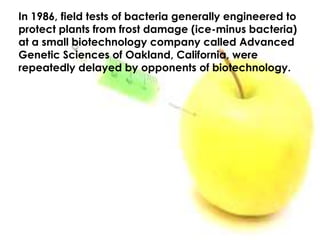
In 1986, field tests of bacteria generally engineered to protect plants from frost damage (ice-minus bacteria) at a small biotechnology company called Advanced Genetic Sciences of Oakland, California, were repeatedly delayed by opponents of biotechnology.
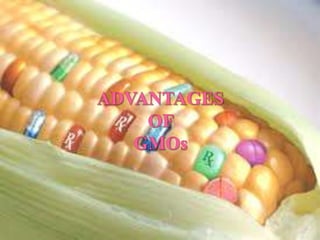
ADVANTAGESOF GMOs
less pesticide is needed to be used due to insert pest     resistant plants
more economically friendly as pesticide do not go into the air , soil and water. Their production hazards to the environment also decreases
decrease in costs of growing and farming, due to the reduced use of pesticides
higher crop yields
farmers have more income
less starvation in the world due to decreased food   prices and increase food production
less deforestation needed to feed the world growing population
decrease in in food prices due to lower costs and higher yield. It means an reduction of poverty creation of “super foods” due to better knowledge. Super foods are types of food that are cheap to produces, grow fast in large quantities and highly nutritious
 reduction of sickness and illnesses, as GMO crops are more nutritious
 development of new kinds of crops that can be grown at extreme climates
 more productive farm animals:  ex. Genes might be inserted to cattle to raise their milk yields longer shelf lives: the genetic modification of fruits and vegetables can make them less to spoil in storage or on way to market
 biofuels: organic matter could be bred to provide  energy
 inbuilt resistant to pest, weeds and diseasesmore capable of thriving in regions with poor soil or adverse climates

GMO POWERPOINT PRESENTATION

  • 1.
  • 2.
    GMOA Genetically Modified Organisms (GMO) is an organisms whose genetic material has been altered using genetic engineering techniques generally known as recombinant DNA technology. Recombinant DNA technology is the ability to combine DNA molecules from different sources into one molecule in vitro. Thus, the expression of certain traits, the phenotype of the organism, or the proteins it produces, can be altered through the modification of its genes.
  • 3.
    GMO are livingorganisms that have been altered through genetic engineering. The purpose of creating GMOs is usually to combine beneficial genes of different organisms in a single organism often for he purpose of consumption as a food source. Genetic modification involves the insertion or deletion of genes. When genes are inserted, they usually come from a different species, which is a form of horizontal genes transfer. In nature, this can occur when exogenous DNA penetrates the cell membrane from any reason. To do this artificially, may require attaching the genes to a virus or just physically inserting the extra DNA into the nucleus of the intended host with a very small syringe, or with very small particles fired from a gene gun. However, other methods exploit natural forms of gene transfer, such as the ability of
  • 4.
    Agro bacterium totransfer genetic material to plants, or the ability of lent viruses to transfer genes to animal cells. The general principle of producing a GMO is to add new genetic material into an organisms genome. This is called genetic engineering and was made possible through the discovery of DNA and the creation of the first recombinant bacteria in 1973; an existing bacterium E.Coli expressing an oxygenic Salmonella gene. This led to concerns in the scientific community about potential risks from genetic engineering , which were thoroughly discussed at the Asilomar Conference. Herbert Boyer then founded the first company to use recombinant DNA technology, Genentech and in 1978 the company announced creation of an E.Coli strain producing the human protein insulin.
  • 5.
    In 1986, fieldtests of bacteria generally engineered to protect plants from frost damage (ice-minus bacteria) at a small biotechnology company called Advanced Genetic Sciences of Oakland, California, were repeatedly delayed by opponents of biotechnology.
  • 6.
  • 7.
    less pesticide isneeded to be used due to insert pest resistant plants
  • 8.
    more economically friendlyas pesticide do not go into the air , soil and water. Their production hazards to the environment also decreases
  • 9.
    decrease in costsof growing and farming, due to the reduced use of pesticides
  • 10.
  • 11.
  • 12.
    less starvation inthe world due to decreased food prices and increase food production
  • 13.
    less deforestation neededto feed the world growing population
  • 14.
    decrease in infood prices due to lower costs and higher yield. It means an reduction of poverty creation of “super foods” due to better knowledge. Super foods are types of food that are cheap to produces, grow fast in large quantities and highly nutritious
  • 15.
    reduction ofsickness and illnesses, as GMO crops are more nutritious
  • 16.
    development ofnew kinds of crops that can be grown at extreme climates
  • 17.
    more productivefarm animals: ex. Genes might be inserted to cattle to raise their milk yields longer shelf lives: the genetic modification of fruits and vegetables can make them less to spoil in storage or on way to market
  • 18.
    biofuels: organicmatter could be bred to provide energy
  • 19.
    inbuilt resistantto pest, weeds and diseasesmore capable of thriving in regions with poor soil or adverse climates