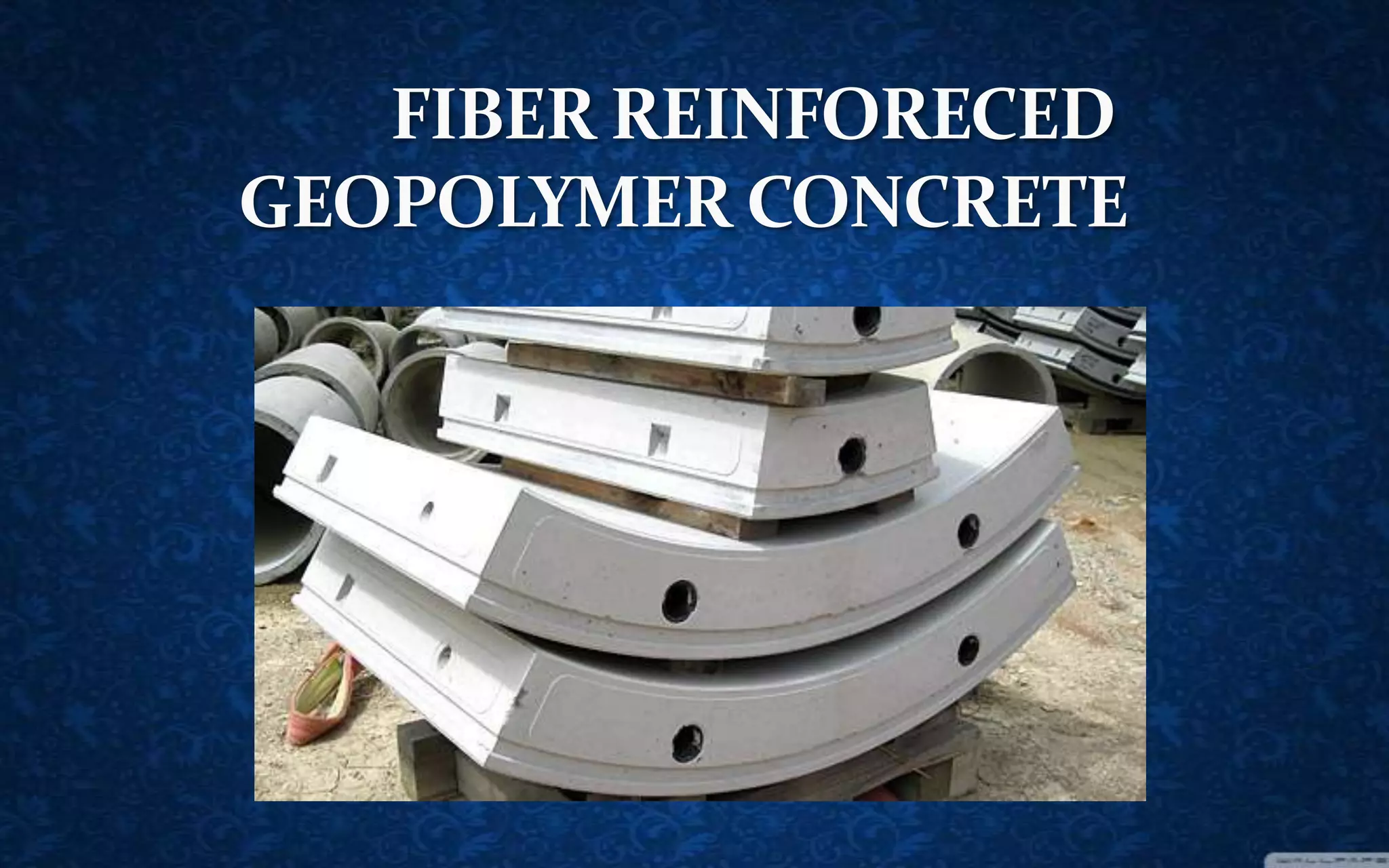
By
    PADIGA AKHILESH GO6155
VIKAS REDDY MAREPALLY GO6148
  PEKETI PADMAKANTH GO6159
 Partially replace the cement in concrete
 Ex: HIGH VOLUME FLY ASH CONCRETE

 Develop alternative material
 Ex: Geopolymer concrete
 Portland cement production is a major contributor to
 CO2 emissions as an estimated 5 TO 8 %of all human-
 generated atmospheric CO2 worldwide comes from
 the concrete industry.

 Production of Portland cement is currently topping 2.6
 billion tons per year worldwide and growing at 5
 percent annually.
 Geopolymer concrete has the potential to substantially
  curb CO2 emissions
 produce a more durable infrastructure capable of
  design life measured in hundreds of years
 conserve hundreds of thousands of acres currently
  used for disposal of coal combustion products
 protect aquifers and surface bodies of fresh water via
  the elimination of fly ash disposal sites.
OPC vs GEO POLYMER
Geopolymer concrete (GPC) using “fly
ash”
Greater corrosion resistance,
Substantially higher fire resistance (up to
2400° F),
High compressive and tensile strengths
Rapid strength gain, and lower
shrinkage.
Greenhouse gas reduction potential as
much as 90 percent when compared with
opc.
 Hardened cementations paste made from flyash and
 alkaline solution.

 Combines waste products into useful product.


 Setting mechanism depends on polymerization.


 Curing temp is between 60-90 degree.
 Source materials :
      Alumina-silicate

 Alkaline liquids
     combination of sodium hydroxide (NaOH) or
 potassium hydroxide (KOH) and sodium silicate or
 potassium silicate.
Alkaline activator
Fly ash     NaOH + Na Silicate


Aggregate


             Geopolymerisation
 Storage
 Alkaline solutions induce the Si and Al atoms in the
 source materials ,example fly ash , to dissolve.

 Gel formation is assisted by applying heat.


 Gel binds the aggregates ,and the unreacted source
 material to form the Geopolymer concrete.
.   Pan Mixer Used in the Manufacture of Geopolymer
                        Concrete
Addition of Liquid Component
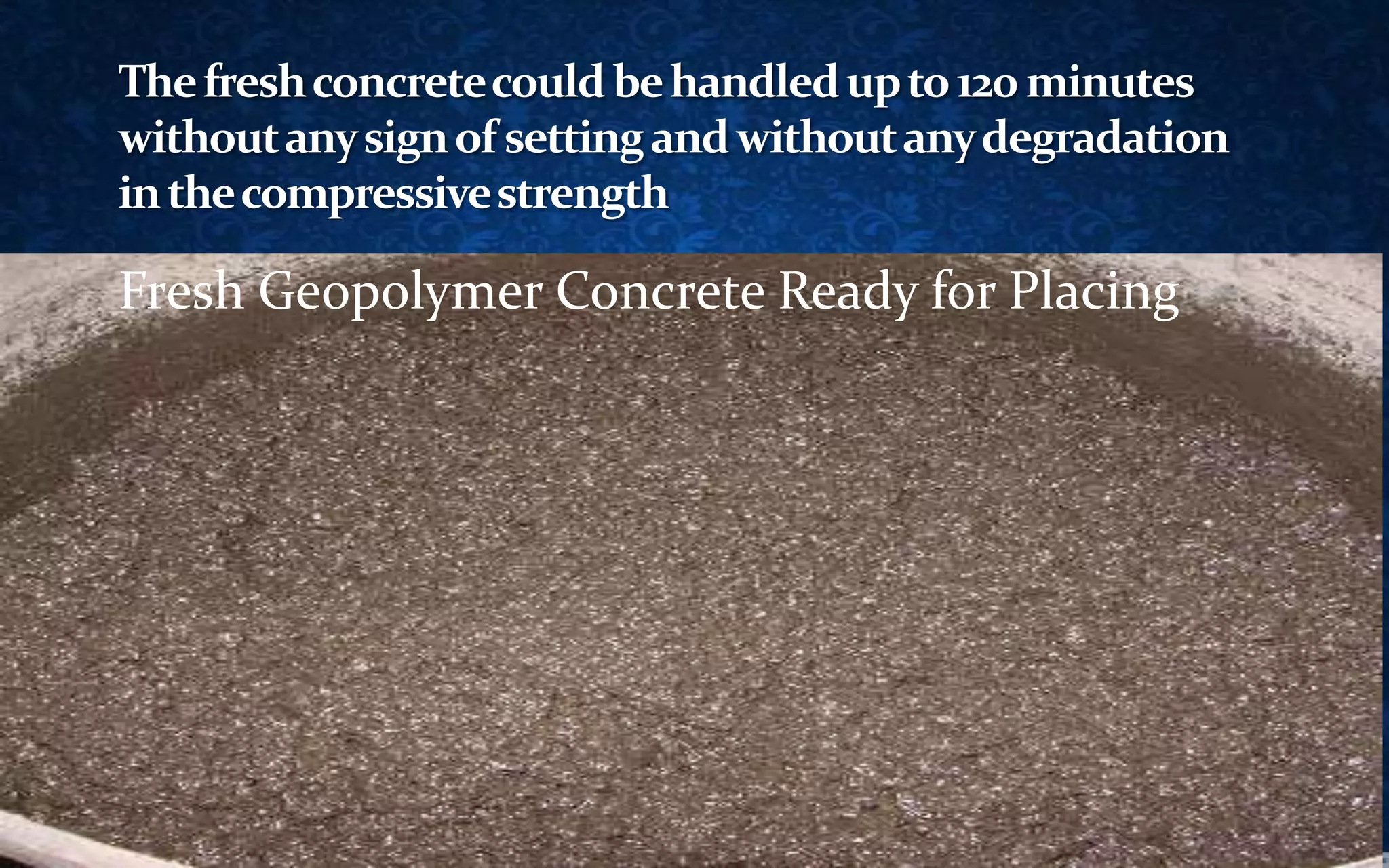
Fresh Geopolymer Concrete Ready for Placing
Slump Measurement of Fresh Geopolymer Concrete
 Cutting the world’s carbon.
 The price of fly ash is low.
 Better compressive strength.
 Fire proof
 Low permeability.
 Eco-friendly.
 Excellent properties within both acid and salt
  environments.
 Pre-cast concrete products like railway sleepers,
 electric power poles, parking tiles etc.

 Marine structures due to resistance against chemical
 attacks

 Waste containments( fly ash)


 FUTURE use IN MAJOR PROJECTS
IN FUTURE
IN FUTURE
• Different source materials
• Properties of soluble silicate
• Contaminants
• Industry regulations
• New material
• Lack of awareness.
The compressive strength of GEOPOLYMER concrete is
  about 1.5 times more than that of the compressive
  strength with the ordinary Portland cement concrete,
  for the same mix.
 Similarly the Geopolymer Concrete showed good
  workability as of the ordinary Portland Cement
  Concrete.
 Non toxic, bleed free
 Sets at room temperature
 Long working life before stiffening
 Impermeable
 Higher resistance to heat and resist all inorganic
  solvents
 Higher compressive strength
 The exposure of the geopolymers materials to the NaCl
 solution resulted in the consistent increase in the
 compressive strength during the whole period of
 measurement (720 days) and the values were as high as
 70 Mpa

 Almost no corrosion products could be found on the
 surface of the geopolymer
A GEOPOLYMERS mortar after the 1.5-year exposure to the
solutions of NaCl
The reduced CO2 emissions of Geopolymer cements make them a
 good alternative to Ordinary Portland Cement.

Produces a substance that is comparable to or better than
 traditional cements with respect to most properties.

Geopolymer concrete has excellent properties within both acid
 and salt environments

Low-calcium fly ash-based geopolymer concrete has excellent
 compressive strength and is suitable for Structural applications.
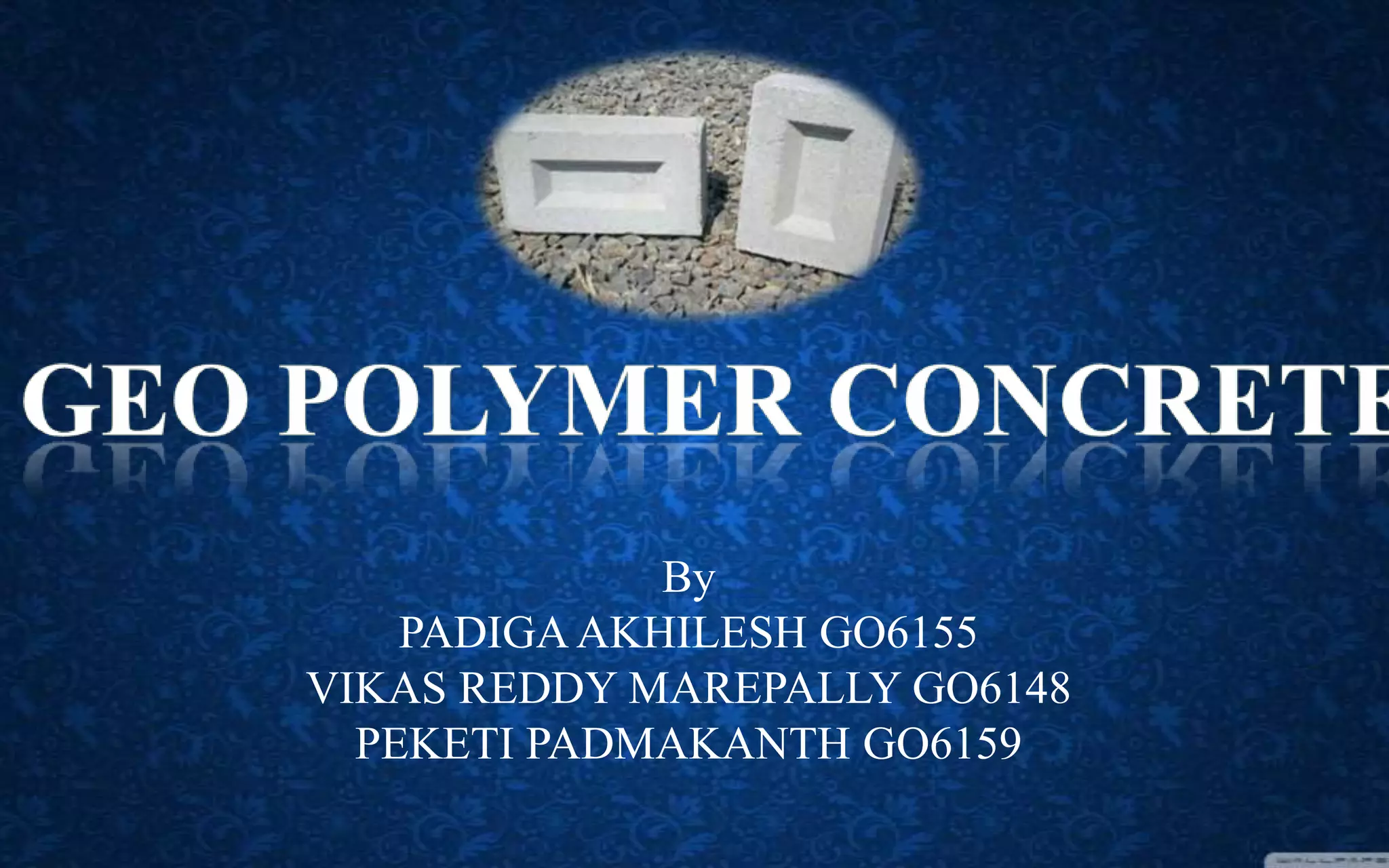
Geopolymer concrete

Geopolymer concrete

  • 1.
    By PADIGA AKHILESH GO6155 VIKAS REDDY MAREPALLY GO6148 PEKETI PADMAKANTH GO6159
  • 2.
     Partially replacethe cement in concrete Ex: HIGH VOLUME FLY ASH CONCRETE  Develop alternative material Ex: Geopolymer concrete
  • 3.
     Portland cementproduction is a major contributor to CO2 emissions as an estimated 5 TO 8 %of all human- generated atmospheric CO2 worldwide comes from the concrete industry.  Production of Portland cement is currently topping 2.6 billion tons per year worldwide and growing at 5 percent annually.
  • 4.
     Geopolymer concretehas the potential to substantially curb CO2 emissions  produce a more durable infrastructure capable of design life measured in hundreds of years  conserve hundreds of thousands of acres currently used for disposal of coal combustion products  protect aquifers and surface bodies of fresh water via the elimination of fly ash disposal sites.
  • 5.
    OPC vs GEOPOLYMER Geopolymer concrete (GPC) using “fly ash” Greater corrosion resistance, Substantially higher fire resistance (up to 2400° F), High compressive and tensile strengths Rapid strength gain, and lower shrinkage. Greenhouse gas reduction potential as much as 90 percent when compared with opc.
  • 6.
     Hardened cementationspaste made from flyash and alkaline solution.  Combines waste products into useful product.  Setting mechanism depends on polymerization.  Curing temp is between 60-90 degree.
  • 7.
     Source materials: Alumina-silicate  Alkaline liquids combination of sodium hydroxide (NaOH) or potassium hydroxide (KOH) and sodium silicate or potassium silicate.
  • 9.
    Alkaline activator Fly ash NaOH + Na Silicate Aggregate Geopolymerisation Storage
  • 10.
     Alkaline solutionsinduce the Si and Al atoms in the source materials ,example fly ash , to dissolve.  Gel formation is assisted by applying heat.  Gel binds the aggregates ,and the unreacted source material to form the Geopolymer concrete.
  • 14.
    . Pan Mixer Used in the Manufacture of Geopolymer Concrete
  • 15.
  • 16.
    Fresh Geopolymer ConcreteReady for Placing
  • 17.
    Slump Measurement ofFresh Geopolymer Concrete
  • 19.
     Cutting theworld’s carbon.  The price of fly ash is low.  Better compressive strength.  Fire proof  Low permeability.  Eco-friendly.  Excellent properties within both acid and salt environments.
  • 20.
     Pre-cast concreteproducts like railway sleepers, electric power poles, parking tiles etc.  Marine structures due to resistance against chemical attacks  Waste containments( fly ash)  FUTURE use IN MAJOR PROJECTS
  • 21.
  • 22.
  • 23.
    • Different sourcematerials • Properties of soluble silicate • Contaminants • Industry regulations • New material • Lack of awareness.
  • 24.
    The compressive strengthof GEOPOLYMER concrete is about 1.5 times more than that of the compressive strength with the ordinary Portland cement concrete, for the same mix.  Similarly the Geopolymer Concrete showed good workability as of the ordinary Portland Cement Concrete.
  • 28.
     Non toxic,bleed free  Sets at room temperature  Long working life before stiffening  Impermeable  Higher resistance to heat and resist all inorganic solvents  Higher compressive strength
  • 29.
     The exposureof the geopolymers materials to the NaCl solution resulted in the consistent increase in the compressive strength during the whole period of measurement (720 days) and the values were as high as 70 Mpa  Almost no corrosion products could be found on the surface of the geopolymer
  • 30.
    A GEOPOLYMERS mortarafter the 1.5-year exposure to the solutions of NaCl
  • 34.
    The reduced CO2emissions of Geopolymer cements make them a good alternative to Ordinary Portland Cement. Produces a substance that is comparable to or better than traditional cements with respect to most properties. Geopolymer concrete has excellent properties within both acid and salt environments Low-calcium fly ash-based geopolymer concrete has excellent compressive strength and is suitable for Structural applications.