Genetic, Biochemical and Molecular Mechanism
of Self Incompatibility and Factors Causing Its
Breakdown
Submitted to: Dr. Vedna Kumari
Presented by: Ronika (A-2020-40-017)
INTRODUCTION
• Inability of plant to set seed with functional
pollen after self polllination
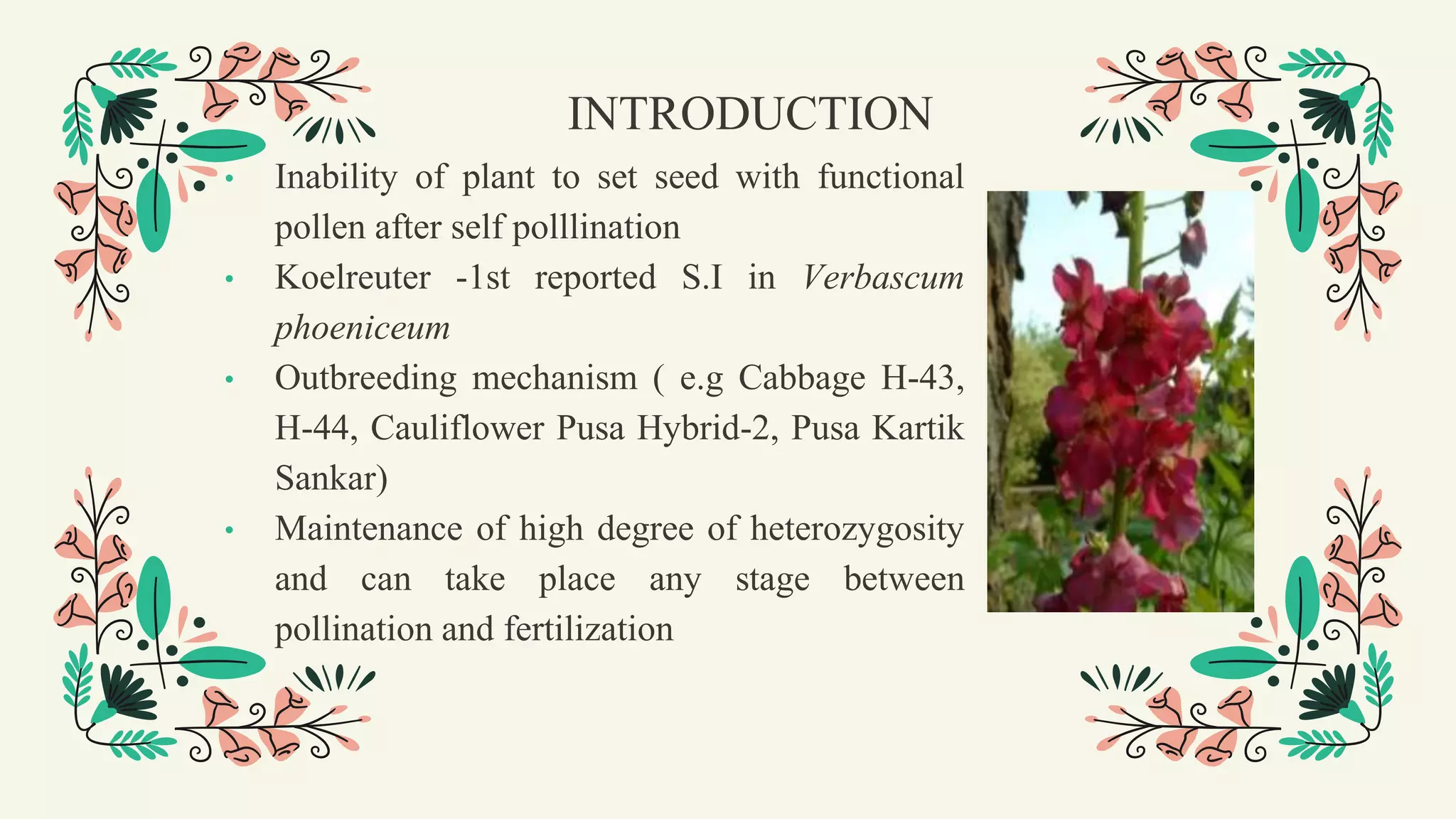
• Koelreuter -1st reported S.I in Verbascum
phoeniceum
• Outbreeding mechanism ( e.g Cabbage H-43,
H-44, Cauliflower Pusa Hybrid-2, Pusa Kartik
Sankar)
• Maintenance of high degree of heterozygosity
and can take place any stage between
pollination and fertilization
3
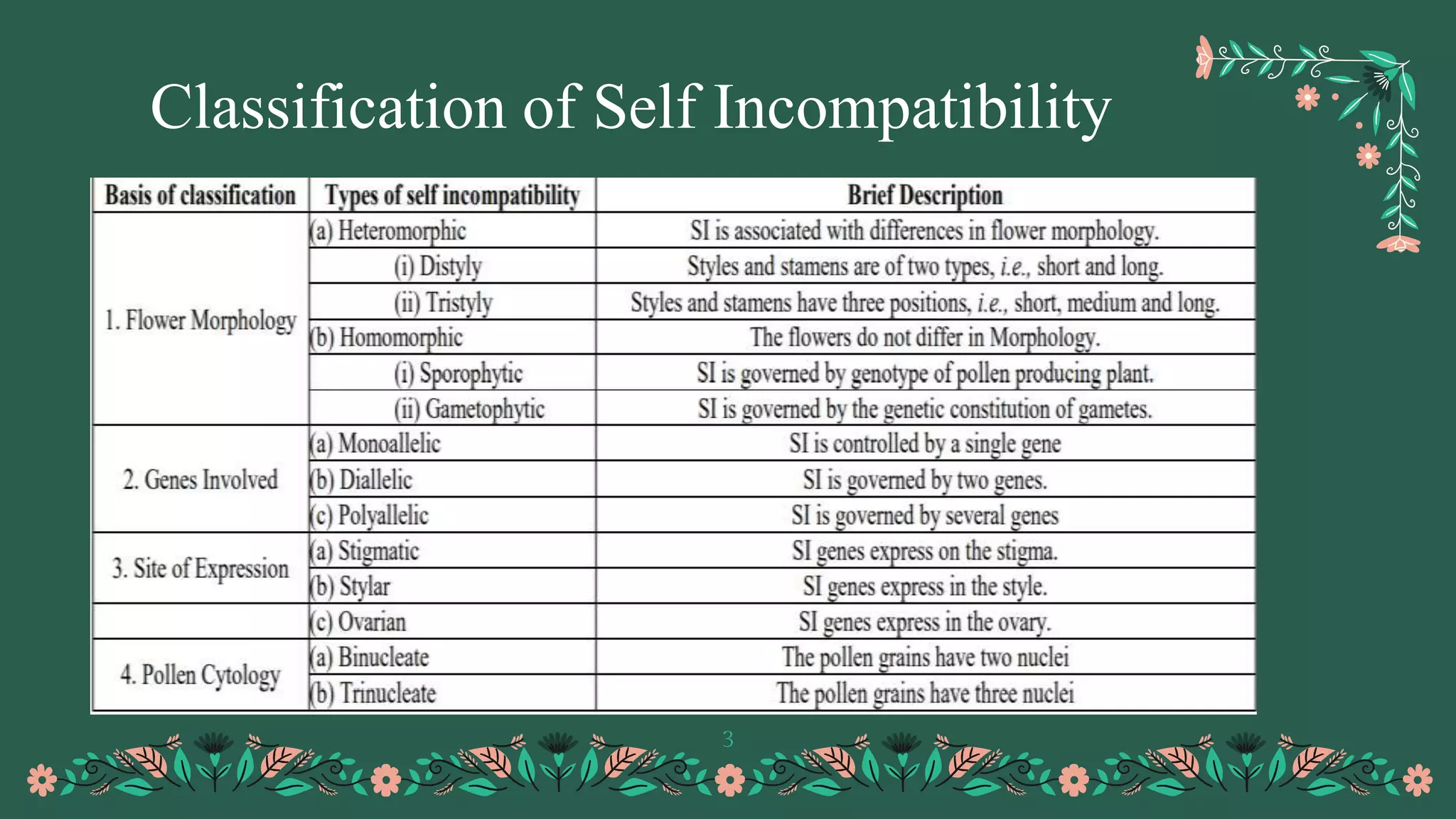
Classification of Self Incompatibility
4
HYPOTHESES
• Proposed by Bateman (1952)
• Incompatibility results due to absence of
stimulation by the pistil on pollen growth in the
like genotypes (S1 S2 × S1 S2), essential for
pollen tube penetration, pollen germinate or pollen
tube growth in the style and the ovary.
• Complementary system depends on the
combination of unlike alleles in the pollen and
style. Such combination of alleles leads to
production of either a stimulant for pollen tube
growth or an antidote to the inhibition already
present in the style.
• Interaction between like alleles (S1 S2 × S1 S2)
leads to production of inhibitor which inhibits
the growth of pollen tube in the pistil
• As a result of interaction between like alleles a
substance is produced in pollen and pistil which
has the property to interfere with the normal
metabolism of the pollen grain or the pollen
tube.
• The inhibitor can act in three ways: (1) it may
inhibit an enzyme or auxin necessary for pollen
tube growth, (2) may block pollen tube
membrane, and (3) may inhibit an enzyme
necessary for the penetration of style.
Complementary hypothesis Oppositional hypothesis
Genetic Basis of Self Incompatibility
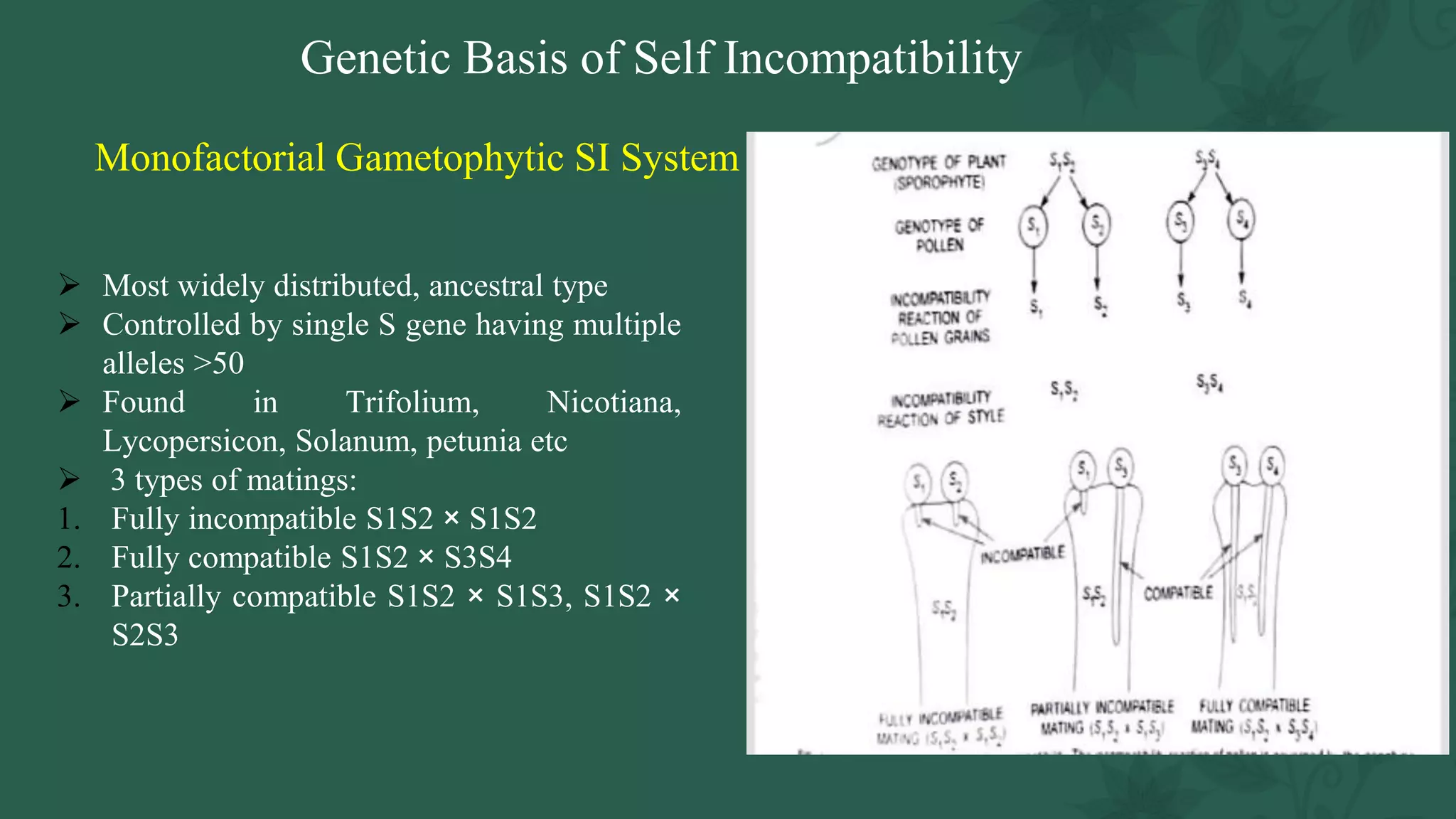
Monofactorial Gametophytic SI System
 Most widely distributed, ancestral type
 Controlled by single S gene having multiple
alleles >50
 Found in Trifolium, Nicotiana,
Lycopersicon, Solanum, petunia etc
 3 types of matings:
1. Fully incompatible S1S2 × S1S2
2. Fully compatible S1S2 × S3S4
3. Partially compatible S1S2 × S1S3, S1S2 ×
S2S3
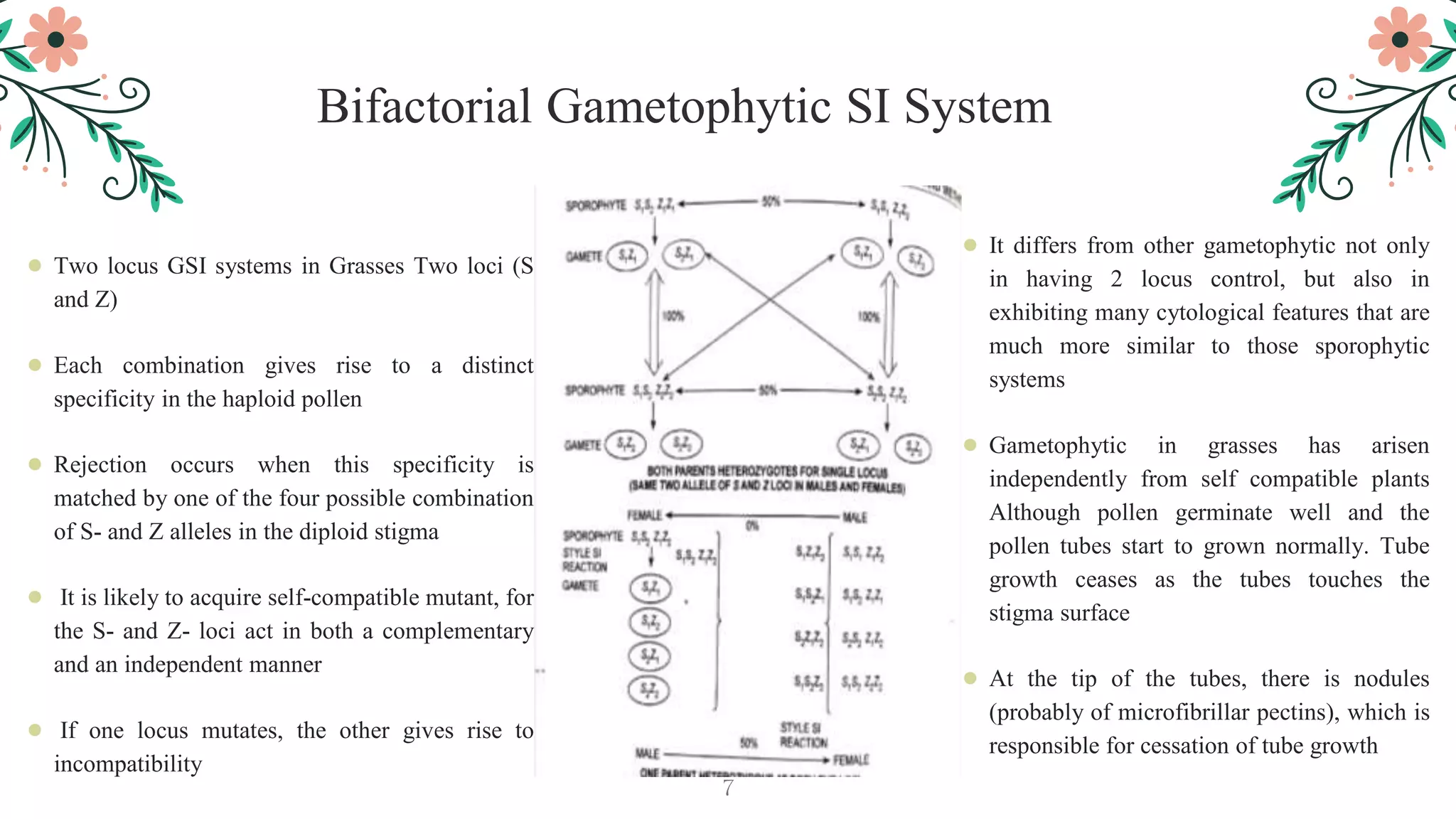
Bifactorial Gametophytic SI System
● Two locus GSI systems in Grasses Two loci (S
and Z)
● Each combination gives rise to a distinct
specificity in the haploid pollen
● Rejection occurs when this specificity is
matched by one of the four possible combination
of S- and Z alleles in the diploid stigma
● It is likely to acquire self-compatible mutant, for
the S- and Z- loci act in both a complementary
and an independent manner
● If one locus mutates, the other gives rise to
incompatibility
● It differs from other gametophytic not only
in having 2 locus control, but also in
exhibiting many cytological features that are
much more similar to those sporophytic
systems
● Gametophytic in grasses has arisen
independently from self compatible plants
Although pollen germinate well and the
pollen tubes start to grown normally. Tube
growth ceases as the tubes touches the
stigma surface
● At the tip of the tubes, there is nodules
(probably of microfibrillar pectins), which is
responsible for cessation of tube growth
7
Molecular Basis of Homomorphic System
8
9
10
Self-recognition system
• Depends on a specific interaction between male-determinants
and female-determinants derived from the same S-haplotype
(group of alleles inherited together).
• These determinant genes are tightly linked in the S-locus and
suggested to have coevolved, keeping the recognition
specificities between two determinants.
• Adopted by Brassicaceae and Papaveraceae
Iwano and Takayama, 2012
SI in Brassicaceae
● Male determinant Cysteine Rich protein
located in protein coat called S-locus Cysteine
Rich protein (SCR)
● Female determinant is Serine/threonine
receptor kinase called S-locus Receptor Kinase
(SRK) located on plasma membrane of stigma
cells.
● Each SRK recognize SCR and its binding
causes autophosphorylation of receptor
● Phosphorylation of SRK receptor initiate
signaling cascade that inhibit pollen hydration
and germination.
● Sporophytic Self Incompatibility
11
SI in Papaveraceae
● Gametophytic Self Incompatibility
S-Glycoprotein Mechanism
● Female determinant encode small
extracellular molecule expressed in
stigma.
● Male determinant is a cell membrane
receptor.
● Interaction with male and female
determinant triggers a series of SI
responses, including increase in cytosolic
free Ca2+ and depolymerization of the
actin cytoskeleton, resulting in pollen
inhibition and programmed cell death.
Add a main point
Elaborate on what you want to discuss.
12
• Non-self recognition SI involves the
recognition of non-self partners and
disregard of the self partner.
• Eg. Solanaceae
Non-self recognition system
SI in Solanaceae
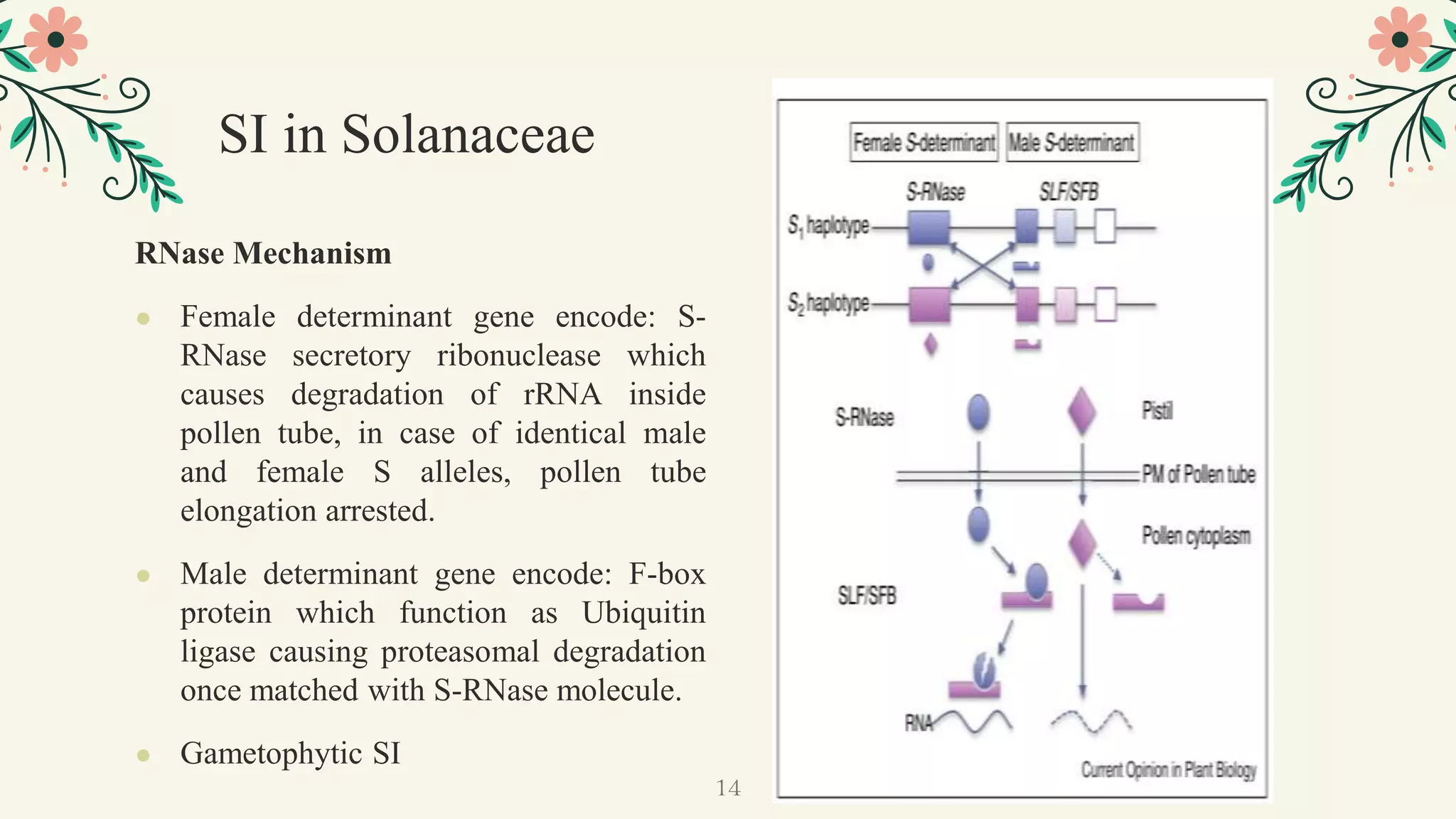
RNase Mechanism
● Female determinant gene encode: S-
RNase secretory ribonuclease which
causes degradation of rRNA inside
pollen tube, in case of identical male
and female S alleles, pollen tube
elongation arrested.
● Male determinant gene encode: F-box
protein which function as Ubiquitin
ligase causing proteasomal degradation
once matched with S-RNase molecule.
● Gametophytic SI
14
Molecular Basis of Heteromorphic System
15
Primula
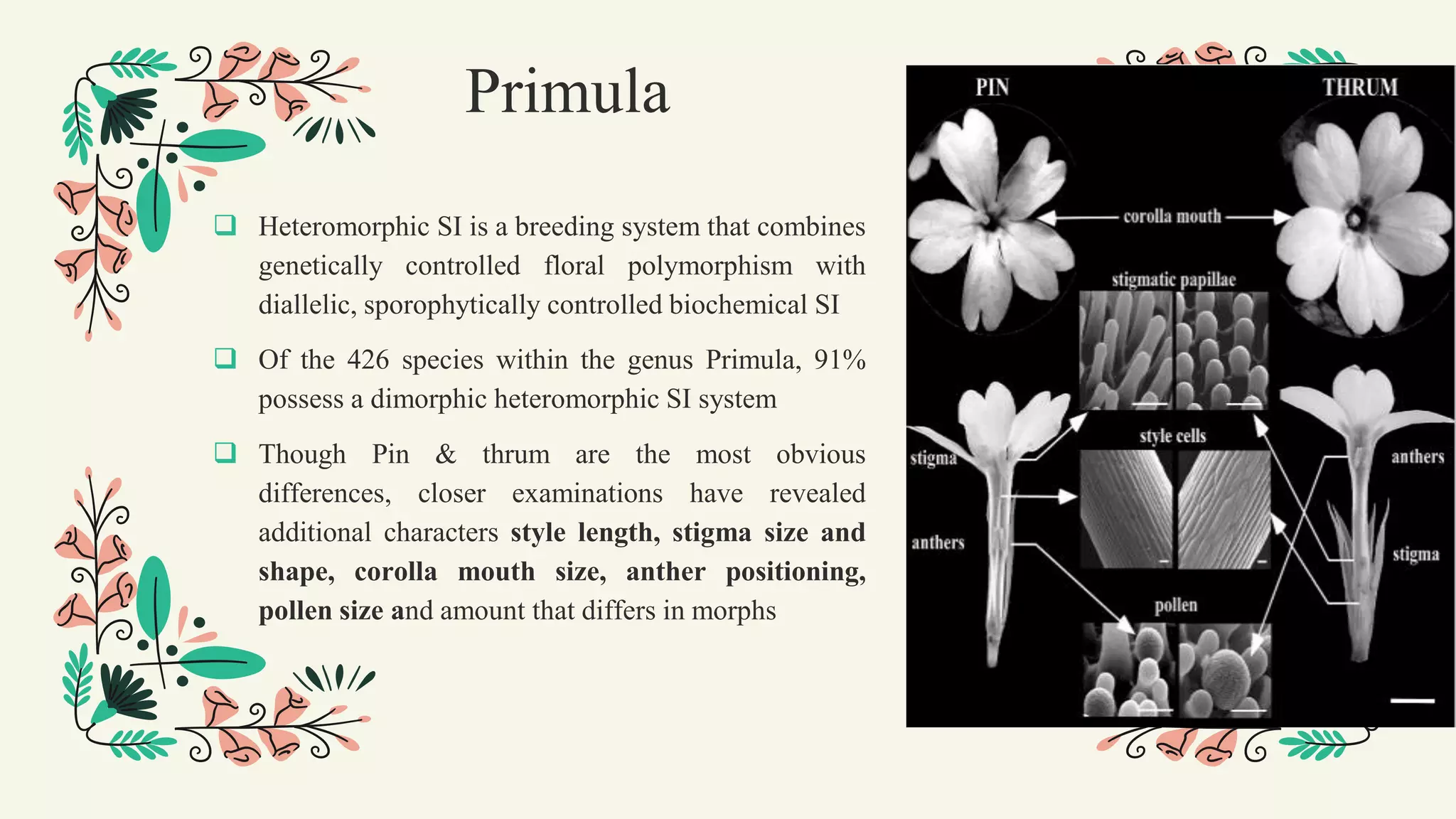
 Heteromorphic SI is a breeding system that combines
genetically controlled floral polymorphism with
diallelic, sporophytically controlled biochemical SI
 Of the 426 species within the genus Primula, 91%
possess a dimorphic heteromorphic SI system
 Though Pin & thrum are the most obvious
differences, closer examinations have revealed
additional characters style length, stigma size and
shape, corolla mouth size, anther positioning,
pollen size and amount that differs in morphs
Genetic Structure of Primula S-locus
• The locus that controls the various morphological characteristics and the SI mating
type that combines to make the heteromorphic SI system is designated, as are all SI
loci, the S-locus
• The collective term supergene complex (5 genes) has been applied to the multigene
linkage group governing heteromorphic SI and provides a useful term that highlights
the apparently complex nature of this genetic locus
• Primula heteromorphic SI S-locus possesses only two functional alleles. The allele
determining thrum form is dominant in Primula, the thrum being genotypically a
heterozygote (Ss) and the pin homozygous recessive (ss).
• Though the genes controlling biochemical SI and associated floral polymorphisms
usually segregate as a single unit, crossover events do occur rarely within the locus,
leading to breakdown of heteromorphic SI and phenotypes known as homostyles.
Buckwheat
18
Self-incompatibility is an obstacle for establishing pure lines and fixation of
agronomically useful genes.
Common buckwheat needs pollinators such as bees and flies for cross-pollination
between pin and thrum plants, and seed production is strongly influenced by
pollinator activity. (Fagopyrum esculentum)
Self-fertilizing SC lines no longer need to attract pollinators. Thus, it is expected that the
seed production of SC lines would be more stable than outcrossing varieties.
(Fagopyrum homotropicum)
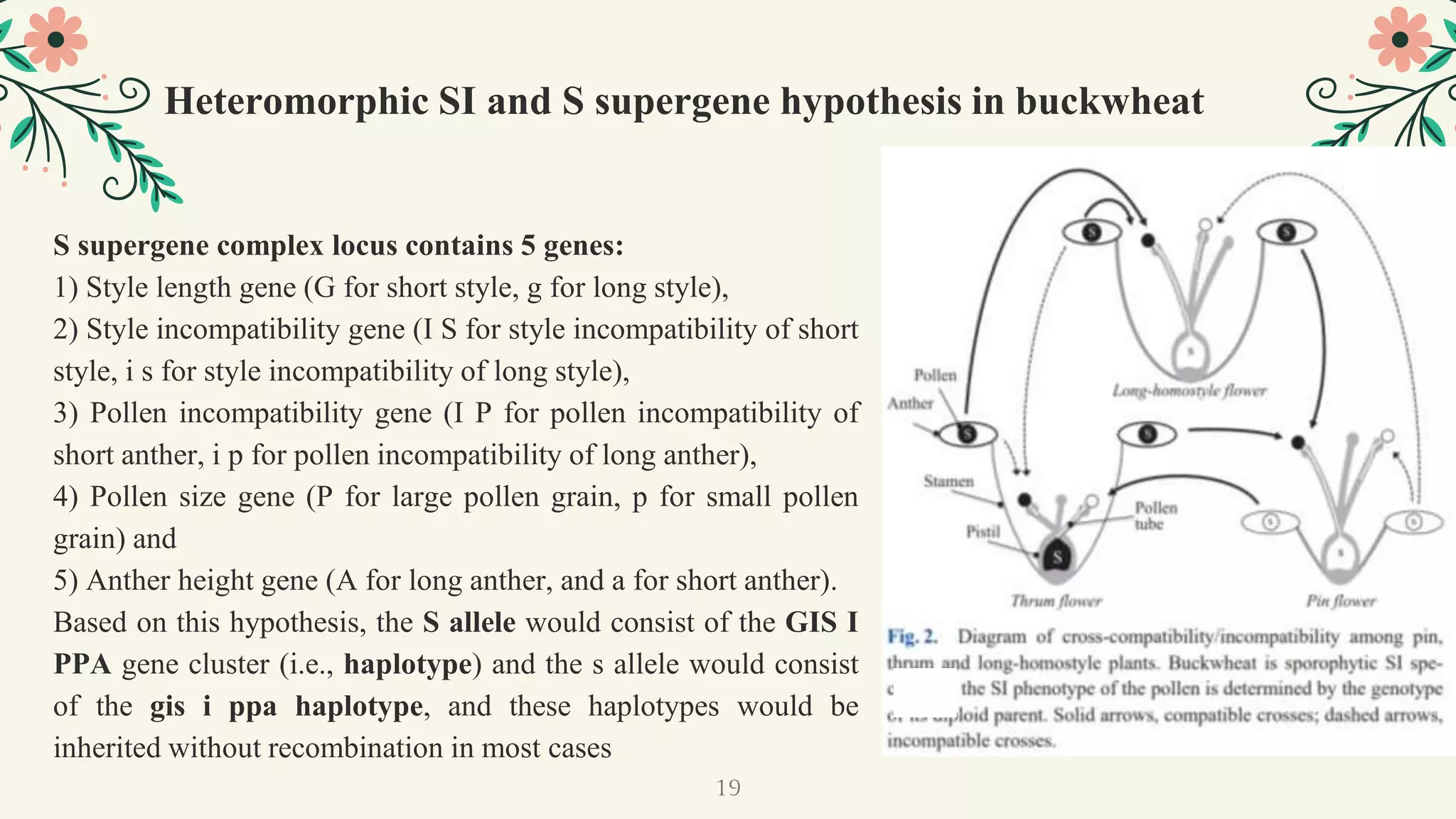
Heteromorphic SI and S supergene hypothesis in buckwheat
19
S supergene complex locus contains 5 genes:
1) Style length gene (G for short style, g for long style),
2) Style incompatibility gene (I S for style incompatibility of short
style, i s for style incompatibility of long style),
3) Pollen incompatibility gene (I P for pollen incompatibility of
short anther, i p for pollen incompatibility of long anther),
4) Pollen size gene (P for large pollen grain, p for small pollen
grain) and
5) Anther height gene (A for long anther, and a for short anther).
Based on this hypothesis, the S allele would consist of the GIS I
PPA gene cluster (i.e., haplotype) and the s allele would consist
of the gis i ppa haplotype, and these haplotypes would be
inherited without recombination in most cases
S-LOCUS EARLY FLOWERING 3 (S-ELF3) gene in the buckwheat S allele
20
• Dominance of the S allele over the s allele suggests that a specific gene is expressed only in the flowers of thrum
plants
• Yasui et al. (2012) isolated mRNAs separately from pistils of thrum and pin plants, and conducted high-throughput
sequencing analyses of expressed genes and detected four specific transcripts (SSG1–SSG4) in the style of thrum
plants.
• Also found complete genetic linkage between the S locus and SSG2 or SSG3. SSG3 was found to be a homolog of
Arabidopsis EARLY FLOWERING 3 (ELF3) and was named S-LOCUS EARLY FLOWERING 3 (S-ELF3).
• ELF3, a core circadian clock component, forms a complex with ELF4 and LUX ARRHYTHMO (LUX); this
complex binds to the promoters of circadian clock genes such as PHYTOCHROME-INTERACTING FACTOR 4
(PIF4), PIF5 and PSEUDO-RESPONSE REGULATOR 9 and regulates their expression in a circadian manner.
• Because ELF3 functions in flowering repression, diurnal control of hypocotyl growth and thermo-responsive
hypocotyl growth, S-ELF3 function could be related to the regulation of style length.
Matsui and Yasui, 2020
21
● In many cases, self fertile forms will be highly desirable and in such cases, it
would be useful to eliminate the self incompatibility, which can be done by:
● 1) in case of single locus gametophytic system, it can be eliminated by
doubling the chromosome number. Eg. Potato
● 2) Isolation of self fertile mutation. For this buds are irradiated at PMC stage,
pollen from these buds are used to pollinate the flowers with known S alleles.
Generally selection for Sf alleles is much more complicated in the sporophytic
system than in gametophytic system due to temporary loss of incompatibility
leading to pseudofertility in case of former.
● 3) Self compatible alleles may be transferred from related species or from self
compatible varieties of the same species, if available through back cross
programme.
Elimination of Self Incompatibility
Temporary suppression of Self Incompatibility
Bud
pollination
Surgical
techniques
End of
season
pollination
High
temperature
Increased
CO2
concentration
High humidity Salt sprays Irradiation
Double
pollination
22
In many situation during production of inbreds for uses as parents in hybrid seed
production, it is very useful if temporary self fertility is achieved in such a manner that
self incompatibility is fully function in selfed progeny. Such fertility is known as
pseudofertility which can be achieved using one of the following:
Source: Singh 2017
Factors causing Breakdown of SI
23
The breakdown of self-incompatibility has occurred repeatedly throughout the
evolution of flowering plants and has profound impacts on the genetic structure of plant
Loss of self-incompatibility can be attributed to 2 types of causes:
1. Polyploidy & duplication of the S-locus,
2. Mutations that cause loss of S-RNase activity (Solanaceae)
24
Polyploidy & duplication of the S-locus
 Natural or induced tetraploidy led to loss of self-incompatibility in plants from several
families Rosaceae. Solanaceae
 Tetraploid individuals are expected to produce diploid pollen at a 50:50 ratio of
heterozygote: homozygote
 In self-pollination of a tetraploid plant, pollen tubes from homozygous pollen grains
responded exactly as did those from normal haploid grains: they were arrested in the style
 Pollen grains having two different S-alleles, in contrast, escaped recognition and
 were able to sire seeds.
 This behavior was apparently not due to tetraploidy in the style; when diploid pollen was
placed on a diploid style that contained the same two S-alleles, only heterozygous pollen
tubes sired seeds.
 The final type of cross, placing haploid pollen on a tetraploid stigma, generated no
progeny, confirming that duplication of the S-locus affected the performance of pollen, but
not of the style. Stone, 2002
Mutations Affecting Enzymatic Activity
• One of the most straightforward ways in which a mutation could confer
self-incompatibility is by disrupting the production or activity of S-RNase
in the style
• Studies on Lycopersicon peruvianum demonstrated that the self-compatible
and self-incompatible genes were allelic and that they differed in levels of
S-RNase activity
• DNA sequence coding for the “Sc” allele suggested that a mutation of a
single nucleotide led to the replacement of a histidine residue by an
asparagine.This histidine has been found in all members of the RNase
family and is essential for the enzymatic activity of the RNase
26
● Iwano M, Takayama S. Self/non-self discrimination in angiosperm self-incompatibility. Current
opinion in plant biology. 2012 Feb 1;15(1):78-83.
● Matsui K, Yasui Y. Buckwheat heteromorphic self-incompatibility: genetics, genomics and application
to breeding. Breeding science. 2020;70(1):32-8.
● McCubbin A. Heteromorphic self-incompatibility in Primula: twenty-first century tools promise to
unravel a classic nineteenth century model system. InSelf-incompatibility in flowering plants 2008 (pp.
289-308). Springer, Berlin, Heidelberg.
● Molecular Mechanisms Underlying the Breakdown of Gametophytic Self‐Incompatibility Review by:
J L Stone The Quarterly Review of Biology, Vol. 77, No. 1 (March 2002), pp. 17-32
References
Thank you!

Genetic, biochemical and molecular mechanism SI and factors causing breakdown of it..pptx

  • 1.
    Genetic, Biochemical andMolecular Mechanism of Self Incompatibility and Factors Causing Its Breakdown Submitted to: Dr. Vedna Kumari Presented by: Ronika (A-2020-40-017)
  • 2.
    INTRODUCTION • Inability ofplant to set seed with functional pollen after self polllination • Koelreuter -1st reported S.I in Verbascum phoeniceum • Outbreeding mechanism ( e.g Cabbage H-43, H-44, Cauliflower Pusa Hybrid-2, Pusa Kartik Sankar) • Maintenance of high degree of heterozygosity and can take place any stage between pollination and fertilization
  • 3.
    3 Classification of SelfIncompatibility
  • 4.
    4 HYPOTHESES • Proposed byBateman (1952) • Incompatibility results due to absence of stimulation by the pistil on pollen growth in the like genotypes (S1 S2 × S1 S2), essential for pollen tube penetration, pollen germinate or pollen tube growth in the style and the ovary. • Complementary system depends on the combination of unlike alleles in the pollen and style. Such combination of alleles leads to production of either a stimulant for pollen tube growth or an antidote to the inhibition already present in the style. • Interaction between like alleles (S1 S2 × S1 S2) leads to production of inhibitor which inhibits the growth of pollen tube in the pistil • As a result of interaction between like alleles a substance is produced in pollen and pistil which has the property to interfere with the normal metabolism of the pollen grain or the pollen tube. • The inhibitor can act in three ways: (1) it may inhibit an enzyme or auxin necessary for pollen tube growth, (2) may block pollen tube membrane, and (3) may inhibit an enzyme necessary for the penetration of style. Complementary hypothesis Oppositional hypothesis
  • 5.
    Genetic Basis ofSelf Incompatibility Monofactorial Gametophytic SI System  Most widely distributed, ancestral type  Controlled by single S gene having multiple alleles >50  Found in Trifolium, Nicotiana, Lycopersicon, Solanum, petunia etc  3 types of matings: 1. Fully incompatible S1S2 × S1S2 2. Fully compatible S1S2 × S3S4 3. Partially compatible S1S2 × S1S3, S1S2 × S2S3
  • 7.
    Bifactorial Gametophytic SISystem ● Two locus GSI systems in Grasses Two loci (S and Z) ● Each combination gives rise to a distinct specificity in the haploid pollen ● Rejection occurs when this specificity is matched by one of the four possible combination of S- and Z alleles in the diploid stigma ● It is likely to acquire self-compatible mutant, for the S- and Z- loci act in both a complementary and an independent manner ● If one locus mutates, the other gives rise to incompatibility ● It differs from other gametophytic not only in having 2 locus control, but also in exhibiting many cytological features that are much more similar to those sporophytic systems ● Gametophytic in grasses has arisen independently from self compatible plants Although pollen germinate well and the pollen tubes start to grown normally. Tube growth ceases as the tubes touches the stigma surface ● At the tip of the tubes, there is nodules (probably of microfibrillar pectins), which is responsible for cessation of tube growth 7
  • 8.
    Molecular Basis ofHomomorphic System 8
  • 9.
  • 10.
    10 Self-recognition system • Dependson a specific interaction between male-determinants and female-determinants derived from the same S-haplotype (group of alleles inherited together). • These determinant genes are tightly linked in the S-locus and suggested to have coevolved, keeping the recognition specificities between two determinants. • Adopted by Brassicaceae and Papaveraceae Iwano and Takayama, 2012
  • 11.
    SI in Brassicaceae ●Male determinant Cysteine Rich protein located in protein coat called S-locus Cysteine Rich protein (SCR) ● Female determinant is Serine/threonine receptor kinase called S-locus Receptor Kinase (SRK) located on plasma membrane of stigma cells. ● Each SRK recognize SCR and its binding causes autophosphorylation of receptor ● Phosphorylation of SRK receptor initiate signaling cascade that inhibit pollen hydration and germination. ● Sporophytic Self Incompatibility 11
  • 12.
    SI in Papaveraceae ●Gametophytic Self Incompatibility S-Glycoprotein Mechanism ● Female determinant encode small extracellular molecule expressed in stigma. ● Male determinant is a cell membrane receptor. ● Interaction with male and female determinant triggers a series of SI responses, including increase in cytosolic free Ca2+ and depolymerization of the actin cytoskeleton, resulting in pollen inhibition and programmed cell death. Add a main point Elaborate on what you want to discuss. 12
  • 13.
    • Non-self recognitionSI involves the recognition of non-self partners and disregard of the self partner. • Eg. Solanaceae Non-self recognition system
  • 14.
    SI in Solanaceae RNaseMechanism ● Female determinant gene encode: S- RNase secretory ribonuclease which causes degradation of rRNA inside pollen tube, in case of identical male and female S alleles, pollen tube elongation arrested. ● Male determinant gene encode: F-box protein which function as Ubiquitin ligase causing proteasomal degradation once matched with S-RNase molecule. ● Gametophytic SI 14
  • 15.
    Molecular Basis ofHeteromorphic System 15
  • 16.
    Primula  Heteromorphic SIis a breeding system that combines genetically controlled floral polymorphism with diallelic, sporophytically controlled biochemical SI  Of the 426 species within the genus Primula, 91% possess a dimorphic heteromorphic SI system  Though Pin & thrum are the most obvious differences, closer examinations have revealed additional characters style length, stigma size and shape, corolla mouth size, anther positioning, pollen size and amount that differs in morphs
  • 17.
    Genetic Structure ofPrimula S-locus • The locus that controls the various morphological characteristics and the SI mating type that combines to make the heteromorphic SI system is designated, as are all SI loci, the S-locus • The collective term supergene complex (5 genes) has been applied to the multigene linkage group governing heteromorphic SI and provides a useful term that highlights the apparently complex nature of this genetic locus • Primula heteromorphic SI S-locus possesses only two functional alleles. The allele determining thrum form is dominant in Primula, the thrum being genotypically a heterozygote (Ss) and the pin homozygous recessive (ss). • Though the genes controlling biochemical SI and associated floral polymorphisms usually segregate as a single unit, crossover events do occur rarely within the locus, leading to breakdown of heteromorphic SI and phenotypes known as homostyles.
  • 18.
    Buckwheat 18 Self-incompatibility is anobstacle for establishing pure lines and fixation of agronomically useful genes. Common buckwheat needs pollinators such as bees and flies for cross-pollination between pin and thrum plants, and seed production is strongly influenced by pollinator activity. (Fagopyrum esculentum) Self-fertilizing SC lines no longer need to attract pollinators. Thus, it is expected that the seed production of SC lines would be more stable than outcrossing varieties. (Fagopyrum homotropicum)
  • 19.
    Heteromorphic SI andS supergene hypothesis in buckwheat 19 S supergene complex locus contains 5 genes: 1) Style length gene (G for short style, g for long style), 2) Style incompatibility gene (I S for style incompatibility of short style, i s for style incompatibility of long style), 3) Pollen incompatibility gene (I P for pollen incompatibility of short anther, i p for pollen incompatibility of long anther), 4) Pollen size gene (P for large pollen grain, p for small pollen grain) and 5) Anther height gene (A for long anther, and a for short anther). Based on this hypothesis, the S allele would consist of the GIS I PPA gene cluster (i.e., haplotype) and the s allele would consist of the gis i ppa haplotype, and these haplotypes would be inherited without recombination in most cases
  • 20.
    S-LOCUS EARLY FLOWERING3 (S-ELF3) gene in the buckwheat S allele 20 • Dominance of the S allele over the s allele suggests that a specific gene is expressed only in the flowers of thrum plants • Yasui et al. (2012) isolated mRNAs separately from pistils of thrum and pin plants, and conducted high-throughput sequencing analyses of expressed genes and detected four specific transcripts (SSG1–SSG4) in the style of thrum plants. • Also found complete genetic linkage between the S locus and SSG2 or SSG3. SSG3 was found to be a homolog of Arabidopsis EARLY FLOWERING 3 (ELF3) and was named S-LOCUS EARLY FLOWERING 3 (S-ELF3). • ELF3, a core circadian clock component, forms a complex with ELF4 and LUX ARRHYTHMO (LUX); this complex binds to the promoters of circadian clock genes such as PHYTOCHROME-INTERACTING FACTOR 4 (PIF4), PIF5 and PSEUDO-RESPONSE REGULATOR 9 and regulates their expression in a circadian manner. • Because ELF3 functions in flowering repression, diurnal control of hypocotyl growth and thermo-responsive hypocotyl growth, S-ELF3 function could be related to the regulation of style length. Matsui and Yasui, 2020
  • 21.
    21 ● In manycases, self fertile forms will be highly desirable and in such cases, it would be useful to eliminate the self incompatibility, which can be done by: ● 1) in case of single locus gametophytic system, it can be eliminated by doubling the chromosome number. Eg. Potato ● 2) Isolation of self fertile mutation. For this buds are irradiated at PMC stage, pollen from these buds are used to pollinate the flowers with known S alleles. Generally selection for Sf alleles is much more complicated in the sporophytic system than in gametophytic system due to temporary loss of incompatibility leading to pseudofertility in case of former. ● 3) Self compatible alleles may be transferred from related species or from self compatible varieties of the same species, if available through back cross programme. Elimination of Self Incompatibility
  • 22.
    Temporary suppression ofSelf Incompatibility Bud pollination Surgical techniques End of season pollination High temperature Increased CO2 concentration High humidity Salt sprays Irradiation Double pollination 22 In many situation during production of inbreds for uses as parents in hybrid seed production, it is very useful if temporary self fertility is achieved in such a manner that self incompatibility is fully function in selfed progeny. Such fertility is known as pseudofertility which can be achieved using one of the following: Source: Singh 2017
  • 23.
    Factors causing Breakdownof SI 23 The breakdown of self-incompatibility has occurred repeatedly throughout the evolution of flowering plants and has profound impacts on the genetic structure of plant Loss of self-incompatibility can be attributed to 2 types of causes: 1. Polyploidy & duplication of the S-locus, 2. Mutations that cause loss of S-RNase activity (Solanaceae)
  • 24.
    24 Polyploidy & duplicationof the S-locus  Natural or induced tetraploidy led to loss of self-incompatibility in plants from several families Rosaceae. Solanaceae  Tetraploid individuals are expected to produce diploid pollen at a 50:50 ratio of heterozygote: homozygote  In self-pollination of a tetraploid plant, pollen tubes from homozygous pollen grains responded exactly as did those from normal haploid grains: they were arrested in the style  Pollen grains having two different S-alleles, in contrast, escaped recognition and  were able to sire seeds.  This behavior was apparently not due to tetraploidy in the style; when diploid pollen was placed on a diploid style that contained the same two S-alleles, only heterozygous pollen tubes sired seeds.  The final type of cross, placing haploid pollen on a tetraploid stigma, generated no progeny, confirming that duplication of the S-locus affected the performance of pollen, but not of the style. Stone, 2002
  • 25.
    Mutations Affecting EnzymaticActivity • One of the most straightforward ways in which a mutation could confer self-incompatibility is by disrupting the production or activity of S-RNase in the style • Studies on Lycopersicon peruvianum demonstrated that the self-compatible and self-incompatible genes were allelic and that they differed in levels of S-RNase activity • DNA sequence coding for the “Sc” allele suggested that a mutation of a single nucleotide led to the replacement of a histidine residue by an asparagine.This histidine has been found in all members of the RNase family and is essential for the enzymatic activity of the RNase
  • 26.
    26 ● Iwano M,Takayama S. Self/non-self discrimination in angiosperm self-incompatibility. Current opinion in plant biology. 2012 Feb 1;15(1):78-83. ● Matsui K, Yasui Y. Buckwheat heteromorphic self-incompatibility: genetics, genomics and application to breeding. Breeding science. 2020;70(1):32-8. ● McCubbin A. Heteromorphic self-incompatibility in Primula: twenty-first century tools promise to unravel a classic nineteenth century model system. InSelf-incompatibility in flowering plants 2008 (pp. 289-308). Springer, Berlin, Heidelberg. ● Molecular Mechanisms Underlying the Breakdown of Gametophytic Self‐Incompatibility Review by: J L Stone The Quarterly Review of Biology, Vol. 77, No. 1 (March 2002), pp. 17-32 References
  • 27.