VIVEKANANDHA
ARTS AND SCIENCE COLLEGE FOR WOMEN
Veerechipalayam – 637 303, Sankagiri, Salem Dt., Tamilnadu India.
Affiliated to Periyar University, Salem ; Recognised Under Section 2(f) & 12(B) of the UGC Act, 1956)
DEPARTMENT OF MICROBIOLOGY
SUBJECT: FOOD MICROBIOLOGY
SUBJECT INCHARGE: SUBMITTED BY:
Dr. R. DINESHKUMAR, SASIPRABHA THANGAVELU,
Assistant professor, III B.Sc., Microbiology,
Department of Microbiology Department of Microbiology,
VIAAS, Sankagiri. VIAAS, Sankagiri.
TITLE: GENERAL PRINCIPLE METHODS OF PRESERVaTION
FOOD PRESERVATION
OVERVIEW:
 What is food preservation
 Methods of food preservation
1.Control of water activity
2.Control of Microbial growth
3.Control of oxygen level
4. Use of chemical preservatives
5. Use of biological agents
6. Physical methods
 Different methods of preservation
1. Fermentation
2. Dehydration
3. High temperature
4. Low temperature
5. Irradiation
What is Food Preservation ?
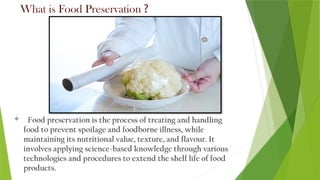
 Food preservation is the process of treating and handling
food to prevent spoilage and foodborne illness, while
maintaining its nutritional value, texture, and flavour. It
involves applying science-based knowledge through various
technologies and procedures to extend the shelf life of food
products.
METHODS OF FOOD PRESERVATION
1. Control of water activity
2. Control of Microbial growth
3. Control of oxygen levels
4. Use of chemical preservatives
5. Use of biological agents
6. Physical methods
METHODS OF FOOD PRESERVATION :
Food preservation involves various techniques to prevent
spoilage, maintain nutritional value, and ensure food safety.
The general principle methods of food preservation can be
categorized into several groups,
1. Control of water activity:
• Dehydration: Removing water from food to inhibit
microbial growth
• Concentration: Increasing the solid content of food to
reduce water activity
• Humectants: Using substances like sugar or salt to bind
water and reduce availability
2.Control of Microbial growth:
• Heat processing: Using high temperature to kill
microorganisms (e.g., pasteurization, sterilization )
• Refrigerator: Slowing down microbial growth through low
temperatures
• Freezing: Stopping microbial growth through extremely
low temperatures
3. Control of oxygen levels:
• Vacuum packaging: Removing air to prevent microbial
growth
• Modified atmosphere packaging: Replacing air with gases
like nitrogen or carbon dioxide
• Aseptic packaging: Filling containers in a sterile
environment to prevent contamination
4. Use of chemical preservatives:
• Acidulants: Adding acids like citric or lactic acid to create
an unfavourable environment
• Antimicrobials: Using substances like sodium benzoate or
potassium sorbate to inhibit growth
• Antioxidants: Preventing oxidation reactions that can lead
to spoilage
5. Use of biological agents:
• Fermentation: Using ionizing to kill microorganisms to
preserve food (e.g., yogurt, sauerkraut)
• Probiotics: Adding beneficial microorganisms to promote
gut health
6. Physical methods:
• Radiation: Using ionizing radiation to kill microorganisms
• High-pressure processing: Using intense pressure to
inactivate microorganisms
• Pulsed electric fields: Using high-voltage pulses to
inactivate microorganisms
These principle methods are used in various
combinations to achieve effective food preservations.
Understanding these principle is curcial for developing
effective food preservations techniques and ensuring the
safety and quality of food products.
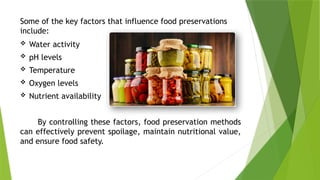
Some of the key factors that influence food preservations
include:
 Water activity
 pH levels
 Temperature
 Oxygen levels
 Nutrient availability
By controlling these factors, food preservation methods
can effectively prevent spoilage, maintain nutritional value,
and ensure food safety.
DIFFERENT METHODS OF FOOD
PRESERVSTION
1. Fermentation
2. Dehydration
3. High temperature
4. Low temperature
5. Irradiation
DIFFERENT METHODS OF PRESERVATION:
 FERMENTATION:
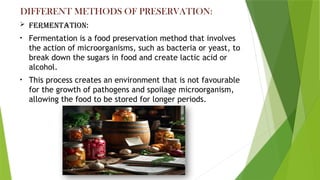
• Fermentation is a food preservation method that involves
the action of microorganisms, such as bacteria or yeast, to
break down the sugars in food and create lactic acid or
alcohol.
• This process creates an environment that is not favourable
for the growth of pathogens and spoilage microorganism,
allowing the food to be stored for longer periods.
 DEHYDRATION:
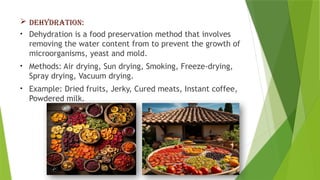
• Dehydration is a food preservation method that involves
removing the water content from to prevent the growth of
microorganisms, yeast and mold.
• Methods: Air drying, Sun drying, Smoking, Freeze-drying,
Spray drying, Vacuum drying.
• Example: Dried fruits, Jerky, Cured meats, Instant coffee,
Powdered milk.
 HIGH TEMPERATURE:
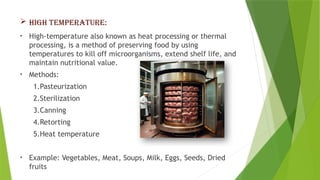
• High-temperature also known as heat processing or thermal
processing, is a method of preserving food by using
temperatures to kill off microorganisms, extend shelf life, and
maintain nutritional value.
• Methods:
1.Pasteurization
2.Sterilization
3.Canning
4.Retorting
5.Heat temperature
• Example: Vegetables, Meat, Soups, Milk, Eggs, Seeds, Dried
fruits
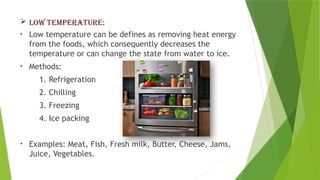
 LOW TEMPERATURE:
• Low temperature can be defines as removing heat energy
from the foods, which consequently decreases the
temperature or can change the state from water to ice.
• Methods:
1. Refrigeration
2. Chilling
3. Freezing
4. Ice packing
• Examples: Meat, Fish, Fresh milk, Butter, Cheese, Jams,
Juice, Vegetables.
 IRRADIATION:
• Food irradiation is a process that exposure food to ionizing
radiation to kill microorganisms, extend shelf life, and
reduce the risk of foodborne illness.
• Methods:
1. Gamma radiation
2. X-ray radiation
3. Electron beam radiation
• Examples: Leafy greens, Broccoli, Garlic powder, Wheat,
Shrimp, Blueberries, Rice.
THANK YOU

General principle methods of preservation

  • 1.
    VIVEKANANDHA ARTS AND SCIENCECOLLEGE FOR WOMEN Veerechipalayam – 637 303, Sankagiri, Salem Dt., Tamilnadu India. Affiliated to Periyar University, Salem ; Recognised Under Section 2(f) & 12(B) of the UGC Act, 1956) DEPARTMENT OF MICROBIOLOGY SUBJECT: FOOD MICROBIOLOGY SUBJECT INCHARGE: SUBMITTED BY: Dr. R. DINESHKUMAR, SASIPRABHA THANGAVELU, Assistant professor, III B.Sc., Microbiology, Department of Microbiology Department of Microbiology, VIAAS, Sankagiri. VIAAS, Sankagiri. TITLE: GENERAL PRINCIPLE METHODS OF PRESERVaTION
  • 2.
  • 3.
    OVERVIEW:  What isfood preservation  Methods of food preservation 1.Control of water activity 2.Control of Microbial growth 3.Control of oxygen level 4. Use of chemical preservatives 5. Use of biological agents 6. Physical methods  Different methods of preservation 1. Fermentation 2. Dehydration 3. High temperature 4. Low temperature 5. Irradiation
  • 4.
    What is FoodPreservation ?  Food preservation is the process of treating and handling food to prevent spoilage and foodborne illness, while maintaining its nutritional value, texture, and flavour. It involves applying science-based knowledge through various technologies and procedures to extend the shelf life of food products.
  • 5.
    METHODS OF FOODPRESERVATION 1. Control of water activity 2. Control of Microbial growth 3. Control of oxygen levels 4. Use of chemical preservatives 5. Use of biological agents 6. Physical methods
  • 6.
    METHODS OF FOODPRESERVATION : Food preservation involves various techniques to prevent spoilage, maintain nutritional value, and ensure food safety. The general principle methods of food preservation can be categorized into several groups, 1. Control of water activity: • Dehydration: Removing water from food to inhibit microbial growth • Concentration: Increasing the solid content of food to reduce water activity • Humectants: Using substances like sugar or salt to bind water and reduce availability
  • 7.
    2.Control of Microbialgrowth: • Heat processing: Using high temperature to kill microorganisms (e.g., pasteurization, sterilization ) • Refrigerator: Slowing down microbial growth through low temperatures • Freezing: Stopping microbial growth through extremely low temperatures 3. Control of oxygen levels: • Vacuum packaging: Removing air to prevent microbial growth • Modified atmosphere packaging: Replacing air with gases like nitrogen or carbon dioxide • Aseptic packaging: Filling containers in a sterile environment to prevent contamination
  • 8.
    4. Use ofchemical preservatives: • Acidulants: Adding acids like citric or lactic acid to create an unfavourable environment • Antimicrobials: Using substances like sodium benzoate or potassium sorbate to inhibit growth • Antioxidants: Preventing oxidation reactions that can lead to spoilage 5. Use of biological agents: • Fermentation: Using ionizing to kill microorganisms to preserve food (e.g., yogurt, sauerkraut) • Probiotics: Adding beneficial microorganisms to promote gut health
  • 9.
    6. Physical methods: •Radiation: Using ionizing radiation to kill microorganisms • High-pressure processing: Using intense pressure to inactivate microorganisms • Pulsed electric fields: Using high-voltage pulses to inactivate microorganisms These principle methods are used in various combinations to achieve effective food preservations. Understanding these principle is curcial for developing effective food preservations techniques and ensuring the safety and quality of food products.
  • 10.
    Some of thekey factors that influence food preservations include:  Water activity  pH levels  Temperature  Oxygen levels  Nutrient availability By controlling these factors, food preservation methods can effectively prevent spoilage, maintain nutritional value, and ensure food safety.
  • 11.
    DIFFERENT METHODS OFFOOD PRESERVSTION 1. Fermentation 2. Dehydration 3. High temperature 4. Low temperature 5. Irradiation
  • 12.
    DIFFERENT METHODS OFPRESERVATION:  FERMENTATION: • Fermentation is a food preservation method that involves the action of microorganisms, such as bacteria or yeast, to break down the sugars in food and create lactic acid or alcohol. • This process creates an environment that is not favourable for the growth of pathogens and spoilage microorganism, allowing the food to be stored for longer periods.
  • 13.
     DEHYDRATION: • Dehydrationis a food preservation method that involves removing the water content from to prevent the growth of microorganisms, yeast and mold. • Methods: Air drying, Sun drying, Smoking, Freeze-drying, Spray drying, Vacuum drying. • Example: Dried fruits, Jerky, Cured meats, Instant coffee, Powdered milk.
  • 14.
     HIGH TEMPERATURE: •High-temperature also known as heat processing or thermal processing, is a method of preserving food by using temperatures to kill off microorganisms, extend shelf life, and maintain nutritional value. • Methods: 1.Pasteurization 2.Sterilization 3.Canning 4.Retorting 5.Heat temperature • Example: Vegetables, Meat, Soups, Milk, Eggs, Seeds, Dried fruits
  • 15.
     LOW TEMPERATURE: •Low temperature can be defines as removing heat energy from the foods, which consequently decreases the temperature or can change the state from water to ice. • Methods: 1. Refrigeration 2. Chilling 3. Freezing 4. Ice packing • Examples: Meat, Fish, Fresh milk, Butter, Cheese, Jams, Juice, Vegetables.
  • 16.
     IRRADIATION: • Foodirradiation is a process that exposure food to ionizing radiation to kill microorganisms, extend shelf life, and reduce the risk of foodborne illness. • Methods: 1. Gamma radiation 2. X-ray radiation 3. Electron beam radiation • Examples: Leafy greens, Broccoli, Garlic powder, Wheat, Shrimp, Blueberries, Rice.
  • 17.