Foundations of Indian
Literature: A Cultural and
Historical Perspective
Mrs . S. Deivalakshmi
Assistant Professor
Department of EFL
SRM IST, FSH, RMP
English in India
Lord Macaulay was
considered the Father of
English education in India.
Macaulay’s Minute of 1835
“To trade with civilized men is infinitely
more profitable than to govern savages.”
“a class who may be interpreters
between us and the millions whom we
govern - a class of persons, Indians in
blood and colour, but English in taste, in
opinion, in morals and in intellect.”
Second Half of 19th Century
• Many English-medium schools and colleges were started in India with the help of
Christian Missionaries.
• Queen Victoria’s proclamation in 1857.
• Indians were encouraged to continue their higher studies abroad, mainly in
Europe.
The Beginnings
Cavelly Venkata Ramaswami –
Indian translator and pundit. He
translated an early seventeenth-
century Sanskrit poem in 1825 –
‘Viswagunadarsana’ of
Arasanipala Venkatadhvarin.
Henry Louis Vivian is widely
regarded as the first Indian English
poet of note.
Lecturer at Hindu College,
Calcutta
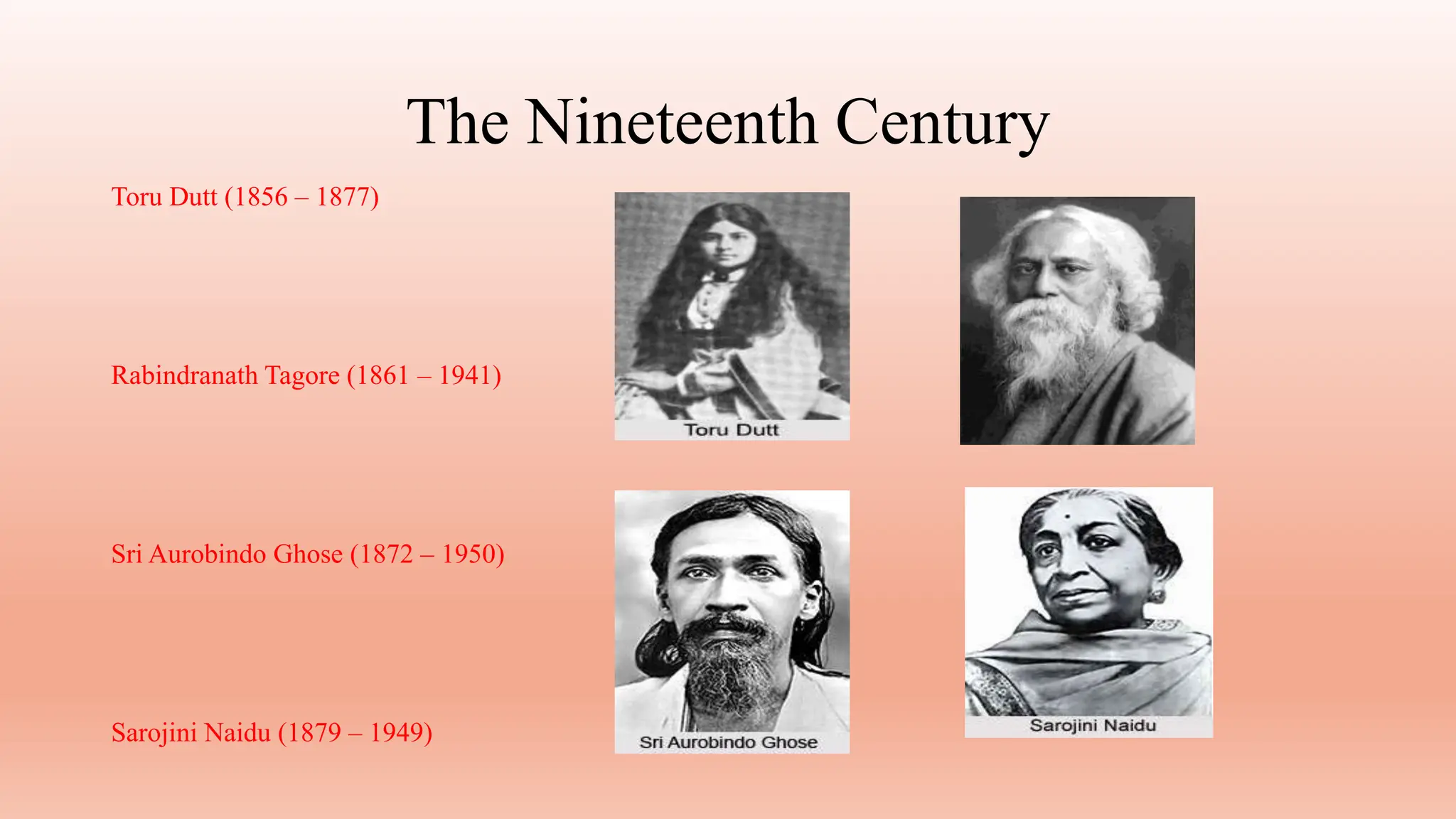
The Nineteenth Century
Toru Dutt (1856 – 1877)
Rabindranath Tagore (1861 – 1941)
Sri Aurobindo Ghose (1872 – 1950)
Sarojini Naidu (1879 – 1949)
The Twentieth Century
• Nissim Ezekiel (1924 – 2004)
• Jayanta Mahapatra (1928 – 2023)
• A. K. Ramanujan (1929 – 1993) TRIO OF INDIAN WRITING
• R. Parthasarathy (1934)
• Arun Kolatkar (1932 – 2004)
• Kamala Das (1934 – 2009)
• Meena Alexander (1951 – 2018)
Early Indian Novels in English
Rajmohan’s Wife (1864) by Bankim Chandra Chattopadhyay
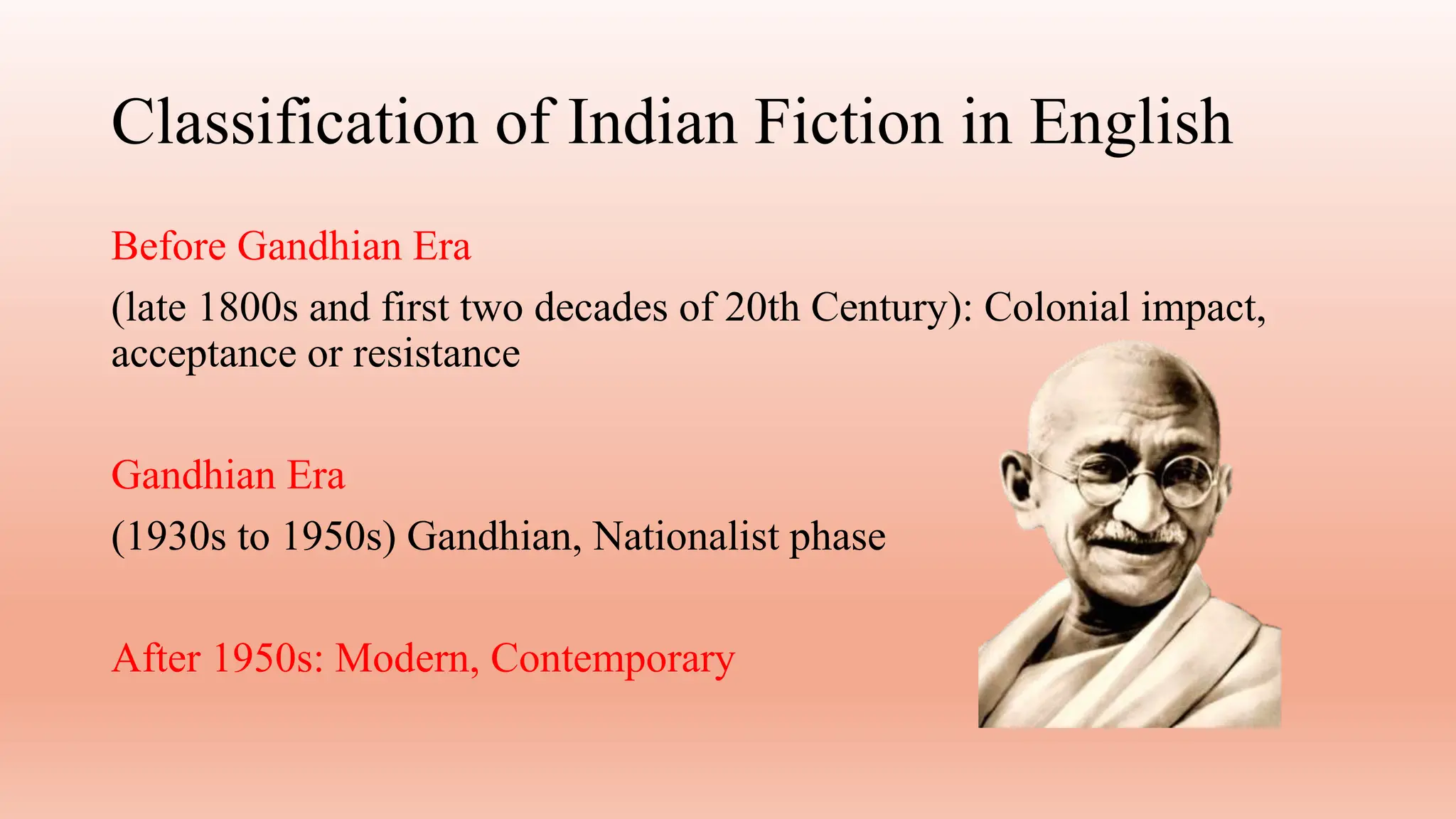
Classification of Indian Fiction in English
Before Gandhian Era
(late 1800s and first two decades of 20th Century): Colonial impact,
acceptance or resistance
Gandhian Era
(1930s to 1950s) Gandhian, Nationalist phase
After 1950s: Modern, Contemporary
Important Novelists
• Bankim Chandra Chatterjee
• Mulk Raj Anand
• Raja Rao
• R.K. Narayan
• Kushwant Singh
• Anita Desai
• Ruth Prawer Jhabvala
• Kamala Markandeya
• Arun Joshi
• Shashi Deshpande
• Amitav Ghosh
• Allan Sealy
• Salman Rushdie
• Arundathi Rohy

Foundation of Indian Literature: A Cultural and Historical Perspective .pptx

  • 1.
    Foundations of Indian Literature:A Cultural and Historical Perspective Mrs . S. Deivalakshmi Assistant Professor Department of EFL SRM IST, FSH, RMP
  • 2.
    English in India LordMacaulay was considered the Father of English education in India.
  • 3.
    Macaulay’s Minute of1835 “To trade with civilized men is infinitely more profitable than to govern savages.” “a class who may be interpreters between us and the millions whom we govern - a class of persons, Indians in blood and colour, but English in taste, in opinion, in morals and in intellect.”
  • 4.
    Second Half of19th Century • Many English-medium schools and colleges were started in India with the help of Christian Missionaries. • Queen Victoria’s proclamation in 1857. • Indians were encouraged to continue their higher studies abroad, mainly in Europe.
  • 5.
    The Beginnings Cavelly VenkataRamaswami – Indian translator and pundit. He translated an early seventeenth- century Sanskrit poem in 1825 – ‘Viswagunadarsana’ of Arasanipala Venkatadhvarin. Henry Louis Vivian is widely regarded as the first Indian English poet of note. Lecturer at Hindu College, Calcutta
  • 6.
    The Nineteenth Century ToruDutt (1856 – 1877) Rabindranath Tagore (1861 – 1941) Sri Aurobindo Ghose (1872 – 1950) Sarojini Naidu (1879 – 1949)
  • 7.
    The Twentieth Century •Nissim Ezekiel (1924 – 2004) • Jayanta Mahapatra (1928 – 2023) • A. K. Ramanujan (1929 – 1993) TRIO OF INDIAN WRITING • R. Parthasarathy (1934) • Arun Kolatkar (1932 – 2004) • Kamala Das (1934 – 2009) • Meena Alexander (1951 – 2018)
  • 8.
    Early Indian Novelsin English Rajmohan’s Wife (1864) by Bankim Chandra Chattopadhyay
  • 9.
    Classification of IndianFiction in English Before Gandhian Era (late 1800s and first two decades of 20th Century): Colonial impact, acceptance or resistance Gandhian Era (1930s to 1950s) Gandhian, Nationalist phase After 1950s: Modern, Contemporary
  • 10.
    Important Novelists • BankimChandra Chatterjee • Mulk Raj Anand • Raja Rao • R.K. Narayan • Kushwant Singh • Anita Desai • Ruth Prawer Jhabvala • Kamala Markandeya • Arun Joshi • Shashi Deshpande • Amitav Ghosh • Allan Sealy • Salman Rushdie • Arundathi Rohy