Footwear Impression
Evidence
Presented By
Priyanka Gadisetty
Impression Evidence
• Defined as – “objects of materials that have retained the
characteristics of other objects or materials through direct physical
contact”
• Fingerprints, palm prints, footwear impression, tire impressions, bite
marks, glove prints, footprints, socked foot impressions, firing pin
impressions, lip impressions, ear impressions
• Plant and animal fossils
Footwear impressions
• Found en route to, at, and exiting from the crime scene
• Link between the criminal and the place where the crime occurred
• Found in very small percentage of cases
• Difficult or inconvenient to find
a) Ground surfaces
b) Latent prints
c) Requirement of specialized lighting techniques
d) Little of no experience of investigator
e) Rush in searching crime scene
f) Limited knowledge of footwear impression examination
Footwear impressions
• Frequency of footwear impressions
• Durability of footwear impression
• Age of impressions
• Positive identification of footwear
Information Provided
• Type, make, description, and approximate or precise size of the
footwear that made them
• Process of developing a suspect
• Crime reconstruction
• Determining the number of suspects, their path into and through the
crime scene, their involvement in the crime, and the events that
occurred during the crime
• Corroborate or refute the information provided by witnesses or
suspects
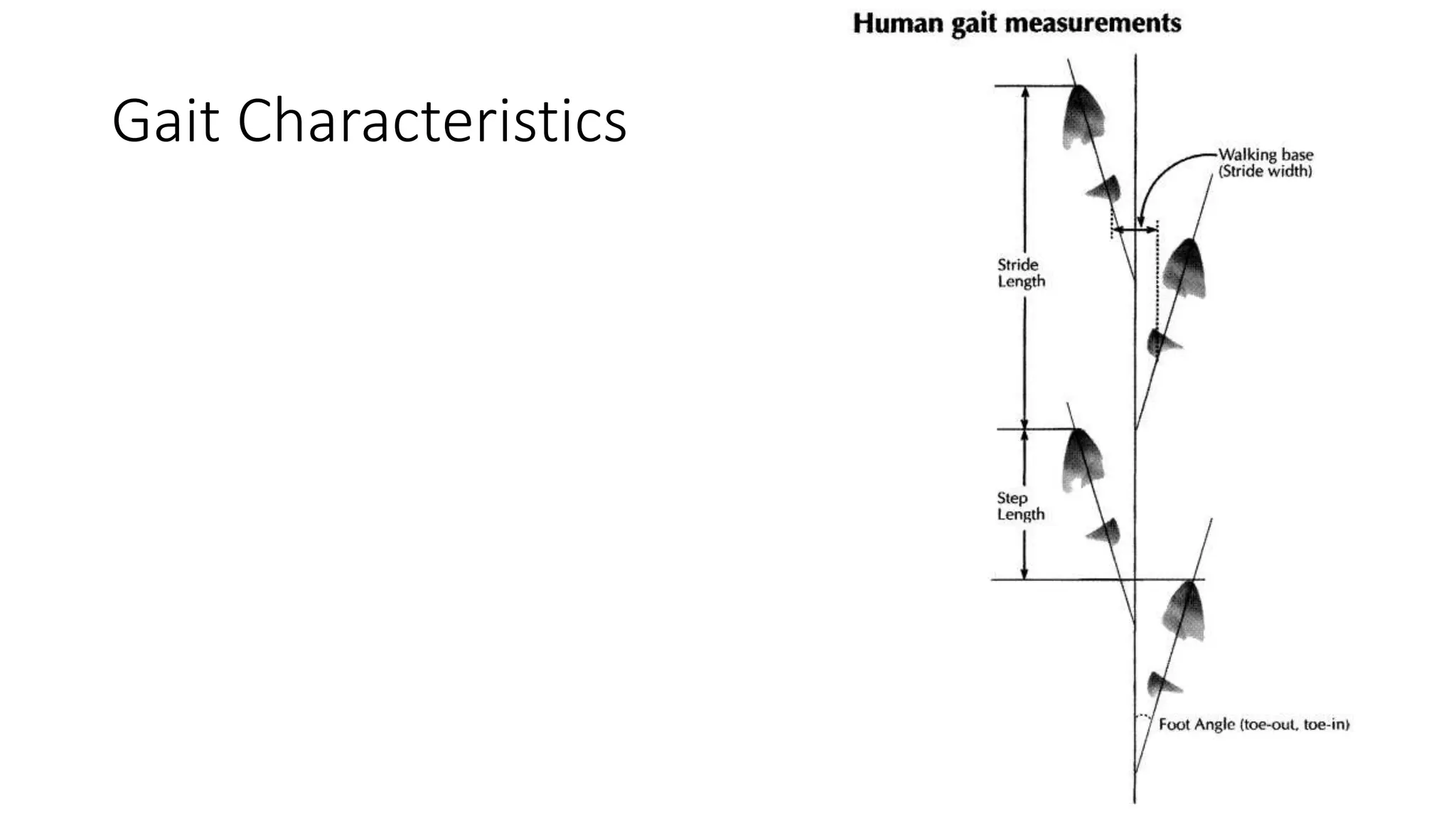
Gait Characteristics
Formation of footwear impressions
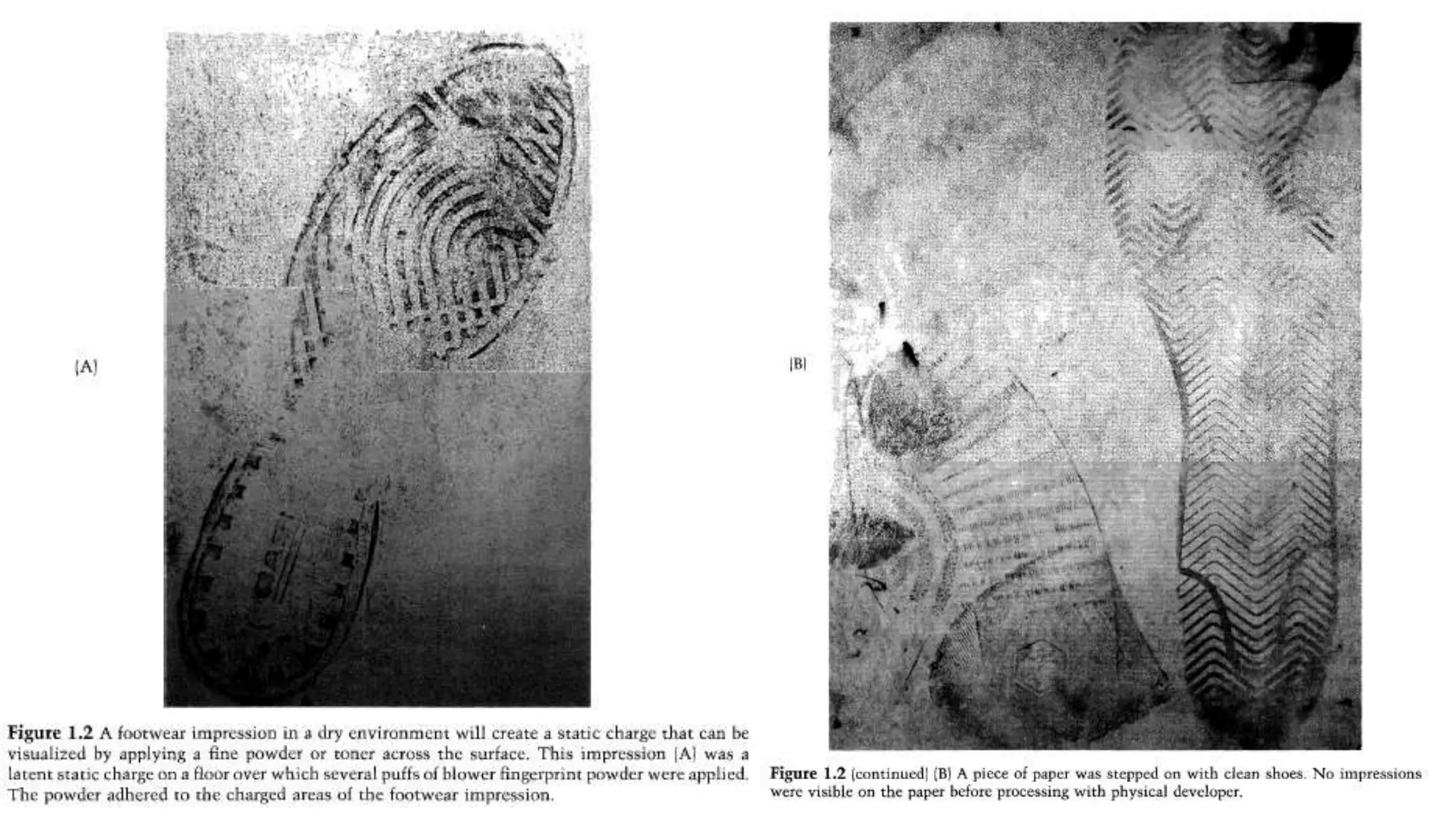
• Creation of static charges – clean, dry shoes, taking several steps and
then walking across and stepping on a hard flat surface such as a tile
floor
• Deformation of the surface – soil, carpets, etc. – use of holography
• Transfer of a trace or residue materials – negative and positive images
Areas to check
• Actual point of occurrence of the crime
• Point of entry
• Path through the crime area
• Point of exit and other exterior areas
• Near other footwear impressions
Handling footwear impressions
• Take general crime scene
photographs – take
examination quality
photographs
• Make notes and crime
scene sketches
• Remove the impressioned
item from the scene
• Never cover an impression
with tape or plastic
Casting 3D footwear impressions
• Significant depth in addition to length and width
• Superior to photography
• Photography and casts must be used to supplement each other
• Possible loss of details in photographs
• Casting materials – silicones, moulage, paraffin wax, alginates, plaster
of paris, and dental stones
• Silicones – Expensive, too thick to flow in impression, take longer time
to cure
• Paraffin wax – 20 – 30 min to melt, more quantity is required
Qualities for a good casting material
2D footwear impressions
• Electrostatic lifting:
It is a tool that electrostatically charges particles within dust or light
soil, which are then attracted and bonded to a lifting film. This method
is best for collecting dry or dusty residue impressions on almost any
surface, even the skin of a cadaver. Imprints and impressions may be
further processed to enhance or bring out additional minute details.
For example, a digital enhancement program such as Adobe
Photoshop® can be used to improve the quality of a photographed
impression. Fingerprint powders and chemical stains or dyes can
enhance image color or increase the contrast against the background.
This enables lifted or casted evidence to be photographed or scanned.
Latent footwear impressions
• Powders
• Footwears in blood

Forensic analysis of Footwear Impression Evidence pptx.

  • 1.
  • 2.
    Impression Evidence • Definedas – “objects of materials that have retained the characteristics of other objects or materials through direct physical contact” • Fingerprints, palm prints, footwear impression, tire impressions, bite marks, glove prints, footprints, socked foot impressions, firing pin impressions, lip impressions, ear impressions • Plant and animal fossils
  • 3.
    Footwear impressions • Founden route to, at, and exiting from the crime scene • Link between the criminal and the place where the crime occurred • Found in very small percentage of cases • Difficult or inconvenient to find a) Ground surfaces b) Latent prints c) Requirement of specialized lighting techniques d) Little of no experience of investigator e) Rush in searching crime scene f) Limited knowledge of footwear impression examination
  • 4.
    Footwear impressions • Frequencyof footwear impressions • Durability of footwear impression • Age of impressions • Positive identification of footwear
  • 5.
    Information Provided • Type,make, description, and approximate or precise size of the footwear that made them • Process of developing a suspect • Crime reconstruction • Determining the number of suspects, their path into and through the crime scene, their involvement in the crime, and the events that occurred during the crime • Corroborate or refute the information provided by witnesses or suspects
  • 6.
  • 7.
    Formation of footwearimpressions • Creation of static charges – clean, dry shoes, taking several steps and then walking across and stepping on a hard flat surface such as a tile floor • Deformation of the surface – soil, carpets, etc. – use of holography • Transfer of a trace or residue materials – negative and positive images
  • 11.
    Areas to check •Actual point of occurrence of the crime • Point of entry • Path through the crime area • Point of exit and other exterior areas • Near other footwear impressions
  • 12.
    Handling footwear impressions •Take general crime scene photographs – take examination quality photographs • Make notes and crime scene sketches • Remove the impressioned item from the scene • Never cover an impression with tape or plastic
  • 13.
    Casting 3D footwearimpressions • Significant depth in addition to length and width • Superior to photography • Photography and casts must be used to supplement each other • Possible loss of details in photographs • Casting materials – silicones, moulage, paraffin wax, alginates, plaster of paris, and dental stones • Silicones – Expensive, too thick to flow in impression, take longer time to cure • Paraffin wax – 20 – 30 min to melt, more quantity is required
  • 14.
    Qualities for agood casting material
  • 16.
    2D footwear impressions •Electrostatic lifting: It is a tool that electrostatically charges particles within dust or light soil, which are then attracted and bonded to a lifting film. This method is best for collecting dry or dusty residue impressions on almost any surface, even the skin of a cadaver. Imprints and impressions may be further processed to enhance or bring out additional minute details. For example, a digital enhancement program such as Adobe Photoshop® can be used to improve the quality of a photographed impression. Fingerprint powders and chemical stains or dyes can enhance image color or increase the contrast against the background. This enables lifted or casted evidence to be photographed or scanned.
  • 17.
    Latent footwear impressions •Powders • Footwears in blood