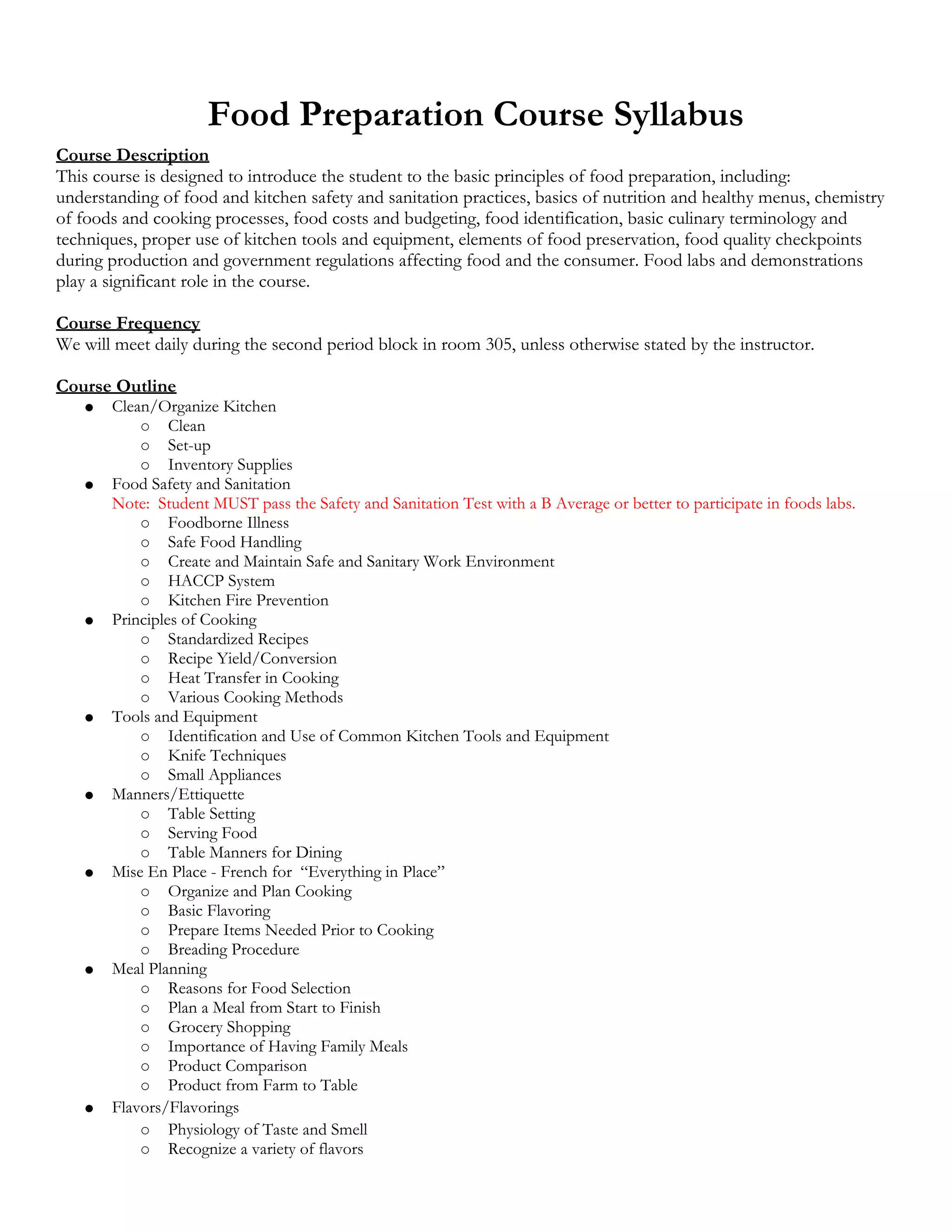
Food Preparation Course Syllabus
Course Description
This course is designed to introduce the student to the basic principles of food preparation, including:
understanding of food and kitchen safety and sanitation practices, basics of nutrition and healthy menus, chemistry
of foods and cooking processes, food costs and budgeting, food identification, basic culinary terminology and
techniques, proper use of kitchen tools and equipment, elements of food preservation, food quality checkpoints
during production and government regulations affecting food and the consumer. Food labs and demonstrations
play a significant role in the course.
Course Frequency
We will meet daily during the second period block in room 305, unless otherwise stated by the instructor.
Course Outline
● Clean/Organize Kitchen
○ Clean
○ Set-up
○ Inventory Supplies
● Food Safety and Sanitation
Note: Student MUST pass the Safety and Sanitation Test with a B Average or better to participate in foods labs.
○ Foodborne Illness
○ Safe Food Handling
○ Create and Maintain Safe and Sanitary Work Environment
○ HACCP System
○ Kitchen Fire Prevention
● Principles of Cooking
○ Standardized Recipes
○ Recipe Yield/Conversion
○ Heat Transfer in Cooking
○ Various Cooking Methods
● Tools and Equipment
○ Identification and Use of Common Kitchen Tools and Equipment
○ Knife Techniques
○ Small Appliances
● Manners/Ettiquette
○ Table Setting
○ Serving Food
○ Table Manners for Dining
● Mise En Place - French for “Everything in Place”
○ Organize and Plan Cooking
○ Basic Flavoring
○ Prepare Items Needed Prior to Cooking
○ Breading Procedure
● Meal Planning
○ Reasons for Food Selection
○ Plan a Meal from Start to Finish
○ Grocery Shopping
○ Importance of Having Family Meals
○ Product Comparison
○ Product from Farm to Table
● Flavors/Flavorings
○ Physiology of Taste and Smell
○ Recognize a variety of flavors
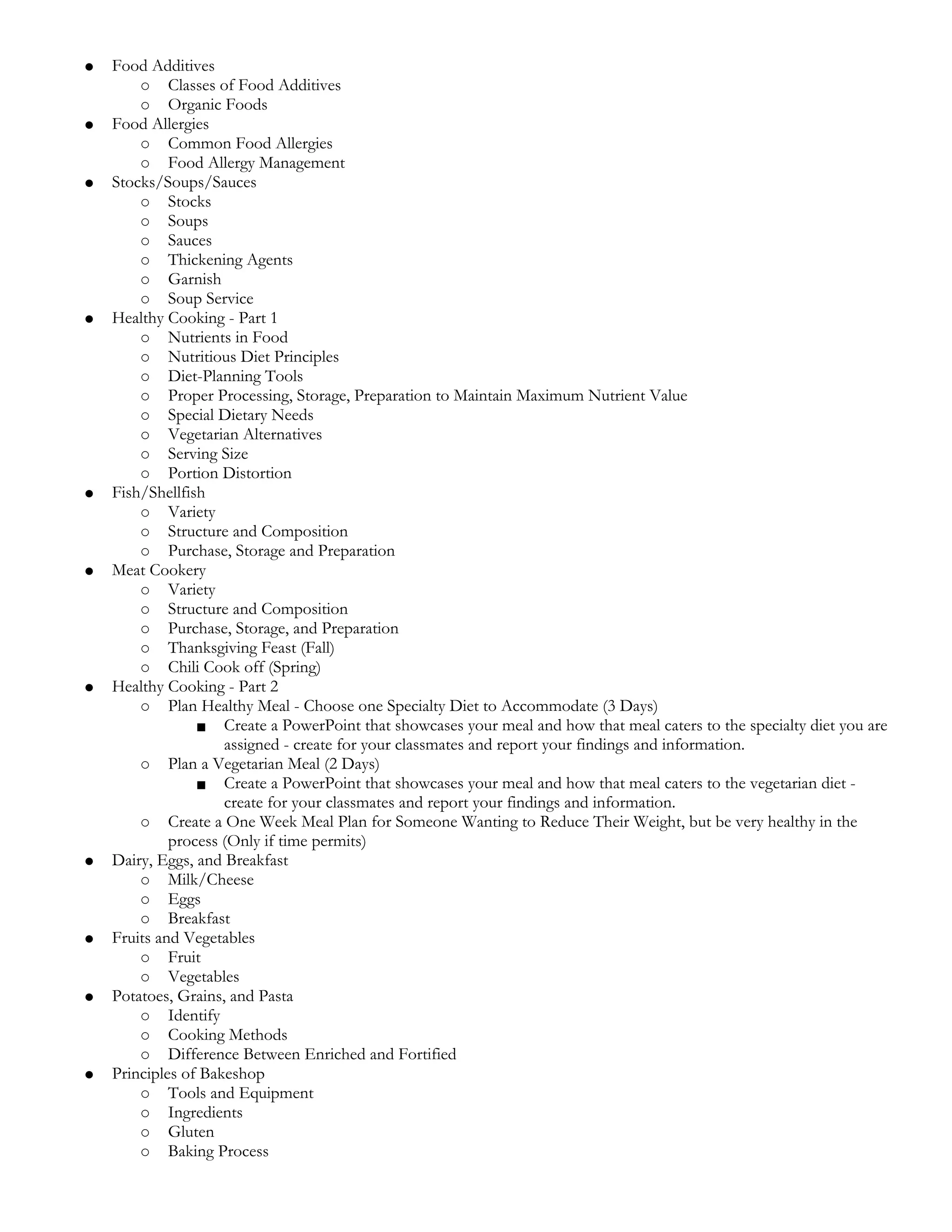
● Food Additives
○ Classes of Food Additives
○ Organic Foods
● Food Allergies
○ Common Food Allergies
○ Food Allergy Management
● Stocks/Soups/Sauces
○ Stocks
○ Soups
○ Sauces
○ Thickening Agents
○ Garnish
○ Soup Service
● Healthy Cooking - Part 1
○ Nutrients in Food
○ Nutritious Diet Principles
○ Diet-Planning Tools
○ Proper Processing, Storage, Preparation to Maintain Maximum Nutrient Value
○ Special Dietary Needs
○ Vegetarian Alternatives
○ Serving Size
○ Portion Distortion
● Fish/Shellfish
○ Variety
○ Structure and Composition
○ Purchase, Storage and Preparation
● Meat Cookery
○ Variety
○ Structure and Composition
○ Purchase, Storage, and Preparation
○ Thanksgiving Feast (Fall)
○ Chili Cook off (Spring)
● Healthy Cooking - Part 2
○ Plan Healthy Meal - Choose one Specialty Diet to Accommodate (3 Days)
■ Create a PowerPoint that showcases your meal and how that meal caters to the specialty diet you are
assigned - create for your classmates and report your findings and information.
○ Plan a Vegetarian Meal (2 Days)
■ Create a PowerPoint that showcases your meal and how that meal caters to the vegetarian diet -
create for your classmates and report your findings and information.
○ Create a One Week Meal Plan for Someone Wanting to Reduce Their Weight, but be very healthy in the
process (Only if time permits)
● Dairy, Eggs, and Breakfast
○ Milk/Cheese
○ Eggs
○ Breakfast
● Fruits and Vegetables
○ Fruit
○ Vegetables
● Potatoes, Grains, and Pasta
○ Identify
○ Cooking Methods
○ Difference Between Enriched and Fortified
● Principles of Bakeshop
○ Tools and Equipment
○ Ingredients
○ Gluten
○ Baking Process
● Pies, Pastries, and Cookies
○ Principles of Each
○ Pie
○ Pastry
○ Cookie
● Cakes and Frosting
○ Principles of Both
○ Assembly and Decorating
● Custards, Creams, Frozen Desserts, and Sauces
○ Principles of Each
● Quick Bread
○ Chemical Leavening Agents
○ Principles and Types
● Yeast Bread
○ Yeast selection and uses
○ 10 Steps
● Regional Foods Project and Presentation/Demonstration
● International Foods Project and Presentation/Demonstration - Final Exam Grade
Textbook
“On Cooking,” 5th Edition, Labensky, Hause, and Martel
“Foods Today,” Kowaltuk
“Complete Idiot's Guide to American Cooking”
Classroom Cookbooks
Materials Necessary
Duo Tang Folder or Three Ring Binder
Pen/Pencil
Hair Ties - for hair longer than shoulder length
Apron (suggested)
Class Responsibility
When students arrive in the classroom, and class time has begun, it is up to the student to get the necessary work
started and prompting by me to begin is not an absolute. If students are working in groups they may begin to work
in a group as soon as class time has begun.
Group Work
There are numerous times in this course when you will be paired or teamed up with one or more of your classmates
for project or challenge purposes. It is the responsibility of the “group” that you submit your work on time and
appropriately according to the activity guidelines. I will not accept excuses that a team member is out sick and the
project is with them or on their e-mail or H:Drive. If there is a problem and members of a group are not holding
their responsibility you need to make me aware before the project is due and not the actual day of it being due!
Any project that is submitted after the scheduled class time is considered late and will be treated as such. If you
are absent on the day a project is to be presented, it is up to you to make arrangements for an alternative means to
complete your presentation.
Absence
I adhere to the late work policy found in the student/parent handbook supplied to you by the Northwestern Lehigh
School District. It is your responsibility to see me if you have been out of class and to make a plan as to how and
when you will be making up the work. The only class exception to this is that if I have given you time during class
to complete a project and you are simply “finishing” it at home.
Technology Requirement
Each student MUST obtain the skills necessary in converting and presenting projects and ideas via a computer and
projector set-up in my classroom. The school computers are not equipped with the latest updated technology and
software; therefore if you have a computer at home that has newer software you must save your work accordingly
and have it prepared and ready when an assignment is DUE not after or it will be deemed late. Any project that
is submitted after the scheduled class time is considered late and will be treated as such. I adhere to the late work
policy found in the student/parent handbook supplied to you by the Northwestern Lehigh School District. For
the purposes of this class we will utilize Google Gmail and Google Docs. I will provide you with a course specific
account.
Project Deadlines
There are times within the semester we will work on a project that takes us longer to complete and it is up to me as
to whether I extend the due date. Due dates are posted on the whiteboard and should be checked daily for changes.
Grading Scale
Assessments ~ 60%
Homework ~ 20%
Classwork ~ 20%
Final Exam ~ 20% of Final Grade
Final Exam
The final exam for Food Preparation is project based. The project is a comprehensive research and cooking
demonstration based on a foreign culture and its’ food. Project guidelines will be shared at the time of the final.
We will be working on the final exam and presentations for approximately 8 class periods. All work will be
completed during the regularly scheduled class period - students are not permitted to work on this assignment at
home.
Instructor: Shay A. Wagner, wagners@nwlehighsd.org 610.298.8661 Ext. 2303
Parents/Students: Please return the bottom portion of this page in acknowledgement of the course syllabus and
outline.
Parent: ______________________________________________ Date: __________________
Parent E-mail__________________________________________
Student: _____________________________________________ Date: __________________
I appreciate your feedback and any questions or concerns you may have. Please feel free to write any comments
below or on the back of this sheet. Please include all necessary information regarding food allergies as this is a very
comprehensive foods course. Thank you and I wish you and your child a great semester!
~Shay A. Wagner

Foodscoursesyllabusforpdf (1)

  • 1.
    Food Preparation CourseSyllabus Course Description This course is designed to introduce the student to the basic principles of food preparation, including: understanding of food and kitchen safety and sanitation practices, basics of nutrition and healthy menus, chemistry of foods and cooking processes, food costs and budgeting, food identification, basic culinary terminology and techniques, proper use of kitchen tools and equipment, elements of food preservation, food quality checkpoints during production and government regulations affecting food and the consumer. Food labs and demonstrations play a significant role in the course. Course Frequency We will meet daily during the second period block in room 305, unless otherwise stated by the instructor. Course Outline ● Clean/Organize Kitchen ○ Clean ○ Set-up ○ Inventory Supplies ● Food Safety and Sanitation Note: Student MUST pass the Safety and Sanitation Test with a B Average or better to participate in foods labs. ○ Foodborne Illness ○ Safe Food Handling ○ Create and Maintain Safe and Sanitary Work Environment ○ HACCP System ○ Kitchen Fire Prevention ● Principles of Cooking ○ Standardized Recipes ○ Recipe Yield/Conversion ○ Heat Transfer in Cooking ○ Various Cooking Methods ● Tools and Equipment ○ Identification and Use of Common Kitchen Tools and Equipment ○ Knife Techniques ○ Small Appliances ● Manners/Ettiquette ○ Table Setting ○ Serving Food ○ Table Manners for Dining ● Mise En Place - French for “Everything in Place” ○ Organize and Plan Cooking ○ Basic Flavoring ○ Prepare Items Needed Prior to Cooking ○ Breading Procedure ● Meal Planning ○ Reasons for Food Selection ○ Plan a Meal from Start to Finish ○ Grocery Shopping ○ Importance of Having Family Meals ○ Product Comparison ○ Product from Farm to Table ● Flavors/Flavorings ○ Physiology of Taste and Smell ○ Recognize a variety of flavors
  • 2.
    ● Food Additives ○Classes of Food Additives ○ Organic Foods ● Food Allergies ○ Common Food Allergies ○ Food Allergy Management ● Stocks/Soups/Sauces ○ Stocks ○ Soups ○ Sauces ○ Thickening Agents ○ Garnish ○ Soup Service ● Healthy Cooking - Part 1 ○ Nutrients in Food ○ Nutritious Diet Principles ○ Diet-Planning Tools ○ Proper Processing, Storage, Preparation to Maintain Maximum Nutrient Value ○ Special Dietary Needs ○ Vegetarian Alternatives ○ Serving Size ○ Portion Distortion ● Fish/Shellfish ○ Variety ○ Structure and Composition ○ Purchase, Storage and Preparation ● Meat Cookery ○ Variety ○ Structure and Composition ○ Purchase, Storage, and Preparation ○ Thanksgiving Feast (Fall) ○ Chili Cook off (Spring) ● Healthy Cooking - Part 2 ○ Plan Healthy Meal - Choose one Specialty Diet to Accommodate (3 Days) ■ Create a PowerPoint that showcases your meal and how that meal caters to the specialty diet you are assigned - create for your classmates and report your findings and information. ○ Plan a Vegetarian Meal (2 Days) ■ Create a PowerPoint that showcases your meal and how that meal caters to the vegetarian diet - create for your classmates and report your findings and information. ○ Create a One Week Meal Plan for Someone Wanting to Reduce Their Weight, but be very healthy in the process (Only if time permits) ● Dairy, Eggs, and Breakfast ○ Milk/Cheese ○ Eggs ○ Breakfast ● Fruits and Vegetables ○ Fruit ○ Vegetables ● Potatoes, Grains, and Pasta ○ Identify ○ Cooking Methods ○ Difference Between Enriched and Fortified ● Principles of Bakeshop ○ Tools and Equipment ○ Ingredients ○ Gluten ○ Baking Process
  • 3.
    ● Pies, Pastries,and Cookies ○ Principles of Each ○ Pie ○ Pastry ○ Cookie ● Cakes and Frosting ○ Principles of Both ○ Assembly and Decorating ● Custards, Creams, Frozen Desserts, and Sauces ○ Principles of Each ● Quick Bread ○ Chemical Leavening Agents ○ Principles and Types ● Yeast Bread ○ Yeast selection and uses ○ 10 Steps ● Regional Foods Project and Presentation/Demonstration ● International Foods Project and Presentation/Demonstration - Final Exam Grade Textbook “On Cooking,” 5th Edition, Labensky, Hause, and Martel “Foods Today,” Kowaltuk “Complete Idiot's Guide to American Cooking” Classroom Cookbooks Materials Necessary Duo Tang Folder or Three Ring Binder Pen/Pencil Hair Ties - for hair longer than shoulder length Apron (suggested) Class Responsibility When students arrive in the classroom, and class time has begun, it is up to the student to get the necessary work started and prompting by me to begin is not an absolute. If students are working in groups they may begin to work in a group as soon as class time has begun. Group Work There are numerous times in this course when you will be paired or teamed up with one or more of your classmates for project or challenge purposes. It is the responsibility of the “group” that you submit your work on time and appropriately according to the activity guidelines. I will not accept excuses that a team member is out sick and the project is with them or on their e-mail or H:Drive. If there is a problem and members of a group are not holding their responsibility you need to make me aware before the project is due and not the actual day of it being due! Any project that is submitted after the scheduled class time is considered late and will be treated as such. If you are absent on the day a project is to be presented, it is up to you to make arrangements for an alternative means to complete your presentation. Absence I adhere to the late work policy found in the student/parent handbook supplied to you by the Northwestern Lehigh School District. It is your responsibility to see me if you have been out of class and to make a plan as to how and when you will be making up the work. The only class exception to this is that if I have given you time during class to complete a project and you are simply “finishing” it at home.
  • 4.
    Technology Requirement Each studentMUST obtain the skills necessary in converting and presenting projects and ideas via a computer and projector set-up in my classroom. The school computers are not equipped with the latest updated technology and software; therefore if you have a computer at home that has newer software you must save your work accordingly and have it prepared and ready when an assignment is DUE not after or it will be deemed late. Any project that is submitted after the scheduled class time is considered late and will be treated as such. I adhere to the late work policy found in the student/parent handbook supplied to you by the Northwestern Lehigh School District. For the purposes of this class we will utilize Google Gmail and Google Docs. I will provide you with a course specific account. Project Deadlines There are times within the semester we will work on a project that takes us longer to complete and it is up to me as to whether I extend the due date. Due dates are posted on the whiteboard and should be checked daily for changes. Grading Scale Assessments ~ 60% Homework ~ 20% Classwork ~ 20% Final Exam ~ 20% of Final Grade Final Exam The final exam for Food Preparation is project based. The project is a comprehensive research and cooking demonstration based on a foreign culture and its’ food. Project guidelines will be shared at the time of the final. We will be working on the final exam and presentations for approximately 8 class periods. All work will be completed during the regularly scheduled class period - students are not permitted to work on this assignment at home. Instructor: Shay A. Wagner, wagners@nwlehighsd.org 610.298.8661 Ext. 2303 Parents/Students: Please return the bottom portion of this page in acknowledgement of the course syllabus and outline. Parent: ______________________________________________ Date: __________________ Parent E-mail__________________________________________ Student: _____________________________________________ Date: __________________ I appreciate your feedback and any questions or concerns you may have. Please feel free to write any comments below or on the back of this sheet. Please include all necessary information regarding food allergies as this is a very comprehensive foods course. Thank you and I wish you and your child a great semester! ~Shay A. Wagner