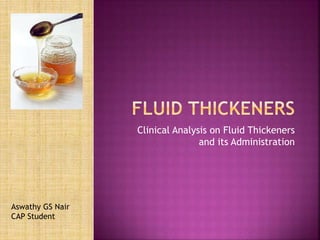


Clinical Analysis on Fluid Thickeners
and its Administration
Aswathy GS Nair
CAP Student
Contents
 Introduction
 Evidences Used
 Definition and Types
 Formulation
 Clinical Indication
 Analysis
 RN Responsibility
 Conclusion
Introduction
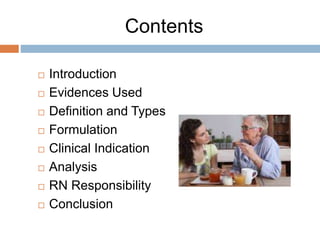
◦ At any times in care homes, there will be residents
with impaired ability to eat and drink safely.
◦ Dysphagia also put people at risk of malnutrition,
dehydration, aspiration pneumonia and chocking.
◦ Normal aging reduces muscle tone in pharynx and
oesophagus
◦ Residents with dementia may even forget some of
their daily living activities including chewing and
swallowing
 Penny B (2014); Use of fluid thickener o reduce dysphagia risk; NursingTimesVol
110 No 12, 19-03-2014
 Zuckerman D (2013);Thickeners and other ways to help older adults with
swallowing problems
 Hines S et al (2010);Thickened fluids for people with dementia in residential aged
care facilities; School of Nursing,Queensland University ofTechnology, Australia
 Cichero J (2013);Thickening agents used for dysphagia management; effect of
bioavailability of water, medication and feeling of satiety; School of pharmacy,
Queensland, Australia
Definition
 Thickened fluids are formulations that have a thickener added to
make them thicker.
 Thickener is a substance which can increase the viscosity of a
liquid without substantially changing its other properties.
 The goal of using thickeners is to make all liquids, including
beverages into a thicker consistency that is less likely to cause
aspiration
Types
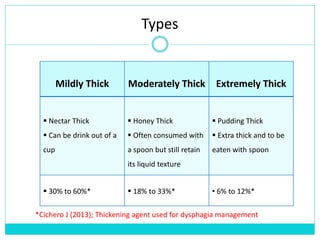
Mildly Thick Moderately Thick Extremely Thick
 Nectar Thick
 Can be drink out of a
cup
 Honey Thick
 Often consumed with
a spoon but still retain
its liquid texture
 Pudding Thick
 Extra thick and to be
eaten with spoon
 30% to 60%*  18% to 33%* • 6% to 12%*
*Cichero J (2013); Thickening agent used for dysphagia management
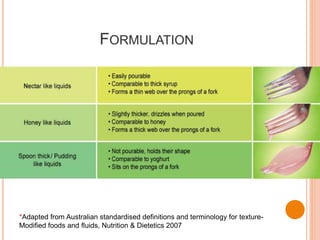
FORMULATION
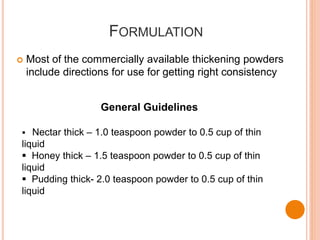
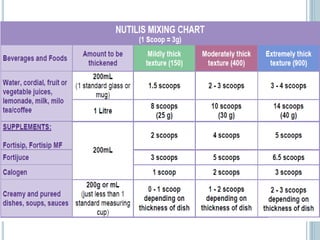
 Most of the commercially available thickening powders
include directions for use for getting right consistency
General Guidelines
 Nectar thick – 1.0 teaspoon powder to 0.5 cup of thin
liquid
 Honey thick – 1.5 teaspoon powder to 0.5 cup of thin
liquid
 Pudding thick- 2.0 teaspoon powder to 0.5 cup of thin
liquid
FORMULATION
*Adapted from Australian standardised definitions and terminology for texture-
Modified foods and fluids, Nutrition & Dietetics 2007
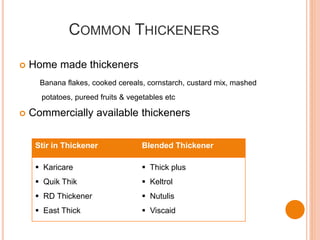
COMMON THICKENERS
 Home made thickeners
Banana flakes, cooked cereals, cornstarch, custard mix, mashed
potatoes, pureed fruits & vegetables etc
 Commercially available thickeners
Stir in Thickener Blended Thickener
 Karicare
 Quik Thik
 RD Thickener
 East Thick
 Thick plus
 Keltrol
 Nutulis
 Viscaid
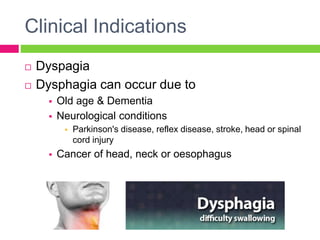
Clinical Indications
 Dyspagia
 Dysphagia can occur due to
 Old age & Dementia
 Neurological conditions
 Parkinson's disease, reflex disease, stroke, head or spinal
cord injury
 Cancer of head, neck or oesophagus
(Actual name and identification details of residents are withheld to adhere to the
privacy policy)
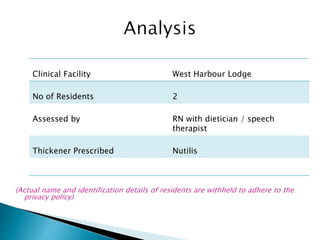
Clinical Facility West Harbour Lodge
No of Residents 2
Assessed by RN with dietician / speech
therapist
Thickener Prescribed Nutilis
Result
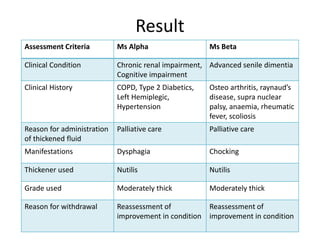
Assessment Criteria Ms Alpha Ms Beta
Clinical Condition Chronic renal impairment,
Cognitive impairment
Advanced senile dimentia
Clinical History COPD, Type 2 Diabetics,
Left Hemiplegic,
Hypertension
Osteo arthritis, raynaud’s
disease, supra nuclear
palsy, anaemia, rheumatic
fever, scoliosis
Reason for administration
of thickened fluid
Palliative care Palliative care
Manifestations Dysphagia Chocking
Thickener used Nutilis Nutilis
Grade used Moderately thick Moderately thick
Reason for withdrawal Reassessment of
improvement in condition
Reassessment of
improvement in condition
RN Responsibility
RN Responsibility
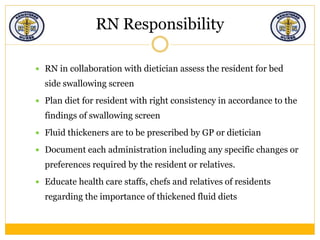
 RN in collaboration with dietician assess the resident for bed
side swallowing screen
 Plan diet for resident with right consistency in accordance to the
findings of swallowing screen
 Fluid thickeners are to be prescribed by GP or dietician
 Document each administration including any specific changes or
preferences required by the resident or relatives.
 Educate health care staffs, chefs and relatives of residents
regarding the importance of thickened fluid diets
RN Responsibility
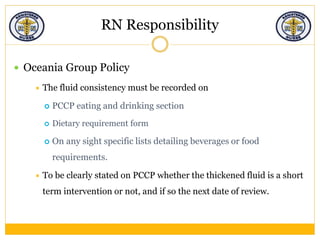
 Oceania Group Policy
 The fluid consistency must be recorded on
 PCCP eating and drinking section
 Dietary requirement form
 On any sight specific lists detailing beverages or food
requirements.
 To be clearly stated on PCCP whether the thickened fluid is a short
term intervention or not, and if so the next date of review.
Fluid Thickeners

Fluid Thickeners

  • 1.
    Clinical Analysis onFluid Thickeners and its Administration Aswathy GS Nair CAP Student
  • 2.
    Contents  Introduction  EvidencesUsed  Definition and Types  Formulation  Clinical Indication  Analysis  RN Responsibility  Conclusion
  • 3.
    Introduction ◦ At anytimes in care homes, there will be residents with impaired ability to eat and drink safely. ◦ Dysphagia also put people at risk of malnutrition, dehydration, aspiration pneumonia and chocking. ◦ Normal aging reduces muscle tone in pharynx and oesophagus ◦ Residents with dementia may even forget some of their daily living activities including chewing and swallowing
  • 4.
     Penny B(2014); Use of fluid thickener o reduce dysphagia risk; NursingTimesVol 110 No 12, 19-03-2014  Zuckerman D (2013);Thickeners and other ways to help older adults with swallowing problems  Hines S et al (2010);Thickened fluids for people with dementia in residential aged care facilities; School of Nursing,Queensland University ofTechnology, Australia  Cichero J (2013);Thickening agents used for dysphagia management; effect of bioavailability of water, medication and feeling of satiety; School of pharmacy, Queensland, Australia
  • 5.
    Definition  Thickened fluidsare formulations that have a thickener added to make them thicker.  Thickener is a substance which can increase the viscosity of a liquid without substantially changing its other properties.  The goal of using thickeners is to make all liquids, including beverages into a thicker consistency that is less likely to cause aspiration
  • 6.
    Types Mildly Thick ModeratelyThick Extremely Thick  Nectar Thick  Can be drink out of a cup  Honey Thick  Often consumed with a spoon but still retain its liquid texture  Pudding Thick  Extra thick and to be eaten with spoon  30% to 60%*  18% to 33%* • 6% to 12%* *Cichero J (2013); Thickening agent used for dysphagia management
  • 7.
    FORMULATION  Most ofthe commercially available thickening powders include directions for use for getting right consistency General Guidelines  Nectar thick – 1.0 teaspoon powder to 0.5 cup of thin liquid  Honey thick – 1.5 teaspoon powder to 0.5 cup of thin liquid  Pudding thick- 2.0 teaspoon powder to 0.5 cup of thin liquid
  • 8.
    FORMULATION *Adapted from Australianstandardised definitions and terminology for texture- Modified foods and fluids, Nutrition & Dietetics 2007
  • 10.
    COMMON THICKENERS  Homemade thickeners Banana flakes, cooked cereals, cornstarch, custard mix, mashed potatoes, pureed fruits & vegetables etc  Commercially available thickeners Stir in Thickener Blended Thickener  Karicare  Quik Thik  RD Thickener  East Thick  Thick plus  Keltrol  Nutulis  Viscaid
  • 11.
    Clinical Indications  Dyspagia Dysphagia can occur due to  Old age & Dementia  Neurological conditions  Parkinson's disease, reflex disease, stroke, head or spinal cord injury  Cancer of head, neck or oesophagus
  • 12.
    (Actual name andidentification details of residents are withheld to adhere to the privacy policy) Clinical Facility West Harbour Lodge No of Residents 2 Assessed by RN with dietician / speech therapist Thickener Prescribed Nutilis
  • 13.
    Result Assessment Criteria MsAlpha Ms Beta Clinical Condition Chronic renal impairment, Cognitive impairment Advanced senile dimentia Clinical History COPD, Type 2 Diabetics, Left Hemiplegic, Hypertension Osteo arthritis, raynaud’s disease, supra nuclear palsy, anaemia, rheumatic fever, scoliosis Reason for administration of thickened fluid Palliative care Palliative care Manifestations Dysphagia Chocking Thickener used Nutilis Nutilis Grade used Moderately thick Moderately thick Reason for withdrawal Reassessment of improvement in condition Reassessment of improvement in condition
  • 14.
  • 15.
    RN Responsibility  RNin collaboration with dietician assess the resident for bed side swallowing screen  Plan diet for resident with right consistency in accordance to the findings of swallowing screen  Fluid thickeners are to be prescribed by GP or dietician  Document each administration including any specific changes or preferences required by the resident or relatives.  Educate health care staffs, chefs and relatives of residents regarding the importance of thickened fluid diets
  • 16.
    RN Responsibility  OceaniaGroup Policy  The fluid consistency must be recorded on  PCCP eating and drinking section  Dietary requirement form  On any sight specific lists detailing beverages or food requirements.  To be clearly stated on PCCP whether the thickened fluid is a short term intervention or not, and if so the next date of review.