Prepared by,
Mujtaba Moosawi
S.Inst Technician
ASSESSMENT
 Mention 3 final control elements.
 What is the function of final control element?
 What are the types of actuators?
 What are the types of valves?
MAIN POINTS
Final Control Element:
 What is a final control element?
 Process Parameters
 Control valve components.
Actuators & Valves:
 Types of actuators
 Types of valves
 Valve Accessories.
Troubleshooting:
 Valve characteristics
 Control valves Challenges
 Control Valves Troubleshooting.
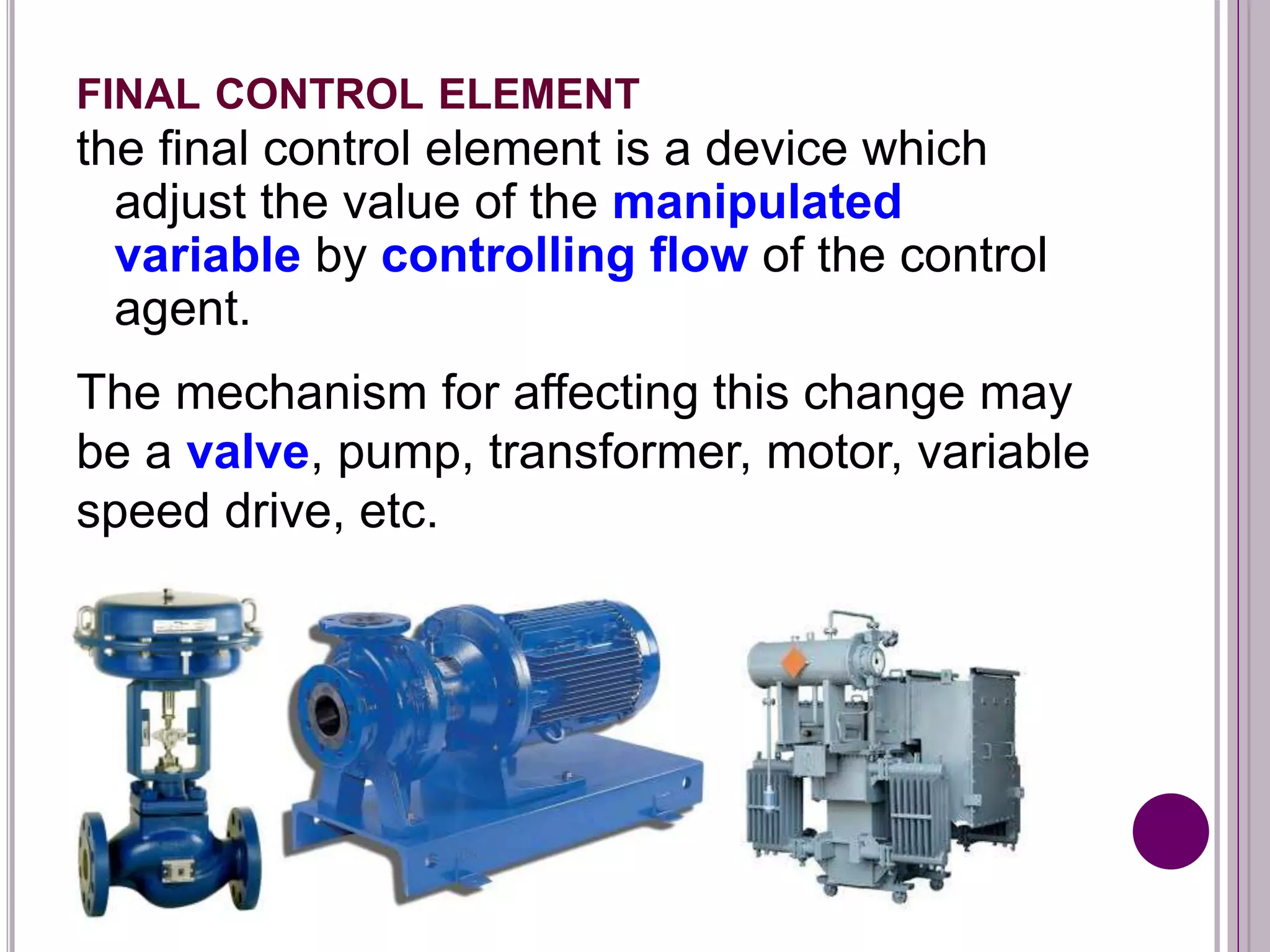
FINAL CONTROL ELEMENT
the final control element is a device which
adjust the value of the manipulated
variable by controlling flow of the control
agent.
The mechanism for affecting this change may
be a valve, pump, transformer, motor, variable
speed drive, etc.
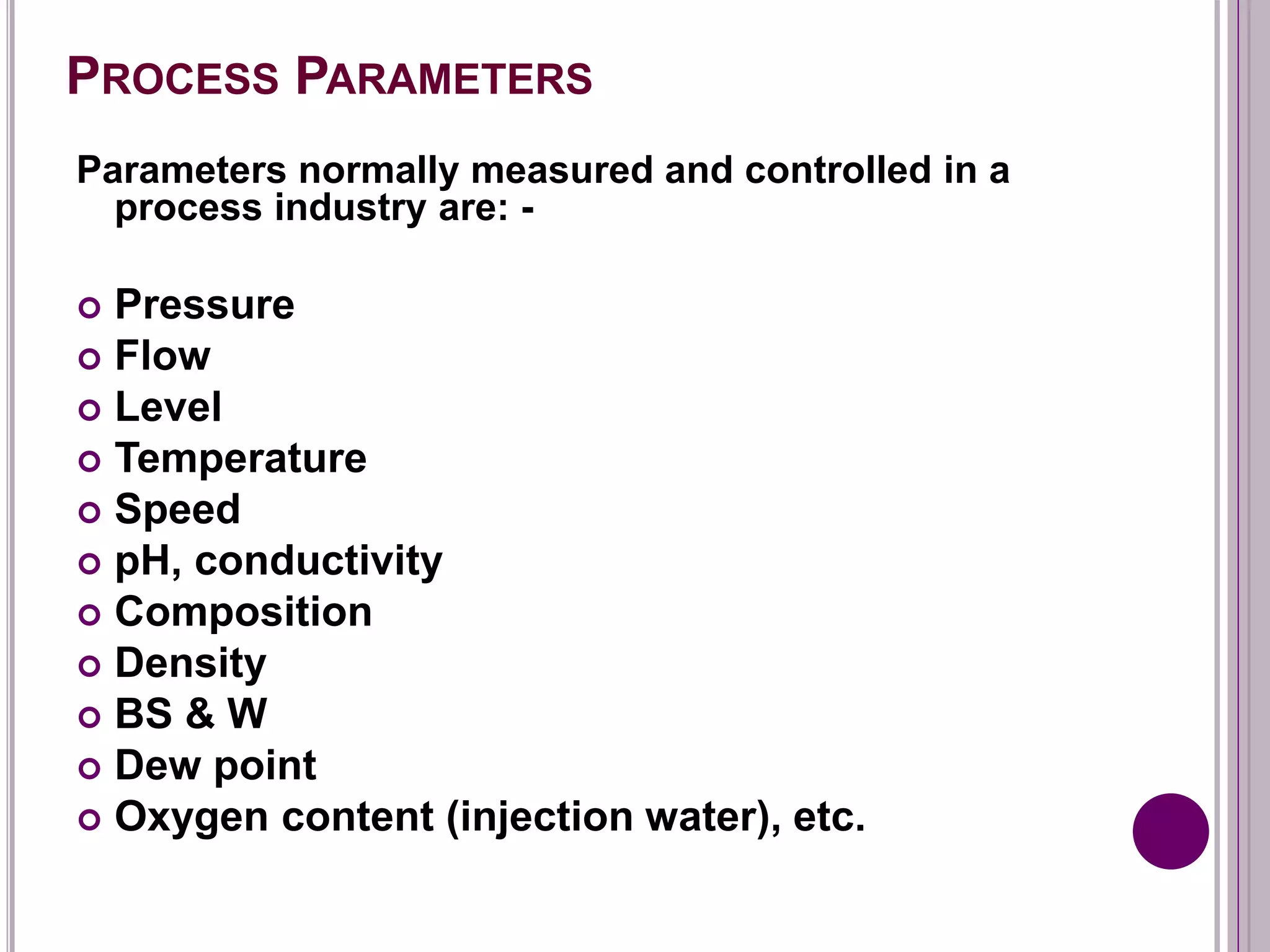
PROCESS PARAMETERS
Parameters normally measured and controlled in a
process industry are: -
 Pressure
 Flow
 Level
 Temperature
 Speed
 pH, conductivity
 Composition
 Density
 BS & W
 Dew point
 Oxygen content (injection water), etc.
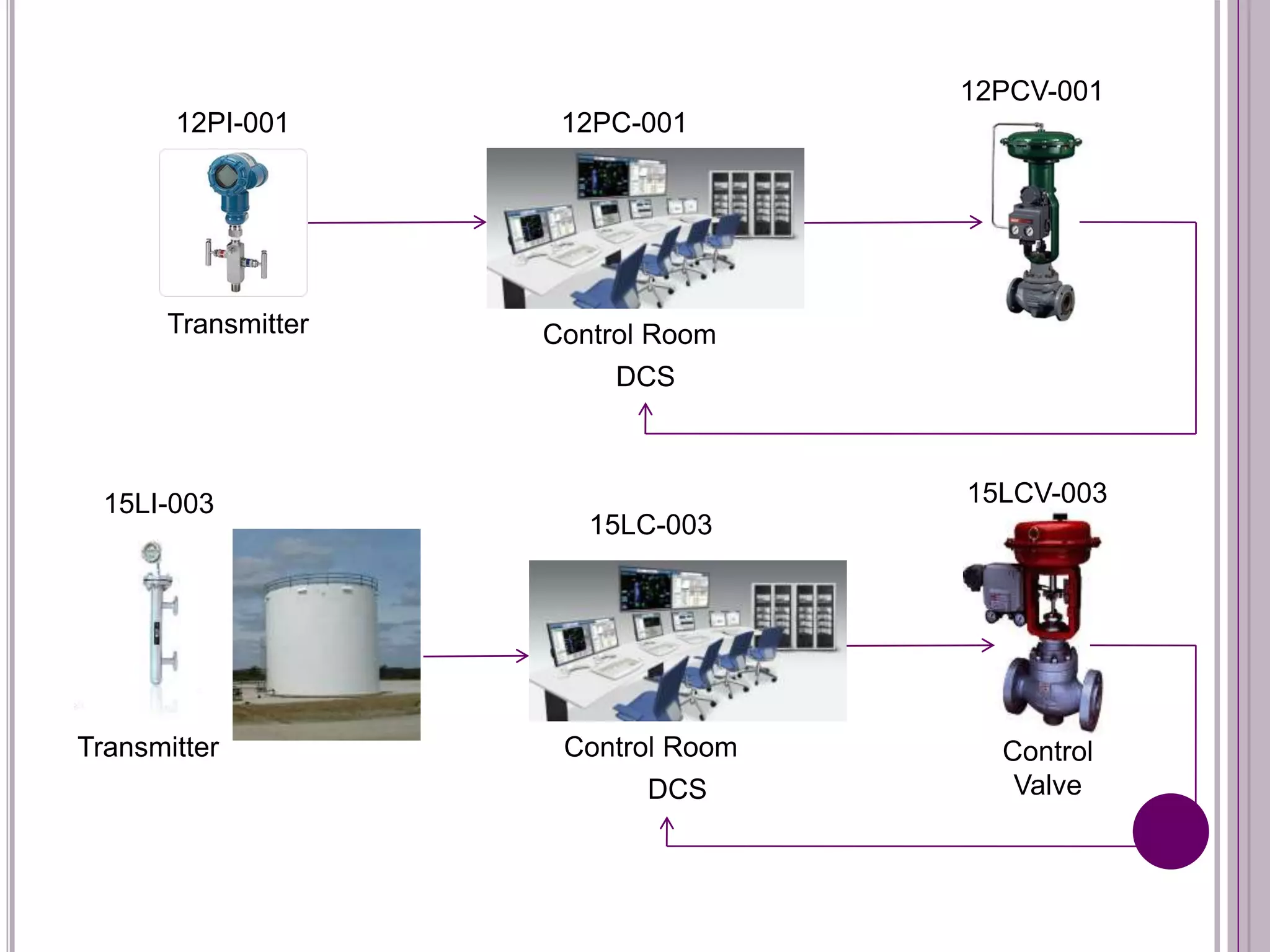
12PI-001 12PC-001
12PCV-001
Transmitter
Control Room
DCS
Control
Valve
Control Room
DCS
15LI-003
15LC-003
15LCV-003
Transmitter
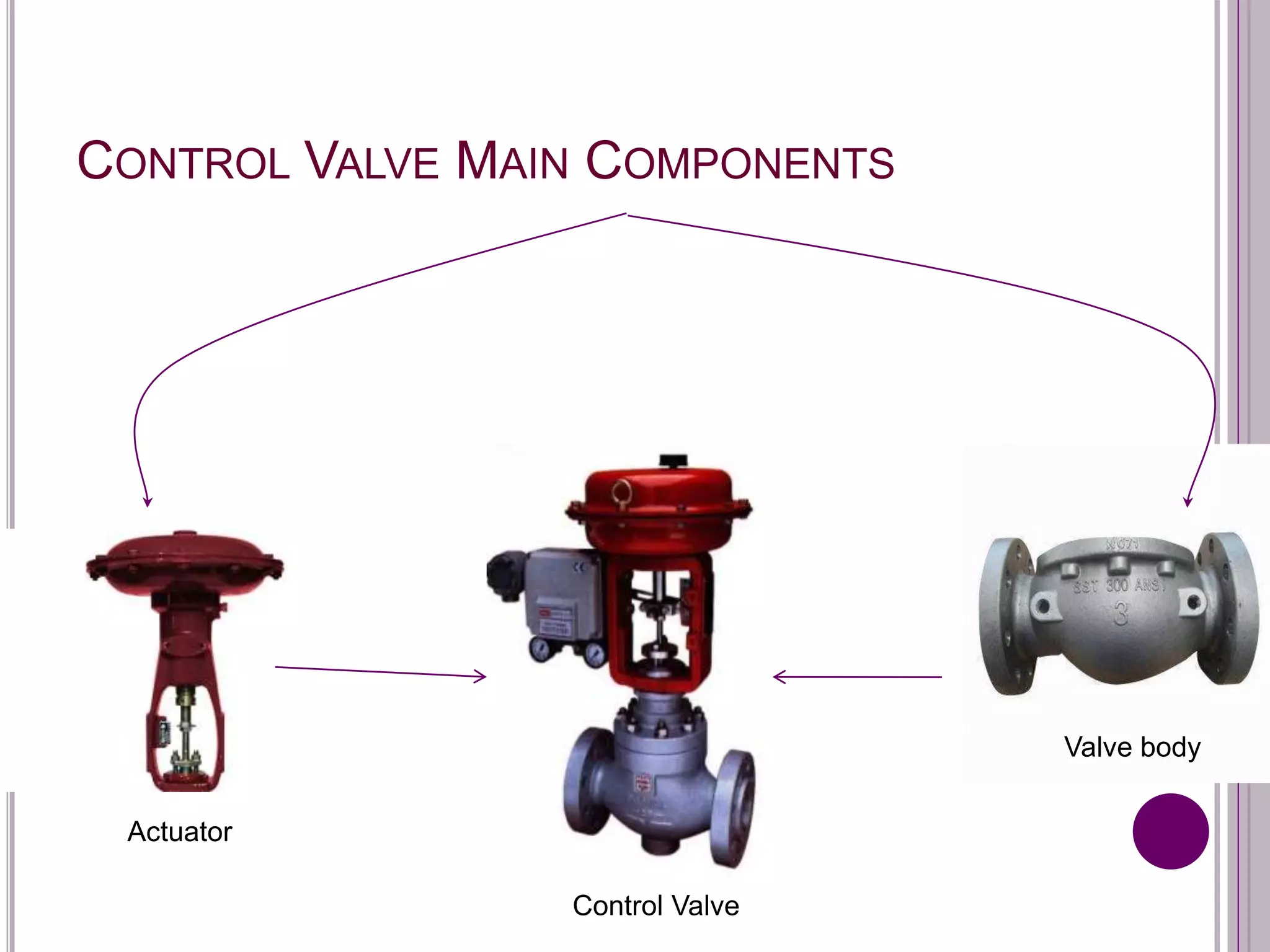
CONTROL VALVE MAIN COMPONENTS
Actuator
Valve body
Control Valve
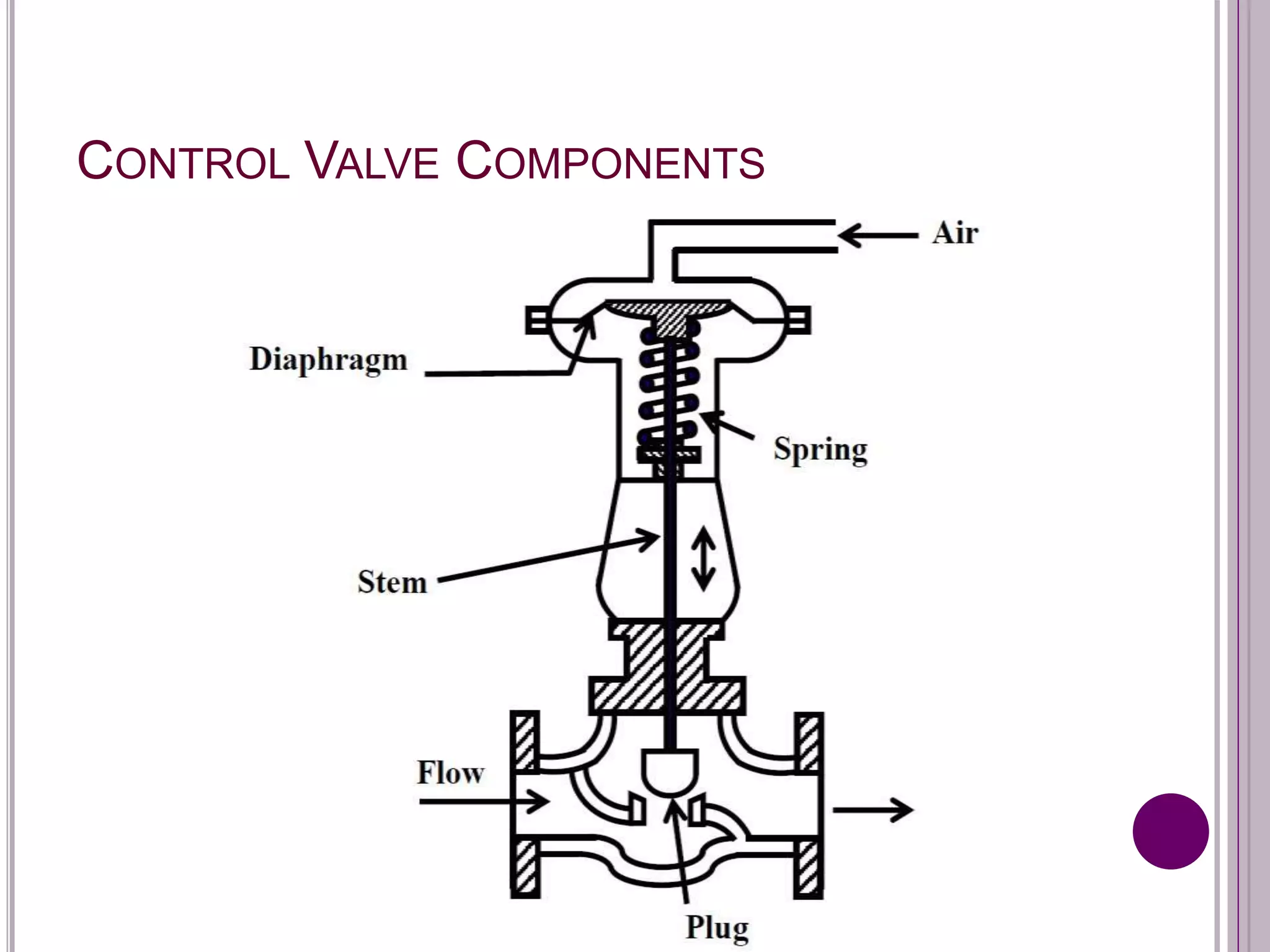
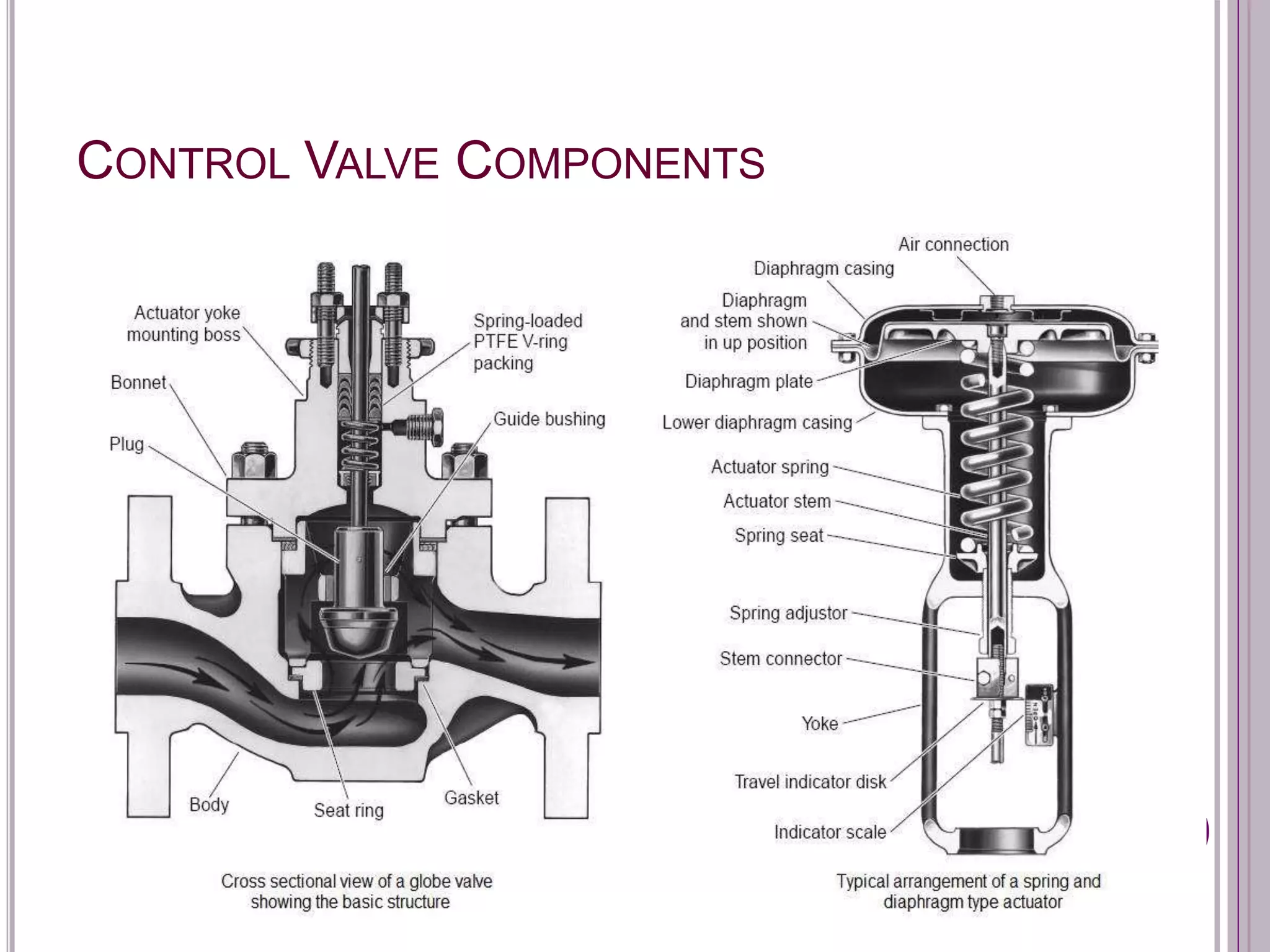
CONTROL VALVE COMPONENTS
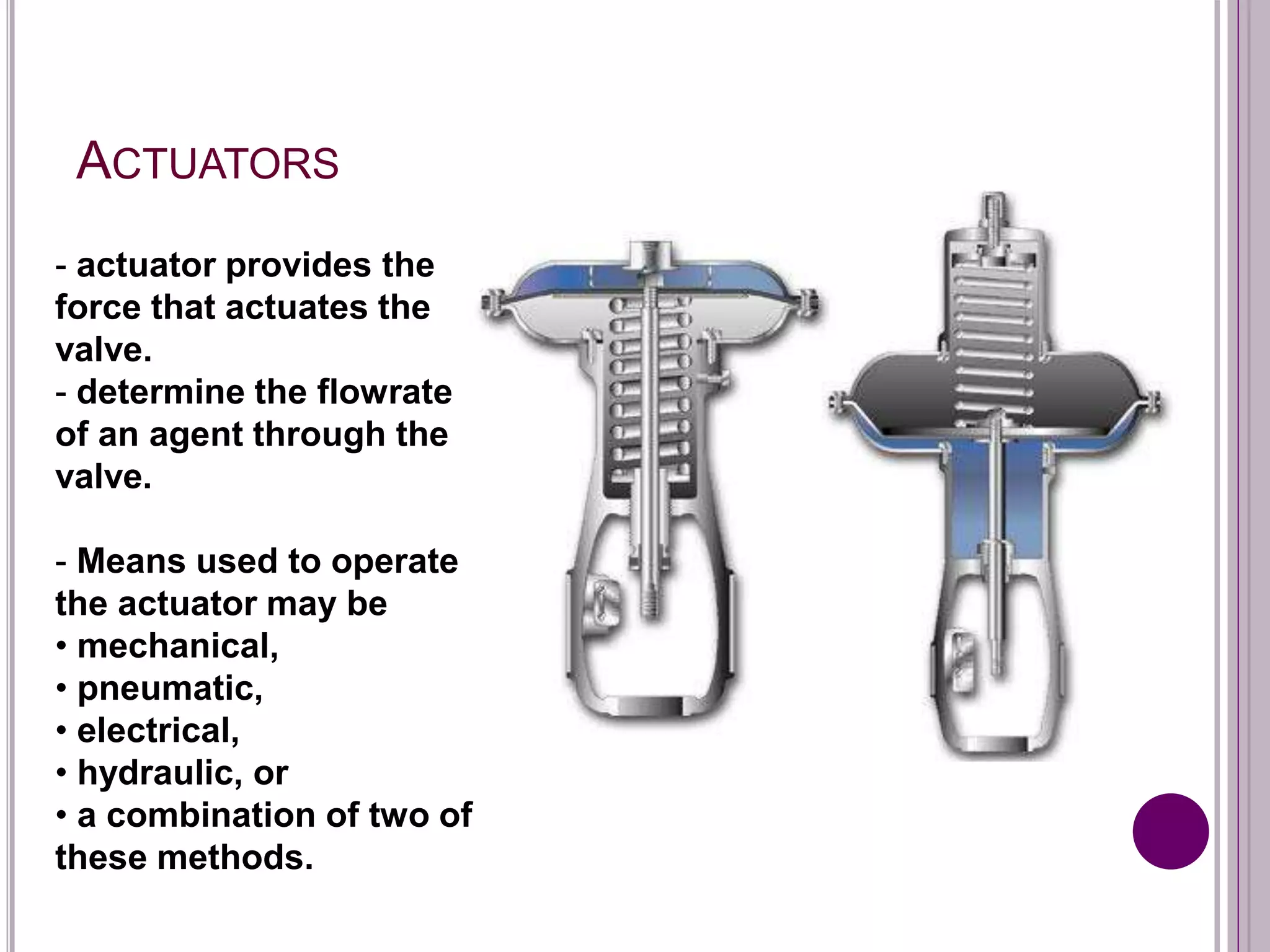
ACTUATORS
- actuator provides the
force that actuates the
valve.
- determine the flowrate
of an agent through the
valve.
- Means used to operate
the actuator may be
• mechanical,
• pneumatic,
• electrical,
• hydraulic, or
• a combination of two of
these methods.
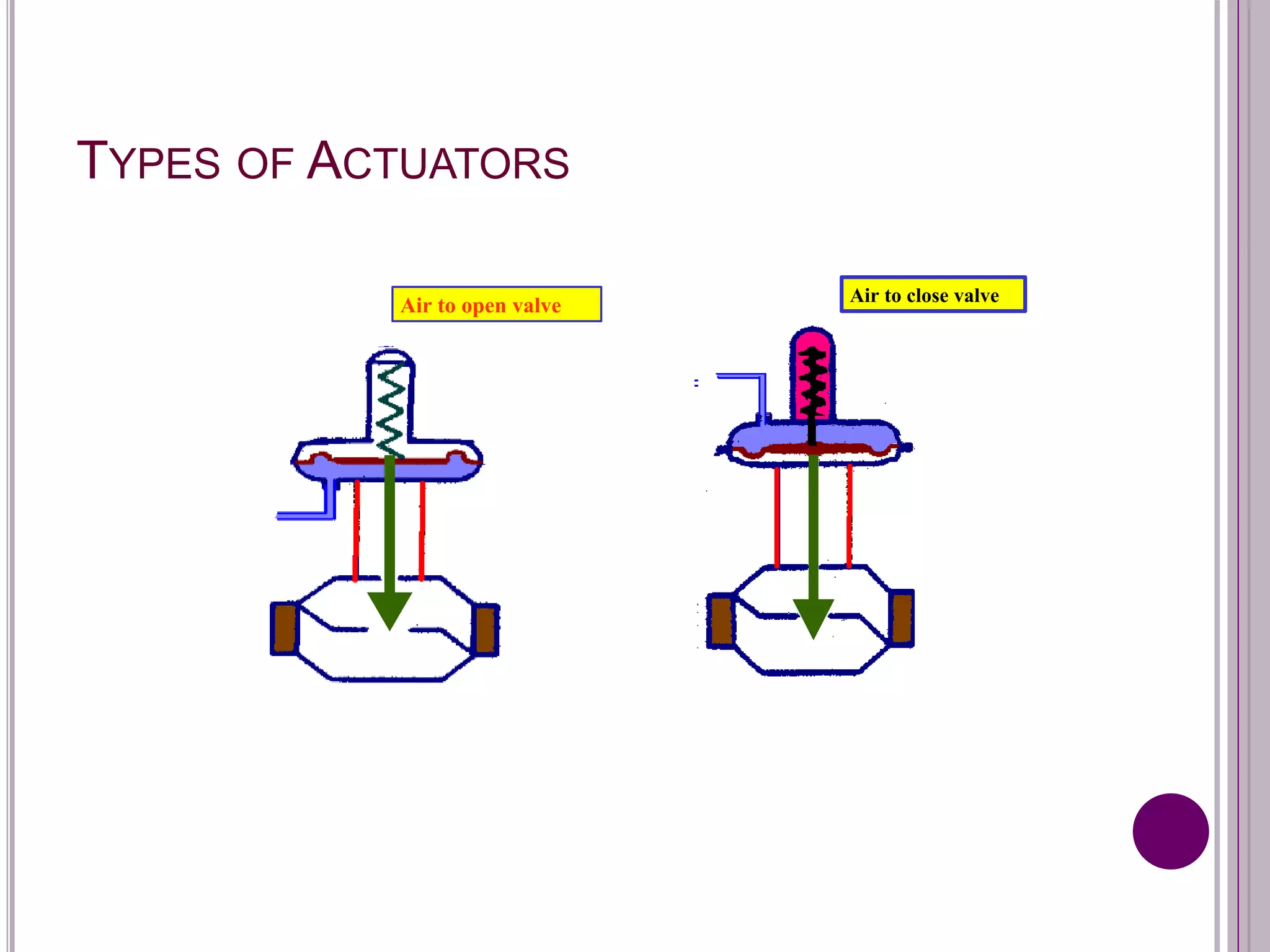
TYPES OF ACTUATORS
Air to close valve
Air to open valve
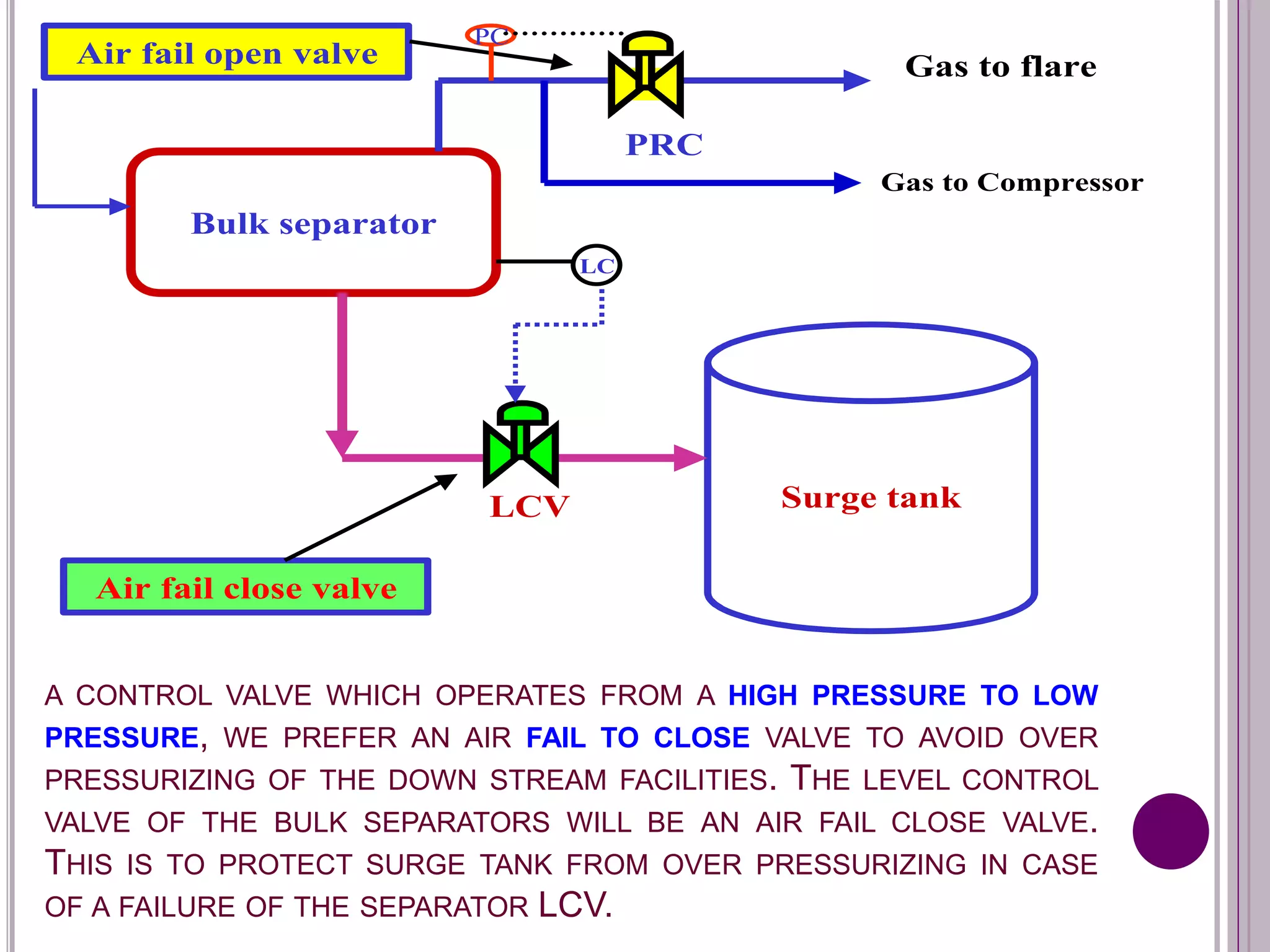
A CONTROL VALVE WHICH OPERATES FROM A HIGH PRESSURE TO LOW
PRESSURE, WE PREFER AN AIR FAIL TO CLOSE VALVE TO AVOID OVER
PRESSURIZING OF THE DOWN STREAM FACILITIES. THE LEVEL CONTROL
VALVE OF THE BULK SEPARATORS WILL BE AN AIR FAIL CLOSE VALVE.
THIS IS TO PROTECT SURGE TANK FROM OVER PRESSURIZING IN CASE
OF A FAILURE OF THE SEPARATOR LCV.
Bulk separator
Surge tankLCV
PRC
Gas to flare
Air fail close valve
Air fail open valve
LC
PC
Gas to Compressor
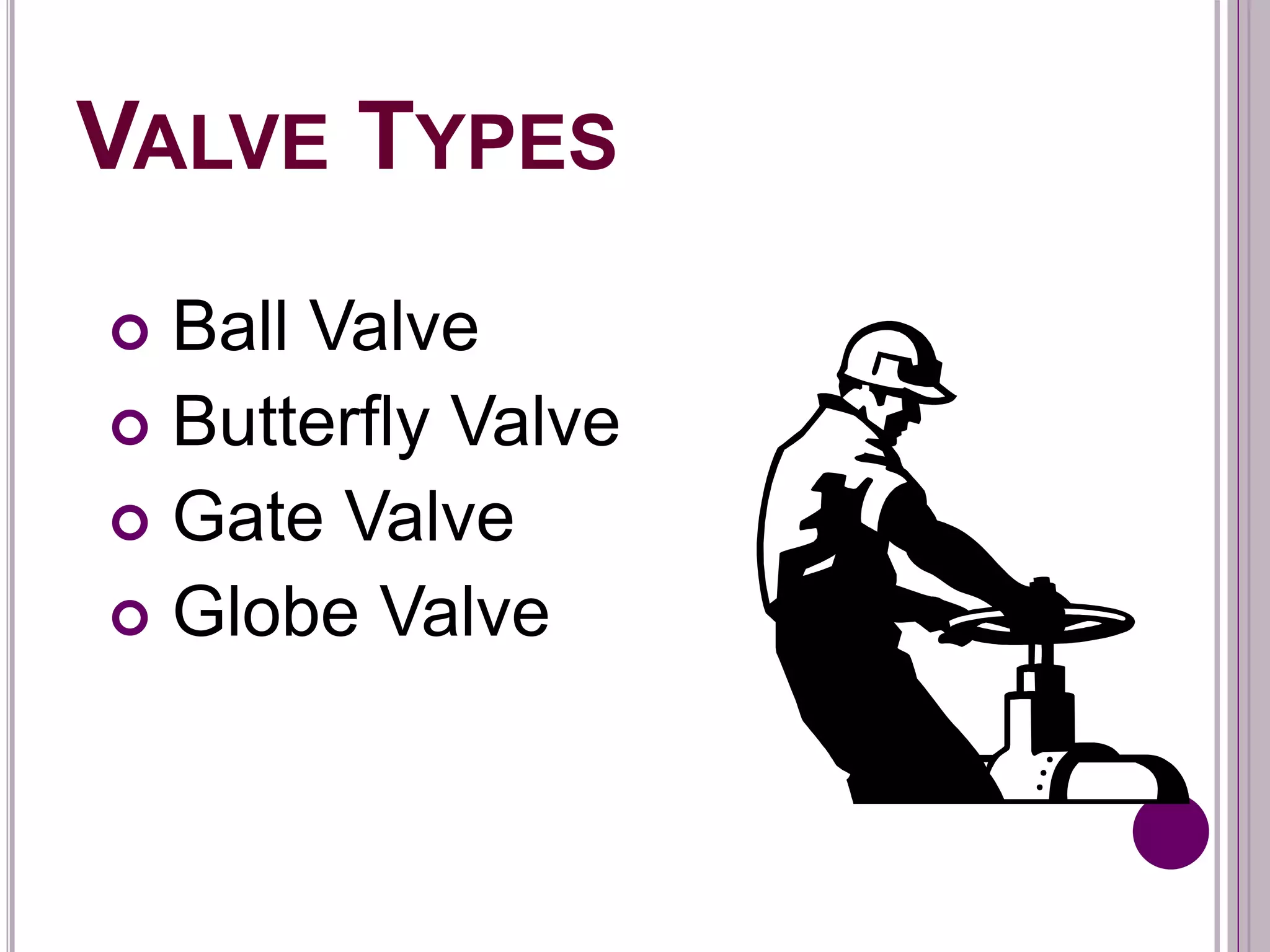
VALVE TYPES
 Ball Valve
 Butterfly Valve
 Gate Valve
 Globe Valve
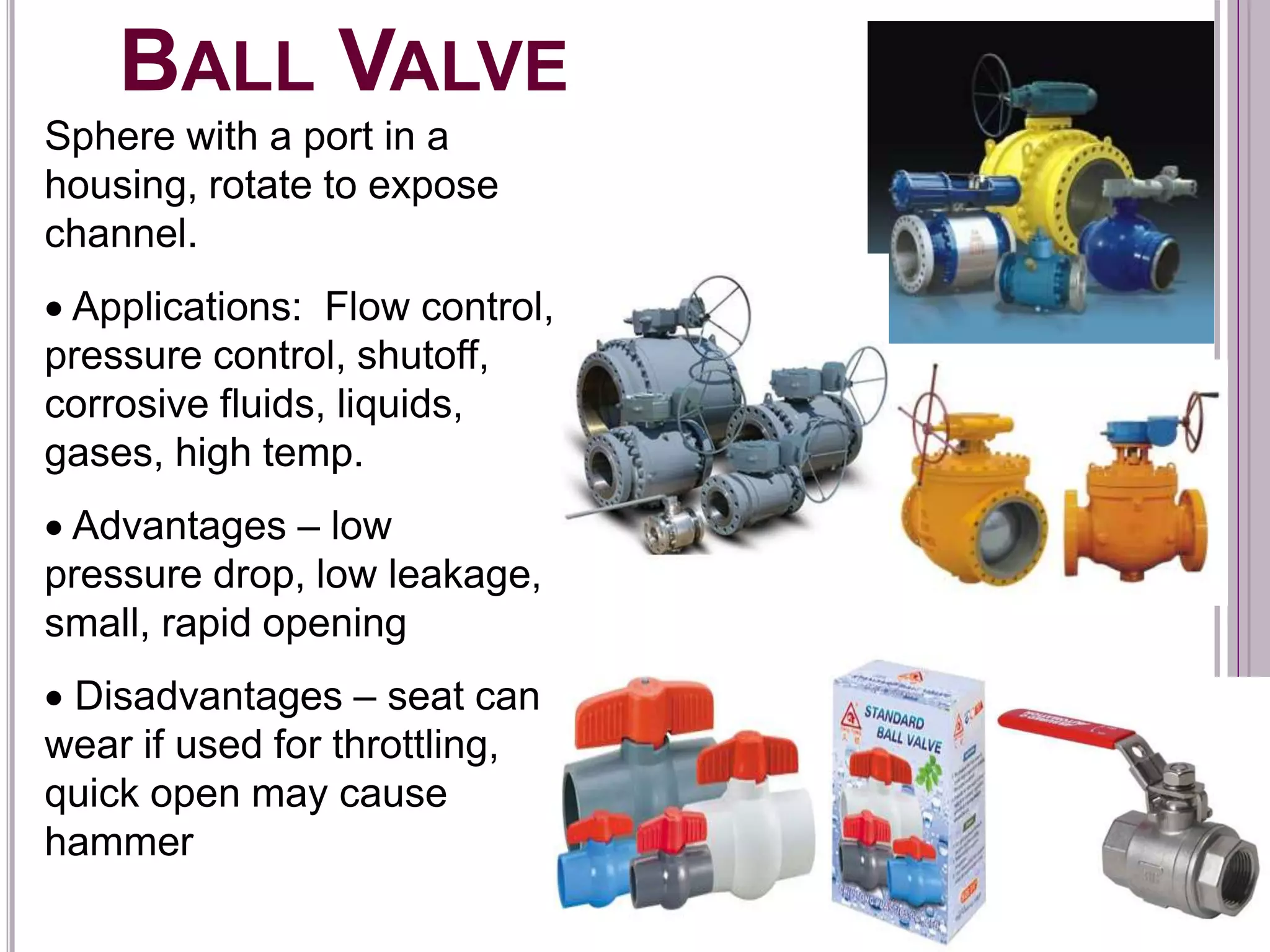
BALL VALVE
Sphere with a port in a
housing, rotate to expose
channel.
 Applications: Flow control,
pressure control, shutoff,
corrosive fluids, liquids,
gases, high temp.
 Advantages – low
pressure drop, low leakage,
small, rapid opening
 Disadvantages – seat can
wear if used for throttling,
quick open may cause
hammer
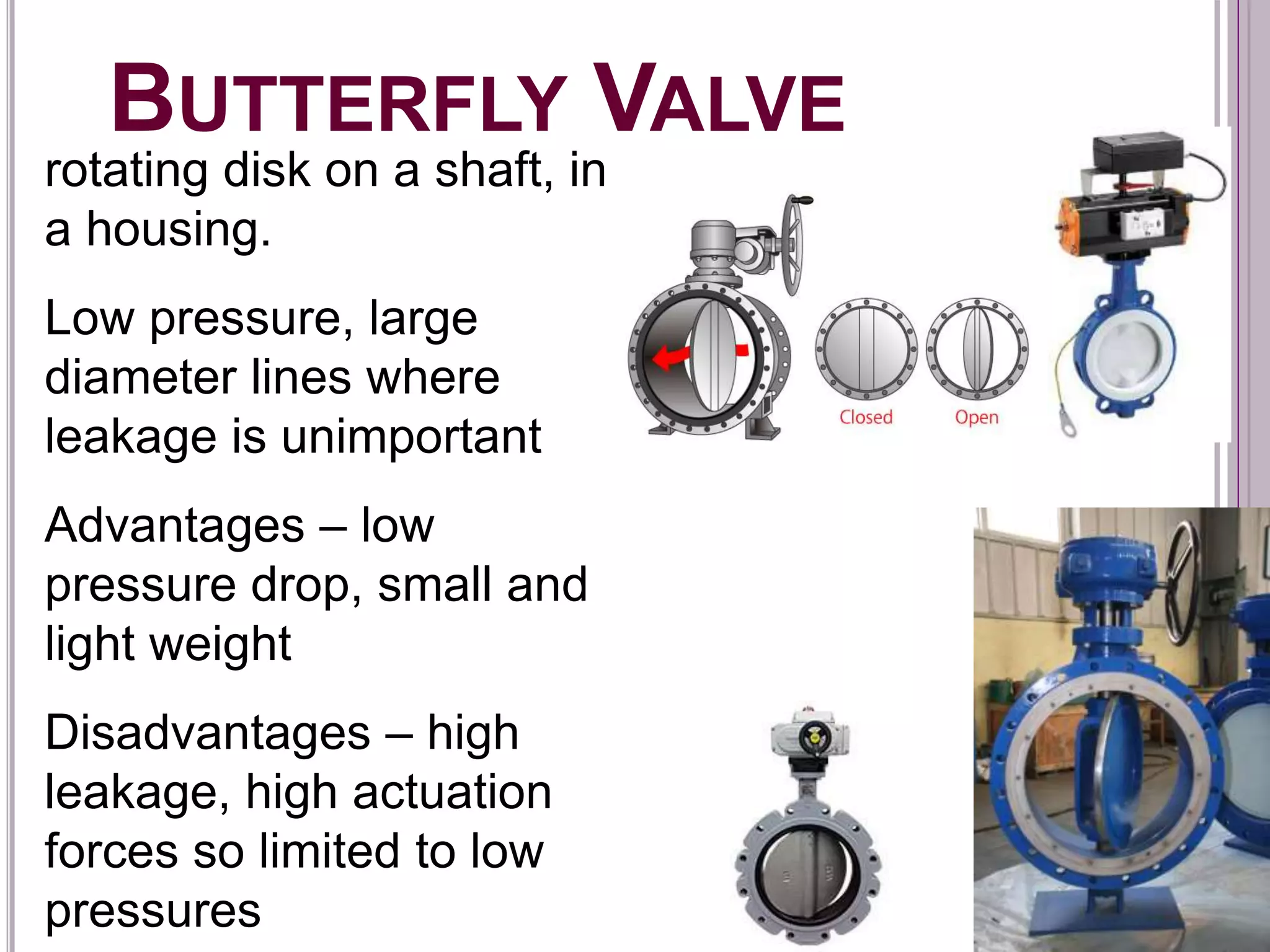
BUTTERFLY VALVE
rotating disk on a shaft, in
a housing.
Low pressure, large
diameter lines where
leakage is unimportant
Advantages – low
pressure drop, small and
light weight
Disadvantages – high
leakage, high actuation
forces so limited to low
pressures
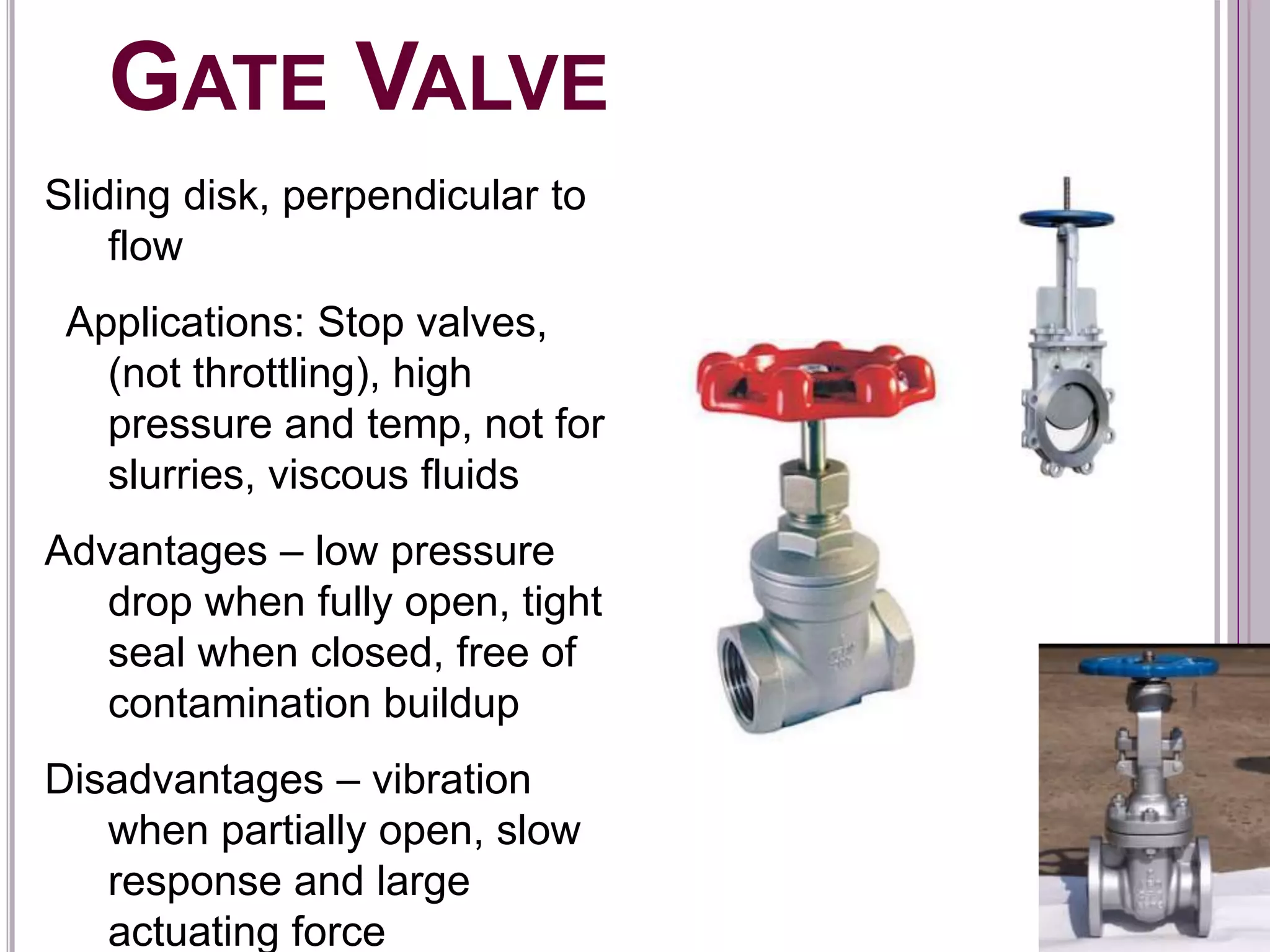
GATE VALVE
Sliding disk, perpendicular to
flow
Applications: Stop valves,
(not throttling), high
pressure and temp, not for
slurries, viscous fluids
Advantages – low pressure
drop when fully open, tight
seal when closed, free of
contamination buildup
Disadvantages – vibration
when partially open, slow
response and large
actuating force
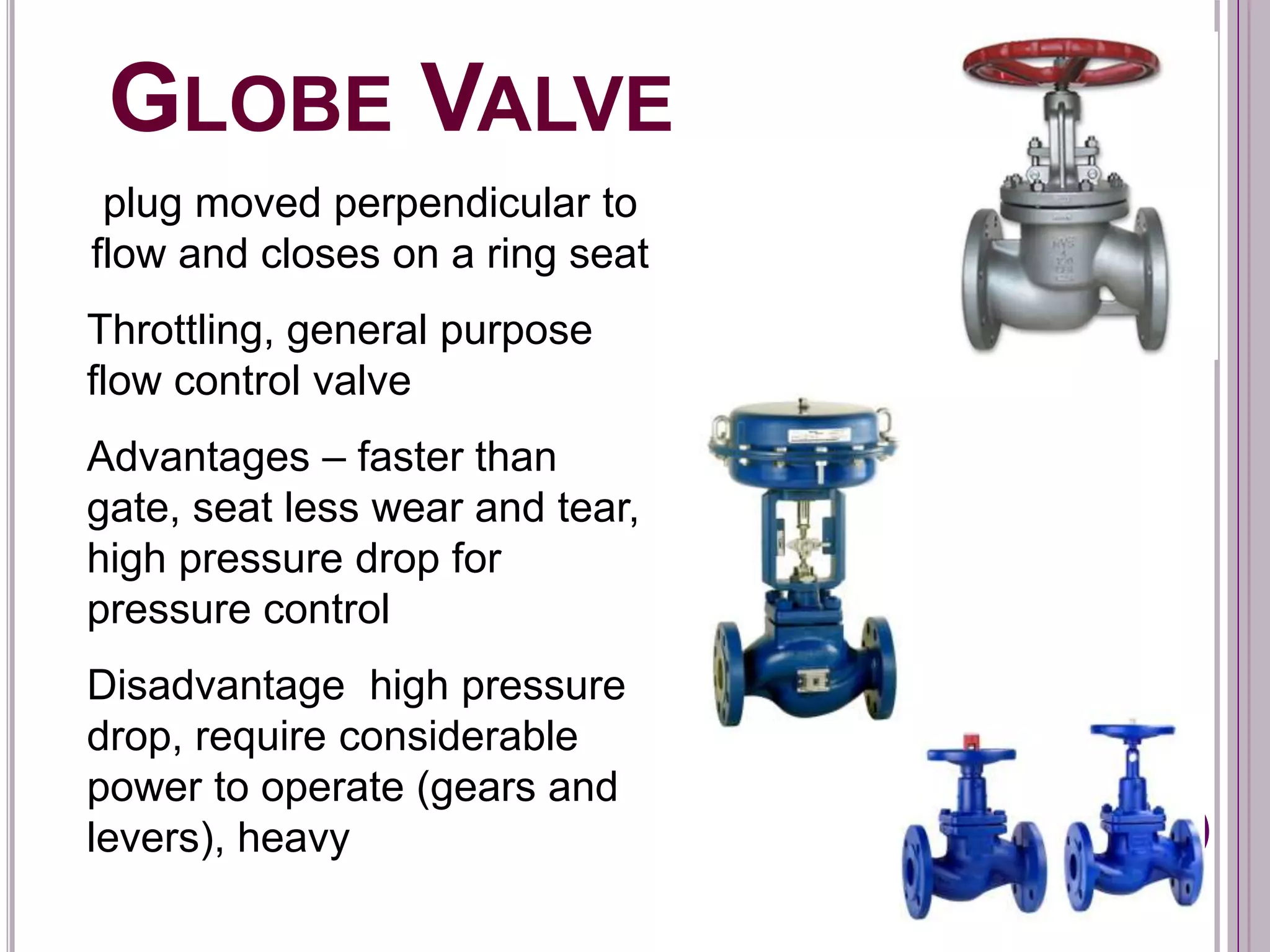
GLOBE VALVE
plug moved perpendicular to
flow and closes on a ring seat
Throttling, general purpose
flow control valve
Advantages – faster than
gate, seat less wear and tear,
high pressure drop for
pressure control
Disadvantage high pressure
drop, require considerable
power to operate (gears and
levers), heavy
ANIMATION
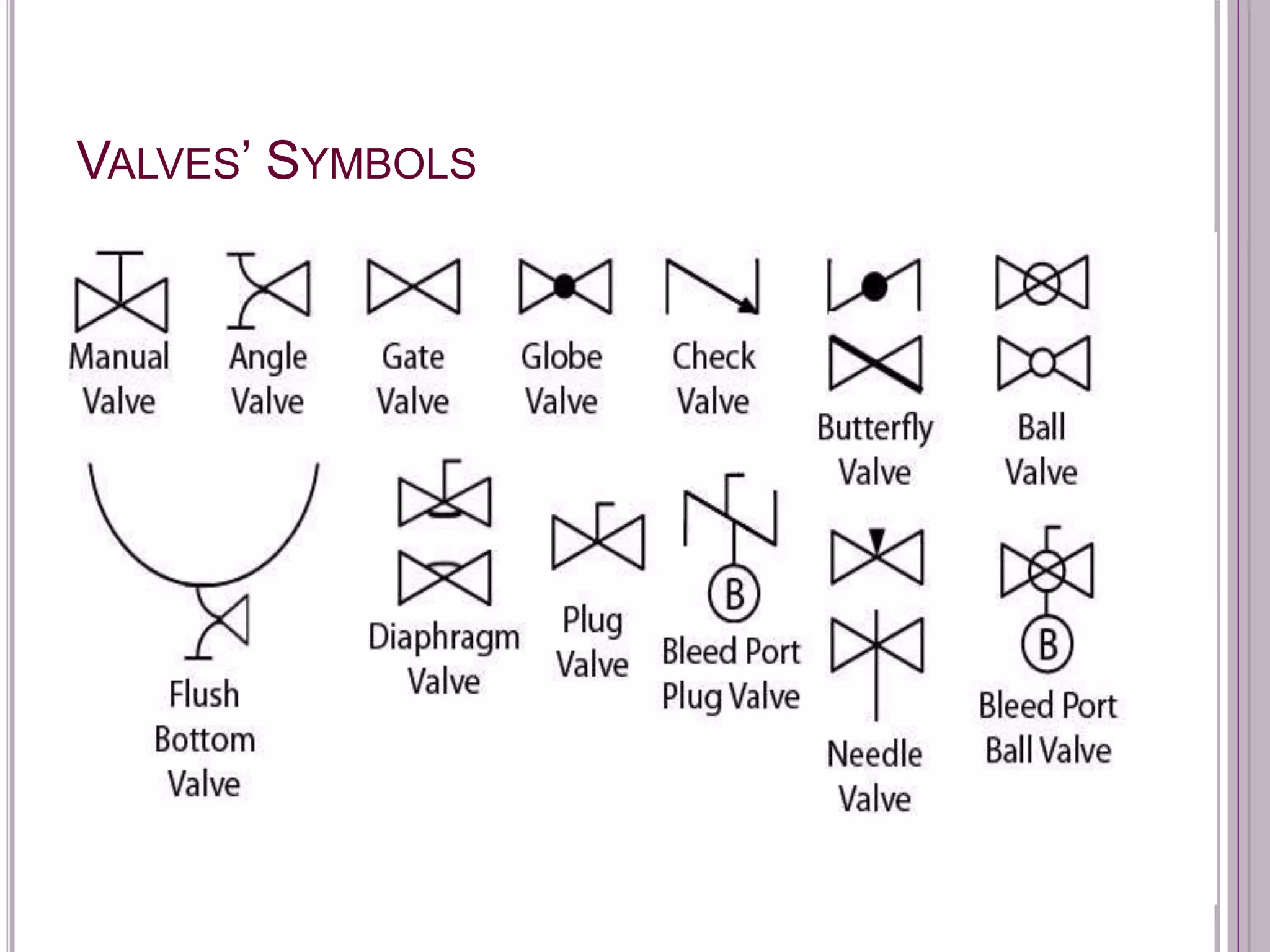
VALVES’ SYMBOLS
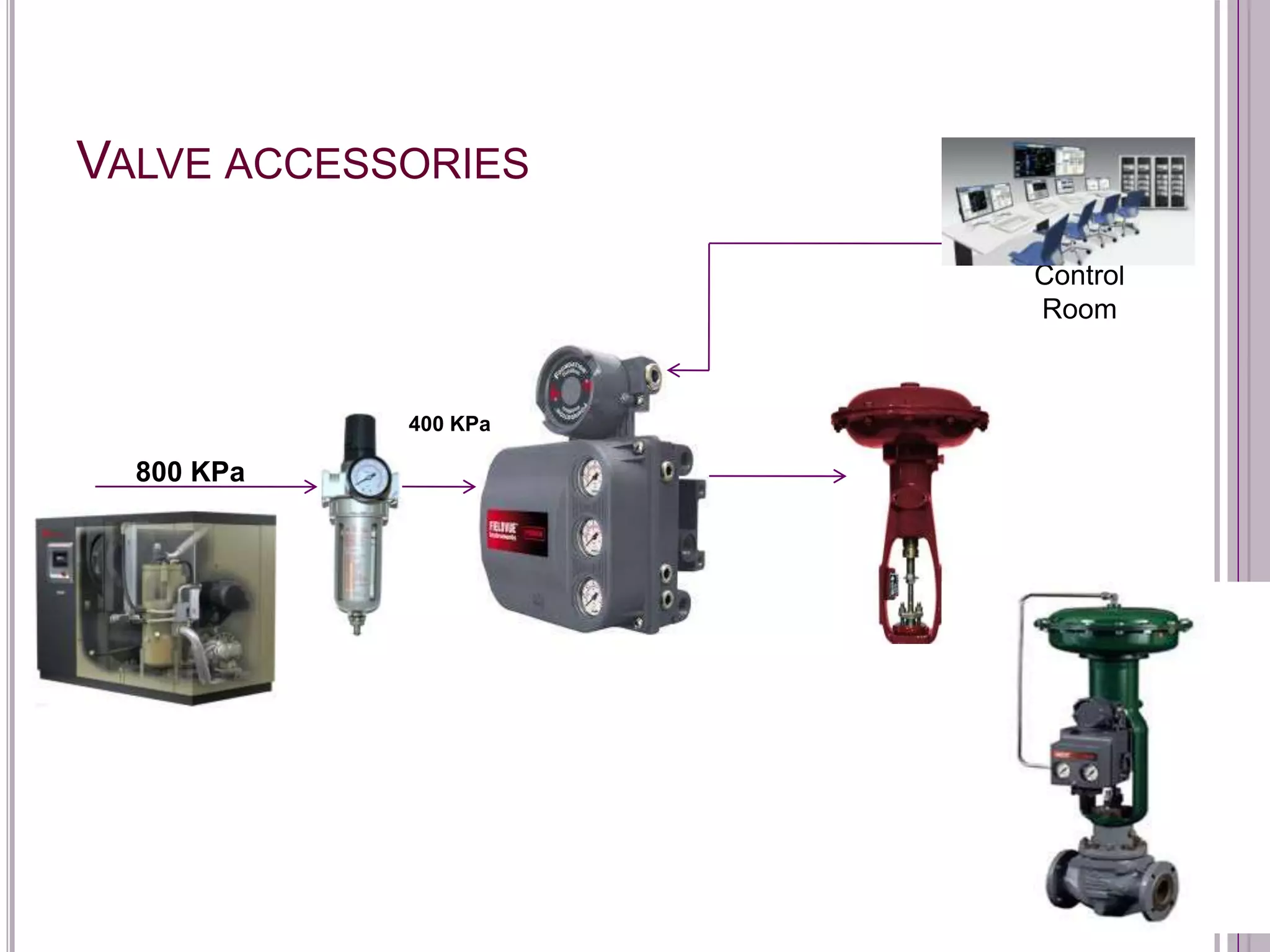
VALVE ACCESSORIES
Control
Room
800 KPa
400 KPa
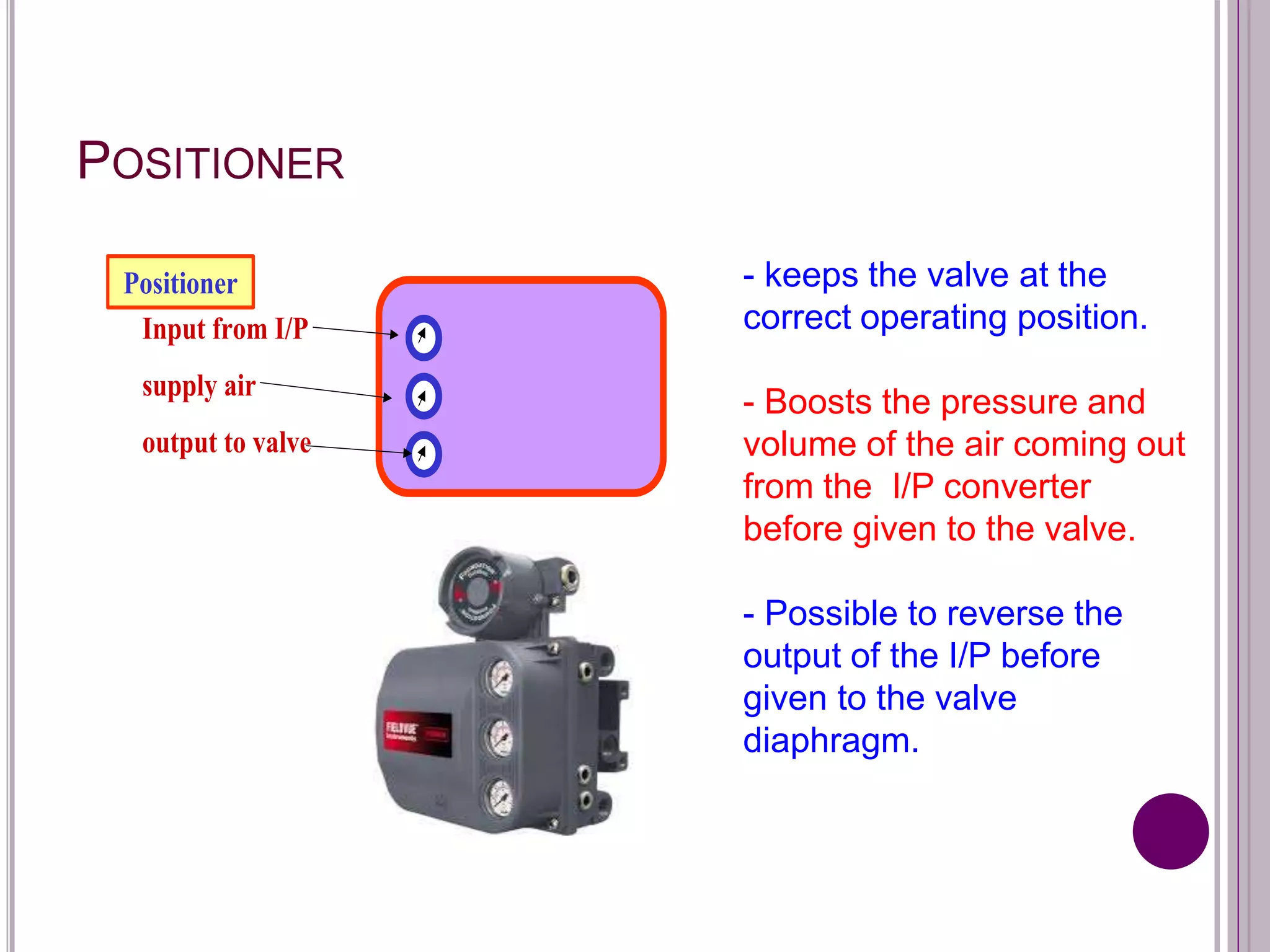
POSITIONER
Positioner
Input from I/P
supply air
output to valve
- keeps the valve at the
correct operating position.
- Boosts the pressure and
volume of the air coming out
from the I/P converter
before given to the valve.
- Possible to reverse the
output of the I/P before
given to the valve
diaphragm.
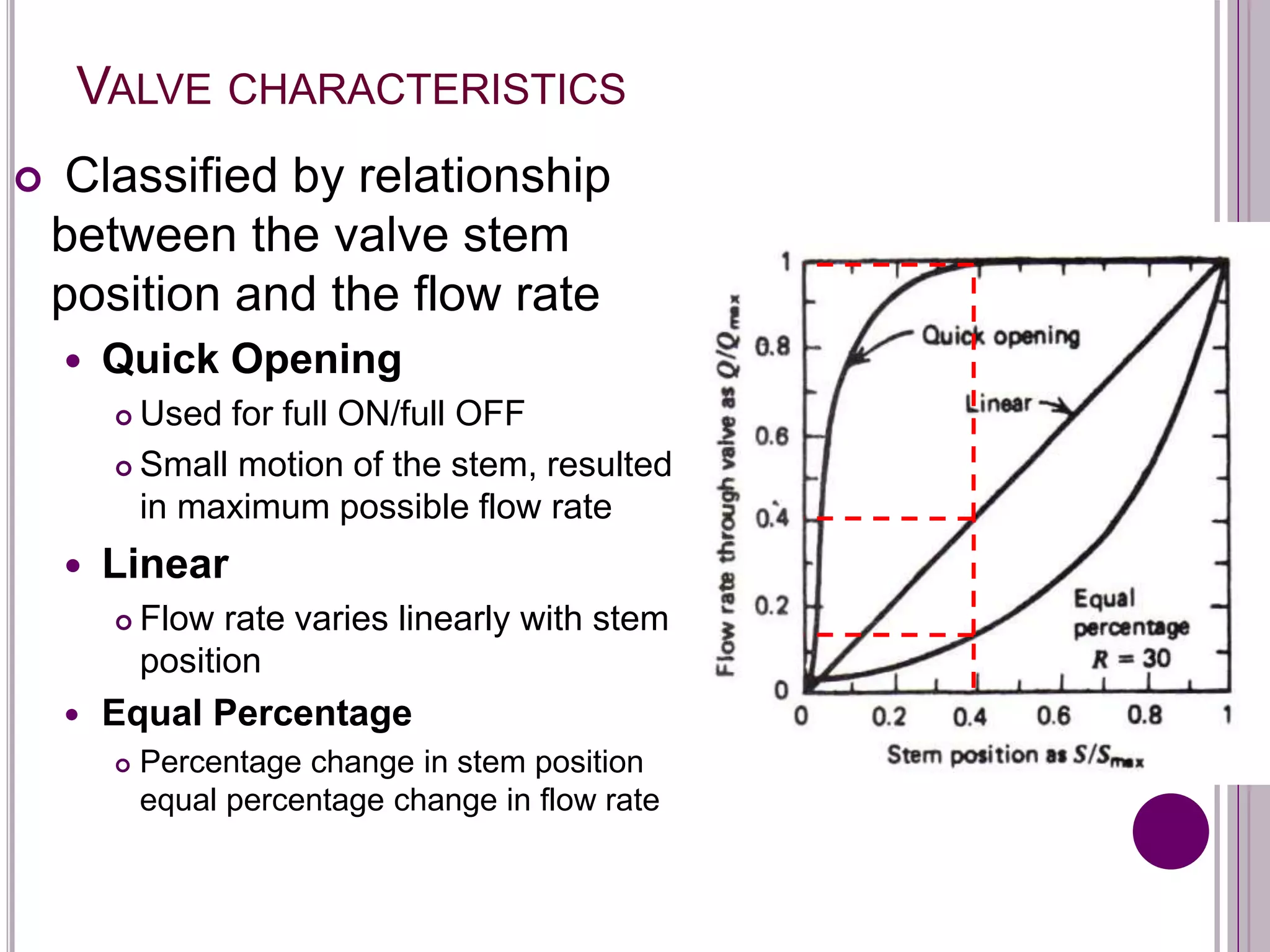
VALVE CHARACTERISTICS
 Classified by relationship
between the valve stem
position and the flow rate
 Quick Opening
 Used for full ON/full OFF
 Small motion of the stem, resulted
in maximum possible flow rate
 Linear
 Flow rate varies linearly with stem
position
 Equal Percentage
 Percentage change in stem position
equal percentage change in flow rate
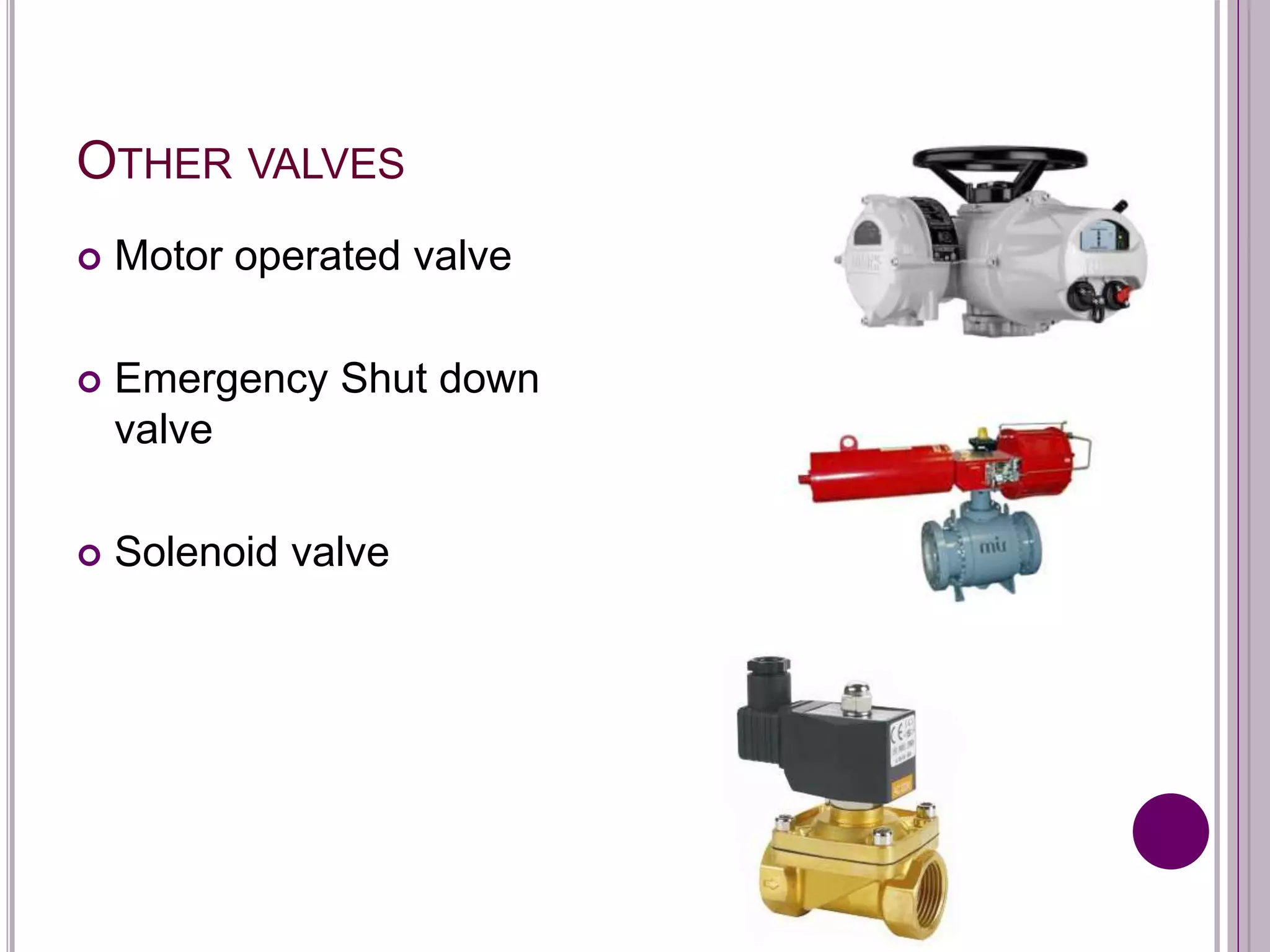
OTHER VALVES
 Motor operated valve
 Emergency Shut down
valve
 Solenoid valve
CONTROL VALVES ISSUES
 Actuator:
- Diaphragm rupture
- Gland Packing
damage
- Regulator pressure
setting
 Valve:
 Passing
 Leaking
 Not opening/closing
CONTROL VALVES TROUBLESHOOTING
 Four problems with control valves are found at a
high frequency in poorly performing control loops.
These are:
- Dead band
- Positioner overshoot
- Incorrect valve sizing
- Nonlinear flow characteristic
CONCLUSION
Final Control Element:
 What is a final control element?
 Process Parameters
 Control valve components.
Actuators & Valves:
 Types of actuators
 Types of valves
 Valve Accessories.
Troubleshooting:
 Valve characteristics
 Control valves Challenges
 Control Valves Troubleshooting.
Q
Many thanks,
Mujtaba Moosawi

Final Control Element

  • 1.
  • 2.
    ASSESSMENT  Mention 3final control elements.  What is the function of final control element?  What are the types of actuators?  What are the types of valves?
  • 3.
    MAIN POINTS Final ControlElement:  What is a final control element?  Process Parameters  Control valve components. Actuators & Valves:  Types of actuators  Types of valves  Valve Accessories. Troubleshooting:  Valve characteristics  Control valves Challenges  Control Valves Troubleshooting.
  • 4.
    FINAL CONTROL ELEMENT thefinal control element is a device which adjust the value of the manipulated variable by controlling flow of the control agent. The mechanism for affecting this change may be a valve, pump, transformer, motor, variable speed drive, etc.
  • 5.
    PROCESS PARAMETERS Parameters normallymeasured and controlled in a process industry are: -  Pressure  Flow  Level  Temperature  Speed  pH, conductivity  Composition  Density  BS & W  Dew point  Oxygen content (injection water), etc.
  • 6.
  • 7.
    CONTROL VALVE MAINCOMPONENTS Actuator Valve body Control Valve
  • 8.
  • 9.
  • 10.
    ACTUATORS - actuator providesthe force that actuates the valve. - determine the flowrate of an agent through the valve. - Means used to operate the actuator may be • mechanical, • pneumatic, • electrical, • hydraulic, or • a combination of two of these methods.
  • 11.
    TYPES OF ACTUATORS Airto close valve Air to open valve
  • 12.
    A CONTROL VALVEWHICH OPERATES FROM A HIGH PRESSURE TO LOW PRESSURE, WE PREFER AN AIR FAIL TO CLOSE VALVE TO AVOID OVER PRESSURIZING OF THE DOWN STREAM FACILITIES. THE LEVEL CONTROL VALVE OF THE BULK SEPARATORS WILL BE AN AIR FAIL CLOSE VALVE. THIS IS TO PROTECT SURGE TANK FROM OVER PRESSURIZING IN CASE OF A FAILURE OF THE SEPARATOR LCV. Bulk separator Surge tankLCV PRC Gas to flare Air fail close valve Air fail open valve LC PC Gas to Compressor
  • 13.
    VALVE TYPES  BallValve  Butterfly Valve  Gate Valve  Globe Valve
  • 14.
    BALL VALVE Sphere witha port in a housing, rotate to expose channel.  Applications: Flow control, pressure control, shutoff, corrosive fluids, liquids, gases, high temp.  Advantages – low pressure drop, low leakage, small, rapid opening  Disadvantages – seat can wear if used for throttling, quick open may cause hammer
  • 15.
    BUTTERFLY VALVE rotating diskon a shaft, in a housing. Low pressure, large diameter lines where leakage is unimportant Advantages – low pressure drop, small and light weight Disadvantages – high leakage, high actuation forces so limited to low pressures
  • 16.
    GATE VALVE Sliding disk,perpendicular to flow Applications: Stop valves, (not throttling), high pressure and temp, not for slurries, viscous fluids Advantages – low pressure drop when fully open, tight seal when closed, free of contamination buildup Disadvantages – vibration when partially open, slow response and large actuating force
  • 17.
    GLOBE VALVE plug movedperpendicular to flow and closes on a ring seat Throttling, general purpose flow control valve Advantages – faster than gate, seat less wear and tear, high pressure drop for pressure control Disadvantage high pressure drop, require considerable power to operate (gears and levers), heavy
  • 18.
  • 19.
  • 20.
  • 21.
    POSITIONER Positioner Input from I/P supplyair output to valve - keeps the valve at the correct operating position. - Boosts the pressure and volume of the air coming out from the I/P converter before given to the valve. - Possible to reverse the output of the I/P before given to the valve diaphragm.
  • 22.
    VALVE CHARACTERISTICS  Classifiedby relationship between the valve stem position and the flow rate  Quick Opening  Used for full ON/full OFF  Small motion of the stem, resulted in maximum possible flow rate  Linear  Flow rate varies linearly with stem position  Equal Percentage  Percentage change in stem position equal percentage change in flow rate
  • 23.
    OTHER VALVES  Motoroperated valve  Emergency Shut down valve  Solenoid valve
  • 24.
    CONTROL VALVES ISSUES Actuator: - Diaphragm rupture - Gland Packing damage - Regulator pressure setting  Valve:  Passing  Leaking  Not opening/closing
  • 25.
    CONTROL VALVES TROUBLESHOOTING Four problems with control valves are found at a high frequency in poorly performing control loops. These are: - Dead band - Positioner overshoot - Incorrect valve sizing - Nonlinear flow characteristic
  • 26.
    CONCLUSION Final Control Element: What is a final control element?  Process Parameters  Control valve components. Actuators & Valves:  Types of actuators  Types of valves  Valve Accessories. Troubleshooting:  Valve characteristics  Control valves Challenges  Control Valves Troubleshooting.
  • 27.

Editor's Notes

  • #6 Now let us see the manipulated variables… What are They ?