TODAY’S TOPIC
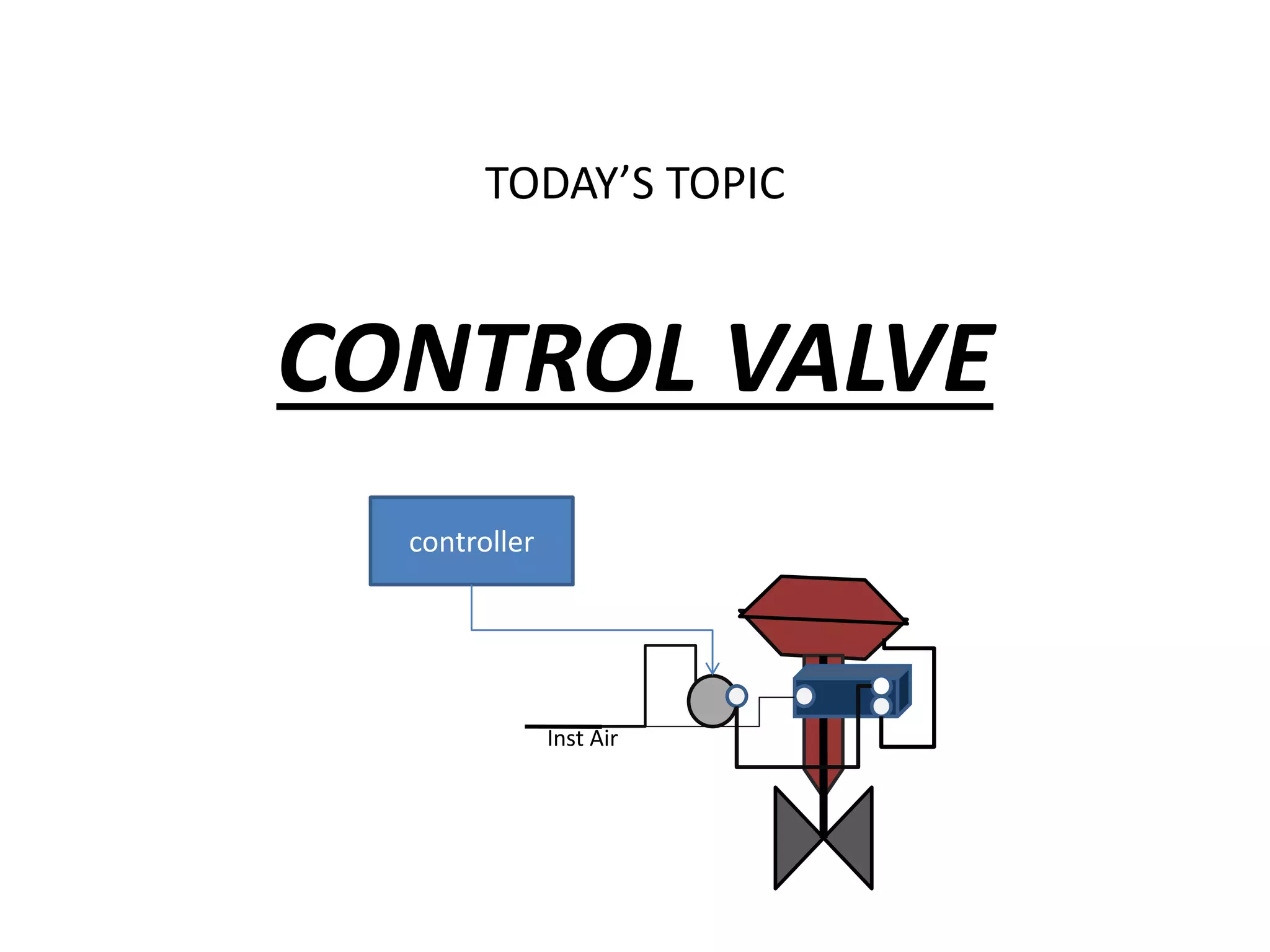
CONTROL VALVE
controller
Inst Air
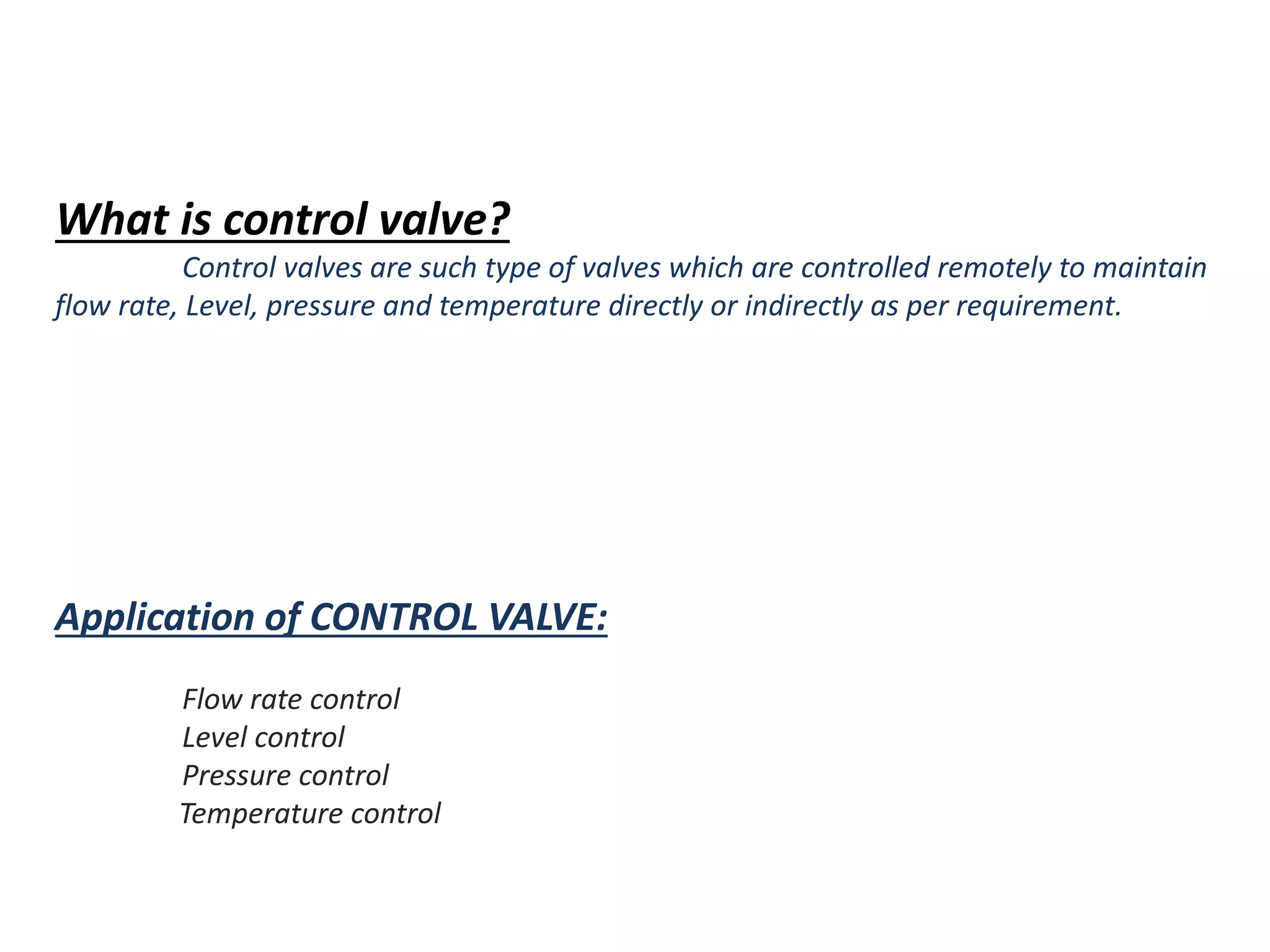
What is control valve?
Control valves are such type of valves which are controlled remotely to maintain
flow rate, Level, pressure and temperature directly or indirectly as per requirement.
Application of CONTROL VALVE:
Flow rate control
Level control
Pressure control
Temperature control
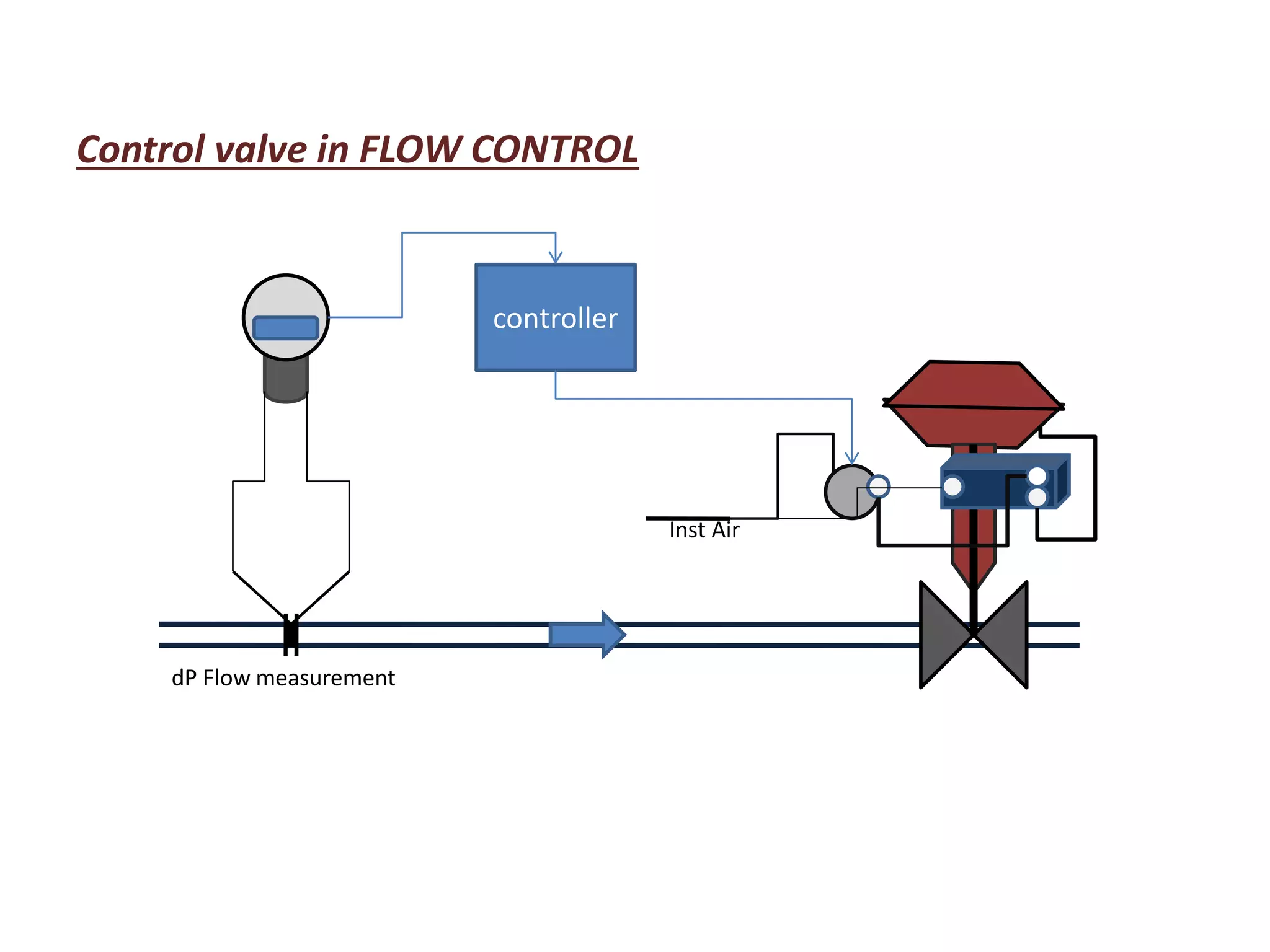
Control valve in FLOW CONTROL
controller
Inst Air
dP Flow measurement
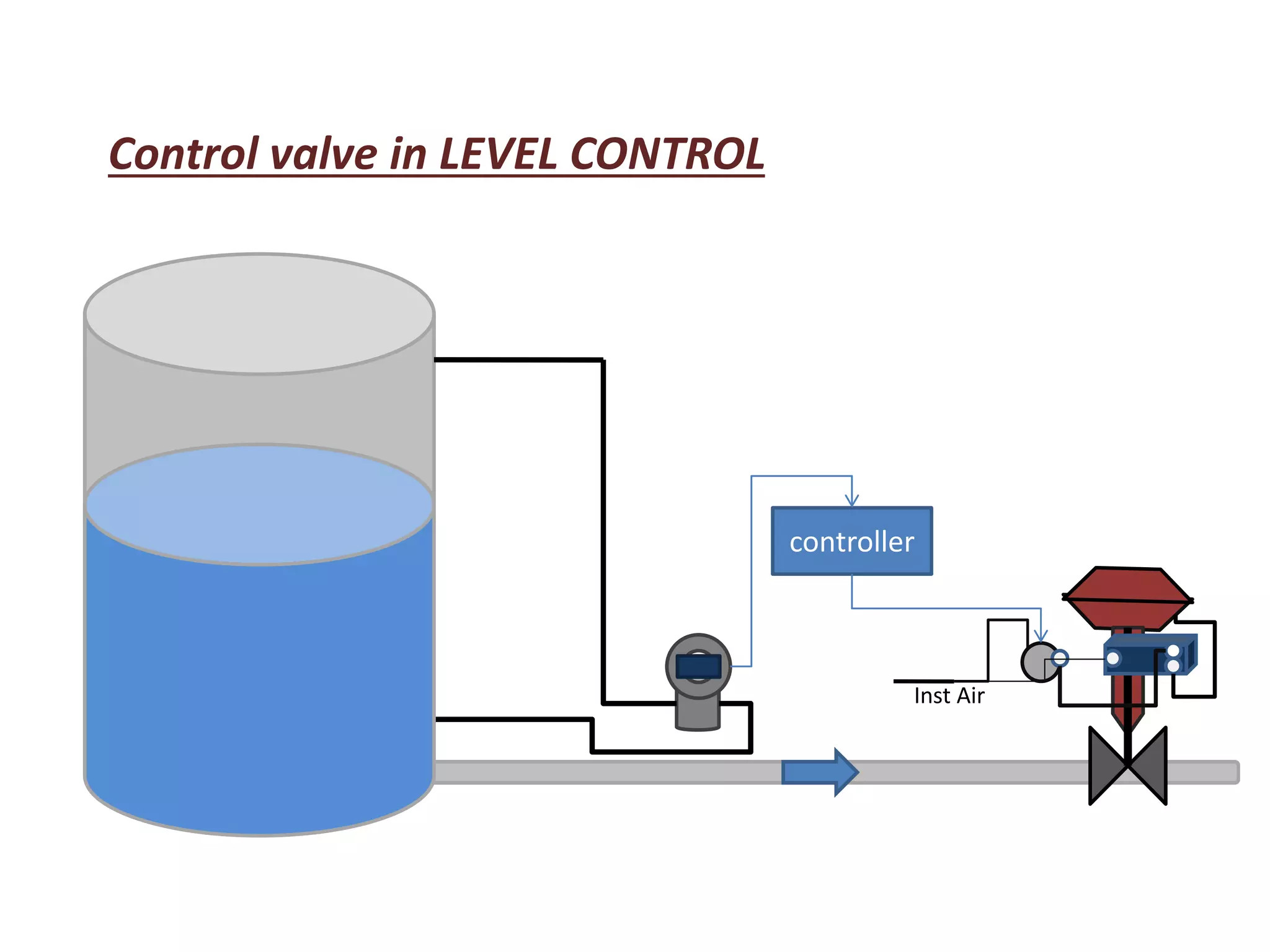
Control valve in LEVEL CONTROL
controller
Inst Air
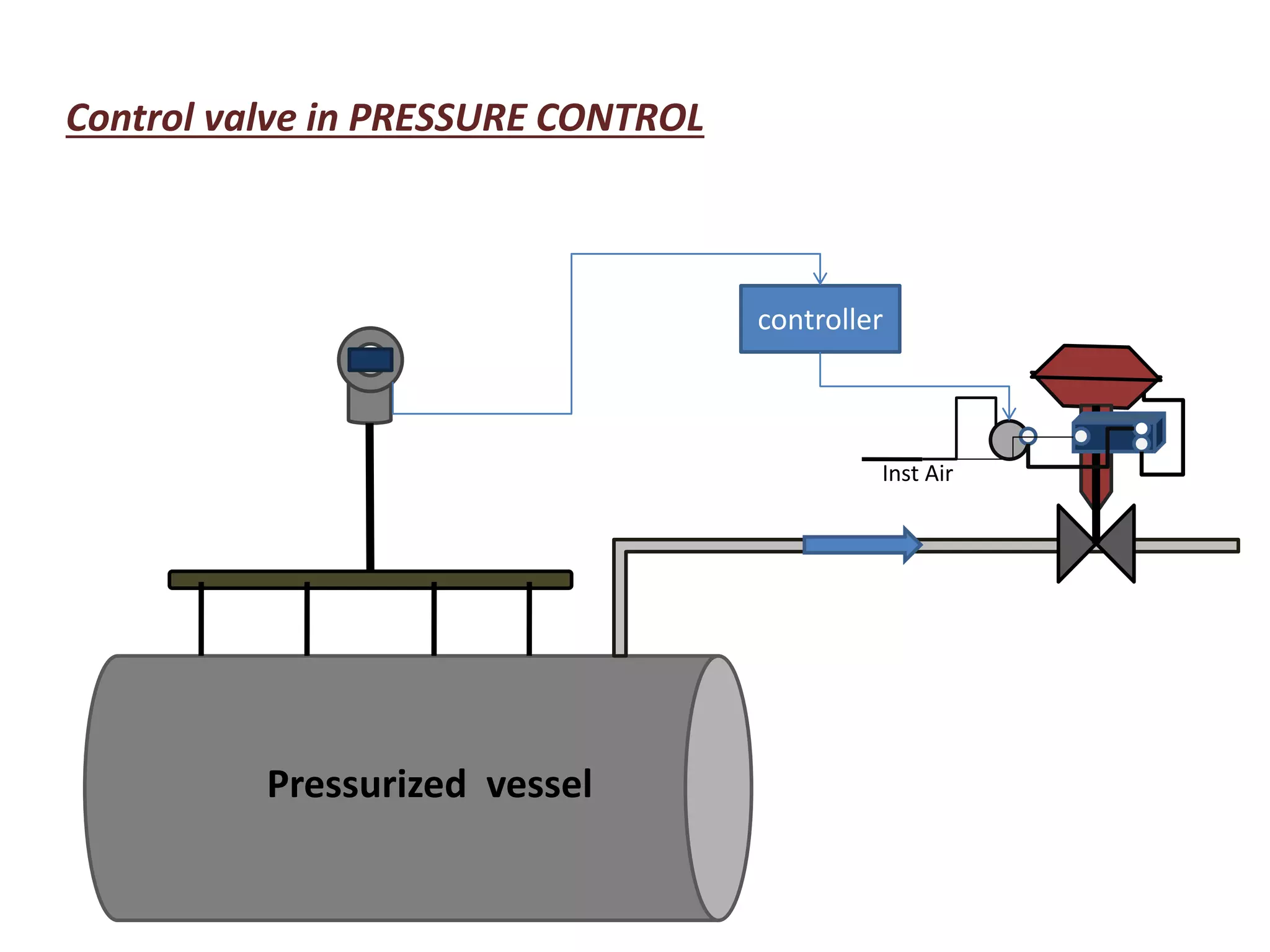
Control valve in PRESSURE CONTROL
controller
Inst Air
Pressurized vessel
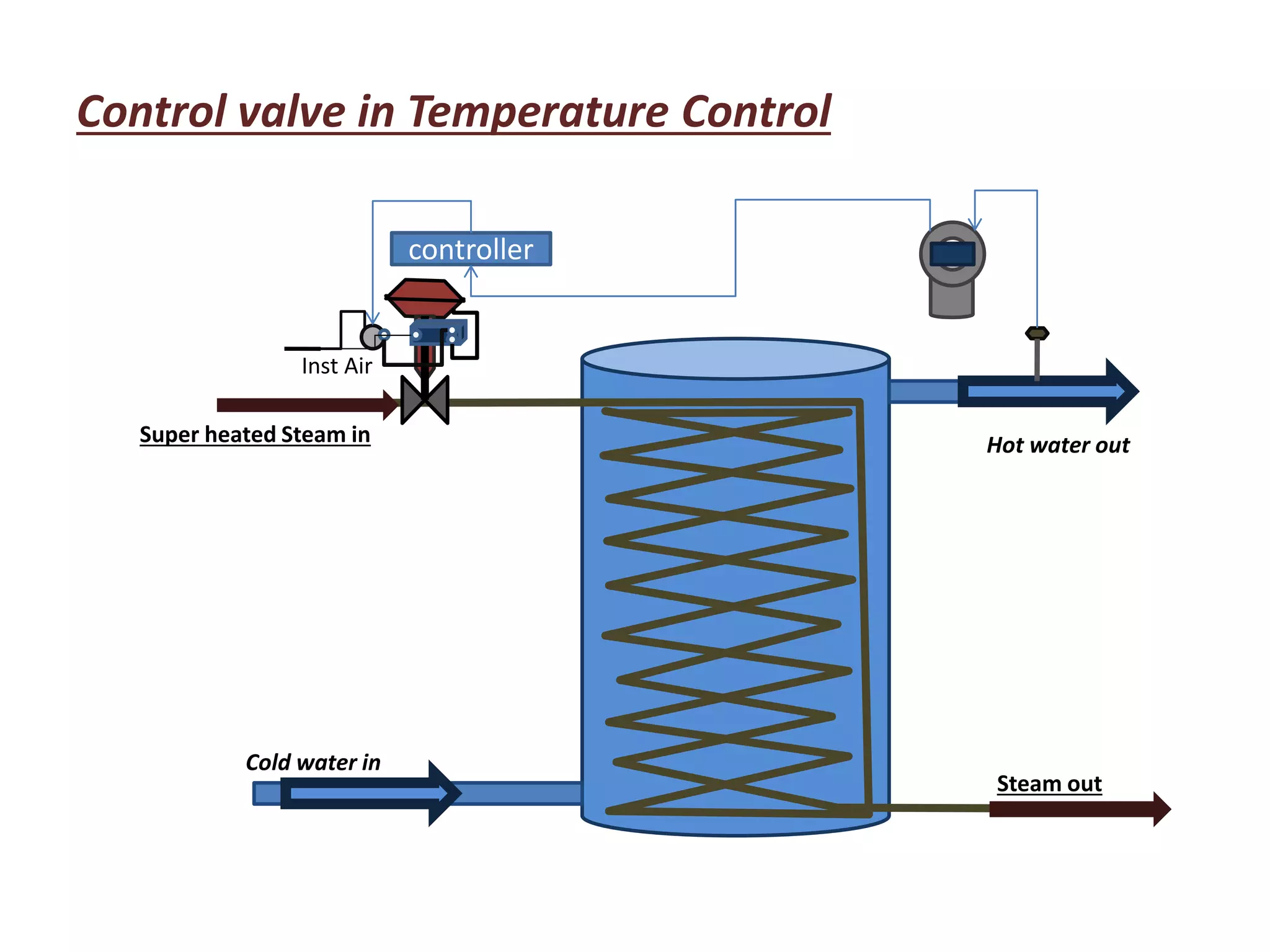
Control valve in Temperature Control
controller
Inst Air
Super heated Steam in
Steam out
Cold water in
Hot water out
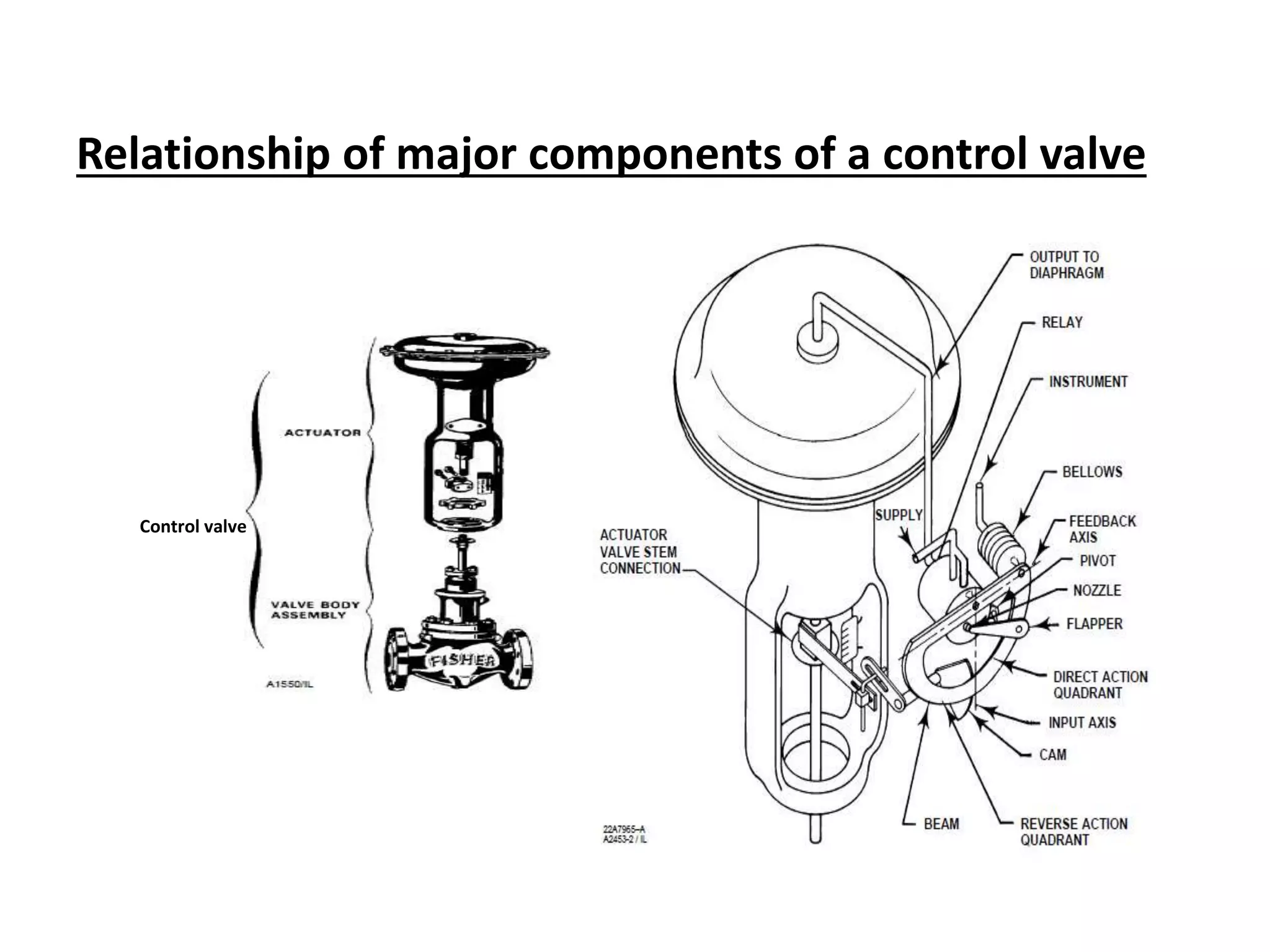
Relationship of major components of a control valve
Control valve
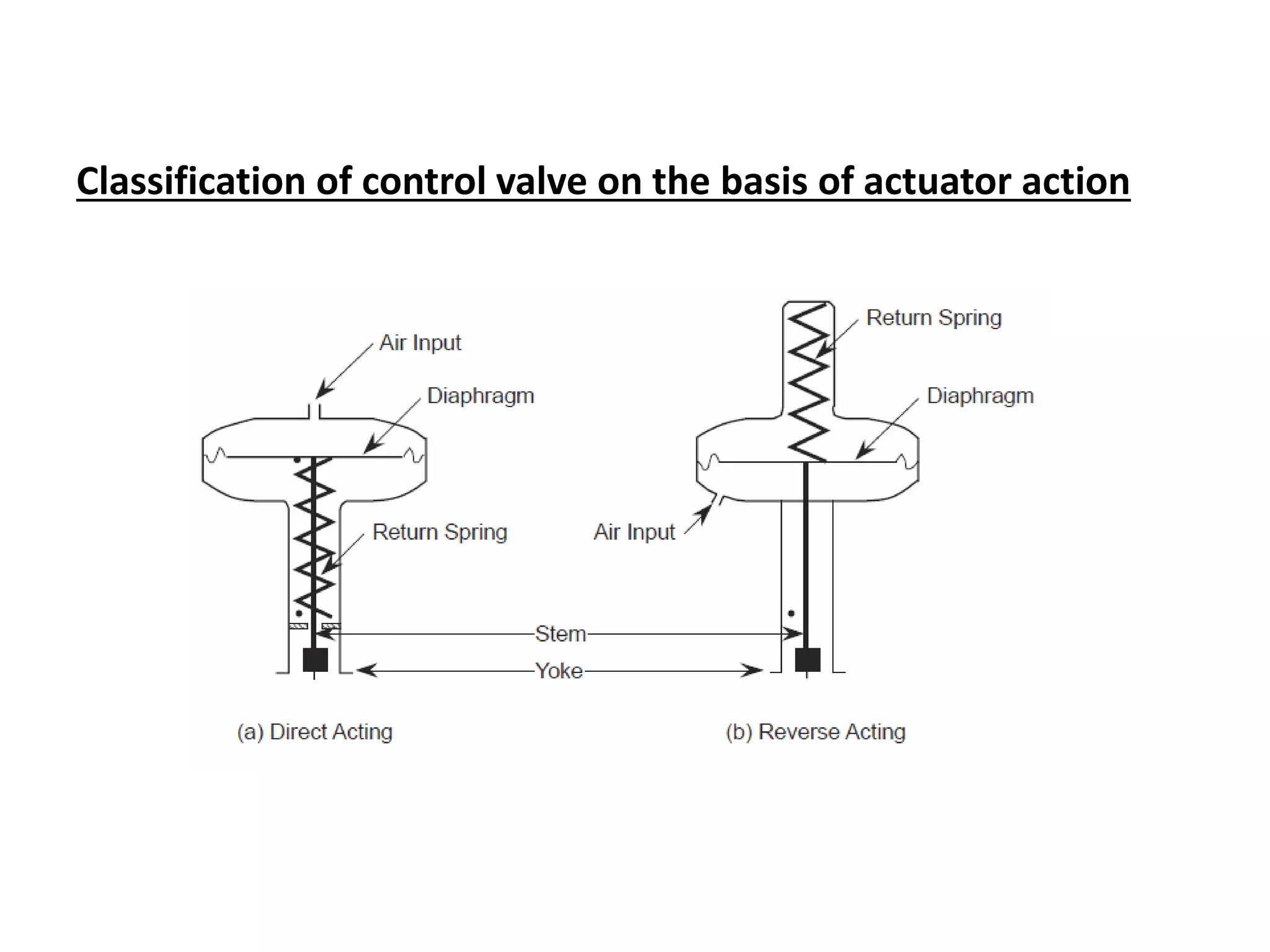
Classification of control valve on the basis of actuator action
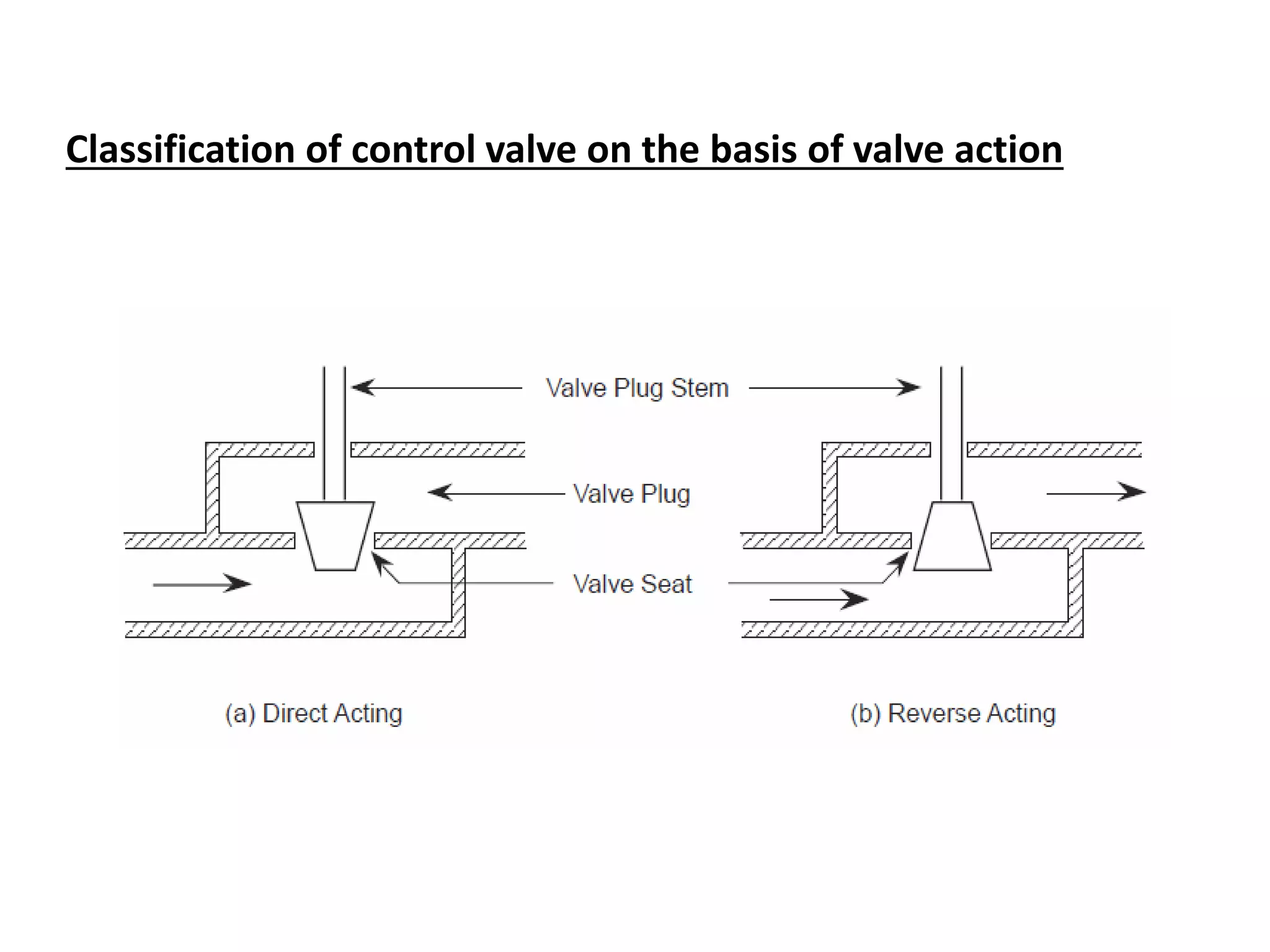
Classification of control valve on the basis of valve action
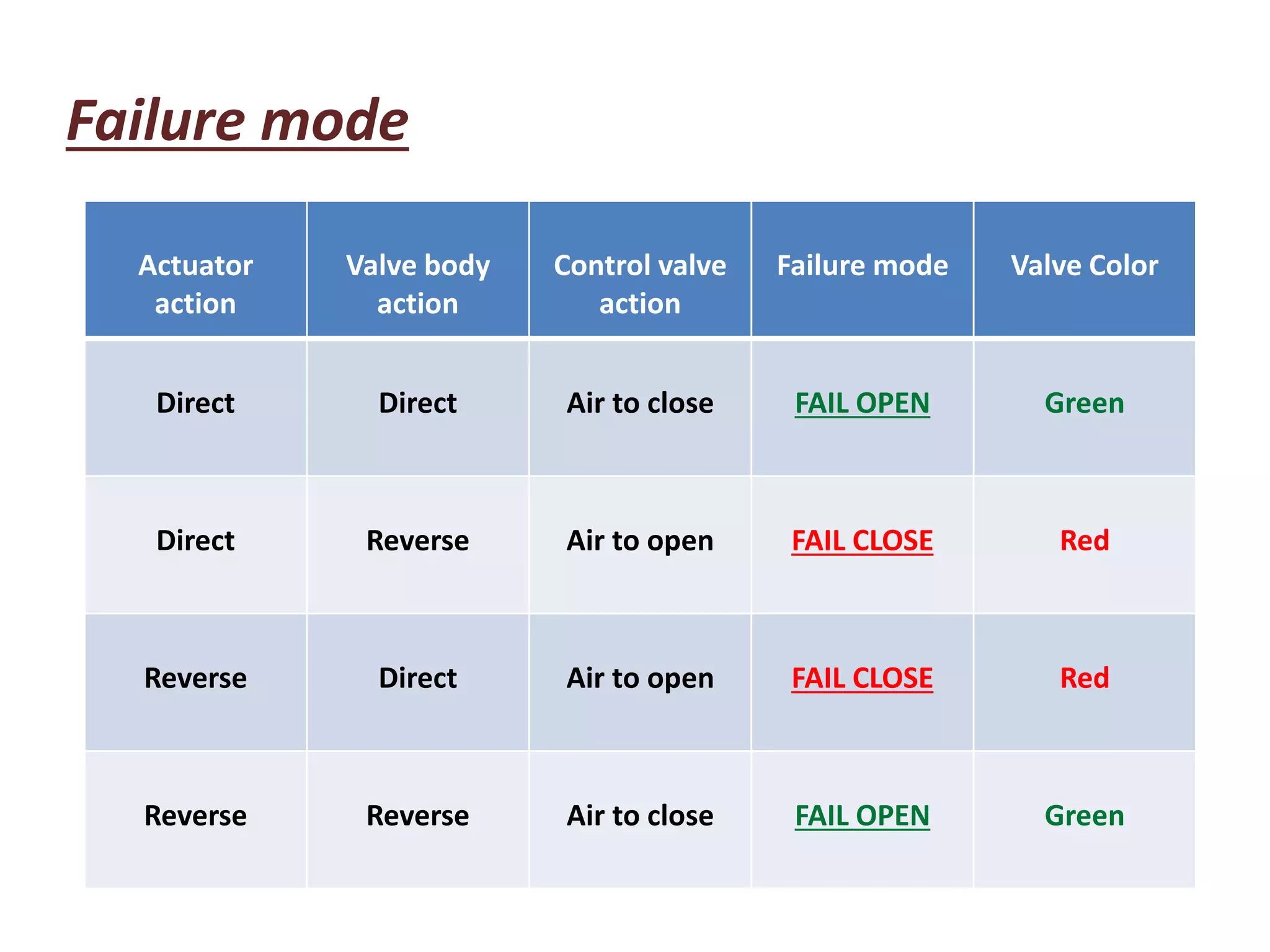
Failure mode
Actuator
action
Valve body
action
Control valve
action
Failure mode Valve Color
Direct Direct Air to close FAIL OPEN Green
Direct Reverse Air to open FAIL CLOSE Red
Reverse Direct Air to open FAIL CLOSE Red
Reverse Reverse Air to close FAIL OPEN Green
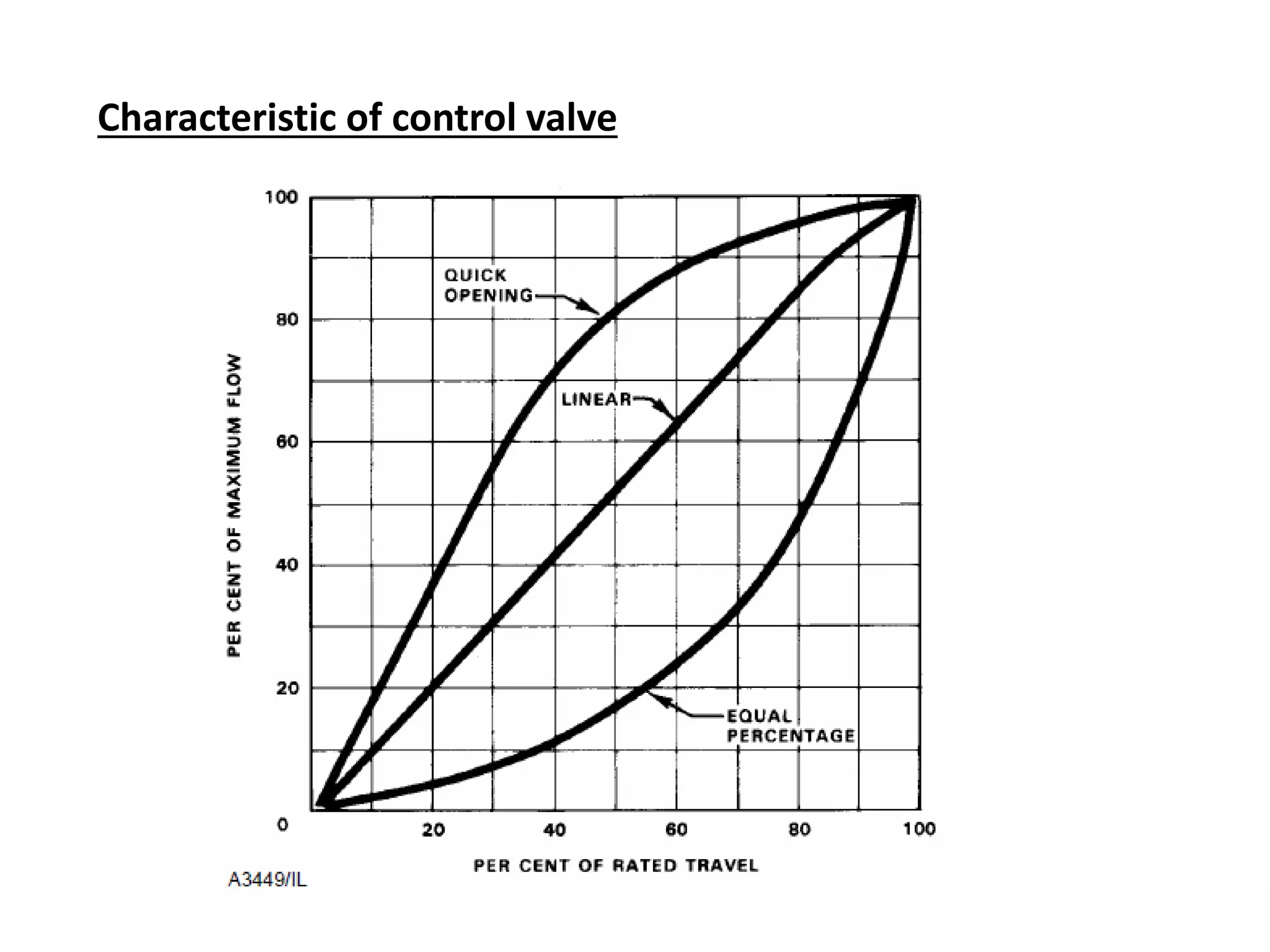
Characteristic of control valve
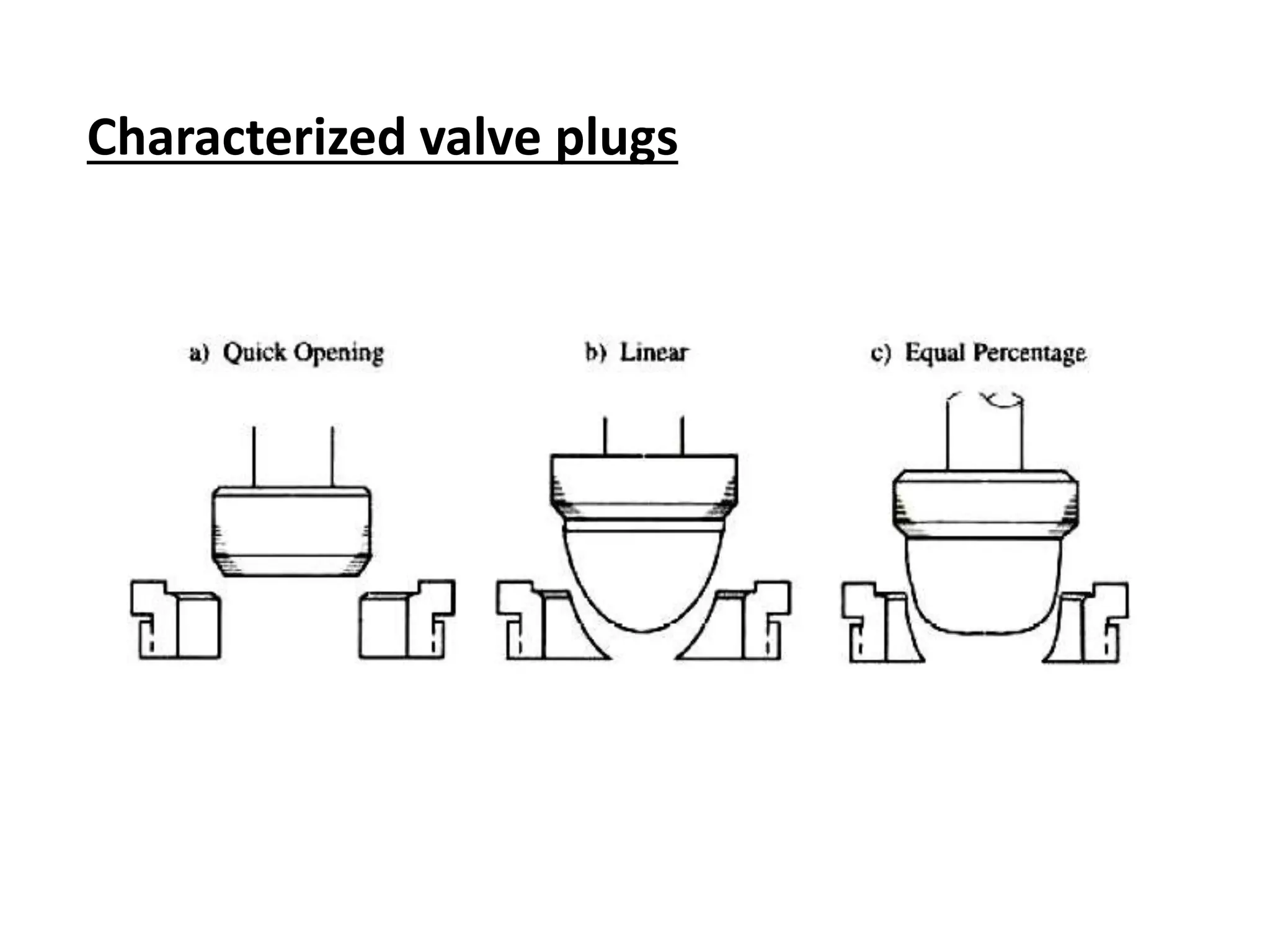
Characterized valve plugs
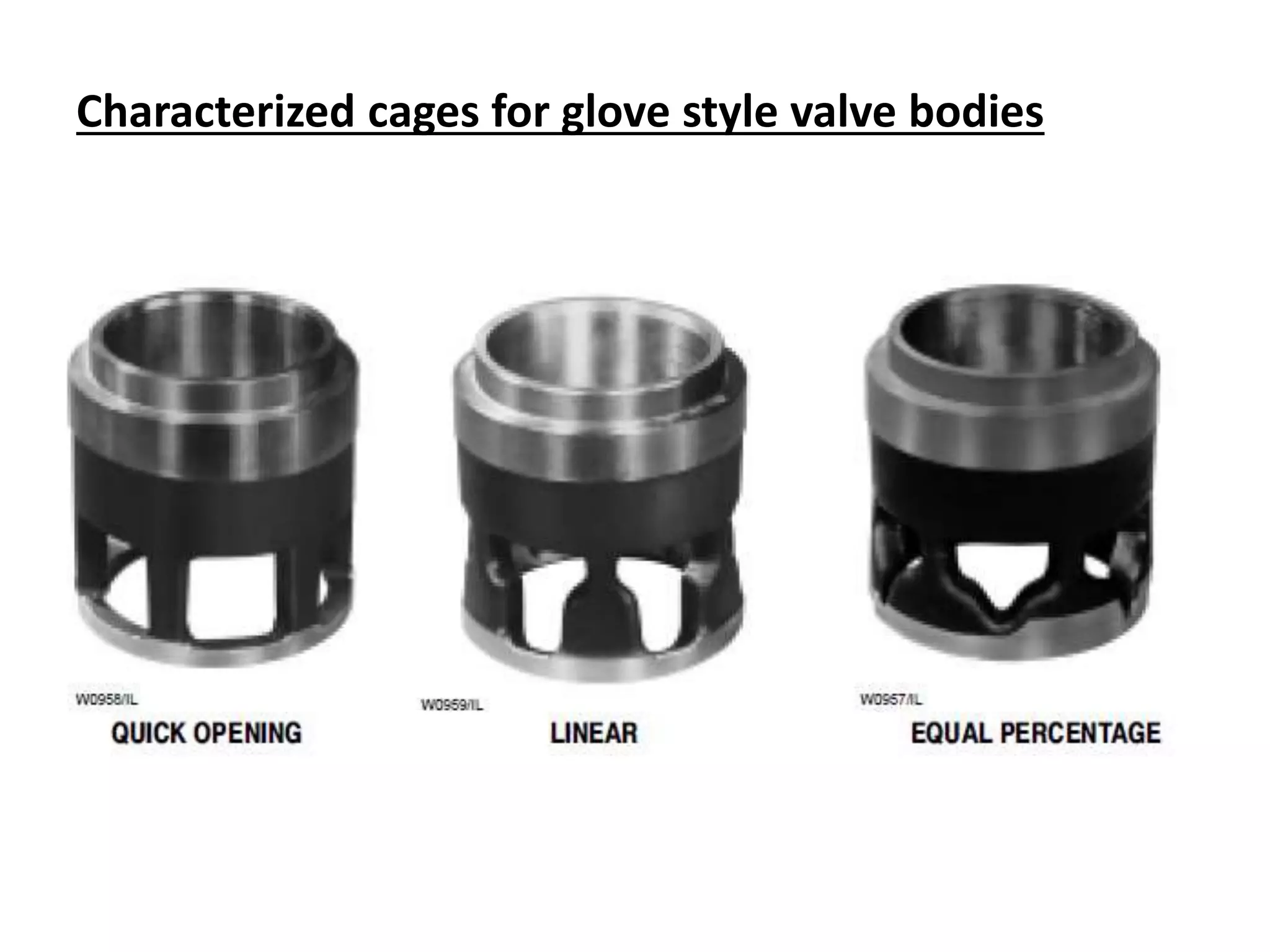
Characterized cages for glove style valve bodies
Pictures of
Few typical valves
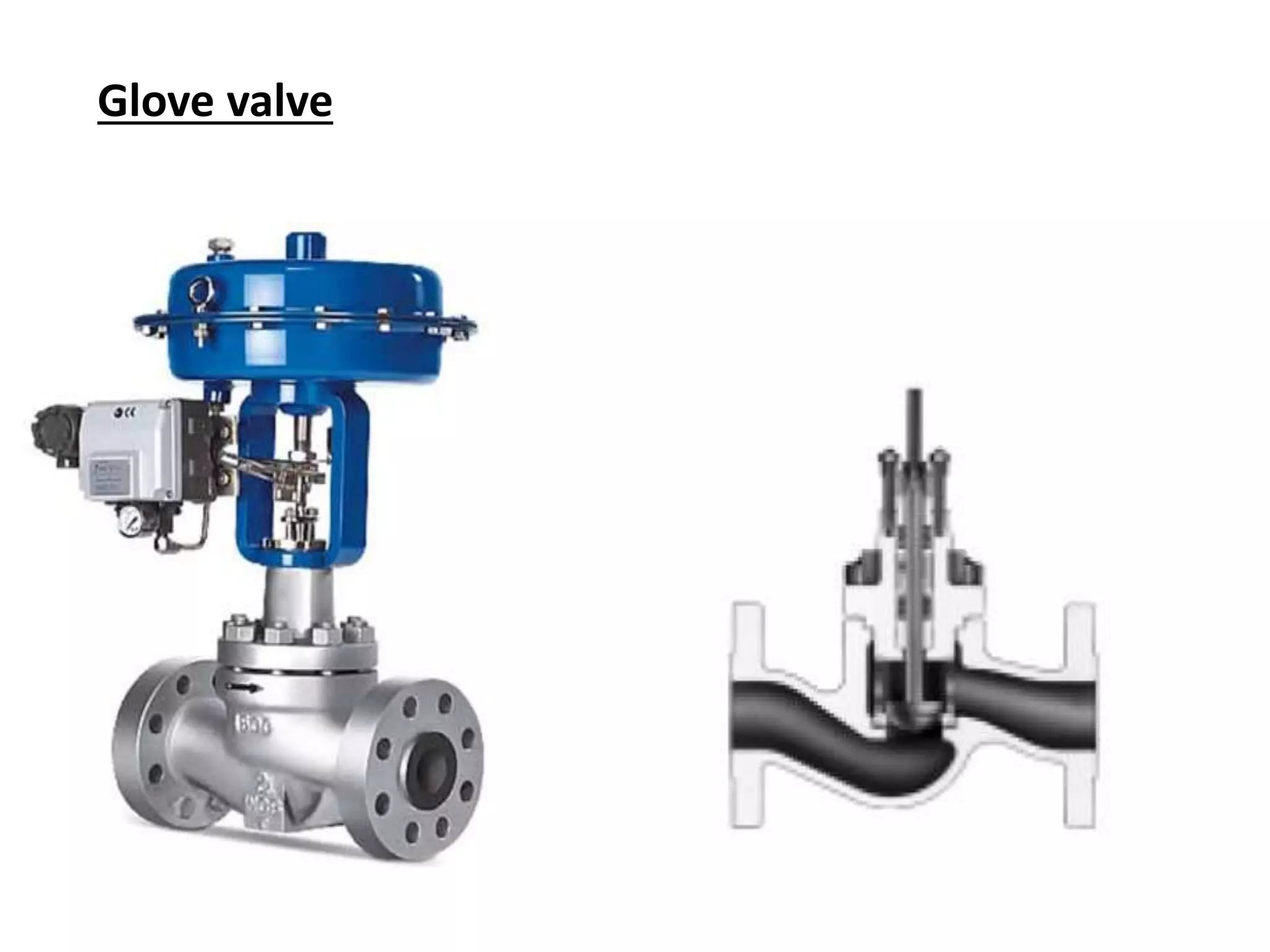
Glove valve
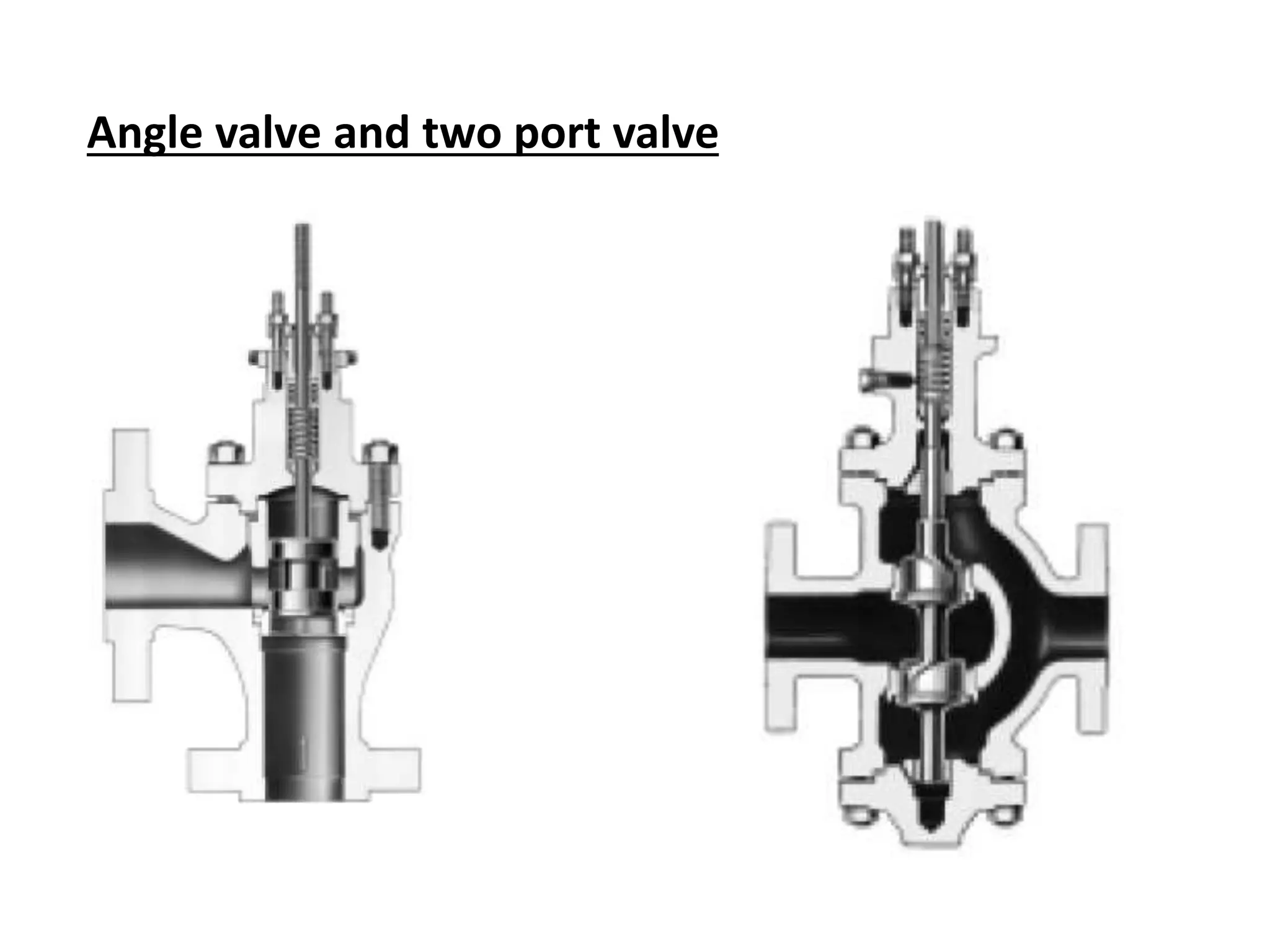
Angle valve and two port valve
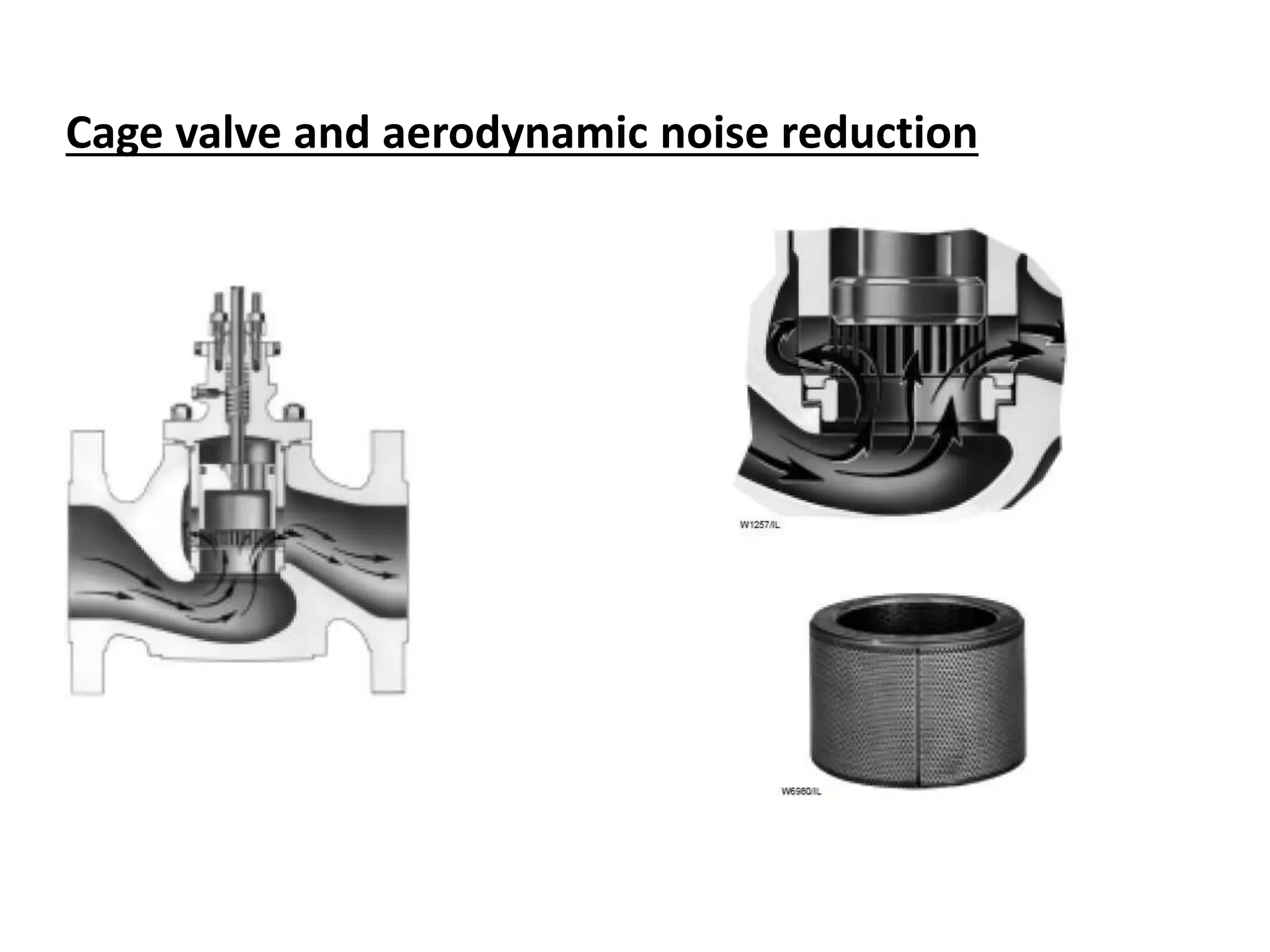
Cage valve and aerodynamic noise reduction
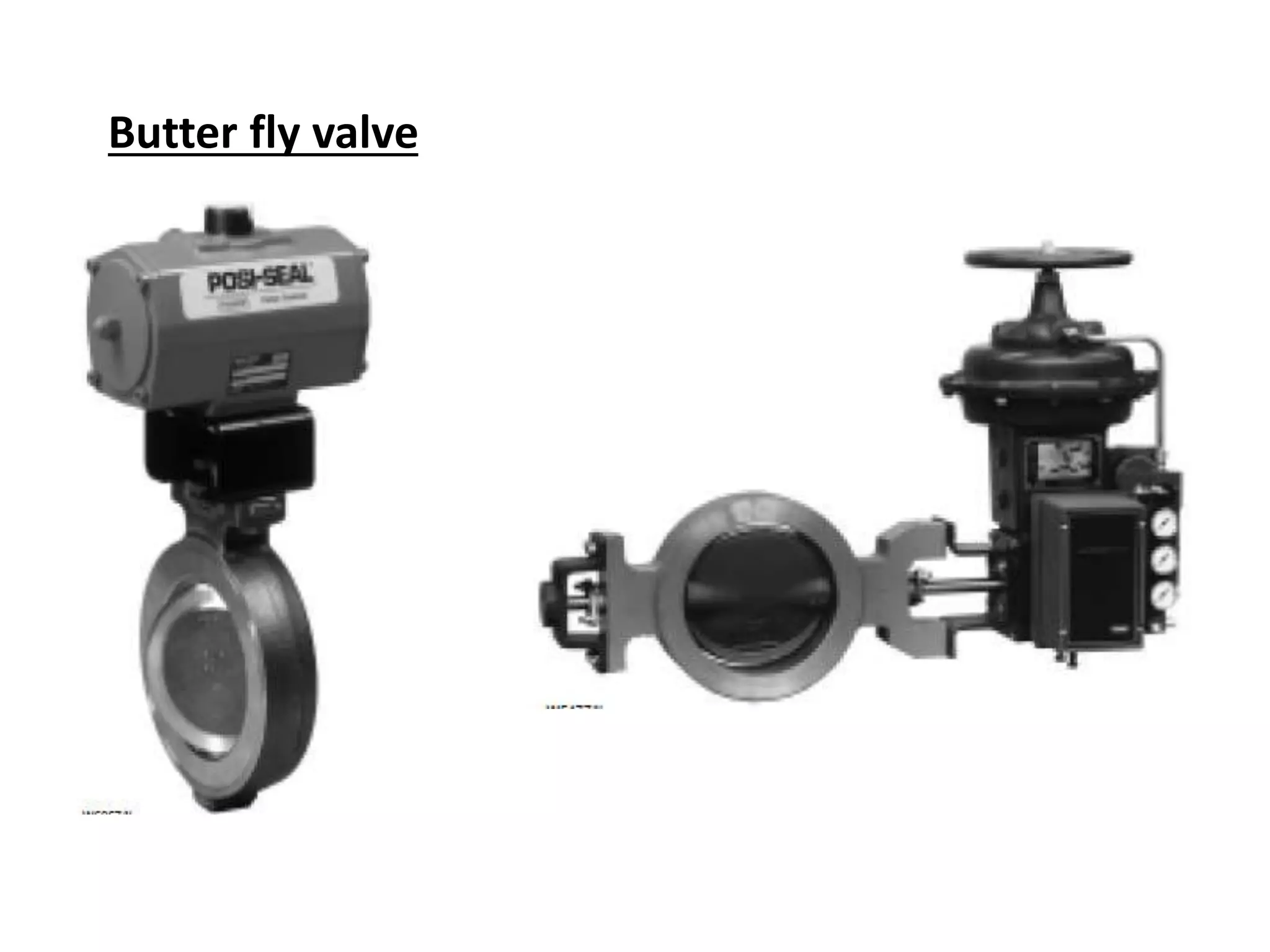
Butter fly valve
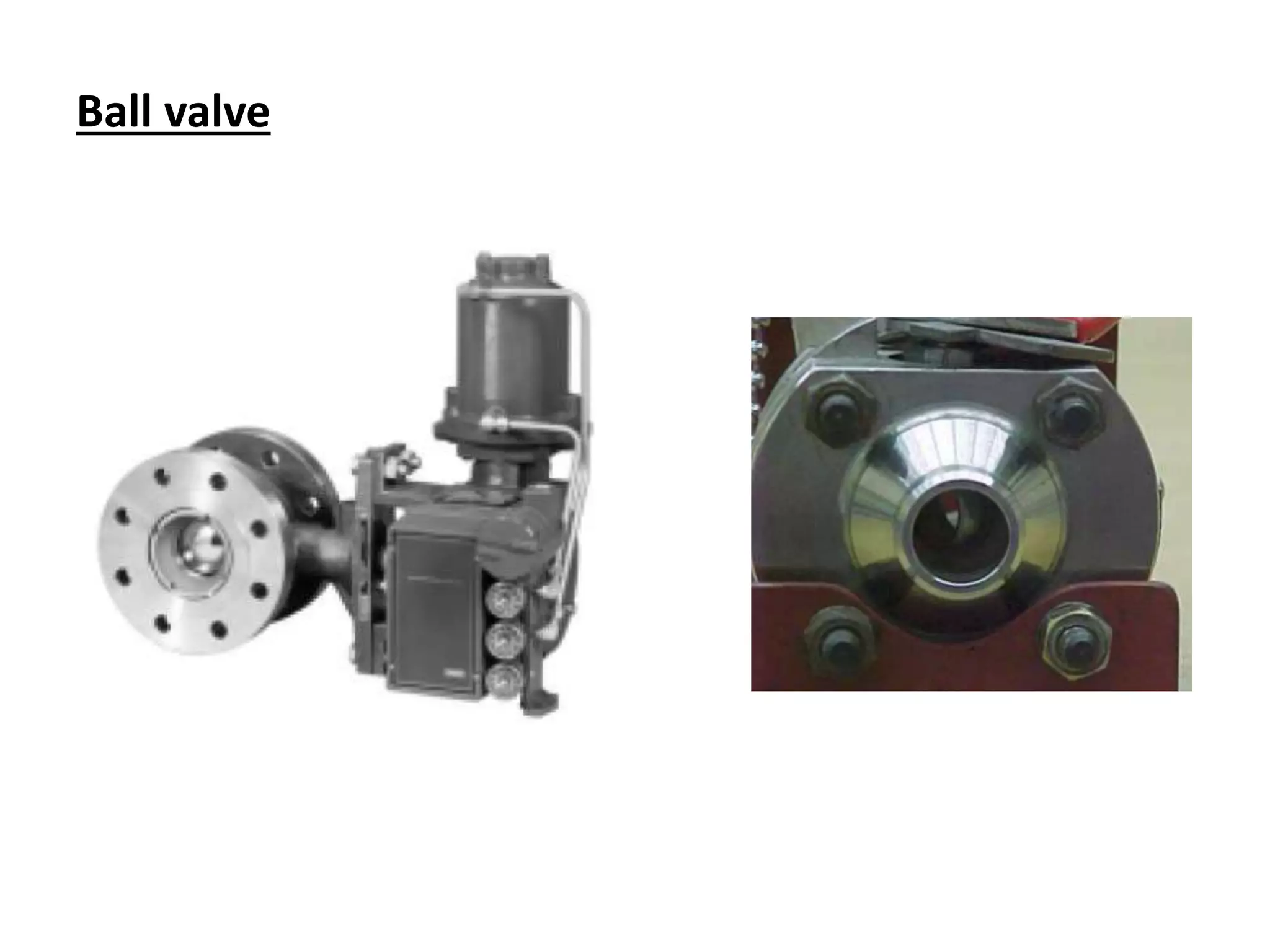
Ball valve
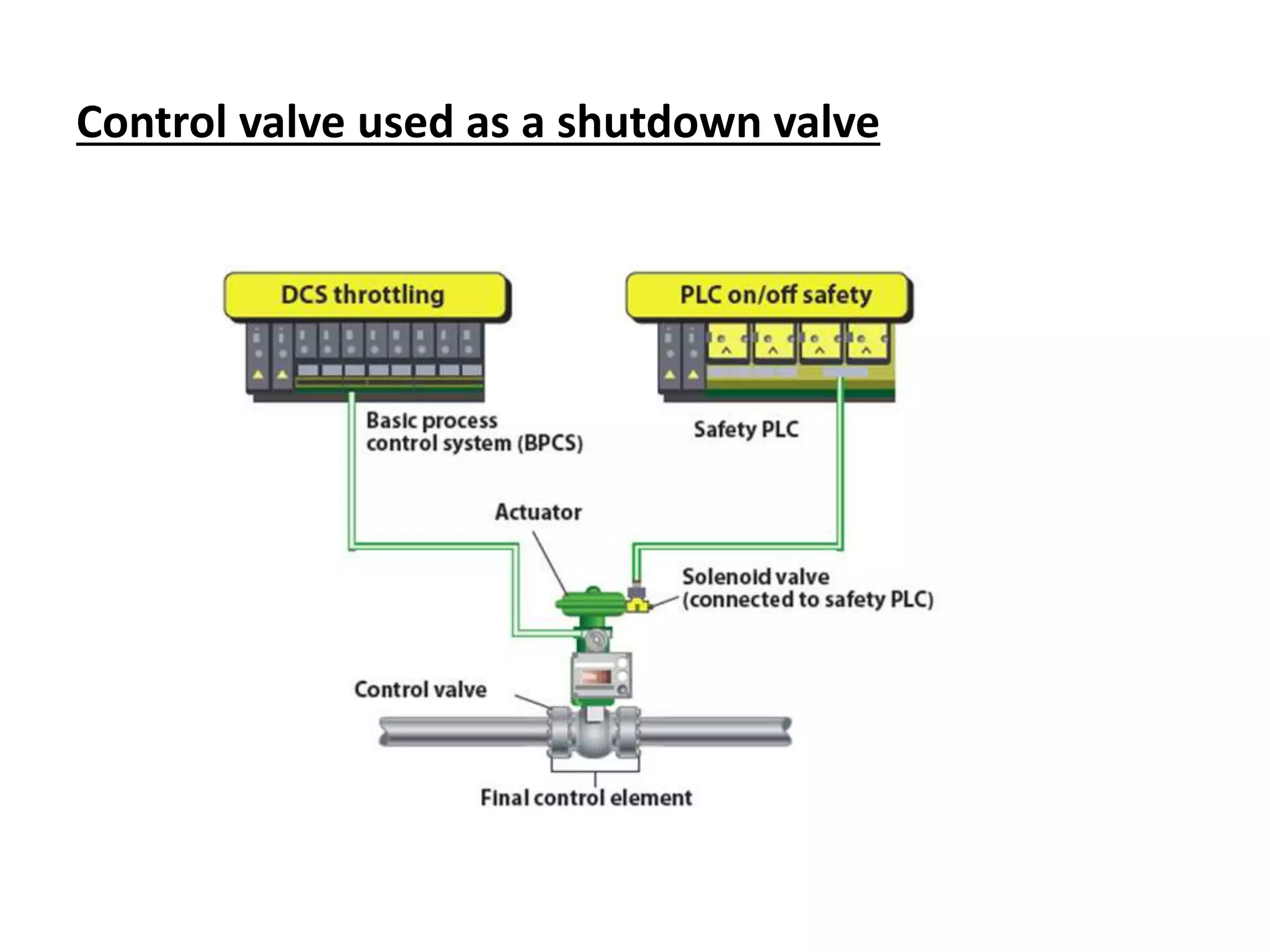
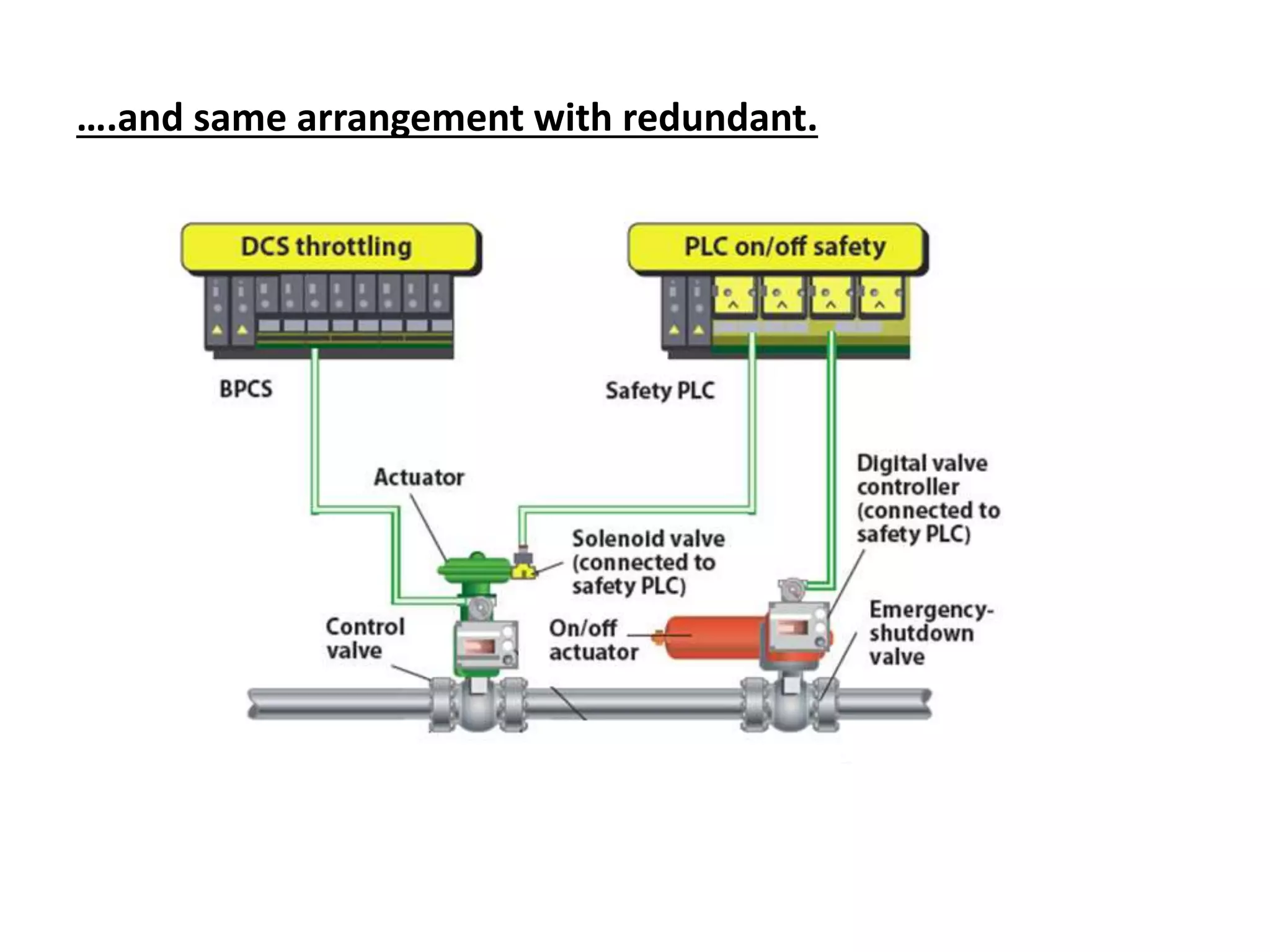
Control valve used as a shutdown valve
….and same arrangement with redundant.
Valve leakage refers to flow through a valve which is set in the 'off' state
In the United States, the American National Standards Institute specifies six different
leakage classes, with "leakage" defined in terms of the full open valve capacity:
 Class I, or 'dust-tight' valves, are intended to work but have not been tested
 Class II valves have no more than 0.5% leakage with 50psi (or less if operating
pressure is less) of air pressure at the operating temperature
 Class III valves have no more than 0.1% leakage under those conditions; this may
require soft valve seats, or lapped metal surfaces
 Class IV valves have no more than 0.01% leakage under those conditions; this
tends to require multiple graphite piston rings or a single Teflon piston ring, and lapped
metal seats.
 Class V valves leak less than 5/10^12 cubic meters, per second, per bar of
pressure differential, per millimeter of port diameter, of water when tested at the service
pressure.
Valve leakage
Valve leakage
 Class VI valves are slightly different in that they , and are required (at 50psi or operating
pressure, whichever is less) to have less than a specified leakage rate in milliliters of air per minute:
1 inch 0.15 ml/min
1.5 inch 0.30 ml/min
2 inch 0.45 ml/min
2.5 inch 0.60 ml/min
3 inch 0.90 ml/min
4 inch 1.70 ml/min
6 inch 4.00 ml/min
8 inch 6.75 ml/min
10 inch 9 ml/min
12 inch 11.5 ml/min
Control valve ppt

Control valve ppt

  • 1.
  • 2.
    What is controlvalve? Control valves are such type of valves which are controlled remotely to maintain flow rate, Level, pressure and temperature directly or indirectly as per requirement. Application of CONTROL VALVE: Flow rate control Level control Pressure control Temperature control
  • 3.
    Control valve inFLOW CONTROL controller Inst Air dP Flow measurement
  • 4.
    Control valve inLEVEL CONTROL controller Inst Air
  • 5.
    Control valve inPRESSURE CONTROL controller Inst Air Pressurized vessel
  • 6.
    Control valve inTemperature Control controller Inst Air Super heated Steam in Steam out Cold water in Hot water out
  • 7.
    Relationship of majorcomponents of a control valve Control valve
  • 8.
    Classification of controlvalve on the basis of actuator action
  • 9.
    Classification of controlvalve on the basis of valve action
  • 10.
    Failure mode Actuator action Valve body action Controlvalve action Failure mode Valve Color Direct Direct Air to close FAIL OPEN Green Direct Reverse Air to open FAIL CLOSE Red Reverse Direct Air to open FAIL CLOSE Red Reverse Reverse Air to close FAIL OPEN Green
  • 11.
  • 12.
  • 13.
    Characterized cages forglove style valve bodies
  • 14.
  • 15.
  • 16.
    Angle valve andtwo port valve
  • 17.
    Cage valve andaerodynamic noise reduction
  • 18.
  • 19.
  • 20.
    Control valve usedas a shutdown valve
  • 21.
    ….and same arrangementwith redundant.
  • 22.
    Valve leakage refersto flow through a valve which is set in the 'off' state In the United States, the American National Standards Institute specifies six different leakage classes, with "leakage" defined in terms of the full open valve capacity:  Class I, or 'dust-tight' valves, are intended to work but have not been tested  Class II valves have no more than 0.5% leakage with 50psi (or less if operating pressure is less) of air pressure at the operating temperature  Class III valves have no more than 0.1% leakage under those conditions; this may require soft valve seats, or lapped metal surfaces  Class IV valves have no more than 0.01% leakage under those conditions; this tends to require multiple graphite piston rings or a single Teflon piston ring, and lapped metal seats.  Class V valves leak less than 5/10^12 cubic meters, per second, per bar of pressure differential, per millimeter of port diameter, of water when tested at the service pressure. Valve leakage
  • 23.
    Valve leakage  ClassVI valves are slightly different in that they , and are required (at 50psi or operating pressure, whichever is less) to have less than a specified leakage rate in milliliters of air per minute: 1 inch 0.15 ml/min 1.5 inch 0.30 ml/min 2 inch 0.45 ml/min 2.5 inch 0.60 ml/min 3 inch 0.90 ml/min 4 inch 1.70 ml/min 6 inch 4.00 ml/min 8 inch 6.75 ml/min 10 inch 9 ml/min 12 inch 11.5 ml/min