Film Techniques and Essay Planning
2
Learning Intentions:

Understand the categories of film techniques and how they create/affect meaning

Know the function of a clear contention when writing an essay
Success Criteria:

I can identify film techniques and their function within “Lion”

I can explain how a contention is foundational to essay structure
3
What do I mean by “contention?”
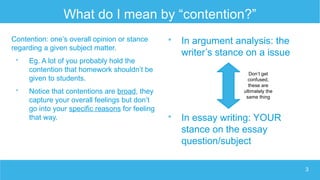
Contention: one’s overall opinion or stance
regarding a given subject matter.

Eg. A lot of you probably hold the
contention that homework shouldn’t be
given to students.

Notice that contentions are broad, they
capture your overall feelings but don’t
go into your specific reasons for feeling
that way.

In argument analysis: the
writer’s stance on a issue

In essay writing: YOUR
stance on the essay
question/subject
Don’t get
confused,
these are
ultimately the
same thing
4
Let’s form a contention
Prompt 2. Explore how the landscape plays a
significant role in Lion
Tip: set aside ~5 minutes at the beginning of
your exam’s writing time to do this for your
chosen prompt
5
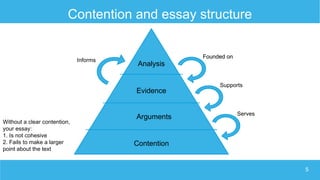
Contention and essay structure
Contention
Arguments
Evidence
Analysis
Founded on
Supports
Founded on
Serves
Informs
Without a clear contention,
your essay:
1. Is not cohesive
2. Fails to make a larger
point about the text
6
Tip: use your links and conclusion as checkpoints

Remember that your linking sentences and conclusion serve to
explain why your arguments are relevant to your contention

Therefore, they also serve as a chance for you (and the reader) to
make sure that what you’ve just written is cohesive
7
Film techniques - CAMELS
8
Film techniques - CAMELS

Camera
Techniques

Acting 
Mise en scene

Editing 
Lighting 
Sound
* Composition
9
Camera Techniques

Shots, angles and movements

* More advanced: depth of
field (focus), zooms and
dollies

All broadly referred to as
cinematography
10
Acting

Speech, mannerisms,
demeanour, actions

All of these can be used to
examine characterisation
11
Mise En Scene

Literally “stuff in the scene”

Broadly refers to the
set/location and objects within
the set
12
Editing

Cuts, transitions, effects, etc.

All aspects of the film which
are not directly captured
during filming
13
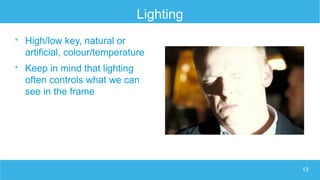
Lighting

High/low key, natural or
artificial, colour/temperature

Keep in mind that lighting
often controls what we can
see in the frame
14
Sound

Dialogue, music, sound
effects, diegetic or non-
diegetic

Very often specific songs are
used not just to invoke a
feeling but to imply meaning
(Jordan Peele loves doing
this)
15
How film techniques convey information
Direct

Dialogue

Acting

Sometimes mise en scene or
editing
Implied

Everything else
The vast majority of the information we get from a film is implied
through the usage of film techniques, especially camera
techniques, lighting and mise en scene
16
Breaking down a shot
17
The jalebi scene: going deeper

This scene doesn’t appear in the
novel “a long way home,” it is an
invention of Garth Davis

Allusion to Proust through
involuntary memory

“Our identity only goes back as far
as our memories”

Privilege
18
Breaking down a shot
19
Breaking down a scene
https://www.youtube.com/watch?v=2wPMf9G2WdY
20
Your turn
Instructions:
1) In small groups (2-4 people) break down and list the techniques used in
at least 3 shots from the worksheet (don’t worry about sound if you can’t
remember)
2) For each shot you examine, provide at least one example of how
meaning is conveyed or implied through the use of filmic techniques
3) If you’re up for a challenge, write a short analysis (~2-3 sentences) of
the techniques used in at least one of the shots you have chosen
21
Conclusion

Write in your own words the
importance of understanding
film techniques

Tip: keep implied information
in mind
Film Techniques .

  • 1.
    Film Techniques andEssay Planning
  • 2.
    2 Learning Intentions:  Understand thecategories of film techniques and how they create/affect meaning  Know the function of a clear contention when writing an essay Success Criteria:  I can identify film techniques and their function within “Lion”  I can explain how a contention is foundational to essay structure
  • 3.
    3 What do Imean by “contention?” Contention: one’s overall opinion or stance regarding a given subject matter.  Eg. A lot of you probably hold the contention that homework shouldn’t be given to students.  Notice that contentions are broad, they capture your overall feelings but don’t go into your specific reasons for feeling that way.  In argument analysis: the writer’s stance on a issue  In essay writing: YOUR stance on the essay question/subject Don’t get confused, these are ultimately the same thing
  • 4.
    4 Let’s form acontention Prompt 2. Explore how the landscape plays a significant role in Lion Tip: set aside ~5 minutes at the beginning of your exam’s writing time to do this for your chosen prompt
  • 5.
    5 Contention and essaystructure Contention Arguments Evidence Analysis Founded on Supports Founded on Serves Informs Without a clear contention, your essay: 1. Is not cohesive 2. Fails to make a larger point about the text
  • 6.
    6 Tip: use yourlinks and conclusion as checkpoints  Remember that your linking sentences and conclusion serve to explain why your arguments are relevant to your contention  Therefore, they also serve as a chance for you (and the reader) to make sure that what you’ve just written is cohesive
  • 7.
  • 8.
    8 Film techniques -CAMELS  Camera Techniques  Acting  Mise en scene  Editing  Lighting  Sound * Composition
  • 9.
    9 Camera Techniques  Shots, anglesand movements  * More advanced: depth of field (focus), zooms and dollies  All broadly referred to as cinematography
  • 10.
    10 Acting  Speech, mannerisms, demeanour, actions  Allof these can be used to examine characterisation
  • 11.
    11 Mise En Scene  Literally“stuff in the scene”  Broadly refers to the set/location and objects within the set
  • 12.
    12 Editing  Cuts, transitions, effects,etc.  All aspects of the film which are not directly captured during filming
  • 13.
    13 Lighting  High/low key, naturalor artificial, colour/temperature  Keep in mind that lighting often controls what we can see in the frame
  • 14.
    14 Sound  Dialogue, music, sound effects,diegetic or non- diegetic  Very often specific songs are used not just to invoke a feeling but to imply meaning (Jordan Peele loves doing this)
  • 15.
    15 How film techniquesconvey information Direct  Dialogue  Acting  Sometimes mise en scene or editing Implied  Everything else The vast majority of the information we get from a film is implied through the usage of film techniques, especially camera techniques, lighting and mise en scene
  • 16.
  • 17.
    17 The jalebi scene:going deeper  This scene doesn’t appear in the novel “a long way home,” it is an invention of Garth Davis  Allusion to Proust through involuntary memory  “Our identity only goes back as far as our memories”  Privilege
  • 18.
  • 19.
    19 Breaking down ascene https://www.youtube.com/watch?v=2wPMf9G2WdY
  • 20.
    20 Your turn Instructions: 1) Insmall groups (2-4 people) break down and list the techniques used in at least 3 shots from the worksheet (don’t worry about sound if you can’t remember) 2) For each shot you examine, provide at least one example of how meaning is conveyed or implied through the use of filmic techniques 3) If you’re up for a challenge, write a short analysis (~2-3 sentences) of the techniques used in at least one of the shots you have chosen
  • 21.
    21 Conclusion  Write in yourown words the importance of understanding film techniques  Tip: keep implied information in mind