Downloaded 10 times


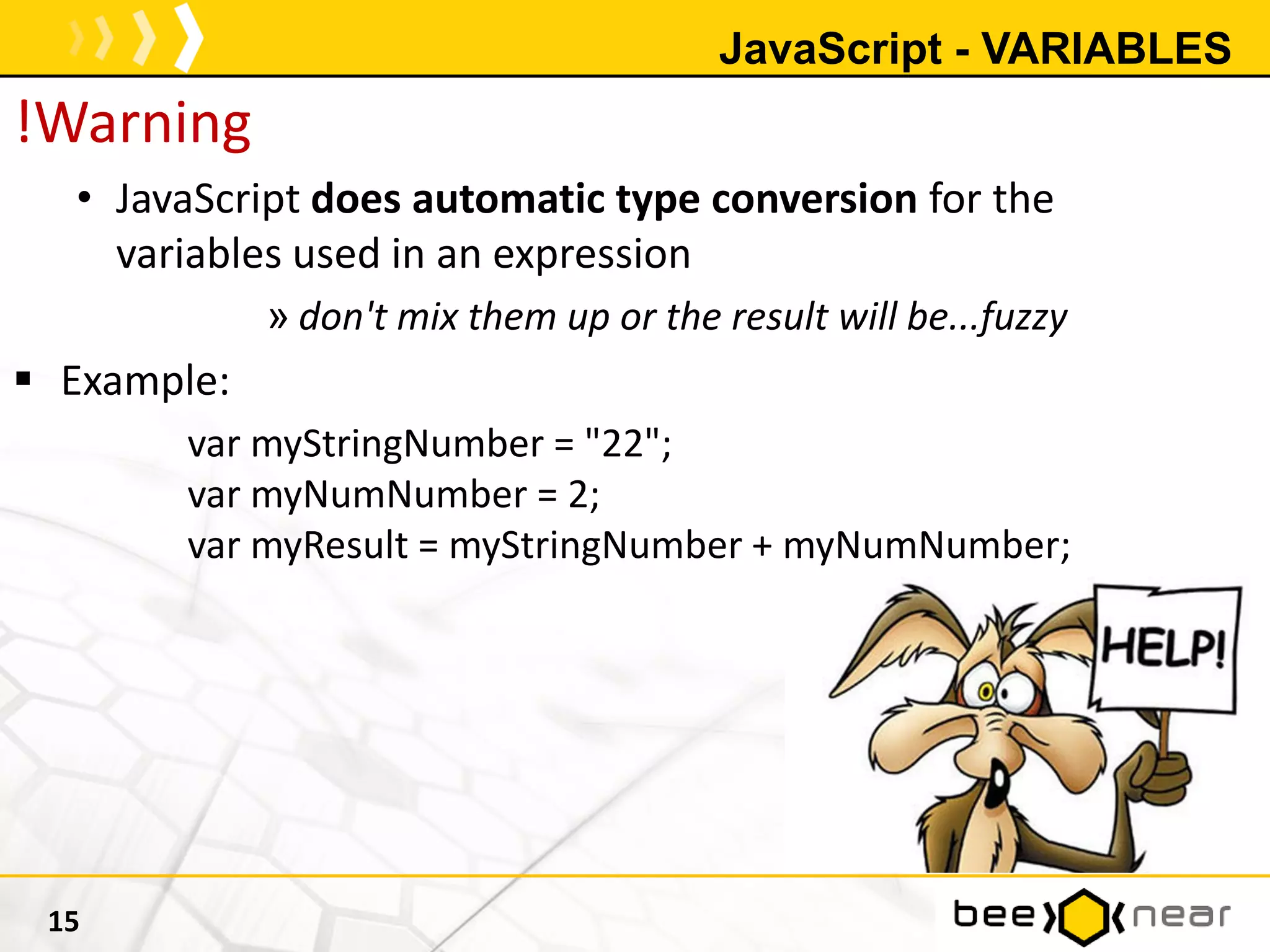
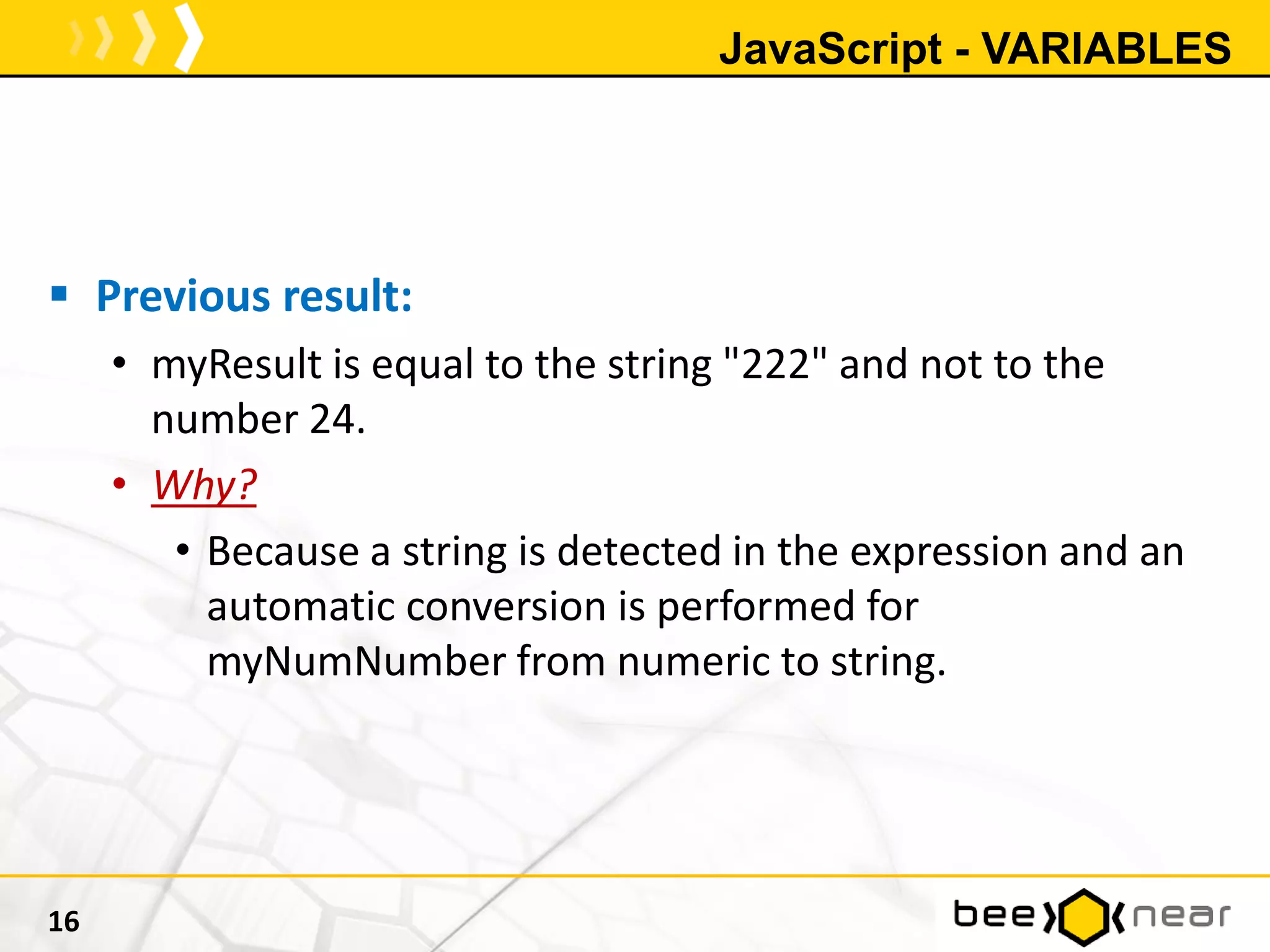
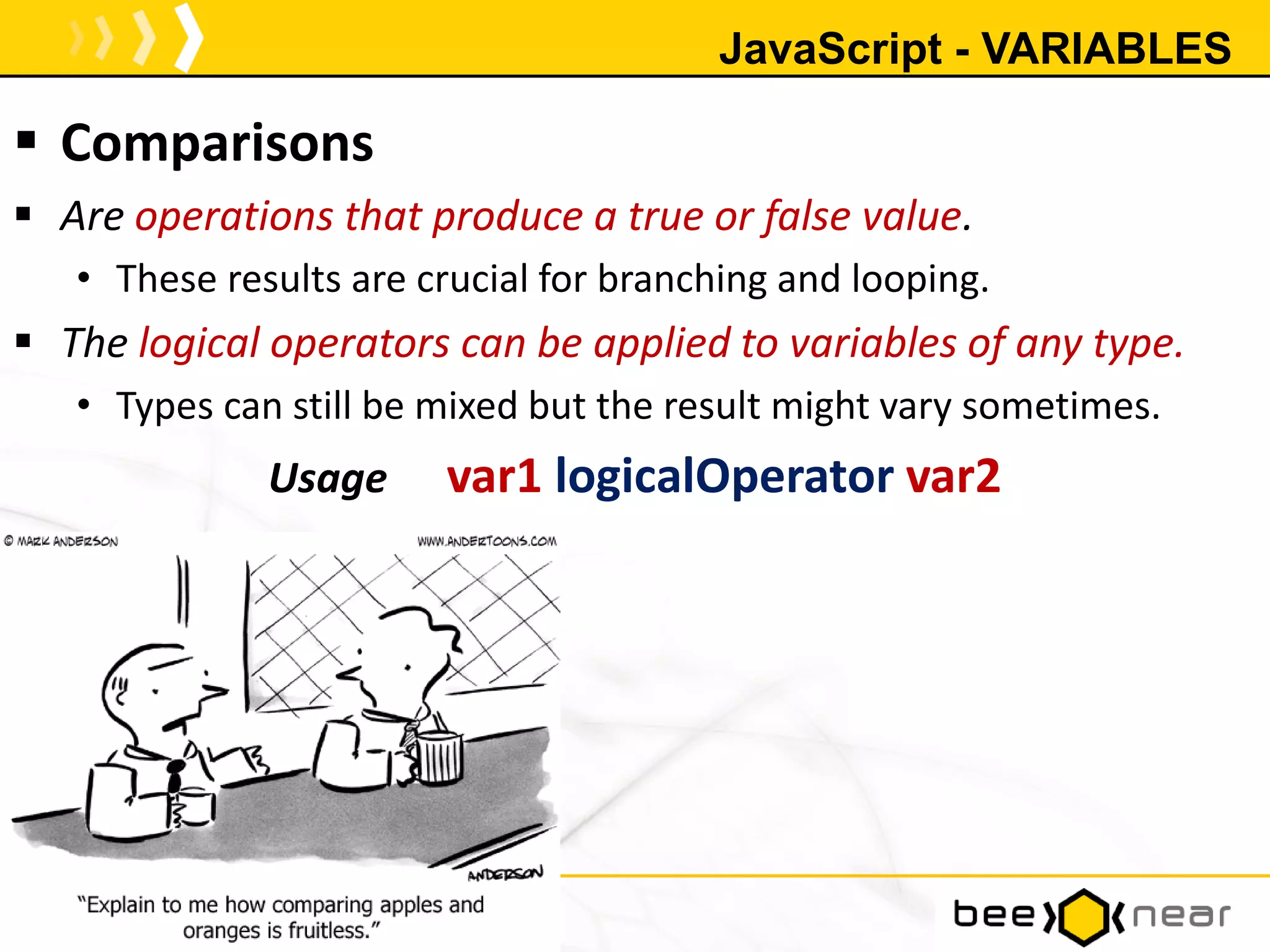
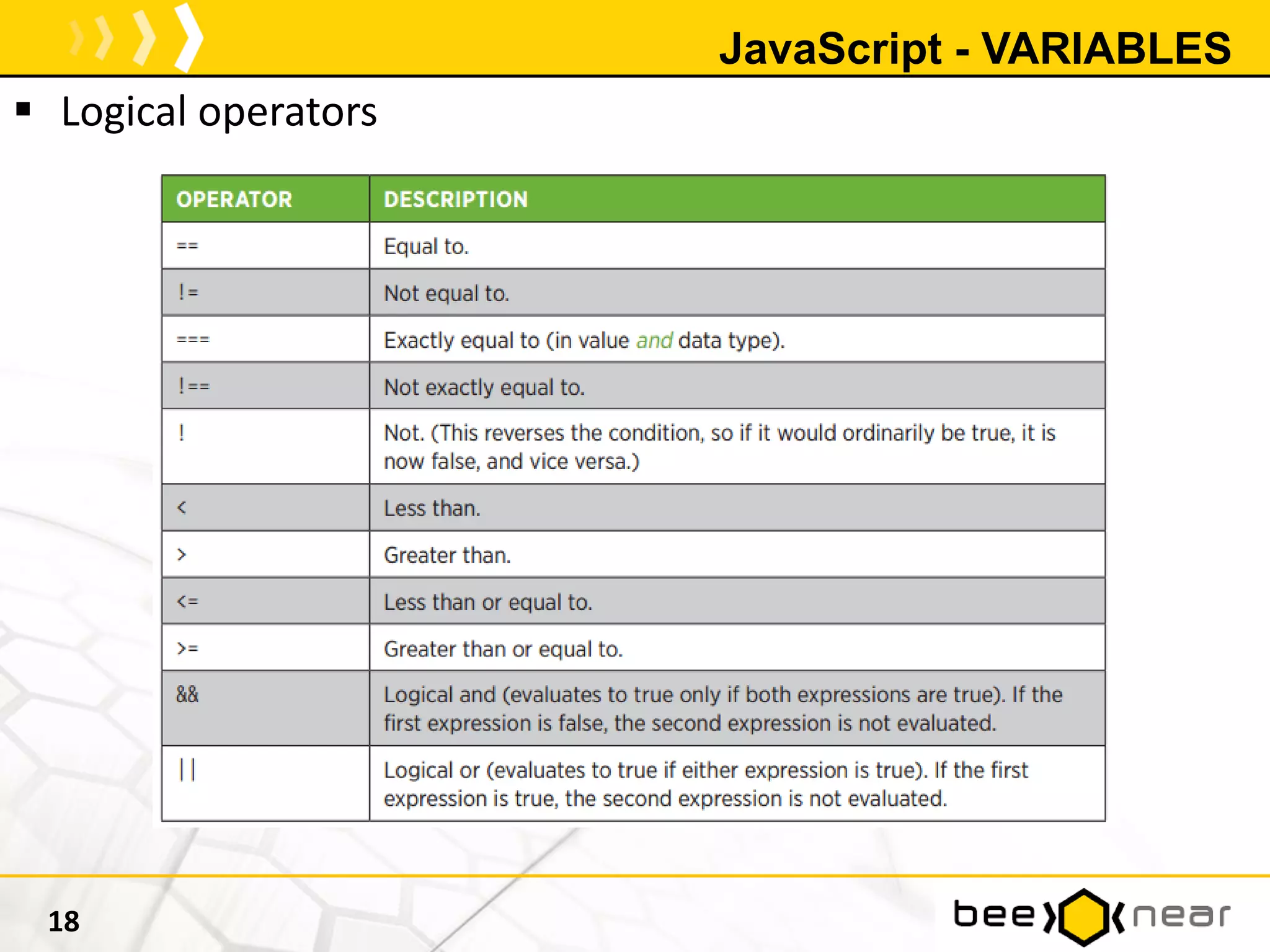
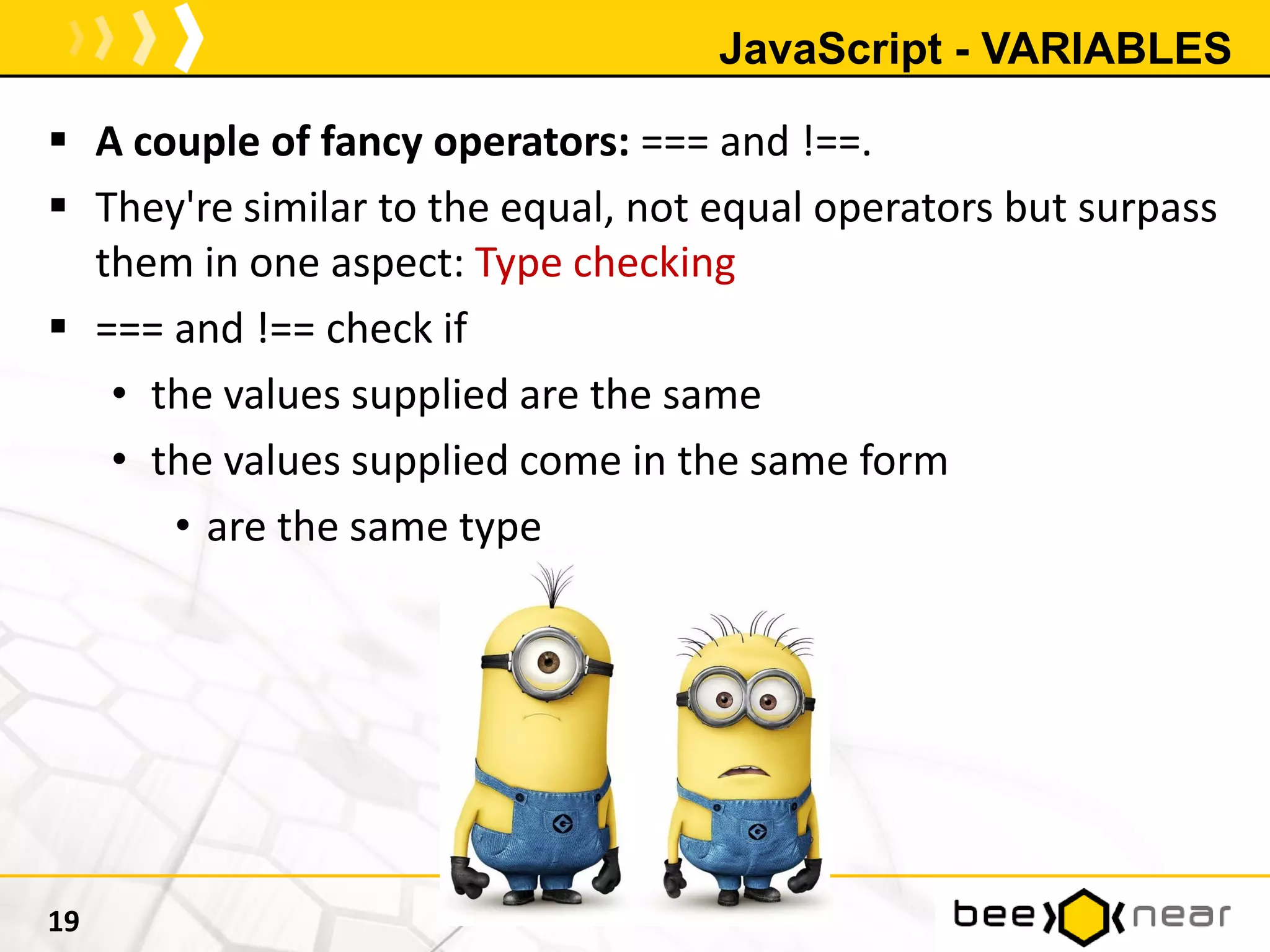
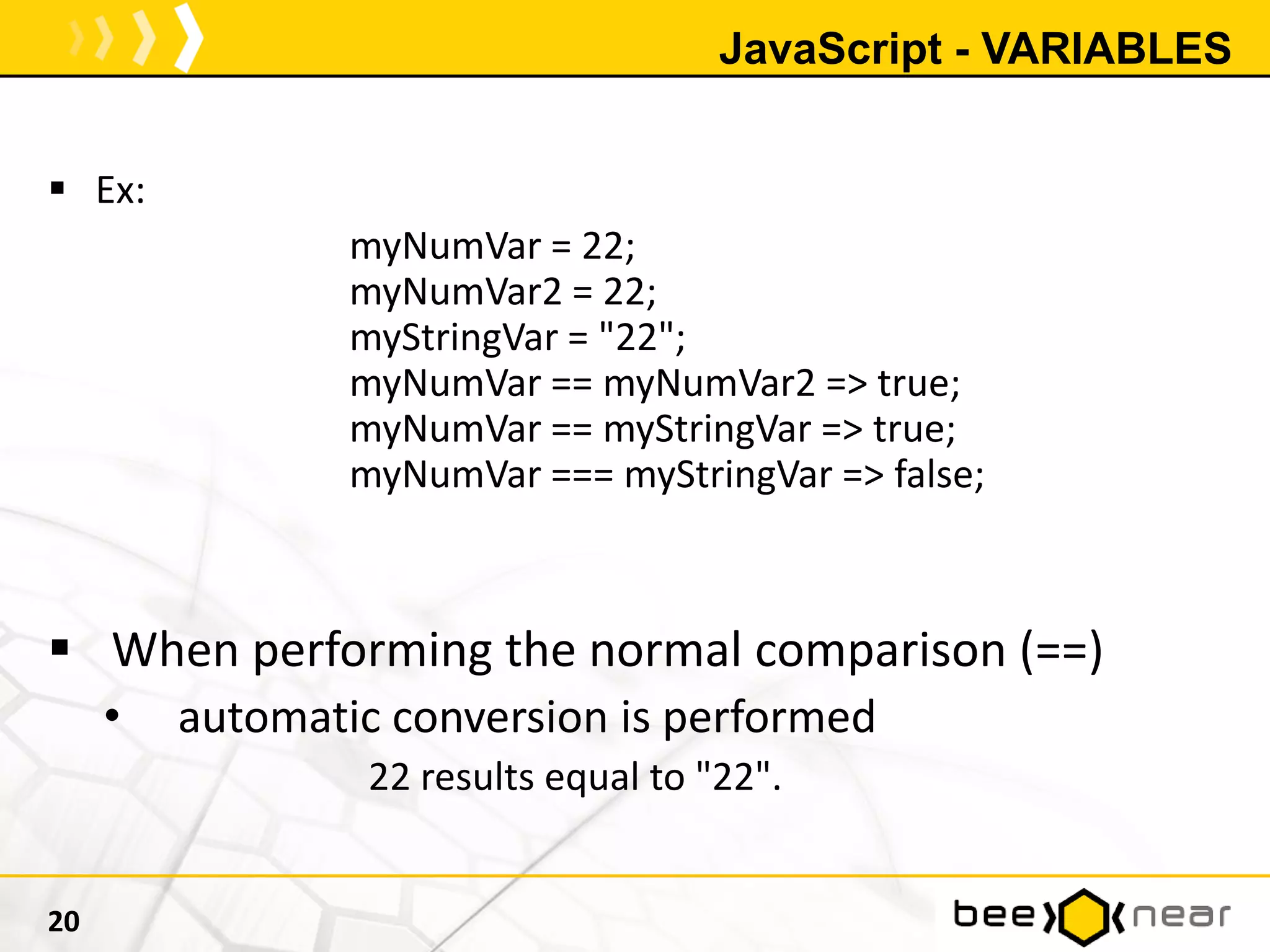
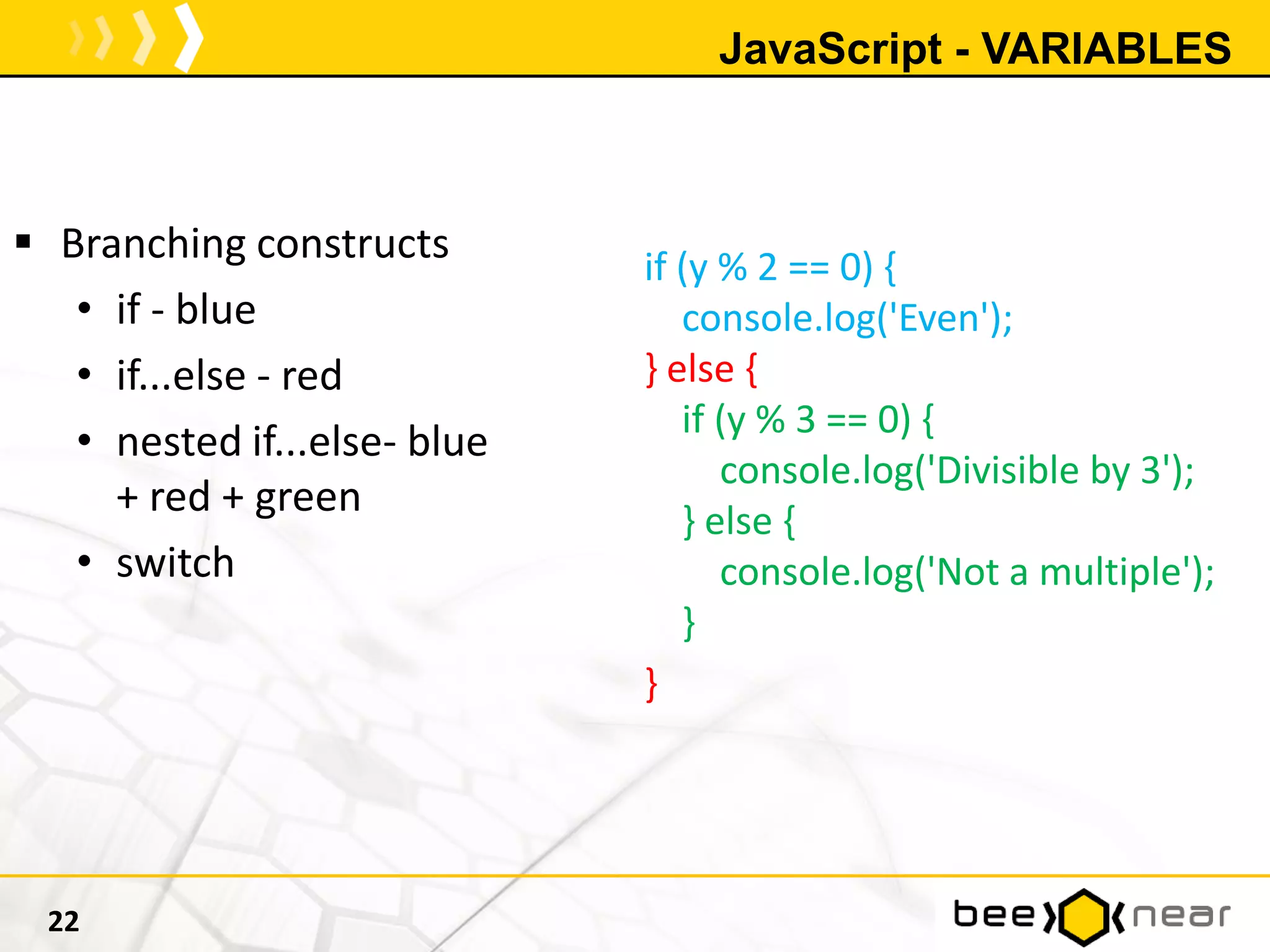
![JavaScript Functions
Declaring a function
function myFunctionName ([myParameterList])
{
//do something with variables, branches, loops, etc
[return some value]
}
29](https://image.slidesharecdn.com/fiipracticfrontendbeenear-laborator3-140317085544-phpapp01/75/Fii-Practic-Frontend-BeeNear-laborator3-29-2048.jpg)
![ Contents of [ and ] are optional
• a function can be declared and used without input
parameters (myParameterList)
• a function can be without having to return some result to
the user (return some value)
Because JavaScript doesn't care about types
• parameter types are not needed
30](https://image.slidesharecdn.com/fiipracticfrontendbeenear-laborator3-140317085544-phpapp01/75/Fii-Practic-Frontend-BeeNear-laborator3-30-2048.jpg)
![Anonymous functions
Functions can also be created by a function expression. Such a function can
be anonymous; it does not have to have a name.
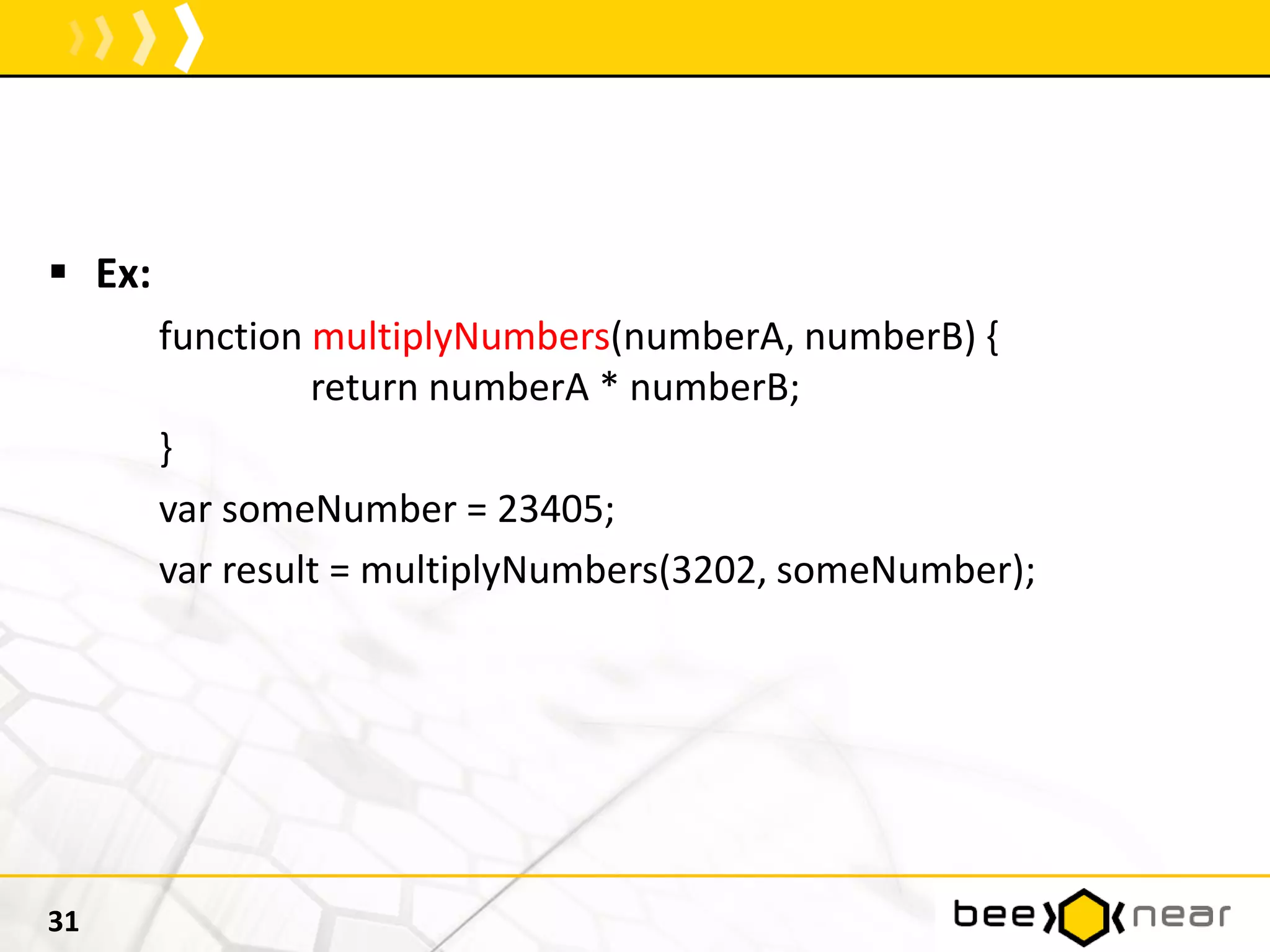
var square = function(number) {return number * number};
var x = square(4) //x gets the value 16
var factorial = function fac(n) {return n<2 ? 1 : n*fac(n-1)};
console.log(factorial(3));
Function expressions are convenient when passing a function as an
argument to another function.
function map(f,a) {
var result = [], // Create a new Array
i;
for (i = 0; i != a.length; i++)
result[i] = f(a[i]);
return result;
}
The call:
map(function(x) {return x * x * x}, [0, 1, 2, 5, 10]);//returns [0, 1, 8, 125, 1000].
33](https://image.slidesharecdn.com/fiipracticfrontendbeenear-laborator3-140317085544-phpapp01/75/Fii-Practic-Frontend-BeeNear-laborator3-33-2048.jpg)
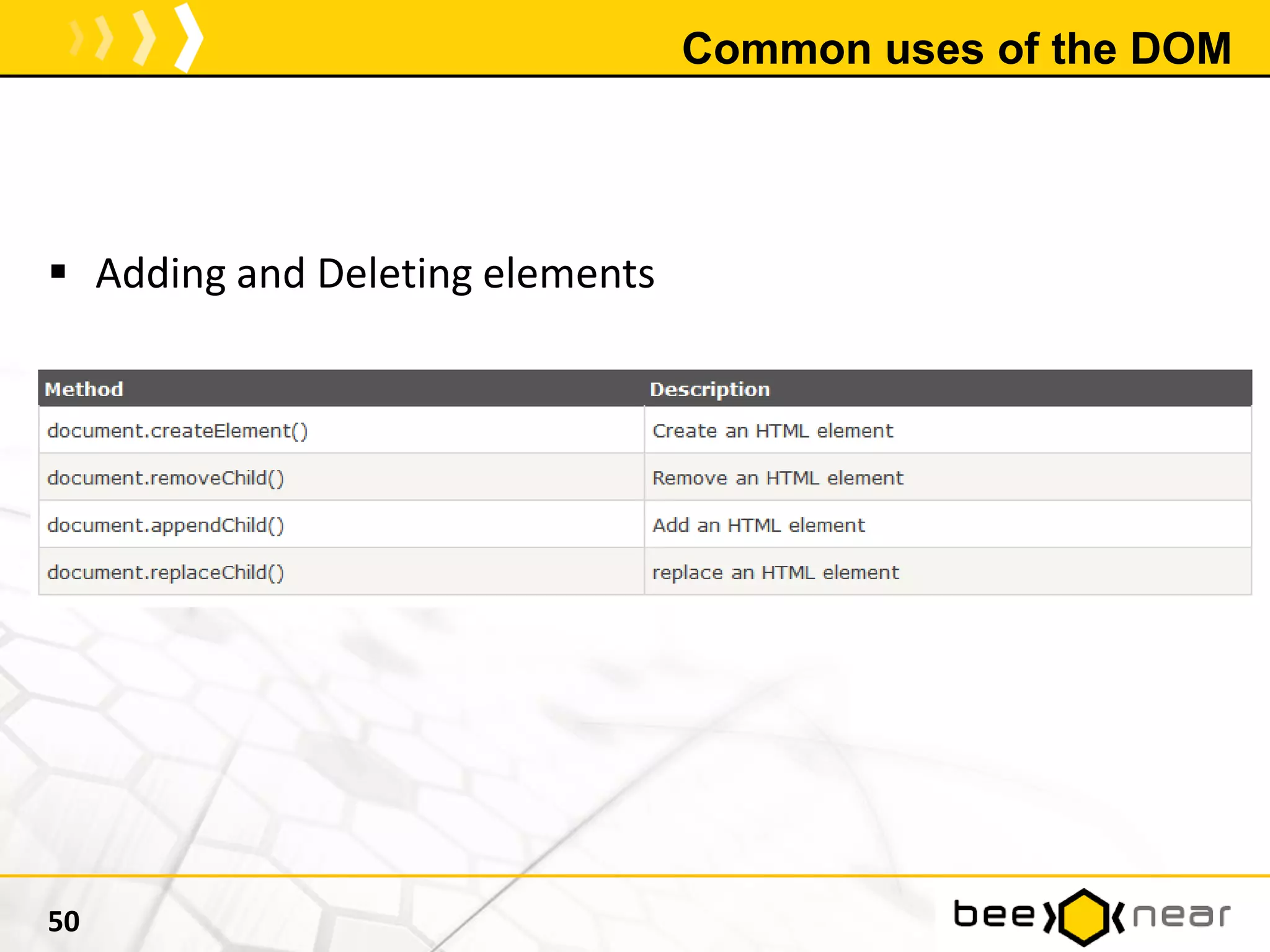
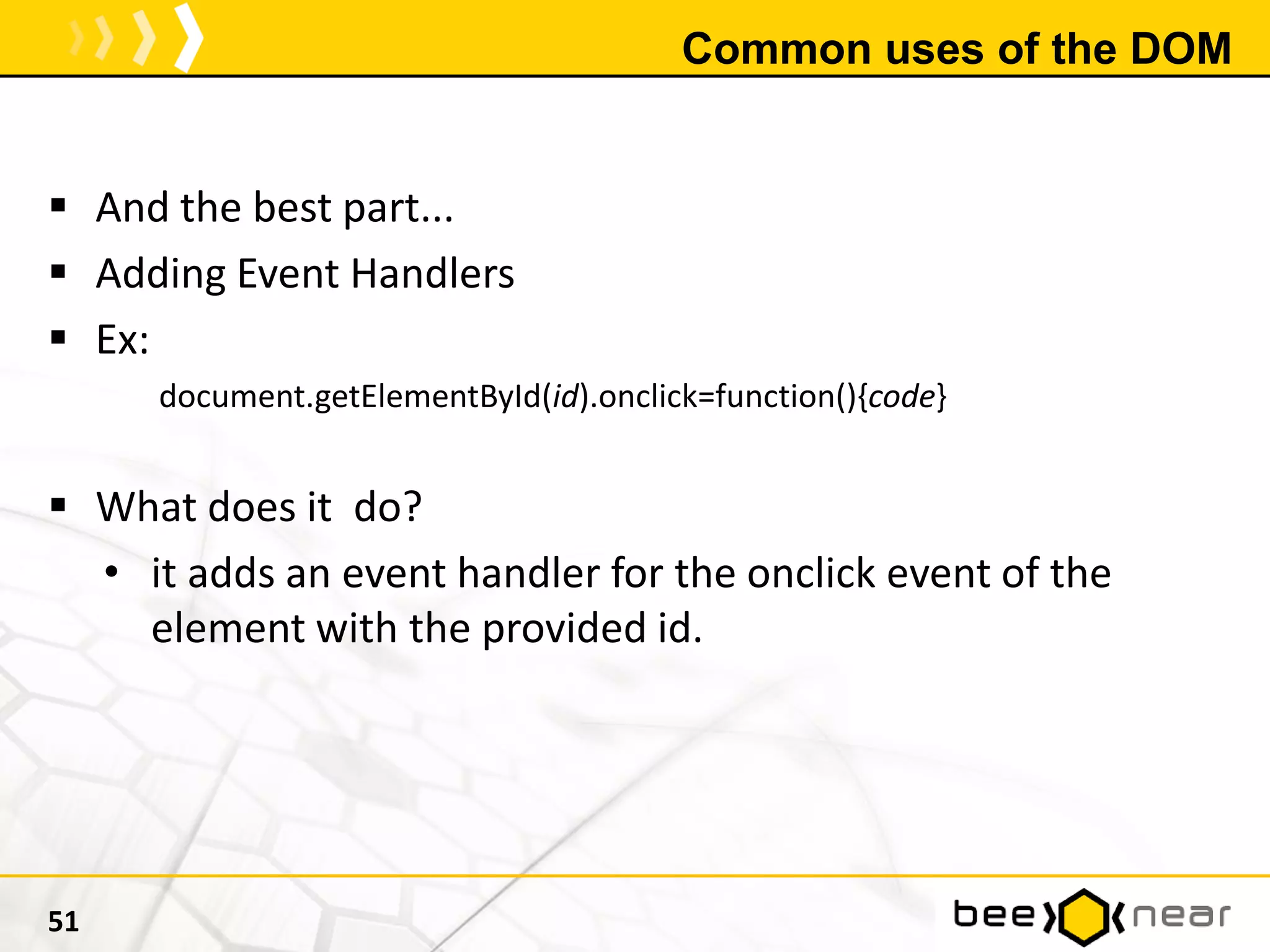
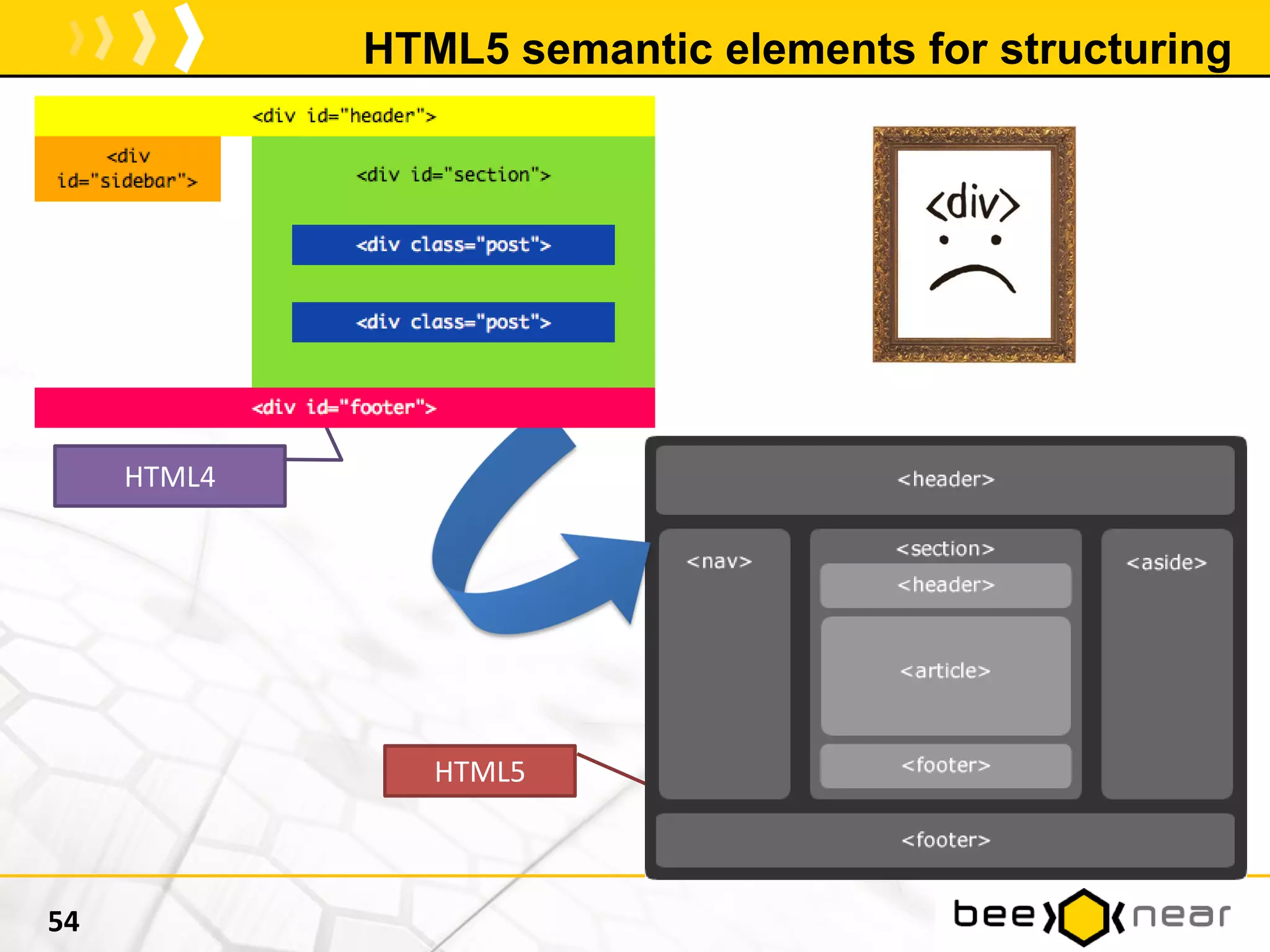
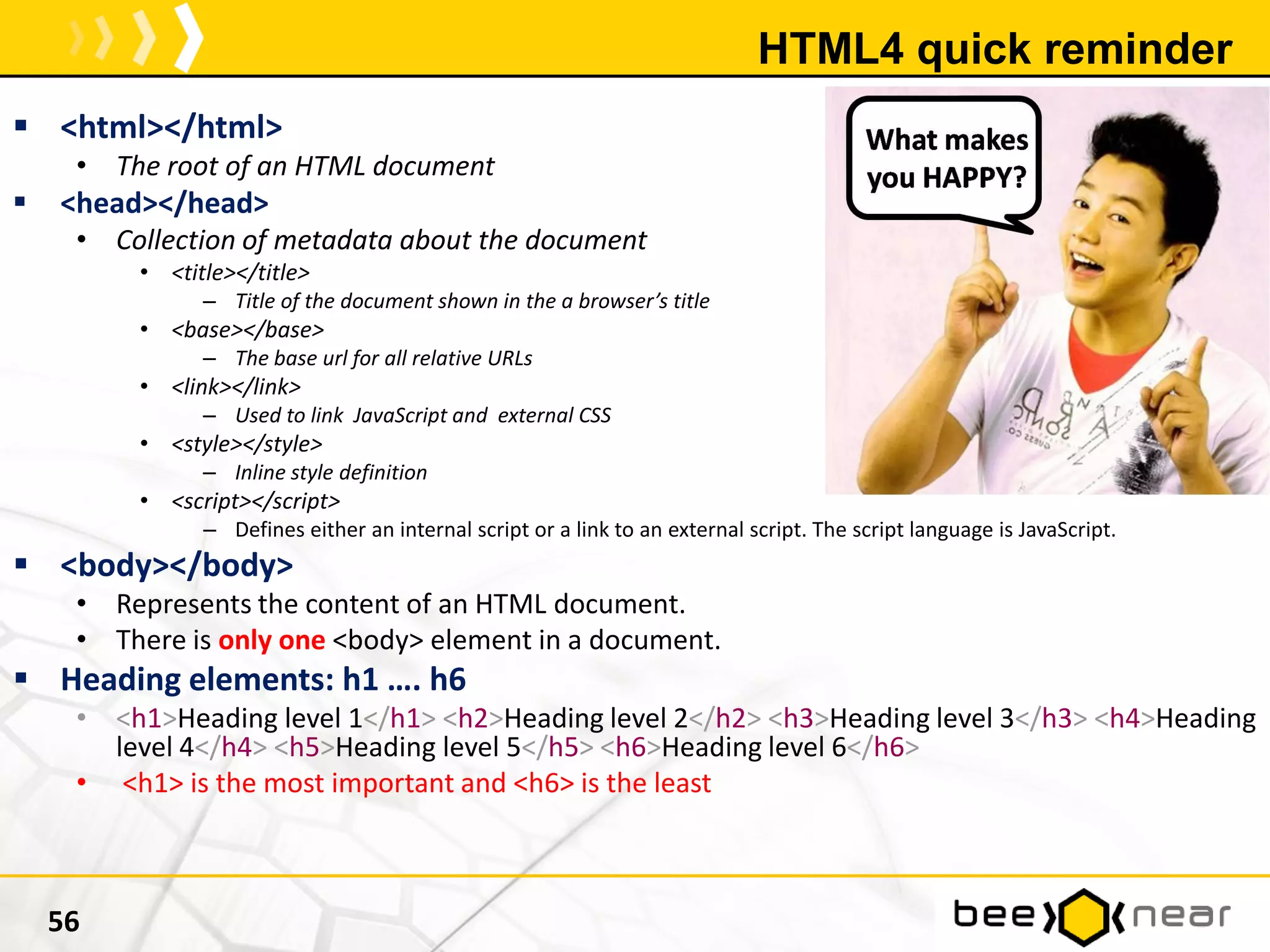
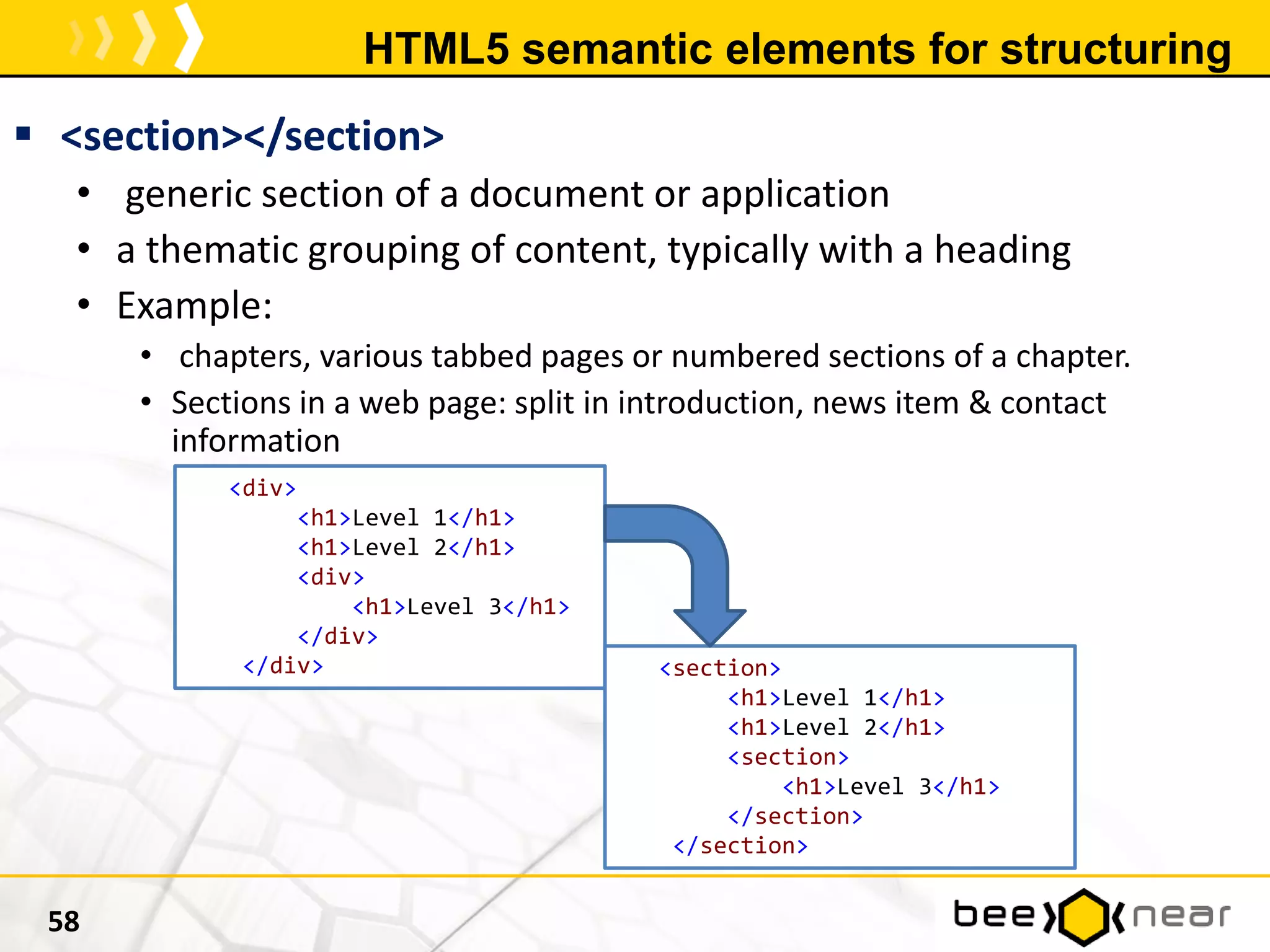
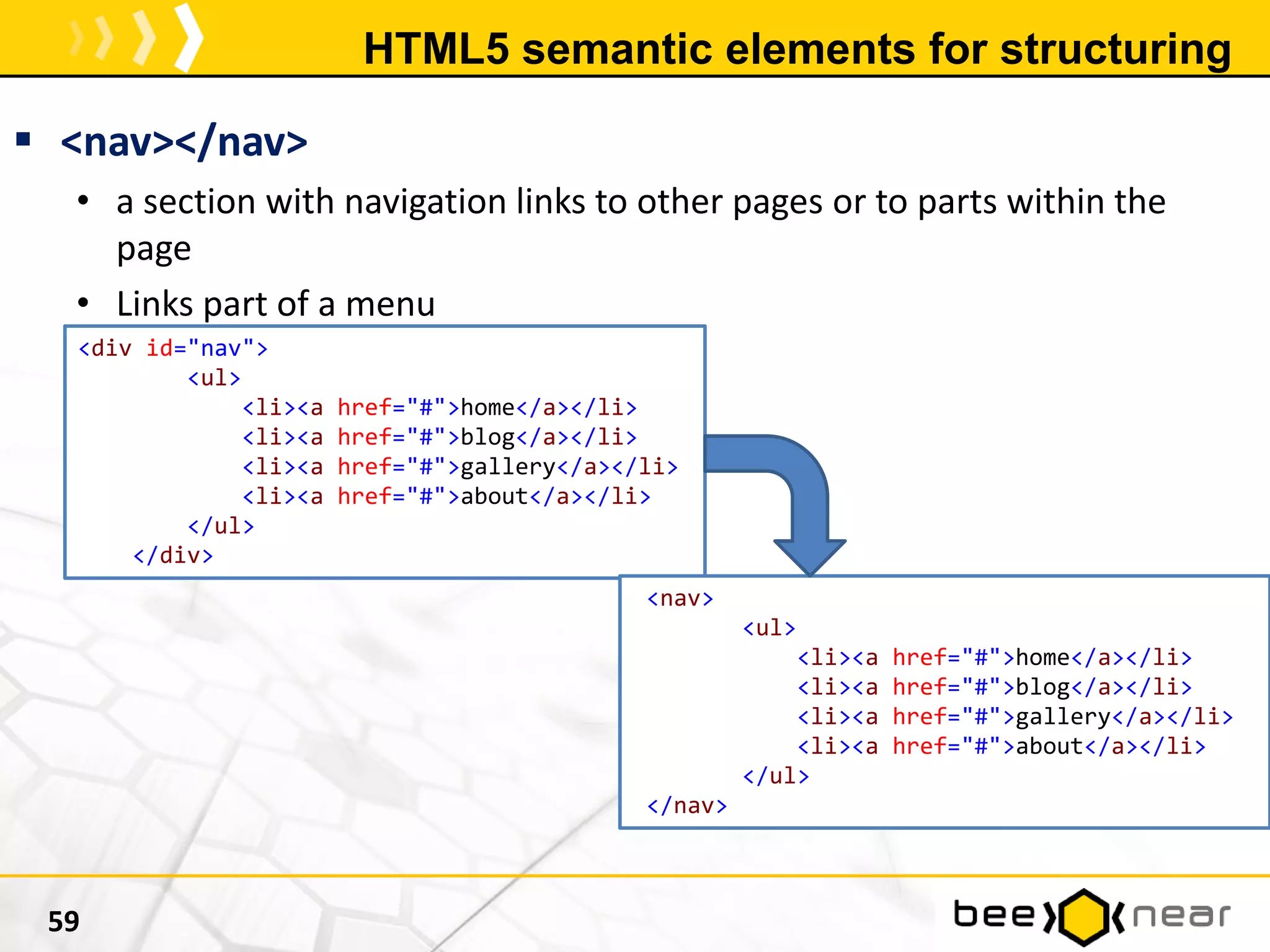
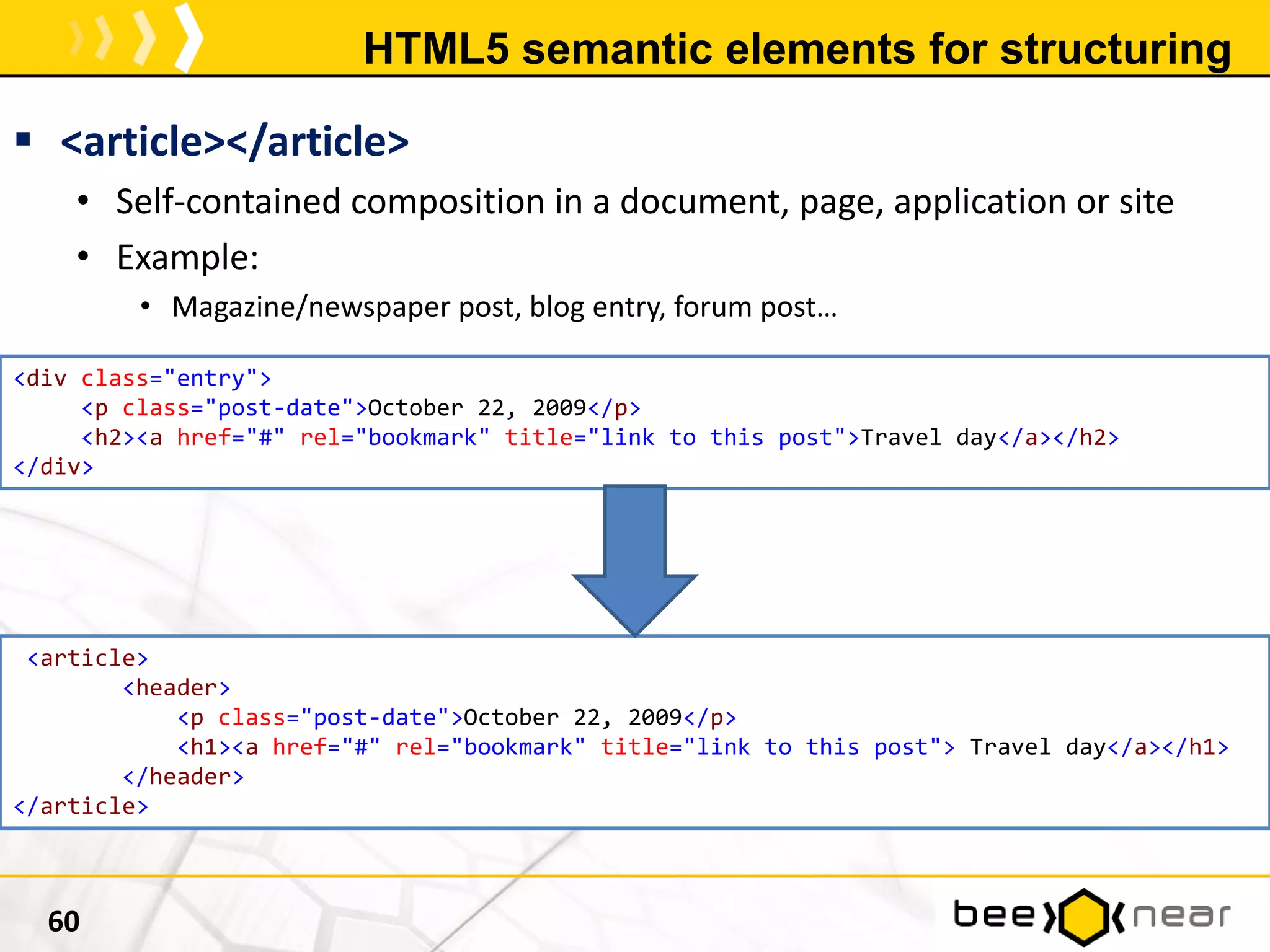
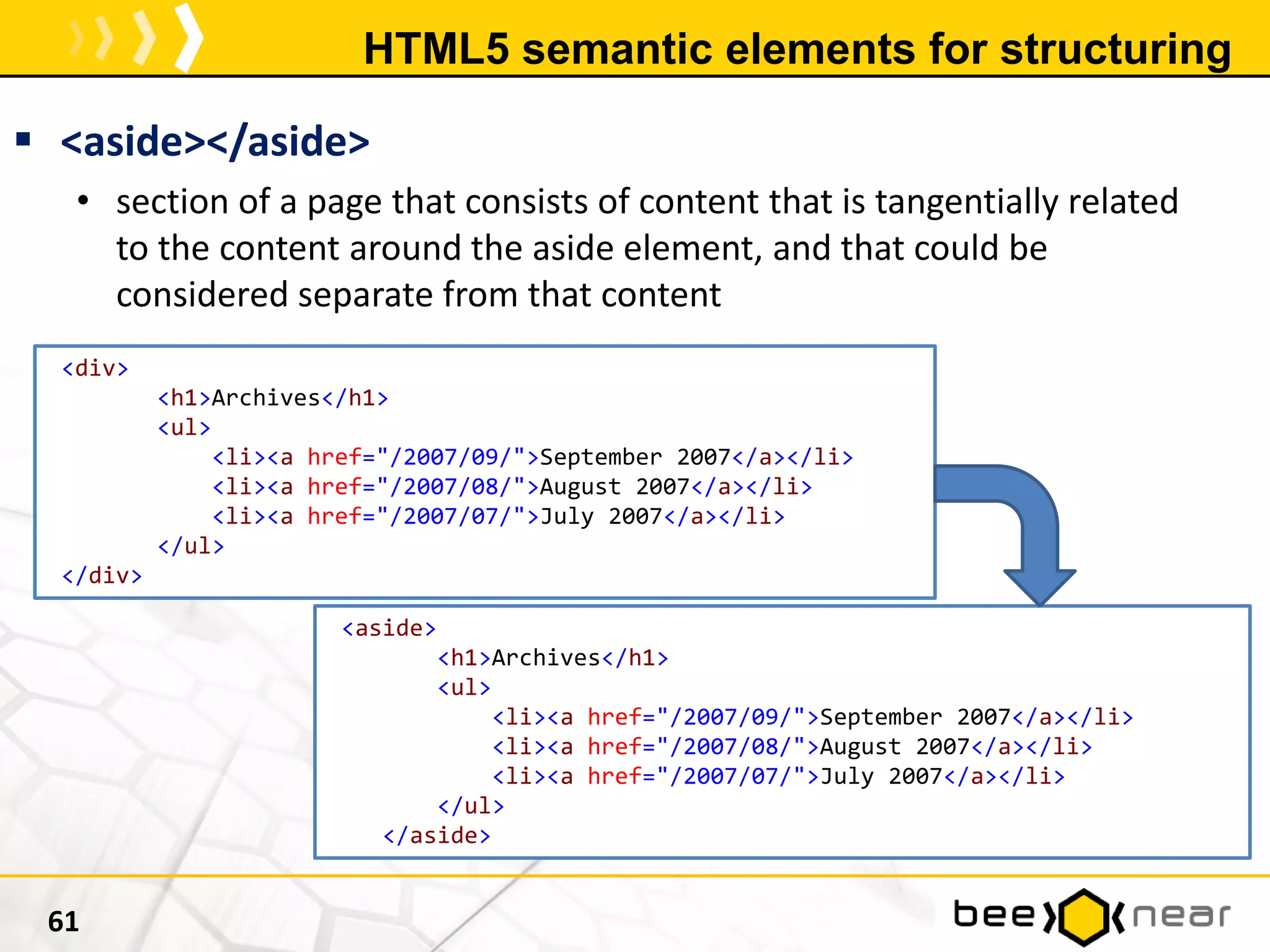
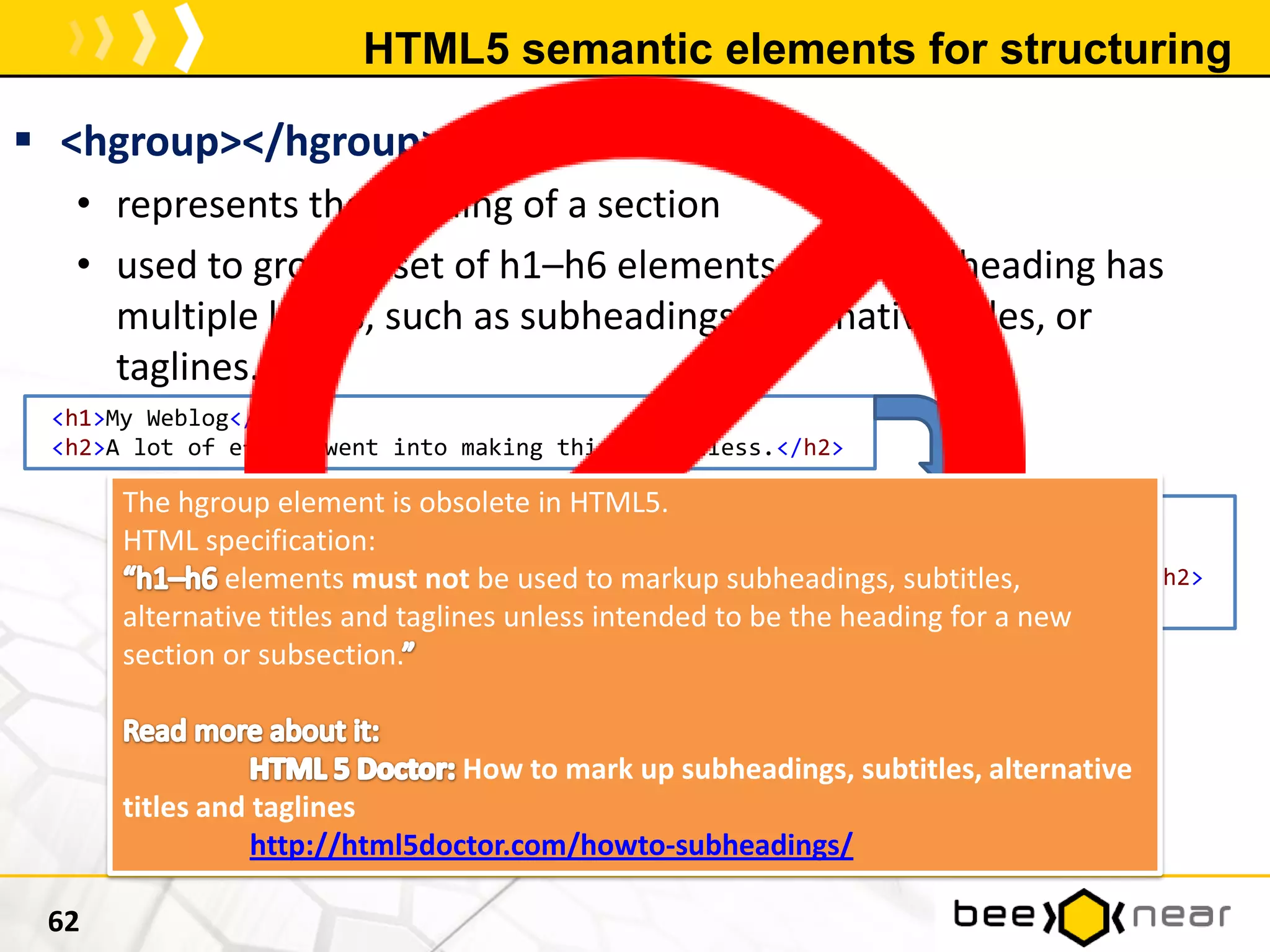
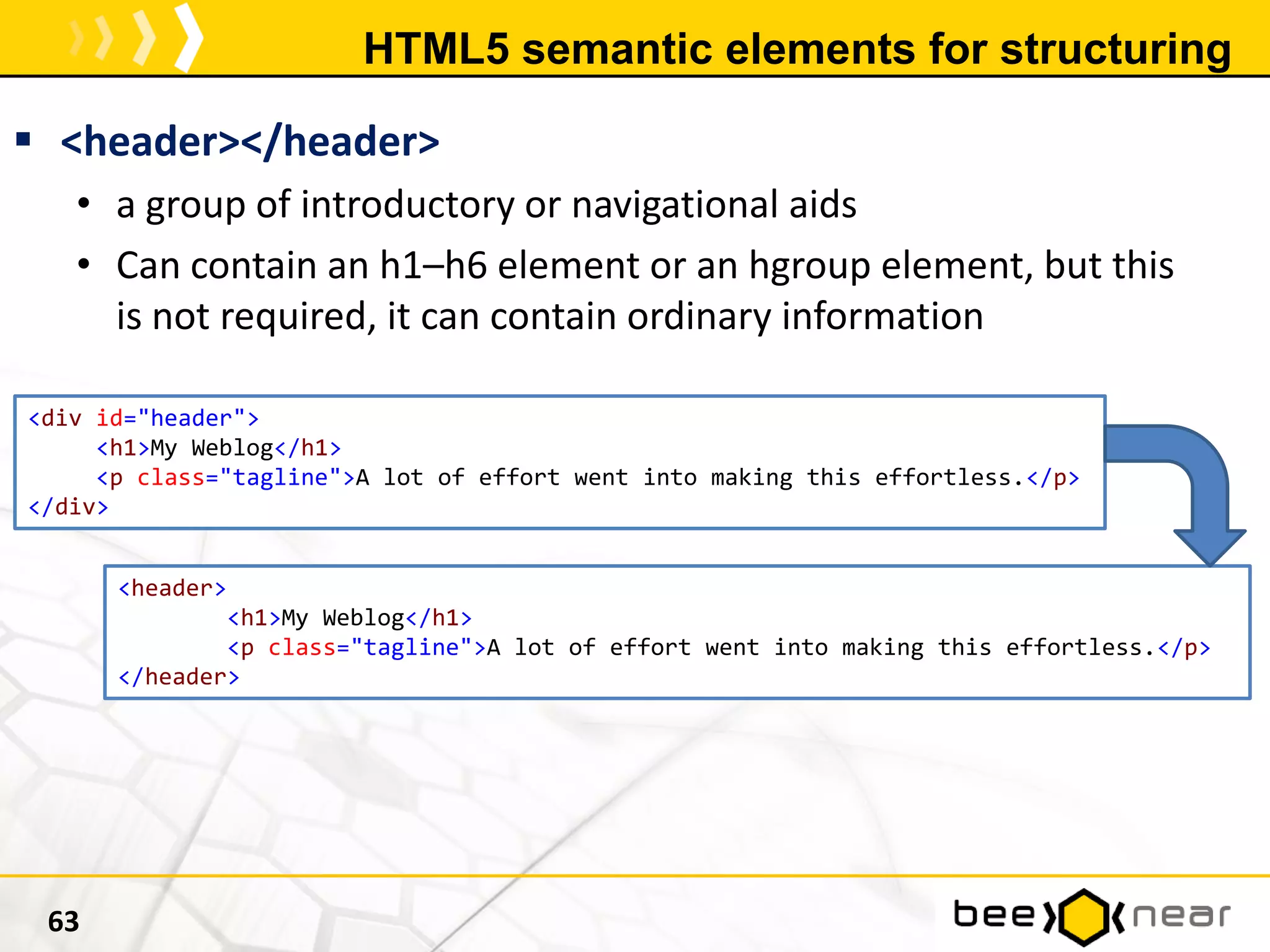
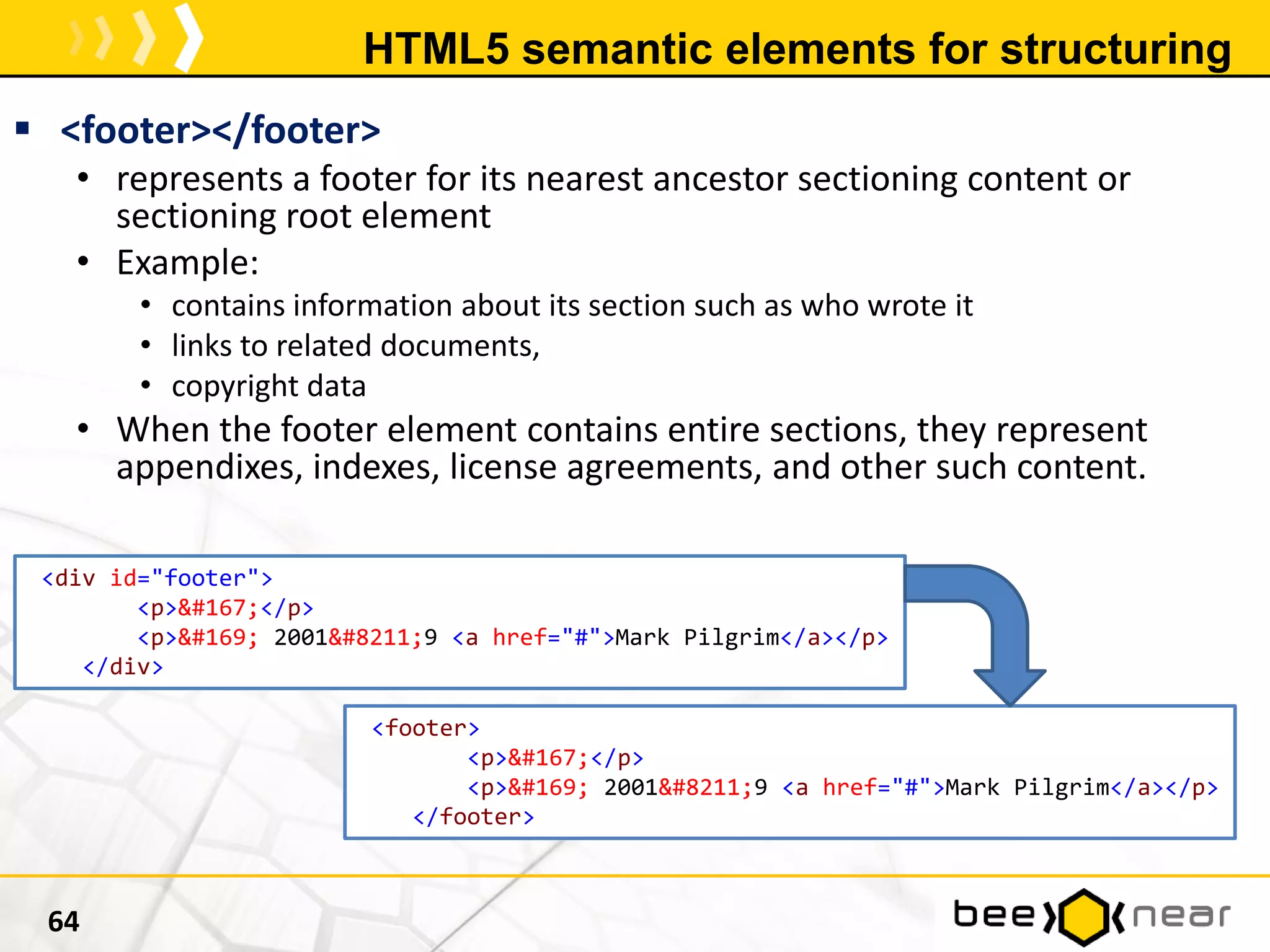
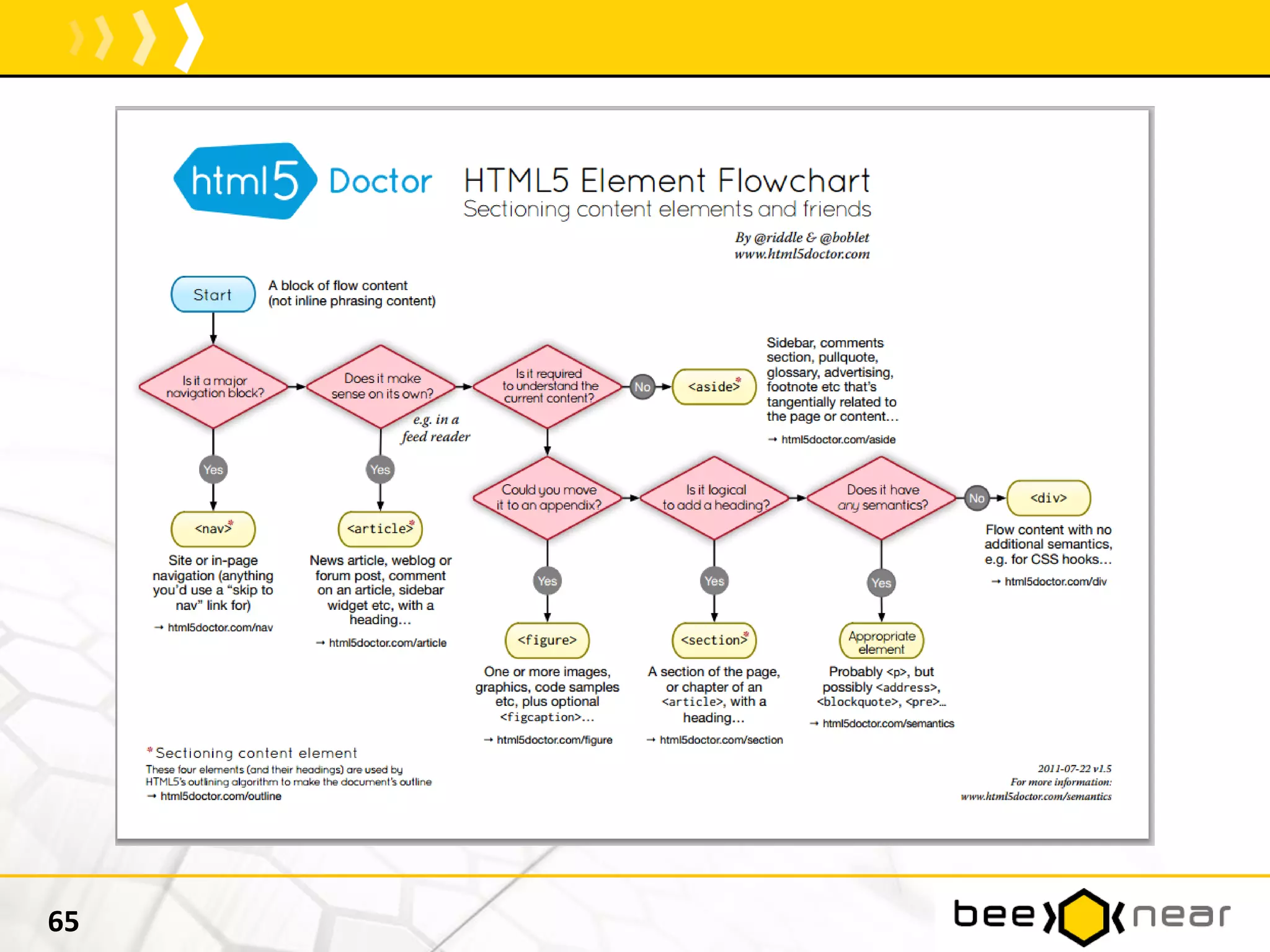


The document discusses HTML5 semantic elements and how they can be used to structure web pages in a more transparent way compared to traditional <div> elements. It provides examples of common HTML5 semantic elements like <header>, <nav>, <article>, <section>, and <aside> that can be used instead of <div> for specific sections like navigation, headers, articles, etc. The document also briefly reviews common HTML4 elements like <html>, <head>, <title>, <body>, and heading elements to provide context before discussing the new HTML5 semantic elements.


