A PRESENTATION ON
FIBER REINFORCED CONCRETE
OVER VIEW
SRI VENKATESWARA ENGINEERING COLLEGE

PRESENTING
Internal guide:
P.Jhansi mam

BY:



CH.GOPI CHAND



Civil engineering department
FIBER REINFORCED CONCRETE

project At :

pacific solutions(ECIL)

Hyderabad, A.p
History


1900s, asbestos fibers were used in
concrete. In the 1950s, the concept
of composite materials came into being
and fiber-reinforced concrete was one of
the topics of interest. Once the health
risks associated with asbestos were
discovered, there was a need to find a
replacement for the substance in
concrete and other building materials. By
the 1960s, steel, glass (GFRC), and
synthetic fibers such
as polypropylene fibers were used in
concrete. Research into new fiberreinforced concretes continues today.
INTRODUCTION









Concrete is one of the most versatile building material.
Concrete is strong under compression yet weak under
tension, brittle and limited ductility material.
Therefore, a form of reinforcement is needed, steel bars
reinforce concrete against tension only locally.
Cracks in reinforced concrete members extend freely
until encountering a rebar.
The need for Multidirectional and closely spaced
reinforcement for concrete arises.
FRC is a concrete mix that contains short discrete fibers
that are uniformly distributed and randomly oriented.
Types of fibers


Fibers include steel fibers, glass fibers, synthetic
fibers and natural fibers – each of which lend varying
properties to the concrete. In addition, the character of
fiber-reinforced concrete changes with varying
concretes, fiber materials, geometries, distribution,
orientation, and densities.



the composite (concrete and fibers) termed Vf. Vf
typically ranges from 0.1 to 3%. Aspect ratio (l/d) is
calculated by dividing fiber length (l) by its diameter (d).
Fibers with a non-circular cross section use an
equivalent diameter for the calculation of aspect ratio.
How is it Made
•

•
•

•
•

?

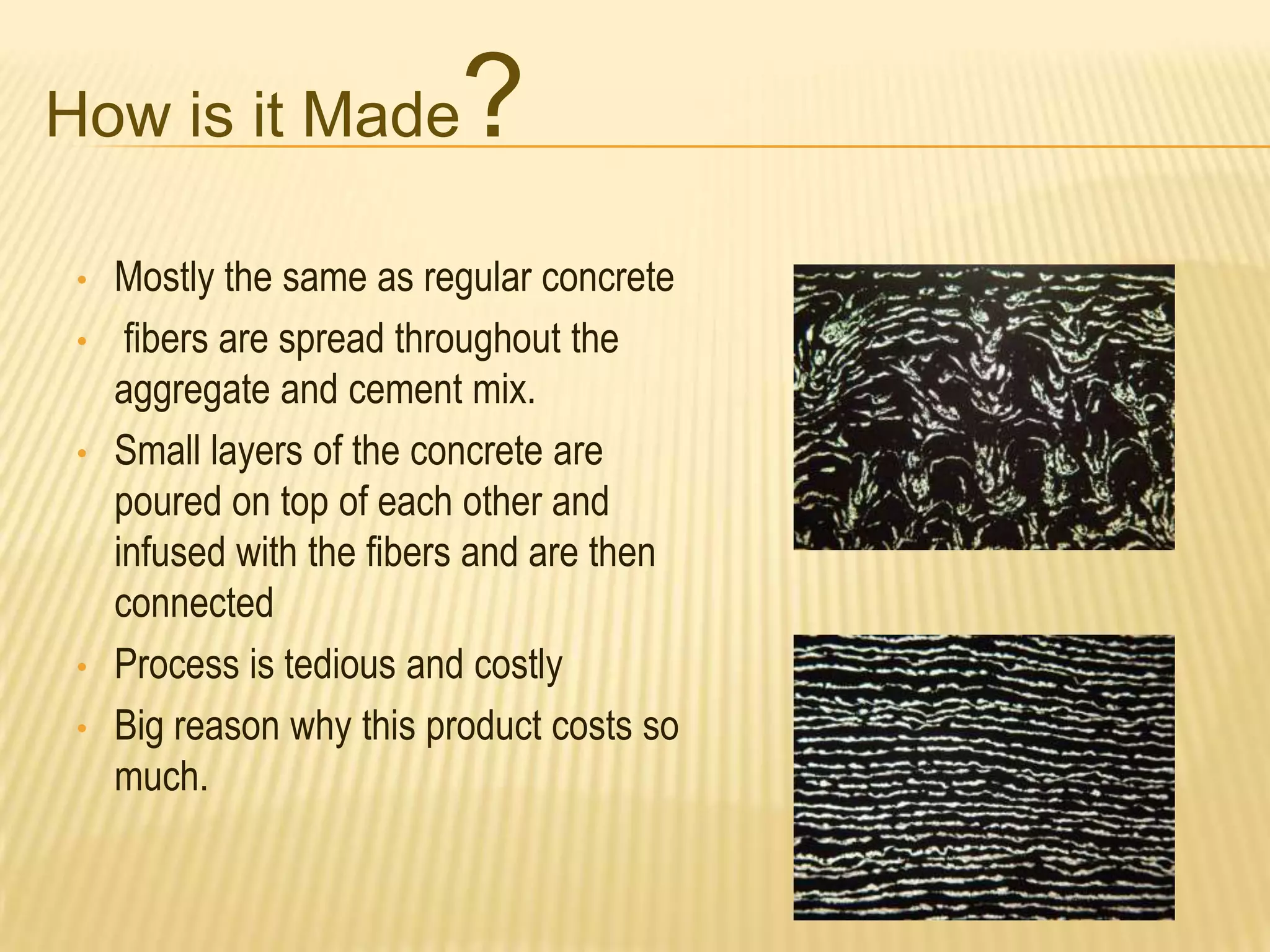
Mostly the same as regular concrete
fibers are spread throughout the
aggregate and cement mix.
Small layers of the concrete are
poured on top of each other and
infused with the fibers and are then
connected
Process is tedious and costly
Big reason why this product costs so
much.
WHY FIBER ?


Fibers are usually used in concrete to control
cracking due to plastic shrinkage and to drying
shrinkage. They also reduce the permeability of
concrete and thus reduce bleeding of water.



Cracks in reinforced concrete members extended
freely until encountering a rebar.



Fiber reinforced concrete is used when there is
requirement for elimination small cracks.
ADVANTAGES


VERY HIGH COMPRESSION STRENGTH



HIGH TENSILE STRENGTH



HIGH ELASTICITY MODULUS



DUCTILE BEHAVIOUR



HIGH DURABILITY
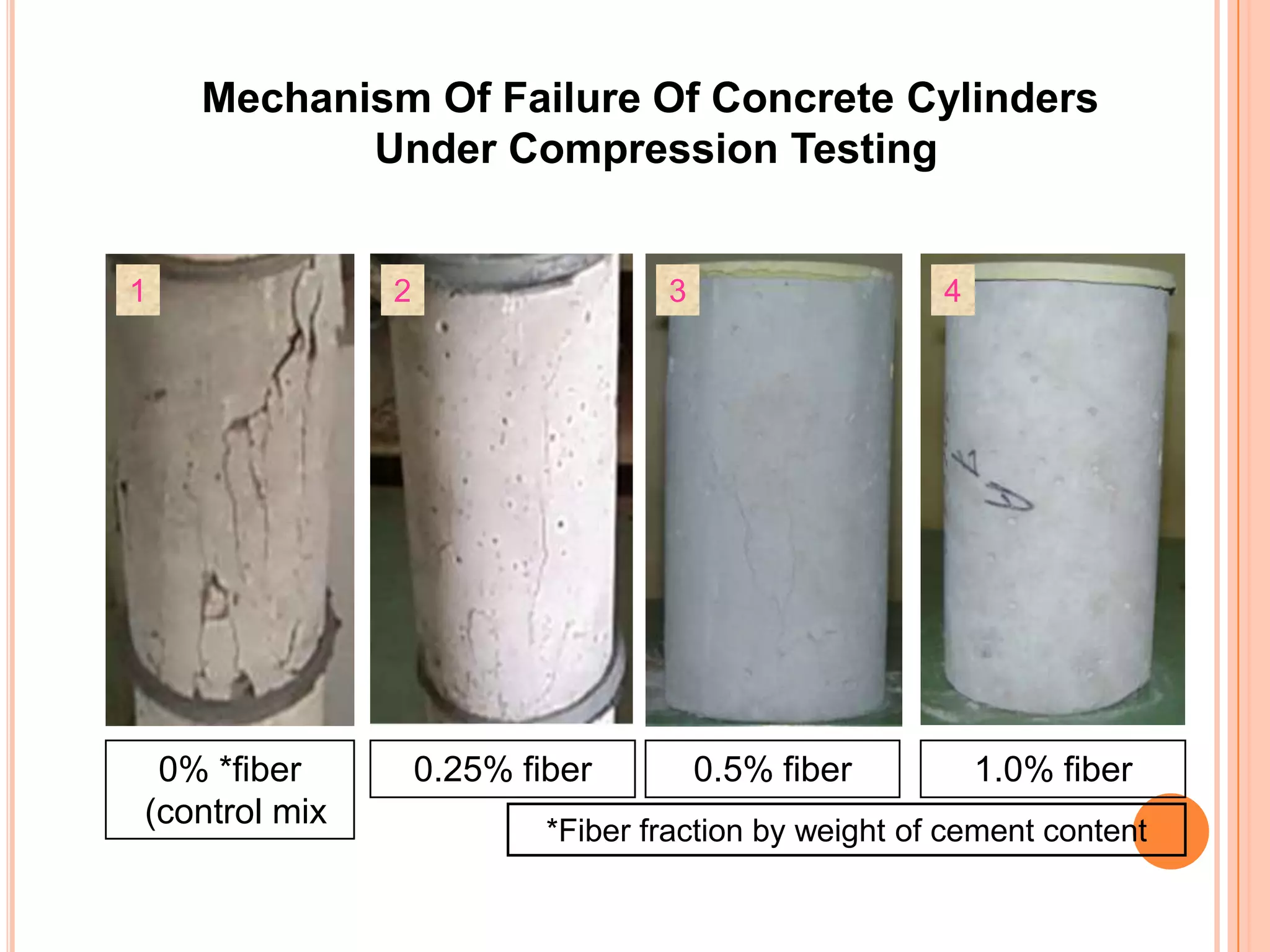
Mechanism Of Failure Of Concrete Cylinders
Under Compression Testing

1

0% *fiber
(control mix

2

3

0.25% fiber

4

0.5% fiber

1.0% fiber

*Fiber fraction by weight of cement content
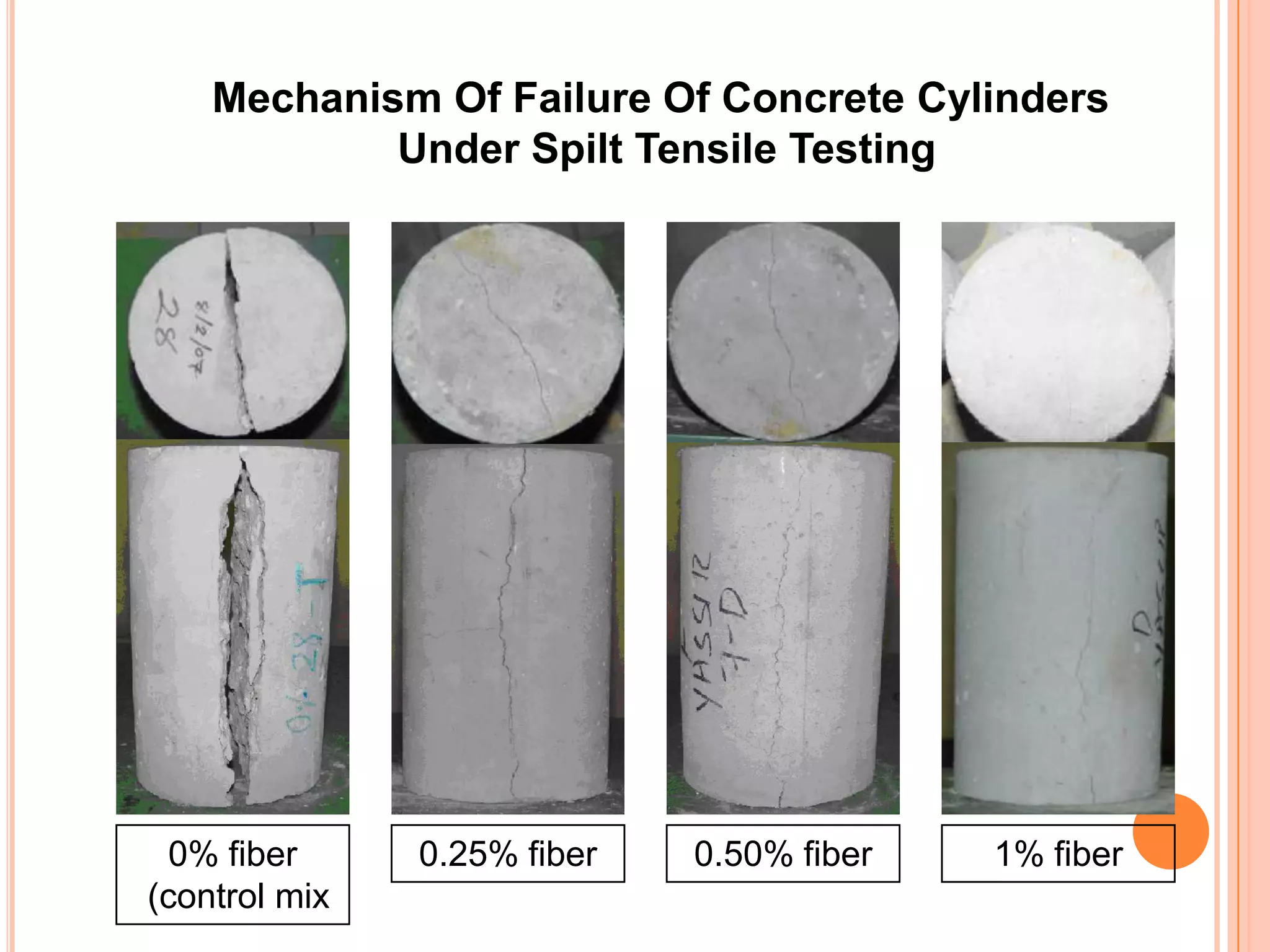
Mechanism Of Failure Of Concrete Cylinders
Under Spilt Tensile Testing

0% fiber
(control mix

0.25% fiber

0.50% fiber

1% fiber


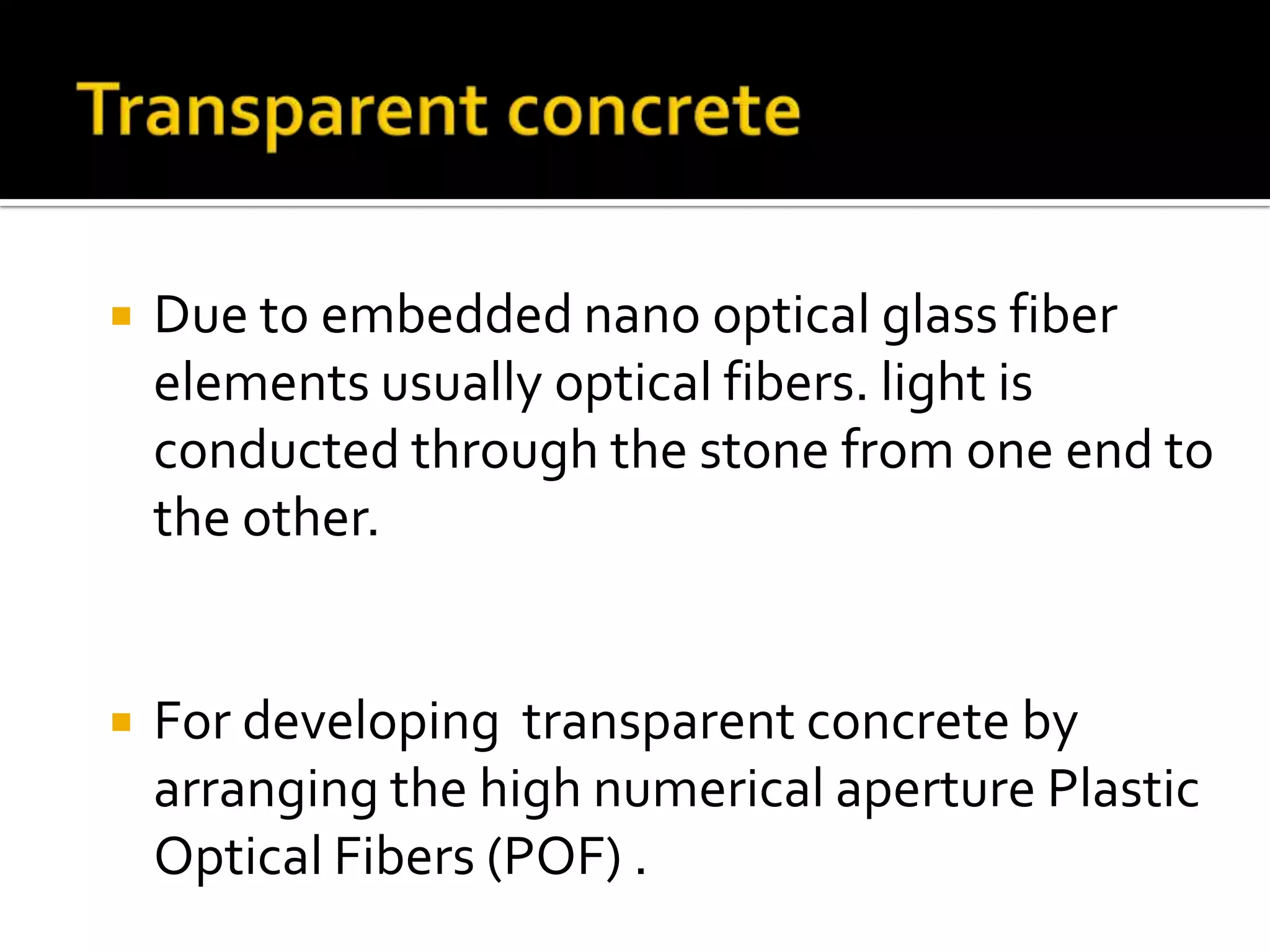
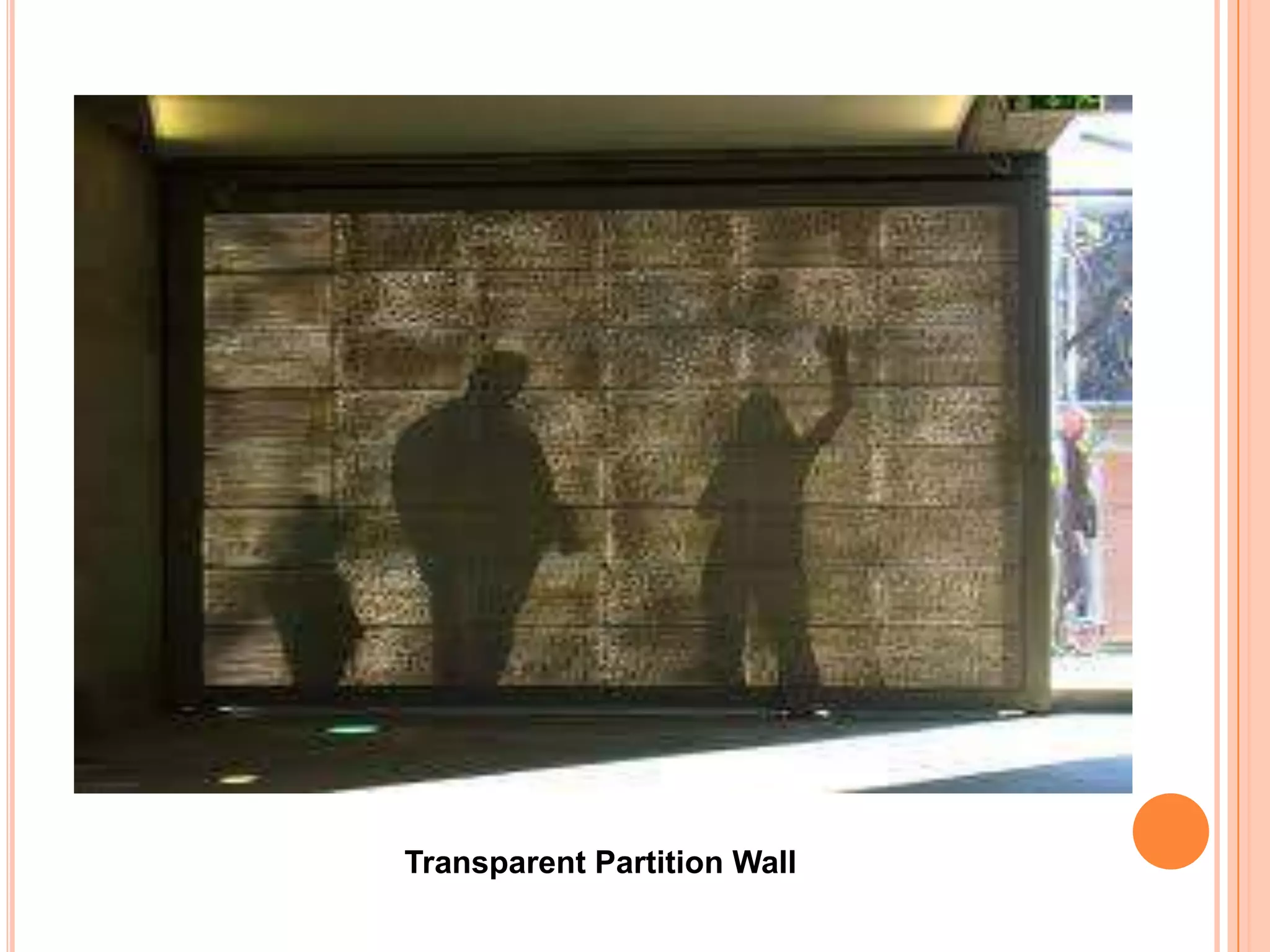
Due to embedded nano optical glass fiber
elements usually optical fibers. light is
conducted through the stone from one end to
the other.



For developing transparent concrete by
arranging the high numerical aperture Plastic
Optical Fibers (POF) .
AREAS OF APPLICATIONS OF FRC MATERIALS
















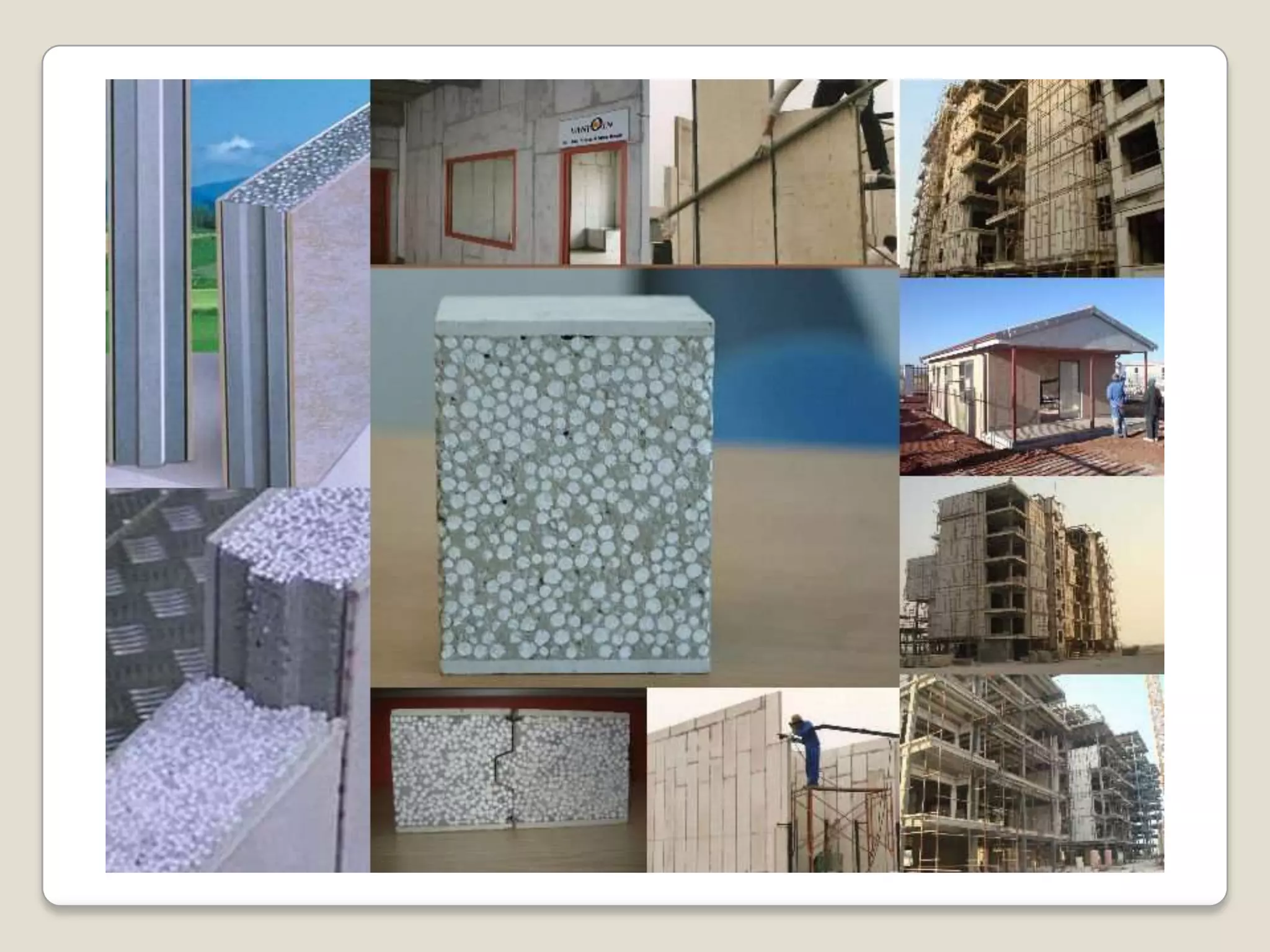
Thin sheets
shingles
roof tiles
pipes
prefabricated shapes
panels
shotcrete
curtain walls
Slabs on grade
precast elements
Composite decks
Vaults, safes.
Impact resisting structures
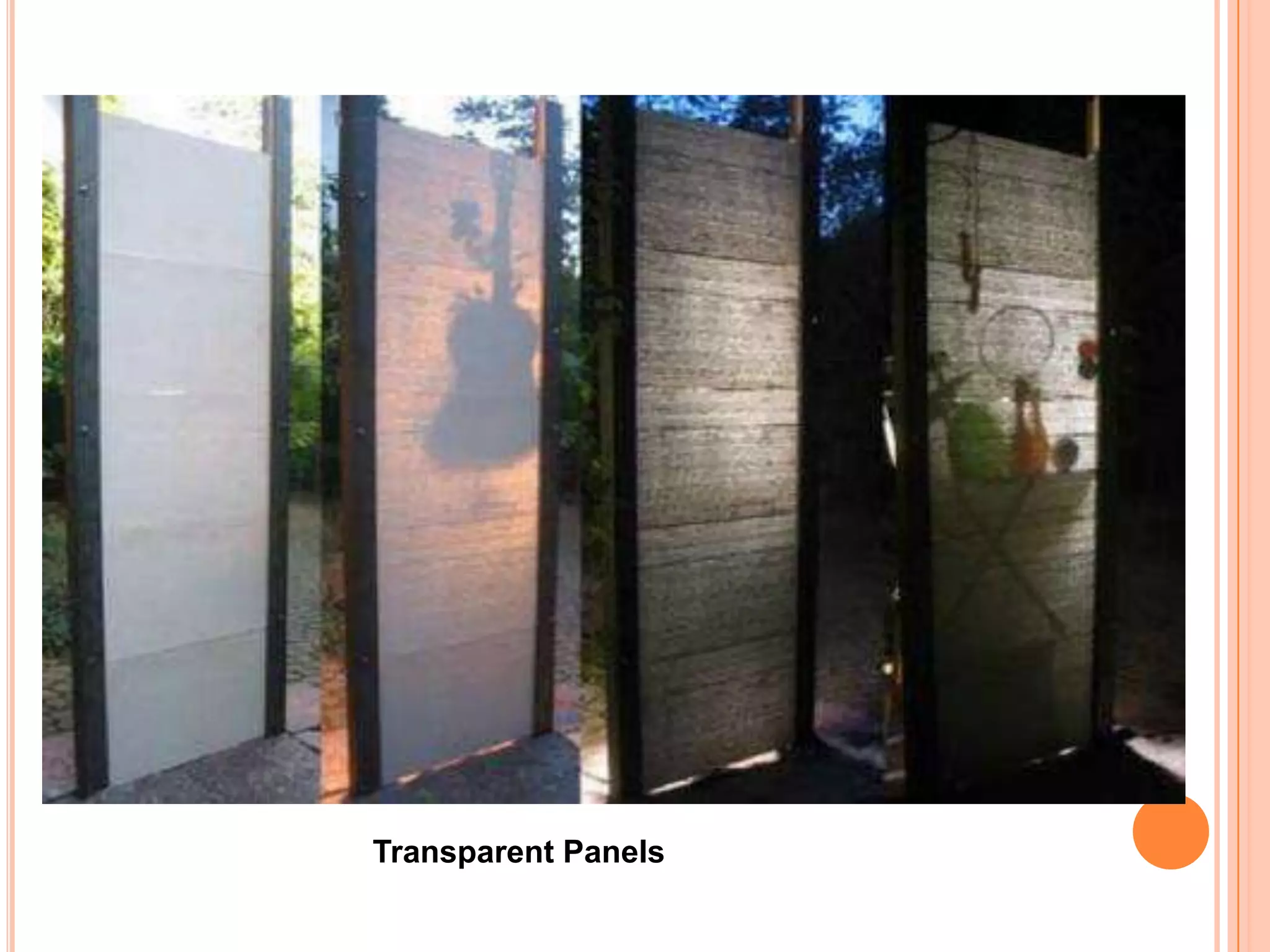
Transparent Panels
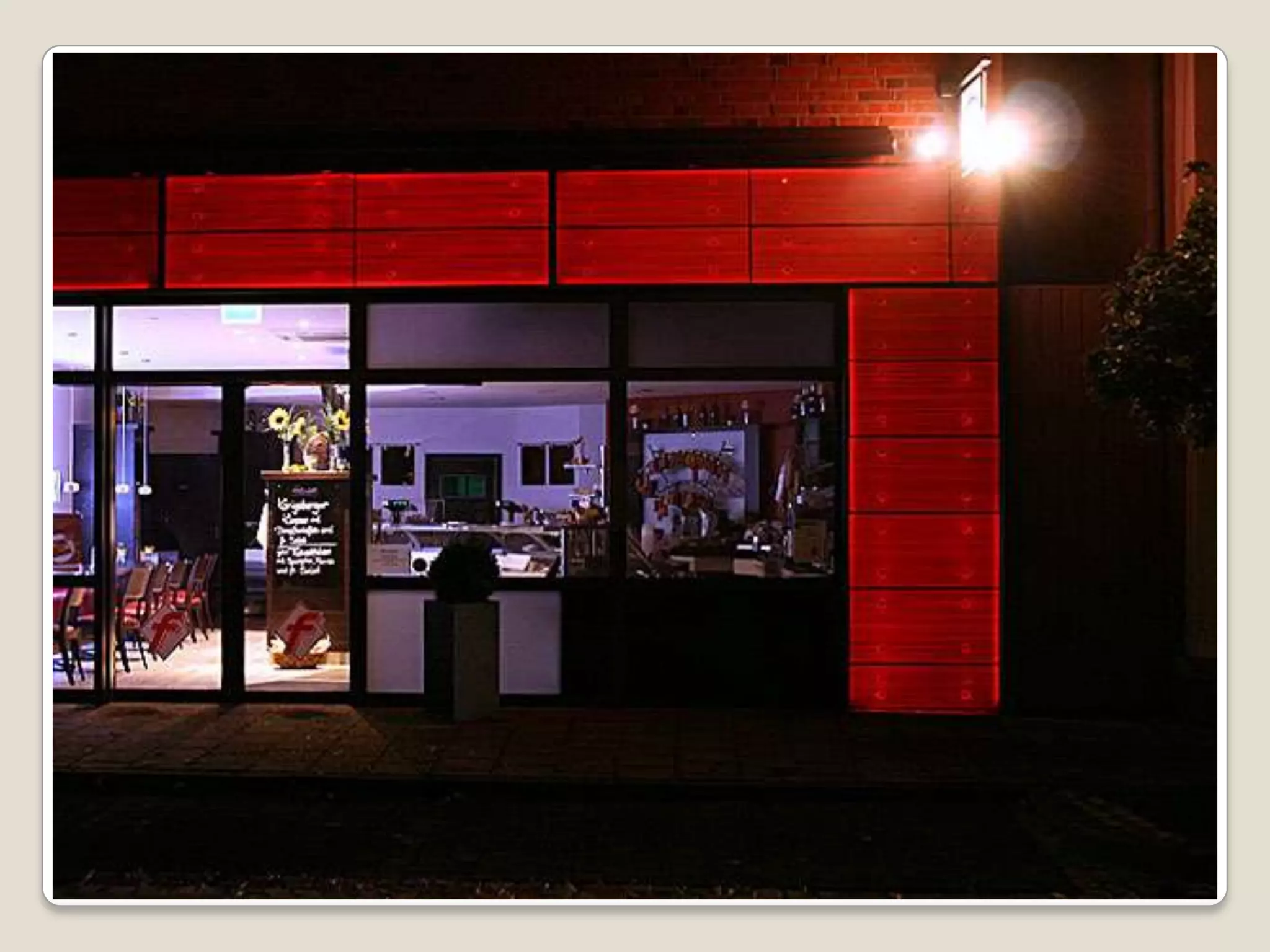
Transparent Partition Wall
Sources











Internet:
http://www.litracon.hu/

http://www.danubiusmagazin.hu/magazin/tortenelem/uvegbeton
_e.html
Textbook:
Fundamentals of Materials Science and Engineering by William
D. Callister Jr. and David G. Rethwisch Chapter 15
Technical Journal:
Optics and Photonics News September 2008 issue “Using
Nano-Optics to Control the Phase of Light”

fiber reinforced concrete

  • 1.
    A PRESENTATION ON FIBERREINFORCED CONCRETE OVER VIEW SRI VENKATESWARA ENGINEERING COLLEGE PRESENTING Internal guide: P.Jhansi mam BY:  CH.GOPI CHAND  Civil engineering department
  • 2.
    FIBER REINFORCED CONCRETE projectAt : pacific solutions(ECIL) Hyderabad, A.p
  • 3.
    History  1900s, asbestos fiberswere used in concrete. In the 1950s, the concept of composite materials came into being and fiber-reinforced concrete was one of the topics of interest. Once the health risks associated with asbestos were discovered, there was a need to find a replacement for the substance in concrete and other building materials. By the 1960s, steel, glass (GFRC), and synthetic fibers such as polypropylene fibers were used in concrete. Research into new fiberreinforced concretes continues today.
  • 4.
    INTRODUCTION       Concrete is oneof the most versatile building material. Concrete is strong under compression yet weak under tension, brittle and limited ductility material. Therefore, a form of reinforcement is needed, steel bars reinforce concrete against tension only locally. Cracks in reinforced concrete members extend freely until encountering a rebar. The need for Multidirectional and closely spaced reinforcement for concrete arises. FRC is a concrete mix that contains short discrete fibers that are uniformly distributed and randomly oriented.
  • 7.
    Types of fibers  Fibersinclude steel fibers, glass fibers, synthetic fibers and natural fibers – each of which lend varying properties to the concrete. In addition, the character of fiber-reinforced concrete changes with varying concretes, fiber materials, geometries, distribution, orientation, and densities.  the composite (concrete and fibers) termed Vf. Vf typically ranges from 0.1 to 3%. Aspect ratio (l/d) is calculated by dividing fiber length (l) by its diameter (d). Fibers with a non-circular cross section use an equivalent diameter for the calculation of aspect ratio.
  • 8.
    How is itMade • • • • • ? Mostly the same as regular concrete fibers are spread throughout the aggregate and cement mix. Small layers of the concrete are poured on top of each other and infused with the fibers and are then connected Process is tedious and costly Big reason why this product costs so much.
  • 9.
    WHY FIBER ?  Fibersare usually used in concrete to control cracking due to plastic shrinkage and to drying shrinkage. They also reduce the permeability of concrete and thus reduce bleeding of water.  Cracks in reinforced concrete members extended freely until encountering a rebar.  Fiber reinforced concrete is used when there is requirement for elimination small cracks.
  • 10.
    ADVANTAGES  VERY HIGH COMPRESSIONSTRENGTH  HIGH TENSILE STRENGTH  HIGH ELASTICITY MODULUS  DUCTILE BEHAVIOUR  HIGH DURABILITY
  • 11.
    Mechanism Of FailureOf Concrete Cylinders Under Compression Testing 1 0% *fiber (control mix 2 3 0.25% fiber 4 0.5% fiber 1.0% fiber *Fiber fraction by weight of cement content
  • 12.
    Mechanism Of FailureOf Concrete Cylinders Under Spilt Tensile Testing 0% fiber (control mix 0.25% fiber 0.50% fiber 1% fiber
  • 13.
     Due to embeddednano optical glass fiber elements usually optical fibers. light is conducted through the stone from one end to the other.  For developing transparent concrete by arranging the high numerical aperture Plastic Optical Fibers (POF) .
  • 14.
    AREAS OF APPLICATIONSOF FRC MATERIALS              Thin sheets shingles roof tiles pipes prefabricated shapes panels shotcrete curtain walls Slabs on grade precast elements Composite decks Vaults, safes. Impact resisting structures
  • 15.
  • 17.
  • 18.
    Sources           Internet: http://www.litracon.hu/ http://www.danubiusmagazin.hu/magazin/tortenelem/uvegbeton _e.html Textbook: Fundamentals of MaterialsScience and Engineering by William D. Callister Jr. and David G. Rethwisch Chapter 15 Technical Journal: Optics and Photonics News September 2008 issue “Using Nano-Optics to Control the Phase of Light”