
Giving and Receiving Feedback 
A hard approach to the soft skills 
Introductory Training 
Tim Burns
2 
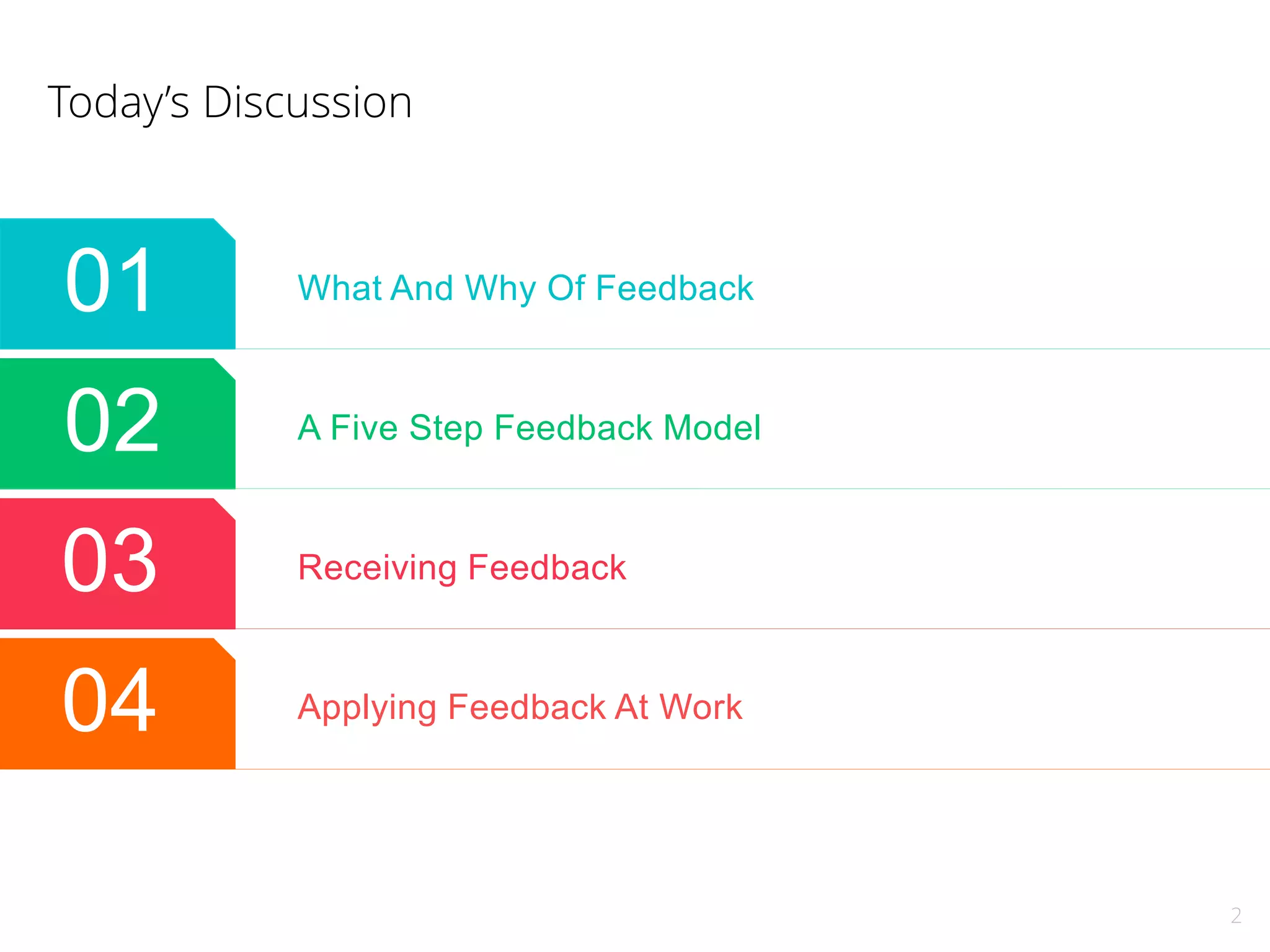
Today’s Discussion 
What And Why Of Feedback 
A Five Step Feedback Model 
Receiving Feedback 
Applying Feedback At Work 
01 
02 
03 
04
3 
Timothy Burns 
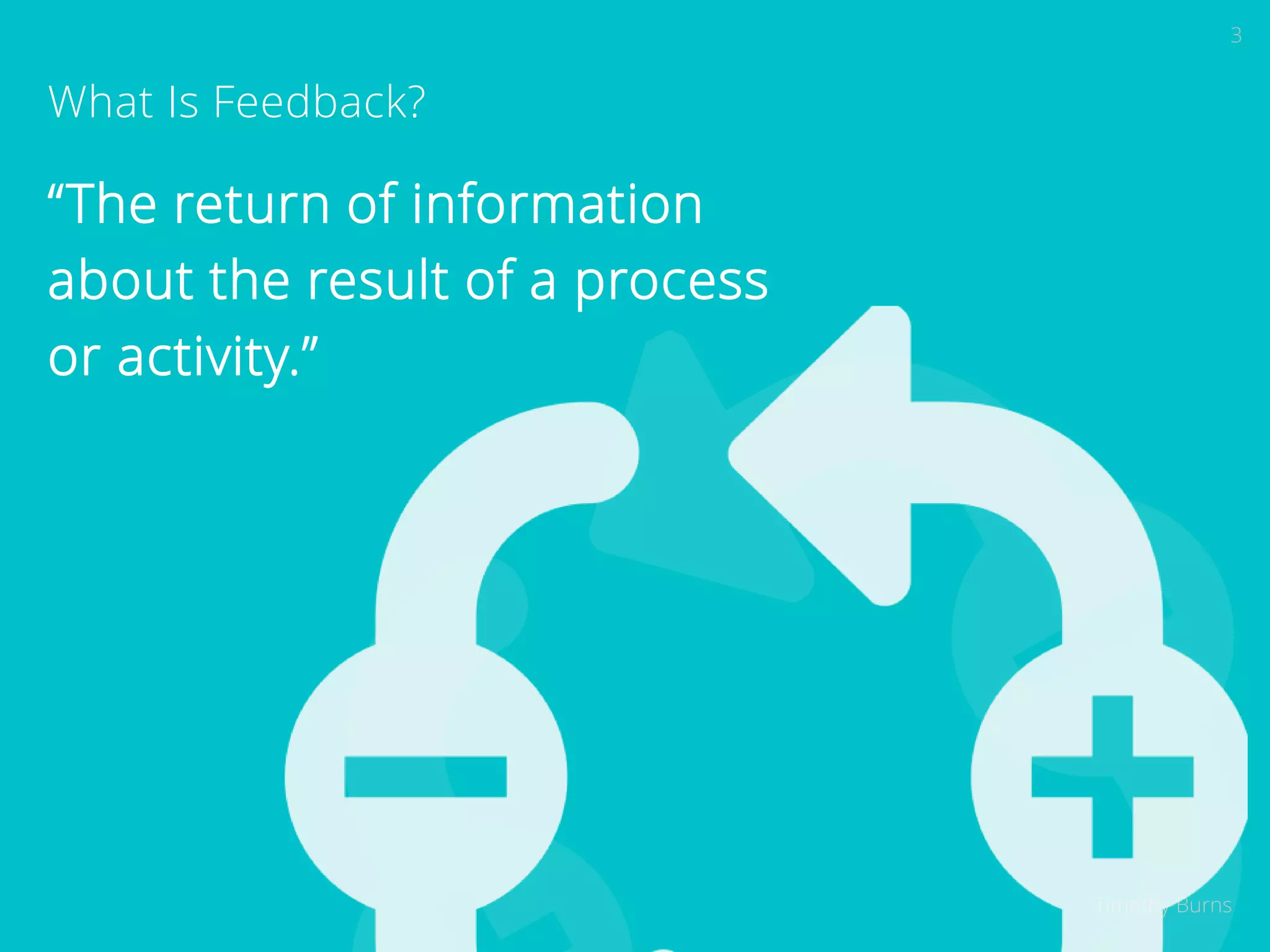
What Is Feedback? 
“The return of information 
about the result of a process 
or activity.”
4 
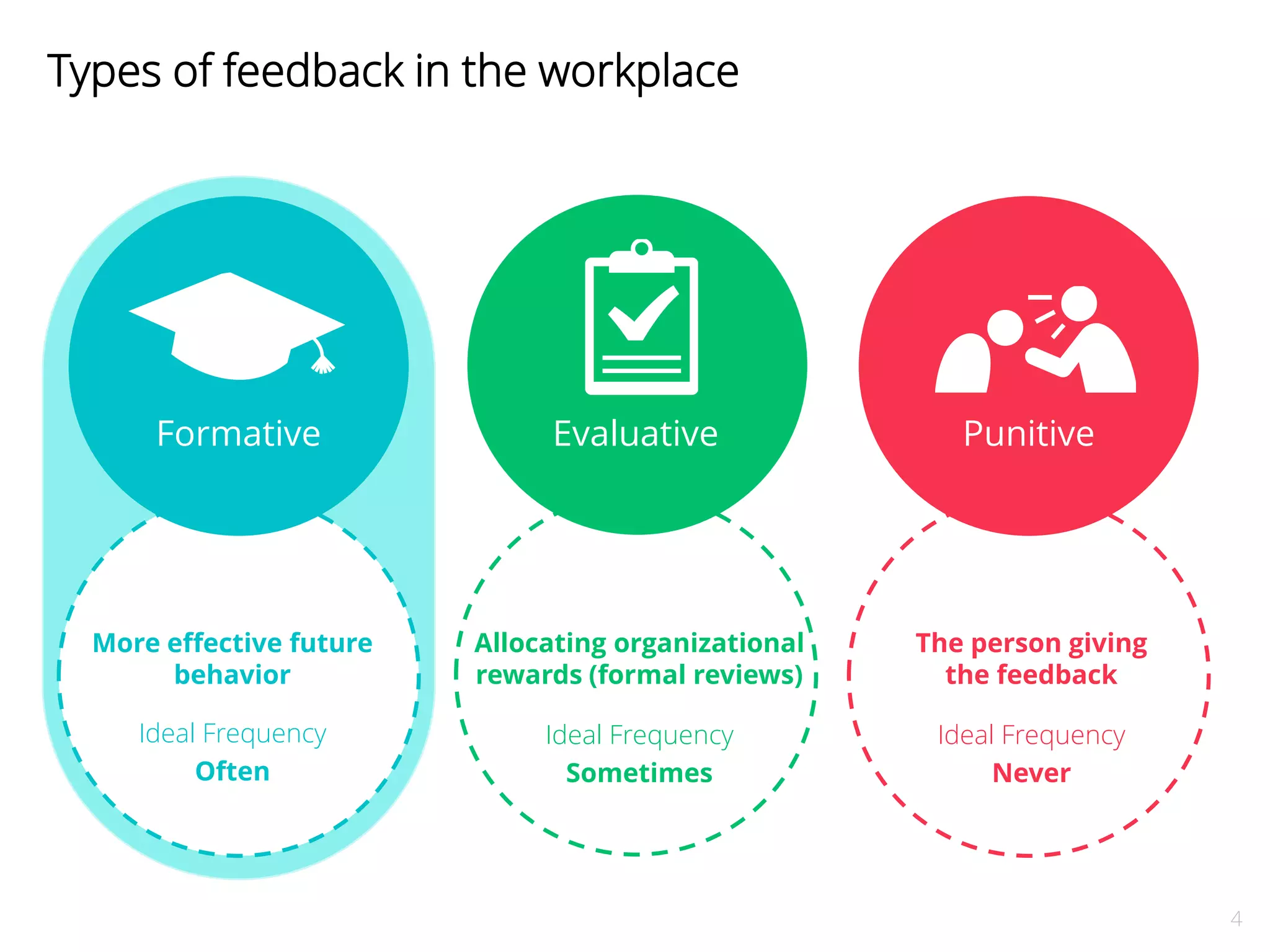
Types of feedback in the workplace 
Formative Evaluative Punitive 
More effective future 
behavior 
Allocating organizational 
rewards (formal reviews) 
The person giving 
the feedback 
Ideal Frequency 
Often 
Ideal Frequency 
Sometimes 
Ideal Frequency 
Never
5 
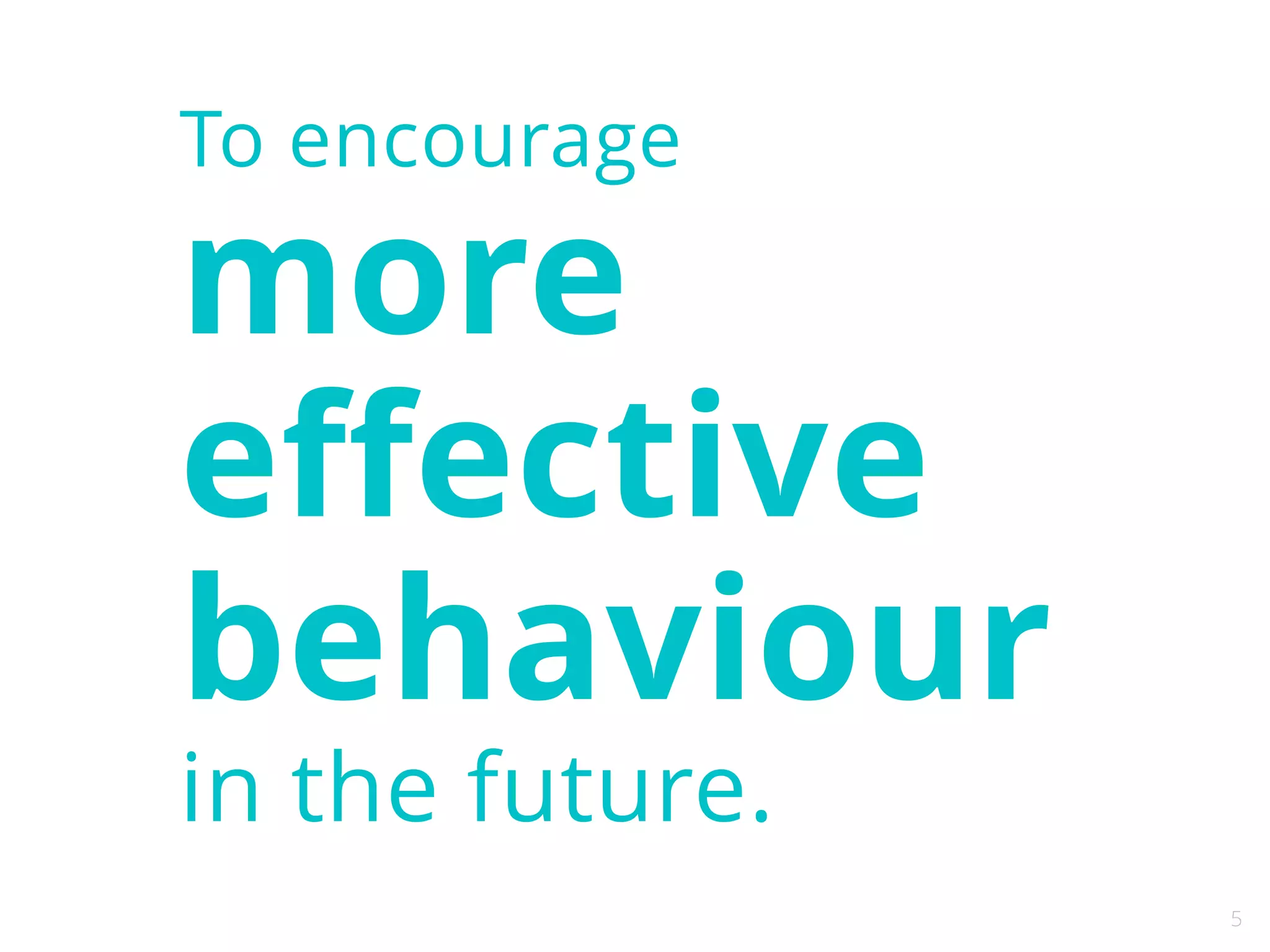
To encourage 
more 
effective 
behaviour 
in the future.
6 
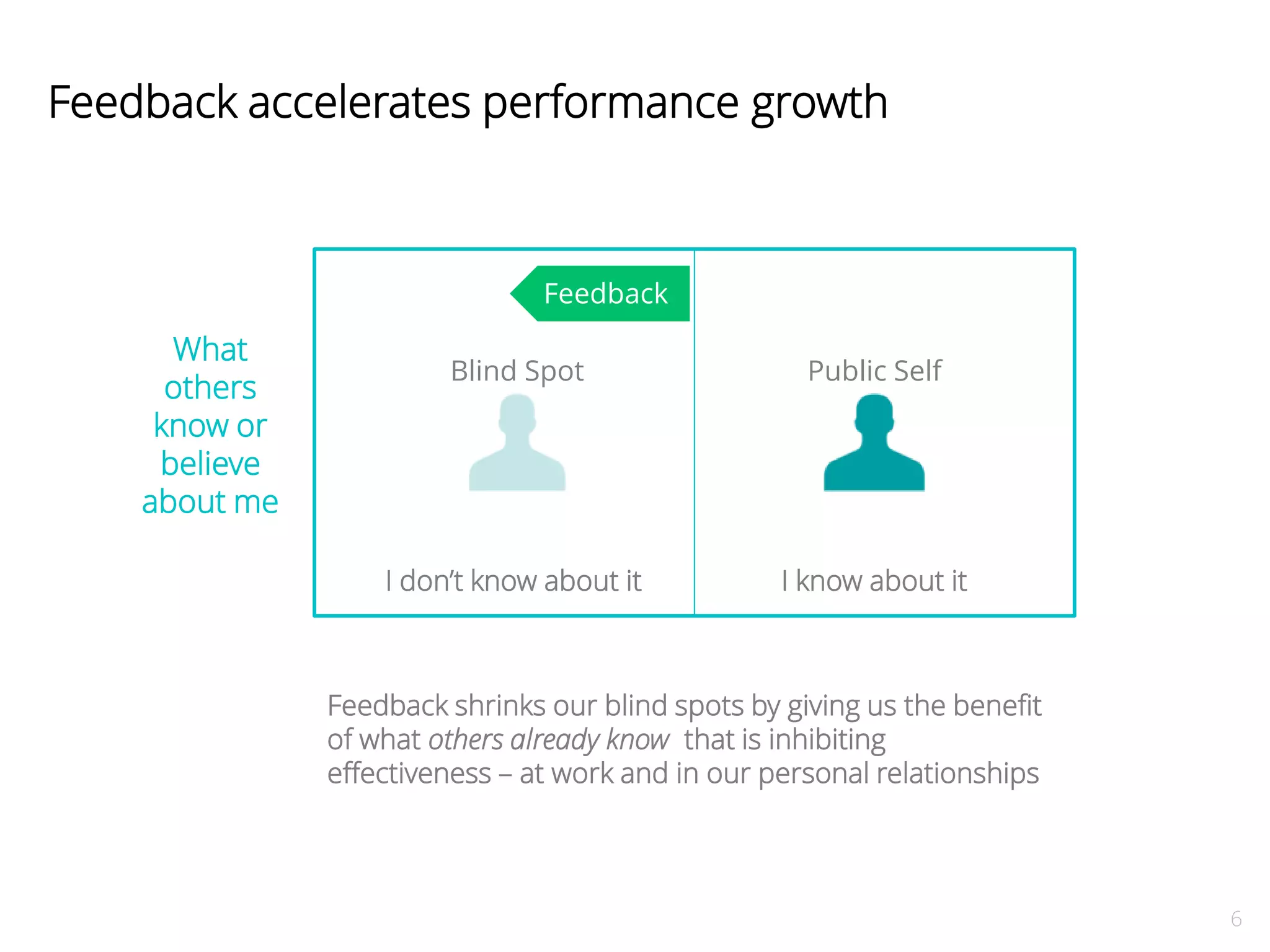
Feedback accelerates performance growth 
What 
others 
know or 
believe 
about me 
Public Self 
I know about it 
Feedback 
Blind Spot 
I don’t know about it 
Feedback shrinks our blind spots by giving us the benefit 
of what others already know that is inhibiting 
effectiveness – at work and in our personal relationships
7 
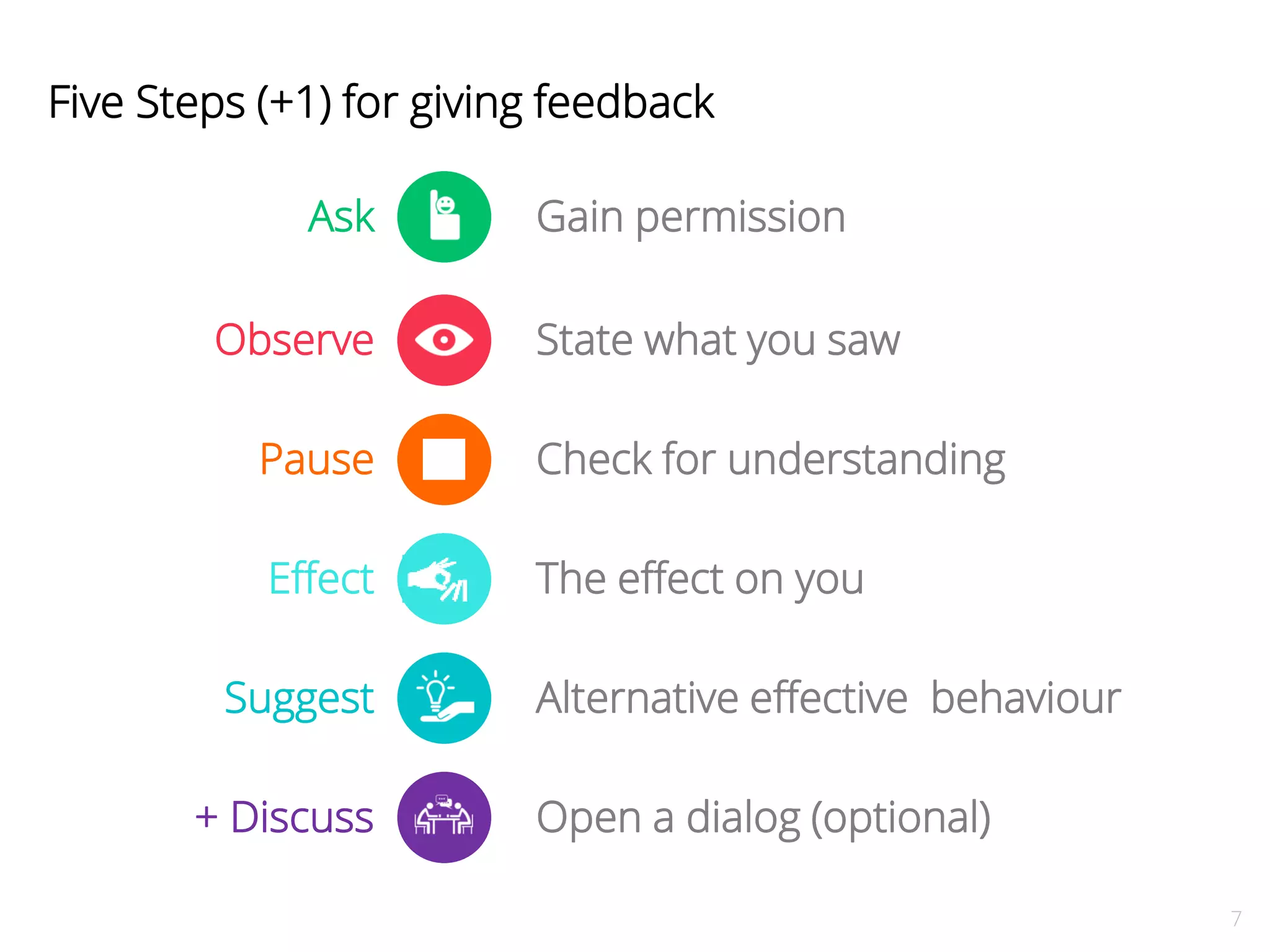
Five Steps (+1) for giving feedback 
Ask Gain permission 
Observe State what you saw 
Pause Check for understanding 
Effect The effect on you 
Suggest Alternative effective behaviour 
+ Discuss Open a dialog (optional)
8 
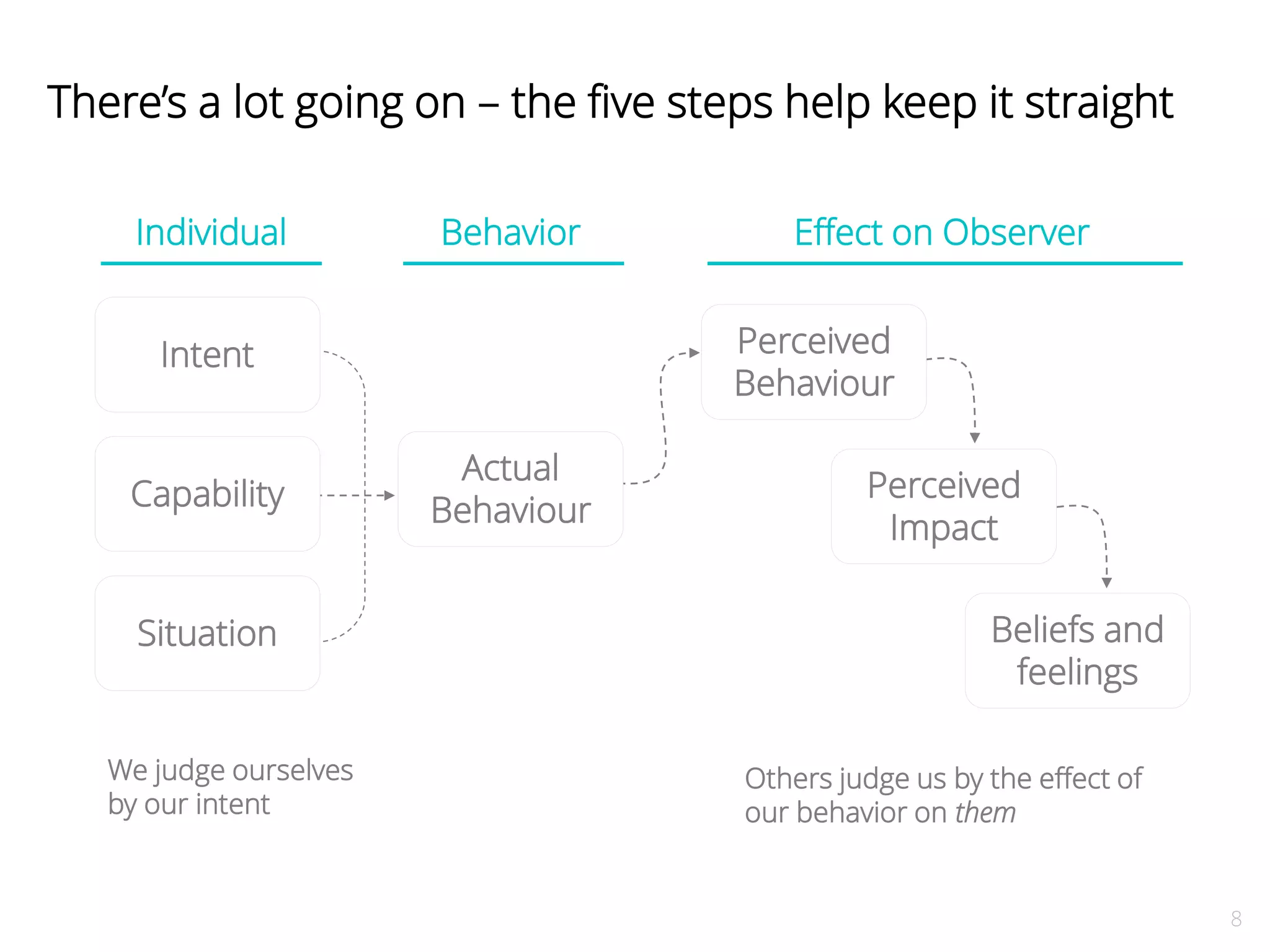
There’s a lot going on – the five steps help keep it straight 
Individual Behavior Effect on Observer 
We judge ourselves 
by our intent 
Others judge us by the effect of 
our behavior on them 
Intent 
Capability 
Situation 
Perceived 
Behaviour 
Actual 
Behaviour 
Perceived 
Impact 
Beliefs and 
feelings
9 
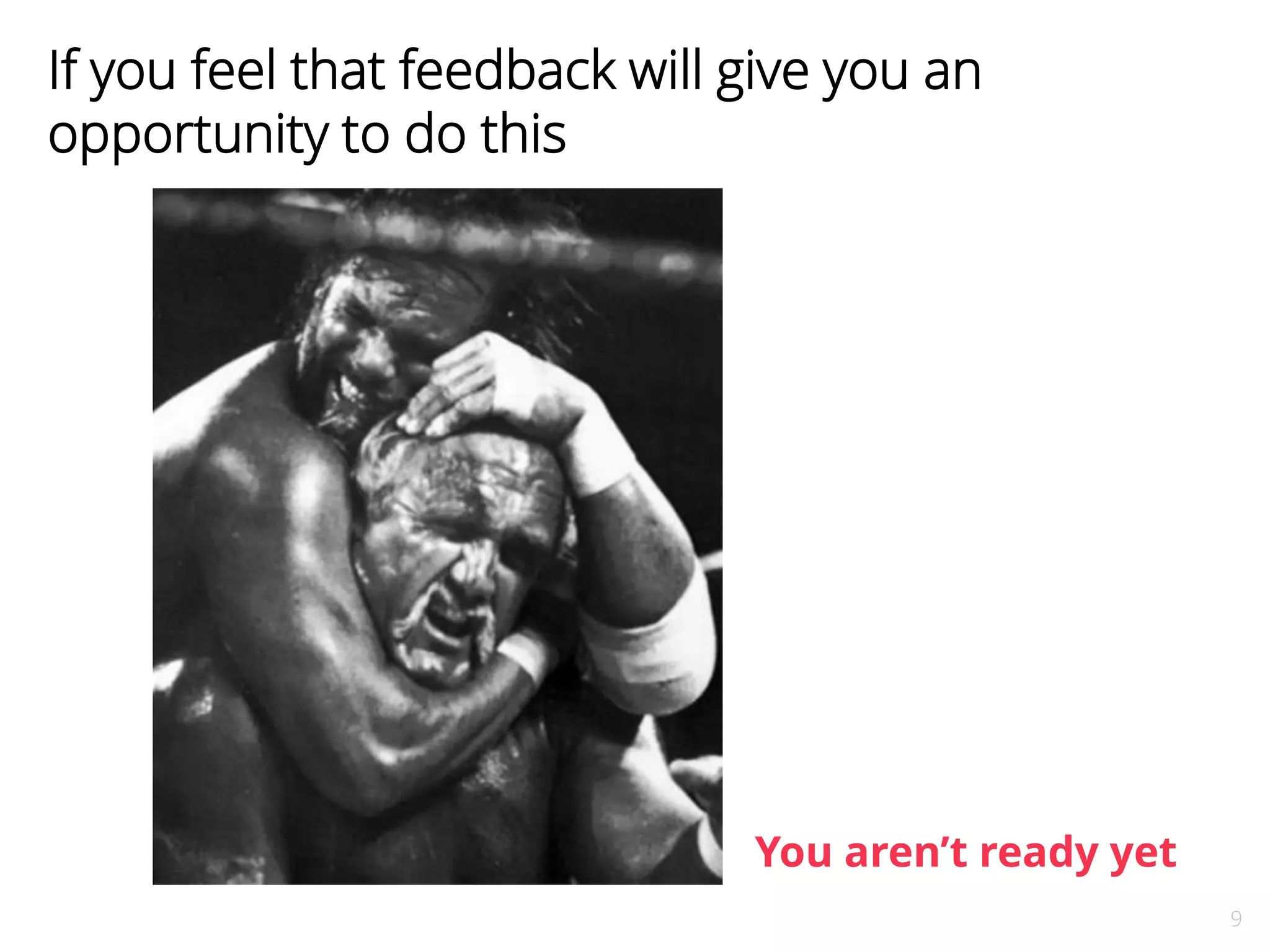
If you feel that feedback will give you an 
opportunity to do this 
You aren’t ready yet
10 
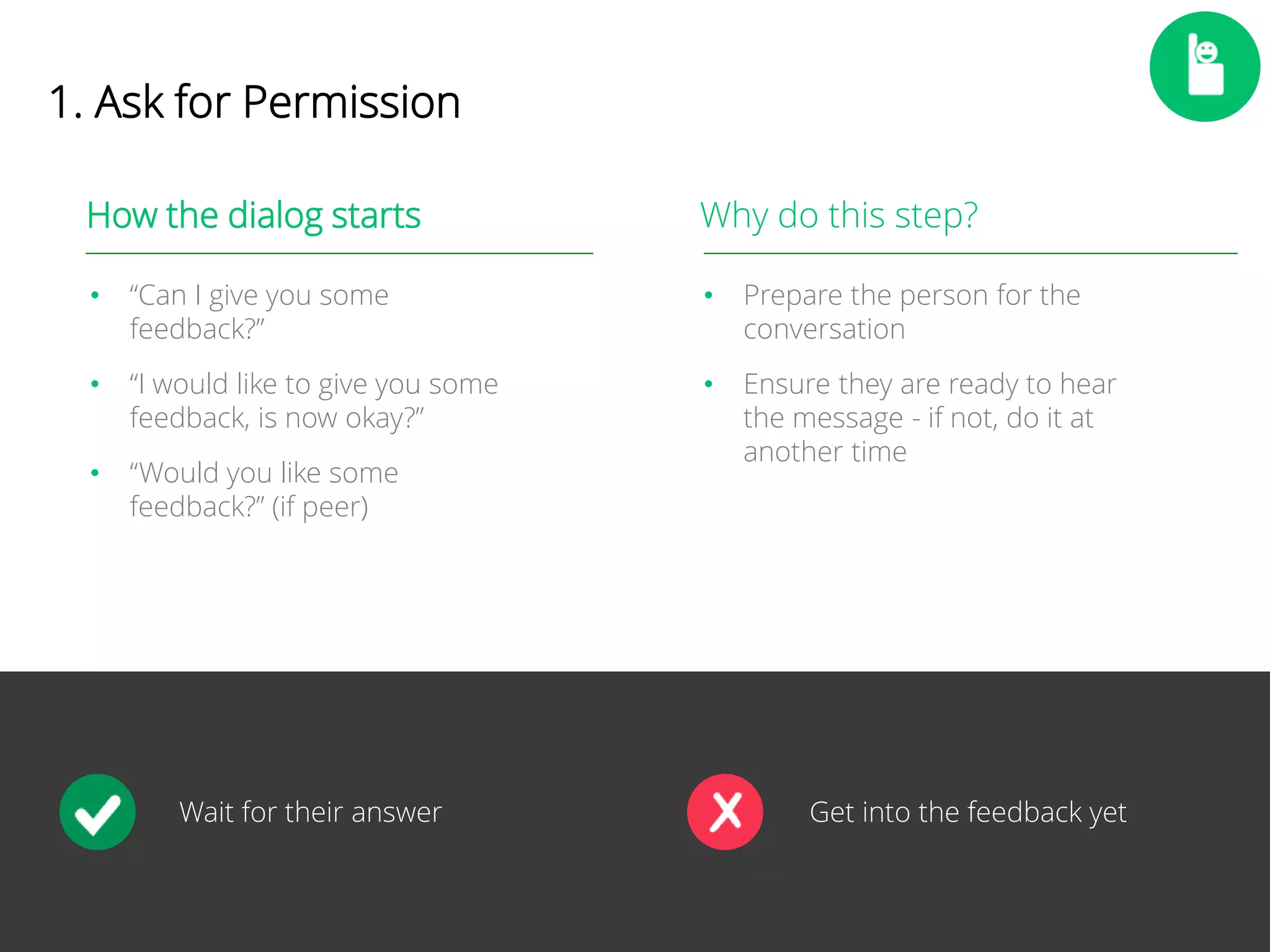
1. Ask for Permission 
How the dialog starts 
• “Can I give you some 
feedback?” 
• “I would like to give you some 
feedback, is now okay?” 
• “Would you like some 
feedback?” (if peer) 
Why do this step? 
• Prepare the person for the 
conversation 
• Ensure they are ready to hear 
the message - if not, do it at 
another time 
Wait for their answer Get into the feedback yet
11 
EXAMPLE 
Can I give you some feedback
12 
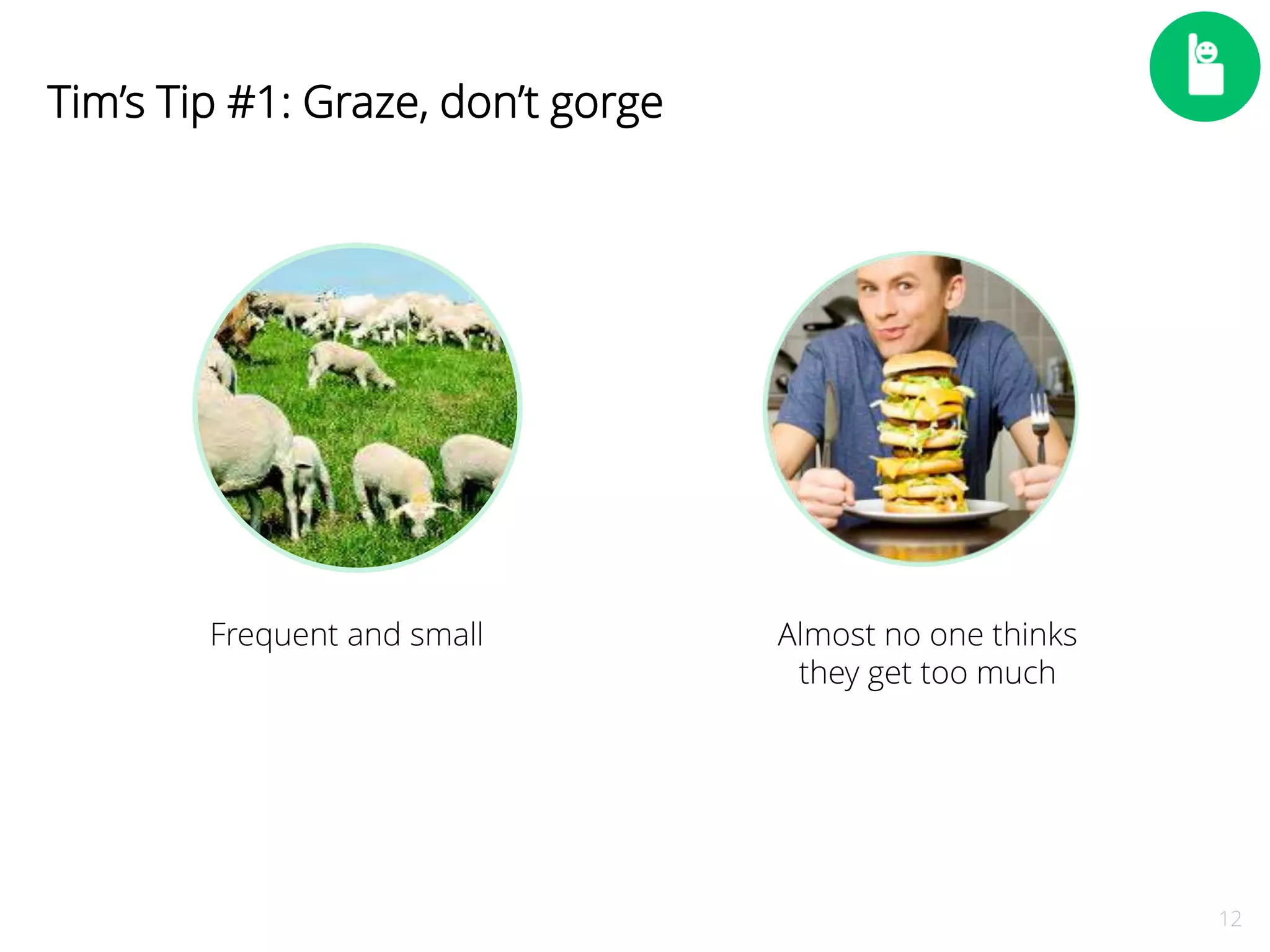
Frequent and small Almost no one thinks 
they get too much 
Tim’s Tip #1: Graze, don’t gorge
13 
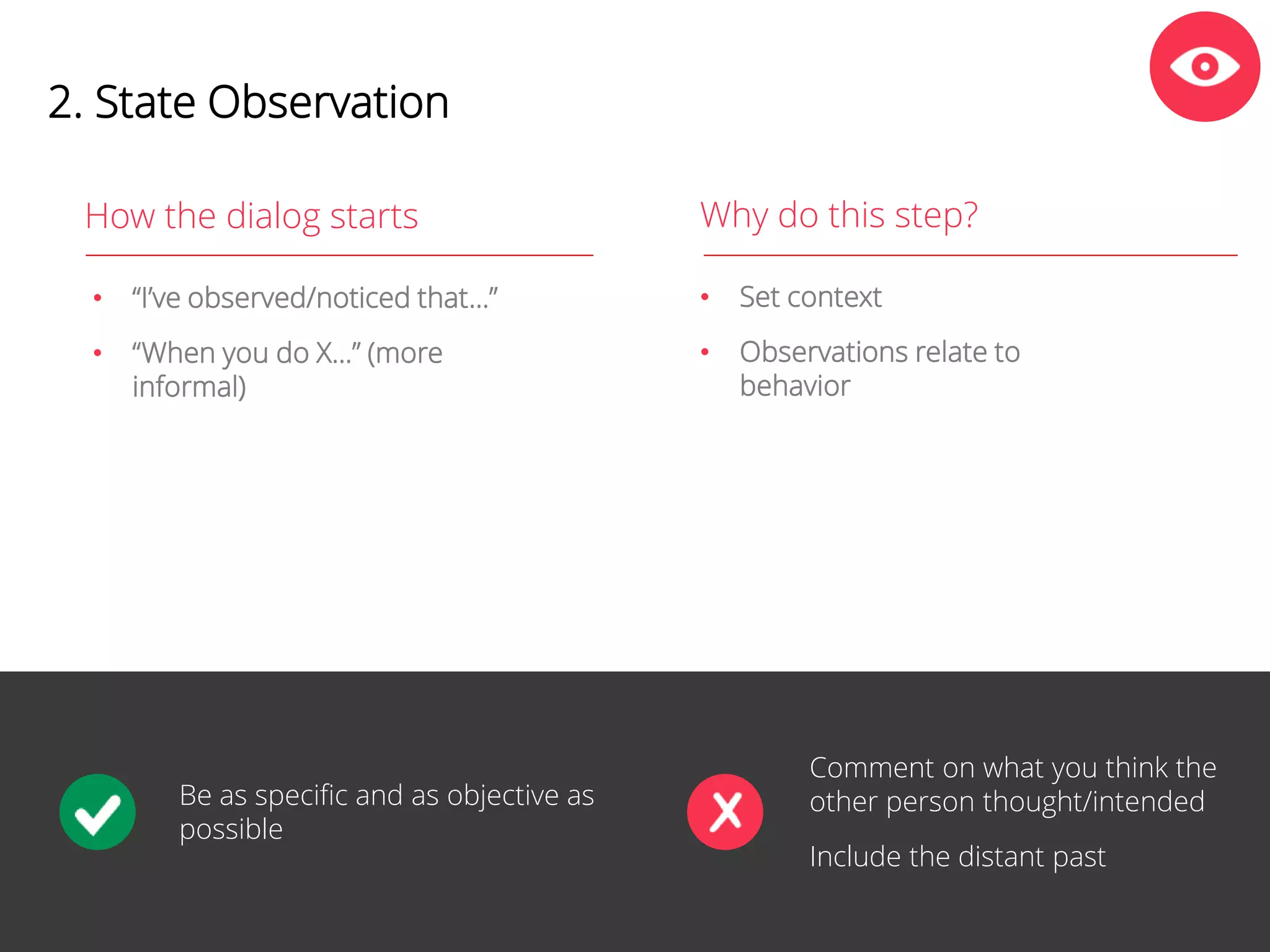
How the dialog starts 
• “I’ve observed/noticed that…” 
• “When you do X…” (more 
informal) 
Why do this step? 
• Set context 
• Observations relate to 
behavior 
2. State Observation 
Be as specific and as objective as 
possible 
Comment on what you think the 
other person thought/intended 
Include the distant past
14 
EXAMPLE 
I noticed that you interrupted Matt in the 
meeting to make your point about our 
implementation plan.
15 
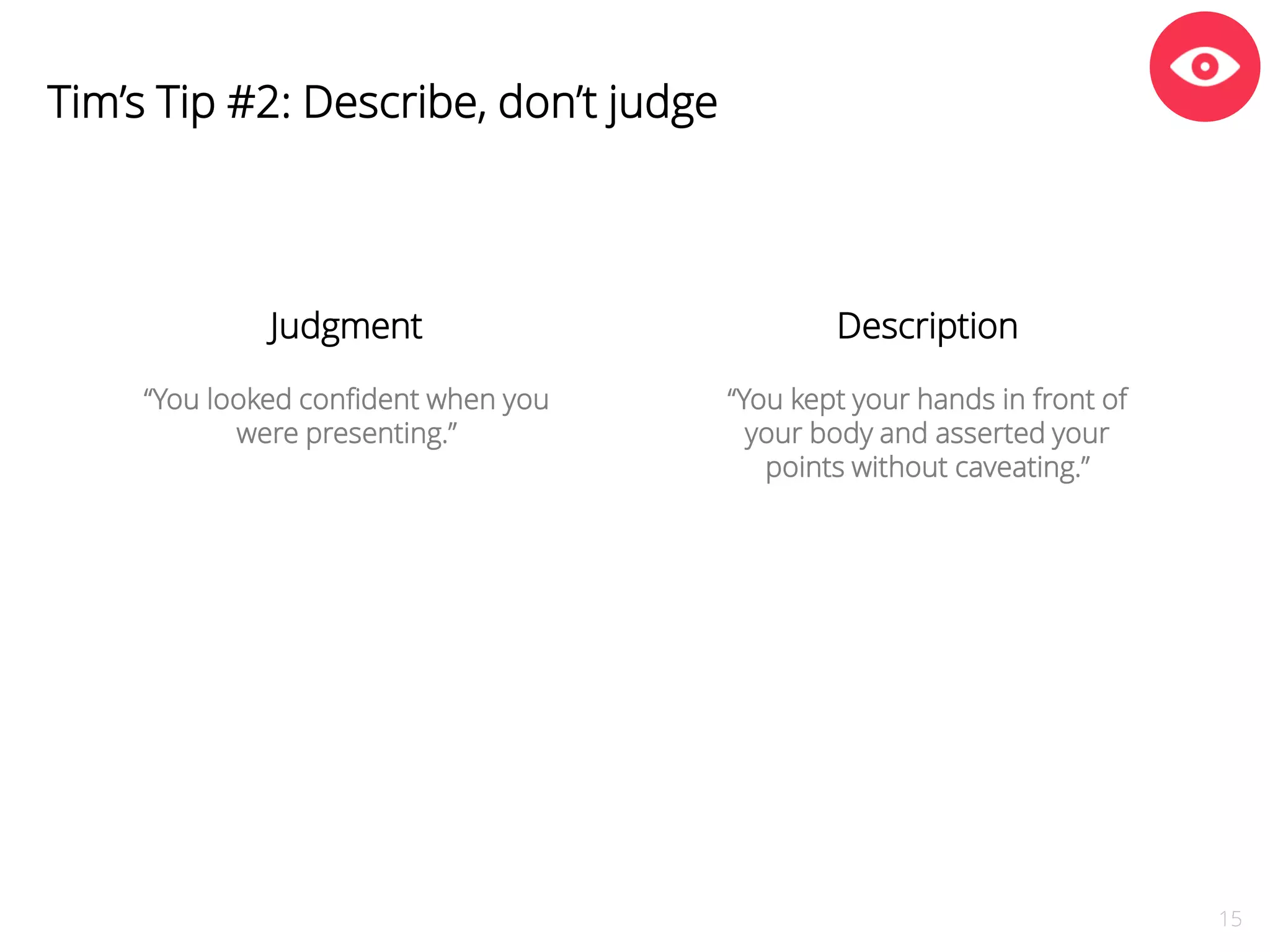
Judgment 
“You looked confident when you 
were presenting.” 
Description 
“You kept your hands in front of 
your body and asserted your 
points without caveating.” 
Tim’s Tip #2: Describe, don’t judge
16 
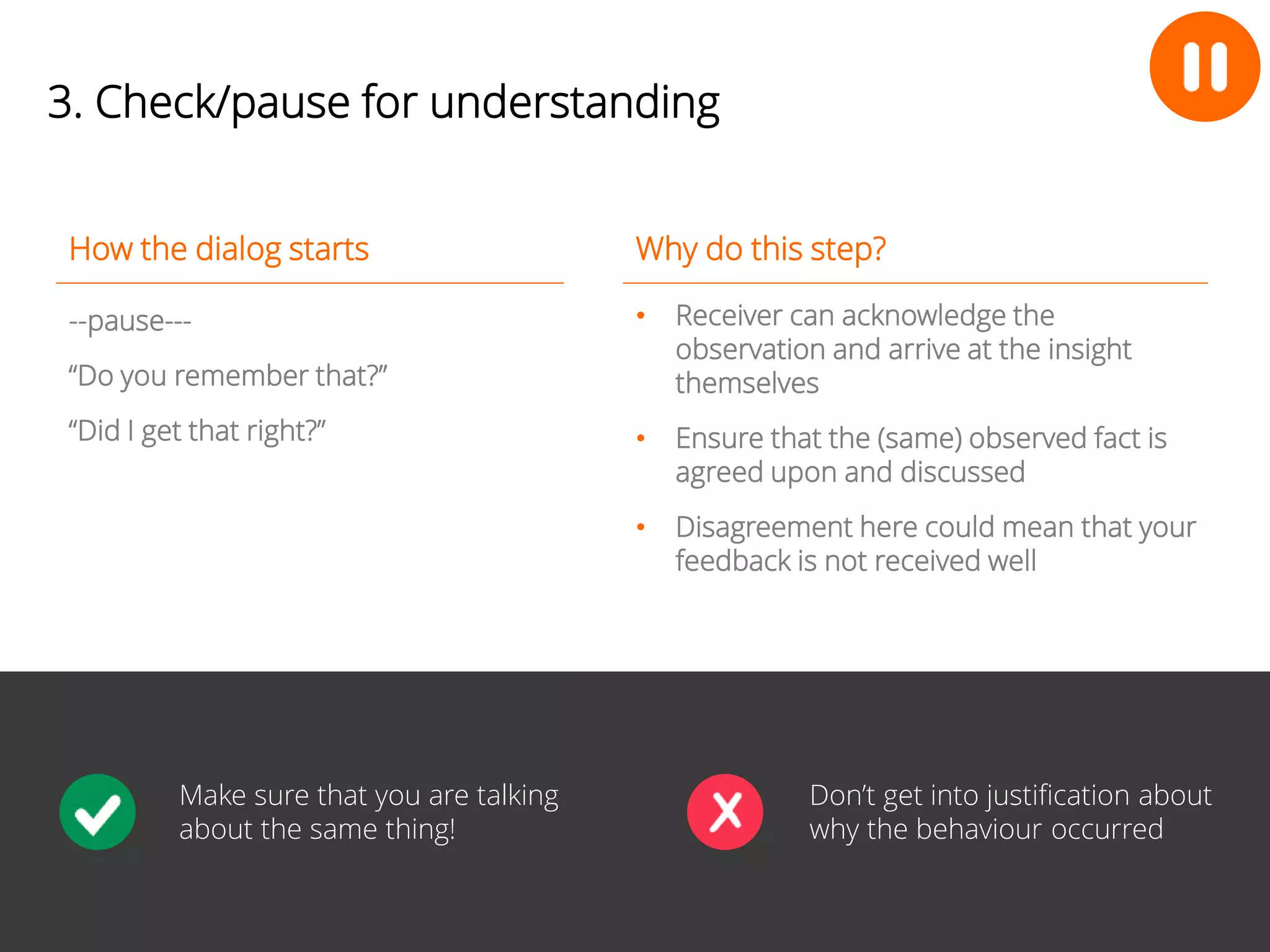
3. Check/pause for understanding 
How the dialog starts 
--pause--- 
“Do you remember that?” 
“Did I get that right?” 
Why do this step? 
• Receiver can acknowledge the 
observation and arrive at the insight 
themselves 
• Ensure that the (same) observed fact is 
agreed upon and discussed 
• Disagreement here could mean that your 
feedback is not received well 
Make sure that you are talking 
about the same thing! 
Don’t get into justification about 
why the behaviour occurred
17 
EXAMPLE 
…
18 
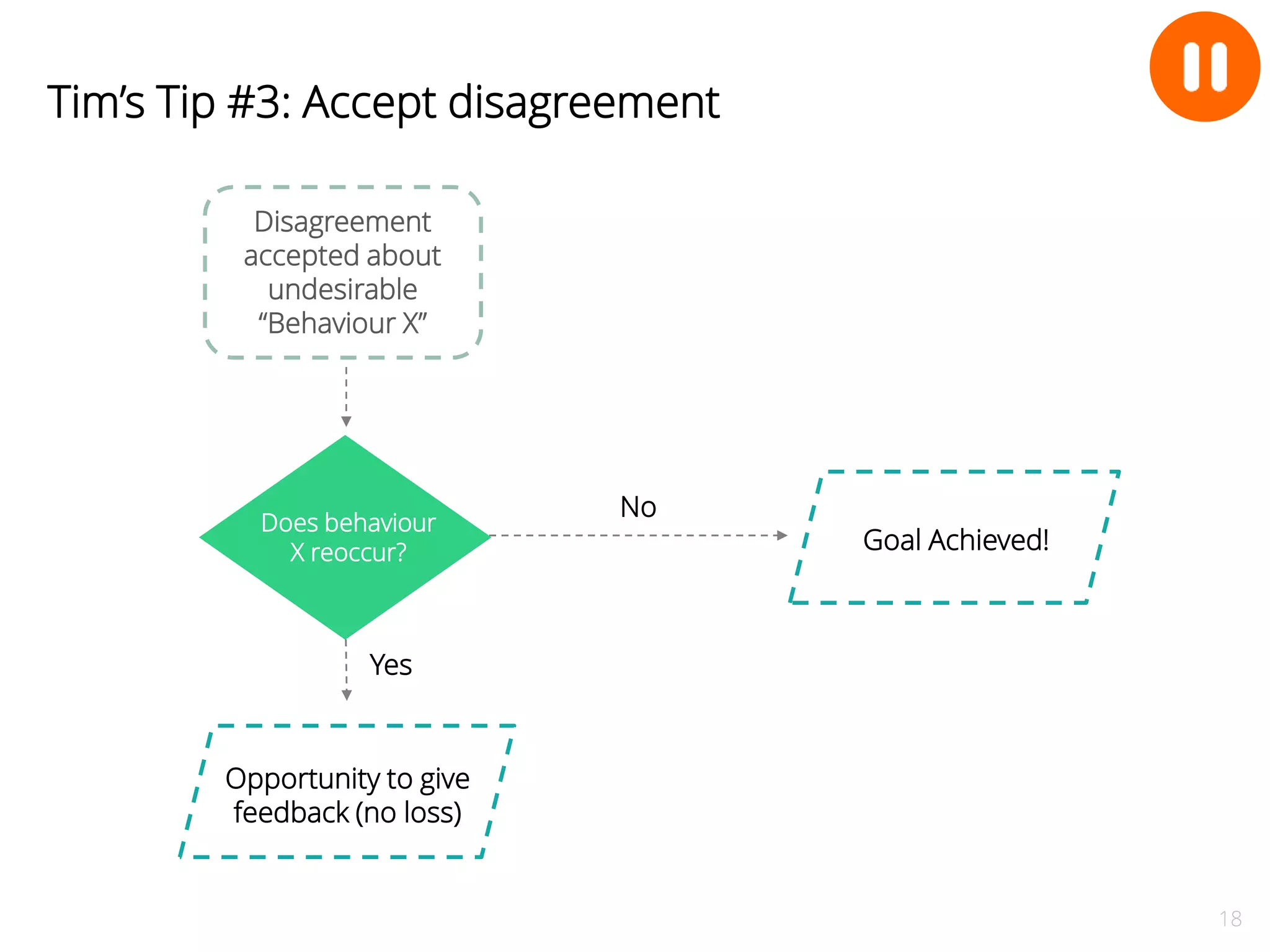
Tim’s Tip #3: Accept disagreement 
Disagreement 
accepted about 
undesirable 
“Behaviour X” 
Does behaviour 
X reoccur? 
No 
Yes 
Goal Achieved! 
Opportunity to give 
feedback (no loss)
19 
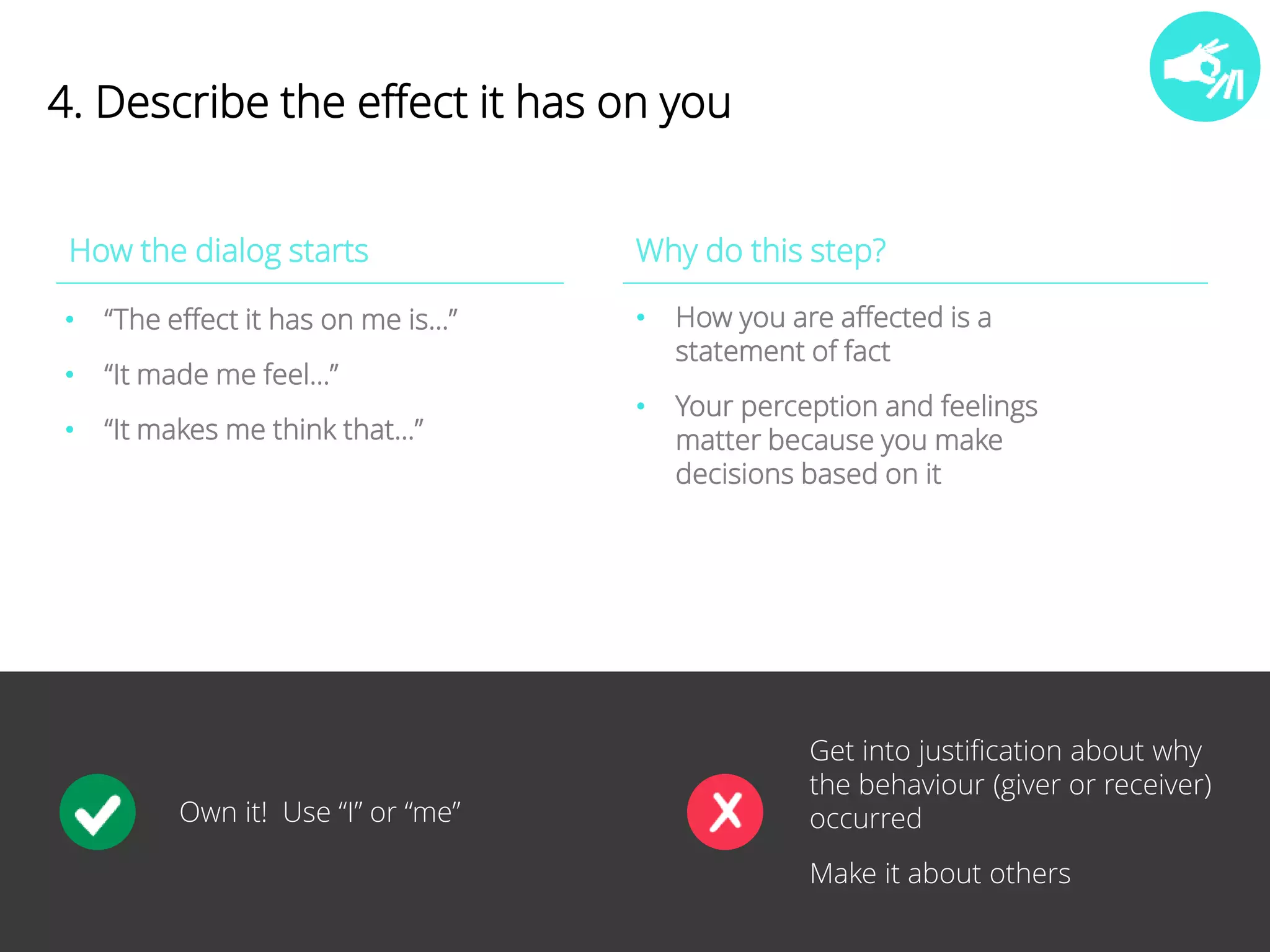
4. Describe the effect it has on you 
How the dialog starts Why do this step? 
• “The effect it has on me is…” 
• “It made me feel…” 
• “It makes me think that…” 
• How you are affected is a 
statement of fact 
• Your perception and feelings 
matter because you make 
decisions based on it 
Own it! Use “I” or “me” 
Get into justification about why 
the behaviour (giver or receiver) 
occurred 
Make it about others
20 
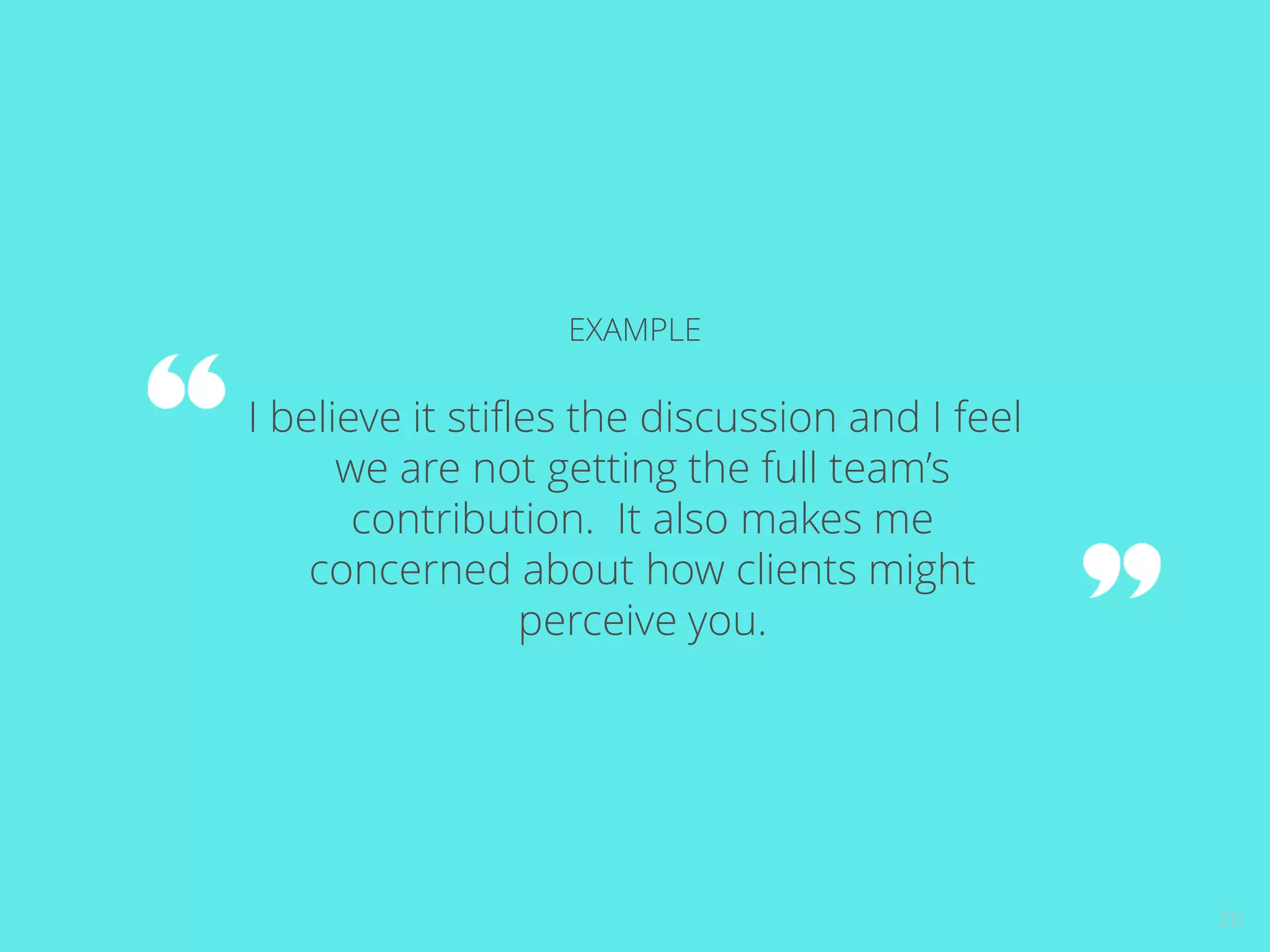
EXAMPLE 
I believe it stifles the discussion and I feel 
we are not getting the full team’s 
contribution. It also makes me 
concerned about how clients might 
perceive you.
21 
4A. Describe the broader impact (if you are trusted as 
knowledgeable or have authority) 
How the dialog starts Why do this step? 
• “Here’s what happens…” 
• “[The effect it has on me is that 
I believe that] the following will 
happen…” 
• Impart knowledge 
• Share understanding of greater 
downstream or ‘second-order’ 
impact 
Clearly connect the dots from 
behaviour to other impact 
Volunteer this with your 
manager 
Do this with people who know 
more about an area than you 
(try asking instead)
22 
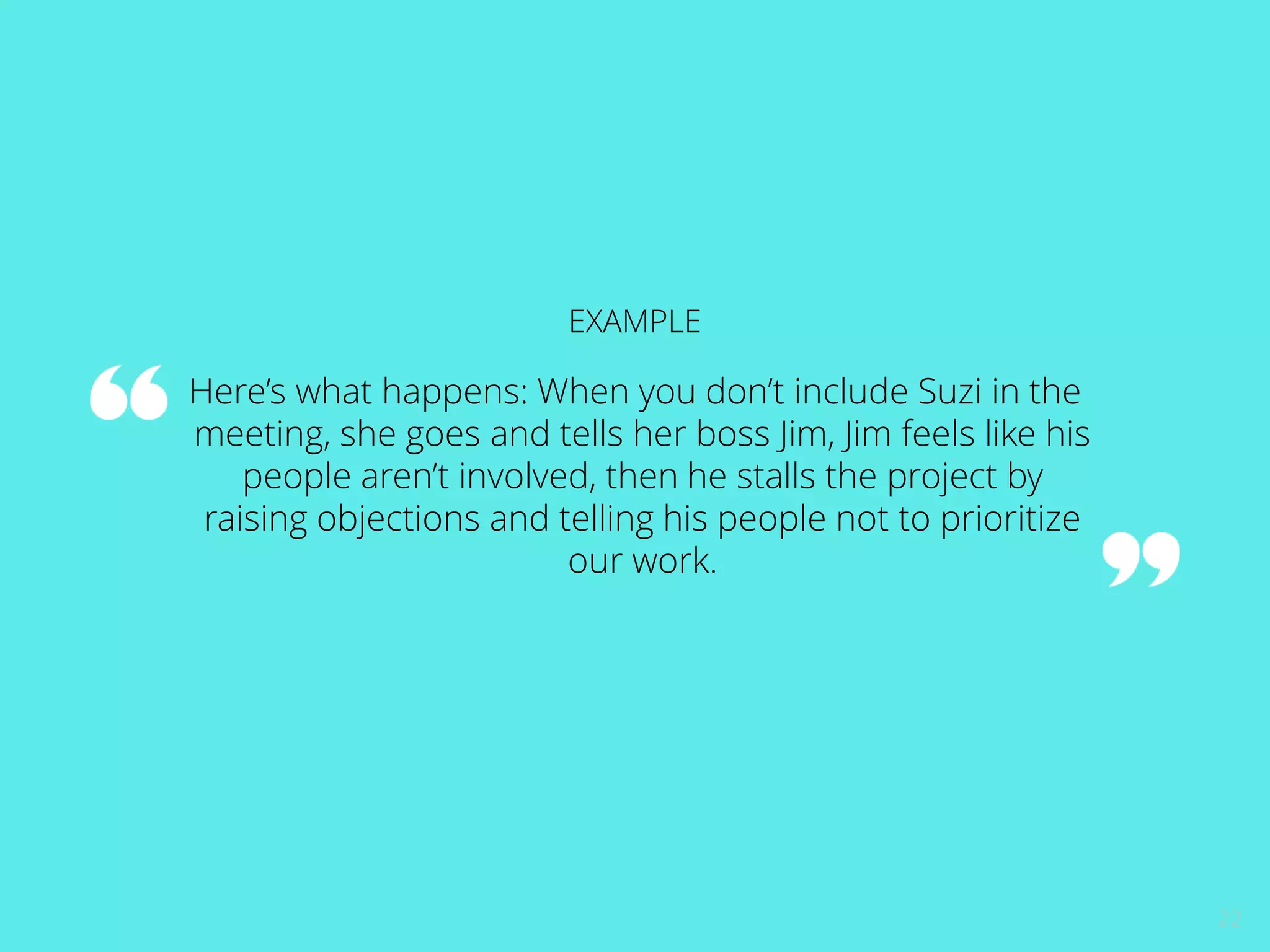
EXAMPLE 
Here’s what happens: When you don’t include Suzi in the 
meeting, she goes and tells her boss Jim, Jim feels like his 
people aren’t involved, then he stalls the project by 
raising objections and telling his people not to prioritize 
our work.
23 
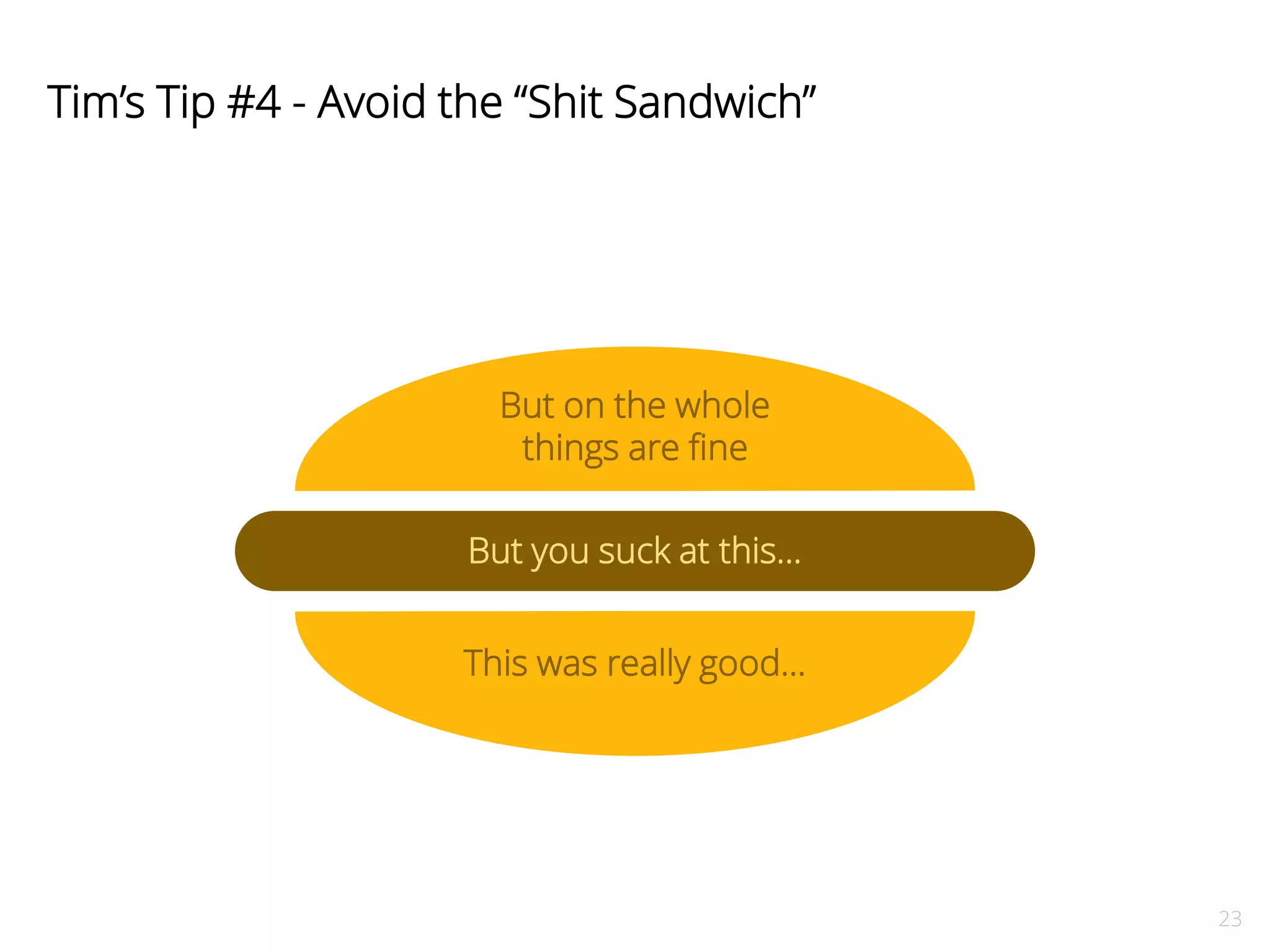
Tim’s Tip #4 - Avoid the “Shit Sandwich” 
But on the whole 
things are fine 
But you suck at this… 
This was really good…
24 
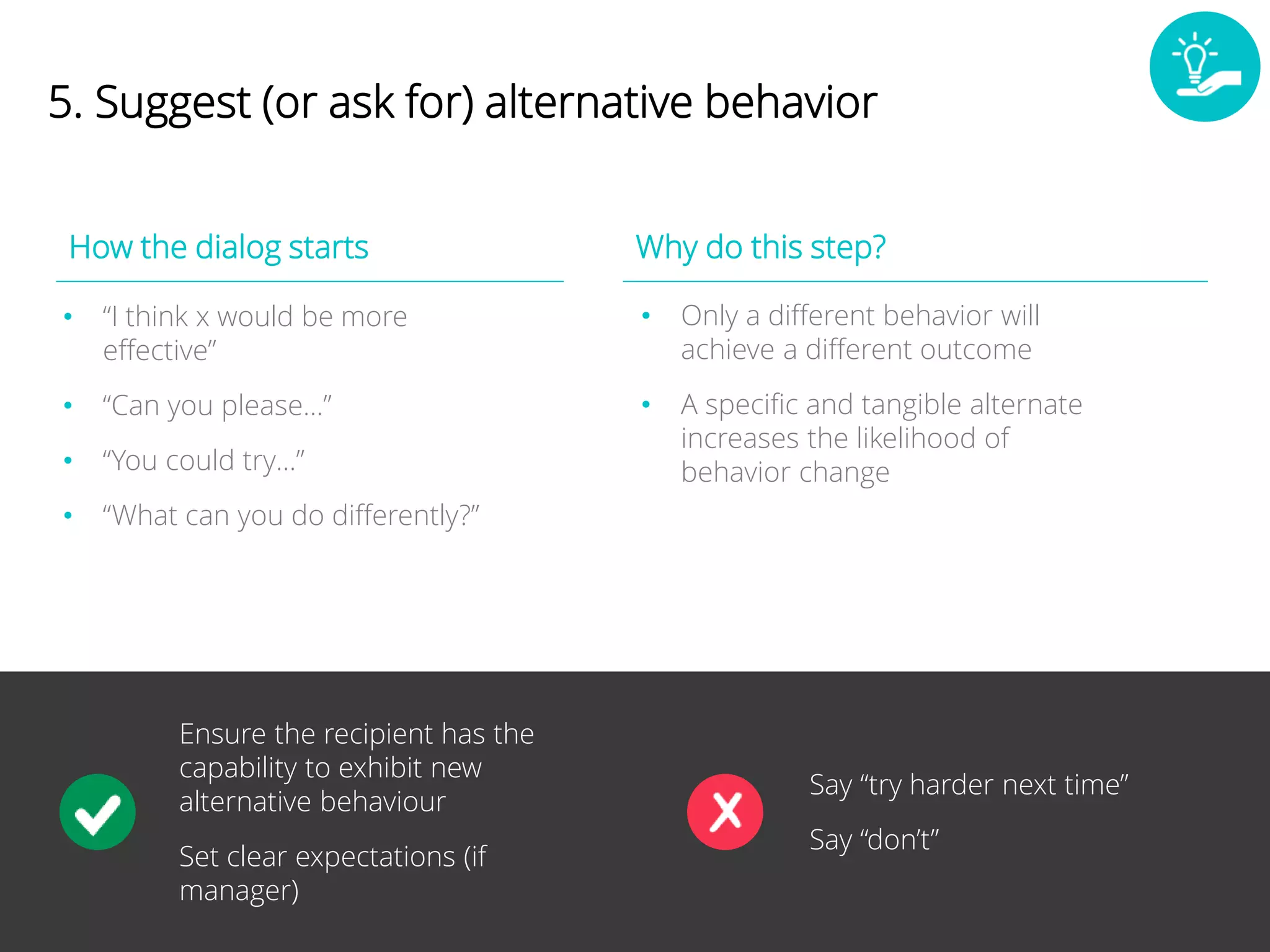
5. Suggest (or ask for) alternative behavior 
How the dialog starts Why do this step? 
• “I think x would be more 
effective” 
• “Can you please…” 
• “You could try…” 
• “What can you do differently?” 
• Only a different behavior will 
achieve a different outcome 
• A specific and tangible alternate 
increases the likelihood of 
behavior change 
Ensure the recipient has the 
capability to exhibit new 
alternative behaviour 
Set clear expectations (if 
manager) 
Say “try harder next time” 
Say “don’t”
25 
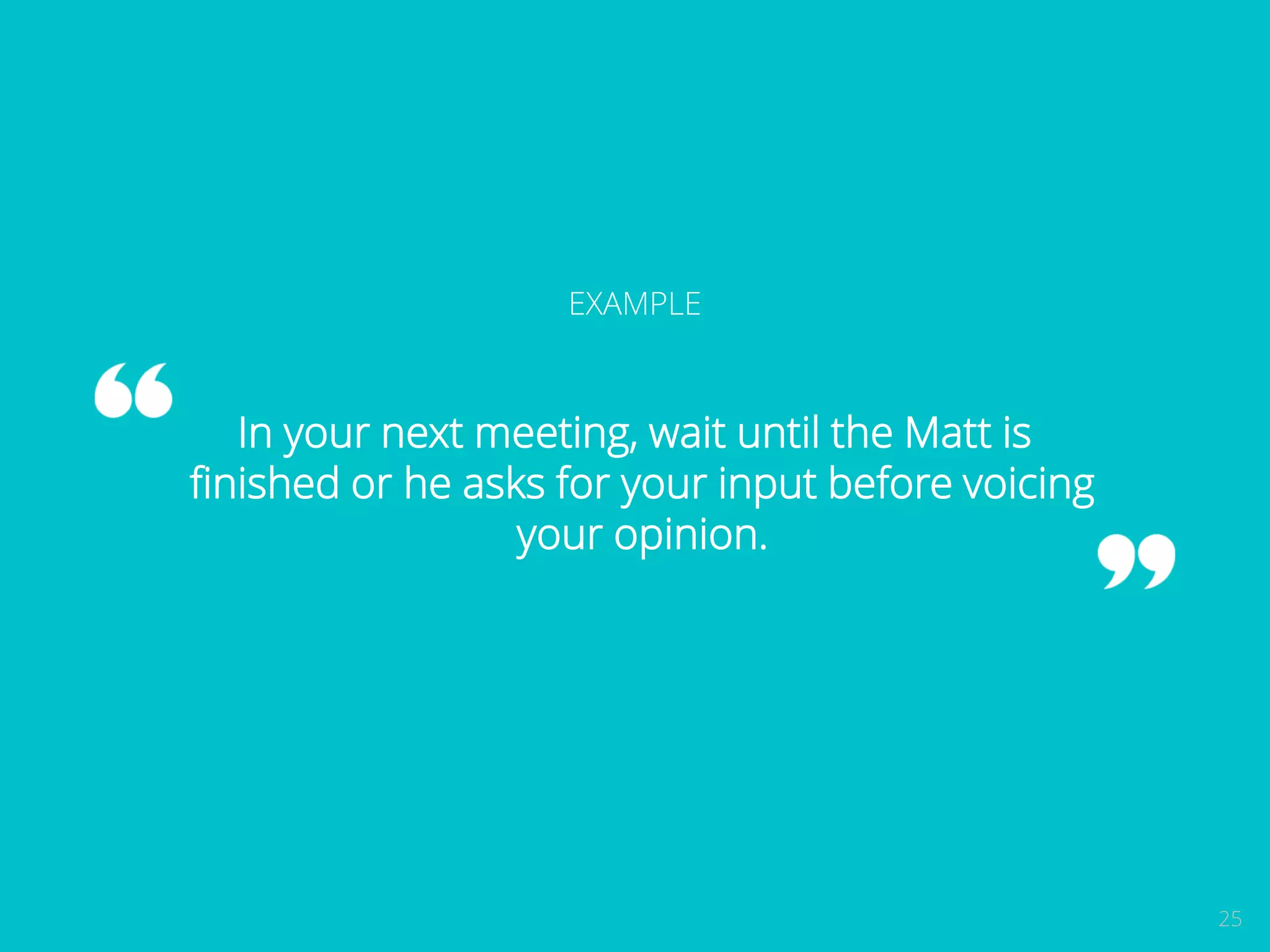
EXAMPLE 
In your next meeting, wait until the Matt is 
finished or he asks for your input before voicing 
your opinion.
26 
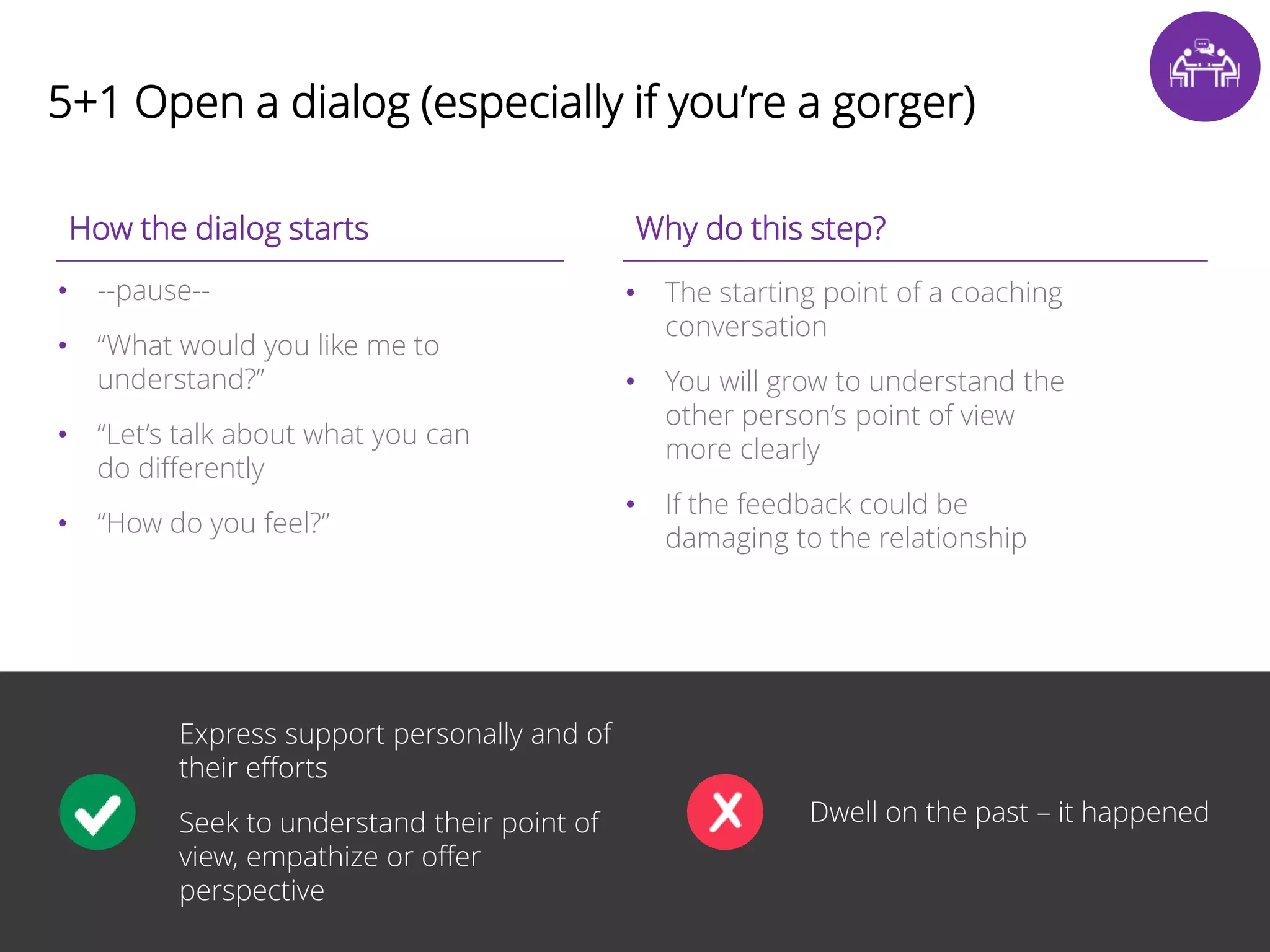
5+1 Open a dialog (especially if you’re a gorger) 
How the dialog starts Why do this step? 
• --pause-- 
• “What would you like me to 
understand?” 
• “Let’s talk about what you can 
do differently 
• “How do you feel?” 
• The starting point of a coaching 
conversation 
• You will grow to understand the 
other person’s point of view 
more clearly 
• If the feedback could be 
damaging to the relationship 
Express support personally and of 
their efforts 
Seek to understand their point of 
view, empathize or offer 
perspective 
Dwell on the past – it happened
27 
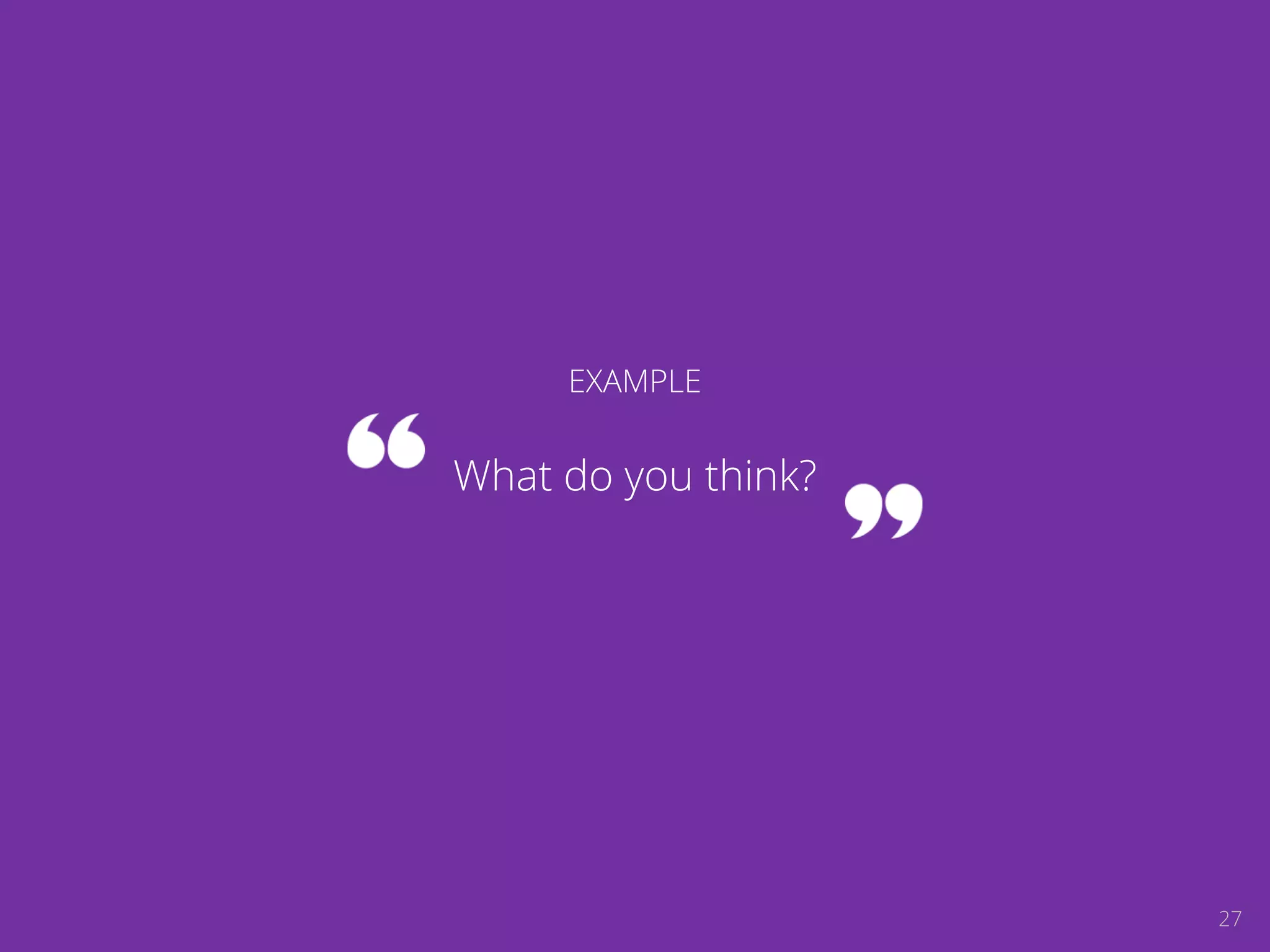
EXAMPLE 
What do you think?
28 
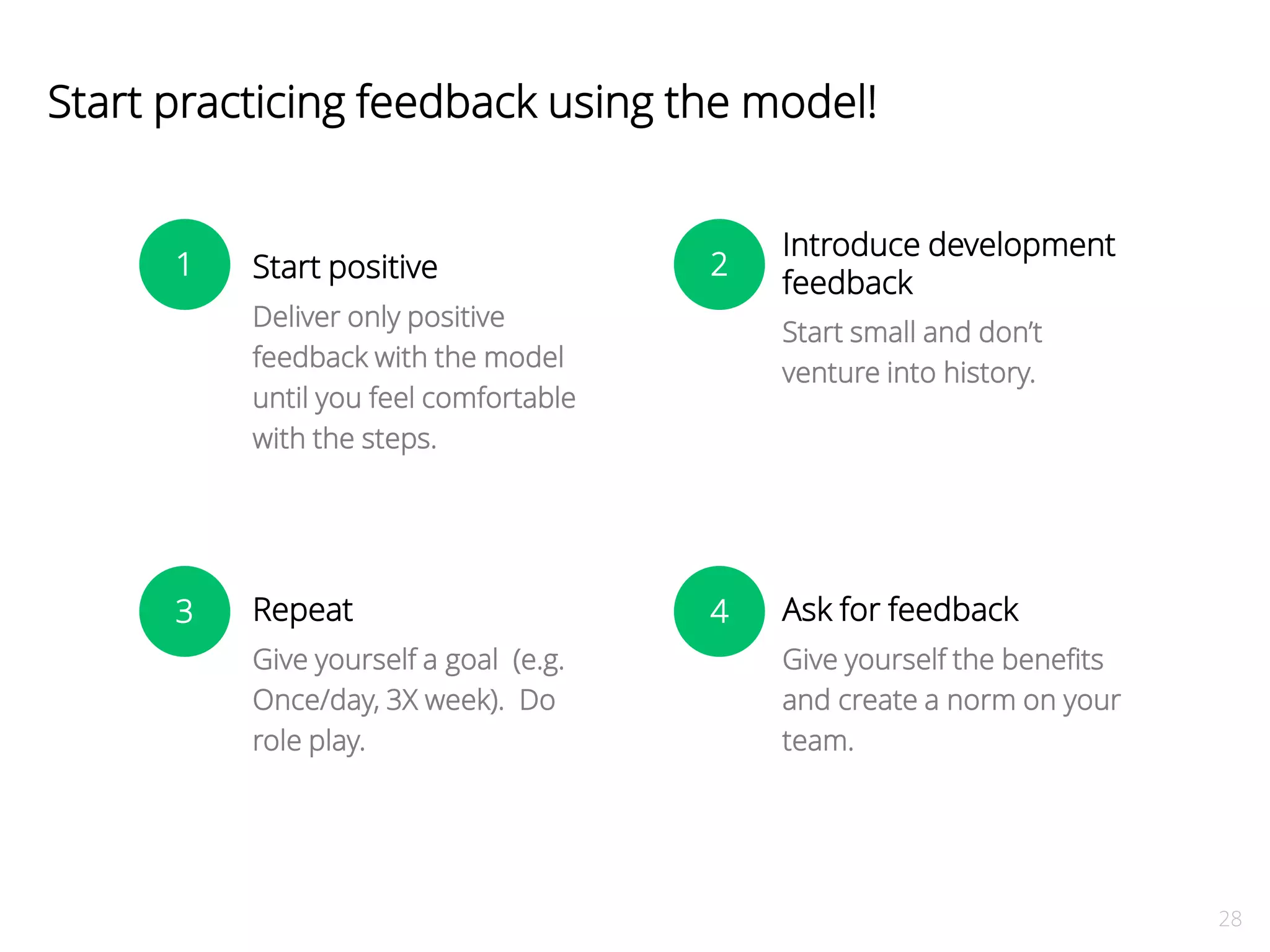
Start practicing feedback using the model! 
Start positive 
Deliver only positive 
feedback with the model 
until you feel comfortable 
with the steps. 
Introduce development 
feedback 
Start small and don’t 
venture into history. 
Repeat 
Give yourself a goal (e.g. 
Once/day, 3X week). Do 
role play. 
Ask for feedback 
1 
3 
2 
4 
Give yourself the benefits 
and create a norm on your 
team.
29 
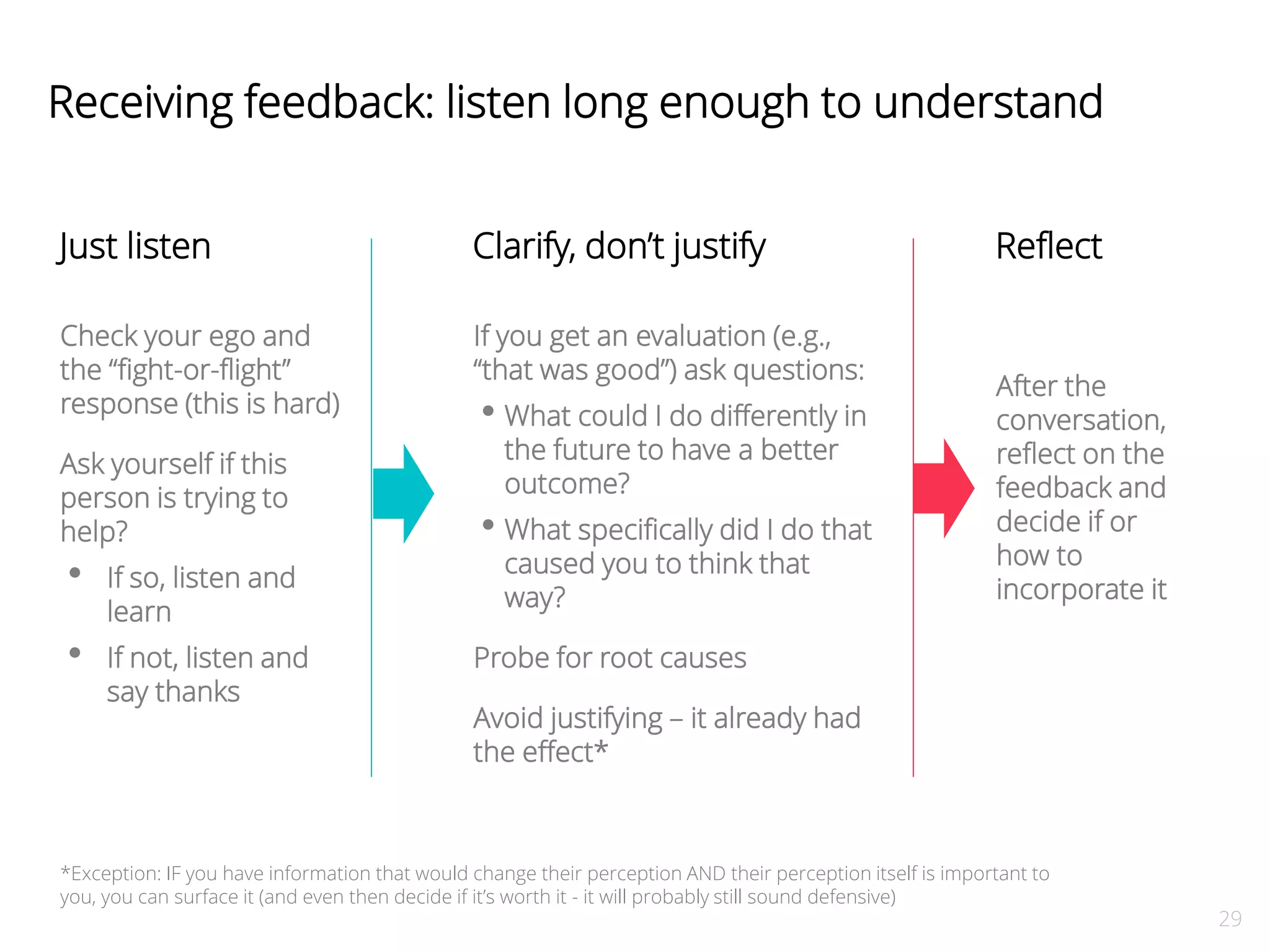
Receiving feedback: listen long enough to understand 
Just listen Clarify, don’t justify 
Reflect 
If you get an evaluation (e.g., 
“that was good”) ask questions: 
• What could I do differently in 
the future to have a better 
outcome? 
• What specifically did I do that 
caused you to think that 
way? 
Probe for root causes 
Avoid justifying – it already had 
the effect* 
Check your ego and 
the “fight-or-flight” 
response (this is hard) 
Ask yourself if this 
person is trying to 
help? 
• If so, listen and 
learn 
• If not, listen and 
say thanks 
After the 
conversation, 
reflect on the 
feedback and 
decide if or 
how to 
incorporate it 
*Exception: IF you have information that would change their perception AND their perception itself is important to 
you, you can surface it (and even then decide if it’s worth it - it will probably still sound defensive)
30 
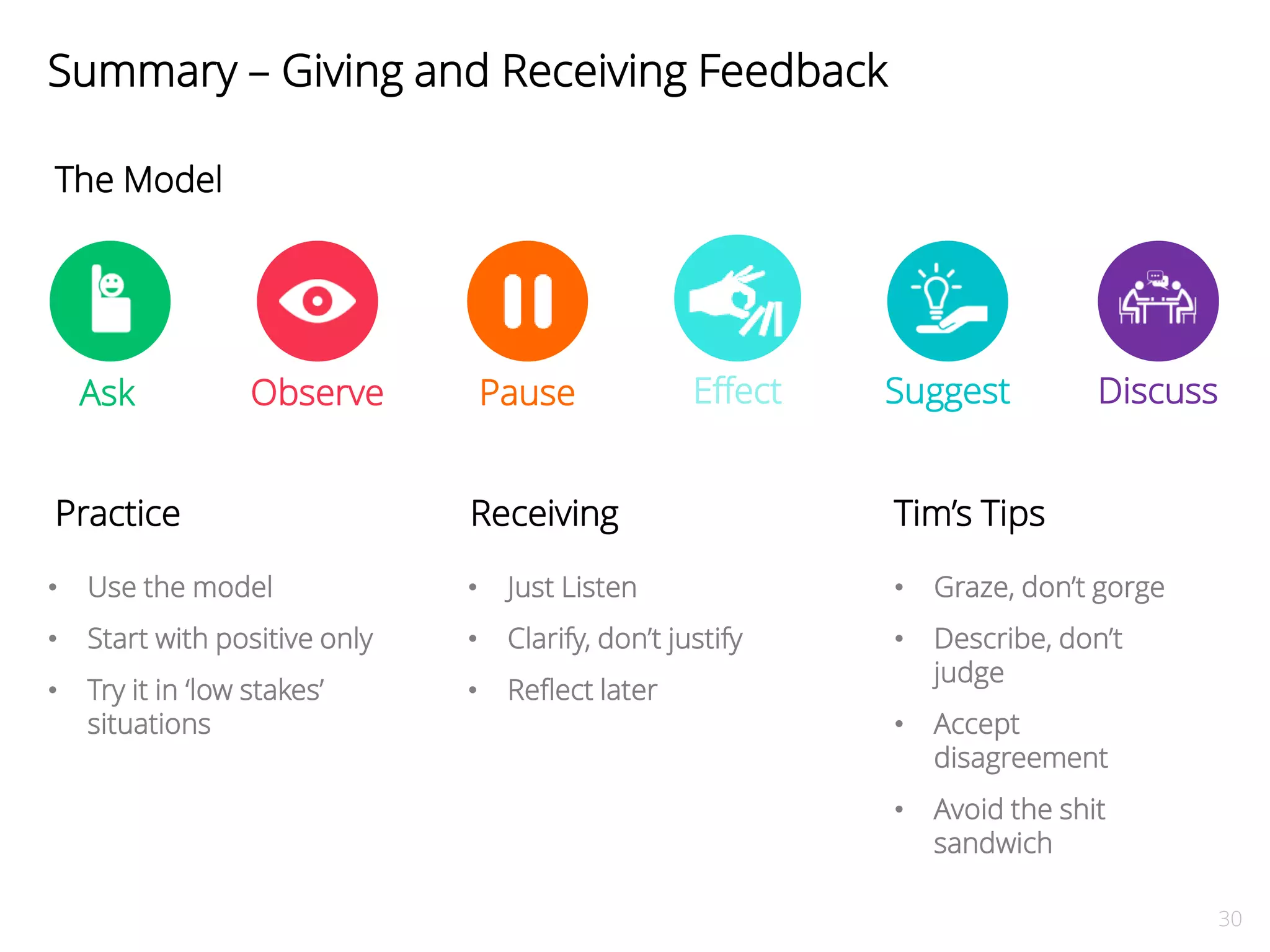
Summary – Giving and Receiving Feedback 
Ask Observe Pause Effect Suggest Discuss 
• Use the model 
• Start with positive only 
• Try it in ‘low stakes’ 
situations 
• Just Listen 
• Clarify, don’t justify 
• Reflect later 
• Graze, don’t gorge 
• Describe, don’t 
judge 
• Accept 
disagreement 
• Avoid the shit 
sandwich 
The Model 
Practice Receiving Tim’s Tips
31 
Feedback? 
Additional Resources 
• Manager Tools Podcasts on 
Feedback (www.manager-tools.com) 
• Difficult Conversations (Stone et. Al) 
• Ladder of inference (Agyris)

Effective Feedback at Work

  • 1.
    Giving and ReceivingFeedback A hard approach to the soft skills Introductory Training Tim Burns
  • 2.
    2 Today’s Discussion What And Why Of Feedback A Five Step Feedback Model Receiving Feedback Applying Feedback At Work 01 02 03 04
  • 3.
    3 Timothy Burns What Is Feedback? “The return of information about the result of a process or activity.”
  • 4.
    4 Types offeedback in the workplace Formative Evaluative Punitive More effective future behavior Allocating organizational rewards (formal reviews) The person giving the feedback Ideal Frequency Often Ideal Frequency Sometimes Ideal Frequency Never
  • 5.
    5 To encourage more effective behaviour in the future.
  • 6.
    6 Feedback acceleratesperformance growth What others know or believe about me Public Self I know about it Feedback Blind Spot I don’t know about it Feedback shrinks our blind spots by giving us the benefit of what others already know that is inhibiting effectiveness – at work and in our personal relationships
  • 7.
    7 Five Steps(+1) for giving feedback Ask Gain permission Observe State what you saw Pause Check for understanding Effect The effect on you Suggest Alternative effective behaviour + Discuss Open a dialog (optional)
  • 8.
    8 There’s alot going on – the five steps help keep it straight Individual Behavior Effect on Observer We judge ourselves by our intent Others judge us by the effect of our behavior on them Intent Capability Situation Perceived Behaviour Actual Behaviour Perceived Impact Beliefs and feelings
  • 9.
    9 If youfeel that feedback will give you an opportunity to do this You aren’t ready yet
  • 10.
    10 1. Askfor Permission How the dialog starts • “Can I give you some feedback?” • “I would like to give you some feedback, is now okay?” • “Would you like some feedback?” (if peer) Why do this step? • Prepare the person for the conversation • Ensure they are ready to hear the message - if not, do it at another time Wait for their answer Get into the feedback yet
  • 11.
    11 EXAMPLE CanI give you some feedback
  • 12.
    12 Frequent andsmall Almost no one thinks they get too much Tim’s Tip #1: Graze, don’t gorge
  • 13.
    13 How thedialog starts • “I’ve observed/noticed that…” • “When you do X…” (more informal) Why do this step? • Set context • Observations relate to behavior 2. State Observation Be as specific and as objective as possible Comment on what you think the other person thought/intended Include the distant past
  • 14.
    14 EXAMPLE Inoticed that you interrupted Matt in the meeting to make your point about our implementation plan.
  • 15.
    15 Judgment “Youlooked confident when you were presenting.” Description “You kept your hands in front of your body and asserted your points without caveating.” Tim’s Tip #2: Describe, don’t judge
  • 16.
    16 3. Check/pausefor understanding How the dialog starts --pause--- “Do you remember that?” “Did I get that right?” Why do this step? • Receiver can acknowledge the observation and arrive at the insight themselves • Ensure that the (same) observed fact is agreed upon and discussed • Disagreement here could mean that your feedback is not received well Make sure that you are talking about the same thing! Don’t get into justification about why the behaviour occurred
  • 17.
  • 18.
    18 Tim’s Tip#3: Accept disagreement Disagreement accepted about undesirable “Behaviour X” Does behaviour X reoccur? No Yes Goal Achieved! Opportunity to give feedback (no loss)
  • 19.
    19 4. Describethe effect it has on you How the dialog starts Why do this step? • “The effect it has on me is…” • “It made me feel…” • “It makes me think that…” • How you are affected is a statement of fact • Your perception and feelings matter because you make decisions based on it Own it! Use “I” or “me” Get into justification about why the behaviour (giver or receiver) occurred Make it about others
  • 20.
    20 EXAMPLE Ibelieve it stifles the discussion and I feel we are not getting the full team’s contribution. It also makes me concerned about how clients might perceive you.
  • 21.
    21 4A. Describethe broader impact (if you are trusted as knowledgeable or have authority) How the dialog starts Why do this step? • “Here’s what happens…” • “[The effect it has on me is that I believe that] the following will happen…” • Impart knowledge • Share understanding of greater downstream or ‘second-order’ impact Clearly connect the dots from behaviour to other impact Volunteer this with your manager Do this with people who know more about an area than you (try asking instead)
  • 22.
    22 EXAMPLE Here’swhat happens: When you don’t include Suzi in the meeting, she goes and tells her boss Jim, Jim feels like his people aren’t involved, then he stalls the project by raising objections and telling his people not to prioritize our work.
  • 23.
    23 Tim’s Tip#4 - Avoid the “Shit Sandwich” But on the whole things are fine But you suck at this… This was really good…
  • 24.
    24 5. Suggest(or ask for) alternative behavior How the dialog starts Why do this step? • “I think x would be more effective” • “Can you please…” • “You could try…” • “What can you do differently?” • Only a different behavior will achieve a different outcome • A specific and tangible alternate increases the likelihood of behavior change Ensure the recipient has the capability to exhibit new alternative behaviour Set clear expectations (if manager) Say “try harder next time” Say “don’t”
  • 25.
    25 EXAMPLE Inyour next meeting, wait until the Matt is finished or he asks for your input before voicing your opinion.
  • 26.
    26 5+1 Opena dialog (especially if you’re a gorger) How the dialog starts Why do this step? • --pause-- • “What would you like me to understand?” • “Let’s talk about what you can do differently • “How do you feel?” • The starting point of a coaching conversation • You will grow to understand the other person’s point of view more clearly • If the feedback could be damaging to the relationship Express support personally and of their efforts Seek to understand their point of view, empathize or offer perspective Dwell on the past – it happened
  • 27.
    27 EXAMPLE Whatdo you think?
  • 28.
    28 Start practicingfeedback using the model! Start positive Deliver only positive feedback with the model until you feel comfortable with the steps. Introduce development feedback Start small and don’t venture into history. Repeat Give yourself a goal (e.g. Once/day, 3X week). Do role play. Ask for feedback 1 3 2 4 Give yourself the benefits and create a norm on your team.
  • 29.
    29 Receiving feedback:listen long enough to understand Just listen Clarify, don’t justify Reflect If you get an evaluation (e.g., “that was good”) ask questions: • What could I do differently in the future to have a better outcome? • What specifically did I do that caused you to think that way? Probe for root causes Avoid justifying – it already had the effect* Check your ego and the “fight-or-flight” response (this is hard) Ask yourself if this person is trying to help? • If so, listen and learn • If not, listen and say thanks After the conversation, reflect on the feedback and decide if or how to incorporate it *Exception: IF you have information that would change their perception AND their perception itself is important to you, you can surface it (and even then decide if it’s worth it - it will probably still sound defensive)
  • 30.
    30 Summary –Giving and Receiving Feedback Ask Observe Pause Effect Suggest Discuss • Use the model • Start with positive only • Try it in ‘low stakes’ situations • Just Listen • Clarify, don’t justify • Reflect later • Graze, don’t gorge • Describe, don’t judge • Accept disagreement • Avoid the shit sandwich The Model Practice Receiving Tim’s Tips
  • 31.
    31 Feedback? AdditionalResources • Manager Tools Podcasts on Feedback (www.manager-tools.com) • Difficult Conversations (Stone et. Al) • Ladder of inference (Agyris)