D E C E M B E R

F L I G H T
                      2 0 0 5


A I R W O R T H I N E S S

S U P P O R T

T E C H N O L O G Y
                                37
E
N
I
Z
A
G
A
M
L
A
C
I
N
H
C
E
T
S
U
B
R
I
A
7
3
T
S
A
F
Customer Services
Just happened                                          Coming soon
                                                                                    events
HUMAN FACTORS SYMPOSIUM                                SPARES, SUPPLIERS & WARRANTY
IN MADRID, SPAIN, 28-30 NOVEMBER                       REGIONAL SYMPOSIUM
Airbus continued the dialogue with its operators at    IN ATHENS, 13-16 FEBRUARY 2006
this forum, discussing human factors aspects with      Following the Airbus Spares, Suppliers and
practical and operational perspectives on:             Warranty symposium in Puerto Vallarta, Mexico
• Flight operations (environmental, safety, pure       for operators in the Americas, and in Sanya,
  ops e.g. procedures, philosophy, systems)            China, for Chinese operators, it is now the turn of
• Maintenance (safety, CRM, organization, proce-       Europe and Africa. A Spares, Suppliers &
  dures, manuals)                                      Warranty regional symposium will be held in
• Cabin operations (safety, CRM, organization,         Athens, Greece, from the 13th to the 16th of
  procedures, mass travel, medical aspects)            February 2006 bringing together Airbus cus-
• Training (to flight operations, maintenance,         tomers, operators and suppliers. Its objective is to
  cabin operations, to human factors)                  review together strategic directions, operational
• ATC (environmental, safety, pure operations e.g.     support issues and current spares and warranty
  procedures, philosophy, systems)                     services. Operators will be given the opportunity
                                                       to express their requirements and share their expe-
A300/A310 FAMILY TECHNICAL SYMPOSIUM                   rience. Major suppliers will also have the opportu-
IN LISBON, PORTUGAL, 14-18 NOVEMBER                    nity to present their support and services strategy.
A landmark event occurred at this symposium,           A330/A340 FAMILY TECHNICAL SYMPOSIUM
with the first formal presentation to operators of     IN SUN CITY, SOUTH AFRICA, 28 MAY-2 JUNE 2006
the Airbus initiatives to ensure Long Term Support     Airbus is pleased to announce the date and loca-
of the A300/A310 Family. The objective of this ini-    tion of the next A330/A340 Technical Symposium.
tiative is to ensure equivalent levels of operator     The Symposium is the opportunity to review
satisfaction for A300/A310 operators as for any        actual in-service experience with the A330/A340
other Airbus programme through to the last air-        Family of aircraft as well as to discuss subjects of
craft being in-service (up to year 2050). Clearly      more general technical interest.
the enhanced support foreseen for the A380 will        A provisional agenda will be sent in February 2006.
set the satisfaction benchmark, and for the
A300/A310 Family other considerations that affect
the level of service include the low rate of produc-
tion (can affect spares availability) and the even-
tual closure of the final assembly line, which must
be anticipated. The operators at the symposium
expressed their view that their expectations for the
future had been met (61%) or exceeded (39%) in
this respect.
The symposium discussion otherwise covered
various technical, maintenance and support issues
and 100 participants from 36 operators were pres-
ent, including all of the largest A300/A310 opera-
tors. 67% of the operator respondents considered
the event very useful and 33% useful.
D   E      C      E       M     B     E     R           2     0   0   5


                                                                                                                         37


                                                                                                                  E
                                                                                                                  N
                                                                                                                  I
                                                                                                                  Z
                                                                                                                  A
                                                                                                                  G
                                                                                                                  A
                                                                                                                  M
F L I G H T


                                                                                                                  L
A I R W O R T H I N E S S


                                                                                                                  A
                                                                                                                  C
S U P P O R T


                                                                                                                  I
T E C H N O L O G Y


                                                                                                                  N
                                                                                                                                             J     U     L     Y           2     0     0   5


                                                                                                                  H
                                                                                                                  C
                                                                                                                                 Safety initiatives in Customer Services                           2


                                                                                                                  E
                                                                                                                                 An overview of Airbus safety initiatives


                                                                                                                  T
                                                                                                                                 Michel Trémaud


                                                                                                                  S
                                                                                                                                 Airbus cabin air quality                                          7
                                                                                                                                 Still the best!


                                                                                                                  U
                                                                                                                                 Claire Nurcombe


                                                                                                                  B
                                                                                                                  R
                                                                                                                                 The European Aviation Safety Agency                               11
                                                                                                                                 A new regulatory authority for European aviation


                                                                                                                  I
                                                                                                                                 Claude Schmitt


                                                                                                                  A
                                                                                                                                 Engine noise reduction programme                                  19
                                                Cover:A380 MSN004 at Frankfurt airport during
                                                     its check exercise, see article on page 23.                                 Making aircraft engines better neighbours
                                                                                                                                 Stephen Montgomery
                                                               Publisher: Bruno Piquet
                                                              Editor: Kenneth Johnson
                                             Graphic Designer: Agnès Massol-Lacombe                                              A380                                                              23
                                                                                                                                 Airport ready
                                                      Authorization for reprint of FAST articles should be requested
                                                           from the editor at the FAST e-mail address given below                Thomas Burger
                                                      Customer Services Communications                                           Thilo Stilp
                                                                    Tel: +33 (0)5 61 93 43 88
                                                                   Fax: +33 (0)5 61 93 47 73
                                                          E-mail: fast.magazine@airbus.com
                                                                                                                                 Airbus Training Airport                                           28
                                                                                             Printer Escourbiac                  A virtual airport for pilot training
                                                                                                                                 Kheireddine Belguedj
                                                   FAST may be read on Internet
          http://www.content.airbusworld.com/SITES/Customer_services/index.html                                                  Bernard Benetti
                                            under Customer Services/Publications

                                                                                            ISSN 1293-5476
                                                                                                                                 Countering jet fuel price increases                               32
                                                                                                                                 Guidance on fuel saving
                                                                   Airbus Customer Services                                      Simon Weselby
                                                                                                                                 Frédéric Desgeorge
                                                      © AIRBUS S.A.S. 2005. All rights reserved
                              No other intellectual property rights are granted by the delivery of this Magazine than
                        the right to read it, for the sole purpose of information. This Magazine and its content shall
                   not be modified and its images shall not be reproduced without prior written consent of Airbus.
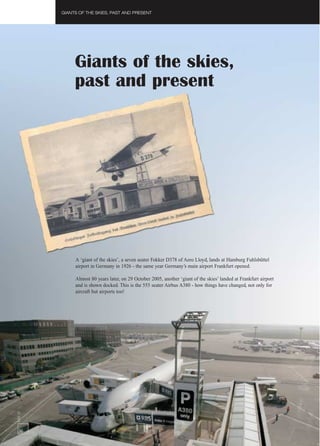
                                                                                                                                 Giants of the skies, past and present                             36
              This Magazine and the material it contains shall not, in whole or in part, be sold, rented, distributed
                     or licensed to any third party. The information contained in this Magazine may vary over time
                 because of future factors that may affect the accuracy of information herein. Airbus assumes no                 Customer Services
                     obligation to update any information contained in this Magazine. When additional information
                 is required, Airbus S.A.S. can be contacted to provide further details. Airbus, its logo and product
                                                                                                                                 Around the clock... Around the world                              37
                                        names are registered trademarks. Airbus S.A.S. shall assume no liability for
                          any damage in connection with the use of this Magazine and of the materials it contains,
                                           even if Airbus S.A.S. has been advised of the likelihood of such damages


                                                                                         Photographs:                                   This issue of FAST has been printed on paper
                                                       exm company: Hervé Goussé and Philippe Masclet                                   produced without using chlorine, to reduce


                                                                                                                                                                                                    FAST37
                                                                           Airbus France: Julie Pomery                                  waste and help conserve natural resources.
                                                                             Cover page: Julie Pomery                                   Every little helps!

                                                                                                                                                                                                    1
SAFETY INITIATIVES IN CUSTOMER SERVICES - AN OVERVIEW OF AIRBUS SAFETY INITIATIVES                                                               SAFETY INITIATIVES IN CUSTOMER SERVICES - AN OVERVIEW OF AIRBUS SAFETY INITIATIVES


                                                                                                                               Continued                               implement safety enhancements in
                                                                                                                                                                       terms of Design, Operations (i.e.
                                                                                                                               airworthiness and                       procedures) and Training.
                                                                                                                               operational safety                      Safety enhancement efforts
                                                                                                                                                                       address equally flight operations,
                                                                                                                               Operators and Maintenance,              cabin operations and mainte-
                                                                                                                               Repair and Overhaul (MRO) orga-         nance. The lessons-learned
                                                                                                                               nizations are required to report to     derived from this process are
                                                                                                                               their national authorities in-service   blended with the conclusions and
                                                                                                                               occurrences defined by their coun-      recommendations from industry
                                                                                                                               try's mandatory occurrence report-      working groups in order to devel-
                                                                                                                               ing (MOR) scheme. It is essential       op and publish safety-awareness
                                                                                                                               that such in-service occurrences        information in various media.
                                                                                                                               are also reported to Airbus, docu-
                                                                                                                               mented, analysed and understood
                                                                                                                               in order to prevent the reoccur-
                                                                                                                                                                       Attaining and
                                                                                                                               rence of known types of events and      maintaining safe
                                                                                                                               the occurrence of potential events.
                                                                                                                               Indeed, this prevention process
                                                                                                                                                                       and profitable
                                                                                                                               includes both a reactive part and a     operations
                       Safety initiatives                                                                                      proactive part.

                                                                                                                               For effective identification of
                                                                                                                                                                       Support to operators in attaining
                                                                                                                                                                       and maintaining safe and prof-
                                                                                                                               events precursors (also referred        itable operations has been the

                 in Customer Services                                                                                          to as weak signals), the proactive
                                                                                                                               part also includes the analysis of
                                                                                                                               observations made by operators
                                                                                                                                                                       charter of Airbus Customer
                                                                                                                                                                       Services since the entry-into-
                                                                                                                                                                       service of the first A300 aircraft
                                                 An overview of Airbus                                                         in the frame of their flight opera-
                                                                                                                               tions monitoring programme (i.e.
                                                                                                                                                                       back in 1975. However, the indus-
                                                                                                                                                                       try has greatly evolved and Airbus'
                                                                                                                                                                       initial operators base of flag carri-
                                                      safety initiatives                                                       incidents and human factors
                                                                                                                               reports, flight data analysis and
                                                                                                                               line observations).
                                                                                                                                                                       ers has been enriched with charter
                                                                                                                                                                       operators and, more recently, low-
                                                                                                                                                                       cost carriers and corporate flight
                                                                                                                               The operational, technical and          departments.
                                                                                                                               human factors analysis of in-
                As an aircraft manufacturer, the prime duty of         Since 2003, Airbus Customer Services has                service experience feedback             The leased-aircraft concept has
                Airbus in terms of safety is two-fold:                 deployed a yearly portfolio of safety initiatives       enables Airbus to continuously          been an enabler in this market
                • Ensure the continued airworthiness and               that address all aspects of Airbus's internal core      identify lessons-learned and            evolution and has created a new
                  operational safety of the Airbus fleet,              activities and all domains of an airline's operation.
                • Support Airbus operators in attaining and
                  maintaining a safe and profitable operation.         This article provides an overview of this portfolio                                                                                                         Airbus Flight Operations Briefing
                                                                       of safety initiatives to encourage operators and                                                                                                            Notes, an example of Airbus
                The former represents the manufacturer's regula-       other actors to take full advantage of these safety                                                                                                         safety-awareness publications
                tory obligation, as Airbus is the holder of a design   enhancement opportunities.
                and production operational approval. The latter
                reflects Airbus's commitment, as a customer
                services organization, to operators of Airbus
                aircraft.


                                                                                                    Michel Trémaud
                                                                                                      Senior Director
                                                                                           Airbus Customer Services
                                                                                         Head of Safety Management
FAST 37


                                                                                                                                                                                                                                                                       FAST 37
 2                                                                                                                                                                                                                                                                     3
SAFETY INITIATIVES IN CUSTOMER SERVICES - AN OVERVIEW OF AIRBUS SAFETY INITIATIVES                                                            SAFETY INITIATIVES IN CUSTOMER SERVICES - AN OVERVIEW OF AIRBUS SAFETY INITIATIVES


                                                  framework of relationships bet-           . Company safety management       To further ease the dissemination        The above set of safety initiatives
                                                  ween Airbus, its customers (i.e. the        system (SMS),                   and understanding of complex             are intended for the various users
                                                  leasing companies) and the aircraft       . Fleet upgrade and               subjects by all stakeholders, some       of Airbus products and their                   1
                                                  operators. The traffic growth in            standardization,                of the above safety awareness            instructors, but would not be com-
                                                  fast-developing       geo-economic        . English proficiency training.   publications have been translated        plete if Airbus were not involved
                                                  regions has been an additional                                              into the Chinese and Russian             upstream in the basic education
                                                  driver in the evolution of Airbus                                           languages.                               and training of future Airbus pilots,
                                                  support to its aircraft operators.      Safety                                                                       flight attendants and maintenance
                                                                                          awareness                           Training and
                                                                                                                                                                       mechanics. Therefore, cooperation
                                                  Today, Airbus Customer Services                                                                                      programmes with state technical
                                                  offers a wide range of support and      Safety management is a mindset;     education                                universities, flight academies and             2
                                                  services to further enhance operat-     safety readiness is a matter of                                              flying colleges have been devel-
                                                  ing safety. This support is both        awareness… being aware to be        Maintaining the link with operators      oped in China and North America,
                                                  direct (i.e., working with operators)   mentally prepared. Over the past    after their type qualification, in one   while similar programmes are cur-
                                                  and indirect (i.e., working with        years, Airbus Customer Services     of the Airbus Training centres, is an    rently being developed in Russia,
                                                  national civil aviation authorities,    has developed a wide array of       important element of Airbus' safety      Ukraine, India, South Africa and
                                                  training organizations, MRO cen-        safety awareness publications on    awareness strategy. In 2004, Airbus      Australia.
                                                  tres, international safety organiza-    various media:                      created the concept of regional
                                                  tions…) and spans the following         • 'Getting to Grips with'           Airline Instructors Seminars to pro-     The objective of these programmes
                                                  basic elements of a safe operation:       brochures that today cover 19     mote the continued exchange of           is to provide students and cadets              3
                                                  • Regulations,                            flight operations themes,         teaching and safety information          with early exposure to modern
                                                  • Regulatory oversight by                 including cabin safety,           between Airbus instructors and air-      technology systems and flight
                                                     national authorities,                • Flight Operations Briefing        line instructors. The following is the   decks, by providing education and
                                                  • Operator's regulatory                   Notes, published on a monthly     regional coverage achieved by these      training organizations with:
                                                     compliance and best practices:         basis in the Airbus Safety        seminars in 2004 and 2005, and           • Technical documentation and
                                                     . General organization,                Library,                          planned for 2006:                           safety awareness publications,
                                                     . Flight operations organization       (http://www.airbus.com/en/        • 2004: Taipei, Mumbai, Beijing,         • Courseware,
                                                       (including flight operations         corporate/ethics/safety_lib/)     • 2005: Miami, Moscow, Hanoi,            • Training devices.                            4
                                                       monitoring process),                 and in a yearly collector box     • 2006: Bangalore, Tunis, Beijing,
                                                     . Maintenance/engineering            • E-Briefings, available on the        plus locations to be selected in
                                                       organization including               Flight Operations Community          the Middle East, Asia and South       International
                                                       maintenance best practices,          of the new airbusworld.com           America.                              safety cooperation
                                                       spares provisioning and              customer portal,
          Flight Operations Briefing Notes             ground support                       (http://www.airbusworld.com/)     Acknowledging the requests of            Airbus Customer Services is also
          collector box, brochure ‘Getting to          equipment/tools,                   • Videos and CDs.                   operators, the initial concept that      further involved in the develop-                      Airbus Training centres in
          Grips’ in Chinese and Russian                                                                                       focused on flight operations has         ment of workshops and seminars                        1. Beijing
          languages, safety-awareness tutorials                                                                                                                                                                              2. Hamburg
                                                                                                                              been extended to maintenance             that are deployed in the context of                   3. Miami
          and courseware on CDs.
                                                                                                                              from the last seminar in Hanoi.          regional safety cooperation pro-                      4. Toulouse
                                                                                                                                                                       grammes funded or led by the
                                                                                                                                  Airbus Safety Library home page      European Union, the International
                                                                                                                                  hosted on the Airbus corporate       Civil Aviation Organization
                                                                                                                                  website                              (ICAO) and Airbus.                                 E-Briefings, a new interactive
                                                                                                                                                                                                                          safety-awareness publication
FAST 37


                                                                                                                                                                                                                                                           FAST 37
 4                                                                                                                                                                                                                                                         5
SAFETY INITIATIVES IN CUSTOMER SERVICES - AN OVERVIEW OF AIRBUS SAFETY INITIATIVES                                                                                                   AIRBUS CABIN AIR QUALITY - STILL THE BEST!


                                              The scope of these workshops and        • Cabin operations
                                              seminars are defined to respond to        . Cabin safety (see brochure
                                              regional needs and priorities.              ‘getting to grips with Cabin
                                              As described below, they address a          Safety’ below).
                                              large cross-section of themes
                                              identified as causal or contributing
                                              factors in incidents and accidents:
                                              • Company safety management
                                                . Incident/accident prevention,
                                                . Safety Management System
                                                  (SMS).
                                              • Flight operations
                                                . Preventing Controlled Flight
                                                  Into Terrain (CFIT),
                                                . Approach and Landing
                                                  Accident Reduction (ALAR),
                                                . Flight operations safety
                                                  awareness (CFIT, ALAR,
                                                  runway incursions, altitude
                                                  deviations/level busts,


                                                                                                                           Airbus cabin
                                                  fire/smoke/fumes in
                                                  cockpit/cabin, weather
                                                  avoidance, …),
                                                . Flight Operations Monitoring        • Maintenance/Engineering


                                                                                                                           air quality
                                                  (FOM),                                . Structural integrity/
                                                . Understanding and use of the            maintenance of aging aircraft
                                                  Minimum Equipment List                  structures,
                                                  (MEL).                                . Maintenance of electrical,
                                                                                          wiring and interconnections,
                                                                                        . Maintenance human factors.       Still the best!
                  Installation 72%
                                                                                Maintenance human factors: understanding
                  Servicing 9%
                                                                                and managing human errors
                  Job set-up preparation 3%
                                                                                                                           Frequent flyers experience it regularly, flight       After carrying out air quality analyses (see
                  Test 2%                                                                                                  attendants and cockpit crew complain about it, but    FAST 20 December 1996 'Airbus Cabin Air
                  Human movement 2%                                                                                        up until now nothing was done about it - that         Quality - Only the Best!') and discovering that air
                                                                                                                           smell coming from the exhausts of aircraft in front   quality was worst during ground phases due to
                  Removal 1%
                                                                                                                           of you in the taxi queue waiting to take off. The     the influence of external pollution, Airbus decid-
                  Others 11%                                                                                               major odour causing compounds in exhaust gases        ed to concentrate on finding an answer to these
                                                                                     CONTACT DETAILS
                                                                                                                           and fuels are from the family of compounds            complaints.
                                                                                     Michel Trémaud                        known as VOCs (volatile organic compounds) and
                                                                                     Senior Director                       they can really spoil that holiday feeling.
                                                                                     Airbus Customer Services
                                                                                     Head of Safety Management

                                                                                     Tel: +33 (0)5 61 93 30 04
                                                                                     Fax: + (33) (0) 5 67 19 12 24

          Conclusion                                                                 michel.tremaud@airbus.com


               An accident investigator once said,                his/her own contribution to aviation safety,
               'Safety is leaving no stone unturned'              but aviation safety has been built from,
               to identify threats that may lie hidden on         and is continuously enhanced by,
               the path to safety. Safety enhancement             successive building blocks. All of them -                                                                                               Claire NURCOMBE
               initiatives must involve a mosaic of efforts       small or large - contribute to making our                                                                                                     ECS Engineer
               and cooperation programmes.                        safe aviation transportation system even                                                                                               Customised Systems
               None of us will ever be able to measure            safer.                                                                                                                                  Airbus Deutschland
FAST 37


                                                                                                                                                                                                                                            FAST 37
 6                                                                                                                                                                                                                                          7
AIRBUS CABIN AIR QUALITY - STILL THE BEST!                                                                                                                                                        AIRBUS CABIN AIR QUALITY - STILL THE BEST!


                                                       Current standards                        with small amounts of other
                                                                                                compounds, such as sulphur.
                                                                                                                                                                                                           Experimental set-up
                                                                                                                                                                                   Catalyst
                                                                                                Hydrocarbons are a class of com-
                                                       Ozone Converters (OZC) have              pounds made up of hydrogen and
                                                       been standard equipment for air-         carbon combined in molecular
                                                                                                                                        Fuel vapour                                                                              Odourless
                                                       craft for over 10 years and optional     chains. These compounds are pre-
                                                                                                                                        molecules                                                                                molecules
                                                       equipment for 20 since it was            sent in very small amounts, but
                                                       found necessary to introduce             due to the sensitivity of the human
                                                       ozone removal capability after the       nose the cabin occupants can
                                                       first trans-Pacific flights in the       smell them, even down to levels of
                                                       mid-70's. The OZC is installed as        a couple of parts per trillion of the                                            Tapping points
                                                       standard equipment on A330/A340          compound.
                                                       Family aircraft and the A380, and
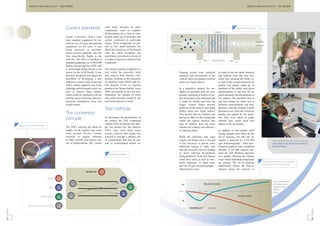
                                                       is increasingly being chosen as an       The catalyst coating is applied to a
                                                       option for the A320 Family. It was       core within the converter's body               Tapping points were installed            In order to test the odour intensity
                                                       therefore decided to investigate the     and oxidizes these odorous com-                upstream and downstream of the           and hedonic tone (the tone des-
                                                       possibility of developing a new          pounds, resulting in the formation             catalyst where air samples could be      cribes how pleasant the odour is),
                                                       catalyst to remove both ozone and        of odourless water (H2O) and car-              taken (see figure above).                as well as the overall perceived air
                                                       VOCs. Airbus suppliers rose to the       bon dioxide (CO2) as reaction                                                           quality, test panels made up of
                                                       challenge and developed a new cat-       products (see figures below). Since            In a quantitive analysis the iso-        members of the public were given
                                                       alyst to remove these odours,            VOCs are present in very low con-              alkanes (a specialist term for com-      questionnaires to rate how the air
                                                       which could be combined with the         centrations the amount of water                pounds consisting of chains of car-      smelt upstream and downstream of
                                                       existing ozone removing catalyst to      and carbon dioxide created by the              bon molecules) were measured and         the catalyst. The panellists had to
                                                       minimize installation costs and          conversion process is small.                   it could be clearly seen that the        rate how strong the odour was at
                                                       weight impact.                                                                          longer carbon chains present             different concentrations and tem-
                                                                                                                                               upstream of the catalyst were being      peratures, and also whether it smelt
                                                                                                Test methods                                   broken down (see figure below).          pleasant or not. After the overall air
                                                       The conversion                                                                          This proved that the catalyst was        quality was judged by the panel-
                                                                                                To investigate the performance of              having an effect on the compounds        lists they were asked to judge
                                                       principle                                the catalyst the VOC containing                within the vapour, however this          whether they could smell fuel
                                                                                                vapours from an aircraft fuel sam-             type of analysis does not show           odours in the air sample.
          Catalyst and core structure
                                                       The VOCs entering the bleed air          ple was passed over the catalyst.              whether the catalyst was effective-
                                                       supply via the engines may come          VOCs may come from many                        ly reducing odour.                       In addition to this human 'sniff'
                                                       from ground service vehicle              sources, however fuel vapour was                                                        testing, samples were taken for the
                                                       exhausts or engine exhausts              selected to provide a realistic mix            While the chemistry may seem             GC-O analysis. For this the air
                                                       of other aircraft and mostly con-        of contaminants that may be pre-               simple, the human nose is not and        sample is analysed by a GC-MS                              Nose testing and electronic analysis.
                                                       sist of hydrocarbons (HC) mixed          sent in contaminated airport air.              it was necessary to pursue some          (gas chromatography - mass spec-                           With thanks to the Fraunhofer Institute for
                                                                                                                                               additional testing to make sure          trometry) analyser with a modified                         Building Physics
                                                                                                                                               that the converter was not leading       off-take. A GC-MS analysis pre-
                                                                                                                                               to more odorous by-products              sents the full chemical spectrum
                                                                                                    Catalytic reaction
                                                                                                                                               being produced. To do this human         of a sample, allowing the chemist
                                                                                                                                               noses were used, as well as elec-        to see which individual compounds
                                                                                                                                               tronic analysers, in panel tests,        are present. The GC-O analyser                 Percentage difference for iso-alkanes
                                                                                                                                                                                                                                       up/down-stream of the catalyst
                                                                                                                                               and GC-O (gas chromatography -           additionally allows the flavour
                                                                                                                                               olfactometry) tests.                     chemist doing the analysis to
                                                                           Hot bleed air   O2

                                        Oxygen   O2
                                                                                                                 H2O
                                                                                                                                                                                                                                                   * Cx is the number
                                                                                                                                                 +%                       Uncoated matrix                                                          of carbon atoms
                                         Water   H2O                                                                     CO2                                                                                                                       present in the
                                                                                                                                                                                                                                                   carbon
                                                                                                                                                                                                                                                   chain.
                                                                                                                 H2O
                                Carbon dioxide   CO2                                                                                                                                                        Coated matrix
                                                                                                                                                 -%
                   Odorous hydrocarbons (VOCS)   HC
                                                                                                                                                        Increasing Cx *
FAST 37


                                                                                                                                                                                                                                                                                                 FAST 37
 8                                                                                                                                                                                                                                                                                               9
AIRBUS CABIN AIR QUALITY - STILL THE BEST!                                                                                              EASA - A NEW REGULATORY AUTHORITY FOR EUROPEAN AVIATION


                                             identify the type of odour of the         ozone converter equipment, mean-
                                             individual odorous compounds.             ing minimal weight and mainte-
                                             The flavour chemist uses his or her       nance impact for operators.
                                             trained nose to identify each odor-
                                             ous compound and give a descrip-          The combined converter has the
                                             tion, such as 'green', 'citrus', or       same maintenance requirements as
            Combined VOC/Ozone Converter     'roasty' to it. These descriptions can    for the ozone converter and the two
            (VOZC) for A320
                                             then be compared to the known             converters are fully interchange-
                                             odorous characteristics of chemi-         able (although of course the odour
                                             cals and the compounds that are           removing function is lost if
                                             causing the odour can be identified.      exchanged for a standard ozone
                                             A perceived air quality improve-          converter).
                                             ment of 80% and a significant
                                             reduction in the odour intensity was      The modification is optional for
                                             confirmed during the testing.             A320, A330/A340 families and the
                                                                                       A380, although introduction as
                                                                                       standard equipment for the A380 is
                                             Entry into service                        planned. The combined Ozone
                                                                                       /VOC Converter (VOZC) will also
                                             The new odour removing function           be standard equipment for future
                                             is integrated into the existing

                                                                                                                             The European
                                                                                       Airbus programmes.


                                                                                 OZC and VOZC data for aircraft programmes


                                                                                                                             Aviation Safety
                                                                                                                             Agency
                                                                                                                             A new regulatory authority
                                                                                                                             for European aviation
                                                                                      CONTACT DETAILS
                                                                                                                             The formation of the European Aviation Safety      It all started in 1969, when aerospace industry        * The AECMA association
                                                                                      Claire NURCOMBE                                                                                                                                  has now merged with
                                                                                      ECS Engineer
                                                                                                                             Agency (EASA) was the result of a longstand-       leaders, conscious of the importance of inter-
                                                                                                                             ing request from European industry, going          national co-operation for future aeronautical          European trade
                                                                                      Customised Systems                                                                                                                               associations of space and
                                                                                      Airbus Deutschland                     back to 1969. EASA has now been in operation       programmes, prompted AECMA, their                      defence industries to form
                                                                                                                             since October 2003, so this is an appropriate      European trade association*, to submit a               the Aerospace and
                                                                                      Phone: +49 (0)40 743 83293             time to take both a global and a closer look at    request to the main European aviation certifi-         Defence Industries
                                                                                      Fax: +49 (0)40 743 73787                                                                                                                         Association of Europe
                                                                                                                             this new institution, see how it is established    cation authorities, asking them to cooperate
          Conclusion                                                                  claire.nurcombe@airbus.com
                                                                                                                             and understand its role and actions in relation
                                                                                                                             to Airbus products.
                                                                                                                                                                                and adopt common airworthiness certification
                                                                                                                                                                                requirements.
                                                                                                                                                                                                                                       (ASD).


               Still the best!                                    This technology will become standard
                                                                  equipment for future aircraft programmes.
               Airbus is the first aircraft manufacturer to       With the VOZC installed, and improved
               integrate this technology into their aircraft.     cabin air quality on ground for crew and
               The installation of the combined VOZC is           passengers, airlines will soon be 'smelling'                                                                                                     Claude Schmitt
               available as an option for the A320 and            the benefits of Airbus' dedication to                                                                                        Senior Director Strategies & Policies
               A330/A340 families and the A380.                   innovation.                                                                                                                         Engineering-Product Integrity
FAST 37


                                                                                                                                                                                                                                                                     FAST 37
 10                                                                                                                                                                                                                                                                 11
EASA - A NEW REGULATORY AUTHORITY FOR EUROPEAN AVIATION                                                                                                                                  EASA - A NEW REGULATORY AUTHORITY FOR EUROPEAN AVIATION


                                                                         The authorities responded very         European aviation safety require-      Aviation Safety Agency (EASA)
                                                                                                                                                                                                    What will EASA do
                                                                         positively and created in 1970         ments (no national differences or      and defines the agency's general
                                                                         what would subsequently be called      variants), and for a single process    organization and tasks.
                                                                         the Joint Aviation Authorities         to obtain, from one authority only,
                                                                         (JAA), developing harmonized           certificates and approvals having      THE OBJECTIVES
                                                                         technical requirements (the Joint      full validity throughout Europe.
                                                                         Aviation Requirements - ‘JARs’)                                               The main objective of the Basic
                                                                         with the support and contribution      A number of solutions were             Regulation is to ensure a high, uni-
                             General scheme                              of industry expertise.                 explored and many milestones           form, level of safety of civil aviation
                                                                                                                passed before the governments of       in Europe. Additional objectives, in
                                                                                                                the European Union (EU), in            line with general EU objectives and
                                                                                                                March 2000, finally instructed the     principles, have also been added,
                                                                                                                European Commission to negotiate       concerning environment protection,
                                                                                                                the establishment of a new EU          free circulation of products, ser-
                                                                                                                agency that could provide the          vices and persons, improved cost-
                                                                                                                effective, recognized, single          efficiency, assistance to member
                                                                                                                authority requested by the various     states and promotion of European
                                                                                                                stakeholders concerned with avia-      positions concerning aviation safety
                                                                                                                tion safety regulation.                rules and standards.

                                                                                                                This process was finally completed     LEGAL COMPETENCE AND
                                                                                                                with the adoption, on 15 July 2002,    REGULATORY POWER
                                                                                                                of the regulation ‘on common rules
                                                                                                                in the field of civil aviation and     The legislative level (EU Council
                                                                                                                establishing a European Aviation       and Parliament), through the Basic
                                                                                                                Safety Agency’ (referred to as the     Regulation, defines the scope of          • Verification of correct and uni-
                                                                                                                ‘Basic Regulation’ in the follow-      powers being transferred to the             form implementation of Basic
                                                                                                                ing) by the EU Council and             Community, adopts the essential             Regulation and common rules
                                                                                                                Parliament.*                           requirements specifying the objec-          by member states                                 What will EASA not do
          * Regulation (EC) N°1592/2002 of the European                  However, despite the successive                                               tives to be met, allocates the exec-
          Parliament and of the Council, on common rules in the          scope extensions (maintenance,                                                utive tasks among the executive           The decision and plan to transfer
          field of civil aviation and establishing a European Aviation
                                                                         operations, licences) and proce-
                                                                                                                The Basic                              actors, and establishes the means         the responsibility on rules govern-
          Safety Agency (15 July 2002).
                                                                         dural improvements brought into        Regulation and                         of judicial control. At the executive     ing aircraft operations and qualifi-
                                                                         the JAA system, it could not be                                               level, standards necessary for the        cation of relevant personnel is
                                                                         legally empowered to fulfil the
                                                                                                                the European                           implementation of the Basic Regu-         already stipulated in the Basic
                                                                         requests for a single set of binding   institutional context                  lation may be adopted by either           Regulation, while provision is
                                                                                                                                                       the European Commission (imple-           made for the subsequent transfer of
                                                       Responsibility splitting between EASA and NAAs           Within the framework of existing       menting rules) or by EASA (certi-         rules concerning safety of air traf-
                                                                                                                EU treaties and institutions,          fication specifications, acceptable       fic control and airports (a new EU
                                                                                                                              the Basic Regula-        means of compliance). See                 Parliament and Council decision is
                                                                                                                              tion is setting up the   ‘General scheme’.                         necessary in this case).
                                                                                                                              organization        of
                                                                                                                              Community compe-         THE TRANSFER OF
                                                                                                                              tence for aviation       LEGAL COMPETENCE                          EASA functions
                                                                                                                              safety. It constitutes
                                                                                                                              a ‘European Avia-        Since 28 September 2003, legal            EASA is in charge of drafting all
                                                                                                                              tion Safety Act’,        competence and power have been            future regulations relative to avia-
                                                                                                                              which sets funda-        transferred from member states to         tion safety (for adoption by EASA
                                                                                                                              mental objectives,       the EU for:                               itself or for submission to European
                                                                                                                              establishes       and    • Rules governing the                     Commission orParliament/Council)
                                                                                                                              organizes the exer-         airworthiness of aircraft and          and is responsible for compliance
                                                                                                                              cise (and, if neces-        related products (type design,         verification tasks associated with
                                                                                                                              sary, the transfer) of      continued airworthiness,               some of these regulations.
                                                                                                                              legal competence            maintenance organizations and
                                                                                                                              and regulatory pow-         personnel)                             The agency is also responsible for
                                                                                                                              ers on aviation safe-    • Compliance determination for            the coordination of research on avi-
                                                                                                                              ty matters in the           aircraft product designs and           ation safety and assists the
FAST 37


                                                                                                                                                                                                                                                                                FAST 37
                                                                                                                              EU. Finally, it estab-      issuance of relevant type              European Commission on a num-
                                                                                                                              lishes the European         certificates                           ber of aspects, including the
 12                                                                                                                                                                                                                                                                            13
EASA - A NEW REGULATORY AUTHORITY FOR EUROPEAN AVIATION                                                                                                                             EASA - A NEW REGULATORY AUTHORITY FOR EUROPEAN AVIATION


                                                inspections to be conducted in the     composed of all professions con-         any airworthiness directive affect-
                                                                                                                                                                            EASA organization, the main factors
                                                member states to check the uni-        cerned - the advisory board, has         ing a product and any design orga-
                                                form implementation of the regula-     been established and is being con-       nization approval or change thereof
                                                tions in Europe. Some of the tasks     sulted regularly by the manage-          are now approved under the direct
                                                related to the implementation of       ment board prior to decisions            responsibility of the agency.
                                                regulations remain with National       affecting interested parties. The
                                                Aviation Administrations (NAAs),       advisory board may also formulate        During the transition phase, until
                                                which requires a sharing of respon-    positions, requests or proposals on      the agency has built up sufficient
                                                sibilities between the agency and      its own initiative.                      in-house resources and expertise to
                                                these administrations. A summary                                                carry out these tasks entirely on its
                                                of what the agency will or will not    While recourse to the EU Court of        own, EASA will rely on the NAAs
                                                do and the sharing of responsibili-    Justice always remains possible in       which will provide assistance to
                                                ties is provided on pages 12 and 13.   case of disagreement with an             ensure the continuity of certifica-
                                                                                       EASA decision, a board of appeal         tion tasks during the establishment
                                                                                       is established as a built-in appeal      phase of EASA. EASA and the
                                                The structure                          process, which provides for a faster     NAAs are accordingly negotiating
                                                and organization                       resolution of disputes by indepen-       contractual outsourcing arrange-
                                                                                       dent experts.                            ments for this purpose.
                                                of EASA
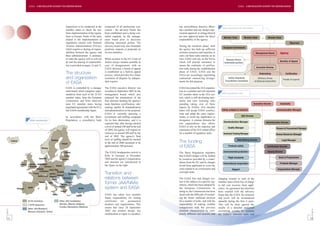
                                                EASA is controlled by a manage-        The EASA executive director was          EASA has joined the JAA organiza-
                                                ment board, which comprises repre-     recruited in September 2003 by the       tion as a member and will represent
                                                                                                                                                                            EASA organization chart
                                                sentatives from each of the 25 EU      management board, which also             EU member states in the JAA sys-
                                                member states, from the European       endorsed the nominations of the          tem, which is still developing oper-
                                                Commission and from observers          four directors heading the agency's      ations and crew licensing rules
                                                (non EU member states having           main functions (certification, rule-     (pending taking over of these
                                                negotiated agreements with the EU).    making, quality & standardization        aspects by EASA). JAA member
                                                See EASA membership figure.            and administrative) on his proposal.     states will accept EASA certifica-
                                                                                       EASA is currently pursuing a             tions and adopt the same require-
                                                In accordance with the Basic           recruitment and staffing campaign        ments, to avoid any duplication or
          EASA membership                       Regulation, a consultative body        for its four directorates, and it is     divergence. A contract between the
                                                                                       expected that, after having reached      two organizations also allows
                                                                                       a level of around 100 staff at the end   EASA to rely on the expertise and
                                                                                       of 2004, the agency will expand its      experience of the JAA central office
                                                                                       resources to around 200 staff by the     for a number of regulatory tasks.
                                                                                       end of 2005. The agency's final
                                                                                       level of staffing should be reached
                                                                                       at the end of 2006 (assumed to be        The funding
                                                                                       approximately 300 persons).              of EASA
                                                                                       The EASA headquarters moved to           The Basic Regulation stipulates
                                                                                       Köln in Germany in November              that EASA’s budget will be funded
                                                                                       2004 and the agency's organization       by resources provided by a contri-
                                                                                       and structure are summarized in          bution from the EU and by charges
                                                                                       the figure on the right.                 levied from applicants to cover the
                                                                                                                                costs related to its certification and
                                                                                                                                oversight tasks.
                                                                                       Transition and
                                                                                       relations between                        The EASA fees and charges sys-           charging systems in each of the
                                                                                                                                tem is the subject of a specific reg-    member states (from free of charge
                                                                                       former JAA/NAAs                          ulation, which has been adopted by       to full cost recovery from appli-
                                                                                       system and EASA                          the European Commission. In              cants). An agreement has therefore
                                                                                                                                doing so, the Commission has been        been reached with the advisory
                                                                                       EASA has taken over member               faced with the difficulty of evaluat-    board that the EASA fee structure
                                                                                       States responsibility for issuing        ing the future workload involved         and levels will be reconsidered
                                                                                       certificates for aeronautical            for a number of tasks, and with the      annually during the first 4 years.
                                                                                       products and organizations. This         impossibility of making credible         This will be done against the
                                                                                       means that since 28 September            comparisons with the previous            results of a detailed analytical
FAST 37


                                                                                                                                                                                                                                                         FAST 37
                                                                                       2003, any product design, any            situation characterized by com-          accounting system, to examine
                                                                                       modification or repair to a product,     pletely different cost recovery and      the balance between tasks and
 14                                                                                                                                                                                                                                                     15
EASA - A NEW REGULATORY AUTHORITY FOR EUROPEAN AVIATION                                                                                                                                               EASA - A NEW REGULATORY AUTHORITY FOR EUROPEAN AVIATION


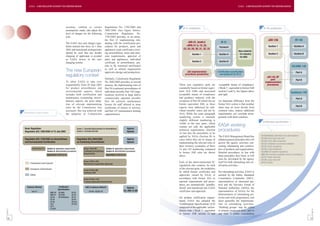
                                                            revenues, confirm or correct                         Regulations No. 1702/2003 and              IR 21 architecture                                                                 IR 145 architecture
                                                            assumptions made, and adjust the                     2042/2003 (See figure below).
                                                            level of charges for the following                   Commission Regulation No.
                                                            year.                                                1702/2003 provides, as an annex,
                                                                                                                 the Part 21 implementing rule,
                                                            The EASA fees and charges regu-                      dealing with the certification pro-
                                                            lation entered into force on 1 June                  cedures for products, parts and
                                                            2005 and transitional arrangements                   appliances (type certificates cover-
                                                            should be such that any double                       ing airworthiness, noise and emis-
                                                            charging of applicants is avoided                    sion requirements, approval of
                                                            as EASA moves to the new                             parts and appliances, individual
                                                            charging system.                                     certificate of airworthiness, per-
                                                                                                                 mits to fly, restricted certificates)
                                                                                                                 as well as related organization
                                                            The new European                                     approvals (design and production).
                                                            regulatory context
                                                                                                                 Similarly, Commission Regulation
                                                            To allow EASA to take over                           No. 2042/2003 provides, in several
                                                            responsibility from 28 Sept 2003                     annexes, the implementing rules of      These new regulatory parts are          ‘acceptable means of compliance’
                                                            for product airworthiness and                        Part M (continued airworthiness of      essentially based on former equiv-      (‘Book 2’, equivalent to former JAR
                                                            environmental aspects, which                         individual aircraft), Part 145 (orga-   alent JAA JARs and associated           sections 2 and 3). See figures above
                                                            includes both certification and                      nizations involved in large and/or      acceptable means of compliance          and right.
                                                            maintenance (continuing airwor-                      commercially operated aircraft),        and guidance material, with the
                                                            thiness) aspects, the prior adop-                    Part 66 (aircraft maintenance           exception of Part M (which has no       An important difference from the
                                                            tion of relevant implementing                        licence for staff allowed to issue      former equivalent JAR, as these         former JAA system is that member
                                                            rules by the Commission was                          certificates of release to service),    aspects were addressed by indi-         states may no more deviate from
                                                            necessary: this was achieved with                    and Part 147 (maintenance training      vidual member states and not by         common rules, impose additional
          Rulemaking in EASA context                                                                                                                     JAA). While the same paragraph          requirements, nor conclude arran-
                                                            the adoption of Commission                           organizations).
                                                                                                                                                         numbering system is retained,           gements with third countries.
                                                                                                                                                         slightly different numbering is
                                                                                                                                                                                                                                              Certification specifications
                                                                                                                                                         visible in the new parts, which
                                                                                                                                                         contain not only the applicable         EASA working
          Basic Regulation                                                   Annex I : Essential Requirements for Airworthiness            Agency
          Regulation (EC) 1592/2002 of 15 July 2002                          Annex II : Excluded Aircraft                                  Opinion
                                                                                                                                                         technical requirements (Section         procedures
                                                                                                                                                         A) but also the procedures to be
                                                                                                                                                         applied by NAAs (Section B) in          The EASA Management Board has
          Regulation (EC) 1702/2003 on Airworthiness                         Regulation (EC) 2042/2003                                     Agency        cases where they are in charge of       adopted general principles that will
          and Environmental Certification                                    on Continuing Airworthiness                                   Opinion       implementing the relevant rules in      govern the agency activities con-
                                                                                                                                                         their territory (examples of Parts      cerning rulemaking and certifica-
                   Annex (Part 21)   Section A: application requirements             Annex I (Part-M):            Section A: application requirements    21 and 145 numbering compared           tion of products and organizations.
                                     Section B: administrative procedures            Continuing Airworthiness     Section B: administrative procedures
                                                                                     Requirements
                                                                                                                                                         to former JAR rules are shown           Detailed procedures, in line with
                                     Appendices: EASA forms                                                       Appendices: EASA forms                 above.                                  these principles, have been, or will
                                                                                                                                                                                                 soon be, developed by the agency
                                                                                     Annex II (Part-145):                                                Each of the above-mentioned EC          itself for both rulemaking and cer-
                Parliament and Council                                               Maintenance Organization Approvals
                                                                                                                                                         regulations also contains, for each     tification activities.
                European Commission                                                                                                                      of the relevant parts, the modalities
                                                                                     Annex III (Part-66):
                                                                                     Certifying Staff                                                    by which former certificates and        For rulemaking activities, EASA is
                EASA                                                                                                                                     approvals, issued by NAAs in            assisted by the Safety Standards
                                                                                     Annex IV (Part-147):                                                accordance with former JAA or           Consultative Committee (SSCC,
                                                                                     Training Organization Requirements                                  national requirements and proce-        representatives of interested par-
                                                                                                                                                         dures, are automatically ‘grandfa-      ties) and the Advisory Group of
             Guidance Material                     Certification                       AMC & Guidance Material                            Agency         thered’ and transferred into EASA       National Authorities (AGNA, the
                                                  Specifications
                  Part 21                                                                   Part M, 145,66,147                         CS, AMC & GM      certificates and approvals.             representatives of NAAs) for the
                                        AMC 20     CS AWO           CS 22
                                        AMC 21     CS ETSO          CS 23                                                                                                                        determination of rulemaking pri-
                                        CS 25      CS Definitions   CS 27                                                                                For product certification require-      orities and work programmes, and
                                        CS 34                       CS 29
                                        CS 36                       CS VLA                                                                               ments EASA has adopted the              more generally the implementa-
                                        CS E                        CS VLR                                                                               ‘Certifications Specifications’ (CS)    tion of rulemaking activities.
                                        CS P
                                        CS APU
                                                                                                                                                         composed of the applicable ‘airwor-     ‘Drafting groups’ may be called
FAST 37


                                                                                                                                                                                                                                                                                FAST 37
                                                                                                                                                         thiness code’ (‘Book 1’, equivalent     to prepare proposed texts, and in
                                                                                                                                                         to former JAR section 1) and            any case, a public consultation
 16                                                                                                                                                                                                                                                                            17
EASA - A NEW REGULATORY AUTHORITY FOR EUROPEAN AVIATION                                                                                            ENGINE NOISE REDUCTION PROGRAMME - MAKING AIRCRAFT ENGINES BETTER NEIGHBOURS


                                                process is to be followed (NPA:
                                                Notice of Proposed Amendment).
                                                                                        International
                                                Similarly, detailed certification       relations, bilateral
                                                procedures for both products and
                                                organizations have been prepared
                                                                                        agreements
                                                and published by the agency.            Interested parties have requested
                                                                                        that every step of EASA establish-
                                                                                        ment be carefully made so as not to
                                                Finalization                            disturb the validation of European
                                                of transition                           certifications and approvals by for-
                                                                                        eign, non-European, authorities
                                                and achievement                         and the international exchange of
                                                of remaining                            aeronautical products and services.
                                                                                        In particular, industry has insisted
                                                EASA objectives                         on the necessity for the European
                                                                                        Community to conclude appropri-
                                                Naturally, industry is carefully        ate bilateral agreements with for-
                                                watching the establishment phase        eign countries, in particular with
                                                of EASA and the transition from         the USA. Negotiations are pro-
                                                the former JAA/NAAs system,             gressing between the European


                                                                                                                                Engine noise
                                                with particular attention paid to       Commission, EASA and a number
                                                the necessity of maintaining the        of foreign authorities, and working
                                                availability of the necessary           arrangements are already agreed
                                                authority expertise during and          with a number of them.
                                                after this build-up phase. This
                                                requires careful management of a
                                                pool of sharable expertise, with
                                                appropriate sharing of this
                                                resource with national authorities,
                                                                                        No significant difficulties have
                                                                                        been noted so far in the interna-
                                                                                        tional exchange of products and
                                                                                        services, probably owing to the
                                                                                                                                reduction programme
                                                during the whole transition phase,
                                                until the agency is in a position to
                                                                                        fact that it has generally been
                                                                                        agreed that existing bilateral agree-
                                                                                                                                Making aircraft engines
                                                fulfil its responsibility and con-
                                                duct all tasks with its own
                                                resources.
                                                                                        ments will remain valid as long as
                                                                                        necessary until replaced by new
                                                                                        agreements with the EU/EASA.
                                                                                                                                better neighbours
                                                                                       CONTACT DETAILS                          Not long after the creation of the first regular     timeframes where aircraft could not land or
                                                                                                                                air service between London and Paris, the res-       take-off. These types of restrictions are still in
                                                                                       Claude Schmitt
                                                                                       Senior Director                          idents of both cities started complaining about      place today, both in London and Paris, as well
                                                                                       Strategies & Policies                    aircraft noise. The arrival of the jet age exacer-   as most other airports around the world. The
                                                                                       Engineering-Product Integrity            bated the problem, Parisians and Londoners           newer types of restrictions have become more
                                                                                       Tel: +33 (0)5 62 11 82 57                living under the flight paths took their cases to    complex, with different restrictions and land-
                                                                                       Fax: +33 (0)5 61 93 42 71                higher governmental bodies. The result was           ing fees enforced depending on the certified
                                                                                       claude.schmitt@airbus.com
          Conclusion                                                                                                            the introduction of operational restrictions and     noise level of an aircraft.


               In line with the longstanding European               accompanying the restructuring of the
               industry principle of maintaining one level          European aerospace industry.
               of safety for air transport throughout
               Europe, the establishment of EASA is                 Airbus and the whole European industry
               considered by industry to be the logical             are placing great hopes in EASA, which
               final step to pursue the achievement                 they consider potentially to become the
               reached by the former JAA system and                 best aviation safety system for Europe
               transform it into a more coherent and                and a model for the world, as well as an                                                                                                   Stephen Montgomery
               efficient system, applying the principles of         efficient partner of their future                                                                                                             Technical Manager
                                                                                                                                                                                        Engineering Centre of Competence Powerplant
               European Community treaties and                      development.
FAST 37


                                                                                                                                                                                                                                             FAST 37
 18                                                                                                                                                                                                                                         19
ENGINE NOISE REDUCTION PROGRAMME - MAKING AIRCRAFT ENGINES BETTER NEIGHBOURS                                                                   ENGINE NOISE REDUCTION PROGRAMME - MAKING AIRCRAFT ENGINES BETTER NEIGHBOURS


                                                                Modern jets are much quieter than        an A322 or A317 aircraft to be cer-     fairings were also modified to            temperature resistant material. The
                                                                those first jet aircraft, thanks to      tified after 2006, and not to current   include acoustic treatment. The           idea was to utilize the current noz-
                                                                increasing technology in both            aircraft.                               result was an increase in the             zle lines as much as possible to
                                                                engine design, with higher by-pass                                               acoustic area of the thrust reverser      ensure a new chevron nozzle could
                                                                ratios and better internal aerody-       During initial discussion by the        by approximately 2 square meters          be easily fitted onto existing
                                                                namics, combined with improved           ICAO council (where Airbus was          (21.5 sq ft).                             engines, without modification of
                                                                nacelle design, increased sound          represented), it was clear to Airbus                                              the actual engine hardware.
                                                                absorption and flow mixers.              and CFM that Stage 4 would quick-       This increase would provide signif-
                                                                                                         ly become the reference standard        icant noise reduction, but would
                                                                Nevertheless, Airbus, in associa-        by which all aircraft are measured.     not be enough.                            Chevron nozzle
                                                                tion with the major engine and           Therefore, even before the noise
                                                                nacelle manufacturers, constantly        reduction target was known, Airbus      Next, the specialists turned their
                                                                                                                                                                                           design challenges
                                                                strives to reduce aircraft noise to      and CFM launched initial design         thoughts to the exhaust nozzle. The
              Take-off and landing/certification conditions     meet the requirements of both the        studies targeted to be introduced on    CFM engine nacelle has a separate         Through model testing, it became
                                                                public and the environmental             the current A321 aircraft powered       flow short duct nacelle, which            apparent that the chevrons had a
                                                                authorities.                             by CFM engines. This would allow        means that the bypass air and the jet     small but measurable effect on
                                                                                                         reduction of A320 Family noise          (or core air) stay separated until        engine performance. This perfor-
                                                                                                         levels to whatever the Stage 4 noise    right at the exhaust of the engine        mance impact would have to be
                                                                                                         requirements would be.                  where the two flows meet. These           countered to ensure that the end
          ICAO annex 16 certification                                                                                                            two regions of air are moving at          result would be no difference in the
          Take-off and landing profiles
                                                                                                         Airbus and CFM, along with              very different velocities, the core air   operation of the aircraft, i.e. the
                                                                                                         nacelle manufacturer Goodrich           being at much higher temperature          operation of the engine and the
                                                                                                         Aerostructures Group (GAG),             and velocity than the bypass air. The     basic engine reaction to control
                                                                                                         started investigating ways to           resulting difference in energy caus-      commands would not be different
                                                                                                         reduce the noise signature of the       es shock waves, and shear, which          from the pre-chevron nozzle
                                                                                                         engine. The particular concern was      result in noise. This is typically the    standard. The answer was to intro-
                                                                                                         for the A321 aircraft at the highest    highest noise source created by a         duce a thrust compensator, which
                                                                                                         MTOW (Maximum Take Off                  modern high bypass jet engine.            thanks to the CFM FADEC (Full
                                                                                                         Weight), as the other members of                                                  Authority Digital Engine Control)
                                                                                                         the A320 Family already had a very      If the core airflow is distorted and      simply required a software modifi-
                                                                                                         good margin over Stage 3.               mixed into the bypass air there are       cation and a way of identifying to
                                                                                                                                                 less shock waves and hence the            the aircraft when a chevron nozzle
                                                                                                         Nevertheless, it was clear that all     sound generated is reduced.               was fitted. This is currently done
                                                                                                         modifications would have to be          However, distorting the flow of core      through a FADEC software change
                                                                                                         interchangeable across the entire       air can have a significant affect on      and a programmable engine data
                                                                                                         Airbus A320 Family fleet to ensure      engine behaviour, especially for          plug, which has push-pull pins
                                                                                                         part interchangeability and mix-        performance and fuel efficiency.          allowing a discrete to be set on or
                                                                                                         ability was maintained.                 Any modification in this area would       off for the thrust compensator.
                                                                Noise is measured as the level of                                                have to be rigorously tested for          Additional verification from the
                    Thrust reverser increased acoustic area     acoustic pressure variations (SPL:                                               effects on engine surge margin,           MCDU (Multifunctional Control
                                                                Sound Pressure Level) and its unit                                               Exhaust Gas Temperature (EGT)             and Display Unit) allows program-
                                                                is the dB (decibel). In certification,
                                                                                                         Where to look?                          and Specific Fuel Consumption             ming on the aircraft side to tell the
                                                                to take into account the duration                                                (SFC) amongst others.                     system a chevron nozzle is fitted,
                                                                effect of an aircraft flyover and the    Two major areas of improvements                                                   allowing a check between aircraft
                                                                presence of audible pure tones or        in acoustics were identified, these     Any distortion in this area there-        and engine to be made. This
                                                                discrete frequencies in the noise        were both associated with the           fore needs to be performed in a           ensures that the thrust compensator
                                                                signal, aeronautics uses the EPNL        exhaust or jet noise of the engine.     subtle manner. Studies on core            logic is only applied when a
                                                                (Effective Perceived Noise Level),                                               chevron nozzles had shown good            chevron nozzle is fitted.
                                                                expressed in EPNdB.                      The thrust reverser structure was       results from analysis, however
                                                                                                         acoustically treated along approxi-     model testing would be required to        The result is full interchangeability
                                                                Increasing pressure from the public      mately half of its internal surface.    ensure the analytical results could       and mix-ability of the chevron noz-
                                                                and governing bodies resulted in         It was clear that increasing this       be proven in the real world. The          zle on A320 Family aircraft.
                                                                the ICAO (International Civil            acoustic area would increase the        model tests could demonstrate the
                                                                Aviation Organization) declaring a       acoustic sound absorption and           effects the chevrons would have on        Another of the design challenges
                                                                new noise regulation – Stage 4.          hence decrease the overall measur-      performance, but were subject to          was durability. The introduction of
                                                                                                         able exhaust noise. The inner fixed     the usual scatter associated to           the chevrons meant that there were
                                                                Stage 4 requirements only apply to       structure was redesigned with           model testing. The existing nozzle        now ‘petals’ of material in the hot
FAST 37


                                                                                                                                                                                                                                                              FAST 37
                                                                new or derivative aircraft, for          increased acoustic area. In addi-       on the CFM56 engine is a two-             air stream, which are subjected to
                                                                example, if Airbus were to develop       tion, the support struts and several    piece construction made from high         high thermal stresses as well as high
 20                                                                                                                                                                                                                                                          21
ENGINE NOISE REDUCTION PROGRAMME - MAKING AIRCRAFT ENGINES BETTER NEIGHBOURS                                                                                                                                      A380 - AIRPORT READY


                                                         aerodynamic loads. The structure           For a new certification of aircraft
                                                         would have to be designed to ensure        noise, there are certain weather
                                                         full life. Extensive testing both on       characteristics, which must be
                                                         an engine in a test cell, as well as       adhered to. There is a narrow band
                                                         fully instrumented flight testing,         of climatic conditions, which
                                                         allowed GAG to correlate a detailed        means flight testing can only be
                                                         finite element model of the chevron        performed at certain times of the
                                                         nozzle. This model was then used           year, to be certain of catching these
          Chevron nozzle thermal & stress analysis       to demonstrate full life capability at     weather conditions.
                                                         all the extremes of the operating
                                                         envelope of the aircraft.                  A production A321 was used for
                                                                                                    acoustic certification flights at an
                                                                                                    airport specially selected for its
                                                         The test                                   ideal weather conditions, which
                                                                                                    increased the chances of having
                                                         During their development, the              ‘good’ weather.
                                                         actual noise reductions resulting
                                                         from the improvements could only           The flight test provided good
                                                         be estimated. The flight effects,          results with the high weight A321
                                                         particularly for the chevron noz-          having an 11.2 EPNdB noise


                                                                                                                                            A380
                                                         zle, could not be fully represented        reduction compared to Stage 3,
                                                         by model analysis. Therefore, the          which is 1.2EPNdB below the
                                                         true result would come only from           Stage 4 requirements.
                                                         flying the aircraft in the correct
                                                         configuration in front of the
                                                         airworthiness authorities.                                                         Airport ready
                                                                                                                                            With the entry into service of the A380 less        after the A340-600 visited to do the same
                                                                                                                                            than a year away, preparations by the lead air-     before its entry into service. It was no coinci-
                                                                                                                                            lines and airports to receive the aircraft are in   dence however that the A380 arrived, was han-
                                                                                                  CONTACT DETAILS                           full swing. The coming months will see the          dled and departed using almost the same infra-
                                                                                                                                            culmination of many years of collaboration          structure, procedures and equipment that the
                                                                                                  Stephen Montgomery                        between Airbus and the airport community,           A340 did four years earlier.
                                                                                                  Technical Manager                         all focused on ensuring a smooth entry into
                                                                                                  Engineering                               service.                                            Many aspects of the A380 design have been
                                                                                                  Centre of Competence
                                                                                                  Powerplant                                                                                    driven by airport compatibility considerations,
                                                                                                  Tel: +33 (0)5 62 00 03 00                 To ensure that Airbus customers receive a reli-     thus minimizing the amount of adaptation, and
                                                                                                  Fax: +33 (0)5 61 93 49 08                 able, mature aircraft with the capability to fit    hence investment, required by airports to
                    Conclusion                                                                    stephen.montgomery@airbus.com             seamlessly into their existing ground opera-
                                                                                                                                            tions environment, early dialogue with all
                                                                                                                                                                                                accommodate the aircraft. The main aim of
                                                                                                                                                                                                this design optimization was to ensure that the
                                                                                                                                            stakeholders involved in airport operations         A380 could be handled in the most part just
                             The Airbus and CFM view at the time was          aircraft with this modification package are                   was essential. This has been recognised on all      like any other widebody aircraft. It was this
                             correct; Stage 4 has now become the              easily identified as having associated lower                  Airbus aircraft programmes, and for the A380,       capability that was validated by the tests at
                             reference standard to which all aircraft are     noise characteristics and therefore being                     the extensive consultation is now paying divi-      Frankfurt, which consisted of both an airside
                             measured. With the application of the            more environmentally friendly.                                dends. On 29 October, at 08:56, A380                and landside element. The following describes,
                             noise reduction programme the A321 can                                                                         MSN004 touched down at Frankfurt Airport to         with figures from the tests, the process of han-
                             join its A320 Family stable-mates in being       The acoustic benefits for the other A320                      perform the first of a series of airport check      dling the A380 and its similarities with other
                             the quietest aircraft in service today.          Family members will be less than for the                      exercises, coincidentally 4 years to the day        widebody aircraft.
                                                                              A321, but would be able to be certified
                             The noise reduction package is currently         upon airline request - for airlines
                             offered as the basic standard on all CFM         interested in achieving even more margin
                             powered Airbus A321 aircraft. It is also         to Stage 4. This may be particularly
                             optional on all the other A320 Family            interesting in the future if individual
                             aircraft.                                        airports in highly populated city areas
                                                                              introduce penalties and landing                                                                                                 Thomas Burger        Thilo Stilp
                             Due to the easily distinguished profile of       surcharges based on noise levels even                                                                                 Product Marketing Manager      Group Manager
                             the chevron nozzle, those airlines operating     more stringent than Stage 4.                                                                                             A380 Product Marketing      Ground Operations & Environment
                                                                                                                                                                                                                                   A380 Programme
FAST 37


                                                                                                                                                                                                                                                                      FAST 37
 22                                                                                                                                                                                                                                                                  23
A380 - AIRPORT READY                                                                                                                                                                                       A380 - AIRPORT READY


                                                           Airside                                current and future international
                                                                                                  guidelines. In comparative terms it
                                                                                                                                           dling tests could begin. Several
                                                                                                                                           ramp scenarios were simulated,
                                                                                                                                                                                                          A380 side profile comparison

                                                           compatibility                          will generate half the noise energy      based around the standard layout
                                                                                                  of today’s largest aircraft and at the   with upper deck catering, shown
                                                           The airside element saw the air-       same time carry 35% more passen-         on the right. Other equipment, not
                                                           craft arrive at a landing weight of    gers per movement.                       normally part of the normal turn
                                                           382 tonnes, just 4 tonnes below the                                             round process was also tested as
                                                           maximum. It then taxied direct to                                               well as multiple pieces from dif-
                                                           stand E9 at terminal 2 where
                                                                                                  Landside                                 ferent manufacturers. In total
                                                           ground tests were carried out until    compatibility                            around 40 different pieces of GSE
                                                           19:00, these are described in the                                               (Ground Support Equipment)
                                                           following sections. The next day       STANDS                                   were used, this compares to
                                                                                                                                                                                    Baseline layout with upper deck catering
                                                           the aircraft departed at 09:34 at a                                             around 21 for a standard A380
                                                           take-off weight of 400 tonnes.         The landside element started as          turn round, a similar number to
                                                                                                  the aircraft approached stand E9,        existing large aircraft.
                                                           With a lower approach speed, bet-      shown on the left, one of eventual-
                                                           ter take-off, landing and climb per-   ly 18 A380 capable stands at the         The first process to take place was
                                                           formance than today’s largest air-     airport. With a mezzanine cockpit        the positioning of the passenger
                                                           craft, the A380 completed the air-     between its main and upper decks         boarding bridges. Stand E9 is
                                                           side elements of the check success-    the A380 reference pilot eye             equipped with two boarding
                                                           fully, and performed in much the       height is 7.2m (23.6ft), between         bridges, with the second able to
                                                           same way as any other widebody         that of the 747-400 at 8.7m              reach the 8m (26.2ft) doorsill
                                                           aircraft operating into Frankfurt      (28.5ft) and other widebodies at         height of the upper deck.
                                                           that day. Similarly, due to better     about 6m (19.7ft). This allows           Although not an operational
                                                           ground manoeuvrability and pave-       good forward visibility as well as       necessity, many airports are plan-
                                                           ment loading than aircraft such as     compatibility with existing stand        ning some form of upper deck
                                                           the A340-600 and B777-300ER,           guidance systems, as was the case        access to enhance product differ-
          A380 docked at Frankfurt, stand E9, Terminal 2   no problems were encountered dur-      at Frankfurt.                            entiation and passenger service
                                                           ing the taxi to the stand.                                                      levels. Docking took place at main
                                                                                                  At a width of 80m (262.5ft), stand       deck door M1L (main deck for-
                                                                                                  E9 is an ICAO (International Civil       ward left door) followed by upper
                                                                                                  Aviation Organization) Code F            deck door U1L (upper deck for-
                                                                                                  stand, capable of accommodating          ward left door), shown on the
                                                                                                  any aircraft up to a maximum             right. The main deck bridge was
                                                                                                  wingspan of 80m. Many of the             then moved to main deck door
                                                                                                  more than 60 airports that will see      M2L. The docking process went            Bridges docked at doors M1L and U1L
                                                                                                  A380 operations by 2010 are tak-         smoothly with the desired clear-
                                                                                                  ing advantage of the fact that           ances achieved, although the
                                                                                                  Code F stands can have a MARS            upper deck bridge canopy was not
                                                                                                  (Multi Aircraft Ramp uSage)              fully flush with the fuselage of the
                                                                                                  capability. This capability allows       aircraft, a small case which a
                                                                                                  two single-aisle aircraft to be          minor adjustment of the canopy
                                                                                                  parked in the same space as an           rigging will solve.
                                                                                                  A380. As terminal stands are used
                                                                                                  by many different sizes of aircraft      Since MSN004 does not have a
                                                                                                  during any given period, MARS            passenger cabin (it is equipped
                                                                                                  stands allow airports to optimize        with a full flight test installation),
                                                                                                  gate usage and terminal efficien-        boarding was restricted to the
                                                                                                  cy. The A380 can also be accom-          flight test crew. Full scale, timed,
                                                                                                  modated at 65m (213.3ft) wide            turn round tests including passen-
                                                                                                  Code E stands if the size of air-        ger boarding and cargo handling
                                                           Many of those watching the air-        craft on adjacent stands is limited      will be conducted during the route
                                                           craft arrive and depart noted how      to that of smaller widebodies.           proving flights due to take place in
                                                           quiet it was. The A380 is the first                                             mid 2006. These tests will validate
                                                           aircraft to be designed, and guaran-   RAMP OVERVIEW                            that, due its superior cabin archi-
                                                           teed, to meet very stringent local     AND BRIDGE DOCKING                       tecture, the A380 will offer similar
                                                           noise limits (London QC2 depar-                                                 boarding and turn round times to
FAST 37


                                                                                                                                                                                                                                                            FAST 37
                                                           ture, QC1 arrival) and consequent-     When the aircraft came to a stop         existing aircraft using two main
                                                           ly also has significant margins to     and was chocked, the ground han-         deck bridges.
 24                                                                                                                                                                                                                                                        25
A380 - AIRPORT READY                                                                                                                                                                                  A380 - AIRPORT READY


                                                GROUND AND CABIN SERVICING –           more wheels to spread its weight) it   right) where cross-aisle galleys are
                                                ONLY TWO NEW GSE PIECES                does necessitate heavier and more      generally located, to allow trans-
                                                REQUIRED FOR A380 SERVICING            powerful tow tractors. This is espe-   port of catering trolleys from the
                                                                                       cially the case if push back at MRW    aircraft main deck to the upper
                                                Following the successful docking       and under low traction conditions is   deck. Servicing of the aircraft via
          Most A380 servicing uses              of the bridges, the positioning and    to be achieved.                        the main deck only is therefore
          standard existing equipment           connection of the ground servicing                                            possible. So why direct upper deck
                                                equipment could commence. With         Both conventional (towbar) and         catering? The answer is time. With
                                                main and lower deck doors as well      towbarless A380 capable trac-          almost all airlines having their
                                                as ground service connection           tors are available from several        largest galley blocks at the M2 and
                                                points at the same height as those     manufacturers. The require-            U1 door cross-aisle galley posi-
                                                of existing large aircraft, the A380   ments for these vehicles have          tions, the ability to access both
                                                is serviced using mostly existing      been defined in Airbus orga-           directly, therefore avoiding the use
                                                ground servicing equipment and         nized working groups in which          of the trolley lift, can save up to 36
                                                processes. Of the 21 pieces of         airlines, GSE manufacturers and        minutes. As catering is in the criti-
                                                equipment that are required to ser-    ground handlers were involved.         cal turn around path, the overall
                                                vice the aircraft, 19 are standard     Today eight manufacturers are          turn around time is also reduced by       The fact that nine vehicle manufac-              One of three upper deck catering
                                                widebody units, which can be           offering A380 capable tractors         36 minutes (assuming a standard           turers have announced the avail-                 vehicles tested at Frankfurt
                                                found on any airport ramp today.       with several already in service.       555 seat cabin layout - this time         ability of prototype vehicles before
                                                As with any other aircraft, it is                                             could vary depending on the airline       entry into service (three of which
                                                recommended to check the equip-        Conventional A380 capable units        layouts and galley locations). With       were tested at Frankfurt) is again
                                                ment manufacturers specification       weigh around 70 tonnes and have        two standard passenger boarding           testament to the cooperation
                                                against the aircraft requirements      engines with around 300hp, which       bridges to the main deck of the air-      between Airbus, the airlines, cater-
                                                to ensure compatibility of a certain   allow them to handle the A380 at       craft, the use of upper deck cater-       ers, and vehicle manufacturers.
                                                piece of GSE. A380 requirements        MRW and under poor surface fric-       ing at door U1R allows the A380 to        The upper deck catering working
                                                can be found in the Aircraft           tion conditions. At weights below      achieve a turn around time of 90          group, organized by Airbus, was
                                                Characteristics for Airplane Plan-     MRW and/or with good surface           minutes, comparable to today’s            successfully concluded in the sum-           CONTACT DETAILS
                                                ning (AC) document, available on       friction, it is also possible to use   largest aircraft, though with 35%         mer of 2005 after eight meetings.            Thomas Burger
                                                the Airbus website (link at the end    existing widebody tractor units. As    more passengers boarded.                  During these meetings different              Product Marketing Manager
                                                of this article).                      for all other aircraft, the A380                                                 concepts were analysed and basic             Airbus Marketing Division
                                                                                       requires its own dedicated towbar.     Other doors on the aircraft upper         functional requirements were                 Tel: +33 (0)5 62 11 84 73
                                                The two A380 specific units are an                                            deck could also be considered for         defined. IATA has also developed a           Fax: +33 (0)5 61 93 31 01
                                                                                                                                                                                                                     thomas.burger@airbus.com
                                                upper deck catering vehicle, which     Existing towbarless tractors can-      direct servicing but the galley loca-     dedicatedAirport Handling Manual
                                                allows direct access to the large      not handle the A380 due to its         tions and sizes of most A380 cus-         standard (926) in its 2005 issue. A          Thilo Stilp
                                                upper deck galley in order to          larger nose wheel size; therefore      tomer airlines are such that servicing    new ISO standard on upper deck               Group Manager
                                                enhance catering times, and due to     new models have been designed          them would not provide as big a ben-      catering vehicles is also under              Ground Operations & Environment
                                                the aircrafts higher ramp weight, a    and are today available from five      efit as it does for the U1 position.      development.                                 A380 Programme
                                                                                                                                                                                                                     Tel: +33 (0)5 62 11 06 33
                                                more powerful tow tractor. These       manufacturers. These new designs                                                                                              Fax: +33 (0)5 61 93 35 86
          Getting ready for push back           units are compatible with existing     were again defined during the                                                                                                 thilo.stilp@airbus.com
                                                widebody aircraft, this being a        working group meetings. Due to
                                                clear requirement from the airlines    the direct interface between these
                                                and handlers that helped define
                                                them in regular Airbus organized
                                                working group meetings. They are
                                                                                       tractors and the aircraft nose land-
                                                                                       ing gear these units need to be
                                                                                       qualified prior to being used on
                                                                                                                                     Conclusion
                                                available from several manufactur-     the A380 on a regular basis. The                       The Frankfurt airport check exercise                       through a more general ground handling
                                                ers, some of who provided vehicles     towbarless tractor qualification                       represented the culmination of many years                  working group. This will ensure that all
                                                for the Frankfurt tests.               procedure is a standard practice                       of cooperation between Airbus and the                      relevant information is passed to those
                                                                                       today for all Airbus and other man-                    airport community on the design of the                     who will shortly be regularly servicing the
                                                A380 CAPABLE TOW TRACTORS              ufacturers aircraft and ensures that                   A380. It also signalled the readiness of                   aircraft. The route proving campaign will
                                                                                       the pushback and towing manoeu-                        airports to accept the aircraft using mainly               then be the final validation of the airport
                                                Carrying 555 passengers up to          vres will not adversely affect the                     existing infrastructure and equipment,                     optimized design of the A380, providing
                                                                                                                                              thus validating a design goal set from the                 Airbus, customer airlines, airports and
                                                8,000nm means that the A380 has a      nose landing gear life cycle.
                                                                                                                                              start of the programme. In the coming                      ground handlers with the knowledge
                                                higher MTOW and consequently
                                                                                                                                              months Airbus contact with the ground                      and experience to ensure a smooth entry
                                                MRW (Maximum Take-Off Weight           UPPER DECK CATERING
                                                                                                                                              handling community will continue in                        into service.
                                                and Maximum Ramp Weight) than
                                                                                                                                              conjunction with customer airlines
                                                today’s largest aircraft. Although     As a standard, the A380 is
                                                this extra weight does not result in   equipped with trolley lifts at the                      Link to A380 Airplane Characteristics for Airtport Planning:
FAST 37


                                                                                                                                                                                                                                                             FAST 37
                                                higher pavement loading than exist-    M2 and M5 doors (second and                             http://www.airbus.com/store/mm_repository/pdf/att00004248/media_object_file_AC_A380.pdf
                                                ing widebody aircraft (the A380 has    fifth main deck doors left and
 26                                                                                                                                                                                                                                                         27
AIRBUS TRAINING AIRPORT - A VIRTUAL AIRPORT FOR PILOT TRAINING                                                                                                                             AIRBUS TRAINING AIRPORT - A VIRTUAL AIRPORT FOR PILOT TRAINING


                                                                                                                                                The ability to offer a wider range of     necessitated diverting the course
                                                                                                                                                experience, such as ‘black hole’          of the river Loire!
                                                                                                                                                approaches, or airports in line with
                                                                                                                                                a pilot’s future operating environ-       Fortunately, as this is a virtual
                                                                                                                                                ment in different parts of the world      airport and consequently a virtual
                                                                                                                                                is the ideal for pilot familiarization,   river diversion the real residents
                                                                                                                                                but is not feasible in this situation.    of the new river course did not
                                                                                                                                                Considering these issues, and with a      get wet!
                                                                                                                                                vision of what an ideal system
                                                                                                                                                should be like, Airbus training has       For performance limitations:
                                                                                                                                                developed and introduced an innov-        GPWS (Ground Proximity Warning
                                                                                                                                                ative tool for pilot training. This is    System) training and ILS (Instrument
                                                                                                                                                the Airbus Training Airport - a vir-      Landing System) approaches with
                                                                                                                                                tual airport - that is used in the        a 4° glide slope a hill was introduced
                                                                                                                                                M/FTD (Maintenance/Flight Train-          in line with the new runway. Urban
                                                                                                                                                ing Device) and in the Full Flight        areas were also included for noise
                                                                                                                                                Simulator for the new Airbus Pilot        abatement restrictions.
                                                                                                                                                Transition (APT) courses. Its objec-
                                                                                                                                                tive is to provide functionalities to     The design of taxiways and ground
                                                                                                                                                enable pilot training on most types       markings was done with experts
                                                                                                                                                of approaches, runways, signboards        from the French Civil Aviation


                                    Airbus                                                                                                      and ground markings etc that they
                                                                                                                                                will encounter worldwide.

                                                                                                                                                This article describes the six steps
                                                                                                                                                                                          Authorities in compliance with
                                                                                                                                                                                          ICAO (International Civil Aviation
                                                                                                                                                                                          Organization) annex 14 as well as
                                                                                                                                                                                          French regulations. Particular


                           Training Airport
                                                                                                                                                it took to achieve the Airbus             attention was paid to ground mark-
                                                                                                                                                Training Airport: airport site, plat-     ings due to the taxi training recom-
                                                                                                                                                form, terminal buildings and              mended by the FAA (Federal
                                                                                                                                                facilities, charts, FMGS (Flight          Aviation Administration) in Advi-
                                                                                                                                                Management Guidance System)               sory Circular 120-74.
                   A virtual airport for pilot training                                                                                         database and visual scene.
                                                                                                                                                                                          The platform has three runways
                                                                                                                                                                                          of different lengths and widths
                                                                                                                                                Airport site                              and an additional one under
                                                                                                                                                                                          construction. All have several
                To complete a pilot type-rating course and issue an        Flying to several airports gives some experience of                  The airport position is: 46 24.
                                                                                                                                                                                          approach lighting systems (PAPI,
                adequate certificate Airbus training centre                different runways, lighting systems, taxiways and                    4N/004 01.3E. The reason for this
                                                                                                                                                                                          APAPI, PAPI L, PAPI R, VASI*).
                includes in its curriculum a number of instrument          parking, but the possibility to experience a wider                   choice is the presence of a flying
                                                                                                                                                                                          A LDIN (Lead-in Light System)
                and visual approaches, as required by airworthi-           range of these is limited by the facilities of the air-              school that has available runway
                                                                                                                                                                                          approach is also available with a
                ness authorities. To perform these it has become           ports themselves. Furthermore, flying to these air-                  and radio aids. In addition, it is
                                                                                                                                                                                          final turn over water as a lake was
                necessary to fly to several different airports             ports requires the maintenance of a substantial                      close to the centre of France, thus it
                                                                                                                                                                                          added to enable this.
                because Toulouse Blagnac airport does not have             amount of airport charts, performance tables and                     is possible to fly a one-hour leg to
                the capacity to handle all the approaches.                 visual scenes, which is time consuming, quite                        the major airports of the neigh-
                                                                                                                                                                                          The airport will be available in
                                                                           expensive and inconvenient for all involved.                         bourhood.
                                                                                                                                                                                          2007 in Jeppesen ANS (Airport
                                                                                                                                                                                          Navigation System). In addition,
                                                                                                                                                Platform                                  the software makes it possible to
                                                                                                                                                                                          reproduce airport traffic moving
                                                                                                                                                The airport platform was designed         on the ground so training exercises,
                                                                                                                                                to provide the functionalities to         in particular with low visibility, are
                                                                                                                                                train pilots on most of the types of      achievable. One of the most diffi-
                                                                                                                                                runways, signboards, ground               cult parts of a flight in some con-      * ABBREVIATIONS
                                                                                                                                                markings and so on. To achieve            gested airports is the taxi from the     PAPI: Precision Approach Path Indicator
                                                                                                                                                this, it was designed according to        gate to the holding point and from       L: left - R: right
                                                                                                                                                the airport on the selected site.         the runway to the gate. This is sig-     APAPI: Abbreviated Precision Approach Path Indicator
                                                       Captain Kheireddine Belguedj         Bernard Benetti
                                                    Flight instructor pilot CAA/TRI.TRE     Aircraft Simulation Expert                          However, this did not offer all the       nificantly eased when the airport is     VASI: Visual Approach Slope Indicator
                                                                          Training policy   Training Devices Simulation & Maintenance           possibilities needed, so it was nec-      equipped with the SMGCS
                                   Training and Flight Operations Support & Services        Training and Flight Operations Support & Services   essary to add a new runway at 90°         (Surface Movement Guidance
FAST 37


                                                                                                                                                                                                                                                                                           FAST 37
                                                             Airbus Customer Services       Airbus Customer Services                            to the existing one to allow partic-      Control System) and the airport
                                                                                                                                                ular circling approaches, which           also has this possibility.
 28                                                                                                                                                                                                                                                                                       29
AIRBUS TRAINING AIRPORT - A VIRTUAL AIRPORT FOR PILOT TRAINING                                                                                                             AIRBUS TRAINING AIRPORT - A VIRTUAL AIRPORT FOR PILOT TRAINING


                                                             Terminal buildings                       Non-precision approaches like
                                                                                                      VOR DME, ADF, localiser back
                                                                                                                                              Visual scene                                   This was achieved by day, as well as by
                                                                                                                                                                                             night, in all kinds of weather conditions
                                                             and facilities                           course     and      even      VDF                                                      such as nice weather, fog and snow.
                                                                                                      (Voice Directional Finder) are also     For training tools like flight training        When the runway is wet or contaminated
                                                             The airport has a main central           possible.                               devices or full flight simulators the visual   with ice, snow, or slush, the visual
                                                             terminal building and two side                                                   scene is of paramount importance, as its       system reflects the runway surface and
                                                             satellites. Each is devoted to an        The basic issue of the charts is in     level of reliability and visual quality has    degraded braking action is reproduced.
                                                             aircraft size: the north satellite for   AIP (Aeronautical Information           a direct impact on the level of training.
                                                             the A380, the central terminal for       Publications) format converted to                                                      Pilots in some regions of the world may
                                                             the A330/A340 and A300 families          Jeppesen format and it will be          The design of the airport visual scene         have to land at night with only the
                                                             and the south satellite for the A320     available in LIDO Flight Nav format     started with a two-dimensional model           runway lights as a reference, which is a
                                                             Family. Three different aircraft         as well. These formats are alterna-     drawing followed by building from this         so-called ‘black hole approach’. Such
                                                             guidance systems are implemented         tive versions of the charts available   a three-dimensional model using appro-         an approach can be simulated with the
                                                             at the gates. The airport has two        for airports (see examples and list     priate software. The model data was            airport by switching off all the lighting
                                                             control towers, a freight terminal,      on the left).                           then translated by another software into       of the environment of the visual scene
                                                             a maintenance hangar and several                                                 data to be processed by the simulator          except the lights of the landing runway.
                                                             parking positions on the tarmac.                                                 image generator. The airport is available
                                                             A fire station is included, as well as
                                                                                                      FMGS database                           for a number of visual systems of                               CONTACT DETAILS
                                                             some administration buildings. The                                               different manufacturers.                                        Captain Kheireddine Belguedj
                                                             service roads and antennas of radio      The STARs (Standard Terminal                                                                            Flight instructor pilot CAA/TRI.TRE - Training policy - Training and
                                                             aids are also shown on the visual        Arrival Routes), SIDs (Standard         Particular attention was paid to details                        Flight Operations Support & Services - Airbus Customer Services
                                                             scene.                                   Instrument Departures), and             to obtain high definition of the close                          Tel: +33 (0)5 61 93 20 71 - Fax: +33 (0)5 62 11 07 40
                                                                                                      instrument approaches listed in the     environment of the airport.                                     kheireddine.belguedj@airbus.com
                                                                                                      pilot documentation are included                                                                        Bernard Benetti
                                                             Airport charts                           in the FMGS (Flight Management                                                                          Aircraft Simulation Expert - Training Devices Simulation &
                                                                                                      and Guidance System) database                                                                           Maintenance - Training and Flight Operations Support & Services
                                                                                                                                                                                                              Airbus Customer Services
          List of Jeppesen charts
          List of Jeppesen charts                            The airport charts were designed         and coded according to ARINC                                                                            Tel: +33 (0)5 61 93 21 73 - Fax: +33 (0)5 61 93 20 73
                                                             by ENAC (Ecole Nationale de              (Aeronautical Radio, Inc) 424                                                                           bernard.benetti@airbus.com
          STAR ATN 1C, BUZIL 1C, DJL 1C FOR RWYS 33L/R
          STAR DJL 1A FOR RWYS 06, 07, 15L/R, 24
                                                             l’Aviation Civile), which is the         norms. Due to the implementation                                                                        For ENAC contact Hervé Pradines
          STAR DJL 1B FOR RWYS 15L/R, 24

          STAR CFA 1D, EB 1D FOR RWYS 06, 07, 33L/R
                                                             French aviation academy. With the
                                                             airport it is possible to practise ILS
                                                             approaches, CAT I, CAT II and
                                                                                                      of artificial terrain and the modifi-
                                                                                                      cation of the environment the
                                                                                                      EGPWS (Enhanced Ground
                                                                                                                                                     Conclusion                                               PANS-OPS designer and instructor
                                                                                                                                                                                                              herve.pradines@enac.fr

          SID ATN 1E, ATN 1N, BUZIL 1E, BUZIL 1N,            CAT III with a 3° glide slope and        Proximity Warning System) data-
          BUZIL 1S FOR RWYS 06, 07, 33L/R, 15L/R, 24                                                                                                           Airbus experience in the use of the Airbus             charts and performance tables), offering
                                                             also a 4° glide slope on different       base is modified to match the
                                                                                                                                                               Training Airport has demonstrated many                 benefits from a basic school to a
          SIDMOU 1N, MOU 1W, ONZON 1S FOR RWYS 33L/R,        orientations of the same runway.         surrounding terrain profile.
          24, 15L/R                                                                                                                                            benefits, some examples:                               professional training centre.
          AIRPORT PLAN
                                                                                                                                                               • Training in extreme conditions (short and            • Airbus Training Airport has been used
          AIRPORT LIGHT DESCRIPTION                                                                                                                            narrow runway covered with ice, blowing                since October 2004 in all Airbus training
          AIRPORT PARKING PLAN
                                                                                                                                                               snow, crosswind and degraded braking                   centres and since November 2005 in the
                                                                                                                                                               action). It is not necessary to have a                 centres of Airbus partners.
          APPROACH ILS RWY 06                                                                                                                                  Gander or Goose Bay visual scene to
          APPROACH ILS RWY 07                                                                                                                                  practise a localiser back course approach.             • The airport will evolve at the same rate
                                                                                                                                                               Pilots who need to fly for the first time to           as development of Airbus technology and
          APPROACH LOC (BCK CRS) RWY 15L
                                                                                                                                                               New York (Kennedy airport) or Tokyo                    airport regulation amendments.
          APPROACH ILS RWY 33L                                                                                                                                 (Haneda airport) can practice an LDIN
                                                                                                                                                               approach on the Airbus airport before their            Considering the trend of basic training for
          APPROACH ILS RWY 33R
                                                                                                                                                               first trip and therefore be familiar and               airline pilots towards increasing simulator
          APPROACH CAT II ILS RWY 33R                                                                                                                          comfortable with it before doing it in                 time and reducing real aircraft handling,
          APPROACH RNAV GNSS RWY 24
                                                                                                                                                               reality.                                               an increasing part (most) of courses will
                                                                                                                                                                                                                      be performed on training devices and full
          APPROACH VOR DME RWY 15R                                                                                                                             • The airport can be customised to                     flight simulators. Therefore, the Airbus
          APPROACH VOR DME RWY 24                                                                                                                              reproduce an operator’s home airport and               Training Airport with its wide range of
                                                                                                                                                               implemented in any place in the world, so              possibilities will be of great value to
          APPROACH VOR DME RWY 33L
                                                                                                                                                               can comply with an operator’s local                    ensure good quality pilot training and
          APPROACH VOR DME RWY 33R                                                                                                                             training needs.                                        generate increasing benefits for those
                                                                                                                                                                                                                      using it.
          APPROACH NDB RWY 33R
                                                                                                                                                               • It is flexible, adaptable and enables cost
                                                                                                                                                               savings (no update required for airport
FAST 37


                                                                                                                                                                                                                                                                                      FAST 37
          CIRCLING APPROACH FOR RWY 15L/R


 30                                                                                                                                                                                                                                                                                  31
COUNTERING JET FUEL PRICE INCREASES - GUIDANCE ON FUEL SAVING
          TITLE - SUB-TITLE                                                                                                                                           COUNTERING JET FUEL PRICE INCREASES - GUIDANCE ON FUEL SAVING


                                                                                                                                                                                                                             nformation
                                                                                                                                                                                                                         None of the information
                                                                                                                                                                                                                         contained in the ‘getting to
                                                                                                                                                                                                                         grips’ publications is intended
                                                                                                                                                                                                                         to replace procedures or
                                                                                                                                                                                                                         recommendations contained in
                                                                                                                                                                                                                         the Flight Crew Operating
                                                                                                                                                                                                                         Manual (FCOM), but rather to
                                                                                                                                                                                                                         highlight the areas where
                                                                                                                                                                                                                         maintenance, operations and
                                                                                                                                                                                                                         flight crews can contribute
                                                                                                                                                                                                                         significantly to fuel savings.


                                                                                                                           getting to grips  getting to grips
                                                                                                                           with fuel economy with the cost index
                                                                                                                           ISSUE 3 - JULY 2004                    ISSUE 2 - MAY 1998


                                                Countering                                                                 This examines the influence of
                                                                                                                           flight operations on fuel conserva-
                                                                                                                           tion and provides recommenda-
                                                                                                                           tions to enhance fuel economy. It
                                                                                                                                                                  In addition to navigation functions,
                                                                                                                                                                  the Flight Management Computer
                                                                                                                                                                  (FMC) carries out real-time perfor-
                                                                                                                                                                  mance optimization aimed at pro-


                                               jet fuel price
                                                                                                                           covers maximization of range for a     viding best economics, not simply
                                                                                                                           given payload, the decrease of fuel    in terms of fuel consumption,
                                                                                                                           uplift from high fuel cost airports    but rather in terms of direct operat-
                                                                                                                           and introduces the concept of cost     ing costs. This is achieved using
                                                                                                                           index (see ‘Getting to Grips with      the cost index concept that helps

                                                  increases                                                                the cost index’ on the right).

                                                                                                                           Also, it systematically reviews fuel
                                                                                                                           conservation relative to ground and
                                                                                                                                                                  fuel and time-related costs to be
                                                                                                                                                                  balanced.

                                                                                                                                                                  Airbus has recently launched a new
                                       Guidance on fuel saving                                                             flight performance, including cen-
                                                                                                                           tre of gravity position, excess
                                                                                                                                                                  software tool called AirS@vings. It
                                                                                                                                                                  is designed to provide a dynamic
                                                                                                                           weight, flight planning, auxiliary     determination of the cost index
                                                                                                                           power unit operations, taxiing,        under a wide variety of operational
                In the last two years the average cost of jet fuel   The mechanisms for maximising fuel economy            climb, step climb, cruise, descent,    criteria so that it can be accurately
                has doubled as shown in the report on the right,     are well understood as being aerodynamically          holding and approach.                  tailored to the specifics of an air-      ATA monthly jet fuel report
                while competition in the airline industry is         clean aircraft, well maintained engines and good                                             line’s operation on a particular route.
                intense. Consequently, more and more airlines are    flight planning and procedures.
                looking to optimize their fuel consumption as a
                means of minimizing overall costs.                   This article highlights existing Airbus ‘Getting to
                                                                     grips with’ publications where information on
                                                                     optimizing fuel consumption can be found and
                                                                     identifies some additional areas for consideration.


                                                                Simon Weselby       Frédéric Desgeorge
                                                A320 Family Programme Manager       A330/A340 Programme Manager
                                                       Airbus Customer Services     Airbus Customer Services
FAST 37


                                                                                                                                                                                                                                                            FAST 37
 32                                                                                                                                                                                                                                                        33
COUNTERING JET FUEL PRICE INCREASES - GUIDANCE ON FUEL SAVING                                                                                                     COUNTERING JET FUEL PRICE INCREASES - GUIDANCE ON FUEL SAVING


                                                                                                                                 Other areas for                        • Developing an engine water
                                                                                                                                                                          wash schedule
                                                                                                                                 consideration                            Over time, dirt accumulation on
                                                                                                                                                                          the compressor airfoils reduces
                                                                                                                                 In addition to the ‘getting to grips     engine compressor efficiency.
                                                                                                                                 with’ publications an airline has        Engine core water washes are
                                                                                                                                 many other routes available for          recommended to remove this.
                                                                                                                                 minimizing fuel expenditure,             Contamination levels depend on
                                                                                                                                 including:                               the aircraft’s operation and
                                                                                                                                 • Minimizing dispatches under            environment, so wash frequency
                                                                                                                                   MEL (Minimum Equipment                 must be optimized by each
                                                                                                                                   List) conditions that include          operator. Periodic engine water
                                                                                                                                   requirements for additional fuel       washes also have a positive
                                                                                                                                   reserves, or where fuel burn is        effect on the exhaust gas
                                                                                                                                   increased.                             temperature margin and
                                                                                                                                   Example: dispatch with wing            consequently on engine life
          getting hands-on                          getting to grips                       getting to grips                        anti-ice valve failed in open        • Trading passenger comfort or
          experience                                with aircraft                          with aircraft                           position may increase fuel             service against weight (carrying
                                                                                                                                   consumption by up to 6%                newspapers, magazines,
          with aerodynamic                          performance                            performance                             depending on aircraft.                 blankets, reducing potable water
          deterioration                             ISSUE 1 - JANUARY 2002                 monitoring                            • Implementing an engine health          carried, etc.).
                                                                                           ISSUE 1 - JANUARY 2003                  monitoring system
          ISSUE 2 - OCTOBER 2001
                                                                                                                                   Example: engine component
          This examines the influence of            This addresses three different         This provides guidelines for air-       defects may increase fuel
          aerodynamic deterioration on              aspects of aircraft performance:       craft performance monitoring            consumption while remaining
          operational costs. During an air-         • Physical aspect: Reminders on        based on feedback obtained from         operational and engine health
          craft’s life deterioration is likely to     flight mechanics, aerodynamics,      many operators and on Airbus’           monitoring can highlight such
          occur and drag can increase by up           altimetry, influence of external     knowledge of its aircraft. It has       increases.
          to 2% within five years. This in            parameters on aircraft               five-objectives:                      • Working closely with the
          turn can result in a significant fuel       performance, flight optimization     • Introduce performance                 engine shop to establish an
                                                                                                                                                                                                              CONTACT DETAILS
          consumption increase. However,              concepts, etc.                         monitoring, presenting the            optimized refurbishment
          this cost has to be traded against        • Regulatory aspect: Description         different analysis methods and        workscope that provides the best                                           Simon Weselby
          the cost of maintenance to estab-           of the main JAR and FAR                tools.                                compromise between cost,                                                   A320 Family Programme
                                                      certification and operating rules,   • How to deal with the amount of        reliability and performance                                                Manager
          lish when it is cost-effective to
                                                                                                                                   restoration                                                                Tel: +33 (0)5 62 11 75 16
          carry out corrective measures.              leading to the establishment of        data required, the most common
                                                                                                                                                                                                              Fax: +33 (0)5 61 30 00 79
                                                      limitations.                           ways to get data routinely                                                                                       simon.weselby@airbus.com
          Cost-benefit analyses are a practi-       • Operational aspect: Description        recorded are described via a
          cal way to approach this and                of operational methods, aircraft       quick overview of the available                                                                                  Frédéric Desgeorge
                                                      computer logics, operational           aircraft systems.                                                                                                A330/A340 Programme
          Airbus has carried out numerous
                                                                                                                                                                                                              Manager
          performance audits in cooperation           procedures, pilot’s actions, etc.    • Guidelines on the way to
                                                                                                                                                                                                              Airbus Customer Services
          with airlines. Consequently this                                                   process the data using one of the                                                                                Tel : +33 (0) 5 61 93 42 01
          can help operators determine cor-                                                  Airbus aircraft performance-                                                                                     Fax : +33 (0) 5 61 30 00 79
          rective actions that are financially                                               monitoring tools, namely the                                                                                     frederic.desgeorge@airbus.com
          beneficial despite the short-term                                                  APM programme.
          maintenance costs.                                                               • Assessing data coming from
                                                                                             regular cruise performance                Conclusion
                                                                                             analysis.
                                                                                           • Airbus recommendations on                           Airbus has previously published                   be best served by adopting a holistic or
                                                                                             how to use the results of                           a wide range of information and                   airline-wide approach and not making fuel
                                                                                             analysis in daily aircraft                          recommendations for the optimization              economy the responsibility of any single
                                                                                             operations.                                         of both aircraft performance and fuel             entity in the organization.
                                                                                                                                                 economy. These publications remain
                                                                                                                                                 as valid today as when they were                  Airbus also recognizes the increasing
                                                                                                                                                 published (with the exception of certain          importance of fuel efficiency to its
                                                                                                                                                 economic conditions). The breadth of              customers so further support will become
                                                                                                                                                 these recommendations illustrate that an          available during the course of 2006.
                                                                                                                                                 airline wishing to minimize its fuel bill will
FAST 37


                                                                                                                                                                                                                                                FAST 37
 34                                                                                                                                                                                                                                            35
GIANTS OF THE SKIES, PAST AND PRESENT


               Giants of the skies,
               past and present


               A ‘giant of the skies’, a seven seater Fokker D378 of Aero Lloyd, lands at Hamburg Fuhlsbüttel
               airport in Germany in 1926 - the same year Germany’s main airport Frankfurt opened.

               Almost 80 years later, on 29 October 2005, another ‘giant of the skies’ landed at Frankfurt airport
               and is shown docked. This is the 555 seater Airbus A380 - how things have changed, not only for
               aircraft but airports too!
FAST 37


 36
CUSTOMER SUPPORT                  AROUND THE CLOCK... AROUND THE WORLD


WORLDWIDE
Jean-Daniel Leroy
VP Customer Support
Tel: +33 (0)5 61 93 35 04
Fax: +33 (0)5 61 93 41 01

USA/CANADA
Philippe Bordes
Senior Director Customer Support
Tel: +1 (703) 834 3506
Fax: +1 (703) 834 3464                          Customer Support Centres
                                                Training centres
CHINA                                           Spares centres / Regional warehouses
                                                Resident Customer Support Managers (RCSM)
Ron Bollekamp
Senior Director Customer Support                RCSM location         Country                           RCSM location       Country
Tel: +86 10 804 86161
                                                Abu Dhabi             United Arab Emirates              London              United Kingdom
Fax: +86 10 804 86162 / 63                      Ajaccio               France                            Louisville          United States of America
                                                Algiers               Algeria                           Luton               United Kingdom
RESIDENT CUSTOMER SUPPORT                       Al-Manamah            Bahrain                           Macau               S.A.R. China
                                                Amman                 Jordan                            Madrid              Spain
ADMINISTRATION                                  Amsterdam             Netherlands                       Manchester          United Kingdom
Jean-Philippe Guillon                           Athens                Greece                            Manila              Philippines
Director                                        Auckland              New Zealand                       Mauritius           Mauritius
Resident Customer Support Administration        Baku                  Azerbaijan                        Memphis             United States of America
                                                Bandar Seri Begawan   Brunei                            Mexico City         Mexico
Tel: +33 (0)5 61 93 31 02                       Bangalore             India                             Miami               United States of America
Fax: +33 (0)5 61 93 49 64                       Bangkok               Thailand                          Milan               Italy
                                                Barcelona             Spain                             Minneapolis         United States of America
TECHNICAL, SPARES, TRAINING                     Beirut                Lebanon                           Montreal            Canada
                                                Berlin                Germany                           Moscow              Russia
Airbus has its main spares centre in Hamburg,   Brussels              Belgium                           Mumbai              India
and regional warehouses in Frankfurt,           Buenos Aires          Argentina                         Nanchang            China
Washington D.C., Beijing and Singapore.         Cairo                 Egypt                             Nanjing             China
                                                Casablanca            Morocco                           New York            United States of America
                                                Charlotte             United States of America          Newcastle           Australia
Airbus operates 24 hours a day every day.       Chengdu               China                             Ningbo              China
AOG Technical and Spares calls.                 Cologne               Germany                           Noumea              New Caledonia
                                                Colombo               Sri Lanka                         Orlando             United States of America
                                                Copenhagen            Denmark                           Palma de Mallorca   Spain
  Airbus Technical AOG Centre (AIRTAC)          Dalian                China                             Paris               France
  Tel: +33 (0)5 61 93 34 00                     Damascus              Syria                             Paro                Bhutan
  Fax:+33 (0)5 61 93 35 00                      Delhi                 India                             Phoenix             United States of America
  support.airtac@airbus.com                     Denver                United States of America          Pittsburgh          United States of America
                                                Derby                 United Kingdom                    Prague              Czech Republic
                                                Detroit               United States of America          Qingdao             China
  Spares AOGs in North America should be        Dhaka                 Bangladesh                        Quito               Ecuador
  addressed to:                                 Doha                  Qatar                             Rome                Italy
  Tel: +1 (703) 729 9000                        Donetsk               Ukraine                           San’a               Yemen
                                                Dubai                 United Arab Emirates              San Francisco       United States of America
  Fax:+1 (703) 729 4373                         Dublin                Ireland                           San Salvador        El Salvador
                                                Duluth                United States of America          Santiago            Chile
  Spares AOGs outside North America             Dusseldorf            Germany                           Sao Paulo           Brazil
  should be addressed to:                       Fort Lauderdale       United States of America          Seoul               South Korea
                                                Frankfurt             Germany                           Shanghai            China
  Tel: +49 (40) 50 76 3001/3002/3003            Guangzhou             China                             Sharjah             United Arab Emirates
  Fax:+49 (40) 50 76 3011/3012/3013             Hangzhou              China                             Shenyang            China
                                                Haikou                China                             Shenzhen            China
  Airbus Training Centre Toulouse, France       Hanoi                 Vietnam                           Singapore           Singapore
                                                Helsinki              Finland                           Sydney              Australia
  Tel: +33 (0)5 61 93 33 33                     Hong Kong             S.A.R. China                      Taipei              Taiwan
  Fax:+33 (0)5 61 93 20 94                      Indianapolis          United States of America          Tashkent            Uzbekistan
                                                Istanbul              Turkey                            Tehran              Iran
                                                Jakarta               Indonesia                         Tokyo               Japan
  Airbus Training subsidiaries                  Jinan                 China                             Toronto             Canada
  Miami, USA - Florida                          Johannesburg          South Africa                      Toulouse            France
  Tel: +1 (305) 871 36 55                       Karachi               Pakistan                          Tulsa               United States of America
  Fax:+1 (305) 871 46 49                        kita-Kyushu           Japan                             Tunis               Tunisia
                                                                                                                                                        FAST 37


                                                Kuala Lumpur          Malaysia                          Vienna              Austria
  Beijing, China                                Kuwait city           Kuwait                            Washington          United States of America
  Tel: +86 10 80 48 63 40                       Lanzhou               China                             Xi'an               China
  Fax:+86 10 80 48 65 76                        Larnaca               Cyprus                            Zurich              Switzerland
                                                Lisbon                Portugal                                                                         37
www.airbusworld.com


Over a million pages of information, now online.
We could write pages and pages on how we can make           personalised details and you can even cut and paste any
your business information management more cost effective.   relevant information into your own
But why hunt through endless filing cabinets when with      documents. Don’t go through the
Airbus On-Line Services you get rapid, up to date access    long haul to find what you want,
to all our technical data? It’s simple and easy to use.     visit www.airbusworld.com instead.
All subscribers have totally secure access to all their     Airbus. Setting the standards.

Fast37

  • 1.
    D E CE M B E R F L I G H T 2 0 0 5 A I R W O R T H I N E S S S U P P O R T T E C H N O L O G Y 37 E N I Z A G A M L A C I N H C E T S U B R I A 7 3 T S A F
  • 2.
    Customer Services Just happened Coming soon events HUMAN FACTORS SYMPOSIUM SPARES, SUPPLIERS & WARRANTY IN MADRID, SPAIN, 28-30 NOVEMBER REGIONAL SYMPOSIUM Airbus continued the dialogue with its operators at IN ATHENS, 13-16 FEBRUARY 2006 this forum, discussing human factors aspects with Following the Airbus Spares, Suppliers and practical and operational perspectives on: Warranty symposium in Puerto Vallarta, Mexico • Flight operations (environmental, safety, pure for operators in the Americas, and in Sanya, ops e.g. procedures, philosophy, systems) China, for Chinese operators, it is now the turn of • Maintenance (safety, CRM, organization, proce- Europe and Africa. A Spares, Suppliers & dures, manuals) Warranty regional symposium will be held in • Cabin operations (safety, CRM, organization, Athens, Greece, from the 13th to the 16th of procedures, mass travel, medical aspects) February 2006 bringing together Airbus cus- • Training (to flight operations, maintenance, tomers, operators and suppliers. Its objective is to cabin operations, to human factors) review together strategic directions, operational • ATC (environmental, safety, pure operations e.g. support issues and current spares and warranty procedures, philosophy, systems) services. Operators will be given the opportunity to express their requirements and share their expe- A300/A310 FAMILY TECHNICAL SYMPOSIUM rience. Major suppliers will also have the opportu- IN LISBON, PORTUGAL, 14-18 NOVEMBER nity to present their support and services strategy. A landmark event occurred at this symposium, A330/A340 FAMILY TECHNICAL SYMPOSIUM with the first formal presentation to operators of IN SUN CITY, SOUTH AFRICA, 28 MAY-2 JUNE 2006 the Airbus initiatives to ensure Long Term Support Airbus is pleased to announce the date and loca- of the A300/A310 Family. The objective of this ini- tion of the next A330/A340 Technical Symposium. tiative is to ensure equivalent levels of operator The Symposium is the opportunity to review satisfaction for A300/A310 operators as for any actual in-service experience with the A330/A340 other Airbus programme through to the last air- Family of aircraft as well as to discuss subjects of craft being in-service (up to year 2050). Clearly more general technical interest. the enhanced support foreseen for the A380 will A provisional agenda will be sent in February 2006. set the satisfaction benchmark, and for the A300/A310 Family other considerations that affect the level of service include the low rate of produc- tion (can affect spares availability) and the even- tual closure of the final assembly line, which must be anticipated. The operators at the symposium expressed their view that their expectations for the future had been met (61%) or exceeded (39%) in this respect. The symposium discussion otherwise covered various technical, maintenance and support issues and 100 participants from 36 operators were pres- ent, including all of the largest A300/A310 opera- tors. 67% of the operator respondents considered the event very useful and 33% useful.
  • 3.
    D E C E M B E R 2 0 0 5 37 E N I Z A G A M F L I G H T L A I R W O R T H I N E S S A C S U P P O R T I T E C H N O L O G Y N J U L Y 2 0 0 5 H C Safety initiatives in Customer Services 2 E An overview of Airbus safety initiatives T Michel Trémaud S Airbus cabin air quality 7 Still the best! U Claire Nurcombe B R The European Aviation Safety Agency 11 A new regulatory authority for European aviation I Claude Schmitt A Engine noise reduction programme 19 Cover:A380 MSN004 at Frankfurt airport during its check exercise, see article on page 23. Making aircraft engines better neighbours Stephen Montgomery Publisher: Bruno Piquet Editor: Kenneth Johnson Graphic Designer: Agnès Massol-Lacombe A380 23 Airport ready Authorization for reprint of FAST articles should be requested from the editor at the FAST e-mail address given below Thomas Burger Customer Services Communications Thilo Stilp Tel: +33 (0)5 61 93 43 88 Fax: +33 (0)5 61 93 47 73 E-mail: fast.magazine@airbus.com Airbus Training Airport 28 Printer Escourbiac A virtual airport for pilot training Kheireddine Belguedj FAST may be read on Internet http://www.content.airbusworld.com/SITES/Customer_services/index.html Bernard Benetti under Customer Services/Publications ISSN 1293-5476 Countering jet fuel price increases 32 Guidance on fuel saving Airbus Customer Services Simon Weselby Frédéric Desgeorge © AIRBUS S.A.S. 2005. All rights reserved No other intellectual property rights are granted by the delivery of this Magazine than the right to read it, for the sole purpose of information. This Magazine and its content shall not be modified and its images shall not be reproduced without prior written consent of Airbus. Giants of the skies, past and present 36 This Magazine and the material it contains shall not, in whole or in part, be sold, rented, distributed or licensed to any third party. The information contained in this Magazine may vary over time because of future factors that may affect the accuracy of information herein. Airbus assumes no Customer Services obligation to update any information contained in this Magazine. When additional information is required, Airbus S.A.S. can be contacted to provide further details. Airbus, its logo and product Around the clock... Around the world 37 names are registered trademarks. Airbus S.A.S. shall assume no liability for any damage in connection with the use of this Magazine and of the materials it contains, even if Airbus S.A.S. has been advised of the likelihood of such damages Photographs: This issue of FAST has been printed on paper exm company: Hervé Goussé and Philippe Masclet produced without using chlorine, to reduce FAST37 Airbus France: Julie Pomery waste and help conserve natural resources. Cover page: Julie Pomery Every little helps! 1
  • 4.
    SAFETY INITIATIVES INCUSTOMER SERVICES - AN OVERVIEW OF AIRBUS SAFETY INITIATIVES SAFETY INITIATIVES IN CUSTOMER SERVICES - AN OVERVIEW OF AIRBUS SAFETY INITIATIVES Continued implement safety enhancements in terms of Design, Operations (i.e. airworthiness and procedures) and Training. operational safety Safety enhancement efforts address equally flight operations, Operators and Maintenance, cabin operations and mainte- Repair and Overhaul (MRO) orga- nance. The lessons-learned nizations are required to report to derived from this process are their national authorities in-service blended with the conclusions and occurrences defined by their coun- recommendations from industry try's mandatory occurrence report- working groups in order to devel- ing (MOR) scheme. It is essential op and publish safety-awareness that such in-service occurrences information in various media. are also reported to Airbus, docu- mented, analysed and understood in order to prevent the reoccur- Attaining and rence of known types of events and maintaining safe the occurrence of potential events. Indeed, this prevention process and profitable includes both a reactive part and a operations Safety initiatives proactive part. For effective identification of Support to operators in attaining and maintaining safe and prof- events precursors (also referred itable operations has been the in Customer Services to as weak signals), the proactive part also includes the analysis of observations made by operators charter of Airbus Customer Services since the entry-into- service of the first A300 aircraft An overview of Airbus in the frame of their flight opera- tions monitoring programme (i.e. back in 1975. However, the indus- try has greatly evolved and Airbus' initial operators base of flag carri- safety initiatives incidents and human factors reports, flight data analysis and line observations). ers has been enriched with charter operators and, more recently, low- cost carriers and corporate flight The operational, technical and departments. human factors analysis of in- As an aircraft manufacturer, the prime duty of Since 2003, Airbus Customer Services has service experience feedback The leased-aircraft concept has Airbus in terms of safety is two-fold: deployed a yearly portfolio of safety initiatives enables Airbus to continuously been an enabler in this market • Ensure the continued airworthiness and that address all aspects of Airbus's internal core identify lessons-learned and evolution and has created a new operational safety of the Airbus fleet, activities and all domains of an airline's operation. • Support Airbus operators in attaining and maintaining a safe and profitable operation. This article provides an overview of this portfolio Airbus Flight Operations Briefing of safety initiatives to encourage operators and Notes, an example of Airbus The former represents the manufacturer's regula- other actors to take full advantage of these safety safety-awareness publications tory obligation, as Airbus is the holder of a design enhancement opportunities. and production operational approval. The latter reflects Airbus's commitment, as a customer services organization, to operators of Airbus aircraft. Michel Trémaud Senior Director Airbus Customer Services Head of Safety Management FAST 37 FAST 37 2 3
  • 5.
    SAFETY INITIATIVES INCUSTOMER SERVICES - AN OVERVIEW OF AIRBUS SAFETY INITIATIVES SAFETY INITIATIVES IN CUSTOMER SERVICES - AN OVERVIEW OF AIRBUS SAFETY INITIATIVES framework of relationships bet- . Company safety management To further ease the dissemination The above set of safety initiatives ween Airbus, its customers (i.e. the system (SMS), and understanding of complex are intended for the various users leasing companies) and the aircraft . Fleet upgrade and subjects by all stakeholders, some of Airbus products and their 1 operators. The traffic growth in standardization, of the above safety awareness instructors, but would not be com- fast-developing geo-economic . English proficiency training. publications have been translated plete if Airbus were not involved regions has been an additional into the Chinese and Russian upstream in the basic education driver in the evolution of Airbus languages. and training of future Airbus pilots, support to its aircraft operators. Safety flight attendants and maintenance awareness Training and mechanics. Therefore, cooperation Today, Airbus Customer Services programmes with state technical offers a wide range of support and Safety management is a mindset; education universities, flight academies and 2 services to further enhance operat- safety readiness is a matter of flying colleges have been devel- ing safety. This support is both awareness… being aware to be Maintaining the link with operators oped in China and North America, direct (i.e., working with operators) mentally prepared. Over the past after their type qualification, in one while similar programmes are cur- and indirect (i.e., working with years, Airbus Customer Services of the Airbus Training centres, is an rently being developed in Russia, national civil aviation authorities, has developed a wide array of important element of Airbus' safety Ukraine, India, South Africa and training organizations, MRO cen- safety awareness publications on awareness strategy. In 2004, Airbus Australia. tres, international safety organiza- various media: created the concept of regional tions…) and spans the following • 'Getting to Grips with' Airline Instructors Seminars to pro- The objective of these programmes basic elements of a safe operation: brochures that today cover 19 mote the continued exchange of is to provide students and cadets 3 • Regulations, flight operations themes, teaching and safety information with early exposure to modern • Regulatory oversight by including cabin safety, between Airbus instructors and air- technology systems and flight national authorities, • Flight Operations Briefing line instructors. The following is the decks, by providing education and • Operator's regulatory Notes, published on a monthly regional coverage achieved by these training organizations with: compliance and best practices: basis in the Airbus Safety seminars in 2004 and 2005, and • Technical documentation and . General organization, Library, planned for 2006: safety awareness publications, . Flight operations organization (http://www.airbus.com/en/ • 2004: Taipei, Mumbai, Beijing, • Courseware, (including flight operations corporate/ethics/safety_lib/) • 2005: Miami, Moscow, Hanoi, • Training devices. 4 monitoring process), and in a yearly collector box • 2006: Bangalore, Tunis, Beijing, . Maintenance/engineering • E-Briefings, available on the plus locations to be selected in organization including Flight Operations Community the Middle East, Asia and South International maintenance best practices, of the new airbusworld.com America. safety cooperation spares provisioning and customer portal, Flight Operations Briefing Notes ground support (http://www.airbusworld.com/) Acknowledging the requests of Airbus Customer Services is also collector box, brochure ‘Getting to equipment/tools, • Videos and CDs. operators, the initial concept that further involved in the develop- Airbus Training centres in Grips’ in Chinese and Russian focused on flight operations has ment of workshops and seminars 1. Beijing languages, safety-awareness tutorials 2. Hamburg been extended to maintenance that are deployed in the context of 3. Miami and courseware on CDs. from the last seminar in Hanoi. regional safety cooperation pro- 4. Toulouse grammes funded or led by the Airbus Safety Library home page European Union, the International hosted on the Airbus corporate Civil Aviation Organization website (ICAO) and Airbus. E-Briefings, a new interactive safety-awareness publication FAST 37 FAST 37 4 5
  • 6.
    SAFETY INITIATIVES INCUSTOMER SERVICES - AN OVERVIEW OF AIRBUS SAFETY INITIATIVES AIRBUS CABIN AIR QUALITY - STILL THE BEST! The scope of these workshops and • Cabin operations seminars are defined to respond to . Cabin safety (see brochure regional needs and priorities. ‘getting to grips with Cabin As described below, they address a Safety’ below). large cross-section of themes identified as causal or contributing factors in incidents and accidents: • Company safety management . Incident/accident prevention, . Safety Management System (SMS). • Flight operations . Preventing Controlled Flight Into Terrain (CFIT), . Approach and Landing Accident Reduction (ALAR), . Flight operations safety awareness (CFIT, ALAR, runway incursions, altitude deviations/level busts, Airbus cabin fire/smoke/fumes in cockpit/cabin, weather avoidance, …), . Flight Operations Monitoring • Maintenance/Engineering air quality (FOM), . Structural integrity/ . Understanding and use of the maintenance of aging aircraft Minimum Equipment List structures, (MEL). . Maintenance of electrical, wiring and interconnections, . Maintenance human factors. Still the best! Installation 72% Maintenance human factors: understanding Servicing 9% and managing human errors Job set-up preparation 3% Frequent flyers experience it regularly, flight After carrying out air quality analyses (see Test 2% attendants and cockpit crew complain about it, but FAST 20 December 1996 'Airbus Cabin Air Human movement 2% up until now nothing was done about it - that Quality - Only the Best!') and discovering that air smell coming from the exhausts of aircraft in front quality was worst during ground phases due to Removal 1% of you in the taxi queue waiting to take off. The the influence of external pollution, Airbus decid- Others 11% major odour causing compounds in exhaust gases ed to concentrate on finding an answer to these CONTACT DETAILS and fuels are from the family of compounds complaints. Michel Trémaud known as VOCs (volatile organic compounds) and Senior Director they can really spoil that holiday feeling. Airbus Customer Services Head of Safety Management Tel: +33 (0)5 61 93 30 04 Fax: + (33) (0) 5 67 19 12 24 Conclusion michel.tremaud@airbus.com An accident investigator once said, his/her own contribution to aviation safety, 'Safety is leaving no stone unturned' but aviation safety has been built from, to identify threats that may lie hidden on and is continuously enhanced by, the path to safety. Safety enhancement successive building blocks. All of them - Claire NURCOMBE initiatives must involve a mosaic of efforts small or large - contribute to making our ECS Engineer and cooperation programmes. safe aviation transportation system even Customised Systems None of us will ever be able to measure safer. Airbus Deutschland FAST 37 FAST 37 6 7
  • 7.
    AIRBUS CABIN AIRQUALITY - STILL THE BEST! AIRBUS CABIN AIR QUALITY - STILL THE BEST! Current standards with small amounts of other compounds, such as sulphur. Experimental set-up Catalyst Hydrocarbons are a class of com- Ozone Converters (OZC) have pounds made up of hydrogen and been standard equipment for air- carbon combined in molecular Fuel vapour Odourless craft for over 10 years and optional chains. These compounds are pre- molecules molecules equipment for 20 since it was sent in very small amounts, but found necessary to introduce due to the sensitivity of the human ozone removal capability after the nose the cabin occupants can first trans-Pacific flights in the smell them, even down to levels of mid-70's. The OZC is installed as a couple of parts per trillion of the Tapping points standard equipment on A330/A340 compound. Family aircraft and the A380, and is increasingly being chosen as an The catalyst coating is applied to a option for the A320 Family. It was core within the converter's body Tapping points were installed In order to test the odour intensity therefore decided to investigate the and oxidizes these odorous com- upstream and downstream of the and hedonic tone (the tone des- possibility of developing a new pounds, resulting in the formation catalyst where air samples could be cribes how pleasant the odour is), catalyst to remove both ozone and of odourless water (H2O) and car- taken (see figure above). as well as the overall perceived air VOCs. Airbus suppliers rose to the bon dioxide (CO2) as reaction quality, test panels made up of challenge and developed a new cat- products (see figures below). Since In a quantitive analysis the iso- members of the public were given alyst to remove these odours, VOCs are present in very low con- alkanes (a specialist term for com- questionnaires to rate how the air which could be combined with the centrations the amount of water pounds consisting of chains of car- smelt upstream and downstream of existing ozone removing catalyst to and carbon dioxide created by the bon molecules) were measured and the catalyst. The panellists had to minimize installation costs and conversion process is small. it could be clearly seen that the rate how strong the odour was at weight impact. longer carbon chains present different concentrations and tem- upstream of the catalyst were being peratures, and also whether it smelt Test methods broken down (see figure below). pleasant or not. After the overall air The conversion This proved that the catalyst was quality was judged by the panel- To investigate the performance of having an effect on the compounds lists they were asked to judge principle the catalyst the VOC containing within the vapour, however this whether they could smell fuel vapours from an aircraft fuel sam- type of analysis does not show odours in the air sample. Catalyst and core structure The VOCs entering the bleed air ple was passed over the catalyst. whether the catalyst was effective- supply via the engines may come VOCs may come from many ly reducing odour. In addition to this human 'sniff' from ground service vehicle sources, however fuel vapour was testing, samples were taken for the exhausts or engine exhausts selected to provide a realistic mix While the chemistry may seem GC-O analysis. For this the air of other aircraft and mostly con- of contaminants that may be pre- simple, the human nose is not and sample is analysed by a GC-MS Nose testing and electronic analysis. sist of hydrocarbons (HC) mixed sent in contaminated airport air. it was necessary to pursue some (gas chromatography - mass spec- With thanks to the Fraunhofer Institute for additional testing to make sure trometry) analyser with a modified Building Physics that the converter was not leading off-take. A GC-MS analysis pre- to more odorous by-products sents the full chemical spectrum Catalytic reaction being produced. To do this human of a sample, allowing the chemist noses were used, as well as elec- to see which individual compounds tronic analysers, in panel tests, are present. The GC-O analyser Percentage difference for iso-alkanes up/down-stream of the catalyst and GC-O (gas chromatography - additionally allows the flavour olfactometry) tests. chemist doing the analysis to Hot bleed air O2 Oxygen O2 H2O * Cx is the number +% Uncoated matrix of carbon atoms Water H2O CO2 present in the carbon chain. H2O Carbon dioxide CO2 Coated matrix -% Odorous hydrocarbons (VOCS) HC Increasing Cx * FAST 37 FAST 37 8 9
  • 8.
    AIRBUS CABIN AIRQUALITY - STILL THE BEST! EASA - A NEW REGULATORY AUTHORITY FOR EUROPEAN AVIATION identify the type of odour of the ozone converter equipment, mean- individual odorous compounds. ing minimal weight and mainte- The flavour chemist uses his or her nance impact for operators. trained nose to identify each odor- ous compound and give a descrip- The combined converter has the tion, such as 'green', 'citrus', or same maintenance requirements as Combined VOC/Ozone Converter 'roasty' to it. These descriptions can for the ozone converter and the two (VOZC) for A320 then be compared to the known converters are fully interchange- odorous characteristics of chemi- able (although of course the odour cals and the compounds that are removing function is lost if causing the odour can be identified. exchanged for a standard ozone A perceived air quality improve- converter). ment of 80% and a significant reduction in the odour intensity was The modification is optional for confirmed during the testing. A320, A330/A340 families and the A380, although introduction as standard equipment for the A380 is Entry into service planned. The combined Ozone /VOC Converter (VOZC) will also The new odour removing function be standard equipment for future is integrated into the existing The European Airbus programmes. OZC and VOZC data for aircraft programmes Aviation Safety Agency A new regulatory authority for European aviation CONTACT DETAILS The formation of the European Aviation Safety It all started in 1969, when aerospace industry * The AECMA association Claire NURCOMBE has now merged with ECS Engineer Agency (EASA) was the result of a longstand- leaders, conscious of the importance of inter- ing request from European industry, going national co-operation for future aeronautical European trade Customised Systems associations of space and Airbus Deutschland back to 1969. EASA has now been in operation programmes, prompted AECMA, their defence industries to form since October 2003, so this is an appropriate European trade association*, to submit a the Aerospace and Phone: +49 (0)40 743 83293 time to take both a global and a closer look at request to the main European aviation certifi- Defence Industries Fax: +49 (0)40 743 73787 Association of Europe this new institution, see how it is established cation authorities, asking them to cooperate Conclusion claire.nurcombe@airbus.com and understand its role and actions in relation to Airbus products. and adopt common airworthiness certification requirements. (ASD). Still the best! This technology will become standard equipment for future aircraft programmes. Airbus is the first aircraft manufacturer to With the VOZC installed, and improved integrate this technology into their aircraft. cabin air quality on ground for crew and The installation of the combined VOZC is passengers, airlines will soon be 'smelling' Claude Schmitt available as an option for the A320 and the benefits of Airbus' dedication to Senior Director Strategies & Policies A330/A340 families and the A380. innovation. Engineering-Product Integrity FAST 37 FAST 37 10 11
  • 9.
    EASA - ANEW REGULATORY AUTHORITY FOR EUROPEAN AVIATION EASA - A NEW REGULATORY AUTHORITY FOR EUROPEAN AVIATION The authorities responded very European aviation safety require- Aviation Safety Agency (EASA) What will EASA do positively and created in 1970 ments (no national differences or and defines the agency's general what would subsequently be called variants), and for a single process organization and tasks. the Joint Aviation Authorities to obtain, from one authority only, (JAA), developing harmonized certificates and approvals having THE OBJECTIVES technical requirements (the Joint full validity throughout Europe. Aviation Requirements - ‘JARs’) The main objective of the Basic with the support and contribution A number of solutions were Regulation is to ensure a high, uni- General scheme of industry expertise. explored and many milestones form, level of safety of civil aviation passed before the governments of in Europe. Additional objectives, in the European Union (EU), in line with general EU objectives and March 2000, finally instructed the principles, have also been added, European Commission to negotiate concerning environment protection, the establishment of a new EU free circulation of products, ser- agency that could provide the vices and persons, improved cost- effective, recognized, single efficiency, assistance to member authority requested by the various states and promotion of European stakeholders concerned with avia- positions concerning aviation safety tion safety regulation. rules and standards. This process was finally completed LEGAL COMPETENCE AND with the adoption, on 15 July 2002, REGULATORY POWER of the regulation ‘on common rules in the field of civil aviation and The legislative level (EU Council establishing a European Aviation and Parliament), through the Basic Safety Agency’ (referred to as the Regulation, defines the scope of • Verification of correct and uni- ‘Basic Regulation’ in the follow- powers being transferred to the form implementation of Basic ing) by the EU Council and Community, adopts the essential Regulation and common rules Parliament.* requirements specifying the objec- by member states What will EASA not do * Regulation (EC) N°1592/2002 of the European However, despite the successive tives to be met, allocates the exec- Parliament and of the Council, on common rules in the scope extensions (maintenance, utive tasks among the executive The decision and plan to transfer field of civil aviation and establishing a European Aviation operations, licences) and proce- The Basic actors, and establishes the means the responsibility on rules govern- Safety Agency (15 July 2002). dural improvements brought into Regulation and of judicial control. At the executive ing aircraft operations and qualifi- the JAA system, it could not be level, standards necessary for the cation of relevant personnel is legally empowered to fulfil the the European implementation of the Basic Regu- already stipulated in the Basic requests for a single set of binding institutional context lation may be adopted by either Regulation, while provision is the European Commission (imple- made for the subsequent transfer of Responsibility splitting between EASA and NAAs Within the framework of existing menting rules) or by EASA (certi- rules concerning safety of air traf- EU treaties and institutions, fication specifications, acceptable fic control and airports (a new EU the Basic Regula- means of compliance). See Parliament and Council decision is tion is setting up the ‘General scheme’. necessary in this case). organization of Community compe- THE TRANSFER OF tence for aviation LEGAL COMPETENCE EASA functions safety. It constitutes a ‘European Avia- Since 28 September 2003, legal EASA is in charge of drafting all tion Safety Act’, competence and power have been future regulations relative to avia- which sets funda- transferred from member states to tion safety (for adoption by EASA mental objectives, the EU for: itself or for submission to European establishes and • Rules governing the Commission orParliament/Council) organizes the exer- airworthiness of aircraft and and is responsible for compliance cise (and, if neces- related products (type design, verification tasks associated with sary, the transfer) of continued airworthiness, some of these regulations. legal competence maintenance organizations and and regulatory pow- personnel) The agency is also responsible for ers on aviation safe- • Compliance determination for the coordination of research on avi- ty matters in the aircraft product designs and ation safety and assists the FAST 37 FAST 37 EU. Finally, it estab- issuance of relevant type European Commission on a num- lishes the European certificates ber of aspects, including the 12 13
  • 10.
    EASA - ANEW REGULATORY AUTHORITY FOR EUROPEAN AVIATION EASA - A NEW REGULATORY AUTHORITY FOR EUROPEAN AVIATION inspections to be conducted in the composed of all professions con- any airworthiness directive affect- EASA organization, the main factors member states to check the uni- cerned - the advisory board, has ing a product and any design orga- form implementation of the regula- been established and is being con- nization approval or change thereof tions in Europe. Some of the tasks sulted regularly by the manage- are now approved under the direct related to the implementation of ment board prior to decisions responsibility of the agency. regulations remain with National affecting interested parties. The Aviation Administrations (NAAs), advisory board may also formulate During the transition phase, until which requires a sharing of respon- positions, requests or proposals on the agency has built up sufficient sibilities between the agency and its own initiative. in-house resources and expertise to these administrations. A summary carry out these tasks entirely on its of what the agency will or will not While recourse to the EU Court of own, EASA will rely on the NAAs do and the sharing of responsibili- Justice always remains possible in which will provide assistance to ties is provided on pages 12 and 13. case of disagreement with an ensure the continuity of certifica- EASA decision, a board of appeal tion tasks during the establishment is established as a built-in appeal phase of EASA. EASA and the The structure process, which provides for a faster NAAs are accordingly negotiating and organization resolution of disputes by indepen- contractual outsourcing arrange- dent experts. ments for this purpose. of EASA EASA is controlled by a manage- The EASA executive director was EASA has joined the JAA organiza- ment board, which comprises repre- recruited in September 2003 by the tion as a member and will represent EASA organization chart sentatives from each of the 25 EU management board, which also EU member states in the JAA sys- member states, from the European endorsed the nominations of the tem, which is still developing oper- Commission and from observers four directors heading the agency's ations and crew licensing rules (non EU member states having main functions (certification, rule- (pending taking over of these negotiated agreements with the EU). making, quality & standardization aspects by EASA). JAA member See EASA membership figure. and administrative) on his proposal. states will accept EASA certifica- EASA is currently pursuing a tions and adopt the same require- In accordance with the Basic recruitment and staffing campaign ments, to avoid any duplication or EASA membership Regulation, a consultative body for its four directorates, and it is divergence. A contract between the expected that, after having reached two organizations also allows a level of around 100 staff at the end EASA to rely on the expertise and of 2004, the agency will expand its experience of the JAA central office resources to around 200 staff by the for a number of regulatory tasks. end of 2005. The agency's final level of staffing should be reached at the end of 2006 (assumed to be The funding approximately 300 persons). of EASA The EASA headquarters moved to The Basic Regulation stipulates Köln in Germany in November that EASA’s budget will be funded 2004 and the agency's organization by resources provided by a contri- and structure are summarized in bution from the EU and by charges the figure on the right. levied from applicants to cover the costs related to its certification and oversight tasks. Transition and relations between The EASA fees and charges sys- charging systems in each of the tem is the subject of a specific reg- member states (from free of charge former JAA/NAAs ulation, which has been adopted by to full cost recovery from appli- system and EASA the European Commission. In cants). An agreement has therefore doing so, the Commission has been been reached with the advisory EASA has taken over member faced with the difficulty of evaluat- board that the EASA fee structure States responsibility for issuing ing the future workload involved and levels will be reconsidered certificates for aeronautical for a number of tasks, and with the annually during the first 4 years. products and organizations. This impossibility of making credible This will be done against the means that since 28 September comparisons with the previous results of a detailed analytical FAST 37 FAST 37 2003, any product design, any situation characterized by com- accounting system, to examine modification or repair to a product, pletely different cost recovery and the balance between tasks and 14 15
  • 11.
    EASA - ANEW REGULATORY AUTHORITY FOR EUROPEAN AVIATION EASA - A NEW REGULATORY AUTHORITY FOR EUROPEAN AVIATION revenues, confirm or correct Regulations No. 1702/2003 and IR 21 architecture IR 145 architecture assumptions made, and adjust the 2042/2003 (See figure below). level of charges for the following Commission Regulation No. year. 1702/2003 provides, as an annex, the Part 21 implementing rule, The EASA fees and charges regu- dealing with the certification pro- lation entered into force on 1 June cedures for products, parts and 2005 and transitional arrangements appliances (type certificates cover- should be such that any double ing airworthiness, noise and emis- charging of applicants is avoided sion requirements, approval of as EASA moves to the new parts and appliances, individual charging system. certificate of airworthiness, per- mits to fly, restricted certificates) as well as related organization The new European approvals (design and production). regulatory context Similarly, Commission Regulation To allow EASA to take over No. 2042/2003 provides, in several responsibility from 28 Sept 2003 annexes, the implementing rules of These new regulatory parts are ‘acceptable means of compliance’ for product airworthiness and Part M (continued airworthiness of essentially based on former equiv- (‘Book 2’, equivalent to former JAR environmental aspects, which individual aircraft), Part 145 (orga- alent JAA JARs and associated sections 2 and 3). See figures above includes both certification and nizations involved in large and/or acceptable means of compliance and right. maintenance (continuing airwor- commercially operated aircraft), and guidance material, with the thiness) aspects, the prior adop- Part 66 (aircraft maintenance exception of Part M (which has no An important difference from the tion of relevant implementing licence for staff allowed to issue former equivalent JAR, as these former JAA system is that member rules by the Commission was certificates of release to service), aspects were addressed by indi- states may no more deviate from necessary: this was achieved with and Part 147 (maintenance training vidual member states and not by common rules, impose additional Rulemaking in EASA context JAA). While the same paragraph requirements, nor conclude arran- the adoption of Commission organizations). numbering system is retained, gements with third countries. slightly different numbering is Certification specifications visible in the new parts, which contain not only the applicable EASA working Basic Regulation Annex I : Essential Requirements for Airworthiness Agency Regulation (EC) 1592/2002 of 15 July 2002 Annex II : Excluded Aircraft Opinion technical requirements (Section procedures A) but also the procedures to be applied by NAAs (Section B) in The EASA Management Board has Regulation (EC) 1702/2003 on Airworthiness Regulation (EC) 2042/2003 Agency cases where they are in charge of adopted general principles that will and Environmental Certification on Continuing Airworthiness Opinion implementing the relevant rules in govern the agency activities con- their territory (examples of Parts cerning rulemaking and certifica- Annex (Part 21) Section A: application requirements Annex I (Part-M): Section A: application requirements 21 and 145 numbering compared tion of products and organizations. Section B: administrative procedures Continuing Airworthiness Section B: administrative procedures Requirements to former JAR rules are shown Detailed procedures, in line with Appendices: EASA forms Appendices: EASA forms above. these principles, have been, or will soon be, developed by the agency Annex II (Part-145): Each of the above-mentioned EC itself for both rulemaking and cer- Parliament and Council Maintenance Organization Approvals regulations also contains, for each tification activities. European Commission of the relevant parts, the modalities Annex III (Part-66): Certifying Staff by which former certificates and For rulemaking activities, EASA is EASA approvals, issued by NAAs in assisted by the Safety Standards Annex IV (Part-147): accordance with former JAA or Consultative Committee (SSCC, Training Organization Requirements national requirements and proce- representatives of interested par- dures, are automatically ‘grandfa- ties) and the Advisory Group of Guidance Material Certification AMC & Guidance Material Agency thered’ and transferred into EASA National Authorities (AGNA, the Specifications Part 21 Part M, 145,66,147 CS, AMC & GM certificates and approvals. representatives of NAAs) for the AMC 20 CS AWO CS 22 AMC 21 CS ETSO CS 23 determination of rulemaking pri- CS 25 CS Definitions CS 27 For product certification require- orities and work programmes, and CS 34 CS 29 CS 36 CS VLA ments EASA has adopted the more generally the implementa- CS E CS VLR ‘Certifications Specifications’ (CS) tion of rulemaking activities. CS P CS APU composed of the applicable ‘airwor- ‘Drafting groups’ may be called FAST 37 FAST 37 thiness code’ (‘Book 1’, equivalent to prepare proposed texts, and in to former JAR section 1) and any case, a public consultation 16 17
  • 12.
    EASA - ANEW REGULATORY AUTHORITY FOR EUROPEAN AVIATION ENGINE NOISE REDUCTION PROGRAMME - MAKING AIRCRAFT ENGINES BETTER NEIGHBOURS process is to be followed (NPA: Notice of Proposed Amendment). International Similarly, detailed certification relations, bilateral procedures for both products and organizations have been prepared agreements and published by the agency. Interested parties have requested that every step of EASA establish- ment be carefully made so as not to Finalization disturb the validation of European of transition certifications and approvals by for- eign, non-European, authorities and achievement and the international exchange of of remaining aeronautical products and services. In particular, industry has insisted EASA objectives on the necessity for the European Community to conclude appropri- Naturally, industry is carefully ate bilateral agreements with for- watching the establishment phase eign countries, in particular with of EASA and the transition from the USA. Negotiations are pro- the former JAA/NAAs system, gressing between the European Engine noise with particular attention paid to Commission, EASA and a number the necessity of maintaining the of foreign authorities, and working availability of the necessary arrangements are already agreed authority expertise during and with a number of them. after this build-up phase. This requires careful management of a pool of sharable expertise, with appropriate sharing of this resource with national authorities, No significant difficulties have been noted so far in the interna- tional exchange of products and services, probably owing to the reduction programme during the whole transition phase, until the agency is in a position to fact that it has generally been agreed that existing bilateral agree- Making aircraft engines fulfil its responsibility and con- duct all tasks with its own resources. ments will remain valid as long as necessary until replaced by new agreements with the EU/EASA. better neighbours CONTACT DETAILS Not long after the creation of the first regular timeframes where aircraft could not land or air service between London and Paris, the res- take-off. These types of restrictions are still in Claude Schmitt Senior Director idents of both cities started complaining about place today, both in London and Paris, as well Strategies & Policies aircraft noise. The arrival of the jet age exacer- as most other airports around the world. The Engineering-Product Integrity bated the problem, Parisians and Londoners newer types of restrictions have become more Tel: +33 (0)5 62 11 82 57 living under the flight paths took their cases to complex, with different restrictions and land- Fax: +33 (0)5 61 93 42 71 higher governmental bodies. The result was ing fees enforced depending on the certified claude.schmitt@airbus.com Conclusion the introduction of operational restrictions and noise level of an aircraft. In line with the longstanding European accompanying the restructuring of the industry principle of maintaining one level European aerospace industry. of safety for air transport throughout Europe, the establishment of EASA is Airbus and the whole European industry considered by industry to be the logical are placing great hopes in EASA, which final step to pursue the achievement they consider potentially to become the reached by the former JAA system and best aviation safety system for Europe transform it into a more coherent and and a model for the world, as well as an Stephen Montgomery efficient system, applying the principles of efficient partner of their future Technical Manager Engineering Centre of Competence Powerplant European Community treaties and development. FAST 37 FAST 37 18 19
  • 13.
    ENGINE NOISE REDUCTIONPROGRAMME - MAKING AIRCRAFT ENGINES BETTER NEIGHBOURS ENGINE NOISE REDUCTION PROGRAMME - MAKING AIRCRAFT ENGINES BETTER NEIGHBOURS Modern jets are much quieter than an A322 or A317 aircraft to be cer- fairings were also modified to temperature resistant material. The those first jet aircraft, thanks to tified after 2006, and not to current include acoustic treatment. The idea was to utilize the current noz- increasing technology in both aircraft. result was an increase in the zle lines as much as possible to engine design, with higher by-pass acoustic area of the thrust reverser ensure a new chevron nozzle could ratios and better internal aerody- During initial discussion by the by approximately 2 square meters be easily fitted onto existing namics, combined with improved ICAO council (where Airbus was (21.5 sq ft). engines, without modification of nacelle design, increased sound represented), it was clear to Airbus the actual engine hardware. absorption and flow mixers. and CFM that Stage 4 would quick- This increase would provide signif- ly become the reference standard icant noise reduction, but would Nevertheless, Airbus, in associa- by which all aircraft are measured. not be enough. Chevron nozzle tion with the major engine and Therefore, even before the noise nacelle manufacturers, constantly reduction target was known, Airbus Next, the specialists turned their design challenges strives to reduce aircraft noise to and CFM launched initial design thoughts to the exhaust nozzle. The Take-off and landing/certification conditions meet the requirements of both the studies targeted to be introduced on CFM engine nacelle has a separate Through model testing, it became public and the environmental the current A321 aircraft powered flow short duct nacelle, which apparent that the chevrons had a authorities. by CFM engines. This would allow means that the bypass air and the jet small but measurable effect on reduction of A320 Family noise (or core air) stay separated until engine performance. This perfor- levels to whatever the Stage 4 noise right at the exhaust of the engine mance impact would have to be requirements would be. where the two flows meet. These countered to ensure that the end ICAO annex 16 certification two regions of air are moving at result would be no difference in the Take-off and landing profiles Airbus and CFM, along with very different velocities, the core air operation of the aircraft, i.e. the nacelle manufacturer Goodrich being at much higher temperature operation of the engine and the Aerostructures Group (GAG), and velocity than the bypass air. The basic engine reaction to control started investigating ways to resulting difference in energy caus- commands would not be different reduce the noise signature of the es shock waves, and shear, which from the pre-chevron nozzle engine. The particular concern was result in noise. This is typically the standard. The answer was to intro- for the A321 aircraft at the highest highest noise source created by a duce a thrust compensator, which MTOW (Maximum Take Off modern high bypass jet engine. thanks to the CFM FADEC (Full Weight), as the other members of Authority Digital Engine Control) the A320 Family already had a very If the core airflow is distorted and simply required a software modifi- good margin over Stage 3. mixed into the bypass air there are cation and a way of identifying to less shock waves and hence the the aircraft when a chevron nozzle Nevertheless, it was clear that all sound generated is reduced. was fitted. This is currently done modifications would have to be However, distorting the flow of core through a FADEC software change interchangeable across the entire air can have a significant affect on and a programmable engine data Airbus A320 Family fleet to ensure engine behaviour, especially for plug, which has push-pull pins part interchangeability and mix- performance and fuel efficiency. allowing a discrete to be set on or ability was maintained. Any modification in this area would off for the thrust compensator. Noise is measured as the level of have to be rigorously tested for Additional verification from the Thrust reverser increased acoustic area acoustic pressure variations (SPL: effects on engine surge margin, MCDU (Multifunctional Control Sound Pressure Level) and its unit Exhaust Gas Temperature (EGT) and Display Unit) allows program- is the dB (decibel). In certification, Where to look? and Specific Fuel Consumption ming on the aircraft side to tell the to take into account the duration (SFC) amongst others. system a chevron nozzle is fitted, effect of an aircraft flyover and the Two major areas of improvements allowing a check between aircraft presence of audible pure tones or in acoustics were identified, these Any distortion in this area there- and engine to be made. This discrete frequencies in the noise were both associated with the fore needs to be performed in a ensures that the thrust compensator signal, aeronautics uses the EPNL exhaust or jet noise of the engine. subtle manner. Studies on core logic is only applied when a (Effective Perceived Noise Level), chevron nozzles had shown good chevron nozzle is fitted. expressed in EPNdB. The thrust reverser structure was results from analysis, however acoustically treated along approxi- model testing would be required to The result is full interchangeability Increasing pressure from the public mately half of its internal surface. ensure the analytical results could and mix-ability of the chevron noz- and governing bodies resulted in It was clear that increasing this be proven in the real world. The zle on A320 Family aircraft. the ICAO (International Civil acoustic area would increase the model tests could demonstrate the Aviation Organization) declaring a acoustic sound absorption and effects the chevrons would have on Another of the design challenges new noise regulation – Stage 4. hence decrease the overall measur- performance, but were subject to was durability. The introduction of able exhaust noise. The inner fixed the usual scatter associated to the chevrons meant that there were Stage 4 requirements only apply to structure was redesigned with model testing. The existing nozzle now ‘petals’ of material in the hot FAST 37 FAST 37 new or derivative aircraft, for increased acoustic area. In addi- on the CFM56 engine is a two- air stream, which are subjected to example, if Airbus were to develop tion, the support struts and several piece construction made from high high thermal stresses as well as high 20 21
  • 14.
    ENGINE NOISE REDUCTIONPROGRAMME - MAKING AIRCRAFT ENGINES BETTER NEIGHBOURS A380 - AIRPORT READY aerodynamic loads. The structure For a new certification of aircraft would have to be designed to ensure noise, there are certain weather full life. Extensive testing both on characteristics, which must be an engine in a test cell, as well as adhered to. There is a narrow band fully instrumented flight testing, of climatic conditions, which allowed GAG to correlate a detailed means flight testing can only be finite element model of the chevron performed at certain times of the nozzle. This model was then used year, to be certain of catching these Chevron nozzle thermal & stress analysis to demonstrate full life capability at weather conditions. all the extremes of the operating envelope of the aircraft. A production A321 was used for acoustic certification flights at an airport specially selected for its The test ideal weather conditions, which increased the chances of having During their development, the ‘good’ weather. actual noise reductions resulting from the improvements could only The flight test provided good be estimated. The flight effects, results with the high weight A321 particularly for the chevron noz- having an 11.2 EPNdB noise A380 zle, could not be fully represented reduction compared to Stage 3, by model analysis. Therefore, the which is 1.2EPNdB below the true result would come only from Stage 4 requirements. flying the aircraft in the correct configuration in front of the airworthiness authorities. Airport ready With the entry into service of the A380 less after the A340-600 visited to do the same than a year away, preparations by the lead air- before its entry into service. It was no coinci- lines and airports to receive the aircraft are in dence however that the A380 arrived, was han- CONTACT DETAILS full swing. The coming months will see the dled and departed using almost the same infra- culmination of many years of collaboration structure, procedures and equipment that the Stephen Montgomery between Airbus and the airport community, A340 did four years earlier. Technical Manager all focused on ensuring a smooth entry into Engineering service. Many aspects of the A380 design have been Centre of Competence Powerplant driven by airport compatibility considerations, Tel: +33 (0)5 62 00 03 00 To ensure that Airbus customers receive a reli- thus minimizing the amount of adaptation, and Fax: +33 (0)5 61 93 49 08 able, mature aircraft with the capability to fit hence investment, required by airports to Conclusion stephen.montgomery@airbus.com seamlessly into their existing ground opera- tions environment, early dialogue with all accommodate the aircraft. The main aim of this design optimization was to ensure that the stakeholders involved in airport operations A380 could be handled in the most part just The Airbus and CFM view at the time was aircraft with this modification package are was essential. This has been recognised on all like any other widebody aircraft. It was this correct; Stage 4 has now become the easily identified as having associated lower Airbus aircraft programmes, and for the A380, capability that was validated by the tests at reference standard to which all aircraft are noise characteristics and therefore being the extensive consultation is now paying divi- Frankfurt, which consisted of both an airside measured. With the application of the more environmentally friendly. dends. On 29 October, at 08:56, A380 and landside element. The following describes, noise reduction programme the A321 can MSN004 touched down at Frankfurt Airport to with figures from the tests, the process of han- join its A320 Family stable-mates in being The acoustic benefits for the other A320 perform the first of a series of airport check dling the A380 and its similarities with other the quietest aircraft in service today. Family members will be less than for the exercises, coincidentally 4 years to the day widebody aircraft. A321, but would be able to be certified The noise reduction package is currently upon airline request - for airlines offered as the basic standard on all CFM interested in achieving even more margin powered Airbus A321 aircraft. It is also to Stage 4. This may be particularly optional on all the other A320 Family interesting in the future if individual aircraft. airports in highly populated city areas introduce penalties and landing Thomas Burger Thilo Stilp Due to the easily distinguished profile of surcharges based on noise levels even Product Marketing Manager Group Manager the chevron nozzle, those airlines operating more stringent than Stage 4. A380 Product Marketing Ground Operations & Environment A380 Programme FAST 37 FAST 37 22 23
  • 15.
    A380 - AIRPORTREADY A380 - AIRPORT READY Airside current and future international guidelines. In comparative terms it dling tests could begin. Several ramp scenarios were simulated, A380 side profile comparison compatibility will generate half the noise energy based around the standard layout of today’s largest aircraft and at the with upper deck catering, shown The airside element saw the air- same time carry 35% more passen- on the right. Other equipment, not craft arrive at a landing weight of gers per movement. normally part of the normal turn 382 tonnes, just 4 tonnes below the round process was also tested as maximum. It then taxied direct to well as multiple pieces from dif- stand E9 at terminal 2 where Landside ferent manufacturers. In total ground tests were carried out until compatibility around 40 different pieces of GSE 19:00, these are described in the (Ground Support Equipment) following sections. The next day STANDS were used, this compares to Baseline layout with upper deck catering the aircraft departed at 09:34 at a around 21 for a standard A380 take-off weight of 400 tonnes. The landside element started as turn round, a similar number to the aircraft approached stand E9, existing large aircraft. With a lower approach speed, bet- shown on the left, one of eventual- ter take-off, landing and climb per- ly 18 A380 capable stands at the The first process to take place was formance than today’s largest air- airport. With a mezzanine cockpit the positioning of the passenger craft, the A380 completed the air- between its main and upper decks boarding bridges. Stand E9 is side elements of the check success- the A380 reference pilot eye equipped with two boarding fully, and performed in much the height is 7.2m (23.6ft), between bridges, with the second able to same way as any other widebody that of the 747-400 at 8.7m reach the 8m (26.2ft) doorsill aircraft operating into Frankfurt (28.5ft) and other widebodies at height of the upper deck. that day. Similarly, due to better about 6m (19.7ft). This allows Although not an operational ground manoeuvrability and pave- good forward visibility as well as necessity, many airports are plan- ment loading than aircraft such as compatibility with existing stand ning some form of upper deck the A340-600 and B777-300ER, guidance systems, as was the case access to enhance product differ- A380 docked at Frankfurt, stand E9, Terminal 2 no problems were encountered dur- at Frankfurt. entiation and passenger service ing the taxi to the stand. levels. Docking took place at main At a width of 80m (262.5ft), stand deck door M1L (main deck for- E9 is an ICAO (International Civil ward left door) followed by upper Aviation Organization) Code F deck door U1L (upper deck for- stand, capable of accommodating ward left door), shown on the any aircraft up to a maximum right. The main deck bridge was wingspan of 80m. Many of the then moved to main deck door more than 60 airports that will see M2L. The docking process went Bridges docked at doors M1L and U1L A380 operations by 2010 are tak- smoothly with the desired clear- ing advantage of the fact that ances achieved, although the Code F stands can have a MARS upper deck bridge canopy was not (Multi Aircraft Ramp uSage) fully flush with the fuselage of the capability. This capability allows aircraft, a small case which a two single-aisle aircraft to be minor adjustment of the canopy parked in the same space as an rigging will solve. A380. As terminal stands are used by many different sizes of aircraft Since MSN004 does not have a during any given period, MARS passenger cabin (it is equipped stands allow airports to optimize with a full flight test installation), gate usage and terminal efficien- boarding was restricted to the cy. The A380 can also be accom- flight test crew. Full scale, timed, modated at 65m (213.3ft) wide turn round tests including passen- Code E stands if the size of air- ger boarding and cargo handling Many of those watching the air- craft on adjacent stands is limited will be conducted during the route craft arrive and depart noted how to that of smaller widebodies. proving flights due to take place in quiet it was. The A380 is the first mid 2006. These tests will validate aircraft to be designed, and guaran- RAMP OVERVIEW that, due its superior cabin archi- teed, to meet very stringent local AND BRIDGE DOCKING tecture, the A380 will offer similar noise limits (London QC2 depar- boarding and turn round times to FAST 37 FAST 37 ture, QC1 arrival) and consequent- When the aircraft came to a stop existing aircraft using two main ly also has significant margins to and was chocked, the ground han- deck bridges. 24 25
  • 16.
    A380 - AIRPORTREADY A380 - AIRPORT READY GROUND AND CABIN SERVICING – more wheels to spread its weight) it right) where cross-aisle galleys are ONLY TWO NEW GSE PIECES does necessitate heavier and more generally located, to allow trans- REQUIRED FOR A380 SERVICING powerful tow tractors. This is espe- port of catering trolleys from the cially the case if push back at MRW aircraft main deck to the upper Following the successful docking and under low traction conditions is deck. Servicing of the aircraft via Most A380 servicing uses of the bridges, the positioning and to be achieved. the main deck only is therefore standard existing equipment connection of the ground servicing possible. So why direct upper deck equipment could commence. With Both conventional (towbar) and catering? The answer is time. With main and lower deck doors as well towbarless A380 capable trac- almost all airlines having their as ground service connection tors are available from several largest galley blocks at the M2 and points at the same height as those manufacturers. The require- U1 door cross-aisle galley posi- of existing large aircraft, the A380 ments for these vehicles have tions, the ability to access both is serviced using mostly existing been defined in Airbus orga- directly, therefore avoiding the use ground servicing equipment and nized working groups in which of the trolley lift, can save up to 36 processes. Of the 21 pieces of airlines, GSE manufacturers and minutes. As catering is in the criti- equipment that are required to ser- ground handlers were involved. cal turn around path, the overall vice the aircraft, 19 are standard Today eight manufacturers are turn around time is also reduced by The fact that nine vehicle manufac- One of three upper deck catering widebody units, which can be offering A380 capable tractors 36 minutes (assuming a standard turers have announced the avail- vehicles tested at Frankfurt found on any airport ramp today. with several already in service. 555 seat cabin layout - this time ability of prototype vehicles before As with any other aircraft, it is could vary depending on the airline entry into service (three of which recommended to check the equip- Conventional A380 capable units layouts and galley locations). With were tested at Frankfurt) is again ment manufacturers specification weigh around 70 tonnes and have two standard passenger boarding testament to the cooperation against the aircraft requirements engines with around 300hp, which bridges to the main deck of the air- between Airbus, the airlines, cater- to ensure compatibility of a certain allow them to handle the A380 at craft, the use of upper deck cater- ers, and vehicle manufacturers. piece of GSE. A380 requirements MRW and under poor surface fric- ing at door U1R allows the A380 to The upper deck catering working can be found in the Aircraft tion conditions. At weights below achieve a turn around time of 90 group, organized by Airbus, was Characteristics for Airplane Plan- MRW and/or with good surface minutes, comparable to today’s successfully concluded in the sum- CONTACT DETAILS ning (AC) document, available on friction, it is also possible to use largest aircraft, though with 35% mer of 2005 after eight meetings. Thomas Burger the Airbus website (link at the end existing widebody tractor units. As more passengers boarded. During these meetings different Product Marketing Manager of this article). for all other aircraft, the A380 concepts were analysed and basic Airbus Marketing Division requires its own dedicated towbar. Other doors on the aircraft upper functional requirements were Tel: +33 (0)5 62 11 84 73 The two A380 specific units are an deck could also be considered for defined. IATA has also developed a Fax: +33 (0)5 61 93 31 01 thomas.burger@airbus.com upper deck catering vehicle, which Existing towbarless tractors can- direct servicing but the galley loca- dedicatedAirport Handling Manual allows direct access to the large not handle the A380 due to its tions and sizes of most A380 cus- standard (926) in its 2005 issue. A Thilo Stilp upper deck galley in order to larger nose wheel size; therefore tomer airlines are such that servicing new ISO standard on upper deck Group Manager enhance catering times, and due to new models have been designed them would not provide as big a ben- catering vehicles is also under Ground Operations & Environment the aircrafts higher ramp weight, a and are today available from five efit as it does for the U1 position. development. A380 Programme Tel: +33 (0)5 62 11 06 33 more powerful tow tractor. These manufacturers. These new designs Fax: +33 (0)5 61 93 35 86 Getting ready for push back units are compatible with existing were again defined during the thilo.stilp@airbus.com widebody aircraft, this being a working group meetings. Due to clear requirement from the airlines the direct interface between these and handlers that helped define them in regular Airbus organized working group meetings. They are tractors and the aircraft nose land- ing gear these units need to be qualified prior to being used on Conclusion available from several manufactur- the A380 on a regular basis. The The Frankfurt airport check exercise through a more general ground handling ers, some of who provided vehicles towbarless tractor qualification represented the culmination of many years working group. This will ensure that all for the Frankfurt tests. procedure is a standard practice of cooperation between Airbus and the relevant information is passed to those today for all Airbus and other man- airport community on the design of the who will shortly be regularly servicing the A380 CAPABLE TOW TRACTORS ufacturers aircraft and ensures that A380. It also signalled the readiness of aircraft. The route proving campaign will the pushback and towing manoeu- airports to accept the aircraft using mainly then be the final validation of the airport Carrying 555 passengers up to vres will not adversely affect the existing infrastructure and equipment, optimized design of the A380, providing thus validating a design goal set from the Airbus, customer airlines, airports and 8,000nm means that the A380 has a nose landing gear life cycle. start of the programme. In the coming ground handlers with the knowledge higher MTOW and consequently months Airbus contact with the ground and experience to ensure a smooth entry MRW (Maximum Take-Off Weight UPPER DECK CATERING handling community will continue in into service. and Maximum Ramp Weight) than conjunction with customer airlines today’s largest aircraft. Although As a standard, the A380 is this extra weight does not result in equipped with trolley lifts at the Link to A380 Airplane Characteristics for Airtport Planning: FAST 37 FAST 37 higher pavement loading than exist- M2 and M5 doors (second and http://www.airbus.com/store/mm_repository/pdf/att00004248/media_object_file_AC_A380.pdf ing widebody aircraft (the A380 has fifth main deck doors left and 26 27
  • 17.
    AIRBUS TRAINING AIRPORT- A VIRTUAL AIRPORT FOR PILOT TRAINING AIRBUS TRAINING AIRPORT - A VIRTUAL AIRPORT FOR PILOT TRAINING The ability to offer a wider range of necessitated diverting the course experience, such as ‘black hole’ of the river Loire! approaches, or airports in line with a pilot’s future operating environ- Fortunately, as this is a virtual ment in different parts of the world airport and consequently a virtual is the ideal for pilot familiarization, river diversion the real residents but is not feasible in this situation. of the new river course did not Considering these issues, and with a get wet! vision of what an ideal system should be like, Airbus training has For performance limitations: developed and introduced an innov- GPWS (Ground Proximity Warning ative tool for pilot training. This is System) training and ILS (Instrument the Airbus Training Airport - a vir- Landing System) approaches with tual airport - that is used in the a 4° glide slope a hill was introduced M/FTD (Maintenance/Flight Train- in line with the new runway. Urban ing Device) and in the Full Flight areas were also included for noise Simulator for the new Airbus Pilot abatement restrictions. Transition (APT) courses. Its objec- tive is to provide functionalities to The design of taxiways and ground enable pilot training on most types markings was done with experts of approaches, runways, signboards from the French Civil Aviation Airbus and ground markings etc that they will encounter worldwide. This article describes the six steps Authorities in compliance with ICAO (International Civil Aviation Organization) annex 14 as well as French regulations. Particular Training Airport it took to achieve the Airbus attention was paid to ground mark- Training Airport: airport site, plat- ings due to the taxi training recom- form, terminal buildings and mended by the FAA (Federal facilities, charts, FMGS (Flight Aviation Administration) in Advi- Management Guidance System) sory Circular 120-74. A virtual airport for pilot training database and visual scene. The platform has three runways of different lengths and widths Airport site and an additional one under construction. All have several To complete a pilot type-rating course and issue an Flying to several airports gives some experience of The airport position is: 46 24. approach lighting systems (PAPI, adequate certificate Airbus training centre different runways, lighting systems, taxiways and 4N/004 01.3E. The reason for this APAPI, PAPI L, PAPI R, VASI*). includes in its curriculum a number of instrument parking, but the possibility to experience a wider choice is the presence of a flying A LDIN (Lead-in Light System) and visual approaches, as required by airworthi- range of these is limited by the facilities of the air- school that has available runway approach is also available with a ness authorities. To perform these it has become ports themselves. Furthermore, flying to these air- and radio aids. In addition, it is final turn over water as a lake was necessary to fly to several different airports ports requires the maintenance of a substantial close to the centre of France, thus it added to enable this. because Toulouse Blagnac airport does not have amount of airport charts, performance tables and is possible to fly a one-hour leg to the capacity to handle all the approaches. visual scenes, which is time consuming, quite the major airports of the neigh- The airport will be available in expensive and inconvenient for all involved. bourhood. 2007 in Jeppesen ANS (Airport Navigation System). In addition, Platform the software makes it possible to reproduce airport traffic moving The airport platform was designed on the ground so training exercises, to provide the functionalities to in particular with low visibility, are train pilots on most of the types of achievable. One of the most diffi- runways, signboards, ground cult parts of a flight in some con- * ABBREVIATIONS markings and so on. To achieve gested airports is the taxi from the PAPI: Precision Approach Path Indicator this, it was designed according to gate to the holding point and from L: left - R: right the airport on the selected site. the runway to the gate. This is sig- APAPI: Abbreviated Precision Approach Path Indicator Captain Kheireddine Belguedj Bernard Benetti Flight instructor pilot CAA/TRI.TRE Aircraft Simulation Expert However, this did not offer all the nificantly eased when the airport is VASI: Visual Approach Slope Indicator Training policy Training Devices Simulation & Maintenance possibilities needed, so it was nec- equipped with the SMGCS Training and Flight Operations Support & Services Training and Flight Operations Support & Services essary to add a new runway at 90° (Surface Movement Guidance FAST 37 FAST 37 Airbus Customer Services Airbus Customer Services to the existing one to allow partic- Control System) and the airport ular circling approaches, which also has this possibility. 28 29
  • 18.
    AIRBUS TRAINING AIRPORT- A VIRTUAL AIRPORT FOR PILOT TRAINING AIRBUS TRAINING AIRPORT - A VIRTUAL AIRPORT FOR PILOT TRAINING Terminal buildings Non-precision approaches like VOR DME, ADF, localiser back Visual scene This was achieved by day, as well as by night, in all kinds of weather conditions and facilities course and even VDF such as nice weather, fog and snow. (Voice Directional Finder) are also For training tools like flight training When the runway is wet or contaminated The airport has a main central possible. devices or full flight simulators the visual with ice, snow, or slush, the visual terminal building and two side scene is of paramount importance, as its system reflects the runway surface and satellites. Each is devoted to an The basic issue of the charts is in level of reliability and visual quality has degraded braking action is reproduced. aircraft size: the north satellite for AIP (Aeronautical Information a direct impact on the level of training. the A380, the central terminal for Publications) format converted to Pilots in some regions of the world may the A330/A340 and A300 families Jeppesen format and it will be The design of the airport visual scene have to land at night with only the and the south satellite for the A320 available in LIDO Flight Nav format started with a two-dimensional model runway lights as a reference, which is a Family. Three different aircraft as well. These formats are alterna- drawing followed by building from this so-called ‘black hole approach’. Such guidance systems are implemented tive versions of the charts available a three-dimensional model using appro- an approach can be simulated with the at the gates. The airport has two for airports (see examples and list priate software. The model data was airport by switching off all the lighting control towers, a freight terminal, on the left). then translated by another software into of the environment of the visual scene a maintenance hangar and several data to be processed by the simulator except the lights of the landing runway. parking positions on the tarmac. image generator. The airport is available A fire station is included, as well as FMGS database for a number of visual systems of CONTACT DETAILS some administration buildings. The different manufacturers. Captain Kheireddine Belguedj service roads and antennas of radio The STARs (Standard Terminal Flight instructor pilot CAA/TRI.TRE - Training policy - Training and aids are also shown on the visual Arrival Routes), SIDs (Standard Particular attention was paid to details Flight Operations Support & Services - Airbus Customer Services scene. Instrument Departures), and to obtain high definition of the close Tel: +33 (0)5 61 93 20 71 - Fax: +33 (0)5 62 11 07 40 instrument approaches listed in the environment of the airport. kheireddine.belguedj@airbus.com pilot documentation are included Bernard Benetti Airport charts in the FMGS (Flight Management Aircraft Simulation Expert - Training Devices Simulation & and Guidance System) database Maintenance - Training and Flight Operations Support & Services Airbus Customer Services List of Jeppesen charts List of Jeppesen charts The airport charts were designed and coded according to ARINC Tel: +33 (0)5 61 93 21 73 - Fax: +33 (0)5 61 93 20 73 by ENAC (Ecole Nationale de (Aeronautical Radio, Inc) 424 bernard.benetti@airbus.com STAR ATN 1C, BUZIL 1C, DJL 1C FOR RWYS 33L/R STAR DJL 1A FOR RWYS 06, 07, 15L/R, 24 l’Aviation Civile), which is the norms. Due to the implementation For ENAC contact Hervé Pradines STAR DJL 1B FOR RWYS 15L/R, 24 STAR CFA 1D, EB 1D FOR RWYS 06, 07, 33L/R French aviation academy. With the airport it is possible to practise ILS approaches, CAT I, CAT II and of artificial terrain and the modifi- cation of the environment the EGPWS (Enhanced Ground Conclusion PANS-OPS designer and instructor herve.pradines@enac.fr SID ATN 1E, ATN 1N, BUZIL 1E, BUZIL 1N, CAT III with a 3° glide slope and Proximity Warning System) data- BUZIL 1S FOR RWYS 06, 07, 33L/R, 15L/R, 24 Airbus experience in the use of the Airbus charts and performance tables), offering also a 4° glide slope on different base is modified to match the Training Airport has demonstrated many benefits from a basic school to a SIDMOU 1N, MOU 1W, ONZON 1S FOR RWYS 33L/R, orientations of the same runway. surrounding terrain profile. 24, 15L/R benefits, some examples: professional training centre. AIRPORT PLAN • Training in extreme conditions (short and • Airbus Training Airport has been used AIRPORT LIGHT DESCRIPTION narrow runway covered with ice, blowing since October 2004 in all Airbus training AIRPORT PARKING PLAN snow, crosswind and degraded braking centres and since November 2005 in the action). It is not necessary to have a centres of Airbus partners. APPROACH ILS RWY 06 Gander or Goose Bay visual scene to APPROACH ILS RWY 07 practise a localiser back course approach. • The airport will evolve at the same rate Pilots who need to fly for the first time to as development of Airbus technology and APPROACH LOC (BCK CRS) RWY 15L New York (Kennedy airport) or Tokyo airport regulation amendments. APPROACH ILS RWY 33L (Haneda airport) can practice an LDIN approach on the Airbus airport before their Considering the trend of basic training for APPROACH ILS RWY 33R first trip and therefore be familiar and airline pilots towards increasing simulator APPROACH CAT II ILS RWY 33R comfortable with it before doing it in time and reducing real aircraft handling, APPROACH RNAV GNSS RWY 24 reality. an increasing part (most) of courses will be performed on training devices and full APPROACH VOR DME RWY 15R • The airport can be customised to flight simulators. Therefore, the Airbus APPROACH VOR DME RWY 24 reproduce an operator’s home airport and Training Airport with its wide range of implemented in any place in the world, so possibilities will be of great value to APPROACH VOR DME RWY 33L can comply with an operator’s local ensure good quality pilot training and APPROACH VOR DME RWY 33R training needs. generate increasing benefits for those using it. APPROACH NDB RWY 33R • It is flexible, adaptable and enables cost savings (no update required for airport FAST 37 FAST 37 CIRCLING APPROACH FOR RWY 15L/R 30 31
  • 19.
    COUNTERING JET FUELPRICE INCREASES - GUIDANCE ON FUEL SAVING TITLE - SUB-TITLE COUNTERING JET FUEL PRICE INCREASES - GUIDANCE ON FUEL SAVING nformation None of the information contained in the ‘getting to grips’ publications is intended to replace procedures or recommendations contained in the Flight Crew Operating Manual (FCOM), but rather to highlight the areas where maintenance, operations and flight crews can contribute significantly to fuel savings. getting to grips getting to grips with fuel economy with the cost index ISSUE 3 - JULY 2004 ISSUE 2 - MAY 1998 Countering This examines the influence of flight operations on fuel conserva- tion and provides recommenda- tions to enhance fuel economy. It In addition to navigation functions, the Flight Management Computer (FMC) carries out real-time perfor- mance optimization aimed at pro- jet fuel price covers maximization of range for a viding best economics, not simply given payload, the decrease of fuel in terms of fuel consumption, uplift from high fuel cost airports but rather in terms of direct operat- and introduces the concept of cost ing costs. This is achieved using index (see ‘Getting to Grips with the cost index concept that helps increases the cost index’ on the right). Also, it systematically reviews fuel conservation relative to ground and fuel and time-related costs to be balanced. Airbus has recently launched a new Guidance on fuel saving flight performance, including cen- tre of gravity position, excess software tool called AirS@vings. It is designed to provide a dynamic weight, flight planning, auxiliary determination of the cost index power unit operations, taxiing, under a wide variety of operational In the last two years the average cost of jet fuel The mechanisms for maximising fuel economy climb, step climb, cruise, descent, criteria so that it can be accurately has doubled as shown in the report on the right, are well understood as being aerodynamically holding and approach. tailored to the specifics of an air- ATA monthly jet fuel report while competition in the airline industry is clean aircraft, well maintained engines and good line’s operation on a particular route. intense. Consequently, more and more airlines are flight planning and procedures. looking to optimize their fuel consumption as a means of minimizing overall costs. This article highlights existing Airbus ‘Getting to grips with’ publications where information on optimizing fuel consumption can be found and identifies some additional areas for consideration. Simon Weselby Frédéric Desgeorge A320 Family Programme Manager A330/A340 Programme Manager Airbus Customer Services Airbus Customer Services FAST 37 FAST 37 32 33
  • 20.
    COUNTERING JET FUELPRICE INCREASES - GUIDANCE ON FUEL SAVING COUNTERING JET FUEL PRICE INCREASES - GUIDANCE ON FUEL SAVING Other areas for • Developing an engine water wash schedule consideration Over time, dirt accumulation on the compressor airfoils reduces In addition to the ‘getting to grips engine compressor efficiency. with’ publications an airline has Engine core water washes are many other routes available for recommended to remove this. minimizing fuel expenditure, Contamination levels depend on including: the aircraft’s operation and • Minimizing dispatches under environment, so wash frequency MEL (Minimum Equipment must be optimized by each List) conditions that include operator. Periodic engine water requirements for additional fuel washes also have a positive reserves, or where fuel burn is effect on the exhaust gas increased. temperature margin and Example: dispatch with wing consequently on engine life getting hands-on getting to grips getting to grips anti-ice valve failed in open • Trading passenger comfort or experience with aircraft with aircraft position may increase fuel service against weight (carrying consumption by up to 6% newspapers, magazines, with aerodynamic performance performance depending on aircraft. blankets, reducing potable water deterioration ISSUE 1 - JANUARY 2002 monitoring • Implementing an engine health carried, etc.). ISSUE 1 - JANUARY 2003 monitoring system ISSUE 2 - OCTOBER 2001 Example: engine component This examines the influence of This addresses three different This provides guidelines for air- defects may increase fuel aerodynamic deterioration on aspects of aircraft performance: craft performance monitoring consumption while remaining operational costs. During an air- • Physical aspect: Reminders on based on feedback obtained from operational and engine health craft’s life deterioration is likely to flight mechanics, aerodynamics, many operators and on Airbus’ monitoring can highlight such occur and drag can increase by up altimetry, influence of external knowledge of its aircraft. It has increases. to 2% within five years. This in parameters on aircraft five-objectives: • Working closely with the turn can result in a significant fuel performance, flight optimization • Introduce performance engine shop to establish an CONTACT DETAILS consumption increase. However, concepts, etc. monitoring, presenting the optimized refurbishment this cost has to be traded against • Regulatory aspect: Description different analysis methods and workscope that provides the best Simon Weselby the cost of maintenance to estab- of the main JAR and FAR tools. compromise between cost, A320 Family Programme certification and operating rules, • How to deal with the amount of reliability and performance Manager lish when it is cost-effective to restoration Tel: +33 (0)5 62 11 75 16 carry out corrective measures. leading to the establishment of data required, the most common Fax: +33 (0)5 61 30 00 79 limitations. ways to get data routinely simon.weselby@airbus.com Cost-benefit analyses are a practi- • Operational aspect: Description recorded are described via a cal way to approach this and of operational methods, aircraft quick overview of the available Frédéric Desgeorge computer logics, operational aircraft systems. A330/A340 Programme Airbus has carried out numerous Manager performance audits in cooperation procedures, pilot’s actions, etc. • Guidelines on the way to Airbus Customer Services with airlines. Consequently this process the data using one of the Tel : +33 (0) 5 61 93 42 01 can help operators determine cor- Airbus aircraft performance- Fax : +33 (0) 5 61 30 00 79 rective actions that are financially monitoring tools, namely the frederic.desgeorge@airbus.com beneficial despite the short-term APM programme. maintenance costs. • Assessing data coming from regular cruise performance Conclusion analysis. • Airbus recommendations on Airbus has previously published be best served by adopting a holistic or how to use the results of a wide range of information and airline-wide approach and not making fuel analysis in daily aircraft recommendations for the optimization economy the responsibility of any single operations. of both aircraft performance and fuel entity in the organization. economy. These publications remain as valid today as when they were Airbus also recognizes the increasing published (with the exception of certain importance of fuel efficiency to its economic conditions). The breadth of customers so further support will become these recommendations illustrate that an available during the course of 2006. airline wishing to minimize its fuel bill will FAST 37 FAST 37 34 35
  • 21.
    GIANTS OF THESKIES, PAST AND PRESENT Giants of the skies, past and present A ‘giant of the skies’, a seven seater Fokker D378 of Aero Lloyd, lands at Hamburg Fuhlsbüttel airport in Germany in 1926 - the same year Germany’s main airport Frankfurt opened. Almost 80 years later, on 29 October 2005, another ‘giant of the skies’ landed at Frankfurt airport and is shown docked. This is the 555 seater Airbus A380 - how things have changed, not only for aircraft but airports too! FAST 37 36
  • 22.
    CUSTOMER SUPPORT AROUND THE CLOCK... AROUND THE WORLD WORLDWIDE Jean-Daniel Leroy VP Customer Support Tel: +33 (0)5 61 93 35 04 Fax: +33 (0)5 61 93 41 01 USA/CANADA Philippe Bordes Senior Director Customer Support Tel: +1 (703) 834 3506 Fax: +1 (703) 834 3464 Customer Support Centres Training centres CHINA Spares centres / Regional warehouses Resident Customer Support Managers (RCSM) Ron Bollekamp Senior Director Customer Support RCSM location Country RCSM location Country Tel: +86 10 804 86161 Abu Dhabi United Arab Emirates London United Kingdom Fax: +86 10 804 86162 / 63 Ajaccio France Louisville United States of America Algiers Algeria Luton United Kingdom RESIDENT CUSTOMER SUPPORT Al-Manamah Bahrain Macau S.A.R. China Amman Jordan Madrid Spain ADMINISTRATION Amsterdam Netherlands Manchester United Kingdom Jean-Philippe Guillon Athens Greece Manila Philippines Director Auckland New Zealand Mauritius Mauritius Resident Customer Support Administration Baku Azerbaijan Memphis United States of America Bandar Seri Begawan Brunei Mexico City Mexico Tel: +33 (0)5 61 93 31 02 Bangalore India Miami United States of America Fax: +33 (0)5 61 93 49 64 Bangkok Thailand Milan Italy Barcelona Spain Minneapolis United States of America TECHNICAL, SPARES, TRAINING Beirut Lebanon Montreal Canada Berlin Germany Moscow Russia Airbus has its main spares centre in Hamburg, Brussels Belgium Mumbai India and regional warehouses in Frankfurt, Buenos Aires Argentina Nanchang China Washington D.C., Beijing and Singapore. Cairo Egypt Nanjing China Casablanca Morocco New York United States of America Charlotte United States of America Newcastle Australia Airbus operates 24 hours a day every day. Chengdu China Ningbo China AOG Technical and Spares calls. Cologne Germany Noumea New Caledonia Colombo Sri Lanka Orlando United States of America Copenhagen Denmark Palma de Mallorca Spain Airbus Technical AOG Centre (AIRTAC) Dalian China Paris France Tel: +33 (0)5 61 93 34 00 Damascus Syria Paro Bhutan Fax:+33 (0)5 61 93 35 00 Delhi India Phoenix United States of America support.airtac@airbus.com Denver United States of America Pittsburgh United States of America Derby United Kingdom Prague Czech Republic Detroit United States of America Qingdao China Spares AOGs in North America should be Dhaka Bangladesh Quito Ecuador addressed to: Doha Qatar Rome Italy Tel: +1 (703) 729 9000 Donetsk Ukraine San’a Yemen Dubai United Arab Emirates San Francisco United States of America Fax:+1 (703) 729 4373 Dublin Ireland San Salvador El Salvador Duluth United States of America Santiago Chile Spares AOGs outside North America Dusseldorf Germany Sao Paulo Brazil should be addressed to: Fort Lauderdale United States of America Seoul South Korea Frankfurt Germany Shanghai China Tel: +49 (40) 50 76 3001/3002/3003 Guangzhou China Sharjah United Arab Emirates Fax:+49 (40) 50 76 3011/3012/3013 Hangzhou China Shenyang China Haikou China Shenzhen China Airbus Training Centre Toulouse, France Hanoi Vietnam Singapore Singapore Helsinki Finland Sydney Australia Tel: +33 (0)5 61 93 33 33 Hong Kong S.A.R. China Taipei Taiwan Fax:+33 (0)5 61 93 20 94 Indianapolis United States of America Tashkent Uzbekistan Istanbul Turkey Tehran Iran Jakarta Indonesia Tokyo Japan Airbus Training subsidiaries Jinan China Toronto Canada Miami, USA - Florida Johannesburg South Africa Toulouse France Tel: +1 (305) 871 36 55 Karachi Pakistan Tulsa United States of America Fax:+1 (305) 871 46 49 kita-Kyushu Japan Tunis Tunisia FAST 37 Kuala Lumpur Malaysia Vienna Austria Beijing, China Kuwait city Kuwait Washington United States of America Tel: +86 10 80 48 63 40 Lanzhou China Xi'an China Fax:+86 10 80 48 65 76 Larnaca Cyprus Zurich Switzerland Lisbon Portugal 37
  • 23.
    www.airbusworld.com Over a millionpages of information, now online. We could write pages and pages on how we can make personalised details and you can even cut and paste any your business information management more cost effective. relevant information into your own But why hunt through endless filing cabinets when with documents. Don’t go through the Airbus On-Line Services you get rapid, up to date access long haul to find what you want, to all our technical data? It’s simple and easy to use. visit www.airbusworld.com instead. All subscribers have totally secure access to all their Airbus. Setting the standards.