Clare Hargreaves-Norris
Structure of the Skin
NVQ Level 2 Beauty
Therapy
Clare Hargreaves-Norris
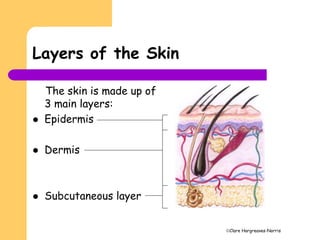
Layers of the Skin
The skin is made up of
3 main layers:
 Epidermis
 Dermis
 Subcutaneous layer
Clare Hargreaves-Norris
Epidermis
 This is the outermost layer of the skin (the part that you can
see), it does not have a blood supply of its own and is made up
of 5 layers:
 Horny layer – the outer layer of the skin, this is made up of
scale like cells which are continuously shed (corn flakes).
 Clear layer- this is made up of small transparent cells through
which light can pass. This layer is only present in the palms of
the hands and soles of the feet.
 Granular layer – this layer is usually 1-3 layers thick. The cells
have distinct granules and keratin is produced in this layer.
 Prickle cell layer – this layer is 3-6 layers thick and the cells
are constantly dividing.
 Germinating layer – a single basal layer of cells, that contain
the pigment melanin. The cells of the epidermis are produced
in this layer and have a distinct nuclei. These cells divide
continuously by a process known as mitosis.
Clare Hargreaves-Norris
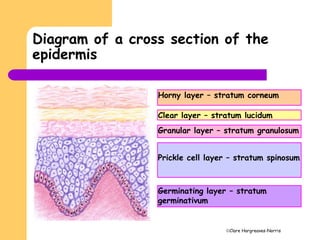
Diagram of a cross section of the
epidermis
Horny layer – stratum corneum
Clear layer – stratum lucidum
Granular layer – stratum granulosum
Prickle cell layer – stratum spinosum
Germinating layer – stratum
germinativum
Clare Hargreaves-Norris
Dermis
This layer is often referred to as the true skin as it forms
the bulk of the skin. The dermis contains 2 layers:
 Papillary Layer – lies directly under the epidermis, it is
quite thin and has cone like projections called papillae. It
provides nutrients and oxygen to the germinating layer of
the epidermis
 Reticular Layer – this lies below the papillary layer and is
the main portion of the dermis. Within the reticular layer
are collagen and elastin fibres. Collagen gives the skin a
plump and youthful appearance and is a white fibrous tissue
made up of proteins. Elastin gives the skin its elastic
properties and is made up of yellow elastic tissue.
Within the dermis are various other structures known as
appendages.
Clare Hargreaves-Norris
Subcutaneous layer
 This is located under the dermis and is mainly
made up of fat cells (adipose tissue). This fatty
layer of the skin provides the plump contours of
the body, protection, insulation, support and a
food supply if needed. A certain amount of fat in
the face is beneficial as it plumps out the facial
contours making the face look more youthful. If
a client looses a lot of weight quite rapidly you will
notice that they look as though they have aged.
Clare Hargreaves-Norris
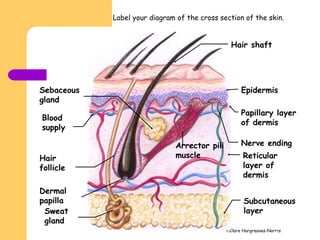
Papillary layer
of dermis
Sebaceous
gland
Nerve ending
Hair
follicle
Arrector pili
muscle
Subcutaneous
layer
Reticular
layer of
dermis
Sweat
gland
Dermal
papilla
Blood
supply
Hair shaft
Epidermis
Label your diagram of the cross section of the skin.
Clare Hargreaves-Norris
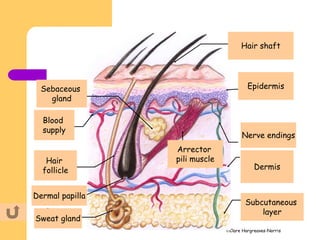
Lets take a closer look at the
appendages of the skin.
Clare Hargreaves-Norris
Sebaceous
gland
Hair
follicle
Subcutaneous
layerSweat
gland
Dermal
papilla
Blood
supply
Hair shaft
Epidermis
Hair shaft
Epidermis
Dermis
Nerve endings
Subcutaneous
layer
Arrector
pili muscle
Sweat gland
Dermal papilla
Hair
follicle
Blood
supply
Sebaceous
gland
Clare Hargreaves-Norris
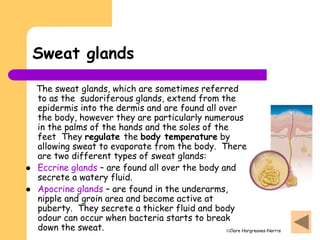
Sweat glands
The sweat glands, which are sometimes referred
to as the sudoriferous glands, extend from the
epidermis into the dermis and are found all over
the body, however they are particularly numerous
in the palms of the hands and the soles of the
feet They regulate the body temperature by
allowing sweat to evaporate from the body. There
are two different types of sweat glands:
 Eccrine glands – are found all over the body and
secrete a watery fluid.
 Apocrine glands – are found in the underarms,
nipple and groin area and become active at
puberty. They secrete a thicker fluid and body
odour can occur when bacteria starts to break
down the sweat.
Clare Hargreaves-Norris
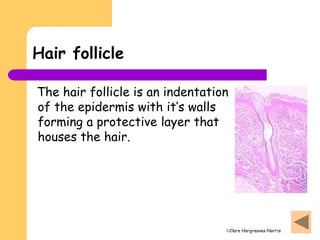
Hair follicle
The hair follicle is an indentation
of the epidermis with it’s walls
forming a protective layer that
houses the hair.
Clare Hargreaves-Norris
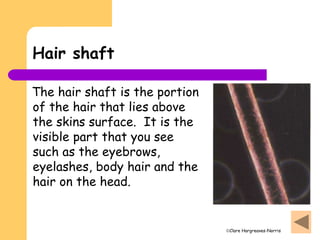
Hair shaft
The hair shaft is the portion
of the hair that lies above
the skins surface. It is the
visible part that you see
such as the eyebrows,
eyelashes, body hair and the
hair on the head.
Clare Hargreaves-Norris
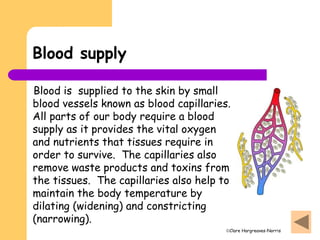
Blood supply
Blood is supplied to the skin by small
blood vessels known as blood capillaries.
All parts of our body require a blood
supply as it provides the vital oxygen
and nutrients that tissues require in
order to survive. The capillaries also
remove waste products and toxins from
the tissues. The capillaries also help to
maintain the body temperature by
dilating (widening) and constricting
(narrowing).
Clare Hargreaves-Norris
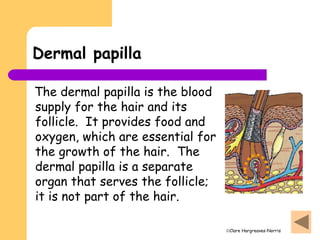
Dermal papilla
The dermal papilla is the blood
supply for the hair and its
follicle. It provides food and
oxygen, which are essential for
the growth of the hair. The
dermal papilla is a separate
organ that serves the follicle;
it is not part of the hair.
Clare Hargreaves-Norris
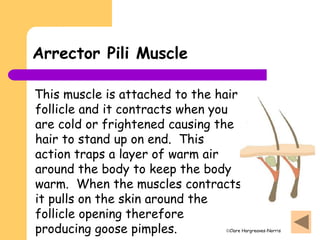
Arrector Pili Muscle
This muscle is attached to the hair
follicle and it contracts when you
are cold or frightened causing the
hair to stand up on end. This
action traps a layer of warm air
around the body to keep the body
warm. When the muscles contracts
it pulls on the skin around the
follicle opening therefore
producing goose pimples.
Clare Hargreaves-Norris
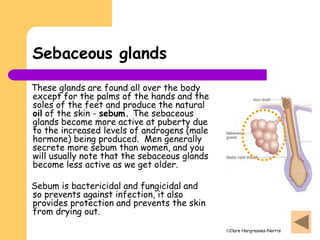
Sebaceous glands
These glands are found all over the body
except for the palms of the hands and the
soles of the feet and produce the natural
oil of the skin - sebum. The sebaceous
glands become more active at puberty due
to the increased levels of androgens (male
hormone) being produced. Men generally
secrete more sebum than women, and you
will usually note that the sebaceous glands
become less active as we get older.
Sebum is bactericidal and fungicidal and
so prevents against infection, it also
provides protection and prevents the skin
from drying out.
Clare Hargreaves-Norris
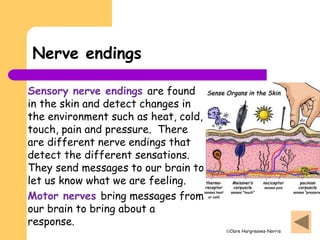
Nerve endings
Sensory nerve endings are found
in the skin and detect changes in
the environment such as heat, cold,
touch, pain and pressure. There
are different nerve endings that
detect the different sensations.
They send messages to our brain to
let us know what we are feeling.
Motor nerves bring messages from
our brain to bring about a
response.

Facial skin structure

  • 1.
    Clare Hargreaves-Norris Structure ofthe Skin NVQ Level 2 Beauty Therapy
  • 2.
    Clare Hargreaves-Norris Layers ofthe Skin The skin is made up of 3 main layers:  Epidermis  Dermis  Subcutaneous layer
  • 3.
    Clare Hargreaves-Norris Epidermis  Thisis the outermost layer of the skin (the part that you can see), it does not have a blood supply of its own and is made up of 5 layers:  Horny layer – the outer layer of the skin, this is made up of scale like cells which are continuously shed (corn flakes).  Clear layer- this is made up of small transparent cells through which light can pass. This layer is only present in the palms of the hands and soles of the feet.  Granular layer – this layer is usually 1-3 layers thick. The cells have distinct granules and keratin is produced in this layer.  Prickle cell layer – this layer is 3-6 layers thick and the cells are constantly dividing.  Germinating layer – a single basal layer of cells, that contain the pigment melanin. The cells of the epidermis are produced in this layer and have a distinct nuclei. These cells divide continuously by a process known as mitosis.
  • 4.
    Clare Hargreaves-Norris Diagram ofa cross section of the epidermis Horny layer – stratum corneum Clear layer – stratum lucidum Granular layer – stratum granulosum Prickle cell layer – stratum spinosum Germinating layer – stratum germinativum
  • 5.
    Clare Hargreaves-Norris Dermis This layeris often referred to as the true skin as it forms the bulk of the skin. The dermis contains 2 layers:  Papillary Layer – lies directly under the epidermis, it is quite thin and has cone like projections called papillae. It provides nutrients and oxygen to the germinating layer of the epidermis  Reticular Layer – this lies below the papillary layer and is the main portion of the dermis. Within the reticular layer are collagen and elastin fibres. Collagen gives the skin a plump and youthful appearance and is a white fibrous tissue made up of proteins. Elastin gives the skin its elastic properties and is made up of yellow elastic tissue. Within the dermis are various other structures known as appendages.
  • 6.
    Clare Hargreaves-Norris Subcutaneous layer This is located under the dermis and is mainly made up of fat cells (adipose tissue). This fatty layer of the skin provides the plump contours of the body, protection, insulation, support and a food supply if needed. A certain amount of fat in the face is beneficial as it plumps out the facial contours making the face look more youthful. If a client looses a lot of weight quite rapidly you will notice that they look as though they have aged.
  • 7.
    Clare Hargreaves-Norris Papillary layer ofdermis Sebaceous gland Nerve ending Hair follicle Arrector pili muscle Subcutaneous layer Reticular layer of dermis Sweat gland Dermal papilla Blood supply Hair shaft Epidermis Label your diagram of the cross section of the skin.
  • 8.
    Clare Hargreaves-Norris Lets takea closer look at the appendages of the skin.
  • 9.
    Clare Hargreaves-Norris Sebaceous gland Hair follicle Subcutaneous layerSweat gland Dermal papilla Blood supply Hair shaft Epidermis Hairshaft Epidermis Dermis Nerve endings Subcutaneous layer Arrector pili muscle Sweat gland Dermal papilla Hair follicle Blood supply Sebaceous gland
  • 10.
    Clare Hargreaves-Norris Sweat glands Thesweat glands, which are sometimes referred to as the sudoriferous glands, extend from the epidermis into the dermis and are found all over the body, however they are particularly numerous in the palms of the hands and the soles of the feet They regulate the body temperature by allowing sweat to evaporate from the body. There are two different types of sweat glands:  Eccrine glands – are found all over the body and secrete a watery fluid.  Apocrine glands – are found in the underarms, nipple and groin area and become active at puberty. They secrete a thicker fluid and body odour can occur when bacteria starts to break down the sweat.
  • 11.
    Clare Hargreaves-Norris Hair follicle Thehair follicle is an indentation of the epidermis with it’s walls forming a protective layer that houses the hair.
  • 12.
    Clare Hargreaves-Norris Hair shaft Thehair shaft is the portion of the hair that lies above the skins surface. It is the visible part that you see such as the eyebrows, eyelashes, body hair and the hair on the head.
  • 13.
    Clare Hargreaves-Norris Blood supply Bloodis supplied to the skin by small blood vessels known as blood capillaries. All parts of our body require a blood supply as it provides the vital oxygen and nutrients that tissues require in order to survive. The capillaries also remove waste products and toxins from the tissues. The capillaries also help to maintain the body temperature by dilating (widening) and constricting (narrowing).
  • 14.
    Clare Hargreaves-Norris Dermal papilla Thedermal papilla is the blood supply for the hair and its follicle. It provides food and oxygen, which are essential for the growth of the hair. The dermal papilla is a separate organ that serves the follicle; it is not part of the hair.
  • 15.
    Clare Hargreaves-Norris Arrector PiliMuscle This muscle is attached to the hair follicle and it contracts when you are cold or frightened causing the hair to stand up on end. This action traps a layer of warm air around the body to keep the body warm. When the muscles contracts it pulls on the skin around the follicle opening therefore producing goose pimples.
  • 16.
    Clare Hargreaves-Norris Sebaceous glands Theseglands are found all over the body except for the palms of the hands and the soles of the feet and produce the natural oil of the skin - sebum. The sebaceous glands become more active at puberty due to the increased levels of androgens (male hormone) being produced. Men generally secrete more sebum than women, and you will usually note that the sebaceous glands become less active as we get older. Sebum is bactericidal and fungicidal and so prevents against infection, it also provides protection and prevents the skin from drying out.
  • 17.
    Clare Hargreaves-Norris Nerve endings Sensorynerve endings are found in the skin and detect changes in the environment such as heat, cold, touch, pain and pressure. There are different nerve endings that detect the different sensations. They send messages to our brain to let us know what we are feeling. Motor nerves bring messages from our brain to bring about a response.