Exclusion Zones Analysis
Name:
Class:
KeyFindingson
ExclusionZones
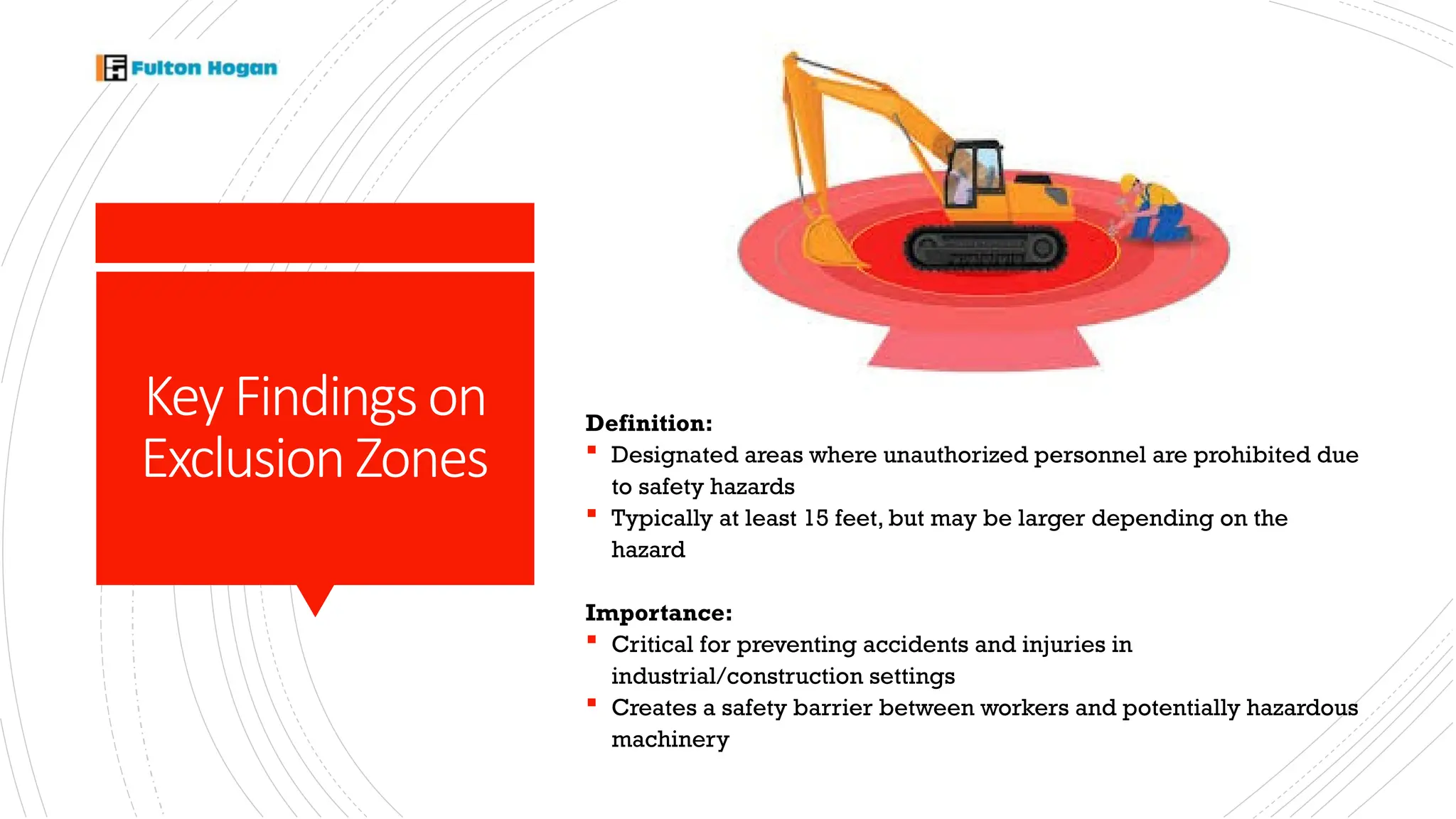
Definition:
 Designated areas where unauthorized personnel are prohibited due
to safety hazards
 Typically at least 15 feet, but may be larger depending on the
hazard
Importance:
 Critical for preventing accidents and injuries in
industrial/construction settings
 Creates a safety barrier between workers and potentially hazardous
machinery
Types of
Exclusion
Zones:
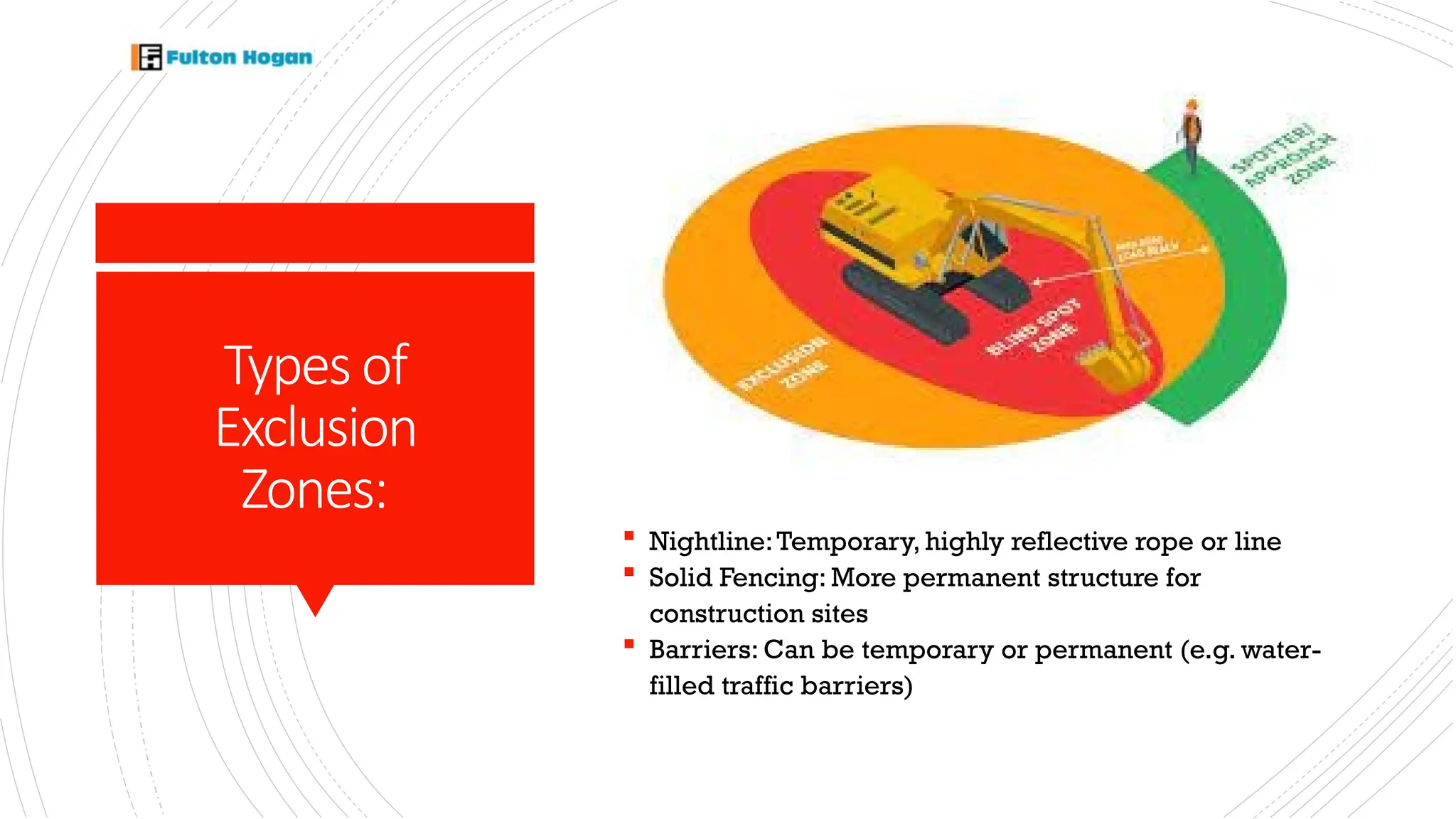
 Nightline:Temporary, highly reflective rope or line
 Solid Fencing: More permanent structure for
construction sites
 Barriers: Can be temporary or permanent (e.g. water-
filled traffic barriers)
Analysis of
ExclusionZone
Distances
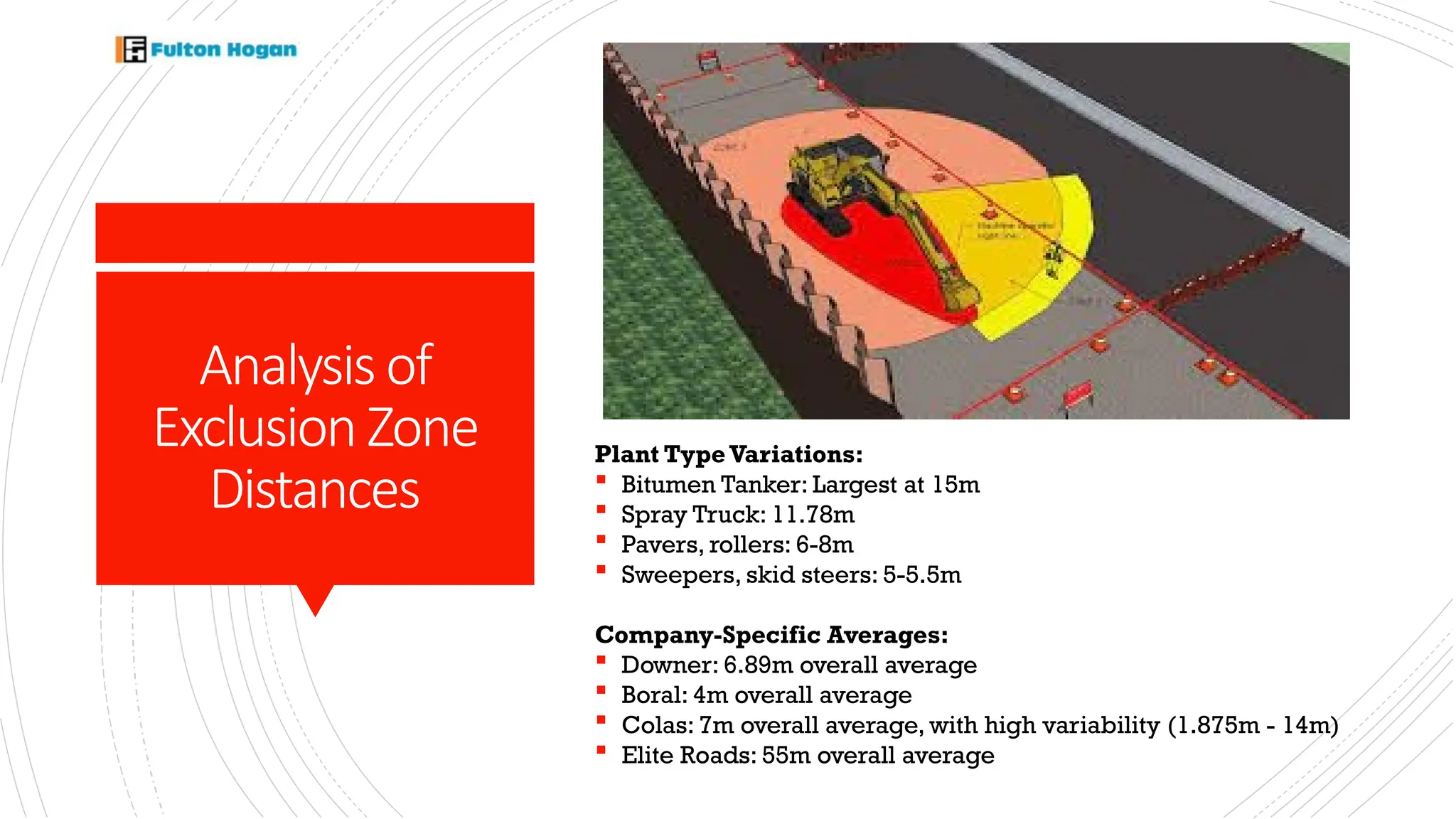
Plant TypeVariations:
 Bitumen Tanker: Largest at 15m
 Spray Truck: 11.78m
 Pavers, rollers: 6-8m
 Sweepers, skid steers: 5-5.5m
Company-Specific Averages:
 Downer: 6.89m overall average
 Boral: 4m overall average
 Colas: 7m overall average, with high variability (1.875m - 14m)
 Elite Roads: 55m overall average
Key
Considerations:
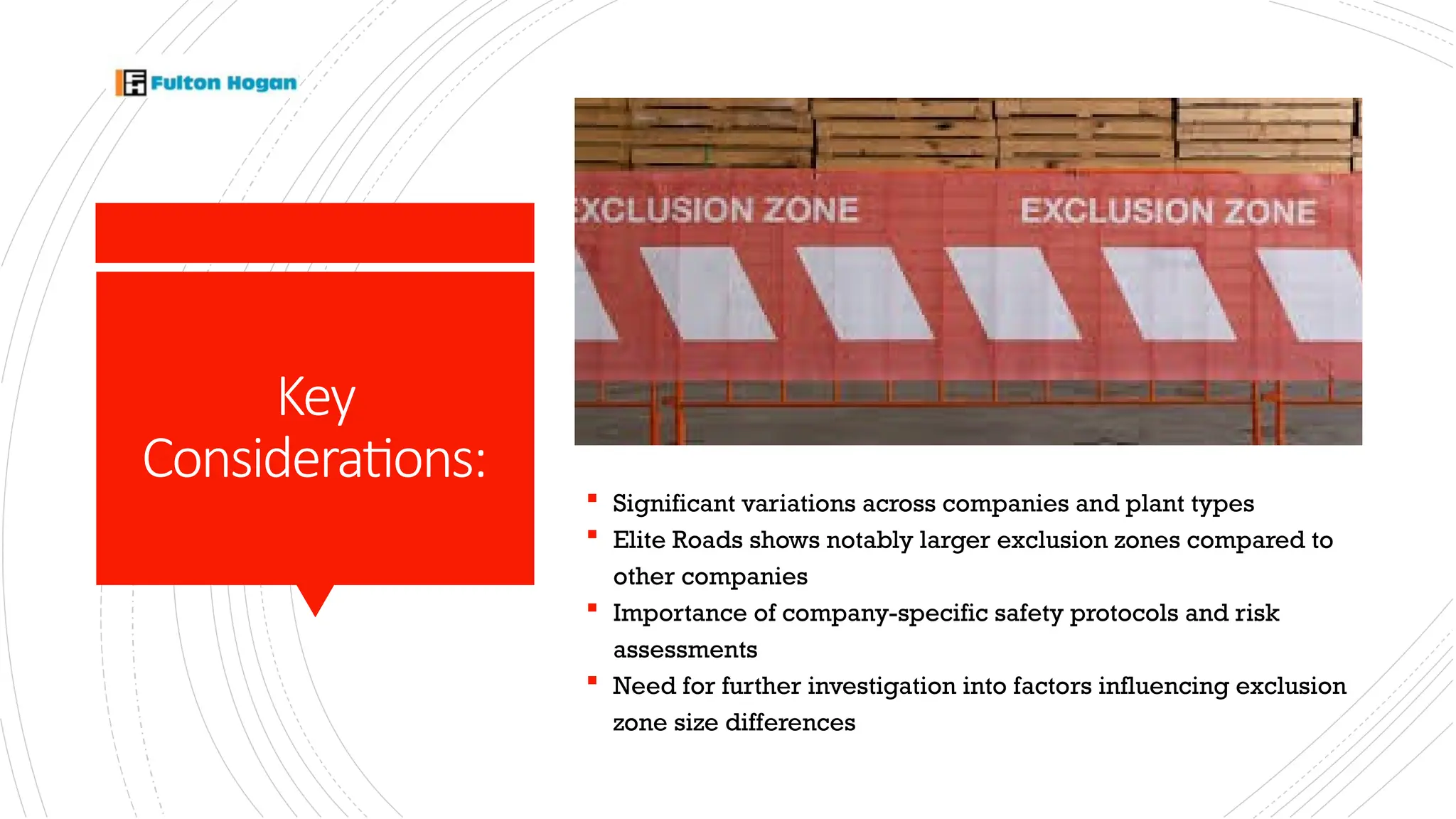
 Significant variations across companies and plant types
 Elite Roads shows notably larger exclusion zones compared to
other companies
 Importance of company-specific safety protocols and risk
assessments
 Need for further investigation into factors influencing exclusion
zone size differences

Exclusion Zones Analysis and details for safety

  • 1.
  • 2.
    KeyFindingson ExclusionZones Definition:  Designated areaswhere unauthorized personnel are prohibited due to safety hazards  Typically at least 15 feet, but may be larger depending on the hazard Importance:  Critical for preventing accidents and injuries in industrial/construction settings  Creates a safety barrier between workers and potentially hazardous machinery
  • 3.
    Types of Exclusion Zones:  Nightline:Temporary,highly reflective rope or line  Solid Fencing: More permanent structure for construction sites  Barriers: Can be temporary or permanent (e.g. water- filled traffic barriers)
  • 4.
    Analysis of ExclusionZone Distances Plant TypeVariations: Bitumen Tanker: Largest at 15m  Spray Truck: 11.78m  Pavers, rollers: 6-8m  Sweepers, skid steers: 5-5.5m Company-Specific Averages:  Downer: 6.89m overall average  Boral: 4m overall average  Colas: 7m overall average, with high variability (1.875m - 14m)  Elite Roads: 55m overall average
  • 5.
    Key Considerations:  Significant variationsacross companies and plant types  Elite Roads shows notably larger exclusion zones compared to other companies  Importance of company-specific safety protocols and risk assessments  Need for further investigation into factors influencing exclusion zone size differences