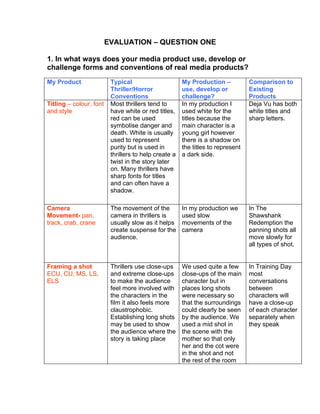
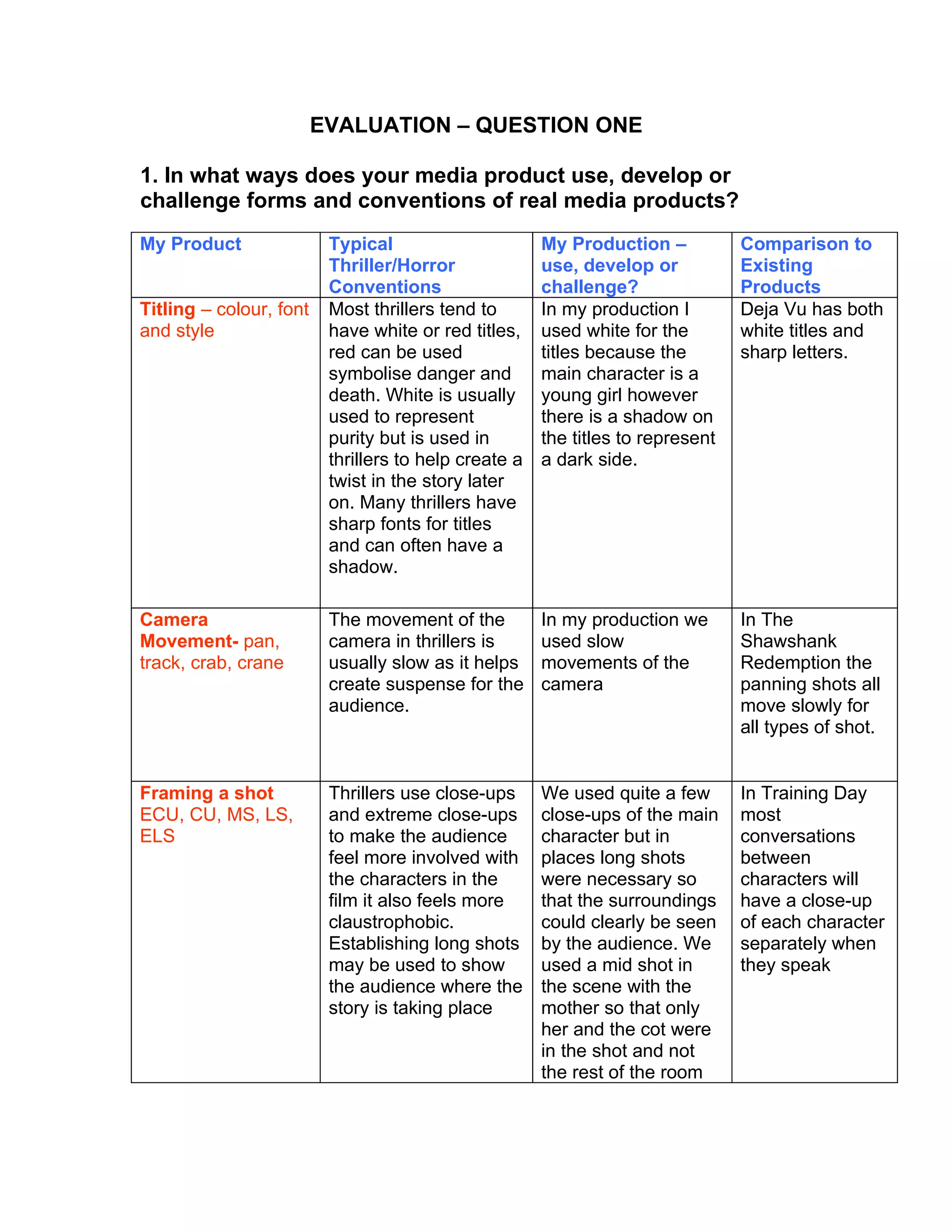
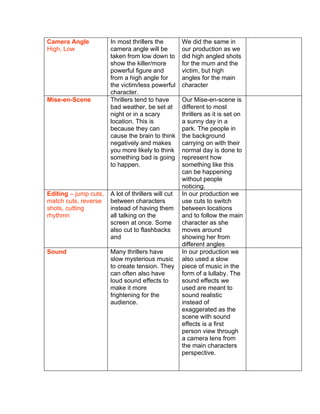
This document evaluates how the student's media production uses, develops or challenges existing conventions of thriller/horror genres. It provides examples of conventions for titling, camera movement, shot types, camera angles, mise-en-scene, editing techniques, sound, and narrative theory that are commonly seen in thriller films. The student compares their techniques in each area to both typical conventions and specific thriller films. Overall, the summary demonstrates how the student's production both adheres to and adjusts some conventions, such as using slow camera movements but setting the story in daylight rather than ominous locations often seen in thrillers.