Ethical Hacking

!@

#
Ethical Hacking - ?
Why – Ethical Hacking ?
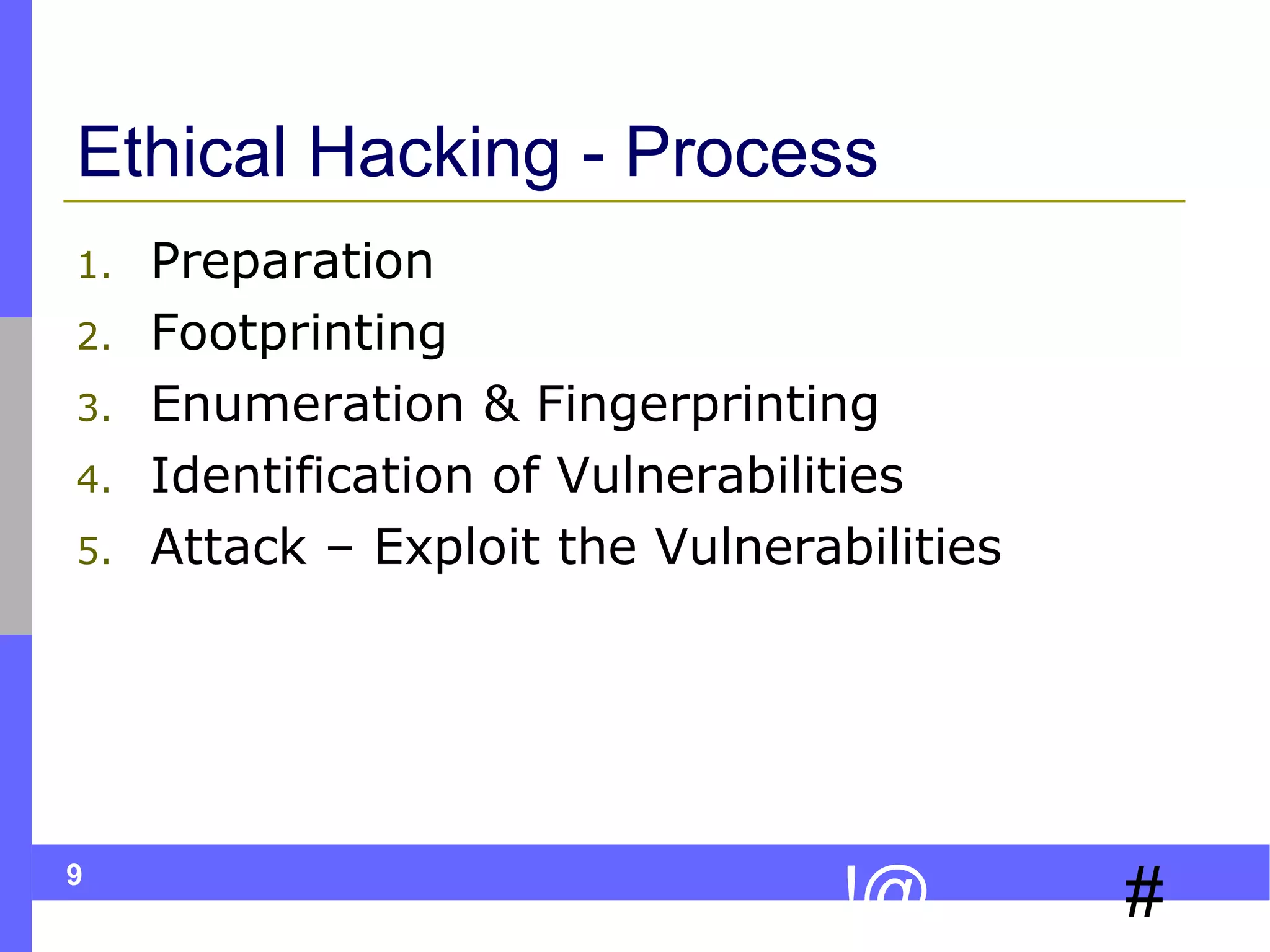
Ethical Hacking - Process
Reporting
Ethical Hacking – Commandments

2

!@

#
What is Ethical Hacking
Also Called – Attack & Penetration Testing,
White-hat hacking, Red teaming
Hacking
Process of breaking into systems for:
Personal or Commercial Gains
Malicious Intent – Causing sever damage to Information & Assets
Ethical
Conforming to accepted professional standards of conduct
Black-hat – Bad guys
3

White-hat - Good Guys

!@

#
What is Ethical Hacking







4

It is Legal
Permission is obtained from the target
Part of an overall security program
Identify vulnerabilities visible from Internet at
particular point of time
Ethical hackers possesses same skills, mindset
and tools of a hacker but the attacks are done in
a non-destructive manner

!@

#
Why – Ethical Hacking
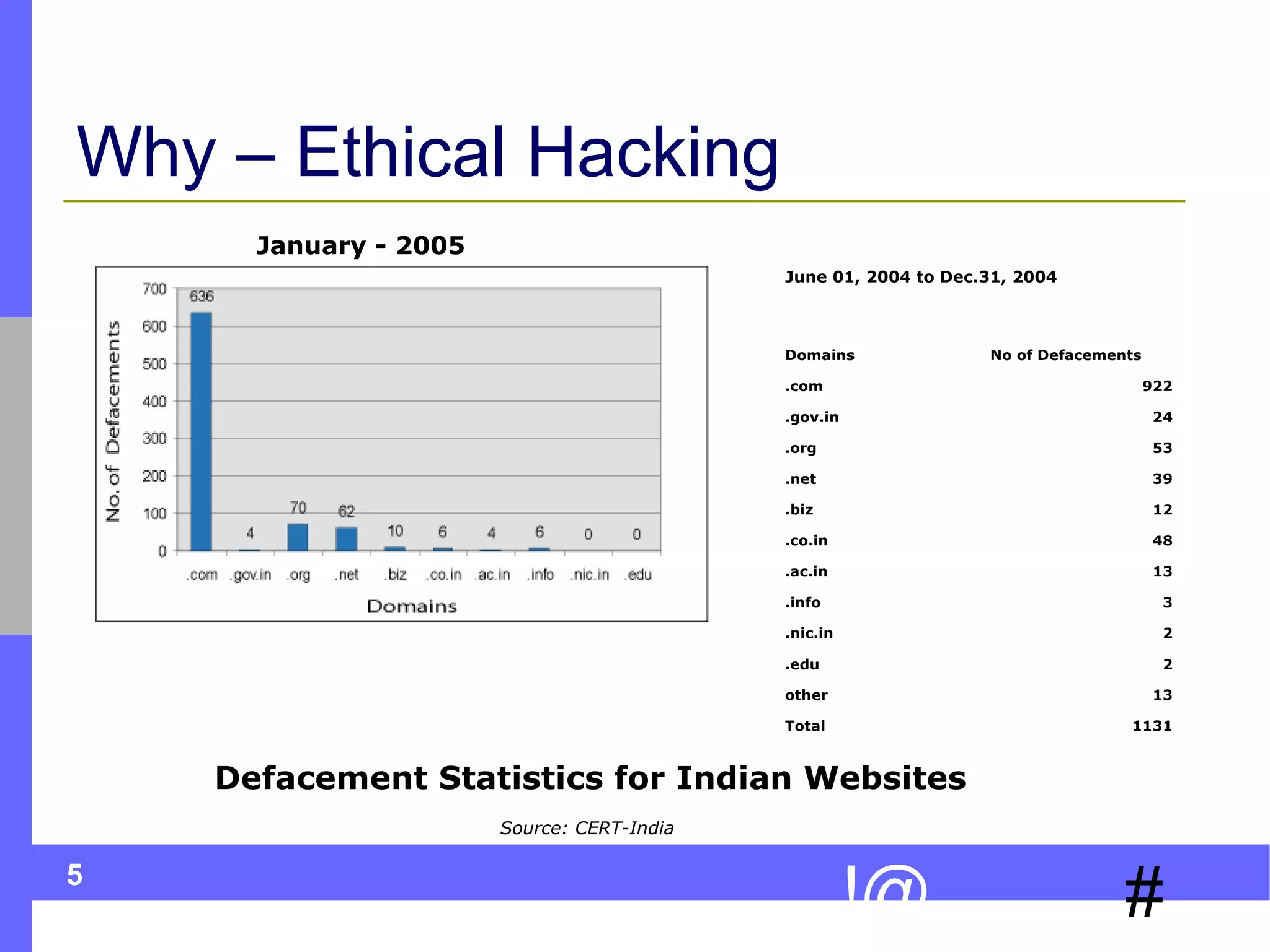
January - 2005
June 01, 2004 to Dec.31, 2004

Domains
.com

No of Defacements
922

.gov.in

24

.org

53

.net

39

.biz

12

.co.in

48

.ac.in

13

.info

3

.nic.in

2

.edu

2

other

13

Total

1131

Defacement Statistics for Indian Websites
Source: CERT-India

5

!@

#
Why – Ethical Hacking

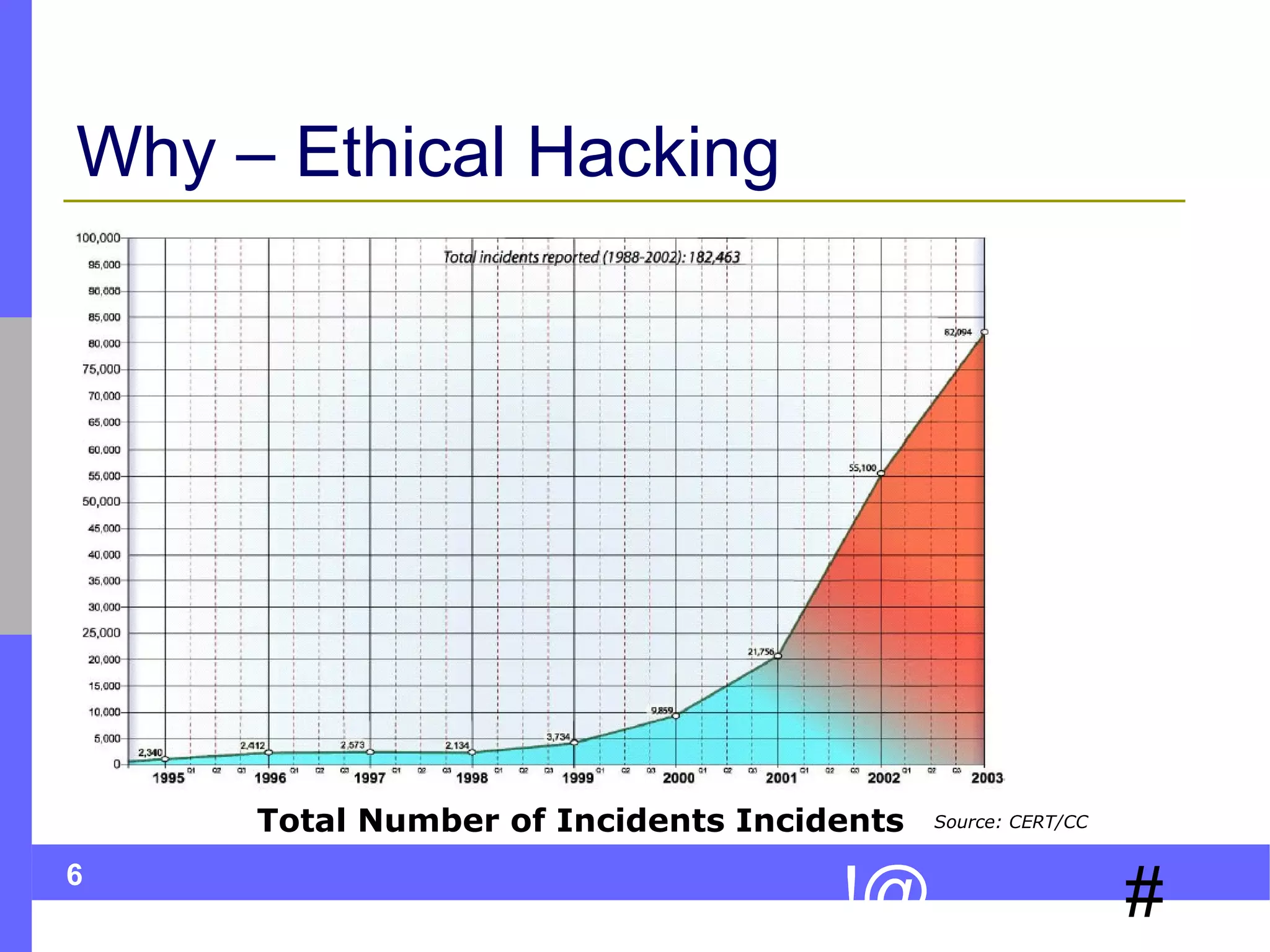
Total Number of Incidents Incidents
6

!@

Source: CERT/CC

#
Why – Ethical Hacking

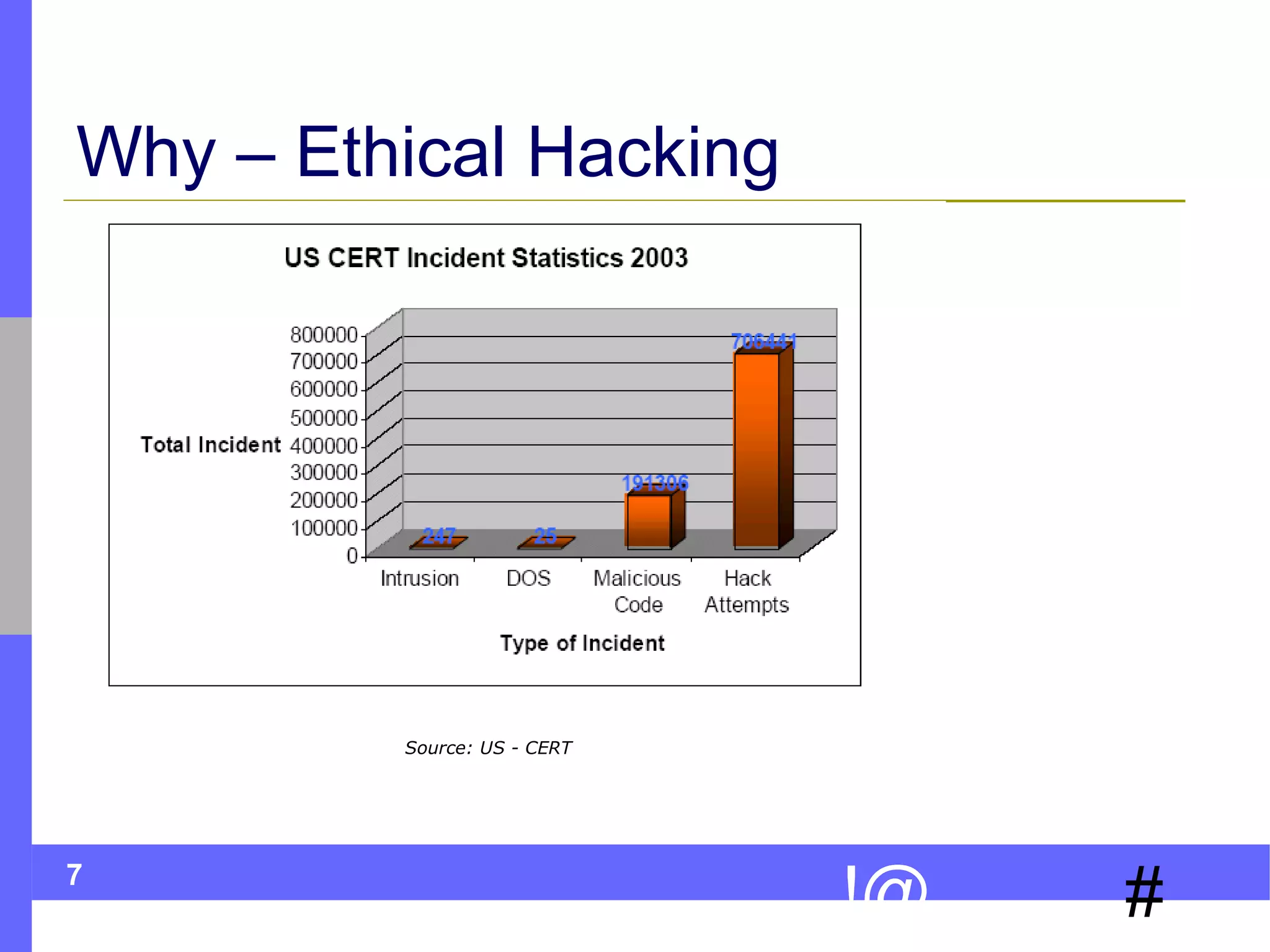
Source: US - CERT

7

!@

#
Why – Ethical Hacking
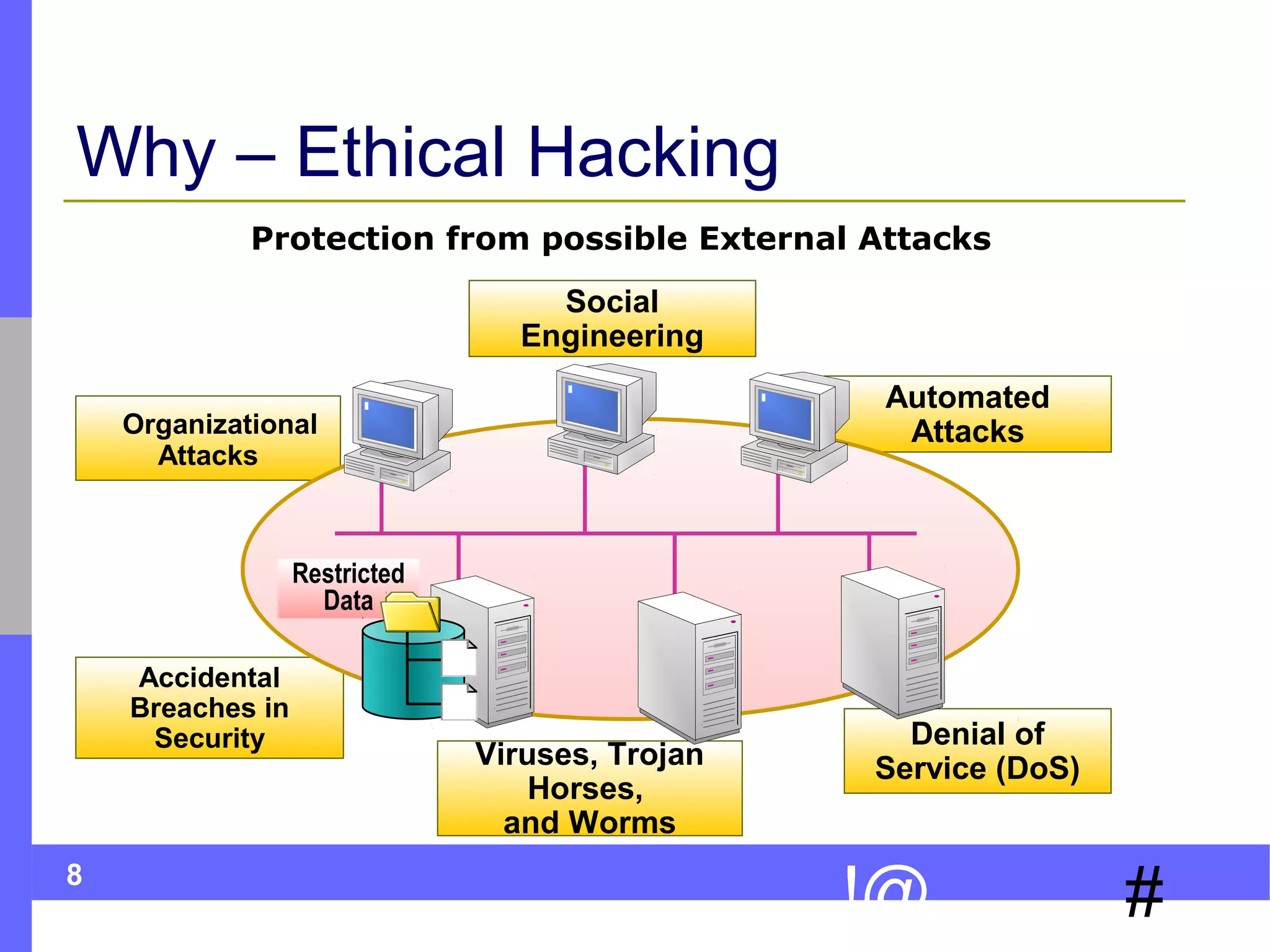
Protection from possible External Attacks
Social
Engineering
Automated
Attacks

Organizational
Attacks

Restricted
Data
Accidental
Breaches in
Security

8

Viruses, Trojan
Horses,
and Worms

Denial of
Service (DoS)

!@

#
Ethical Hacking - Process
1.
2.
3.
4.
5.

9

Preparation
Footprinting
Enumeration & Fingerprinting
Identification of Vulnerabilities
Attack – Exploit the Vulnerabilities

!@

#
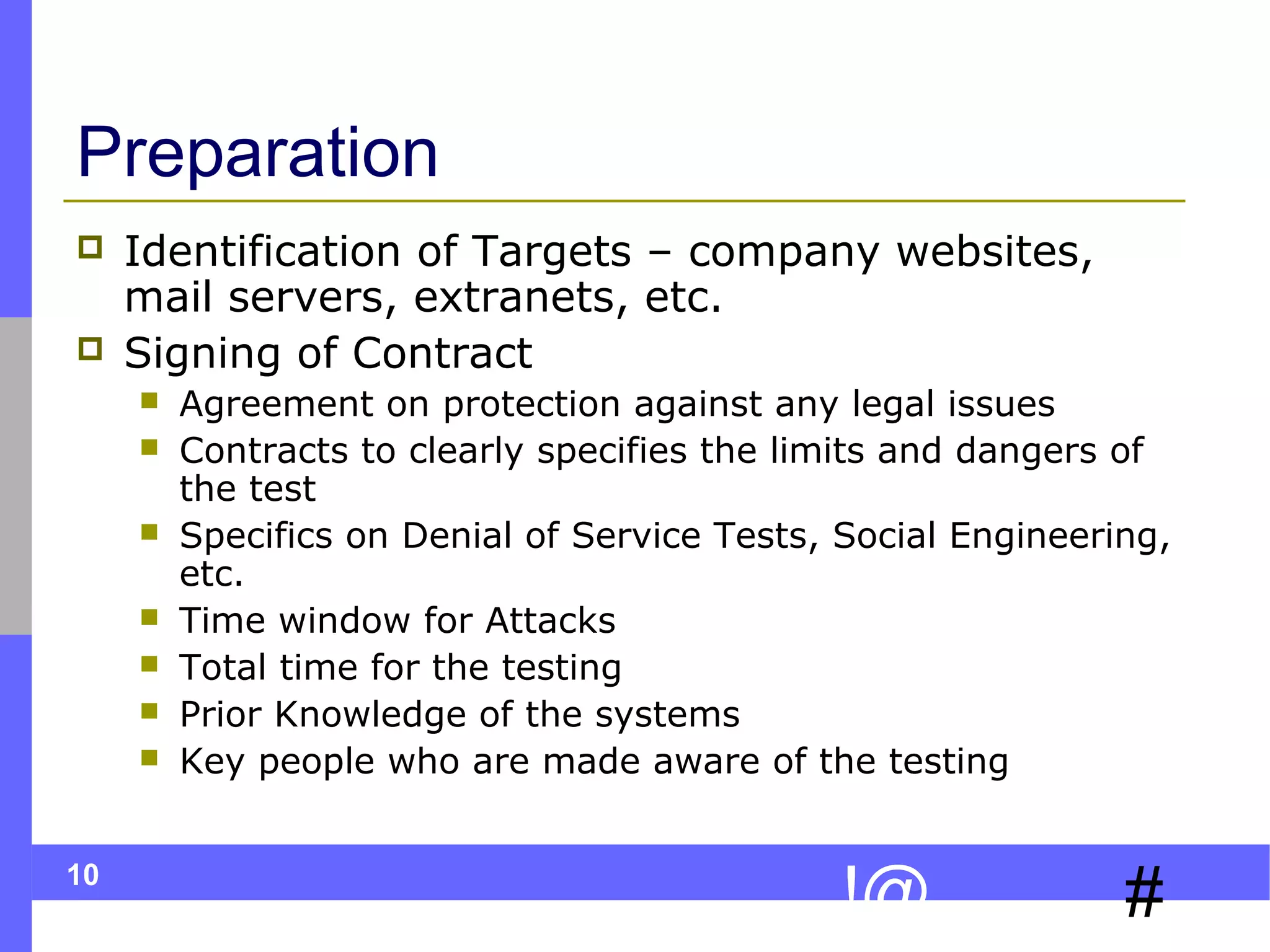
Preparation



Identification of Targets – company websites,
mail servers, extranets, etc.
Signing of Contract








10

Agreement on protection against any legal issues
Contracts to clearly specifies the limits and dangers of
the test
Specifics on Denial of Service Tests, Social Engineering,
etc.
Time window for Attacks
Total time for the testing
Prior Knowledge of the systems
Key people who are made aware of the testing

!@

#
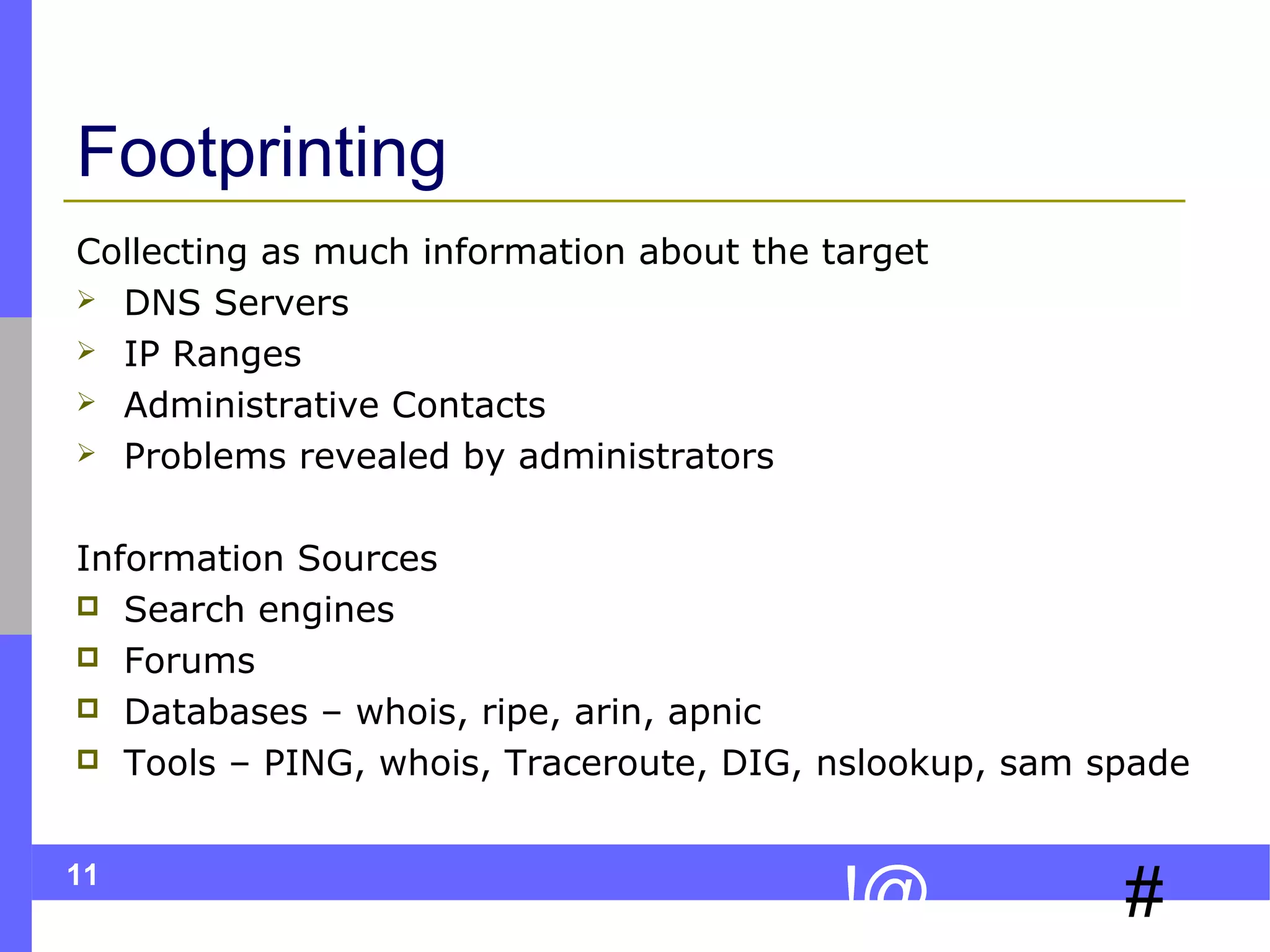
Footprinting
Collecting as much information about the target
 DNS Servers
 IP Ranges
 Administrative Contacts
 Problems revealed by administrators
Information Sources
 Search engines
 Forums
 Databases – whois, ripe, arin, apnic
 Tools – PING, whois, Traceroute, DIG, nslookup, sam spade
11

!@

#
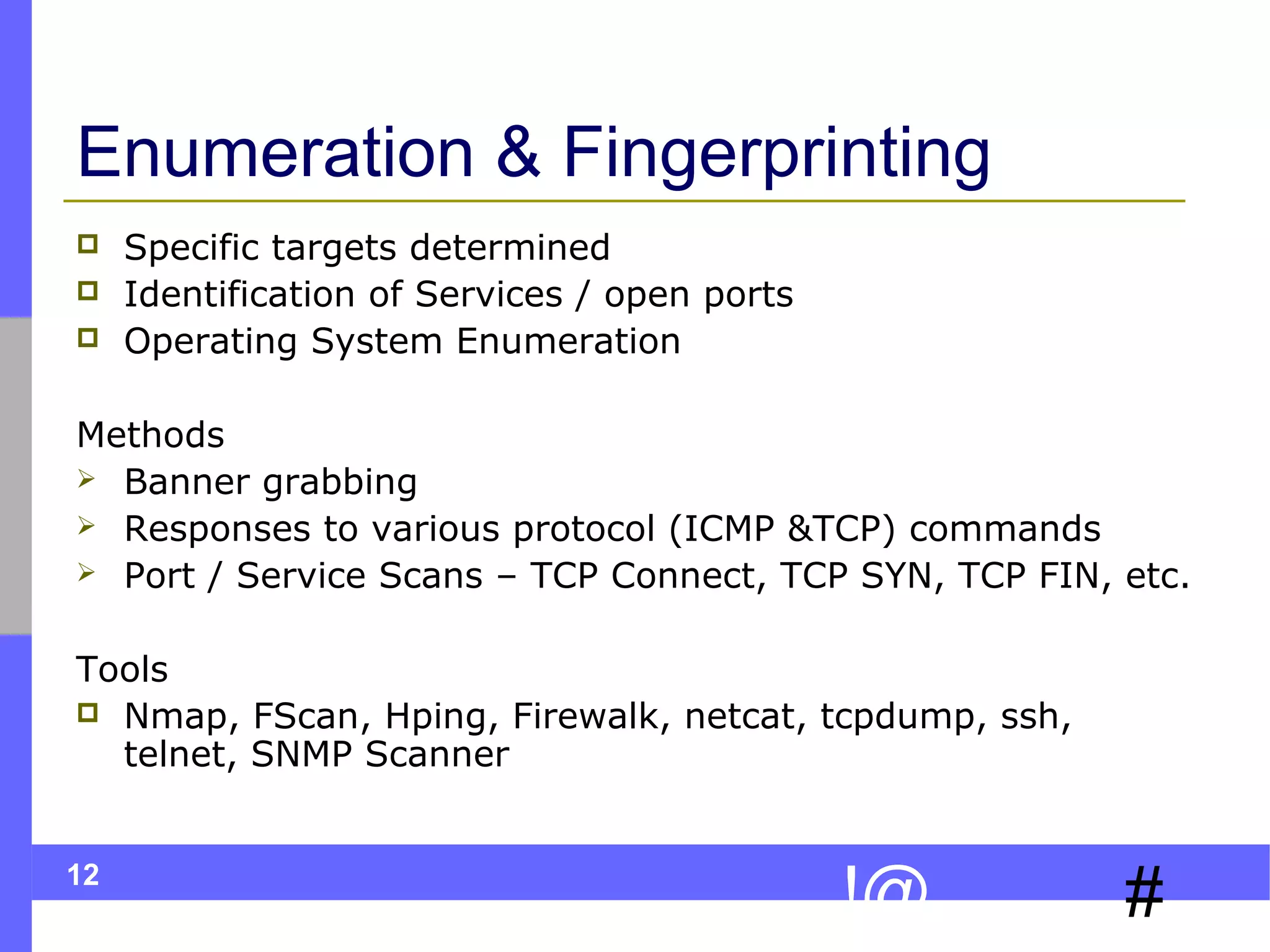
Enumeration & Fingerprinting




Specific targets determined
Identification of Services / open ports
Operating System Enumeration

Methods
 Banner grabbing
 Responses to various protocol (ICMP &TCP) commands
 Port / Service Scans – TCP Connect, TCP SYN, TCP FIN, etc.
Tools
 Nmap, FScan, Hping, Firewalk, netcat, tcpdump, ssh,
telnet, SNMP Scanner
12

!@

#
Identification of Vulnerabilities
Vulnerabilities








13

Insecure Configuration
Weak passwords
Unpatched vulnerabilities in services, Operating
systems, applications
Possible Vulnerabilities in Services, Operating
Systems
Insecure programming
Weak Access Control

!@

#
Identification of Vulnerabilities
Methods
 Unpatched / Possible Vulnerabilities – Tools,
Vulnerability information Websites
 Weak Passwords – Default Passwords, Brute
force, Social Engineering, Listening to Traffic
 Insecure Programming – SQL Injection, Listening
to Traffic
 Weak Access Control – Using the Application
Logic, SQL Injection

14

!@

#
Identification of Vulnerabilities
Tools
Vulnerability Scanners - Nessus, ISS, SARA, SAINT
Listening to Traffic – Ethercap, tcpdump
Password Crackers – John the ripper, LC4, Pwdump
Intercepting Web Traffic – Achilles, Whisker, Legion
Websites
 Common Vulnerabilities & Exposures – http://cve.mitre.org
 Bugtraq – www.securityfocus.com
 Other Vendor Websites

15

!@

#
Attack – Exploit the vulnerabilities






Obtain as much information (trophies) from the
Target Asset
Gaining Normal Access
Escalation of privileges
Obtaining access to other connected systems

Last Ditch Effort – Denial of Service

16

!@

#
Attack – Exploit the vulnerabilities
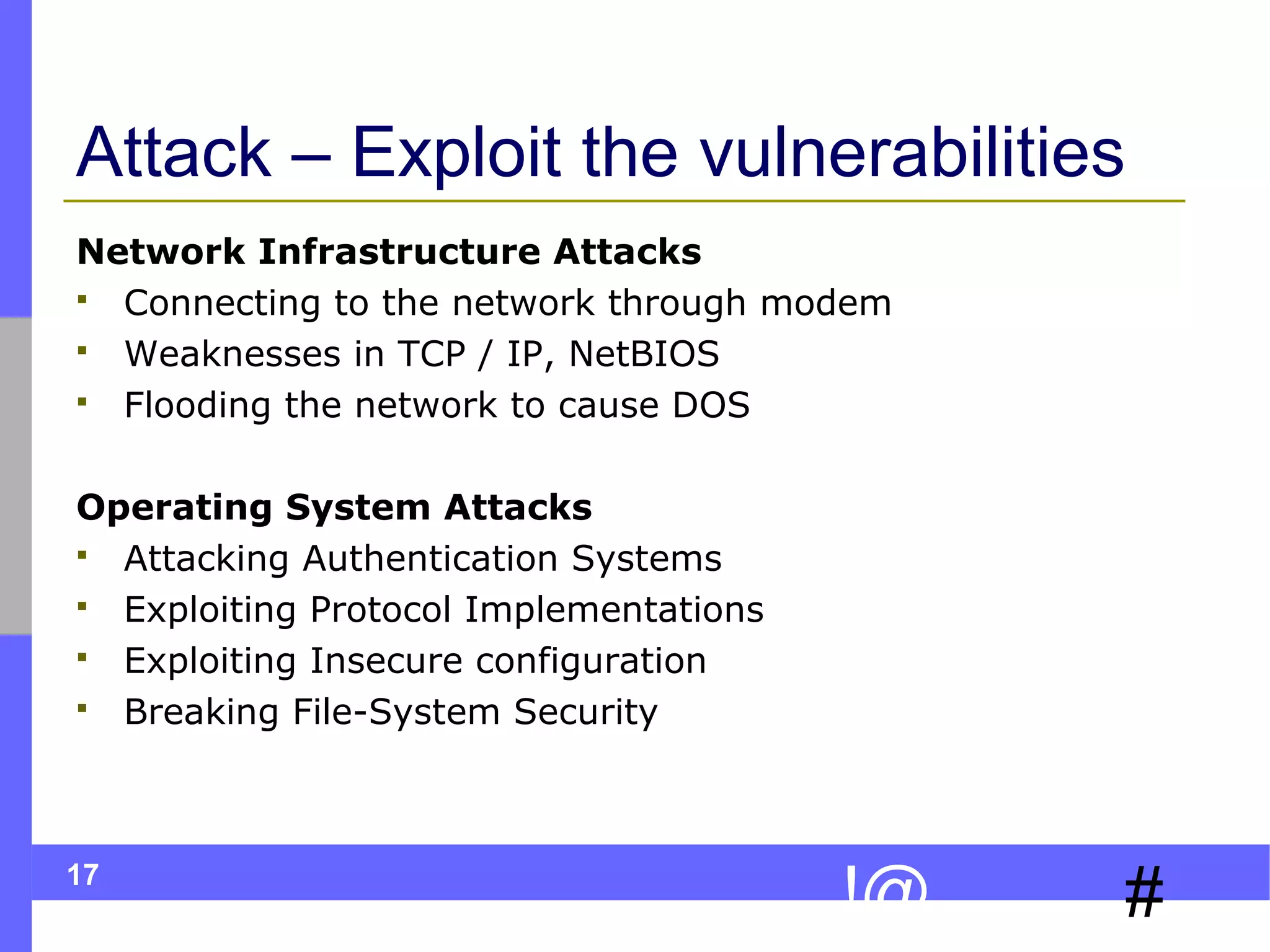
Network Infrastructure Attacks
 Connecting to the network through modem
 Weaknesses in TCP / IP, NetBIOS
 Flooding the network to cause DOS
Operating System Attacks
 Attacking Authentication Systems
 Exploiting Protocol Implementations
 Exploiting Insecure configuration
 Breaking File-System Security

17

!@

#
Attack – Exploit the vulnerabilities
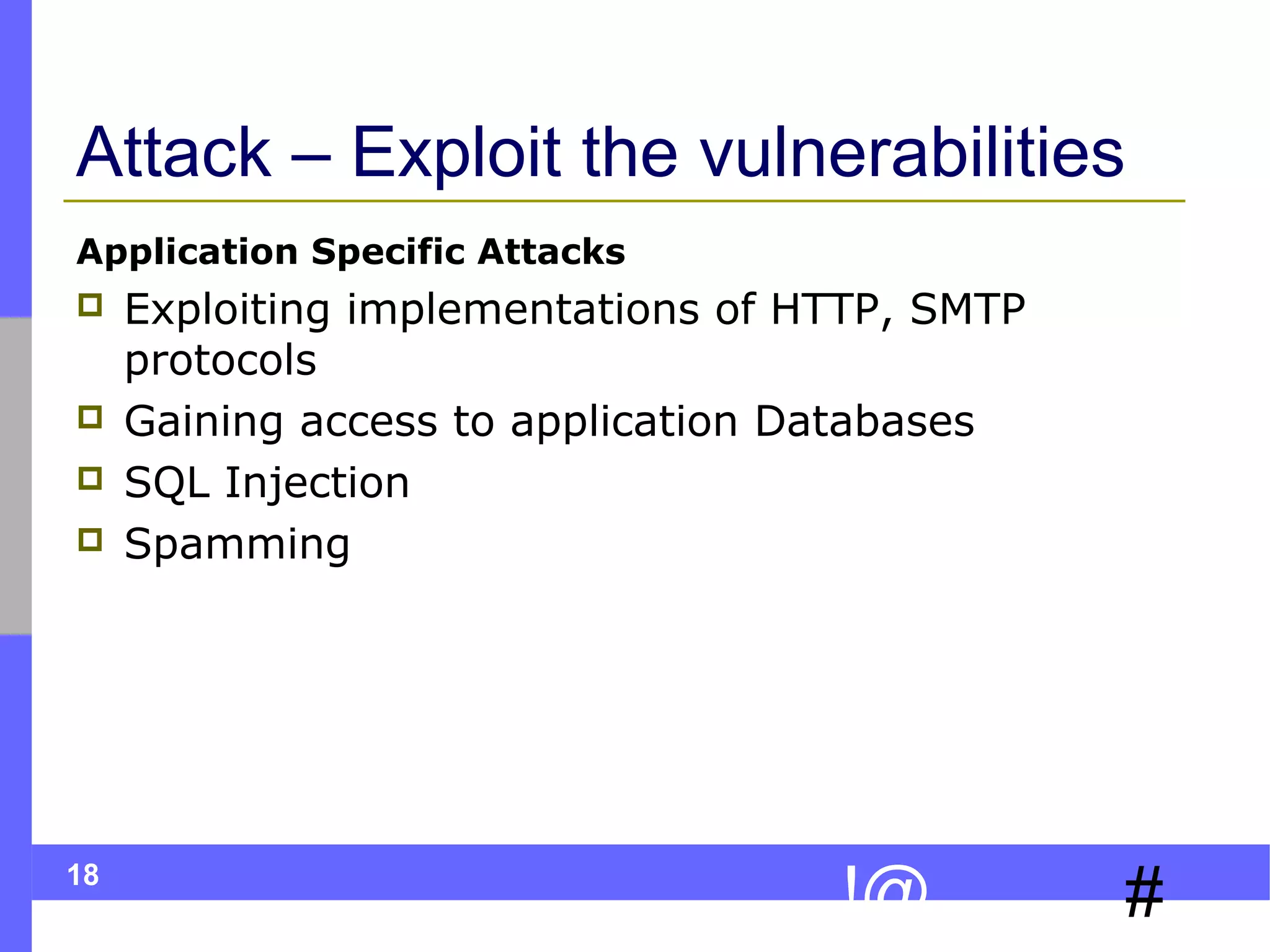
Application Specific Attacks






18

Exploiting implementations of HTTP, SMTP
protocols
Gaining access to application Databases
SQL Injection
Spamming

!@

#
Attack – Exploit the vulnerabilities
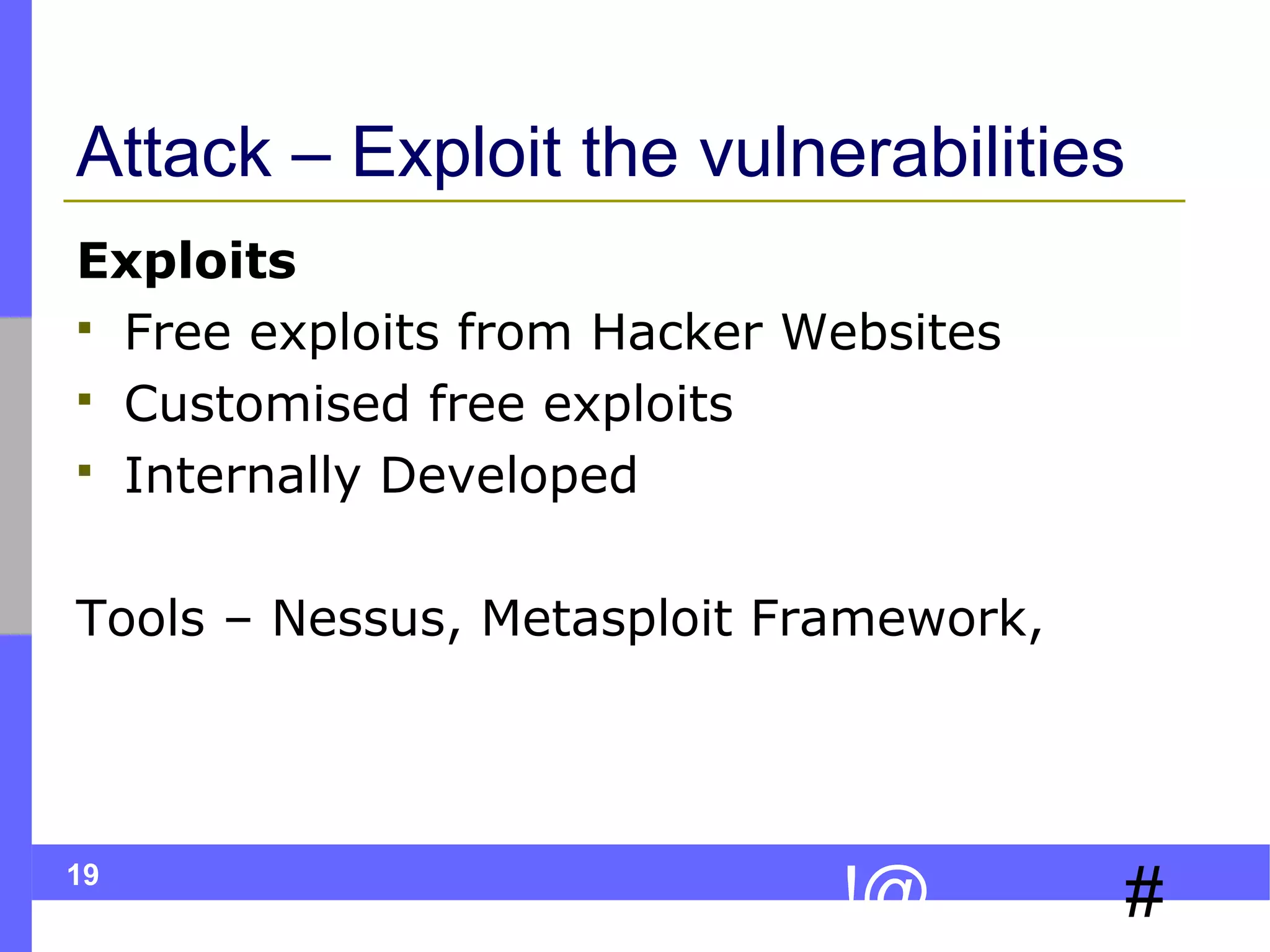
Exploits
 Free exploits from Hacker Websites
 Customised free exploits
 Internally Developed
Tools – Nessus, Metasploit Framework,

19

!@

#
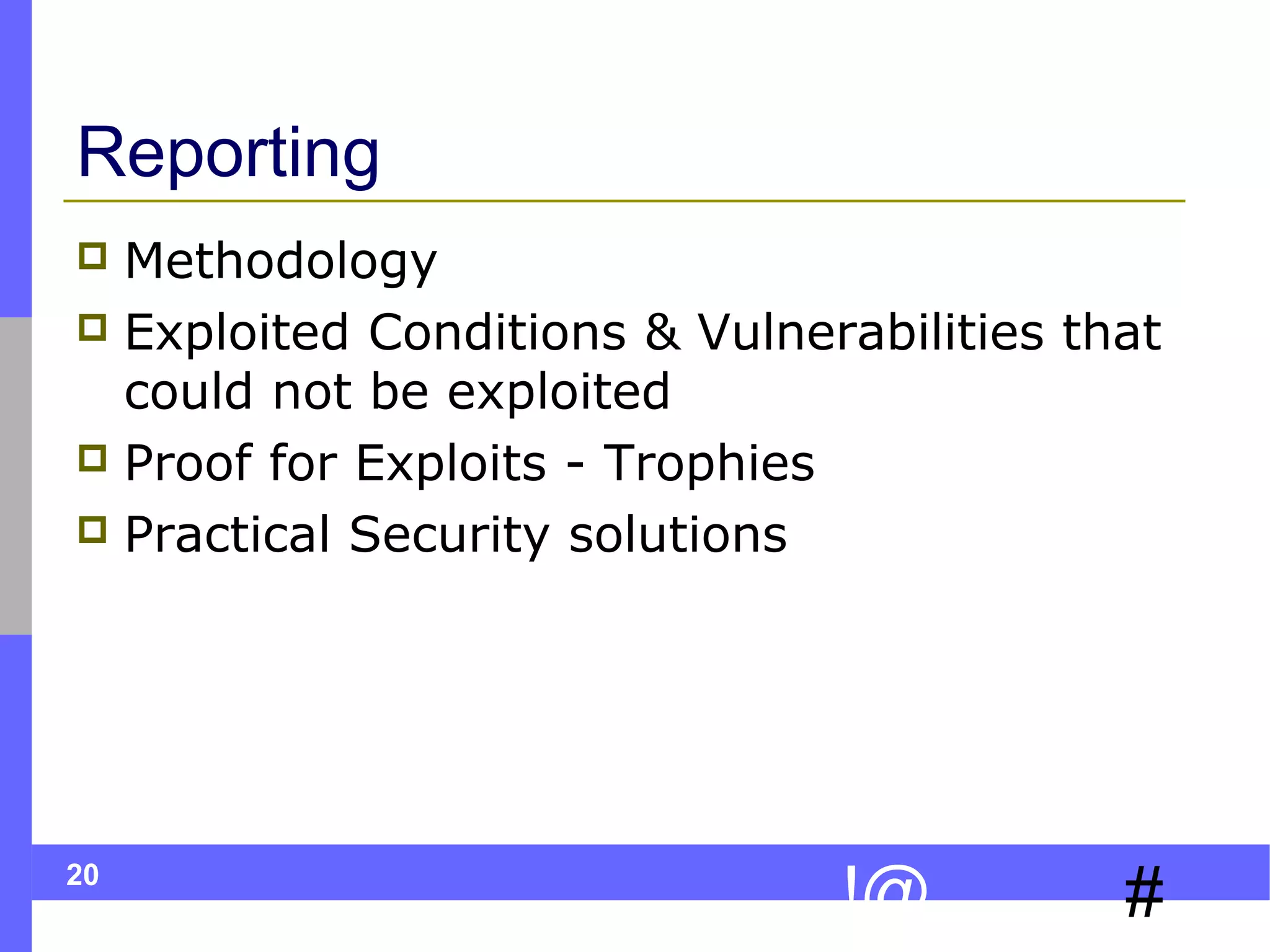
Reporting
Methodology
 Exploited Conditions & Vulnerabilities that
could not be exploited
 Proof for Exploits - Trophies
 Practical Security solutions


20

!@

#
Ethical Hacking - Commandments


Working Ethically






21

Trustworthiness
Misuse for personal gain

Respecting Privacy
Not Crashing the Systems

!@

#

Ethical hacking-ppt-download4575

  • 1.
  • 2.
    Ethical Hacking -? Why – Ethical Hacking ? Ethical Hacking - Process Reporting Ethical Hacking – Commandments 2 !@ #
  • 3.
    What is EthicalHacking Also Called – Attack & Penetration Testing, White-hat hacking, Red teaming Hacking Process of breaking into systems for: Personal or Commercial Gains Malicious Intent – Causing sever damage to Information & Assets Ethical Conforming to accepted professional standards of conduct Black-hat – Bad guys 3 White-hat - Good Guys !@ #
  • 4.
    What is EthicalHacking      4 It is Legal Permission is obtained from the target Part of an overall security program Identify vulnerabilities visible from Internet at particular point of time Ethical hackers possesses same skills, mindset and tools of a hacker but the attacks are done in a non-destructive manner !@ #
  • 5.
    Why – EthicalHacking January - 2005 June 01, 2004 to Dec.31, 2004 Domains .com No of Defacements 922 .gov.in 24 .org 53 .net 39 .biz 12 .co.in 48 .ac.in 13 .info 3 .nic.in 2 .edu 2 other 13 Total 1131 Defacement Statistics for Indian Websites Source: CERT-India 5 !@ #
  • 6.
    Why – EthicalHacking Total Number of Incidents Incidents 6 !@ Source: CERT/CC #
  • 7.
    Why – EthicalHacking Source: US - CERT 7 !@ #
  • 8.
    Why – EthicalHacking Protection from possible External Attacks Social Engineering Automated Attacks Organizational Attacks Restricted Data Accidental Breaches in Security 8 Viruses, Trojan Horses, and Worms Denial of Service (DoS) !@ #
  • 9.
    Ethical Hacking -Process 1. 2. 3. 4. 5. 9 Preparation Footprinting Enumeration & Fingerprinting Identification of Vulnerabilities Attack – Exploit the Vulnerabilities !@ #
  • 10.
    Preparation   Identification of Targets– company websites, mail servers, extranets, etc. Signing of Contract        10 Agreement on protection against any legal issues Contracts to clearly specifies the limits and dangers of the test Specifics on Denial of Service Tests, Social Engineering, etc. Time window for Attacks Total time for the testing Prior Knowledge of the systems Key people who are made aware of the testing !@ #
  • 11.
    Footprinting Collecting as muchinformation about the target  DNS Servers  IP Ranges  Administrative Contacts  Problems revealed by administrators Information Sources  Search engines  Forums  Databases – whois, ripe, arin, apnic  Tools – PING, whois, Traceroute, DIG, nslookup, sam spade 11 !@ #
  • 12.
    Enumeration & Fingerprinting    Specifictargets determined Identification of Services / open ports Operating System Enumeration Methods  Banner grabbing  Responses to various protocol (ICMP &TCP) commands  Port / Service Scans – TCP Connect, TCP SYN, TCP FIN, etc. Tools  Nmap, FScan, Hping, Firewalk, netcat, tcpdump, ssh, telnet, SNMP Scanner 12 !@ #
  • 13.
    Identification of Vulnerabilities Vulnerabilities       13 InsecureConfiguration Weak passwords Unpatched vulnerabilities in services, Operating systems, applications Possible Vulnerabilities in Services, Operating Systems Insecure programming Weak Access Control !@ #
  • 14.
    Identification of Vulnerabilities Methods Unpatched / Possible Vulnerabilities – Tools, Vulnerability information Websites  Weak Passwords – Default Passwords, Brute force, Social Engineering, Listening to Traffic  Insecure Programming – SQL Injection, Listening to Traffic  Weak Access Control – Using the Application Logic, SQL Injection 14 !@ #
  • 15.
    Identification of Vulnerabilities Tools VulnerabilityScanners - Nessus, ISS, SARA, SAINT Listening to Traffic – Ethercap, tcpdump Password Crackers – John the ripper, LC4, Pwdump Intercepting Web Traffic – Achilles, Whisker, Legion Websites  Common Vulnerabilities & Exposures – http://cve.mitre.org  Bugtraq – www.securityfocus.com  Other Vendor Websites 15 !@ #
  • 16.
    Attack – Exploitthe vulnerabilities     Obtain as much information (trophies) from the Target Asset Gaining Normal Access Escalation of privileges Obtaining access to other connected systems Last Ditch Effort – Denial of Service 16 !@ #
  • 17.
    Attack – Exploitthe vulnerabilities Network Infrastructure Attacks  Connecting to the network through modem  Weaknesses in TCP / IP, NetBIOS  Flooding the network to cause DOS Operating System Attacks  Attacking Authentication Systems  Exploiting Protocol Implementations  Exploiting Insecure configuration  Breaking File-System Security 17 !@ #
  • 18.
    Attack – Exploitthe vulnerabilities Application Specific Attacks     18 Exploiting implementations of HTTP, SMTP protocols Gaining access to application Databases SQL Injection Spamming !@ #
  • 19.
    Attack – Exploitthe vulnerabilities Exploits  Free exploits from Hacker Websites  Customised free exploits  Internally Developed Tools – Nessus, Metasploit Framework, 19 !@ #
  • 20.
    Reporting Methodology  Exploited Conditions& Vulnerabilities that could not be exploited  Proof for Exploits - Trophies  Practical Security solutions  20 !@ #
  • 21.
    Ethical Hacking -Commandments  Working Ethically     21 Trustworthiness Misuse for personal gain Respecting Privacy Not Crashing the Systems !@ #

Editor's Notes

  • #4 Red teaming – used for the first time by US government for testing its systems early 90’s Black & white hat terminology comes from the Hollywood movies where good guys wear white hats and bad guys wear black hats
  • #6 Other information not available