ETHICAL CONSIDERATIONS
IN MULTI-CULTURAL
MARKETING
Approaching diversity with integrity and responsibility in
SA
By
Maswanganye M
What is ethical considerations in multi-cultural marketing?
Multicultural marketing tailors marketing strategies( messages) to cultural diversity, such as linguistic and social nuances of various of
various target market. For the purpose of reflecting societal diversity by helping businesses optimise their brand reputation and trust,
leading market expansion and profitability.
The topic serve as a compressive resource for marketing students and professionals to effectively and ethically engage in diverse
markets responsibility. Hence, explore the principles, practices, and ethical challenges involved in creating and delivering messages
across diverse cultural contexts. These include, rising awareness of cultural sensitivity, navigating legal and social expectations, guiding
ethical practices and proving practical strategies.
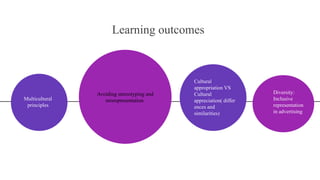
Learning outcomes
Multicultural
principles
Avoiding stereotyping and
misrepresentation
Cultural
appropriation VS
Cultural
appreciation( differ
ences and
similarities)
Diversity:
Inclusive
representation
in advertising
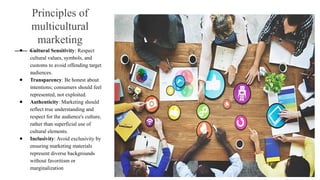
Principles of
multicultural
marketing
● Cultural Sensitivity: Respect
cultural values, symbols, and
customs to avoid offending target
audiences.
● Transparency: Be honest about
intentions; consumers should feel
represented, not exploited.
● Authenticity: Marketing should
reflect true understanding and
respect for the audience's culture,
rather than superficial use of
cultural elements.
● Inclusivity: Avoid exclusivity by
ensuring marketing materials
represent diverse backgrounds
without favoritism or
marginalization
Avoiding
stereotyping and
prejudices
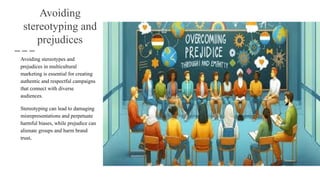
Avoiding stereotypes and
prejudices in multicultural
marketing is essential for creating
authentic and respectful campaigns
that connect with diverse
audiences.
Stereotyping can lead to damaging
misrepresentations and perpetuate
harmful biases, while prejudice can
alienate groups and harm brand
trust.
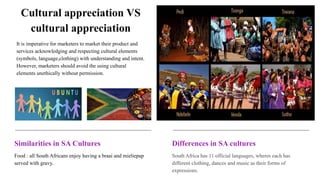
Similarities in SA Cultures
Food : all South Africans enjoy having a braai and mieliepap
served with gravy.
Differences in SA cultures
South Africa has 11 official languages, wheres each has
different clothing, dances and music as their forms of
expressions.
Cultural appreciation VS
cultural appreciation
It is imperative for marketers to market their product and
services acknowledging and respecting cultural elements
(symbols, language,clothing) with understanding and intent.
However, marketers should avoid the using cultural
elements unethically without permission.
Diversity: Inclusive
and representative
advertising
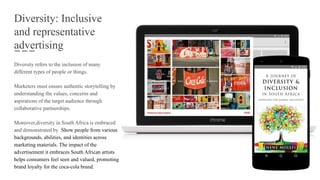
Diversity refers to the inclusion of many
different types of people or things.
Marketers must ensure authentic storytelling by
understanding the values, concerns and
aspirations of the target audience through
collaborative partnerships.
Moreover,diversity in South Africa is embraced
and demonstrated by Show people from various
backgrounds, abilities, and identities across
marketing materials. The impact of the
advertisement it embraces South African artists
helps consumers feel seen and valued, promoting
brand loyalty for the coca-cola brand.
Thank you
References
● Hunt, V., Prince, S., Dixon-Fyle, S., & Yee, L. (2020). "Diversity Wins: How Inclusion Matters." McKinsey & Company
● Hsu, C. K., & Barker, G. G. (2013). "Stereotypes in Multicultural Advertising."
● Kotler, P., & Keller, K. L. (2022). Marketing Management. Pearson
● Mathews, E. (2020). "Cultural Appropriation vs. Cultural Appreciation: How to Tell the Difference." Adweek.
● Taylor, C. R., & Bang, H.-K. (1997). "Portrayal of Cultural Values in Advertising."
● Vincent, J. (2021). "The Importance of Cultural Appreciation in Marketing." Harvard Business Review.

Ethical consideration in multicultural marketing

  • 1.
    ETHICAL CONSIDERATIONS IN MULTI-CULTURAL MARKETING Approachingdiversity with integrity and responsibility in SA By Maswanganye M
  • 2.
    What is ethicalconsiderations in multi-cultural marketing? Multicultural marketing tailors marketing strategies( messages) to cultural diversity, such as linguistic and social nuances of various of various target market. For the purpose of reflecting societal diversity by helping businesses optimise their brand reputation and trust, leading market expansion and profitability. The topic serve as a compressive resource for marketing students and professionals to effectively and ethically engage in diverse markets responsibility. Hence, explore the principles, practices, and ethical challenges involved in creating and delivering messages across diverse cultural contexts. These include, rising awareness of cultural sensitivity, navigating legal and social expectations, guiding ethical practices and proving practical strategies.
  • 3.
    Learning outcomes Multicultural principles Avoiding stereotypingand misrepresentation Cultural appropriation VS Cultural appreciation( differ ences and similarities) Diversity: Inclusive representation in advertising
  • 4.
    Principles of multicultural marketing ● CulturalSensitivity: Respect cultural values, symbols, and customs to avoid offending target audiences. ● Transparency: Be honest about intentions; consumers should feel represented, not exploited. ● Authenticity: Marketing should reflect true understanding and respect for the audience's culture, rather than superficial use of cultural elements. ● Inclusivity: Avoid exclusivity by ensuring marketing materials represent diverse backgrounds without favoritism or marginalization
  • 5.
    Avoiding stereotyping and prejudices Avoiding stereotypesand prejudices in multicultural marketing is essential for creating authentic and respectful campaigns that connect with diverse audiences. Stereotyping can lead to damaging misrepresentations and perpetuate harmful biases, while prejudice can alienate groups and harm brand trust.
  • 6.
    Similarities in SACultures Food : all South Africans enjoy having a braai and mieliepap served with gravy. Differences in SA cultures South Africa has 11 official languages, wheres each has different clothing, dances and music as their forms of expressions. Cultural appreciation VS cultural appreciation It is imperative for marketers to market their product and services acknowledging and respecting cultural elements (symbols, language,clothing) with understanding and intent. However, marketers should avoid the using cultural elements unethically without permission.
  • 7.
    Diversity: Inclusive and representative advertising Diversityrefers to the inclusion of many different types of people or things. Marketers must ensure authentic storytelling by understanding the values, concerns and aspirations of the target audience through collaborative partnerships. Moreover,diversity in South Africa is embraced and demonstrated by Show people from various backgrounds, abilities, and identities across marketing materials. The impact of the advertisement it embraces South African artists helps consumers feel seen and valued, promoting brand loyalty for the coca-cola brand.
  • 8.
  • 9.
    References ● Hunt, V.,Prince, S., Dixon-Fyle, S., & Yee, L. (2020). "Diversity Wins: How Inclusion Matters." McKinsey & Company ● Hsu, C. K., & Barker, G. G. (2013). "Stereotypes in Multicultural Advertising." ● Kotler, P., & Keller, K. L. (2022). Marketing Management. Pearson ● Mathews, E. (2020). "Cultural Appropriation vs. Cultural Appreciation: How to Tell the Difference." Adweek. ● Taylor, C. R., & Bang, H.-K. (1997). "Portrayal of Cultural Values in Advertising." ● Vincent, J. (2021). "The Importance of Cultural Appreciation in Marketing." Harvard Business Review.