How to gracefully handle errors with React
Ishank Bahl
github.com/ishankbahl
twitter.com/ishankbahl97
Errors
● Loss of revenue
● Unhappy customers
● Unhappy developers
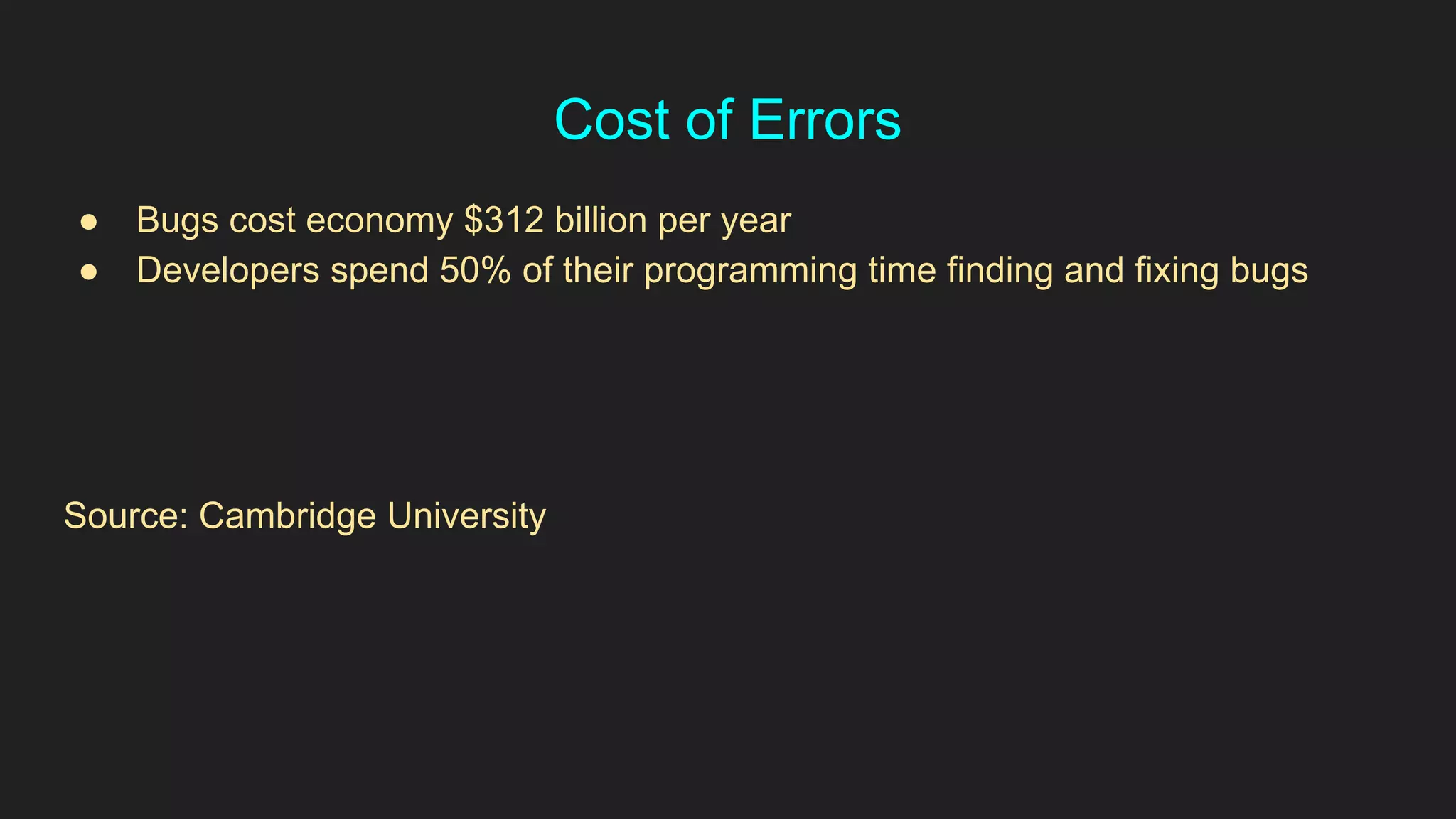
Cost of Errors
● Bugs cost economy $312 billion per year
● Developers spend 50% of their programming time finding and fixing bugs
Source: Cambridge University
What is an Error?
● Incorrect result
● Unintended behaviour
● Inconsistent state
Error Handling
● Give a feedback to the users
● Discover errors quickly
● Store informations to reproduce problems
Types of Errors
● Unexpected
● Operational
Unexpected Errors
Challenges of Errors in React
● Uncaught errors result in unmounting of the whole React component tree.
● Errors don’t bubble up in components. ( Why not try...catch )
● Try...catch suits imperative code, react components are declarative.
Error Boundaries
● Catch JavaScript errors
● Log these errors
● Display Fallback UI
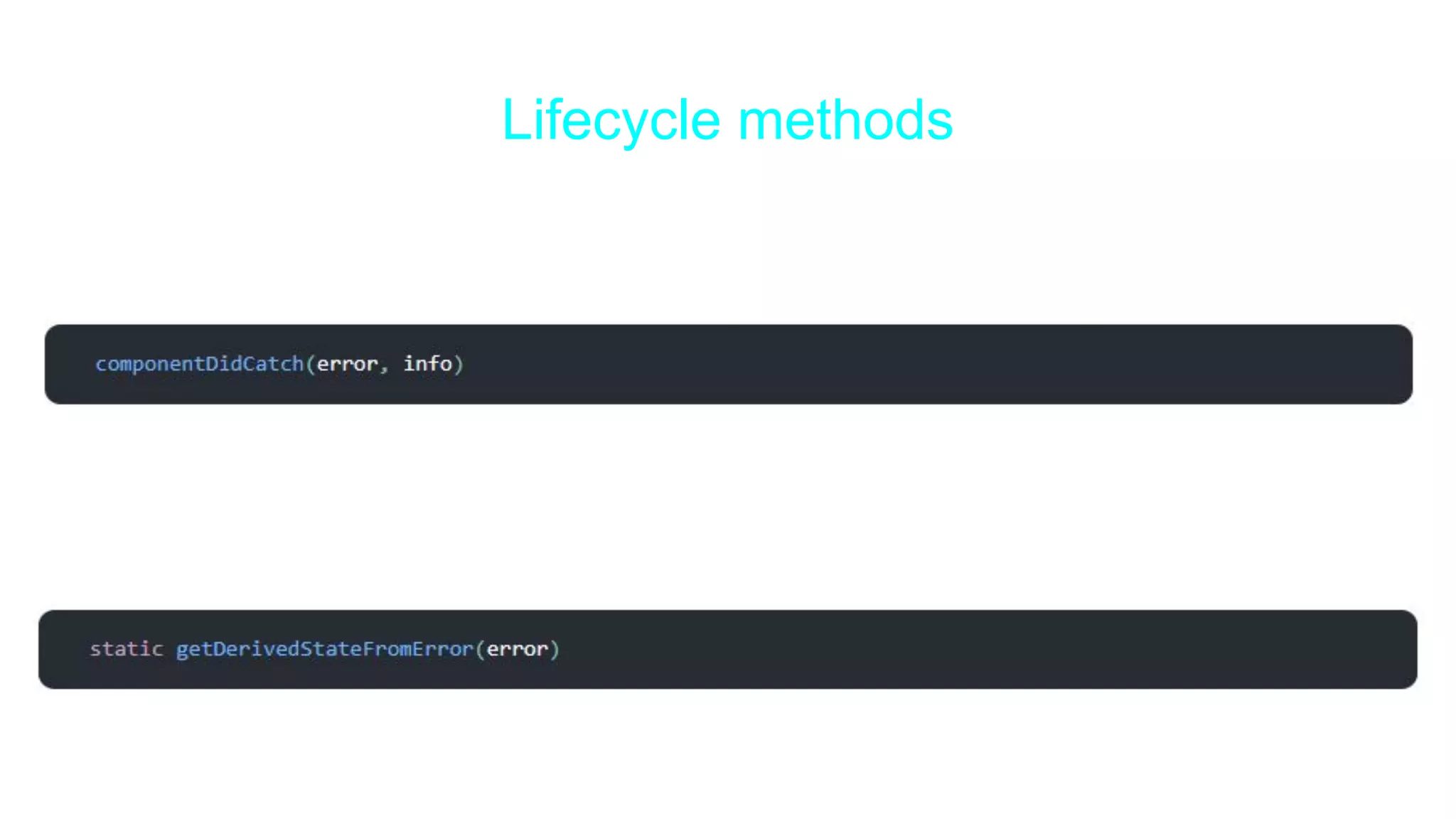
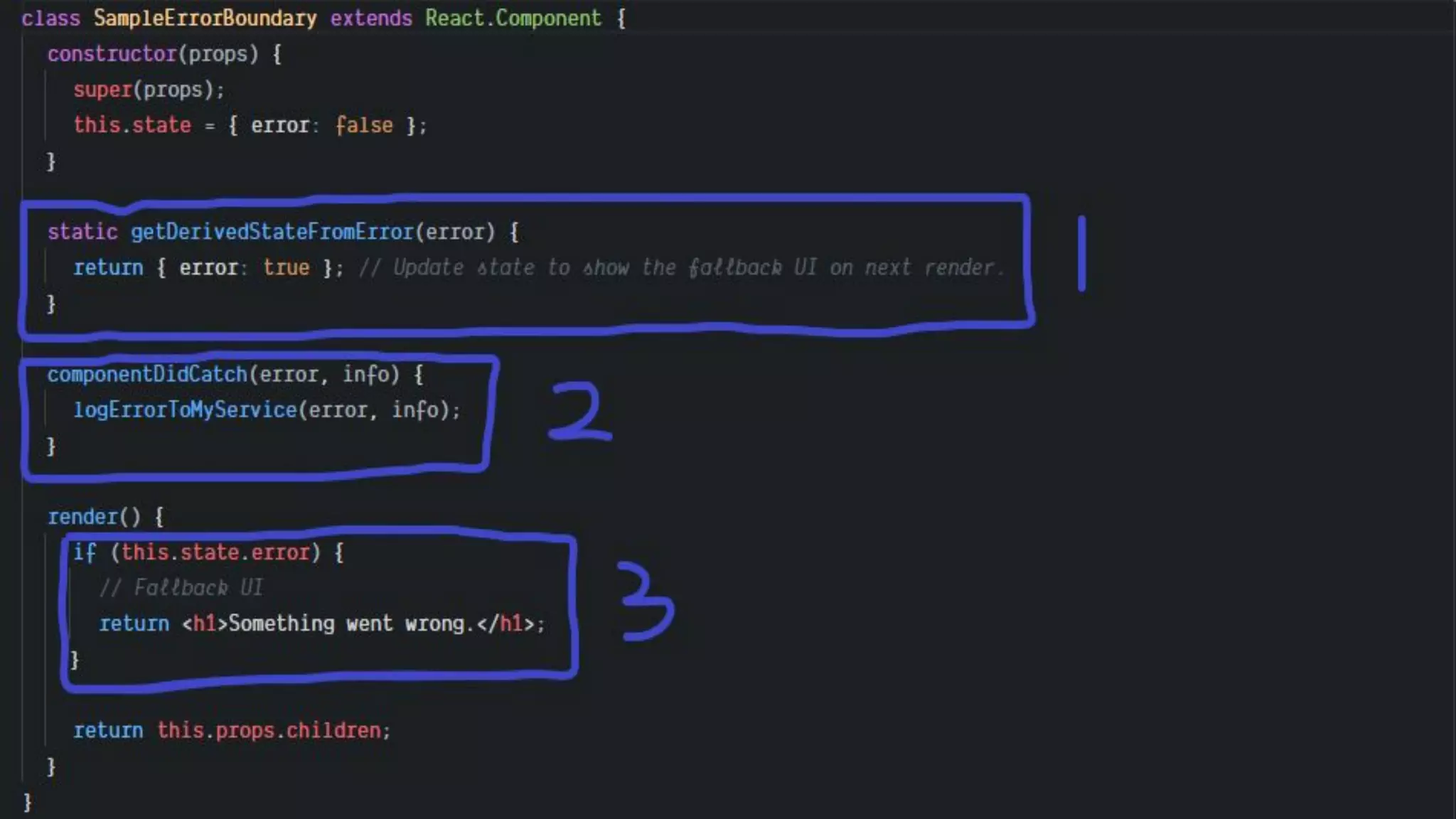
Lifecycle methods
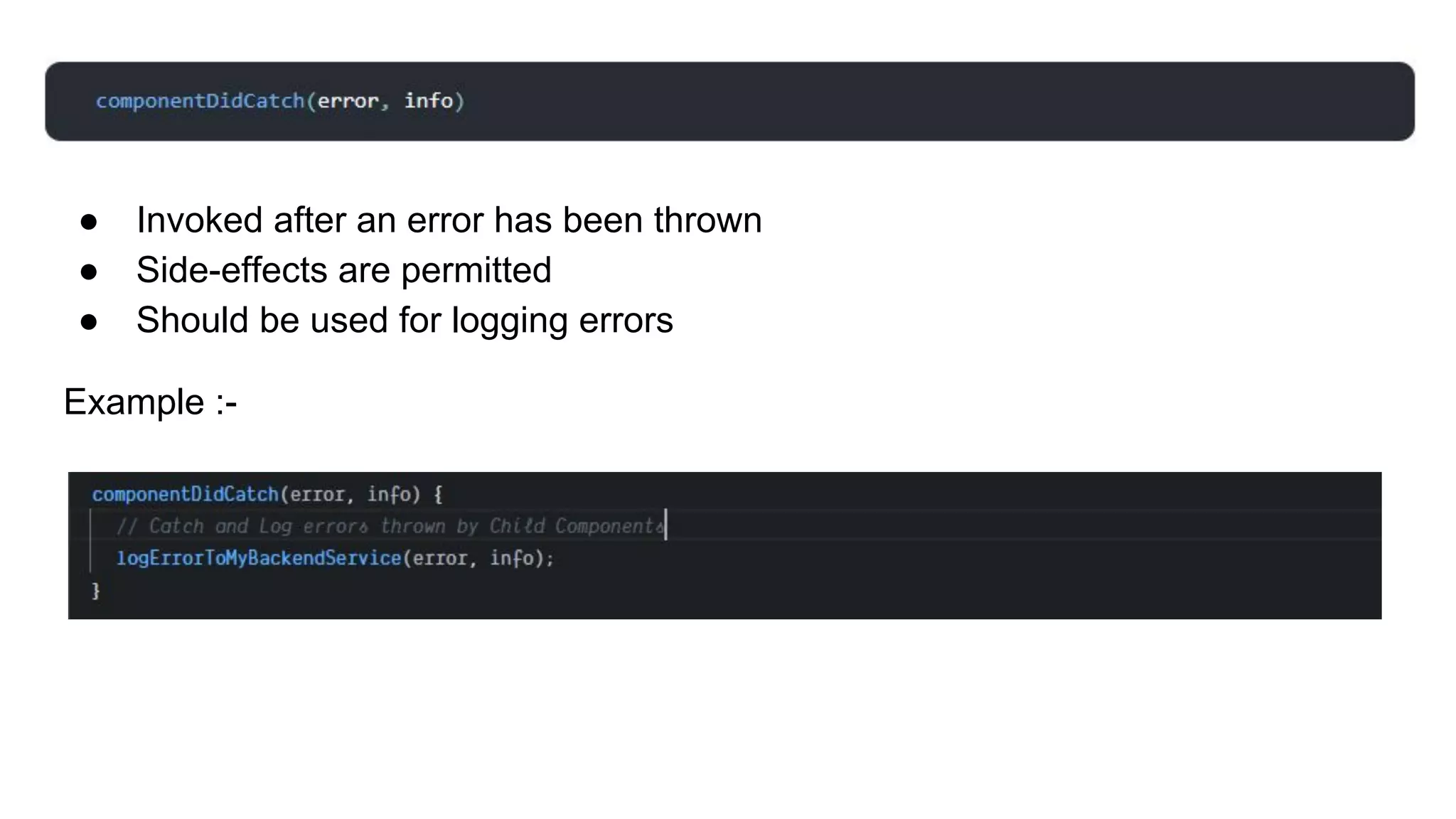
● Invoked after an error has been thrown
● Side-effects are permitted
● Should be used for logging errors
Example :-
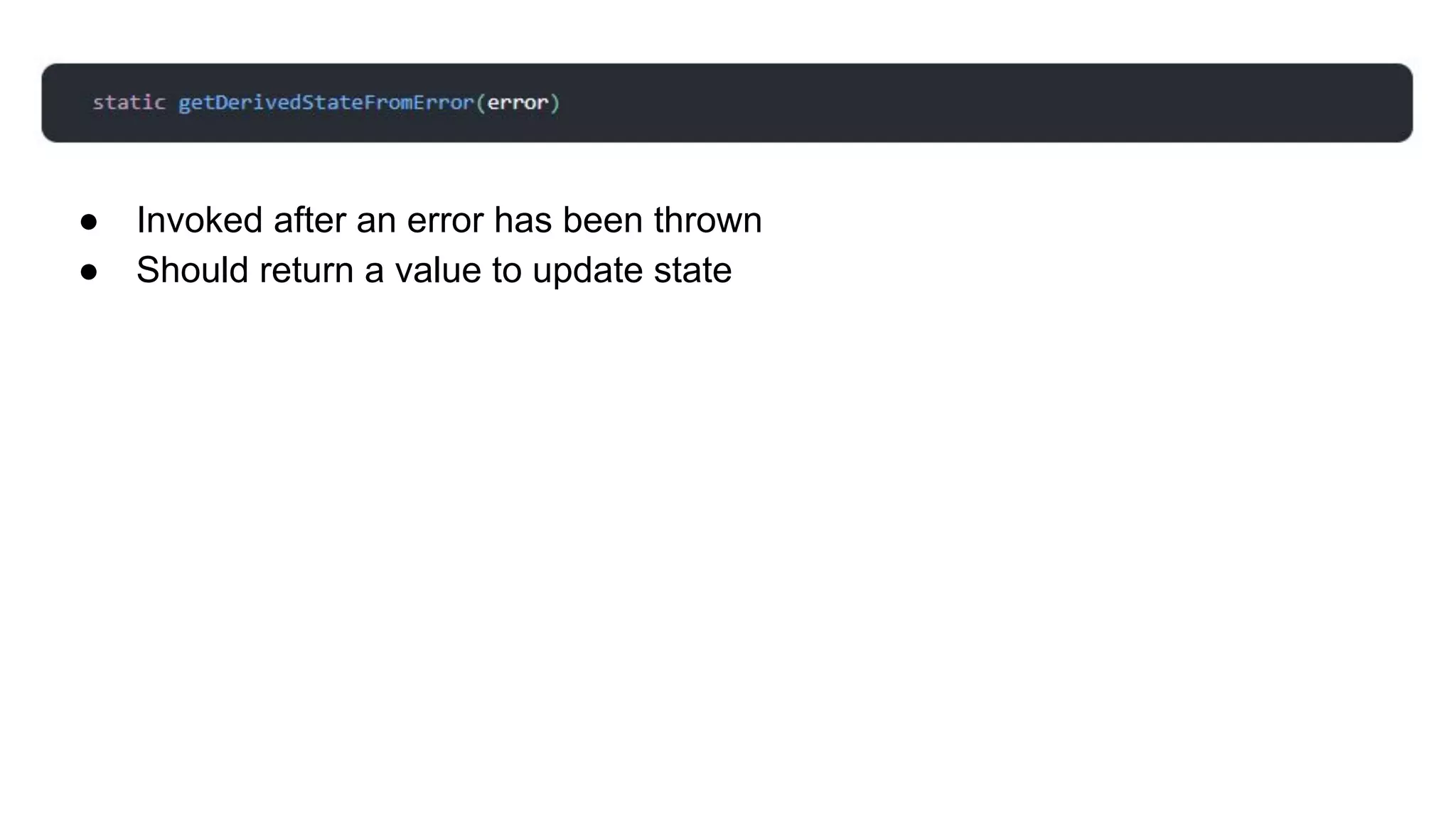
● Invoked after an error has been thrown
● Should return a value to update state
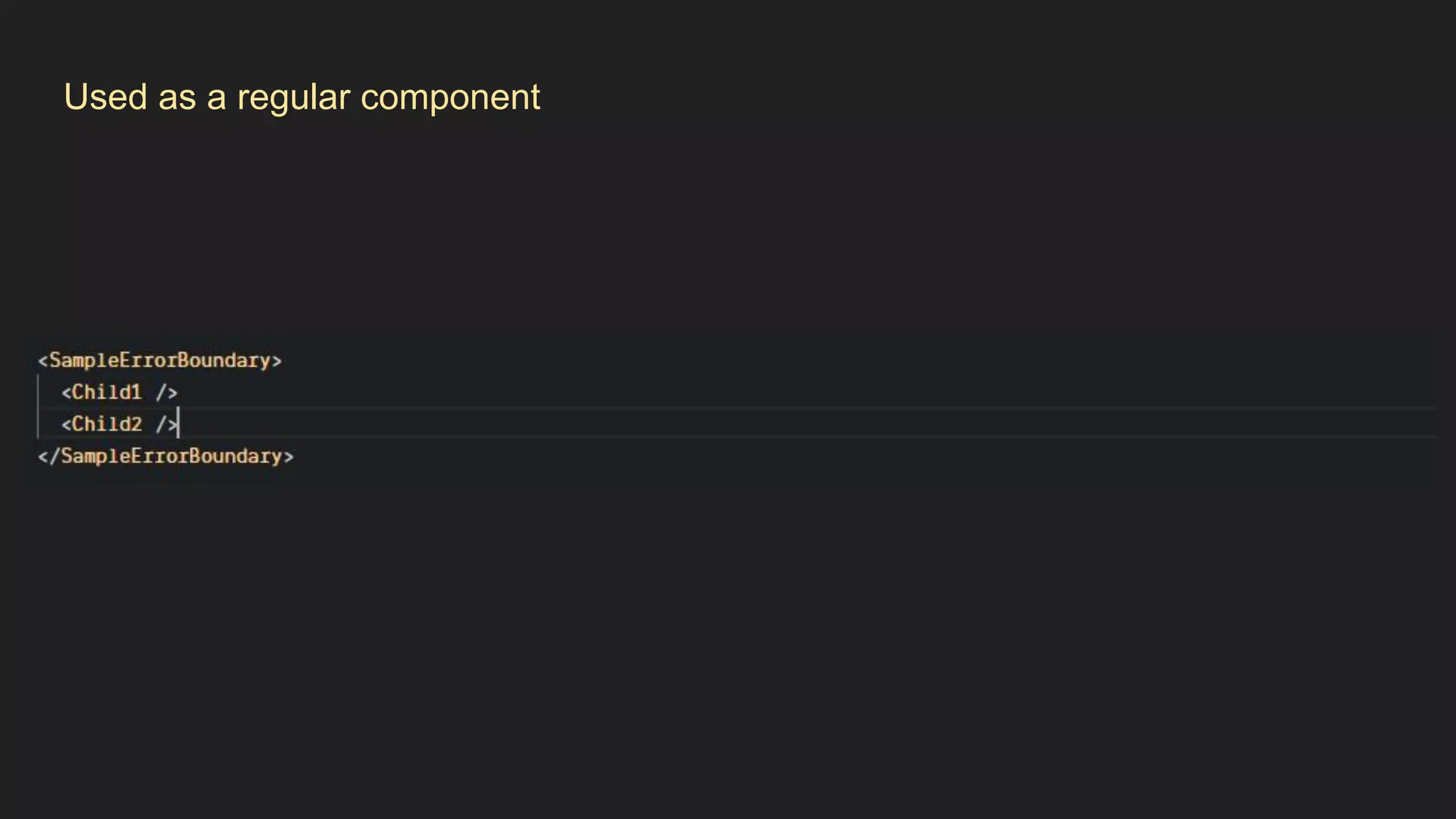
Used as a regular component
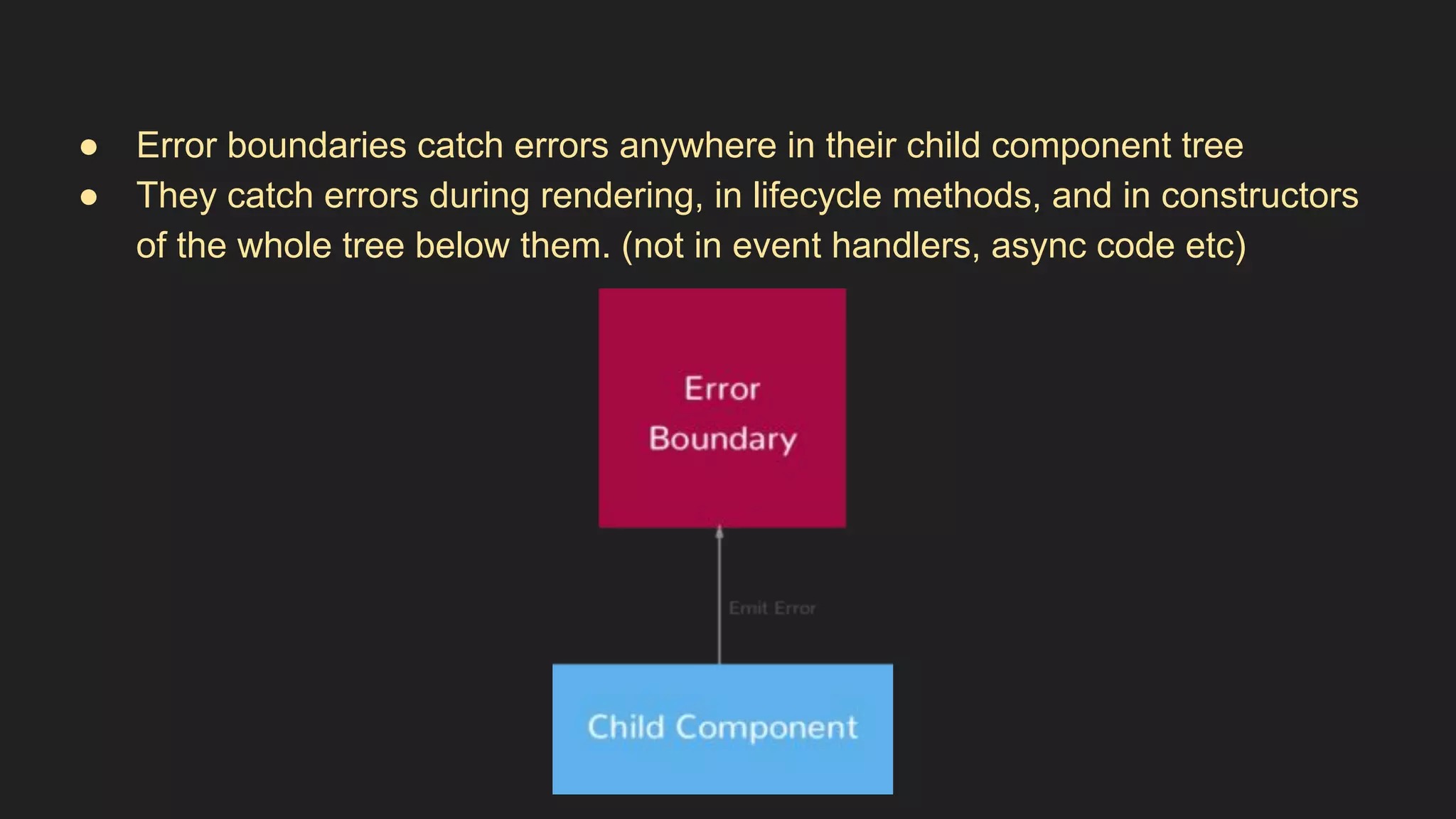
● Error boundaries catch errors anywhere in their child component tree
● They catch errors during rendering, in lifecycle methods, and in constructors
of the whole tree below them. (not in event handlers, async code etc)
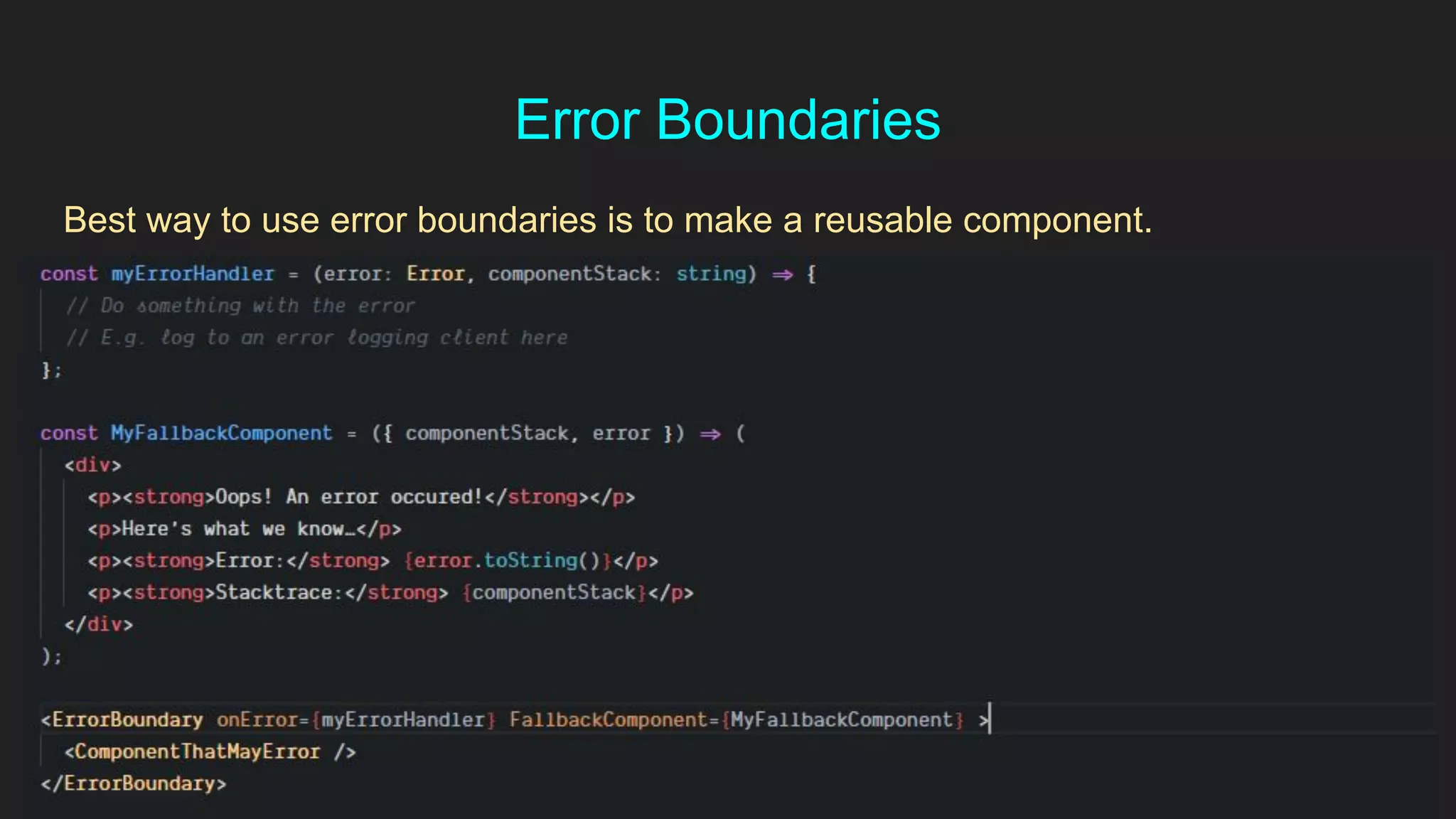
Error Boundaries
Best way to use error boundaries is to make a reusable component.
Demo
codepen link
Error Boundaries
● Error Boundaries do not catch Errors thrown in Event handlers, Async Code
● As these don’t occur during rendering cycle
● Use try...catch for event handlers
Operational errors
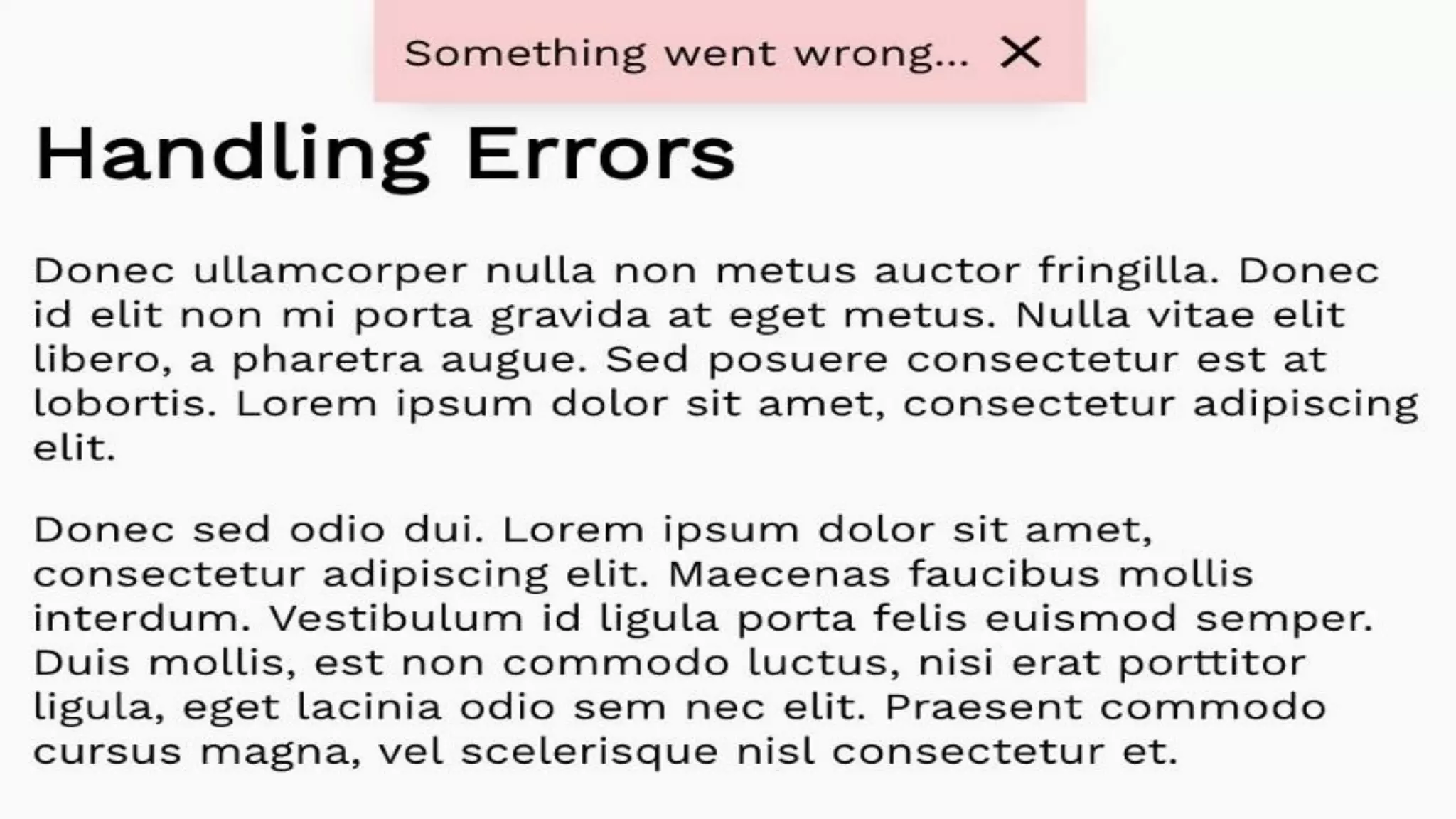
Global Errors
● Generics Errors which come back from backend
● Like user is not signed in
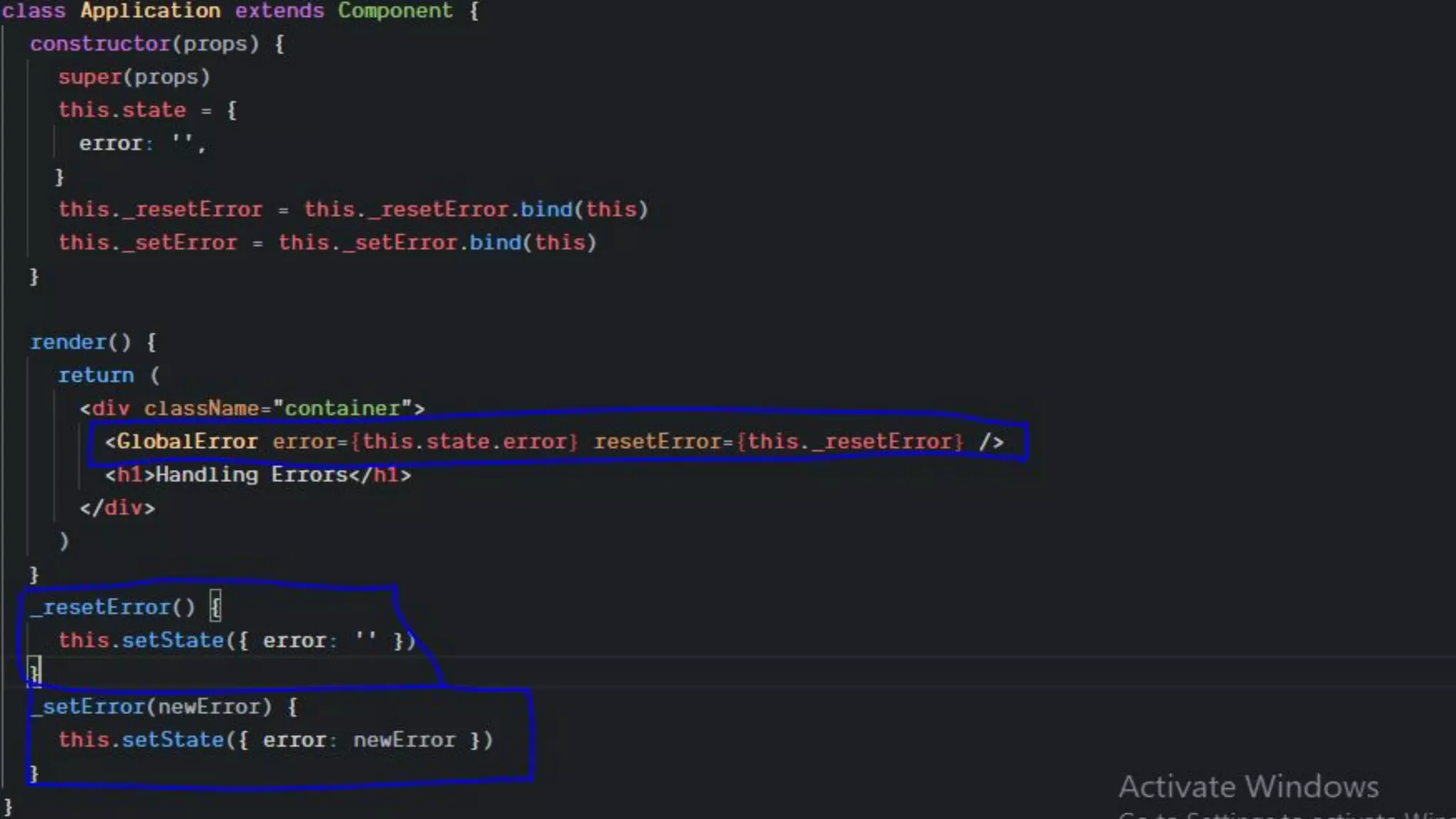
● Should be stored in outermost stateful component
● Design implementation can be anything
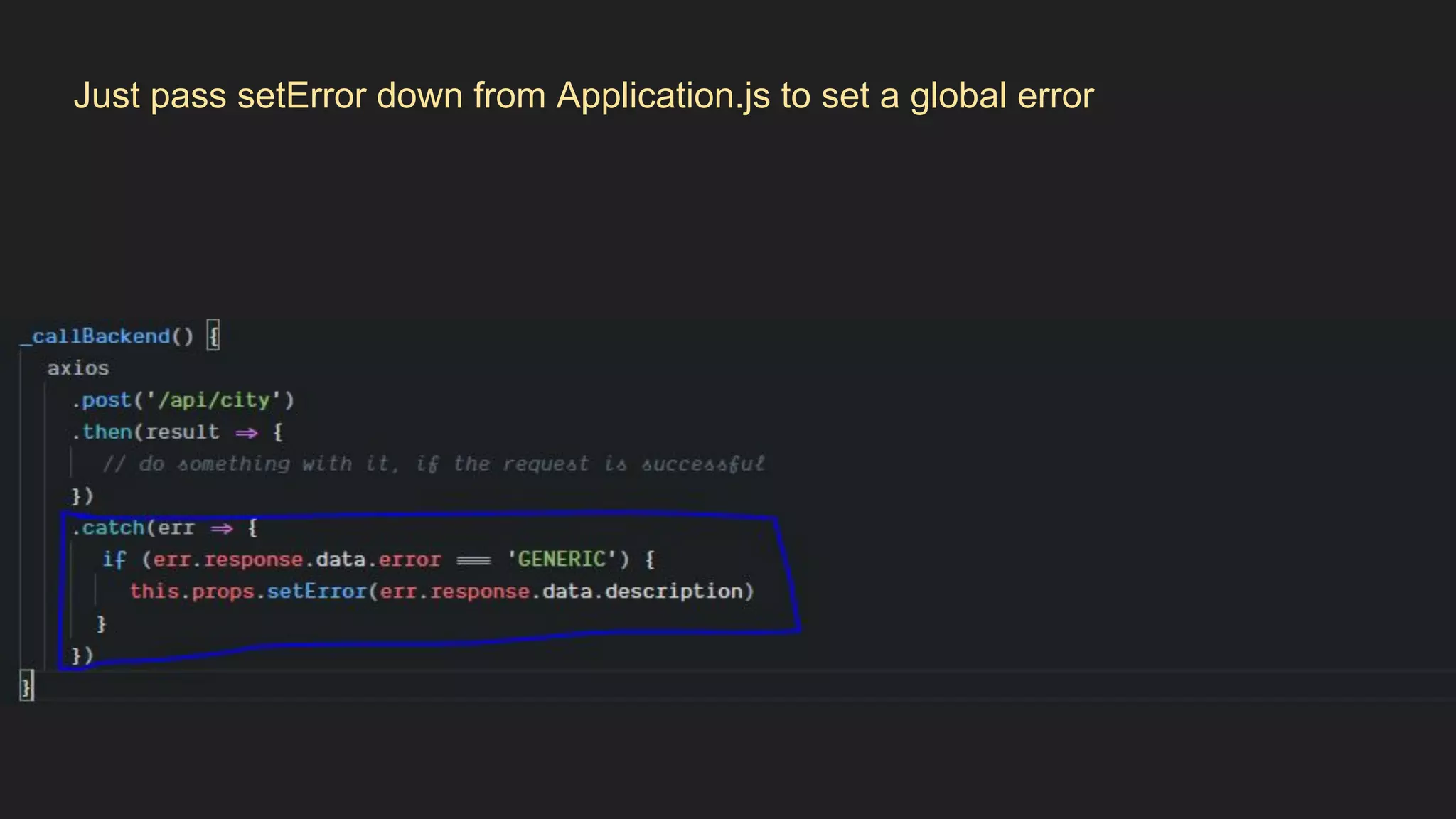
Just pass setError down from Application.js to set a global error
Bonus
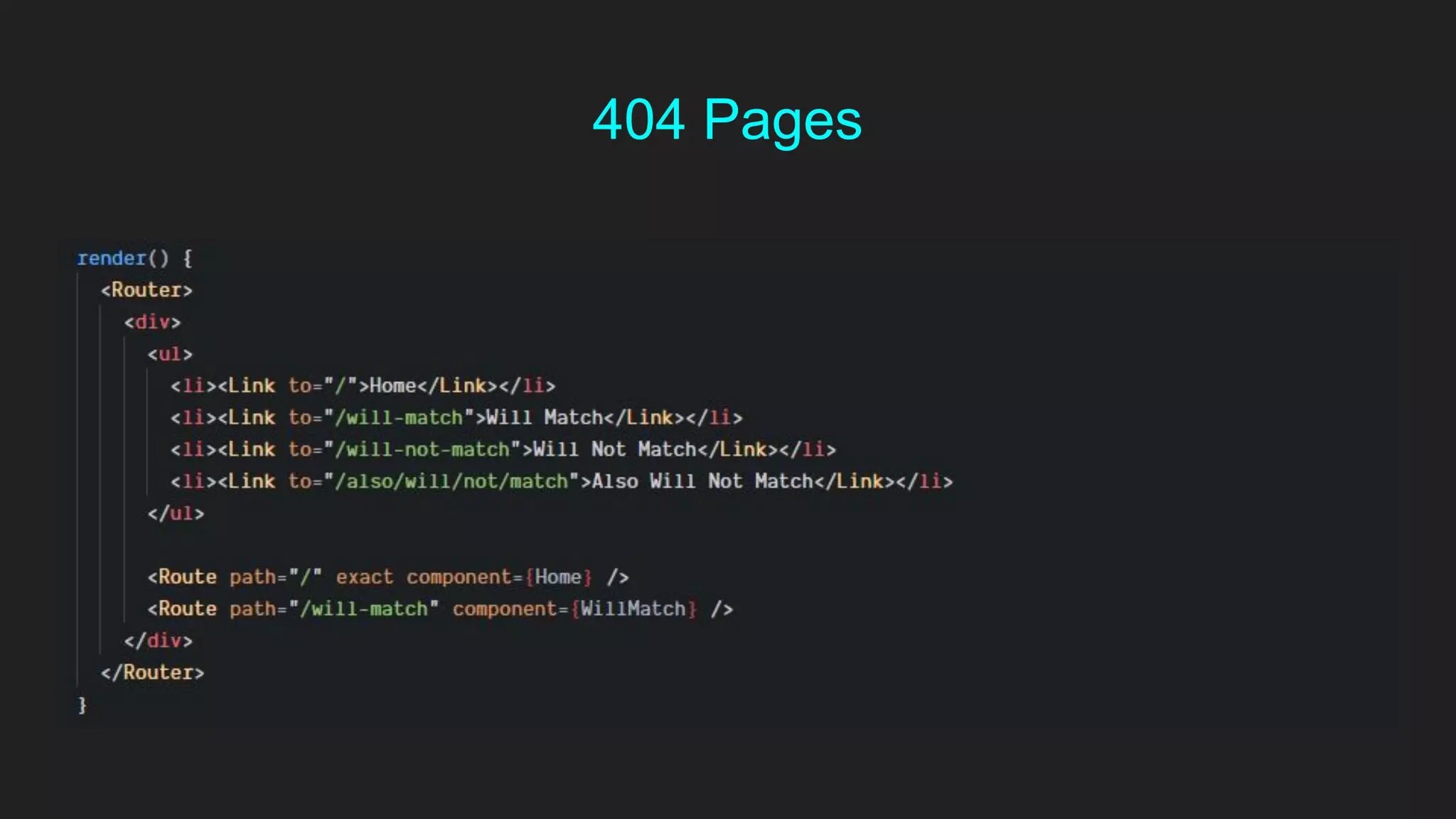
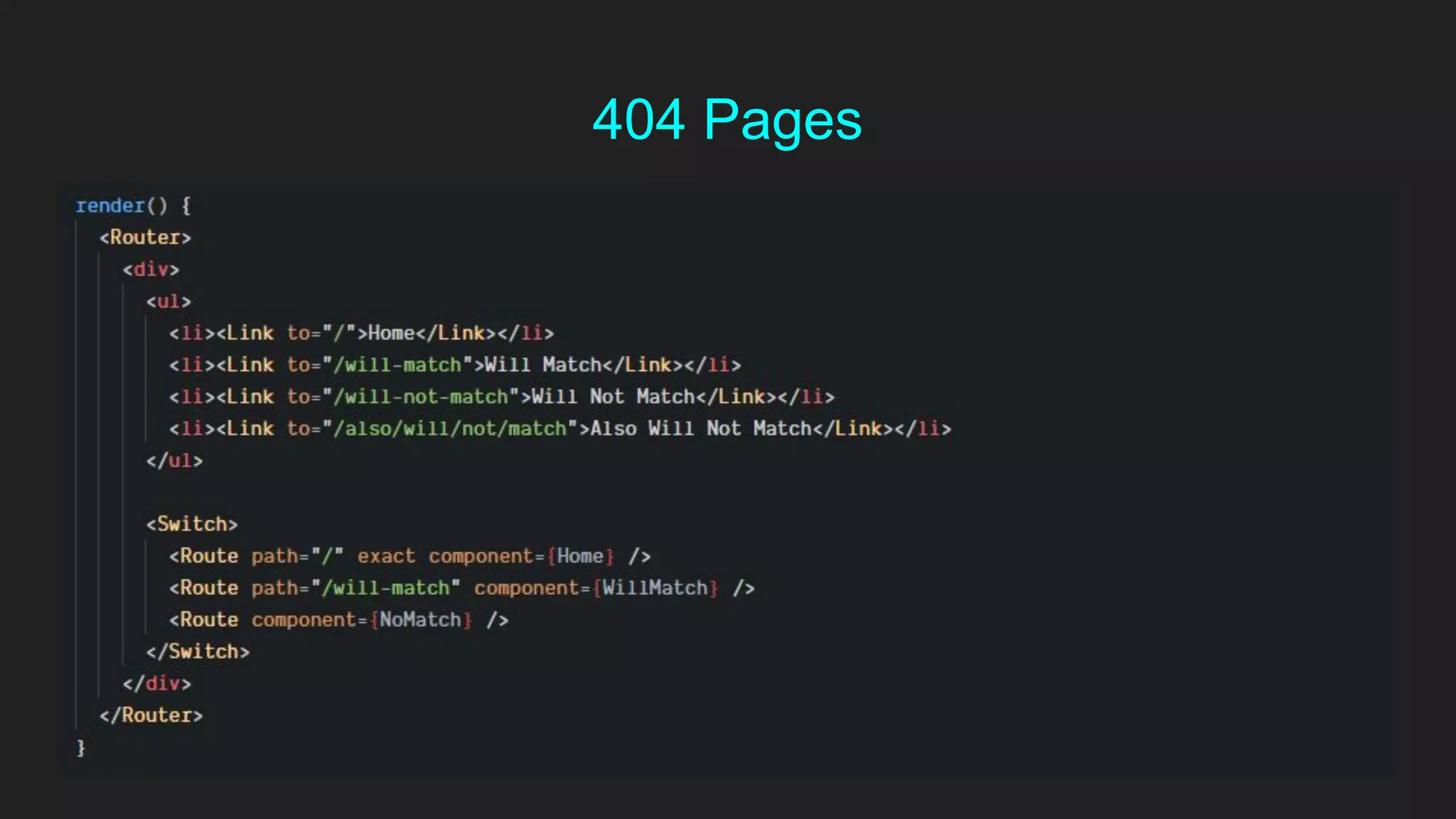
404 Pages
404 Pages
Thank you
Ishank Bahl
github.com/ishankbahl
twitter.com/ishankbahl97

Error handling