Download to read offline
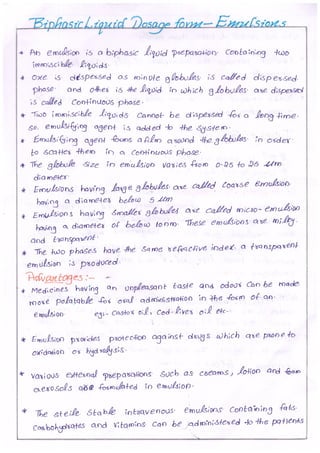
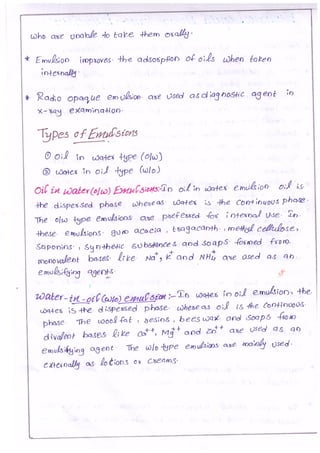
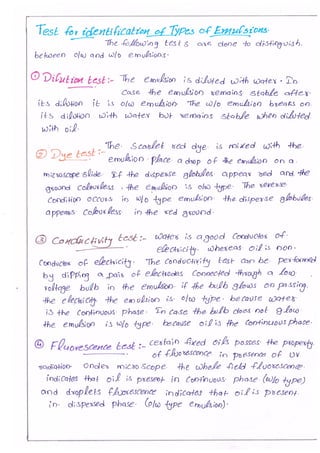
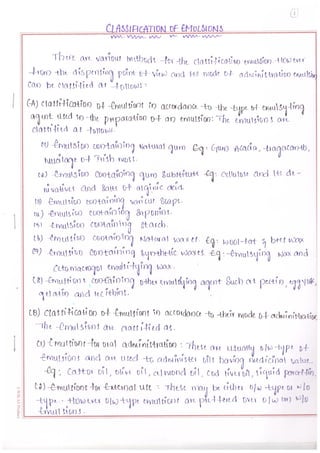
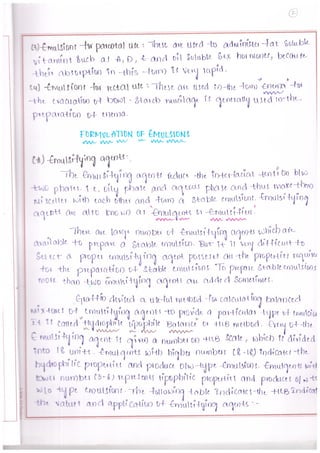
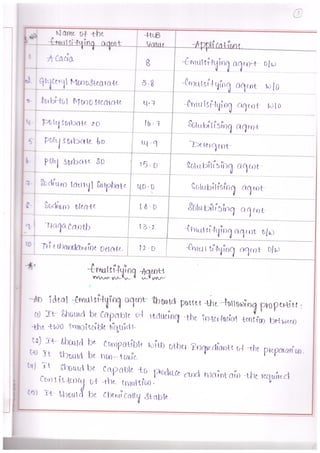
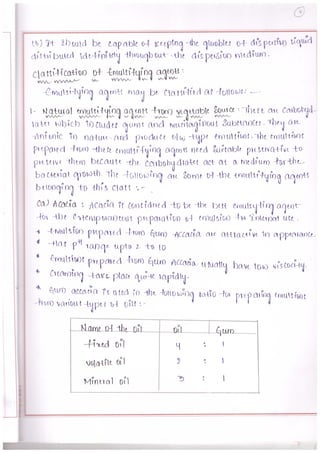
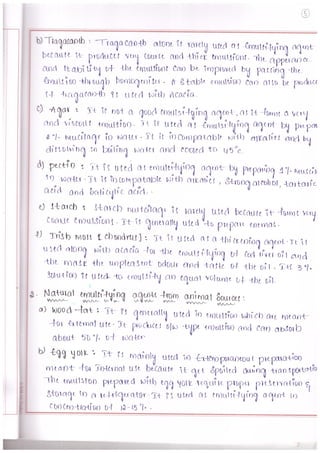
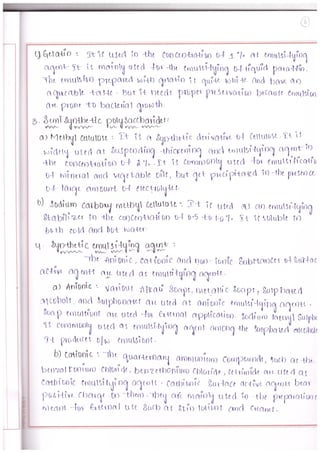
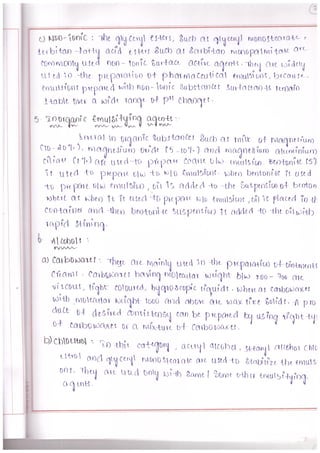
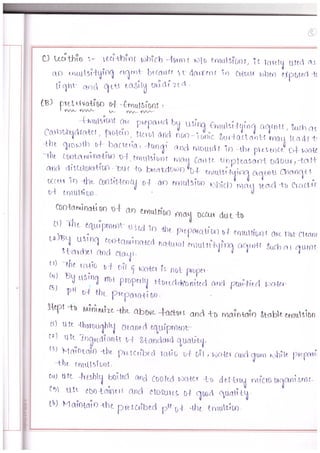
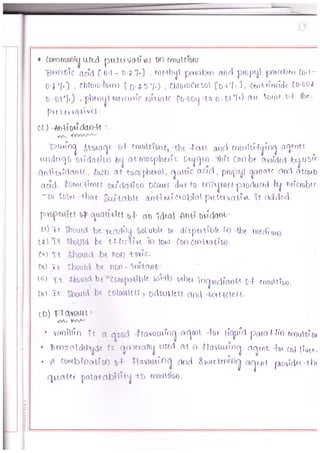
Emulsions: Introduction, Classification, and Formulation Overview Emulsions are biphasic liquid systems consisting of two immiscible liquids, where one liquid is dispersed as droplets within another using an emulsifying agent. They play a significant role in pharmaceutical, cosmetic, and food industries due to their ability to enhance drug solubility, stability, and controlled release. This presentation covers: ✅ Basic concepts of emulsions ✅ Classification based on composition and function ✅ Formulation techniques and preparation methods ✅ Stability issues and evaluation parameters ✅ Applications in pharmaceuticals and cosmetics 🔹 Introduction to Emulsions An emulsion consists of: ✔ Dispersed phase – The internal liquid droplets (oil or water) ✔ Continuous phase – The external liquid (oil or water) ✔ Emulsifier (Surfactant) – A stabilizing agent that prevents phase separation 📌 Key Features of Emulsions: 🔹 Thermodynamically unstable system requiring stabilization 🔹 Enhances solubility and bioavailability of poorly soluble drugs 🔹 Improves controlled and targeted drug delivery 🔹 Classification of Emulsions Emulsions are categorized based on: 1️⃣ Type of Phases (Composition-Based Classification) ✅ Oil-in-Water (O/W) Emulsion: Oil droplets dispersed in water (e.g., oral and intravenous emulsions) ✅ Water-in-Oil (W/O) Emulsion: Water droplets dispersed in oil (e.g., creams, ointments) ✅ Multiple Emulsions (W/O/W or O/W/O): Complex systems for sustained drug release 2️⃣ Droplet Size-Based Classification ✅ Macroemulsions: Droplet size > 1 μm (milky appearance, unstable over time) ✅ Microemulsions: Droplet size < 100 nm (transparent, thermodynamically stable) ✅ Nanoemulsions: Droplet size 20-500 nm (high stability, used in advanced drug delivery) 3️⃣ Application-Based Classification ✅ Pharmaceutical Emulsions: Used in drug formulations (e.g., intravenous lipid emulsions) ✅ Cosmetic Emulsions: Found in skincare products (e.g., moisturizers, sunscreens) ✅ Food Emulsions: Used in dairy products, dressings, and sauces 🔹 Formulation of Emulsions To achieve a stable and effective emulsion, careful formulation is required. 1️⃣ Components of an Emulsion ✔ Oil Phase: Selection depends on solubility and drug compatibility (e.g., castor oil, mineral oil) ✔ Aqueous Phase: Contains buffers, preservatives, and stabilizers ✔ Emulsifying Agents: Surfactants like Tween (hydrophilic) and Span (lipophilic) ✔ Preservatives: Prevent microbial growth (e.g., parabens, benzalkonium chloride) ✔ Viscosity Enhancers: Maintain consistency (e.g., gums, polymers) 2️⃣ Methods of Emulsion Preparation ✅ Dry Gum Method: Oil is first triturated with the emulsifier, then water is added. ✅ Wet Gum Method: Emulsifier is first mixed with water, followed by slow addition of oil. ✅ Bottle Method: Used for volatile oils by shaking all ingredients together. ✅ High-Energy Methods: Includes ultrasonication and high-pressure homogenization for nanoemulsions.


