Visit ebookmass.com todownload the full version and
explore more ebook or textbook
Emerging Technologies in Engineering Mahesh P. K.
_____ Click the link below to download _____
https://ebookmass.com/product/emerging-technologies-in-
engineering-mahesh-p-k/
Explore and download more ebook or textbook at ebookmass.com
2.
Here are somerecommended products that we believe you will be
interested in. You can click the link to download.
Emerging Technologies in Environmental Bioremediation 1st
Edition Maulin P. Shah
https://ebookmass.com/product/emerging-technologies-in-environmental-
bioremediation-1st-edition-maulin-p-shah/
Engineering Thermodynamics and Fluid Mechanics Fifth
Edition WBUT–2016 P. K. Nag
https://ebookmass.com/product/engineering-thermodynamics-and-fluid-
mechanics-fifth-edition-wbut-2016-p-k-nag/
Fermentation Processes: Emerging and Conventional
Technologies Mohamed Koubaa
https://ebookmass.com/product/fermentation-processes-emerging-and-
conventional-technologies-mohamed-koubaa/
Chiral Analysis: Advances in Spectroscopy, Chromatography
and Emerging Methods P L Polavarapu
https://ebookmass.com/product/chiral-analysis-advances-in-
spectroscopy-chromatography-and-emerging-methods-p-l-polavarapu/
3.
The AI Revolutionin Networking, Cybersecurity, and
Emerging Technologies Omar Santos
https://ebookmass.com/product/the-ai-revolution-in-networking-
cybersecurity-and-emerging-technologies-omar-santos/
Engineering Physics Hitendra K Malik
https://ebookmass.com/product/engineering-physics-hitendra-k-malik/
Emerging technologies for sustainable desalination
handbook Veera Gnaneswar Gude (Editor)
https://ebookmass.com/product/emerging-technologies-for-sustainable-
desalination-handbook-veera-gnaneswar-gude-editor/
Emerging Carbon Capture Technologies: Towards a
Sustainable Future Mohammad Khalid
https://ebookmass.com/product/emerging-carbon-capture-technologies-
towards-a-sustainable-future-mohammad-khalid/
Power Plant Engineering R. K. Hegde
https://ebookmass.com/product/power-plant-engineering-r-k-hegde/
McGraw Hill Education(India) Private Limited
CHENNAI
McGraw Hill Education Offices
Chennai New York St Louis San Francisco Auckland Bogotá Caracas
Kuala Lumpur Lisbon London Madrid Mexico City Milan Montreal
San Juan Santiago Singapore Sydney Tokyo Toronto
Editors-in-Chief
Mahesh P K
Don Bosco Institute of Technology, India
Su-Qun Cao
Huaiyin Institute of Technology, China
Ghanshyam Singh
Malaviya National Institute of Technology, India
Emerging Technologies in
Engineering
Committees
Honorary Chair
Dr. ShuvraDas (University of Detroit Mercy, USA)
Dr. Jiguo Yu (Qufu Normal University, China)
Dr. Pawel Hitczenko (Drexel University, USA)
Dr. Lisa Osadciw (Syracuse University, USA)
Dr. Jiguo Yu (Qufu Normal University, China)
Prof. Harry E. Ruda (University of Toronto, Canada)
Technical Chair
Dr. Anooj P K (Al Musanna College of Technology, Sultanate of Oman)
Dr. Urmila Shrawankar (G H Raisoni College of Engineering, India)
Dr. Ching-Chih Tsai (IEEE SMCS TC on Intelligent Learning on Control Systems)
Dr. A G Hessami (IEEE SMCS TC on Systems Safety & Security)
Dr. Xuelong Li (Birkbeck College, University of London, U.K.)
Dr. R Vijayakumar (MG University, India)
Dr. N.Nagarajan (Anna University, Coimbatore)
Chief Editors
Dr. Mahesh P.K (Don Bosco Institute of Technology, India)
Dr. Su-Qun Cao (Huaiyin Institute of Technology, China)
Dr. Ghanshyam Singh (Malaviya National Institute of Technology, India)
Technical Co-Chair
Dr. Natarajan Meghanathan (Jackson State University, USA)
Dr. Hicham Elzabadani (American University in Dubai)
Dr. Pingkun Yan (Philip Research North America)
General Chair
Dr. Janahanlal Stephen (Matha College of Technology, India)
Dr. Yogesh Chaba (Guru Jambeswara University, India)
General Co-Chair
Prof. K. U Abraham (Holykings College of Engineering, India)
Finance Chair
Dr. Gylson Thomas (Thejus Engineering College, India)
Dr. Zhenyu Y Angz (Florida International University, USA)
Publicity Chair
Dr. Amit Manocha (Maharaja Agrasen Institute of Technology, India)
10.
vi Committees
Publicity Co-Chair
Dr.Ford Lumban Gaol (University of Indonesia)
Dr. Amlan Chakrabarti (University of Culcutta, India)
Publication Chair
Dr. Vijayakumar (NSS Engg. College, India)
Dr. T.S.B.Sudarshan (BITS Pilani, India)
Dr. KP Soman (Amritha University, India)
Program Committee Chair
Dr. Harry E. Ruda (University of Toronto, Canada)
Dr Deepak Laxmi Narasimha (University of Malaya, Malaysia)
Dr.N.Nagarajan (Anna University, Coimbatore, India)
Prof. Akash Rajak (Krishna Institute of Engg. & Tech., UP, India)
Dr. Javed Vassilis Khan (Academy for Digital Entertainment, The Netherlands)
International Advisory Committee
Dr. Pawel Hitczenko (Drexel University, USA)
Dr. Kristian J. Hammond (Northwestern University, USA)
Dr. Long Que (Louisiana Tech University, USA)
Dr. Peter Vadasz (Northern Arizona University, USA)
Dr. Hamid Bagheri (Sharif University of Technology, Iran)
National Advisory Committee
Dr. Saurabh Chaudhury (IIT Kharagpur, India)
Dr. R.Kumar (SRM University, India)
Dr. M Kumar (SIRT, Bhopal, India)
Program Committee Members
Dr. Shu-Ching Chen (Florida International University, USA)
Dr. T.S.B.Sudarshan (BITS Pilani, India)
Dr. Habibollah Haro (Universiti Teknologi Malaysia)
Dr. V. K. Bhat (SMVD University, India)
Dr. Keivan Navi (Shahid Beheshti University, Tehran)
Prof. Anil K Jacob (MES College of Engineering, India)
Dr. B. Kannan (CUSAT, India)
Dr. Liviu Vladutu (Dublin City University, Ireland)
Dr. Malabika Basu (Dublin Institute of Technology, Ireland)
Dr. Pritimoy Sanyal (West Bengal University of Technology, India)
Prof. J.Arunadevi (Thiagarajar School of Management, India)
Dr. R.D. Sudhaker Samuel (S J College of Engineering, India)
Dr. Amitabha Sinha (West Bengal University of Technology, India)
Prof. Ananta Ojha (ICFAI University, India)
Dr. A K Sharma (YMCA Institute of Engineering, India)
Dr. Debasis Giri (IIT Kharagpur, India)
Prof. Suparna Biswas (WBUT, India)
11.
Foreword
It’s a greatprivilege and pleasure for me to serve as the Editor-in-chief for the
IDES Joint International Conferences. Innovative ideas and research in two streams
are extremely important for the current Electronics industry to be in support to
“Digital India” and “Make in India” an initiative by Government of India. This Joint
International Conference provides a rostrum to the researchers from the academia
and industries all around the world to share their research results, novel ideas as well
as the improvements over the existing methodology.
This conference covers a wide variety of topics in Control Systems and Power
Electronics, to name a few—Mobile Communication Technology, Natural
Language Processing, Algorithm/Protocol Design and Analysis, VLSI Systems,
Intelligent Systems and Approach, Data Communication, Embedded System, Digital
Security, Data Compression, Data Mining, Databases, Digital Signal Processing,
Telecommunication Technologies, Control Theory and Application, Computational
Intelligence, Robotics, HVDC, MEMS-Related Technology. The response from the researchers for the research
papers is staggering.
I would like to convey my heartfelt gratitude and appreciation to the members of the following committees—
Honorary Chair, Technical Chair, Technical Co-Chair, General Chair, General Co-Chair, Publicity Chair, Publicity
Co-Chair, Publication Chair, Finance Chair, NationalAdvisory Committees, Program Committee Chair, International
Advisory Committee, Review Committee, Program Committee Members for contributing either their precious time
in reviewing the papers or their effort in monitoring and making the conference a grand success. I would also like
to acknowledge the support of IDES, Matha College of Technology, Association of Computer Electrical Electronics
and Communication Engineers (ACEECom), ACEE and AMAE for organising such a platform to welcome the
future technology. I also wish to convey my gratitude to McGraw-Hill Education for publishing the registered
papers.
Mahesh P K
Don Bosco Institute of Technology, India
13.
Preface
The IDES JointInternational Conference “Emerging Technologies in Engineering”
attracted several hundreds of submissions. After rigorous reviews, 63 high-quality
papers are included in the proceedings.
The goal of the joint conference is to promote research, developmental activities and
scientific information interchange between researchers, developers, engineers, students,
and practitioners working in India and around the world in the fields of Computer
Science, Information Technology, Computational Engineering, Communication,
Electrical Measurements, Instrumentation Engineering, Electronic Devices, Digital
Electronics, Circuits, Control and Instrumentation, Communication system, Robotics,
Power Electronics, Civil Engineering and Power Engineering.
The conference is jointly organised by the ECE Department of Matha College of Technology, the IDES,
ACEECom,ACEE andAMAE. I thank the members of the Organizing Committee and the Programming Committee
for their hard working in the past several months. I wish to express my heartfelt appreciation to the keynote
speakers, session chairs, reviewers and student helpers. Finally, I thank all the authors and participants for their
great contributions and exchanging the experiences.
Su-Qun Cao
Huaiyin Institute of Technology, China
15.
Visit https://ebookmass.com todayto explore
a vast collection of ebooks across various
genres, available in popular formats like
PDF, EPUB, and MOBI, fully compatible with
all devices. Enjoy a seamless reading
experience and effortlessly download high-
quality materials in just a few simple steps.
Plus, don’t miss out on exciting offers that
let you access a wealth of knowledge at the
best prices!
16.
Contents
Committees v
Foreword vii
Prefaceix
1. Non-Word Error Detection for Luganda 1-17
Robert Ssali Balagadde and Parvataneni Premchand
2. Modern Approaches Towards Superior Dynamic Allocation 18-27
Snehal C Ratnaparkhi, Mithra Venkatesan and A V Kulkarni
3. Performance Analysis of AODV+ Routing Protocol for Wireless Ad-hoc Networks 28-35
Sanjeev Kumar Srivastava, Ranjana D Raut and P T Karule
4. Comparative Study of Various File Systems for Data Storage in Virtualized 36-44
Cloud Environment
Rashmi Jogdand, Mohan A Gholap and D R Gangodkar
5. Study and Analysis of Modified Aggressive Packet Combining with 45-48
Consideration of the Physical Signal
Achyuth Sarkar, Swarnendu K Chakraborty and C T Bhunia
6. Thyroid Malignancy Detection Using K-Nearest Neighbor (KNN) and 49-56
Probabilistic Neural Network (PNN)
Wrushali Mendre, Ranjana Raut and Pradeep T Karule
7. Signature Imprintment on VLSI Core Designs 57-61
Saurabh Radheshyam Chiraniya, Pradeep Patil and A B Patki
8. Comparison of Network Codes in Distributed Storage Area Network based 62-68
on Performance using NS3 Simulator
Priyanka Ramesh Nanaware and S K Srivastava
9. Optimal PI Tuning with GA and PSO for Shunt Active Power Filter 69-75
N Gowtham and Shobha Shankar
10. Optimal Control of DC Motor using Linear Quadratic Regulator 76-83
Meetty Tomy and A G Thosar
11. A Review on Implementation of UART with Optimum Noise Immunity 84-93
Pallavi R Upase and P S Choudhari
17.
xii Contents
12. Introductionto Energy Efficient Motors 94-98
Himanshu Shekhar and C R Bharath
13. Computation of Steady State Temperature Distribution in the Stator of a 99-108
75 kW Slip-Ring Induction Motor by Finite Element Method
Pradyumna Ranjan Ghosh, Nirmal Kr Bhattacharya and Debasis Sarkar
14. Parametric Study of Drag on Orientation of High Rise Building 109-114
Amol S Pote and Smrutirekha Mishra
15. An Overview of Developments in Adsorption Refrigeration Systems: 115-121
Principle and Optimization Techniques
Jaimin K Patel, N S Mehta and J B Dabhi
16. Pedestrian and Vehicle Detection for Advanced Driver Assistance Systems 122-126
P Lavanya, G Harshith, Chiraag and S S Shylaja
17. Artificial Neural Network for Detection and Location of Faults in Mixed 127-136
Underground Cable and Overhead Transmission Line
Ankita Nag and Anamika Yadav
18. Delineating Data Security and Privacy Boundary in Bioinformatics 137-141
Mukti Routray
19. Sentiment Analysis of Transliterated Hindi and Marathi Script 142-149
Mohammed Arshad Ansari and Sharvari Govilkar
20. An EOQ Model Dealing with Weibull Deterioration with Shortages, 150-163
Ramp Type Demand Rate and Unit Production Cost Incorporating the Effect of Inflation
Jayshree and Shalini Jain
21. Parameter Centric XML Parsing Techniques for Embedded Systems 164-171
Rashmi Sonar, Sadique Ali and Amol Bhagat
22. Emotion Extraction using Rule-based and SVM-KNN Algorithm 172-181
Mohini Chaudhari and Sharvari Govilkar
23. Sentiment Classification in Hindi by using a HindiSentiWordNet (HSWN) 182-189
Pooja Pandey, Sharvari Govilkar and Sagar Kulkarni
24. Regression Analysis for Stock Market Prediction using Weka Tool Without 190-199
Sentiment Analysis
Sudip Padhye and Karuna Gull
25. Component based Face Recognition using Hybrid Approach 200-208
R Srinivasa Perumal and Chandra Mouli P V S S R
26. Framework for Surplus Food Management using Data Analytics 209-214
M Sridevi and B R Arunkumar
18.
Contents xiii
27. GroupKey Management Protocol: Secured Transmission in Compliant Groups 215-222
Amol Bhagat and Lovely Mutneja
28. A Scheduling Approach in Cloud Environment using Deadline and 223-228
VMs MIPS and Bandwidth
Anamika and Pawan Luthra
29. Prioritized Schedule Algorithm : Time Table Generation 229-235
Rutuja Popale, Veeresh Hiremath, Nityanand B Nishanimath,
Anil Rathod, Vandana Kale, G N Jayalaxmi and C Sujata
30. Handling Sink and Object Mobility in Wireless Sensor Networks 236-242
Kulwardhan Singh and T P Sharma
31. Instance based Multi Criteria Decision Model for Cloud Service Selection 243-251
using TOPSIS and VIKOR
Deepti Rai and V Pavan Kumar
32. Part of Speech for TAGGER MARATHI Language 252-259
Shubhangi Rathod, Sharvari Govilkar and Sagar Kulkarni
33. Aadhaar based Secure E-Voting System using Cortex-A15 Processor 260-263
Prathiba Jonnala, Joshua Reginald Pullagura and Ashok Kumar Reddy K
34. An Secured and Energy Conserved Utilization Path Algorithm using Secret 264-275
Key and Adaptive Partition Controller in WSN
K Ramanan and E Baburaj
35. Smart Watchmen with Home Automation System based on Raspberry Pi 276-281
Vanita Jain, Ashwani Sinhal and Saksham Jain
36. Big Data Analytics using Hadoop Collaborative Approach on Android 282-288
Altaf Shah, Amol Bhagat and Sadique Ali
37. Adaptive Dynamic Surface Control of Chaotic Micro-Electro-Mechanical 289-299
System with Unknown System Parameters and Dead-Zone Input
Shaohua Luo, Suqun Cao, Zhong Chen and K Sujatha
38. Five Level Inverter Fed Squirrel Cage Induction Motor Drive with Reduced 300-306
Number of Power Elements
R Harikrishnan, C N Ravi and S Vimala
39. Intelligent Web based Home Automation and Security System using 307-312
Raspberry PI
R Harikrishnan, C N Ravi, Liji S Job and Rudra J Kumar
40. Enhancement of Smart Grid Performance through Logic based Fault Tolerant MPSoC 313-322
D Vijayakumar and V Malathi
19.
xiv Contents
41. TheASVI - Assistance System for Visually Impaired 323-327
Arvind Prasad, H Govindsingh, R Hari Krishnan and C N Ravi
42. Biometric Recognition System (Algorithm) 328-335
Rahul Kumar Jaiswal and Gaurav Saxena
43. A Comprehensive Measurement Placement Method for Power System State Estimation 336-342
Rakesh J Motiyani and Ajitsinh R Chudasama
44. Voltage Control of DC to DC Converter in Integrated Renewable Energy 343-348
System through Fuzzy based GA
K Harinadha Reddy, T Raghu and K P Prasad Rao
45. Placement of Synchronized Measurements in Power Networks for Redundant Observability 349-356
Satyendra Pratap Singh and S P Singh
46. Cationic Catalysis of Lime Treated Soft Soils 357-364
Greeshma Nizy Eujine, S Chandrakaran and N Sankar
47. Behaviour of Square Model Footing on Sand Reinforced with Woven Coir Geotextiles 365-371
Dharmesh Lal, N Sankar and S Chandrakaran
48. Upgradation of a Building to Higher Certification Levels as per LEEDv4 – Case Study 372-380
N Amrutha Sudhakar and S Shrihari
49. Advanced Oxidation Process (AOP) for Removing High Concentration of 381-386
Iron in Drinking Water Sources
Lakshmy A Kumar and V Meera
50. Waste Footprint of Kochi City, Kerala – An Analysis 387-400
Athira Ravi and Subha Vishnudas
51. Effect of Infill on Performance of Steel Frame Buildings 401-407
Ashitha K Ikbal and Satyabrata Choudhury
52. A Study on Dynamic Shear Amplification in RC Frame Structures 408-417
Uday Sinha and Satyabrata Choudhury
53. Prediction of Compressive Strength for Different Curing Stages using Steepest Descent ANNs 418-421
K Rajasekhar and Gottapu Santosh Kumar
54. Study of Factors Affecting Labour Efficiency at Construction Sites 422-427
Purnima Bajpai, Megha Kalra and Garima Srivastava
55. Comparative Analysis of Motif Discovery Methods in Time Series 428-433
Sukriti Parnami and Veenu Mangat
56. Biometric Identification using Lip Imprint with Hybrid Feature Extraction Techniques 434-444
Semonti Chowdhury, Joydev Hazra and Satarupa Bagchi Biswas
20.
Contents xv
57. RoutingProtocols in Wireless Local Area Networks (WLANs) 445-455
Sachin D Latkar and S A Patil
58. True Time based Simulation for AODV in MANET 456-462
L Usha and D K Kumuda
59. A Model to Enhance the Performance of Distributed File System for Cloud Computing 463-468
Pradheep Manisekaran and M R Ashwin Dhivakar
60. Fuzzy Logic Classification based Approach for Linear Time Series Analysis 469-476
in Medical Data Set
Manish Pandey, Meenu Talwar, Sachin Chauhan and Gurinderjit Kaur
61. Design and Implementation of Cost Effective Controller for Solar PV Application 477-493
Pulkit Singh and D K Palwalia
62. A New Approach of Offline Parameters Estimation for Vector Controlled 494-504
Induction Motor Drive
Krishna R More, P N Kapil and Hormaz Amrolia
63. A Comparative Study of Switching Strategies for Single Phase Matrix Converter 505-514
Mohammadamin Yusufji Khatri and Hormaz Amrolia
22.
Non-Word Error Detectionfor Luganda
Robert Ssali Balagadde * and Parvataneni Premchand **
* ** Department of Computer Science & Engineering, University College of Engineering, Osmania University
Hyderabad, 500007, TS, India
baross.kla@gmail.com, Profpremchand.p@gmail.com
Abstract: Editing or word processing Luganda text has been an uphill task mainly because of lack of a system in this
environment which could detect spelling errors in Luganda. In this context, this research paper presents a model for non-word
error detection for Luganda (LugDetect) which comes in handy to address this gap and consequently provide a more user
friendly environment for editing Luganda text. To the best of our knowledge LugDetect is the first of this kind of system
developed for Luganda. Experimentation results show that LugDetect detects non-word errors with an accuracy (AP) of 100%
for all the five categories of Luganda words at an average speed of 1471 Hz (number of words per second) so long as the
erroneous word is not a real word. Experimentation on the Luganda corpus which was used in this research work shows that
19% of Luganda text is composed of Clitics Host Word Combination (CHWC), while the other part (81%)- Real Luganda
Words (RLW).
Keywords: non-word error detection, Luganda error detector, dictionary look-up technique, clitic-host word combination
(CHWC), spelling detector.
Introduction
Editing or word processing Luganda text has been an uphill task mainly because of lack of a environmental system which
could detect spelling errors in Luganda. In this context, this research work presents a model for Non-Word Error Detection
For Luganda (NWEDL- LugDetect) which comes in handy to address this gap, and consequently, provide a more user
friendly environment for editing Luganda text. To the best of our knowledge, LugDetect is the first of this kind of system
developed for Luganda.
One challenge encountered while developing a model for Luganda spell checking is dealing with the infinite number of
clitic-host word combinations (CHWCs) which makes Luganda distinct from other foreign languages especially non-Bantu
languages. In this research work, three types of CHWC are identified in respect to the use of inter-word apostrophe (IWA)
defined in subsection on ”The Error Detection Mechanism"
Type one - CHWC_1, bolded in Example 1 - are created as a result of compounding a modified monosyllabic word
(MMW) or modified disyllabic word with an initial vowel (MDWIV) with another succeeding word which begins with a
vowel. Compounding in Luganda may involve two to three words. MMW or MDWIV- referred to as clitic - is formed by
dropping the ending vowel of the mono-syllabic word (MW) or disyllabic word with an initial vowel (DWIV) and replacing
it with an apostrophe resulting into a long sound that is not represented by a double vowel.
Example 1
� omwenge n'ennyama (alcohol and meat) [conjunctive form]
� n'otema omuti (and you cut the tree) [narrative form]
� ew'omuyizzi (at the hunter's place) [locative form]
� Minisita omubeezi ow'ebyobusuubuzi ne tekinologiya (Minister of State for Trade and Technology)
� n'obw'embwa sibwagala (even that for the dog, I don't like)
� n'olw'ensonga eyo, sijja kujja (and for that reason, I will not come)
Example 2 shows some MWs and DWIVs (bolded) used in compounding to form CHWC_Is. Not all MWs and DWIVs are
used in compounding, and Example 3 shows some of these.
Example 2
� ne, na, nga [conjunction]
� ne, nga [narratives]
� be, ze, ge. gwe , bwe, bye, lwe, lye, kye, bye [object relatives]
� kya, ya, za. lya ba, bya, ga, gwa, ka, lwa, wa [possessives]
� ekya, eya, eza. erya, owa, aba [possessives with initial vowel]
� kye, ye, be, ze, twe [copulatives]
� e [locatives]
23.
2 Sixth InternationalConference on Advances in Information Technology and Mobile Communication – AIM 2016
Example 3
� era, ate, nti, so [conjunction]
� atya, oti [adverbs]
� ggwe, nze, ye, yo. bo, zo, bwo [emphatic pronouns]
� bba [nonn]
� si [negation]
Type II - CHWC_II, shown in Example 4 - are formed as a result of using clitic ng' and nng' to represent "�����������������
double "���������������������������������������������������������������������
Example 4
� ng'ang'ala (to whimper like a dog)
� bbiring'anya (egg plant)
� agakung'anyizzaamu (to collect in it something)
� enng'anda (relatives)
� nng'oma (dram)
Type III - CHWC_III, shown in Example 5 - are formed as a result of using clitic ng' and nng' to represent "�����������������
double "��������������������ctively in words which are initially CHWC_1.
Example 5
� n'agakung'anyizzaamu (and to collect in it something)
� ng'eng'anda (like relatives)
� ng'enng'oma (like a dram)
In view of this, the first task is disambiguating the three types of CHWCs. The approach adopted to disambiguate these words
in LugDetect is discussed in subsection on "Disambiguating the CHWCs"
The second task is how to detect errors in each type of CHWCs. The approach adopted to provide this functionality in
LugDetect is discussed in subsection on "Spell Checking Luganda Clitic Host Word Combination Type I (CHWC_I)".
CHWC_IIs, which can be easy converted into real Luganda words (RLW) by substitution, are dealt with in subsection on
"Spell Checking RLW".
It is worthwhile noting that the CHWC_1 akin to Luganda are also found in other Bantu languages like Runyankore-
Rukiga, Kinyarwanda, among others. Example 6 and Example 7 shows samples of CHWC_I extracted from Runyankore-
Rukiga and Kinyarwanda text respectively.
Example 6
� ky’okutunga
� nk’eihanga
� n’ekya
� g’ebyemikono
Example 7
� n’uw’Umukuru ( and His Excellence)
� Nk’uko (like that)
� y’Umukuru (His Excellence)
� w’Igihugu (of a country)
The third challenge is deciding when to invoke LugDetect or the Error Detection Mechanism (EDM) during interactive
processing and during batch processing. For interactive processing, should LugDetect be invoked when the space bar (SB) is
struck or at every key-stroke? The former approach has a shortfall in that a modified word can miss out on spell checking
through the use of insertion bar (IB) movement keys - a list of which is shown in Table 1 - which move the position of IB
from the modified word to some other word without striking the SB. The latter approach would eliminate this problem but its
main problem is that it is strenuous on the system due to the numerous EDM invocations. A solution to this is the
development of an Algorithm for Interactive Invocation of EDM (IIEDM) discussed in subsection on "Interactive invocation
of EDM"
For batch processing, how should EDM be invoked? A solution to this is discussed in form of an algorithm. A summary
of the modules making up LugDetect is presented in subsection on "The Error Detection Mechanism"
LugDetect can detect numerical errors and word level punctuation errors, however, in this paper, we only mention them.
Details of the modules dealing with these errors can be obtained from "unpublished" [2].
24.
Non-Word Error Detectionfor Luganda 3
The scope of LugDetect is limited to Luganda non-word detection. Named entities, abbreviations, e-mail addresses, uniform
resource locator (URL) strings are not handled in LugDetect, and neither are the real word errors.
Literature Survey
Errors
According to Peterson [15], spelling errors are basically of two types. Firstly, cognitive errors which are errors due to lack of
knowledge of the language and are errors often ignored on the assertion that they are infrequent. In this context, their
frequency is evaluated to be between 10% and 15% [17]. Secondly, typographical errors are 80% of "typos" (also called
single character errors) and are one of the following four types: one exceeding character, one missing character, a mistaken
character, or the transposition of two consecutive characters [4]. This means that 80% of errors are within edit distance of one
and almost all errors - within edit distance of two.
Error Detection
There are two techniques used in detecting non-word errors. First, the Dictionary Lookup Technique (DLT), in which each
word in the input text is lookup in the dictionary. In case a word is not found in the lexicon that word is a non-word or
incorrect, and therefore, flagged or entered into the list of erroneous words. The larger the lexicon the better is the results.
Shinghal and Toussaint [18] noted that DLT has low error rates, but is disadvantaged by large storage demands and high
computational complexity. Most current spelling correction techniques rely on DLT for non-word error detection.
Second, a technique that uses a non-positional bi-gram 26 by 26 matrix which captures information on the existence of
the bi-grams. A bi-gram is assigned a value of one if it exists in the corpus of the language in consideration, otherwise it is
assigned zero. All the bi-grams making up the input text are checked for their existence in the matrix. if any of the bi-grams
is non-existence than the word is flagged or a non-word. This technique is appropriate for Optical Character Recognition
(OCR) errors and it has proven to be less accurate for detecting human-generated errors.
Lexicon
User-lexicon can be interactively enriched with new entries enabling the checker to recognize all the possible inflexions
derived from them. A lexicon for a spelling correction or text recognition application must be carefully tuned to its intended
domain of discourse. Too small a lexicon can burden the user with too many false rejections of valid terms; too large a
lexicon can result in an unacceptably high number of false acceptances. The relationship between misspellings and word
frequencies is not straightforward.
Peterson [16]. recommend that lexicon for spelling correction be kept relatively small based on the fact that
approximately half a percent of all single error transformations of each of the words on a 350,000-item word list result in
other valid words on the list However, Damerau and Mays [5] challenge this recommendation by using a corpus of over 22
million words of text from various genres and they found that by increasing the size of their frequency rank-ordered word list
from 50,000 to 60,000 words; they were able to eliminate 1,348 false rejections while incurring only 23 additional false
acceptances. Since this 50-to-l differential error rate represents a significant improvement in correction accuracy; therefore,
they recommend the use of larger lexicons.
Dictionaries alone are often insufficient sources for lexicon construction. Walker and Amsle [19] observed that nearly
two-thirds (61%) of the words in the Merriam-Webster Seventh Collegiate Dictionary did not appear in an eight million word
corpus of New York Times news wire text, and conversely, almost two-thirds (64.9%) of the words in the text were not in the
dictionary.
On the topic of construction of the lexicon for the spell program, McIlroy [13] provides some helpful insights into
appropriate sources that may be drawn upon for general lexicon construction.
An article by Damerau [6] provides some insights into and guidelines for the automatic construction and customization of
domain oriented vocabularies for specialized NLP (Natural Language Processing) applications.
LugDetect
LugDetect, developed using Python programming language, identifies the type of Luganda word or token which need be
spell checked, and consequently, invokes the appropriate module for detecting the error. LugDetect works in tandem with
LugCorrect to provide detection and correction for Luganda words. In other words, LugDetect is required to detect the error
before LugCorrect can be invoked for correction purposes. The mechanism for LugCorrect, which provides correction
candidate list (CCL) or an explanation or hint on the type of error committed, is shown in Algorithm 1 and more details are
provided in [3].
25.
4 Sixth InternationalConference on Advances in Information Technology and Mobile Communication – AIM 2016
The two models form LugSpell, a model for an interactive spell checker providing spelling feedback while the end user is
word processing their document in the editor. However, in this article, more emphasis is directed towards LugDetect.
The Luganda corpus which was experimented upon in the development of LugDetect was developed from Luganda text
obtained from an online local news paper, Bukedde.
Disambiguating the CHWCs
Analysis of the task of disambiguating the three types of CHWC zeros down on disambiguating between the use of inter-
word apostrophe (IWA) - which is defined in subsection on "The Error Detection Mechanism" - in Luganda compounding
resulting into creation of CHWC_1 and the use of IWA in representing the character "��� �������� ��� ����le or double
character which results into formation of CHWC_II and CHWC_III. At the bottom line of the analysis, we finally arrive at
disambiguating between clitic ng' used in the representation of character '��������������- shown in Example 4 - and in
Get Erroneous Word
IF{punctuation Error}
Give feedback on punctuation error
ELSE IF{Numeric Error }
Give feedback on numeric error
ELSE IF (Word Error)
Generate correction candidate list (GCCL)
ENDIF
GCCL
SubDic=Get all words beginning with 1st character of erroneous word from
lexicon
L=Number of words in SubDic
IF {L>10}
Get 1st 10 words from SubDic load in Dictionary with their corresponding
Jaccard coefficient(JC)
ELSE
Get all words in SubDic load in Dictionary with their corresponding JC
ENDIF
REPEAT
swap if JC of word in SubDic is greater than minimum JC of word in
dictionary
UNTILL all words in SubDic have been checked
Sort words in Dictionary in descending order of JC
Present the word to the user for selection
IF{user selects Dictionary word and gives consent}
Change word in text
ELSE
Ignore
ENDIF
Algorithm 1 : Error Correction Module
26.
Visit https://ebookmass.com todayto explore
a vast collection of ebooks across various
genres, available in popular formats like
PDF, EPUB, and MOBI, fully compatible with
all devices. Enjoy a seamless reading
experience and effortlessly download high-
quality materials in just a few simple steps.
Plus, don’t miss out on exciting offers that
let you access a wealth of knowledge at the
best prices!
as military, throughGermany has been a veritable Calvary.53
The
helplessness which in others would excite forbearance if not pity has
in the German populace provoked only derision and insult.54
The “old
gentleman with a grey beard and gold spectacles” who broke his
umbrella over the back of a Russian lady (the wife of a diplomatist),
the loafers who boarded a train and under the eyes of the indulgent
sentries poked their fingers in the blind eye of a wounded Irishman
who had had half his face shot away, the men and women who spat
upon helpless prisoners and threatened them with death, the guards
who prodded them with bayonets, worried them with dogs, and
dispatched those who could not keep up—these were not a Prussian
caste, but the German people. What is to be thought of a people,
one of whose leading journals publishes55
with approval the letter of
a German officer describing “the brilliant idea” (ein guter Gedanke)
which inspired him to place civilians on chairs in the middle of the
street of a town attacked by the French and use them as a screen
for his men, in spite of their “prayers of anguish.”
New Russian Evidence.
This question of the culpability of the German people, civilians and
soldiers in the ranks, as distinct from the German Government, is
one of supreme importance, and I would like to draw the reader’s
attention to the mass of unpublished evidence (from which some
selections are given in Part VI. of the Documentary Chapter of this
book) placed at my disposal by the Russian Embassy. In addition to
the documents I have printed in that chapter—I refer the reader to
No. 7 in particular—I will here quote the following unpublished
deposition as to the conduct of the German guards in a prison camp.
These barbarities, it should be remembered, were not done in the
heat of action, but represent the leisurely amusement of guards
whose only provocation was the helplessness of the famished men in
their charge.
29.
“In their leisuremoments the German soldiers amused
themselves with practical joking at the expense of the prisoners.
They announced that an extra portion of food would be given
out, and when the Russians hurried to the kitchen, a whole pack
of dogs were let loose on them. The animals flew at the
prisoners and dispersed them in all directions, while the
Germans looked on and roared with laughter. Sometimes the
prisoners were offered an extra ladle of soup, or piece of bread
if they would expose their backs to a certain number of blows
with a whip. Our hungry and tormented soldiers often bought
an extra piece of bread at this price, and it was thrown to them
as if they had been dogs.”
The Germans appear in the case of the Russian, as in that of the
British, Belgian, and French prisoners, to have taken a malignant
and bestial delight in outraging their feelings of self-respect, and
men were herded together day and night in cattle-trucks deep in
manure, and forced to perform their natural functions where they
stood, packed together so close that they could not sit and dared
not lie down. At each station they were exhibited like a travelling
menagerie to the curiosity and insult of the populace. The quality of
mercy was not shown even where one might most expect to find it,
namely, at the hands of the German surgeons and nurses who wore
the Red Cross. Here is the deposition of Vasili Tretiakov:
“Having received no food for two days, the Russian prisoners,
who fully expected to get some bread at this station, were
gazing with hungry and longing looks into the distance, when
they saw women dressed as Sisters of Mercy distributing bread
and sausages to the German soldiers. One of these Sisters went
up to the truck in which I was standing, and a Russian soldier at
the door stretched out his hand for something to eat, but the
woman simply struck it and smeared the soldier’s face with a
piece of sausage. She then called all the prisoners ‘Russian
swine’ and went away from the side of the train.”
30.
Well may theRussian Government say in their covering
communication that “the forms of punishment”—if we can speak of
punishment when no offence had been committed—“remind one of
the tortures of the Middle Ages.” Other documents in my possession
recite how the prisoners were harnessed to ploughs and carts, like
cattle, and lashed with long leather whips; how a man who fainted
from exhaustion was immediately bayoneted, while another who fell
out of the ranks to pick up a rotten turnip shared a like fate; how
wounded men were forced to stand naked for hours in the frost until
gangrene set in, tied up for hours to posts with their toes just
touching the ground until, the blood rising to the head, copious
hæmorrhage took place from the nose, mouth, and ears; how yet
others who, exhausted with hunger and fatigue, could not keep up
on the march were bayoneted or clubbed where they lay. As for the
conduct of the German populace let the following speak for itself:
“The peaceful inhabitants along the routes traversed in
Germany showed the greatest hostility towards the prisoners,
whom they reviled as ‘Russian swine and dogs.’ Women and
even children threw stones and sand at them, and spat right in
their faces.... Even the wounded men were not spared by these
demented Germans who struck them, pulled their moustaches,
and spat in their faces.”
The German Ideal—Europe in Chains.
The conception of the educated classes of Germany as to the future
of Europe we have on record: it is to be a tributary Europe, vast
satrapies of subject populations more rightless than the mediæval
villein, their language proscribed, their liberties disfranchised, their
commerce prohibited, their lands expropriated, hewers of wood and
drawers of water for the conqueror. The ill-disguised slavery under
which Belgium56
and the occupied French Departments57
groan to-
day is to be perpetuated. The small nations of Europe are to
exchange the protection of Europe for the suzerainty of Germany
31.
and to liveunder the German “shield.” Their territories are to be to
Germany what the provinces were to Rome at her worst—great
praedial estates, the peasantry of which are either to be “cleared” or
to remain as the menials of the conqueror. The German dream is the
dream of the Latin historian who sighed for more provinces to
conquer in order that liberty might be “banished from the sight”58
of
those already under his heel. What Germany cannot annex she will
ruin, so that borne down by heavy indemnities France shall never be
able to lift her head again. Such are the “terms of peace” proclaimed
by the German Professors, a body of men who, it should be
remembered, in Germany hold their chairs at the pleasure of the
State and are, in fact, a branch of the Civil Service. They therefore
speak as men having authority.59
A Moral Distemper.
I have been told that there are still some individuals in England who
cherish the idea that this vast orgy of blood, lust, rapine, hate, and
pride is in some peculiar way merely the Bacchanalia of troops
unused to the heady bouquet of the wines of Champagne or,
stranger still, that it is the mental aberration of a people seduced by
idle tales into these courses by its rulers. It is no part of my task to
find explanations. But if the reader is astonished, as well he may be,
at the disgusting repetition of stories of rape and sodomy let him
study the statistics of crime in Germany during the first decade of
this century, issued by the Imperial Government; he will find in them
much to confirm the impression that the whole people is infected
with some kind of moral distemper.60
The seduction of a people by
its rulers is impossible; such hypnotic susceptibility to the influences
of “suggestion” would, of itself, be a symptom of mental
degeneration in the people itself. It is impossible to believe that the
most highly educated nation in Europe is either so ignorant or so
credulous as such an explanation would suggest. It is not in their
ignorance but in their turpitude that the clue to these barbarities is
32.
to be found.This is a sombre fact which has to be faced or these
appalling records will have been sifted and published in vain. The
problem of explanation is ultimately one for the anthropologist rather
than the lawyer, and there may be force in the contention of those
who believe that the Prussian is not a member of the Teutonic family
at all, but a “throw-back” to some Tartar stock. Certain it is that he
exhibits an insensibility to the feelings of others which is only
equalled by his extreme sensitiveness as to his own.61
This morbid
insensibility is, of course, the secret of German “Terrorism,” and of
the immense influence which it has exerted on the theory and
practice of war among the German nation. It explains their singular
ingenuity in finding means to an end, and between the German
trooper who dips a baby’s head into scalding water in order to get
more coffee from its mother62
to the commandant who at the point
of the bayonet thrusts a living screen of priests, old men, and
women with babes at the breast63
between his own troops and those
of the enemy there is a difference of degree rather than of kind.
Similarly the dark passage in the German War Book which hints that
there may be occasions on which it will be profitable to massacre
prisoners of war reveals the same quality of mind as the order to
shoot helpless sailors who are struggling for their lives in the sea.64
All things are lawful which are expedient, and if your enemy has ties
of affection, the better he lends himself to your belligerent
exploitation. Mentem mortalia tangunt—human things touch the
heart—acquires for the German Staff a new and sinister significance.
Every tender feeling that their enemy has becomes a hostage for his
tractability, because it can be violated if he is contumacious. His
churches can be profaned, his priests murdered, his boys driven into
exile, his women-folk handed over to the lust of a licentious soldiery,
and his home destroyed. If his troops defeat one in the field, the
civilian population can be made to pay for it with their lives,65
so that
eventually he may be disarmed not by defeat but by horror. His own
humanity will be his undoing. Not fear but anguish will bring him to
his knees.
33.
This is theGerman doctrine, secreted in the pages of many a
German manual,66
and now published to the world in the German
Proclamations and the evil deeds which they both excuse and
provoke. This it is which has made the German nation, in the words
of Lord Rosebery, “the enemy of the human race,” and has caused
the very name of this bestial and servile people to stink in the
nostrils of mankind.
IV
THE FUTURE OF INTERNATIONAL LAW AND THE
QUESTION OF RETRIBUTION
The Dissolution of Europe.
Many years ago the most distinguished of the modern school of
French historians wrote a remarkable essay on the subject of
“Diplomacy and Progress.”67
He knew Europe as few had known it;
he had spent his life in its chancelleries and its archives, and his
wisdom was only equalled by his knowledge, for he had studied not
only books but men. In that essay he speculated as to the effect of
the progress of mechanical invention in the arts of war upon the
prospects of European peace, and he confessed to a mournful
depression. But the source of his apprehension was not Europe but
Asia. He foresaw the possibility of some potent Oriental nation
awaking from its secular meditations and applying itself in a single
generation to an apprenticeship in those mechanical arts which are
no longer the peculiar mystery and the prerogative of the Western
world. A nation thus acquiring the destructive resources of the West,
while retaining the peculiar morality of the East—its ruthlessness, its
contempt for human life, its sombre fatalism, its indifference to
34.
personal liberty, itschicanery, its love of espionage—might, he
apprehended, fall upon Europe in a catastrophic assault as
unforeseen as it would be unprovoked, and threaten her with
destruction.
The catastrophe has fallen, but the foes of Europe have been those
of her own household, and we have discovered with a shock of
dismay that the comity of European nations has harboured a Power
which is European in nothing but in name, and is more completely
alien to Western ideals than the tribes of Afghanistan. A hybrid
nation of this type which is intellectual without being refined, which
can discipline its mind but cannot control its appetites, which can
acquire the idiom of Europe and yet retain the instincts of Asia or
rather of some pre-Asiatic horde, presents the greatest problem that
has ever perplexed the civilisation of man. It is like an intellectual
savage who has learnt the language and studied the dress and
deportment of polite society, but all the while nurtures dark atavisms
and murderous impulses in the centres of his brain. The subtle
danger of the presence of such a nation in the European comity is
that it uses the language of that international society, and yet all the
while means something different, and that with every appearance of
solemn subscription to its forms and treaties it is making mental
reservations and “economies” which strike at the very root of them.
The Casuistry of the Intellectual Savage.
In the hands of such a nation an international convention is not
merely idle and impotent; the convention itself becomes positively
dangerous, simply because it can be perverted. It can be used to
invest the most barbarous acts with a specious plausibility, and can
be turned against the very people whom it was designed to protect.
Any one who takes the trouble to study the official proclamations of
the German military authorities, or the introductory memorandum to
the German White Book, cannot fail to be struck by this. A civilian
who fires on the enemy forfeits under international law the privileges
35.
of a non-combatant.The rule means as much as it says, and no
more; it does not impose on a civil community the obligation to
prove that it is a non-combatant. But in nine out of ten German
proclamations the rule is invoked as an excuse for involving a whole
community in responsibility with their lives for the acts or omissions,
real or alleged, of single individuals—“the innocent will suffer with
the guilty”68
—and the “law of nations” is invoked to put a whole
population “outside the pale” of it.69
At one stroke we are carried
back to the days of the blood-feud and of vicarious punishment, and
the law of nations is perverted from an instrument of progress to an
organon of bloody sophistries. So, too, the Hague Convention which
requires that requisitions of supplies should not be made without
giving receipts is observed in the letter and violated in the spirit;
receipts are given, but they are forged. The obligation of a treaty
guaranteeing the neutrality of Belgium is admitted, but a false
charge and a falsified document is advanced to justify its breach. A
brigade order to kill all prisoners is first denied, and then when
denial becomes futile, a fictitious order of a prior date is alleged
against us in order to dignify the real order with the sanction of
“reprisals.” Defenceless merchantmen are attacked and sunk at first
sight, and then when they carry guns for their protection their
precautions for defence are used as a retrospective pretext for
attack. The same curious casuistry is invoked to excuse the attacks
on Scarborough and London, and the Hague Convention is
interpreted, in defiance of its authors, to support the plea that
whatever barbarity is not expressly prohibited is thereby condoned.
Germany as a Moral Pervert.
It is this terrible perversion, this prostitution of words until, to quote
a classical expression of Thucydides, they have lost their meaning in
relation to things, that seems to me the most intractable problem
that we have to face. To my mind it is this pathological aspect of the
German temperament which presents a far more serious obstacle to
36.
a restoration ofthe European comity based on the readmission of
Germany to membership than the German dogma of war. You may,
perhaps, extirpate a dogma but you cannot alter a temperament. To
regard Germany as the misguided pupil of a military caste which
alone stands in the way of her reformation seems to me to ignore
the volume of evidence as to the complicity of officers and men in
those orgies of outrage. I cannot avoid the conclusion that the whole
people is infected with a kind of moral distemper.
“Look, Madame,” said a German soldier to a French woman who
witnessed the execution of three poor travellers who with their
hands tied behind their backs with napkins were led into a field
close to her house and shot by six soldiers under the command
of a German officer, “Look! isn’t it fine! See them shoot some
French civilians. A fine feat that! All the others ought to be killed
in the same way.”70
The sentiment is typical; German diaries are full of such things. Nor
is it reasonable to suppose that the kind of teaching which has made
Clausewitz and Treitschke and Bernhardi the gospel of the German
people, and has found authoritative expression in the German War
Book, could have commanded the prestige which it does command
in Germany if it had not found a people apt and eager by
temperament to receive it. Germany stands alone among modern
nations in extending its official conception, and even its academic
analysis71
of war, to include the deliberate “terrorization” of non-
combatants. She alone has taught, both by precept and example,
that there are no limitations to what is justifiable by the exigencies
of war. “C’est la guerre” is the common answer of German officers
when implored by the victims to stop the lust and rapine of their
men.72
It follows from all this that war as taught and practised by
the Germans exceeds in savagery even the practices of the ancient
world, in which it was thought the mark of barbarism to poison
wells, desecrate temples and murder priests—practices which the
Germans have not hesitated to pursue. Incitement to assassination,
37.
which was thoughta mean and dishonourable thing by the Roman
mind,73
is specifically recommended in the German War Book.
In the ancient world the vanquished were regarded as rightless, and
whole populations were sold into slavery after they had been
decimated by the slaughter of their leading citizens. The German
practice is not intrinsically different; municipal magistrates, parish
priests, and one in three of the civil population have been butchered,
many civilians carried off to Germany to work in the fields, and those
who are left behind forced to dig trenches for their captors while
their wives and daughters are handed over to the lust of the
soldiery, and their movable property transported. It is difficult to see
how this differs in anything but name from the tragic fate of those
unhappy communities who in the laconic phrase of the ancient world
passed sub corona and were sold by auction. All this differs from the
practices of the ancient world in nothing except a certain affectation,
the one concession to modern sentiment being a studious
defamation by the Germans of the people whom they ravish and
despoil. It seems to me that bad as the German crimes are the
German justification for them is even worse. For it betrays a real
corruption of mind. The ancients were often brutal but they were
never hypocritical.
The Bankruptcy of The Hague Conventions.
What hope then can there be of a restoration of the comity of
European nations, and the re-establishment of the Hague
Conventions? I confess I can see none. The German Empire was
conceived in duplicity and brought forth in war, and three times
within living memory, as Sir Edward Grey has reminded us, she has
wantonly provoked war in Europe in pursuance of her predatory
designs. I can see no way out of the present travail except an armed
peace, with the elimination as its basis for a long time to come of
Germany from the councils of Europe. What hope of understanding
can there be with a nation which does not observe the ordinary rules
38.
of diplomatic intercourse,that jus fetiale which even the ancient
world regarded as sacred? The world has seen with stupefaction—
there has, I think, been no such case for hundreds of years—the
Ambassador of the Austrian Government taking advantage of his
immunities and sovereign character to suborn seditious conspiracy in
the State to which he was accredited?74
It is difficult to believe that
this case now stands alone. Conventions with such a Power are both
a delusion and a snare. They delude us with an appearance of
agreement where none exists. In unscrupulous hands, the more
precise and technical they are, the more do they lend themselves to
casuistry, adding, as some one has said, the terrors of law to the
horrors of war. I am afraid that such conventions are now hopelessly
discredited. I doubt if we shall hear very much in future of the
distinction between combatants and non-combatants, or of the
sanctity of the levée en masse as a medium of lawful transition from
the one to the other; he who studies the German White Book on
hostilities in Belgium will see how easily a belligerent, if he be so
minded, can dispose with a quibble of the obligations to respect an
improvised force which has “no time” to organise. A belligerent
contemplating a sudden attack and a belligerent having to meet it
will entertain very different conceptions as to what is meant by “no
time.” War has, indeed, come to be, as von der Goltz prophesied it
would be, a war not between armies but between peoples, and we
are further than ever from the oft-quoted maxim of Rousseau that
“War is not a relation of Man to Man but of States to States,” in
which particular individuals are enemies only by the accident of a
uniform. That was the voice of Individualism; but States grow more
and more collectivist, and never so collectivist as in war. If, as an
eminent writer has remarked, “out of the inner life of a nation comes
its foreign policy,” so, we may add, out of its municipal law, its
military usages, and its economic necessities will come its
construction of international law.
The Effect on International Law.
39.
It surely cannotbe too clearly recognised that Germany’s successive
violations of the laws of war have brought the whole fabric down like
a house of cards. When the Germans began to sink neutral
merchantmen by way of vindicating what they were pleased to call
the freedom of the seas, England was forced to jettison much of that
famous Declaration of London, which seemed at one time to be as
complete an expression of a consensus of international opinion as
the world of jurists had yet attained. We have gone further, as we
were bound to do, and have so extended the theory of blockade as
to qualify very considerably the Declaration of Paris. The Foreign
Office has supported these departures by the logic of reprisals—in
my humble opinion very properly—but “reprisals” are, juridically
speaking, a kind of counsel of despair. In books on international law
they receive a kind of shame-faced recognition; their place is always
at the end and the chapter devoted to them is often brief and
generally apologetic. For the jurist knows that they partake of the
character of law about as much as trial by battle. The voice of
America is a voice crying in the wilderness; both groups of
belligerents deny the American contention that peace, and with it
the commerce of neutrals, should govern the construction of the
rules of war. How can it be otherwise in a struggle for existence? I
very much doubt whether, for a long time to come, international
lawyers can afford to assume, as they have been in the habit of
doing, that peace, not war, is the normal conditions of nations. A
nation which like Germany will not admit your major premises will
certainly reject your conclusions when it suits her convenience. The
dilemma therefore is inexorable: we can readmit Germany to
international society and lower our standard of International Law to
her level, or we can exclude her and raise it. There is no third
course.
These are the hard facts to which any one who attempts to take
stock of the present situation and immediate prospects of
International Law must address himself. International Law rests on a
reciprocity of obligation; if one belligerent fails to observe it the
other is, as a mere matter of self-preservation, released from its
40.
observance towards him,and is bound not by law but by morality, by
his own conception of what he owes to his own self-respect. It is
well that our own conception has been rather in advance of
International Law than behind it, and long may it so remain. But in
proportion as our conception is high and the German conception is
low, it seems to me incumbent on us to place our hopes for the
future in the strength of our right arm and in that alone. And if, in
Burke’s noble phrase, we are to consider ourselves for the future
“embodied with Europe” so that, sympathetic with the adversity or
the happiness of mankind, we feel that nothing human is alien to us,
then we must be prepared to support our treaty guarantees of the
independence of the small nations with an adequate armed force;
otherwise they will regard our friendship as an equivocal and
compromising thing. If we are to offer them the protection of Europe
in place of the suzerainty of Germany, we must be in a position to
honour our promissory notes or they will indeed be but a scrap of
paper—a cruel and otiose encouragement to the weak to defy the
strong.
The German as Outlaw.
As for Germany, I can see little hope except in a sentence of
outlawry. Mere black-listing of the names of responsible German
commanders, although worth doing (and I have reason to believe
that at the French War Office it is being done) with a view to
retribution, is not going to change the German character. We shall
have to revise our notions of both municipal and international law as
regards her. The tendency of English law has long been, as an acute
jurist has pointed out,75
to lay more emphasis on domicile than on
nationality, the disabilities of the alien have been diminished almost
to vanishing-point, and British citizenship itself could be had almost
for the asking. Not of it need the alien knocking at our hospitable
doors say, in the words of the chief captain, “With a great sum
obtained I this freedom.” It has been made disastrously cheap. All
41.
that is likelyto be changed. It is not a little significant that already
the courts have begun to take judicial notice of the peculiar morality
of the German and have expressly made it the basis of a decision
extending the conception of what constitutes a prisoner of war.76
And alone among the emergency legislation the drastic Aliens Act is
not limited in its preamble, as are the other Acts, to the duration of
the war. These things are portents. It is impossible to believe that a
revolution more catastrophic than anything through which Europe
has passed, a revolution beside which the French Revolution
assumes the proportions of a storm in a tea-cup, can leave our
conceptions of law, whether municipal or international, unchanged.
Conclusion.
I make no apology, and I trust that none is needed, for these
speculations. Reports of atrocities can serve no useful purpose
unless they move men to reflect no less resolutely than deeply upon
what is to be done to deliver Europe from the scourge of their
repetition. It may well be that my own reflections will seem cynical
to one, depressing to another, arbitrary to a third. They are not the
idols of the theatre, and in academic circles they may not be
fashionable. But the catastrophe that has disturbed the dreams of
the idealogues must teach jurists and statesmen to beware of the
opiate of words and sacramental phrases. That, however, is a task
which belongs to the future. The immediate enterprise is not for
lawyers but for our gallant men in the field. They, and they alone,
can lay the foundations of an enduring peace by an unremitting and
inexorable war. They are the true ministers of justice.
42.
Chapter II
THE BRITISHENQUIRY IN FRANCE
In November of last year I was commissioned by the Secretary of
State for Home Affairs to undertake the investigation in France into
the alleged breaches of the laws of war by the German troops, the
inquiries in England being separately conducted by others. The
results of my investigation were communicated to the Home Office,
in the form of confidential reports and of depositions, diaries,
proclamations, and other pièces justificatives, and were in turn
submitted to the Committee appointed by the Prime Minister and
presided over by Lord Bryce. The Committee made liberal use of this
material, but, owing to the exigencies of space and the necessity of
selection, some of it remains unpublished, and I now propose to
place it and the conclusions I draw from it before the public. Some
part of it, and that part the most important—namely, that which
establishes proofs of a deliberate policy of atrocity by responsible
German officers—came into my hands too late for use by the
Committee. Moreover, the Committee felt that their first duty was to
Belgium, and consequently the portion of the inquiry which related
to France, and in particular to outrages upon British soldiers in
France, occupies a comparatively small place in their publications. In
this article I therefore confine myself to the latter branch of the
inquiry, and the reader will understand that, except where otherwise
stated, the documents here set out are now published for the first
time.77
43.
My investigations extendedover a period of four or five months. The
first six weeks were spent in visiting the base hospitals and
convalescent camps at Boulogne and Rouen, and the hospitals at
Paris; during the remaining three months I was attached to the
General Headquarters Staff of the British Expeditionary Force. In the
course of my inquiries in the hospitals and camps I orally
interrogated some two or three thousand officers and soldiers,78
representing almost every regiment in the British armies and all of
whom had recently been engaged on active service in the field. The
whole of these inquiries were conducted by me personally, but my
inquiries at headquarters were of a much more systematic character.
There, owing to the courtesy of Lieutenant-General Sir Archibald
Murray, the late Chief of the General Staff, I had the assistance of
the various services—in particular the Adjutant-General, the Provost-
Marshal, the Director of Military Intelligence, the Director of Medical
Services and their respective staffs—and also of the civil authorities,
within the area at present occupied by the British armies, such as
the sous-prefets, the procureurs de la République, the commissaries
de police, and the maires of the communes. In this way I was
enabled not only to obtain corroboration of the statements taken
down in the base hospitals in the earlier stages of my inquiry, but
also to make a close local study of the behaviour of the German
troops towards the civil population during their occupation of the
districts recently evacuated by them.79
In pursuance of this latter
inquiry I visited every town and commune of any importance now in
our occupation and lately occupied by the Germans, including places
within a few hundred yards of the German lines. As regards the
conduct of the German troops in the earlier stages of the campaign
and in other parts of France, I confined my inquiries to incidents
which actually came under the observation of our own troops during
or after the battles of Mons, the Marne, and the Aisne, and did not
extend them to include the testimony of the French civil authorities,
as I did not consider it part of my duty to attempt to do what was
already being done by the Commission of Inquiry instituted by the
President of the Council. But I freely availed myself of opportunities
of corroboration of English evidence from French sources where
44.
such sources werereadily accessible, and, by the courtesy of the
French Ministry of War, who placed a Staff officer and a military car
at my disposal, I was enabled to go over the ground to the north-
east of Paris covered by our troops in their advance to the Aisne and
to obtain confirmation of many incidents already related to me by
British officers and soldiers. It was also my privilege frequently to
meet M. Mollard, of the French Commission, and to examine for
myself the depositions on oath and pièces justificatives on which the
first Reports of the Commission are based, and which are as yet
unpublished. In these different ways I have been enabled to obtain
an extensive view of the whole field of inquiry and to arrive at
certain general conclusions which may be of some value.
Methods of Enquiry.
My method of inquiry was twofold—I availed myself of both oral
evidence and written evidence. As regards the former, the evidence
taken at the base hospitals was wholly of this character. The method
which I adopted in taking it was as follows:
I made it a rule to explain to the soldier or officer at the outset that
the inquiry was an official one, and that he must be prepared to put
his name to any testimony he might elect to give.
I allowed the soldier to tell his story in his own way and in his own
words, but after, or in the course of, the recital, I always cross-
examined him as to details, inquiring in particular (1) whether he
directly witnessed the event himself; (2) what was the date and
place of the occurrence—to establish these I have frequently gone
over the operations with the witness with the aid of a military map
and a diary of the campaign; (3) whether, in the case of hearsay
evidence, he heard the story direct from the subject of it, and, in
particular, whether he was versed in the language employed; (4)
45.
whether he couldgive me the name of any person or persons with
him, particularly officers, who also witnessed the event or heard the
story.
After such cross-examination I then took down the narrative, if
satisfied that it possessed any value, read it over to the soldier, and
then obtained his signature. This, however, was often only the first
stage, as I have not infrequently been able to obtain confirmation of
the evidence so obtained by subsequent inquiries at General or
Divisional Headquarters, either among members of the staff or from
company officers or from the civil authorities. For example, hearsay
evidence of rape (and I always regarded such evidence as
inconclusive of itself) tendered to me by soldiers at the base
hospitals received very striking confirmation in the depositions of the
victims on oath which had been taken by the civil authorities at
Bailleul, Metteren, and elsewhere, and which were subsequently
placed at my disposal. Personal inquiries made by me among the
maires and curés of the communes where particular incidents were
alleged to have occurred resulted in similar confirmation. So, too,
the Indian witnesses whom I examined at the base hospital were at
my request subsequently re-examined, when they had rejoined their
units, by the Intelligence Officers attached to the Indian Corps, and
with much the same results. Corroborative evidence as to a policy of
discrimination practised by the German officers in favour of Indians
was also obtained from the record of statements volunteered by a
German prisoner of the 112th Regiment and placed at my disposal
by our Intelligence Officers.
The general impression left in my mind by these subsequent
inquiries at head-quarters as to the value of the statements made to
me earlier by soldiers in hospital is that those statements were true.
There is a tendency in some quarters to depreciate the value of the
testimony of the British soldier, but the degree of its value depends a
good deal on the capacity in which, and the person to whom, the
soldier is addressing himself. In writing letters home or in talking to
solicitous visitors the soldier is one person; in giving evidence in an
46.
official inquiry heis quite another. I have had opportunities when
attending field courts-martial of seeing something of the way in
which soldiers give evidence, and I see no reason to suppose that
the soldier is any less reliable than the average civilian witness in a
court of common law. Indeed, the moment I made it clear to the
soldiers that my inquiry was an official one they became very
cautious and deliberate in their statements, often correcting
themselves or referring to their diaries (of which they usually take
great care), or qualifying the narration with the statement “I did not
see it myself.” It need hardly be said that these observations as to
the credibility of the soldiers apply no less to that of the officers. And
it is worthy of remark that, apart from individual cases of
corroboration of a soldier’s evidence by that of an officer, the burden
of the evidence in the case of each class is the same. Where officers
do not testify to the same thing as the soldiers, they testify to similar
things. The cumulative effect produced on my mind is that of
uniform experience.
I have often found the statements so made subsequently
corroborated; I have rarely, if ever, found them contradicted. I
ascribe this result to my having applied rigid rules as to the
reception of evidence in the first instance. I have always taken into
account the peculiar receptivity of minds fatigued and overwrought
by the strain of battle to the influences of “suggestion,” whether in
the form of newspapers or of oral gossip. It sometimes, but not
often, happened that one could recognise the same story in a
different investiture, although appearing at first sight to be a
different occurrence. Or, again, it may happen that a story
undergoes elaboration in the process of transmission until it looks
worse than it originally was. So, too, a case of apparent outrage may
admit of several explanations; it may happen, for example, in the
case of a suspicious use of the white flag that the act of one party of
Germans in raising it and of another party in taking advantage of it
were conceivably independent of one another. Cases of the shelling
of “undefended” places, of churches, and of hospitals, I have always
disregarded if our men or guns were or lately had been in the
47.
vicinity; and itmay easily happen that a case of firing on stretcher-
bearers or ambulance waggons is due to the impossibility of
discrimination in the midst of a general engagement. Wherever any
of these features appeared to be present I rejected the evidence—
not always nor necessarily because I doubted its veracity, but
because I had misgivings as to its value.
Outrages upon Combatants in the Field.
Lord Bryce’s Committee, with that scrupulous fairness which so
honourably distinguishes their Report, have stated that:
“We have no evidence to show whether and in what cases orders
proceeded from the officer in command to give no quarter, but there
are some instances in which persons obviously desiring to surrender
were nevertheless killed.”
This is putting the case with extreme moderation, as the evidence at
the disposal of the Committee, showing, as it did, that such
barbarities were frequently committed when the German troops
were present in force, raised a considerable presumption that they
were authorised by company and platoon commanders at least, if
not in pursuance of brigade orders. But after the Committee had
concluded its labours, and, unfortunately, too late for its
consideration, I succeeded, as the result of a long and patient
investigation, in obtaining evidence which establishes beyond
reasonable doubt that the outrages upon combatants in the field
were committed by the express orders of responsible officers such
as brigade and company commanders. The nature of that evidence
(which is here published for the first time) I will disclose in a
moment. But before doing so I will present the conclusions I had
previously arrived at by a process of induction from individual cases.
It will then be seen how the deductive method of proof from the
48.
evidence of generalorders confirms the presumption raised by the
evidence of particular instances.
A German military writer of great authority80
predicted some years
ago that the next war would be one of inconceivable violence. The
prophecy appears only too true as regards the conduct of German
troops in the field; it has rarely been distinguished by that chivalry
which is supposed to characterise the freemasonry of arms. One of
our most distinguished Staff officers remarked to me that the
Germans have no sense of honour in the field, and the almost
uniform testimony of our officers and men induces me to believe
that the remark is only too true. Abuse of the white flag has been
very frequent, especially in the earlier stages of the campaign on the
Aisne, when our officers, not having been disillusioned by bitter
experience, acted on the assumption that they had to deal with an
honourable opponent. Again and again the white flag was put up,
and when a company of ours advanced unsuspectingly and without
supports to take prisoners, the Germans who had exhibited the
token of surrender parted their ranks to make room for a murderous
fire from machine-guns concealed behind them. Or, again, the flag
was exhibited in order to give time for supports to come up. It not
infrequently happened that our company officers, advancing
unarmed to confer with the German company commander in such
cases, were shot down as they approached. The Camerons, the
West Yorks, the Coldstreams, the East Lancs, the Wiltshires, the
South Wales Borderers, in particular, suffered heavily in these ways.
In all these cases they were the victims of organised German units,
i.e. companies or battalions, acting under the orders of responsible
officers.
There can, moreover, be no doubt that the respect of the German
troops for the Geneva Convention is but intermittent.81
Cases of
deliberate firing on stretcher-bearers are, according to the universal
testimony of our officers and men, of frequent occurrence. It is
almost certain death to attempt to convey wounded men from the
trenches over open ground except under cover of night. A much
49.
more serious offence,however, is the deliberate killing of the
wounded as they lie helpless and defenceless on the field of battle.
This is so grave a charge that were it not substantiated by the
considered statements of officers, non-commissioned officers, and
men, one would hesitate to believe it. But even after rejecting, as
one is bound to do, cases which may be explained by accident,
mistake, or the excitement of action, there remains a large residuum
of cases which can only be explained by deliberate malice. No other
explanation is possible when, as has not infrequently happened, men
who have been wounded by rifle fire in an advance, and have had to
be left during a retirement for reinforcements, are discovered, in our
subsequent advance, with nine or ten bayonet wounds or with their
heads beaten in by the butt-ends of rifles. Such cases could not have
occurred, the enemy being present in force, without the knowledge
of superior officers. Indeed, I have before me evidence which goes
to show that German officers have themselves acted in similar
fashion. Some of the cases reveal a leisurely barbarity which proves
great deliberation; cases such as the discovery of bodies of
despatch-riders burnt with petrol or “pegged out” with lances, or of
soldiers with their faces stamped upon by the heel of a boot, or of a
guardsman found with numerous bayonet wounds evidently inflicted
as he was in the act of applying a field dressing to a bullet wound.
There also seems no reason to doubt the independent statements of
men of the Loyal North Lancs, whom I interrogated on different
occasions, that the men of one of their companies were killed on
December 20th after they had surrendered and laid down their
arms.82
To what extent prisoners have been treated in this manner it
is impossible to say; dead men tell no tales, but an exceptionally
able Intelligence Officer at the head-quarters of the Cavalry Corps
informed me that it is believed that when British prisoners are taken
in small parties they are put to death in cold blood. Certain it is that
our men when captured are kicked, robbed of all they possess,
threatened with death if they will not give information, and in some
cases forced to dig trenches. The evidence I have taken from
soldiers at the base hospitals on these points is borne out by
evidence taken at the Front immediately after such occurrences by
50.
the Deputy Judge-AdvocateGeneral, an Assistant Provost-Marshal,
and a captain in the Sherwood Foresters, and in the opinion of these
officers the evidence which they took, and which they subsequently
placed at my disposal, is reliable.83
The Proofs of Policy.
The question as to how far these outrages are attributable to policy
and superior orders becomes imperative. It was at first difficult to
answer. For a long time I did not find, nor did I expect to find, any
documentary orders to that effect. Such orders, if given at all, were
much more likely to be verbal, for it is extremely improbable that the
German authorities would be so unwise as to commit them to
writing. But the outrages upon combatants were so numerous and
so collective in character that I began to suspect policy at a very
early stage in my investigations. My suspicions were heightened by
the significant fact that exhaustive inquiries which I made among
Indian native officers and men in the hospital ships in port at
Boulogne, and at the base hospitals, seemed to indicate that
experiences of outrage were as rare among the Indian troops as
they were common among the British. The explanation was fairly
obvious, inasmuch as many of these Indian witnesses who had fallen
into German hands testified to me that the German officers84
seized
the occasion to assure them that Germany was animated by the
most friendly feelings towards them, and more than once dismissed
them with an injunction not to fight against German troops and to
bring over their comrades to the German side. For example, a sepoy
in the 9th Bhopals testified to me as follows:
“I and three others were found wounded by the Germans. They
bound up our wounds and invited us to join them, offering us
money and land. I answered, ‘I, who have eaten the King’s salt,
cannot do this thing and thus bring sorrow and shame upon my
people.’ The Germans took our chupattis, and offered us of their
bread in return. I said, ‘I am a Brahmin and cannot touch it.’
51.
They then leftus, saying that if we were captured again they
would kill us.”
There was other evidence to the same effect. Eventually I obtained
proofs confirming my suspicions, and I will now proceed to set them
out.
On May 3rd I visited the Ministry of War in Paris at the invitation of
the French military authorities, and was received by M. le Capitaine
René Petit, Chef de Service du Contentieux, who conducted me to
the department where the diaries of German prisoners were kept. I
made a brief preliminary examination of them, and discovered the
following passage (which I had photographed) in the diary of a
German N.C.O., Göttsche, of the 85th Infantry Regiment (the IXth
Corps), fourth company detached for service, under date “Okt. 6,
1914, bei Antwerpen”:
“Der Herr Hauptmann rief uns um sich und sagte: ‘In dem Fort,
das zu nehmen ist, sind aller Wahrscheinlichkeit nach Engländer.
Ich wünsche aber keinen gefangenen Engländer bei der Komp.
zu sehen.’ Ein allgemeiner Bravo der Zustimmung war die
Antwort.”
(“The Captain called us to him and said: ‘In the fortress [i.e.,
Antwerp] which we have to take there are in all probability
Englishmen. But I do not want to see any Englishmen prisoners
in the hands of this company.’ A general ‘Bravo’ of assent was
the answer.”)
This malignant frenzy against British troops, so carefully instilled, is
borne out by a passage in another diary, now in the possession of
the French Ministry of War, which was found on April 22nd on the
body of Richard Gerhold, of the 71st Regiment of Infantry of the
Reserve, Fourth Army Corps, who was killed in September at
Nouvron:
52.
“Auch hier kommenja Sachen vor, was auch nicht sein darf,
kommt aber doch vor. Grosse Greultaten kommen natürlich an
Engländern und Belgiern vor. Nun da wird eben jeder ohne
Gnaden niedergeknallt, aber wehe dem armen Deutschen der in
ihre Hände kommt....”
(“Here also things occur which should not be. Great atrocities
are of course committed upon Englishmen and Belgians; every
one of them is now knocked on the head without mercy. But
woe to the poor German who falls into their hands.”)
As regards the last sentence in this diary, which is one long chapter
of horrors and betrays a ferocious credulity, it is worthy of remark
that I have seen at the French Ministry of War the diary85
of a
German N.C.O., named Schulze, who, judging by internal evidence,
was a man of exceptional intelligence, in which the writer refers to
tales of French and Belgian atrocities circulated among the men by
his superior officers. He shrewdly adds that he believes the officers
invented these stories in order to prevent him and his comrades
from surrendering.
A less conclusive passage, but a none the less suspicious one, is to
be found in a diary now in my possession. It is the diary of an Unter-
offizier, named Ragge, of the 158th Regiment, and contains (under
date October 21st) the following:
“Wir verfolgten den Gegner soweit wir ihn sahen. Da haben wir
machen Engländer abgeknallt. Die Engländer lagen wie gesäht
am Boden. Die noch lebenden Engländer im Schützengraben
wurden erstochen oder erschossen. Unsere Komp. machte 61
Gefangene.”
Which may be translated:
“We pursued the enemy as far as we saw him. We ‘knocked out’
many English. The English lay on the ground as if sown there.
53.
Those of theEnglishmen who were still alive in the trenches
were stuck or shot. Our company made 61 prisoners.”86
So far I have only dealt with the acts of small German units—i.e.
companies of infantry. I now come to the most damning proofs of a
policy of coldblooded murder of wounded and prisoners, initiated
and carried out by a whole brigade under the orders of a Brigadier-
General. This particular investigation took me a long time, but the
results are, I think conclusive. It may be remembered that some
months ago the French military authorities published in the French
newspapers what purported to be the text of an order issued by a
German Brigadier-General, named Stenger, commanding the 58th
Brigade, in which he ordered his troops to take no prisoners and to
put to death without mercy every one who fell into their hands,
whether wounded and defenceless or not. The German Government
immediately denounced the alleged order as a forgery. I determined
to see whether I could establish its authenticity, and in February last
I obtained a copy of the original from M. Mollard, of the Ministry of
Foreign Affairs, who is a member of the Commission appointed by
the French Government to inquire into the alleged German atrocities.
The text of that order was as follows:
“Befehl (Armee-befehl) vom 26. Aug. 1914, gegen 4 Uhr nachm.
wie er von Führer der 7 Komp. Reg. 112 (Infant.) bei Thionville,
am Eingang des Waldes von Saint-Barbe, seinen Truppen als
Brigade-oder Armee-befehl gegeben wurde:
“Von heute ab werden keine Gefangene mehr gemacht
Sämtliche Gefangene werden niedergemacht. Verwundete ob
mit Waffen oder wehrlos niedergemacht. Gefangene auch in
grösseren geschlossenen Formationen werden niedergemacht.
Es bleibt kein Mann lebend hinter uns.”
(“Army Order of 26 Aug., 1914, about 4 p.m., such as was given
to his troops as a Brigade or Army Order by the leader of the
54.
7th Company ofthe 112th Regiment of Infantry at Thionville, at
the entrance of the wood of Saint Barbe.
“To date from this day no prisoners will be made any longer. All
the prisoners will be executed. The wounded, whether armed or
defenceless, will be executed. Prisoners, even in large and
compact formations, will be executed. Not a man will be left
alive behind us.”)
Taking this alleged order as my starting-point, I began to make
inquiries at British Head-quarters as to the existence of any
information about the doings of the 112th Regiment. I soon found
that there was good reason to suspect it. Our Intelligence
Department placed in my hands the records of the examination of
two men of this regiment who had been captured by us. One of
them volunteered a statement to one of our Intelligence Officers on
November 23rd to the effect that his regiment had orders to treat
Indians well, but were allowed to treat British prisoners as they
pleased. This man’s testimony appeared to be reliable, as statements
he made on other points, i.e., as to the German formations, were
subsequently found to be true, and his information as to
discrimination in the treatment of Indians entirely bore out the
conclusions I had already arrived at on that particular point. The
German witness in question further stated that 65 out of 150 British
prisoners were killed in cold blood by their escort on or about
October 23rd on the road to Lille, and that the escort were praised
for their conduct. Other German prisoners have, I may add, also
made statements that they had orders to kill all the English who fell
into their hands.
The evidence of this man of the 112th Regiment was as explicit and
assured as it could be. But the matter did not stop there. At a later
date an officer of the same regiment fell into our hands, in whose
field note-book we found the memorandum “Keine Gefangene” (“No
prisoners”). He was immediately cross-examined as to the meaning
of this passage, but he had a plausible explanation ready. It was to
55.
the effect thathis men were not to make the capture of prisoners a
pretext for retiring with them to the rear; but, having disarmed
them, were to leave them to be taken back by the supports.
But at the end of April—too late, unfortunately, for use by Lord
Bryce’s Committee—one of our Intelligence Officers placed before
me the following entry in the field note-book of a German prisoner,
Reinhart Brenneisen,87
reservist, belonging to the 4th Company,
112th Regiment, and dated in August (the same month as appears
on the face of the order in question):
“Auch kam Brigadebefehl sämtliche Franzosen ob verwundet
oder nicht, die uns in die Hände fielen, sollten erschossen
werden. Es dürfte keine Gefangenen gemacht werden.”
(“Then came a brigade order that all French, whether wounded
or not, who fell into our hands, were to be shot. No prisoners
were to be made.”)
This, I think, may be said to put the reality of the brigade order in
question beyond doubt.
The cumulative effect of this evidence, coupled with the statements
of so many of our men who claim to have been eye-witnesses of
wholesale bayoneting of the wounded, certainly confirms suspicions
of the gravest kind as to such acts having been done by authority.
Neither the temperament of the German soldier nor the character of
German discipline (furchtbar streng—“frightfully strict”—as a German
prisoner put it to me) makes it probable that the German soldiers
acted on their own initiative. It would, in any case, be incredible that
so many cases of outrage could be sufficiently explained by any law
of averages, or by the idiosyncrasies of the “bad characters” present
in every large congregation of men.
56.
Welcome to ourwebsite – the ideal destination for book lovers and
knowledge seekers. With a mission to inspire endlessly, we offer a
vast collection of books, ranging from classic literary works to
specialized publications, self-development books, and children's
literature. Each book is a new journey of discovery, expanding
knowledge and enriching the soul of the reade
Our website is not just a platform for buying books, but a bridge
connecting readers to the timeless values of culture and wisdom. With
an elegant, user-friendly interface and an intelligent search system,
we are committed to providing a quick and convenient shopping
experience. Additionally, our special promotions and home delivery
services ensure that you save time and fully enjoy the joy of reading.
Let us accompany you on the journey of exploring knowledge and
personal growth!
ebookmass.com








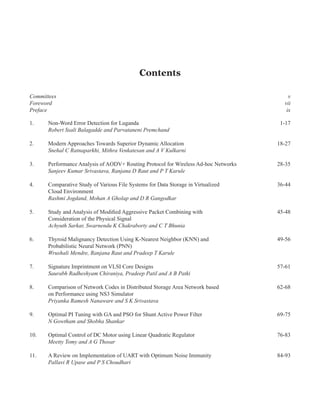
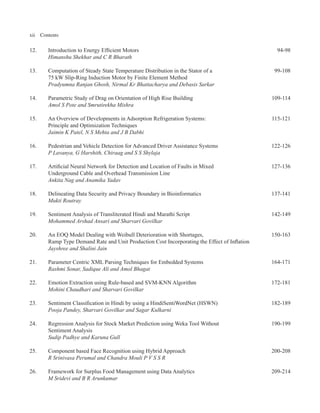
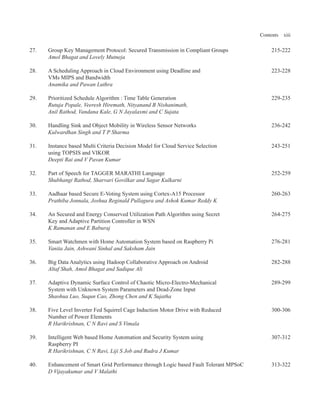
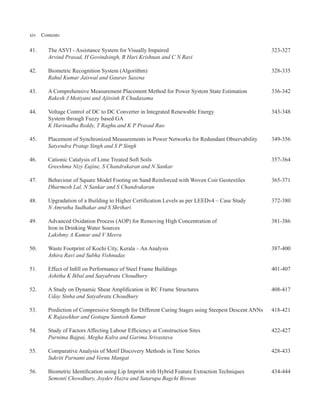

![Non-Word Error Detection for Luganda
Robert Ssali Balagadde * and Parvataneni Premchand **
* ** Department of Computer Science & Engineering, University College of Engineering, Osmania University
Hyderabad, 500007, TS, India
baross.kla@gmail.com, Profpremchand.p@gmail.com
Abstract: Editing or word processing Luganda text has been an uphill task mainly because of lack of a system in this
environment which could detect spelling errors in Luganda. In this context, this research paper presents a model for non-word
error detection for Luganda (LugDetect) which comes in handy to address this gap and consequently provide a more user
friendly environment for editing Luganda text. To the best of our knowledge LugDetect is the first of this kind of system
developed for Luganda. Experimentation results show that LugDetect detects non-word errors with an accuracy (AP) of 100%
for all the five categories of Luganda words at an average speed of 1471 Hz (number of words per second) so long as the
erroneous word is not a real word. Experimentation on the Luganda corpus which was used in this research work shows that
19% of Luganda text is composed of Clitics Host Word Combination (CHWC), while the other part (81%)- Real Luganda
Words (RLW).
Keywords: non-word error detection, Luganda error detector, dictionary look-up technique, clitic-host word combination
(CHWC), spelling detector.
Introduction
Editing or word processing Luganda text has been an uphill task mainly because of lack of a environmental system which
could detect spelling errors in Luganda. In this context, this research work presents a model for Non-Word Error Detection
For Luganda (NWEDL- LugDetect) which comes in handy to address this gap, and consequently, provide a more user
friendly environment for editing Luganda text. To the best of our knowledge, LugDetect is the first of this kind of system
developed for Luganda.
One challenge encountered while developing a model for Luganda spell checking is dealing with the infinite number of
clitic-host word combinations (CHWCs) which makes Luganda distinct from other foreign languages especially non-Bantu
languages. In this research work, three types of CHWC are identified in respect to the use of inter-word apostrophe (IWA)
defined in subsection on ”The Error Detection Mechanism"
Type one - CHWC_1, bolded in Example 1 - are created as a result of compounding a modified monosyllabic word
(MMW) or modified disyllabic word with an initial vowel (MDWIV) with another succeeding word which begins with a
vowel. Compounding in Luganda may involve two to three words. MMW or MDWIV- referred to as clitic - is formed by
dropping the ending vowel of the mono-syllabic word (MW) or disyllabic word with an initial vowel (DWIV) and replacing
it with an apostrophe resulting into a long sound that is not represented by a double vowel.
Example 1
� omwenge n'ennyama (alcohol and meat) [conjunctive form]
� n'otema omuti (and you cut the tree) [narrative form]
� ew'omuyizzi (at the hunter's place) [locative form]
� Minisita omubeezi ow'ebyobusuubuzi ne tekinologiya (Minister of State for Trade and Technology)
� n'obw'embwa sibwagala (even that for the dog, I don't like)
� n'olw'ensonga eyo, sijja kujja (and for that reason, I will not come)
Example 2 shows some MWs and DWIVs (bolded) used in compounding to form CHWC_Is. Not all MWs and DWIVs are
used in compounding, and Example 3 shows some of these.
Example 2
� ne, na, nga [conjunction]
� ne, nga [narratives]
� be, ze, ge. gwe , bwe, bye, lwe, lye, kye, bye [object relatives]
� kya, ya, za. lya ba, bya, ga, gwa, ka, lwa, wa [possessives]
� ekya, eya, eza. erya, owa, aba [possessives with initial vowel]
� kye, ye, be, ze, twe [copulatives]
� e [locatives]](https://image.slidesharecdn.com/52770-250304033351-66882d69/85/Emerging-Technologies-in-Engineering-Mahesh-P-K-22-320.jpg)
![2 Sixth International Conference on Advances in Information Technology and Mobile Communication – AIM 2016
Example 3
� era, ate, nti, so [conjunction]
� atya, oti [adverbs]
� ggwe, nze, ye, yo. bo, zo, bwo [emphatic pronouns]
� bba [nonn]
� si [negation]
Type II - CHWC_II, shown in Example 4 - are formed as a result of using clitic ng' and nng' to represent "�����������������
double "���������������������������������������������������������������������
Example 4
� ng'ang'ala (to whimper like a dog)
� bbiring'anya (egg plant)
� agakung'anyizzaamu (to collect in it something)
� enng'anda (relatives)
� nng'oma (dram)
Type III - CHWC_III, shown in Example 5 - are formed as a result of using clitic ng' and nng' to represent "�����������������
double "��������������������ctively in words which are initially CHWC_1.
Example 5
� n'agakung'anyizzaamu (and to collect in it something)
� ng'eng'anda (like relatives)
� ng'enng'oma (like a dram)
In view of this, the first task is disambiguating the three types of CHWCs. The approach adopted to disambiguate these words
in LugDetect is discussed in subsection on "Disambiguating the CHWCs"
The second task is how to detect errors in each type of CHWCs. The approach adopted to provide this functionality in
LugDetect is discussed in subsection on "Spell Checking Luganda Clitic Host Word Combination Type I (CHWC_I)".
CHWC_IIs, which can be easy converted into real Luganda words (RLW) by substitution, are dealt with in subsection on
"Spell Checking RLW".
It is worthwhile noting that the CHWC_1 akin to Luganda are also found in other Bantu languages like Runyankore-
Rukiga, Kinyarwanda, among others. Example 6 and Example 7 shows samples of CHWC_I extracted from Runyankore-
Rukiga and Kinyarwanda text respectively.
Example 6
� ky’okutunga
� nk’eihanga
� n’ekya
� g’ebyemikono
Example 7
� n’uw’Umukuru ( and His Excellence)
� Nk’uko (like that)
� y’Umukuru (His Excellence)
� w’Igihugu (of a country)
The third challenge is deciding when to invoke LugDetect or the Error Detection Mechanism (EDM) during interactive
processing and during batch processing. For interactive processing, should LugDetect be invoked when the space bar (SB) is
struck or at every key-stroke? The former approach has a shortfall in that a modified word can miss out on spell checking
through the use of insertion bar (IB) movement keys - a list of which is shown in Table 1 - which move the position of IB
from the modified word to some other word without striking the SB. The latter approach would eliminate this problem but its
main problem is that it is strenuous on the system due to the numerous EDM invocations. A solution to this is the
development of an Algorithm for Interactive Invocation of EDM (IIEDM) discussed in subsection on "Interactive invocation
of EDM"
For batch processing, how should EDM be invoked? A solution to this is discussed in form of an algorithm. A summary
of the modules making up LugDetect is presented in subsection on "The Error Detection Mechanism"
LugDetect can detect numerical errors and word level punctuation errors, however, in this paper, we only mention them.
Details of the modules dealing with these errors can be obtained from "unpublished" [2].](https://image.slidesharecdn.com/52770-250304033351-66882d69/85/Emerging-Technologies-in-Engineering-Mahesh-P-K-23-320.jpg)
![Non-Word Error Detection for Luganda 3
The scope of LugDetect is limited to Luganda non-word detection. Named entities, abbreviations, e-mail addresses, uniform
resource locator (URL) strings are not handled in LugDetect, and neither are the real word errors.
Literature Survey
Errors
According to Peterson [15], spelling errors are basically of two types. Firstly, cognitive errors which are errors due to lack of
knowledge of the language and are errors often ignored on the assertion that they are infrequent. In this context, their
frequency is evaluated to be between 10% and 15% [17]. Secondly, typographical errors are 80% of "typos" (also called
single character errors) and are one of the following four types: one exceeding character, one missing character, a mistaken
character, or the transposition of two consecutive characters [4]. This means that 80% of errors are within edit distance of one
and almost all errors - within edit distance of two.
Error Detection
There are two techniques used in detecting non-word errors. First, the Dictionary Lookup Technique (DLT), in which each
word in the input text is lookup in the dictionary. In case a word is not found in the lexicon that word is a non-word or
incorrect, and therefore, flagged or entered into the list of erroneous words. The larger the lexicon the better is the results.
Shinghal and Toussaint [18] noted that DLT has low error rates, but is disadvantaged by large storage demands and high
computational complexity. Most current spelling correction techniques rely on DLT for non-word error detection.
Second, a technique that uses a non-positional bi-gram 26 by 26 matrix which captures information on the existence of
the bi-grams. A bi-gram is assigned a value of one if it exists in the corpus of the language in consideration, otherwise it is
assigned zero. All the bi-grams making up the input text are checked for their existence in the matrix. if any of the bi-grams
is non-existence than the word is flagged or a non-word. This technique is appropriate for Optical Character Recognition
(OCR) errors and it has proven to be less accurate for detecting human-generated errors.
Lexicon
User-lexicon can be interactively enriched with new entries enabling the checker to recognize all the possible inflexions
derived from them. A lexicon for a spelling correction or text recognition application must be carefully tuned to its intended
domain of discourse. Too small a lexicon can burden the user with too many false rejections of valid terms; too large a
lexicon can result in an unacceptably high number of false acceptances. The relationship between misspellings and word
frequencies is not straightforward.
Peterson [16]. recommend that lexicon for spelling correction be kept relatively small based on the fact that
approximately half a percent of all single error transformations of each of the words on a 350,000-item word list result in
other valid words on the list However, Damerau and Mays [5] challenge this recommendation by using a corpus of over 22
million words of text from various genres and they found that by increasing the size of their frequency rank-ordered word list
from 50,000 to 60,000 words; they were able to eliminate 1,348 false rejections while incurring only 23 additional false
acceptances. Since this 50-to-l differential error rate represents a significant improvement in correction accuracy; therefore,
they recommend the use of larger lexicons.
Dictionaries alone are often insufficient sources for lexicon construction. Walker and Amsle [19] observed that nearly
two-thirds (61%) of the words in the Merriam-Webster Seventh Collegiate Dictionary did not appear in an eight million word
corpus of New York Times news wire text, and conversely, almost two-thirds (64.9%) of the words in the text were not in the
dictionary.
On the topic of construction of the lexicon for the spell program, McIlroy [13] provides some helpful insights into
appropriate sources that may be drawn upon for general lexicon construction.
An article by Damerau [6] provides some insights into and guidelines for the automatic construction and customization of
domain oriented vocabularies for specialized NLP (Natural Language Processing) applications.
LugDetect
LugDetect, developed using Python programming language, identifies the type of Luganda word or token which need be
spell checked, and consequently, invokes the appropriate module for detecting the error. LugDetect works in tandem with
LugCorrect to provide detection and correction for Luganda words. In other words, LugDetect is required to detect the error
before LugCorrect can be invoked for correction purposes. The mechanism for LugCorrect, which provides correction
candidate list (CCL) or an explanation or hint on the type of error committed, is shown in Algorithm 1 and more details are
provided in [3].](https://image.slidesharecdn.com/52770-250304033351-66882d69/85/Emerging-Technologies-in-Engineering-Mahesh-P-K-24-320.jpg)
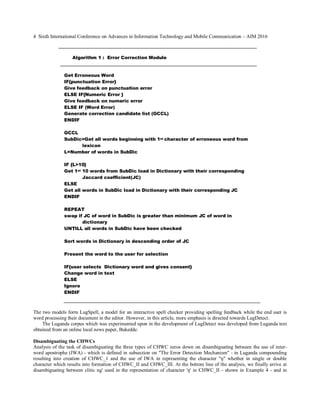


![They then left us, saying that if we were captured again they
would kill us.”
There was other evidence to the same effect. Eventually I obtained
proofs confirming my suspicions, and I will now proceed to set them
out.
On May 3rd I visited the Ministry of War in Paris at the invitation of
the French military authorities, and was received by M. le Capitaine
René Petit, Chef de Service du Contentieux, who conducted me to
the department where the diaries of German prisoners were kept. I
made a brief preliminary examination of them, and discovered the
following passage (which I had photographed) in the diary of a
German N.C.O., Göttsche, of the 85th Infantry Regiment (the IXth
Corps), fourth company detached for service, under date “Okt. 6,
1914, bei Antwerpen”:
“Der Herr Hauptmann rief uns um sich und sagte: ‘In dem Fort,
das zu nehmen ist, sind aller Wahrscheinlichkeit nach Engländer.
Ich wünsche aber keinen gefangenen Engländer bei der Komp.
zu sehen.’ Ein allgemeiner Bravo der Zustimmung war die
Antwort.”
(“The Captain called us to him and said: ‘In the fortress [i.e.,
Antwerp] which we have to take there are in all probability
Englishmen. But I do not want to see any Englishmen prisoners
in the hands of this company.’ A general ‘Bravo’ of assent was
the answer.”)
This malignant frenzy against British troops, so carefully instilled, is
borne out by a passage in another diary, now in the possession of
the French Ministry of War, which was found on April 22nd on the
body of Richard Gerhold, of the 71st Regiment of Infantry of the
Reserve, Fourth Army Corps, who was killed in September at
Nouvron:](https://image.slidesharecdn.com/52770-250304033351-66882d69/85/Emerging-Technologies-in-Engineering-Mahesh-P-K-51-320.jpg)