Embryonic Development
By : Shashikant Neharkar
BBsc Nursing.
1. Cleavage .
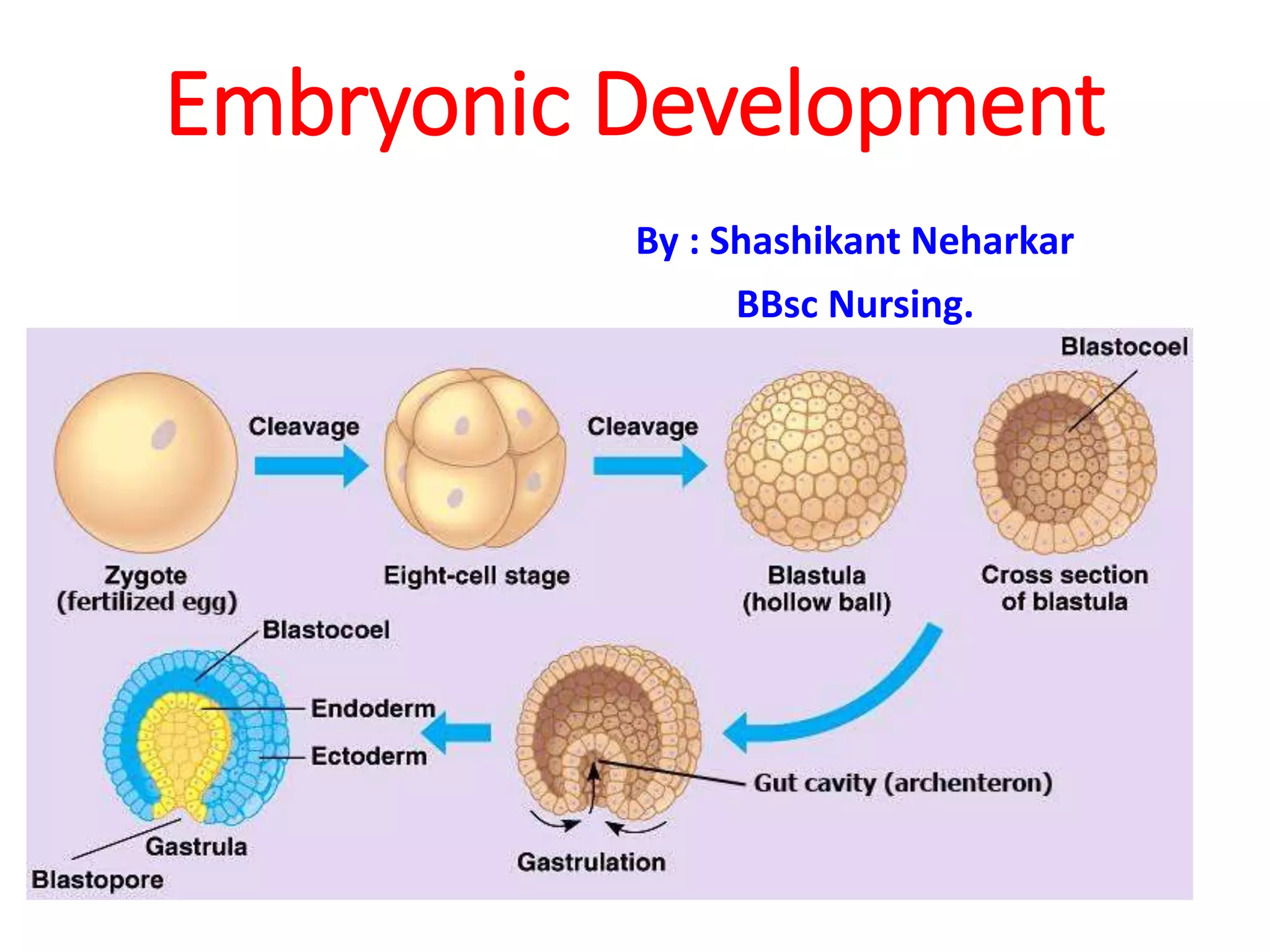
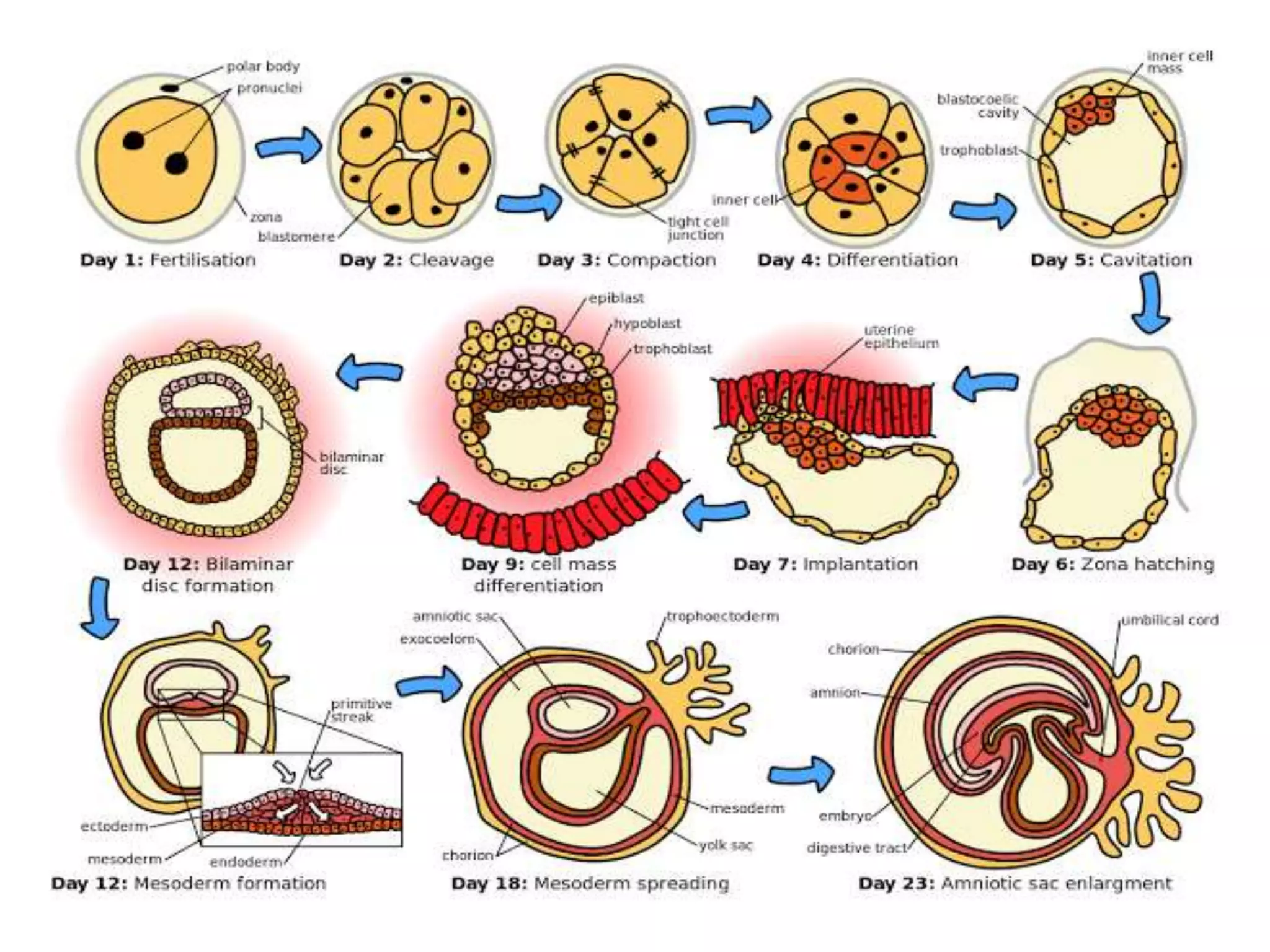
• It is process of early mitotic divisions of zygote
into hollow multicellular blastulla.
• Here cells are formed by clevage called
blastomeres cell.
• For each cleavage blastomere cells size get reduce
and metabolic rate increases .
Process of cleavage
• In human cleavage is holoblastic and planes may be
meridional , longitudinal, equatorial,and horizontal.
• 1st cleavage in the zygot is meridional occours about
30 hours after fertilization .
• It divides zygot into 2 blastomeres.
• 2nd cleavage is longitudinal , occours 30hrs after 1day
clevage .
• 3rd clevage is horizontal.
• Now embryo becomes 8 celled .
• Slowly slowly embryo pushesh towards uterus at
the end of 4th day after fertilization and becomes
16-32 celled.
• At these 16-32 celled stage embryo looks like
mulberry so it is called morulla .
• Morula has two types of cells, smaller cells
toward outer and larger inner cell called inner
mass of cell.
• Due to zona pellucida size of these is no change
but change occours overall from zygot to morulla .
*Blastulation *
• Blastulation is process of formation of the hollow
and multicellular blastocyst.
• These blastocyst remains floating in uterus .
• As we studied morulla has two types of cell from
these outer smaller cell of morulla form a layer
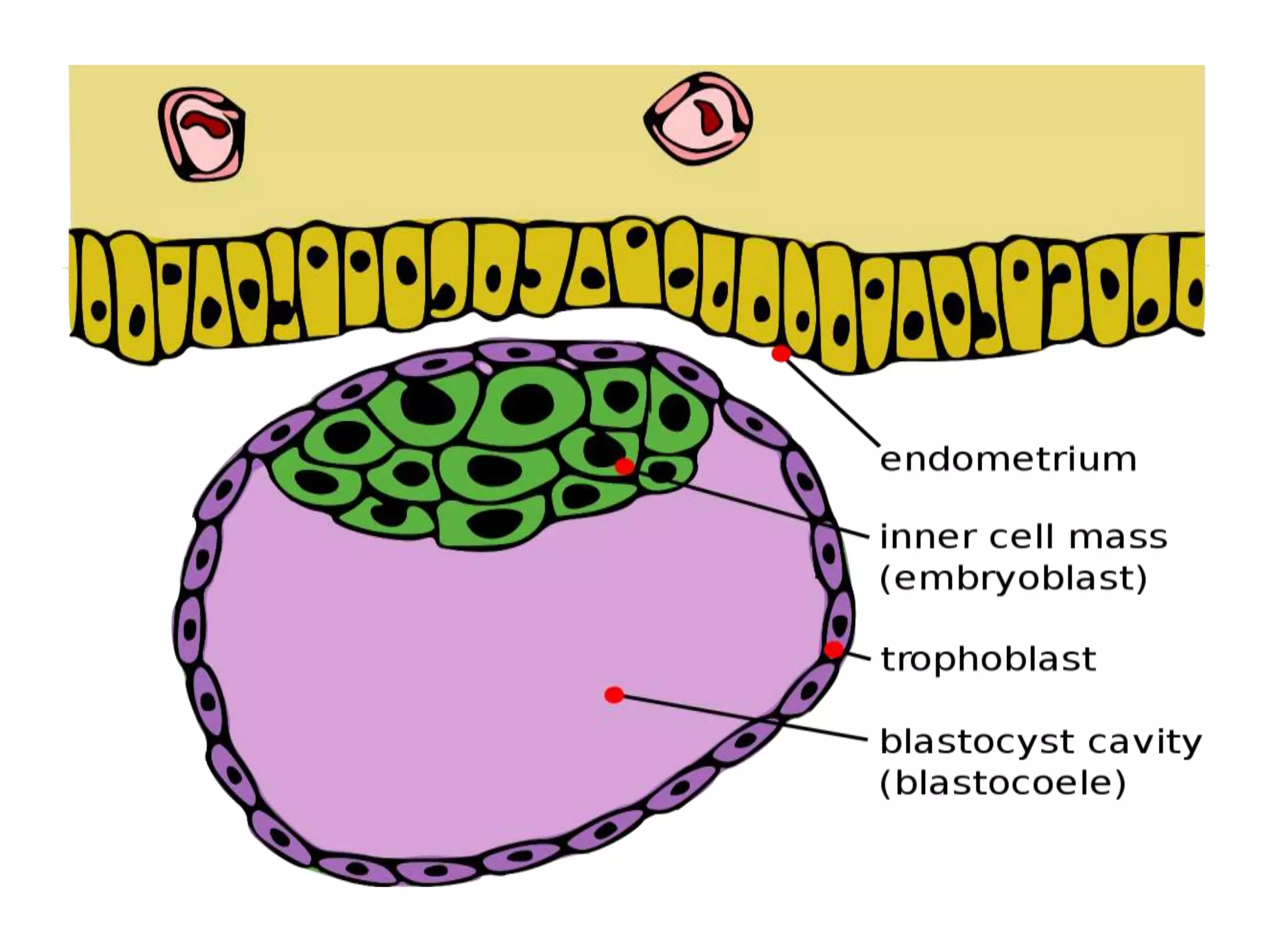
which called trophoblast.
• Now cells from these trophoblast starts to absorb
glycogen rich uterine milk .
• As more fluid gets absorbed a cavity begins to
develop in it called blastocyst cavity .
• Now larger cells of inner cell mass or embryoblast
remains attached to trophoblast .
• Due to unequal cells size and arrangement
blastocyst shows polarity ...
• The pole towards embryonal cells called
embryonal end and opposite to it called
abembryonal end .
• Zona pellucida layer of blastocyst prevent
implementation at abnormal site .
• At time of implantation zona pellucida repturs .
Implantation
• This process starts on 7th to 10th day after
fertilization.
• This implementation occour at fundus of uterus .
• Trophoblastic cells have ability to attach on
endometrium at embryonic pole / end .
• Now here rapid division in trophoblastic layer at
embryonic nob/ end takes place which gives two
types of cells .
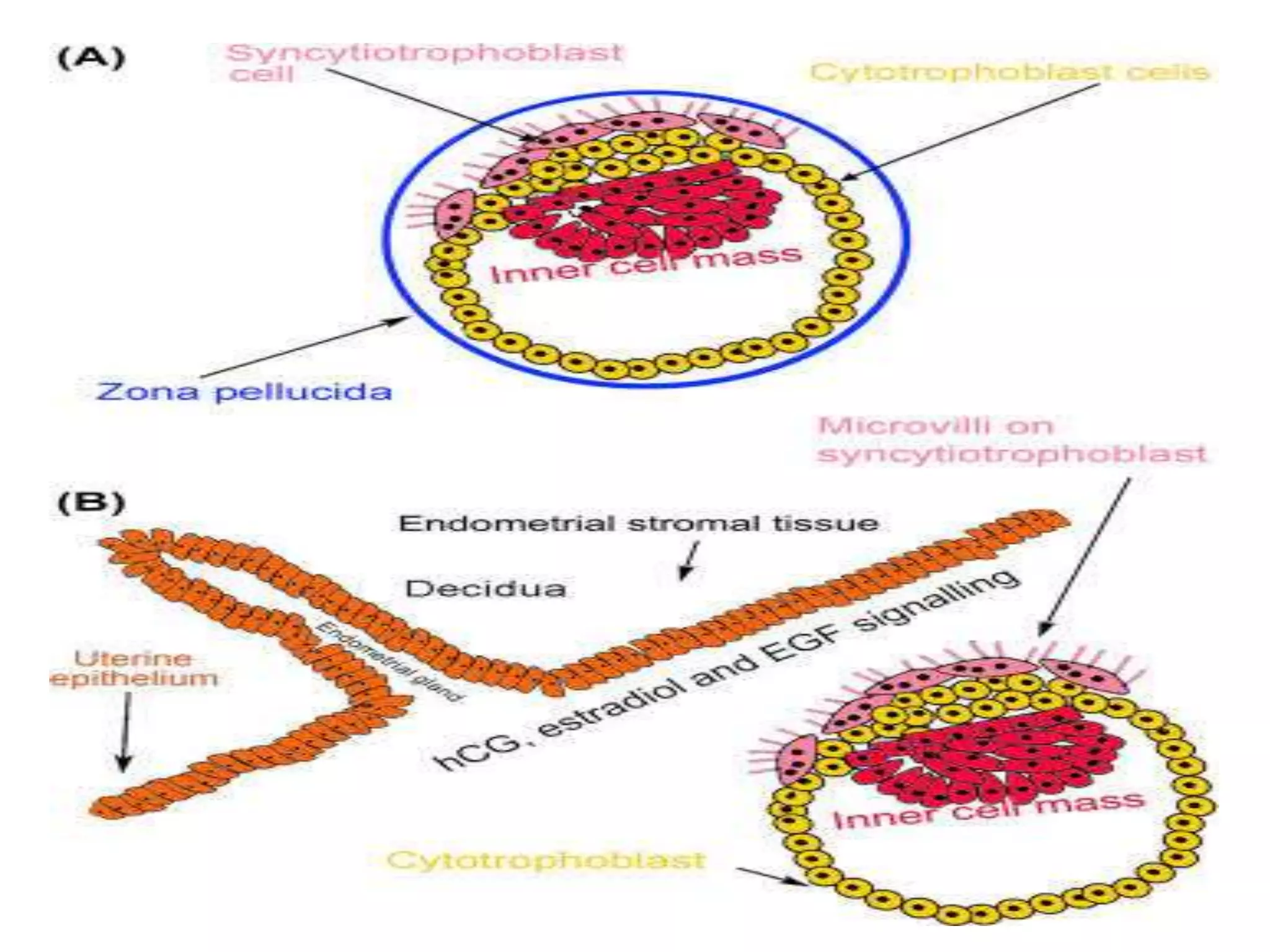
• Outer multinucleated Syncytiotrophoblast and
inner layer of cells cytotrophoblasts .
• Syncytiotrophoblast gives out process which
invade the endometrium.
• They secret lytic enzymes to repture the
endometrial cells to make a burrow .
• In this burrow embryo gets implant by the end of
10th day after fertilization.
Embryonic development  SlideShare.

Embryonic development SlideShare.

  • 1.
    Embryonic Development By :Shashikant Neharkar BBsc Nursing.
  • 2.
    1. Cleavage . •It is process of early mitotic divisions of zygote into hollow multicellular blastulla. • Here cells are formed by clevage called blastomeres cell. • For each cleavage blastomere cells size get reduce and metabolic rate increases .
  • 3.
    Process of cleavage •In human cleavage is holoblastic and planes may be meridional , longitudinal, equatorial,and horizontal. • 1st cleavage in the zygot is meridional occours about 30 hours after fertilization . • It divides zygot into 2 blastomeres. • 2nd cleavage is longitudinal , occours 30hrs after 1day clevage . • 3rd clevage is horizontal. • Now embryo becomes 8 celled .
  • 4.
    • Slowly slowlyembryo pushesh towards uterus at the end of 4th day after fertilization and becomes 16-32 celled. • At these 16-32 celled stage embryo looks like mulberry so it is called morulla . • Morula has two types of cells, smaller cells toward outer and larger inner cell called inner mass of cell. • Due to zona pellucida size of these is no change but change occours overall from zygot to morulla .
  • 5.
    *Blastulation * • Blastulationis process of formation of the hollow and multicellular blastocyst. • These blastocyst remains floating in uterus . • As we studied morulla has two types of cell from these outer smaller cell of morulla form a layer which called trophoblast. • Now cells from these trophoblast starts to absorb glycogen rich uterine milk . • As more fluid gets absorbed a cavity begins to develop in it called blastocyst cavity .
  • 6.
    • Now largercells of inner cell mass or embryoblast remains attached to trophoblast . • Due to unequal cells size and arrangement blastocyst shows polarity ... • The pole towards embryonal cells called embryonal end and opposite to it called abembryonal end . • Zona pellucida layer of blastocyst prevent implementation at abnormal site . • At time of implantation zona pellucida repturs .
  • 8.
    Implantation • This processstarts on 7th to 10th day after fertilization. • This implementation occour at fundus of uterus . • Trophoblastic cells have ability to attach on endometrium at embryonic pole / end . • Now here rapid division in trophoblastic layer at embryonic nob/ end takes place which gives two types of cells . • Outer multinucleated Syncytiotrophoblast and inner layer of cells cytotrophoblasts .
  • 9.
    • Syncytiotrophoblast givesout process which invade the endometrium. • They secret lytic enzymes to repture the endometrial cells to make a burrow . • In this burrow embryo gets implant by the end of 10th day after fertilization.