The Elements of a
Musical Ensemble

Subsidiary Music Performance Diploma
LO1- Musical Ensemble
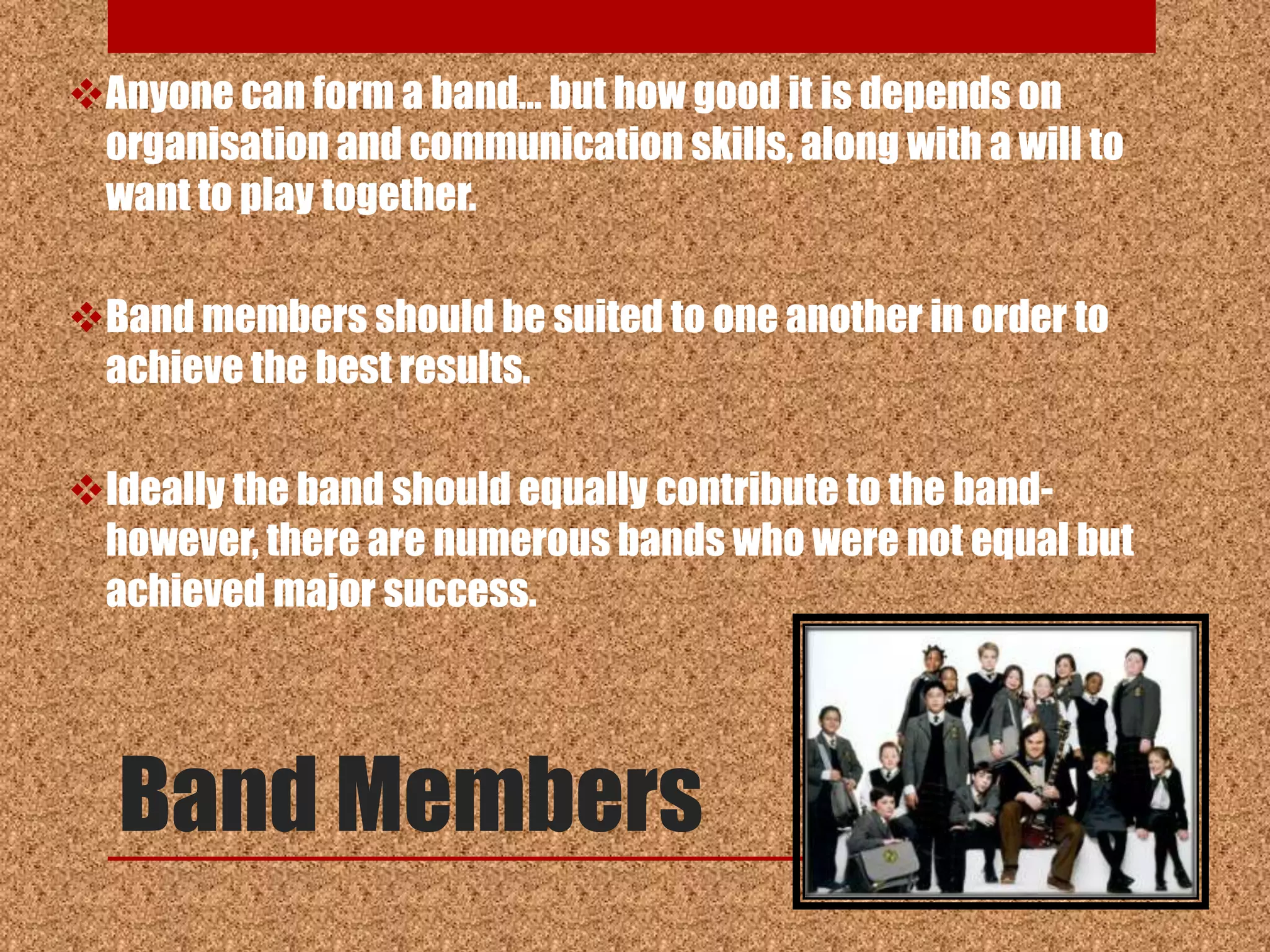
Anyone can form a band… but how good it is depends on
 organisation and communication skills, along with a will to
 want to play together.

Band members should be suited to one another in order to
 achieve the best results.

Ideally the band should equally contribute to the band-
 however, there are numerous bands who were not equal but
 achieved major success.


  Band Members
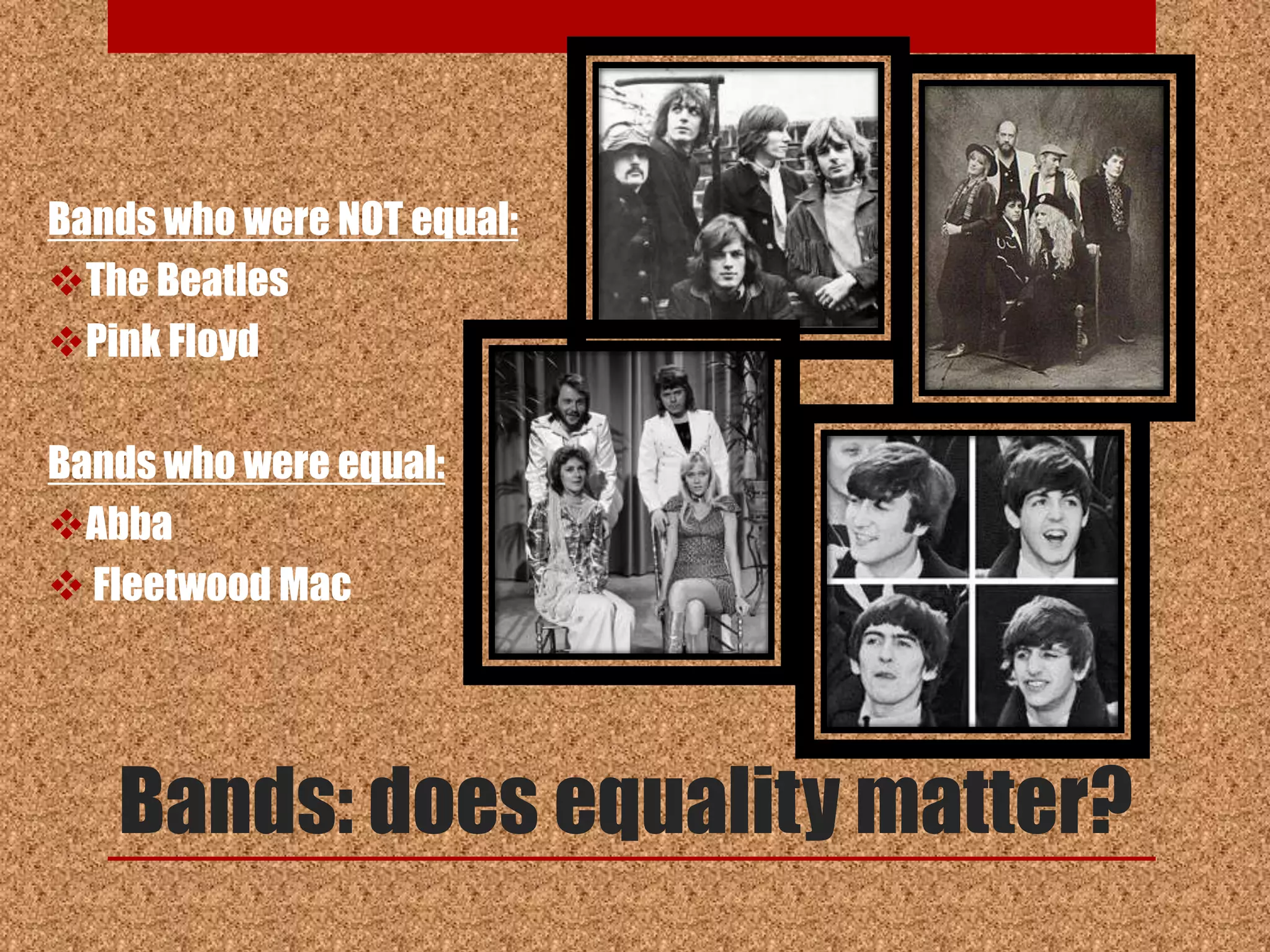
Bands who were NOT equal:
The Beatles
Pink Floyd

Bands who were equal:
Abba
 Fleetwood Mac


   Bands: does equality matter?
There are numerous ways in which to do this:
 Form one with friends who share similar
 musical interests and capabilities

Join a musical club- there‟s bound to be people
 in there who have a similar ambition to you!

Check your local music shop, there are usually
  loads of adverts on the door
Search the internet!- its surprising how many
  sites that are dedicated to finding you other
  local musicians to play with.
. . . Or make one

    How to join a band?
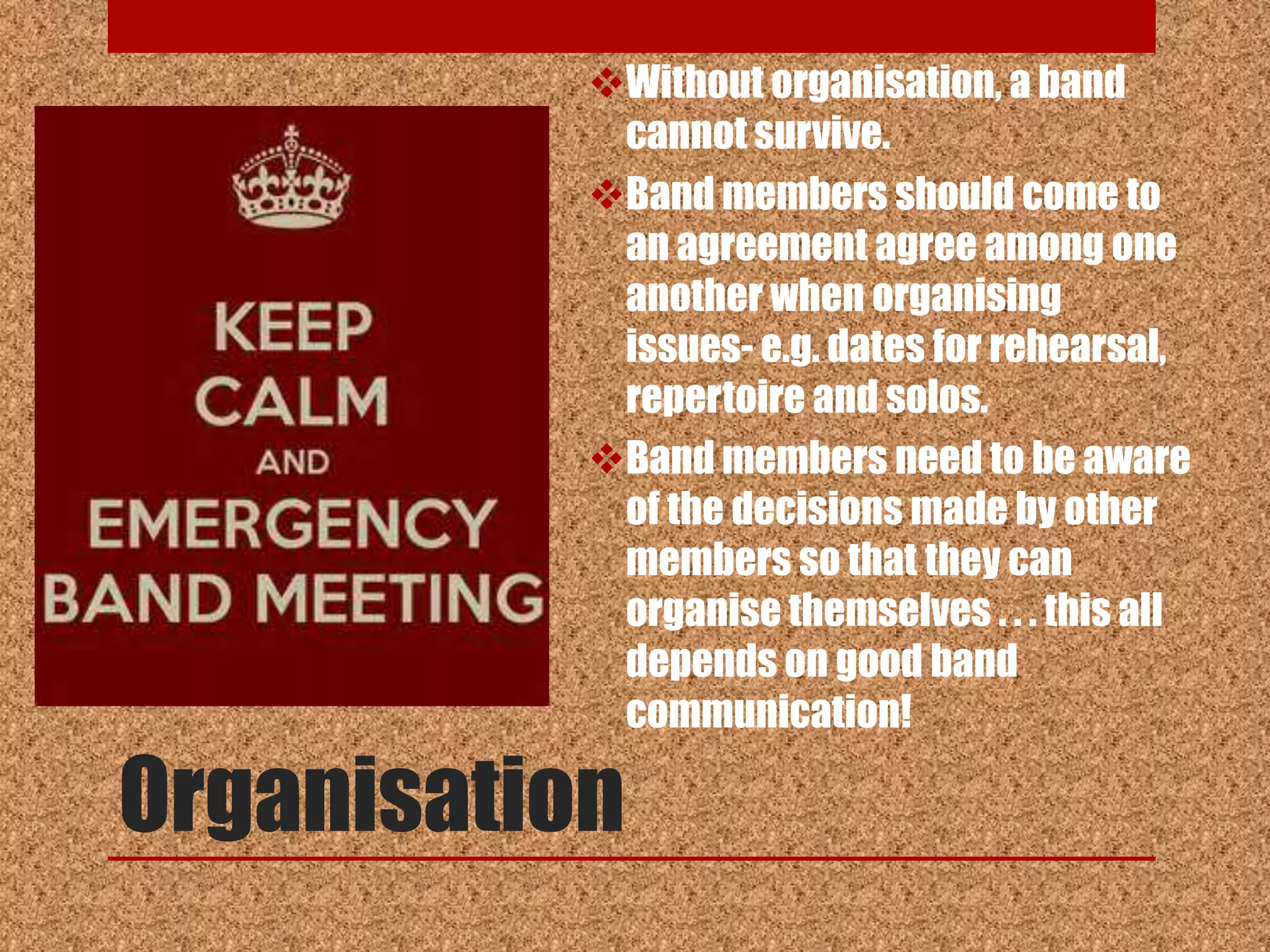
Without organisation, a band
            cannot survive.
           Band members should come to
            an agreement agree among one
            another when organising
            issues- e.g. dates for rehearsal,
            repertoire and solos.
           Band members need to be aware
            of the decisions made by other
            members so that they can
            organise themselves . . . this all
            depends on good band
            communication!

Organisation
Communication is key:
   -band discussions (listening skills + cooperation)
      -musical interaction
      -audience interaction


You need to be able to listen carefully to what
you and others are communicating and then
adjust to that!- may result in re-scheduling,
playing at a different dynamic level etc.

Communication
You need to get out and play to the public in as many
 venues as possible- make a target for yourself like “I
 will play in at least 5 venues this year” and stick to it!

Many famous bands and artists promote their music
 on sites such as MySpace and Facebook- Lilly Allen and
 Arctic Monkeys became famous to an extent because
 of this!

How do you communicate your
music to as many as possible?
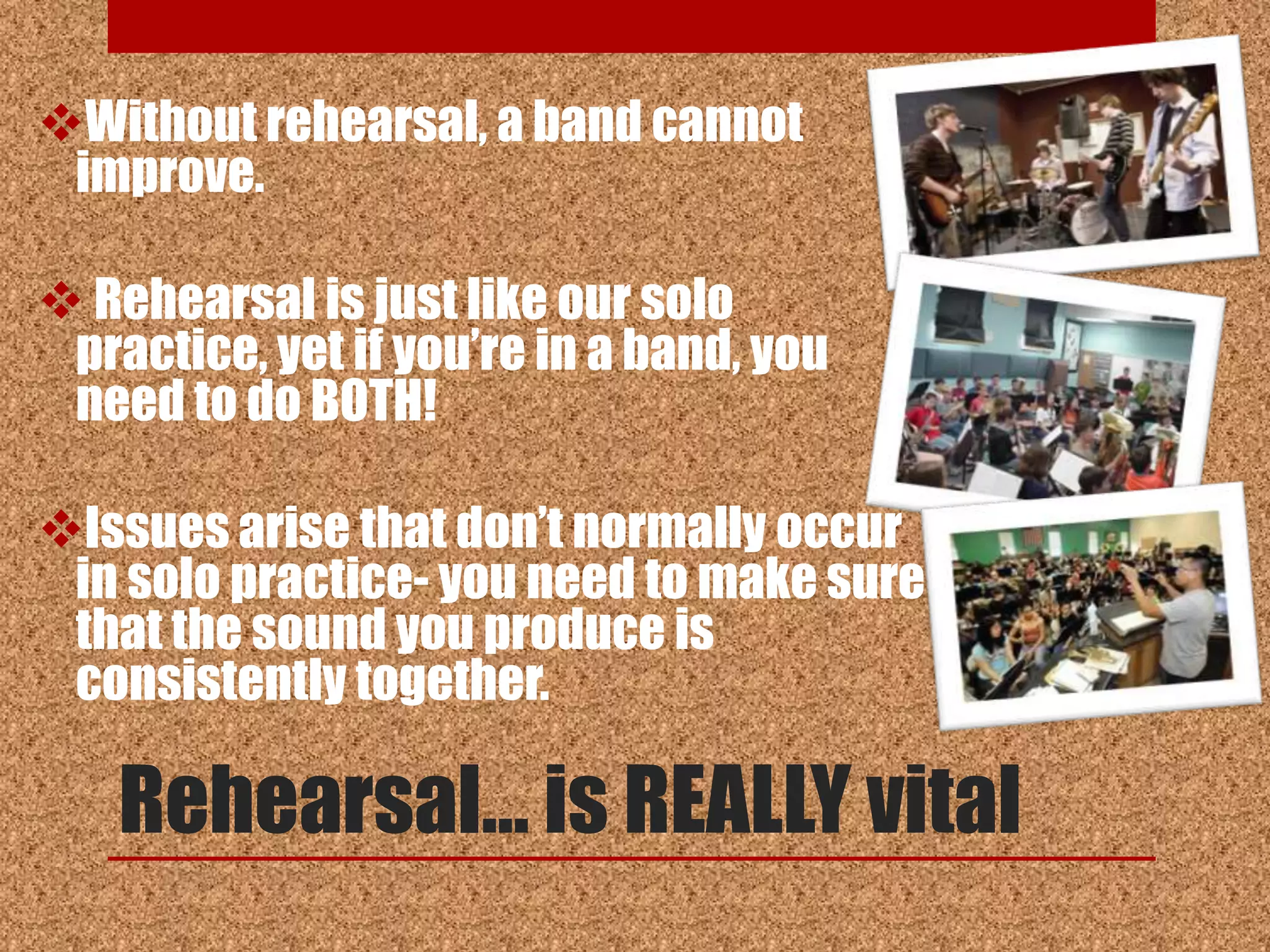
Without rehearsal, a band cannot
 improve.

 Rehearsal is just like our solo
 practice, yet if you‟re in a band, you
 need to do BOTH!

Issues arise that don‟t normally occur
 in solo practice- you need to make sure
 that the sound you produce is
 consistently together.

   Rehearsal… is REALLY vital
A weekly rehearsal = ESSENTIAL
 Longer rehearsals may be necessary to polish the band in
 time for a performance
My local choir always holds weekly rehearsals and when the
 performance time draws nearer we are expected to attend
 longer rehearsals (sometimes more than once in a week)-
 similar to the „Joseph‟ production!
Rehearsals are usually 2 hours in length- but it depends on
 who you are catering for.


     Examples
• Repertoire will depend on what music your
  band plays and which areas you specialise
  in.

• Repertoire should be chosen together- you
  must consider everyone‟s suggestions
  (communication and listening skills)

• Its important that all the members of your
  band like the repertoire that you have
  chosen, otherwise they may not put in much
  effort.

     Repertoire
If you sign up to a school band, for instance for a
 production, then you should have a knowledge of that
 production to judge whether the music would engage
 you.

 At my local choir, every year we are allowed to vote
 what repertoire we wish to sing over the upcoming year,
 every member of the choir is given a vote and we can
 either agree with someone else‟s findings or find other
 repertoire to suggest- this will all be considered.

  Examples
Of the band:
Strengths: organised, cooperative, imaginative +
 inventive, equality, a strong will, best intentions for
 the band, friendship, aims + ambitions,
 determination.

 Weaknesses: unorganised, uninterested, very
 mainstream, biased status of members,
 uninspired, factions + alliances, dis- functional.

   Strengths & Weaknesses
Of the rehearsals:
Strengths: set targets for the rehearsal are
 achieved, each band member knows the music,
 focussed session, members on time= Great music
Weaknesses: targets are not set previous to a
 rehearsal and therefore nothing is achieved, band
 members have not worked separately on the music,
 discordant atmosphere, laid- back approach to the
 rehearsal (lateness, distractions etc.)= Random
 sound

  Strengths & Weaknesses

Elements of a musical ensemble

  • 1.
    The Elements ofa Musical Ensemble Subsidiary Music Performance Diploma LO1- Musical Ensemble
  • 2.
    Anyone can forma band… but how good it is depends on organisation and communication skills, along with a will to want to play together. Band members should be suited to one another in order to achieve the best results. Ideally the band should equally contribute to the band- however, there are numerous bands who were not equal but achieved major success. Band Members
  • 3.
    Bands who wereNOT equal: The Beatles Pink Floyd Bands who were equal: Abba  Fleetwood Mac Bands: does equality matter?
  • 4.
    There are numerousways in which to do this:  Form one with friends who share similar musical interests and capabilities Join a musical club- there‟s bound to be people in there who have a similar ambition to you! Check your local music shop, there are usually loads of adverts on the door Search the internet!- its surprising how many sites that are dedicated to finding you other local musicians to play with. . . . Or make one How to join a band?
  • 5.
    Without organisation, aband cannot survive. Band members should come to an agreement agree among one another when organising issues- e.g. dates for rehearsal, repertoire and solos. Band members need to be aware of the decisions made by other members so that they can organise themselves . . . this all depends on good band communication! Organisation
  • 6.
    Communication is key: -band discussions (listening skills + cooperation) -musical interaction -audience interaction You need to be able to listen carefully to what you and others are communicating and then adjust to that!- may result in re-scheduling, playing at a different dynamic level etc. Communication
  • 7.
    You need toget out and play to the public in as many venues as possible- make a target for yourself like “I will play in at least 5 venues this year” and stick to it! Many famous bands and artists promote their music on sites such as MySpace and Facebook- Lilly Allen and Arctic Monkeys became famous to an extent because of this! How do you communicate your music to as many as possible?
  • 8.
    Without rehearsal, aband cannot improve.  Rehearsal is just like our solo practice, yet if you‟re in a band, you need to do BOTH! Issues arise that don‟t normally occur in solo practice- you need to make sure that the sound you produce is consistently together. Rehearsal… is REALLY vital
  • 9.
    A weekly rehearsal= ESSENTIAL  Longer rehearsals may be necessary to polish the band in time for a performance My local choir always holds weekly rehearsals and when the performance time draws nearer we are expected to attend longer rehearsals (sometimes more than once in a week)- similar to the „Joseph‟ production! Rehearsals are usually 2 hours in length- but it depends on who you are catering for. Examples
  • 10.
    • Repertoire willdepend on what music your band plays and which areas you specialise in. • Repertoire should be chosen together- you must consider everyone‟s suggestions (communication and listening skills) • Its important that all the members of your band like the repertoire that you have chosen, otherwise they may not put in much effort. Repertoire
  • 11.
    If you signup to a school band, for instance for a production, then you should have a knowledge of that production to judge whether the music would engage you.  At my local choir, every year we are allowed to vote what repertoire we wish to sing over the upcoming year, every member of the choir is given a vote and we can either agree with someone else‟s findings or find other repertoire to suggest- this will all be considered. Examples
  • 12.
    Of the band: Strengths:organised, cooperative, imaginative + inventive, equality, a strong will, best intentions for the band, friendship, aims + ambitions, determination.  Weaknesses: unorganised, uninterested, very mainstream, biased status of members, uninspired, factions + alliances, dis- functional. Strengths & Weaknesses
  • 13.
    Of the rehearsals: Strengths:set targets for the rehearsal are achieved, each band member knows the music, focussed session, members on time= Great music Weaknesses: targets are not set previous to a rehearsal and therefore nothing is achieved, band members have not worked separately on the music, discordant atmosphere, laid- back approach to the rehearsal (lateness, distractions etc.)= Random sound Strengths & Weaknesses