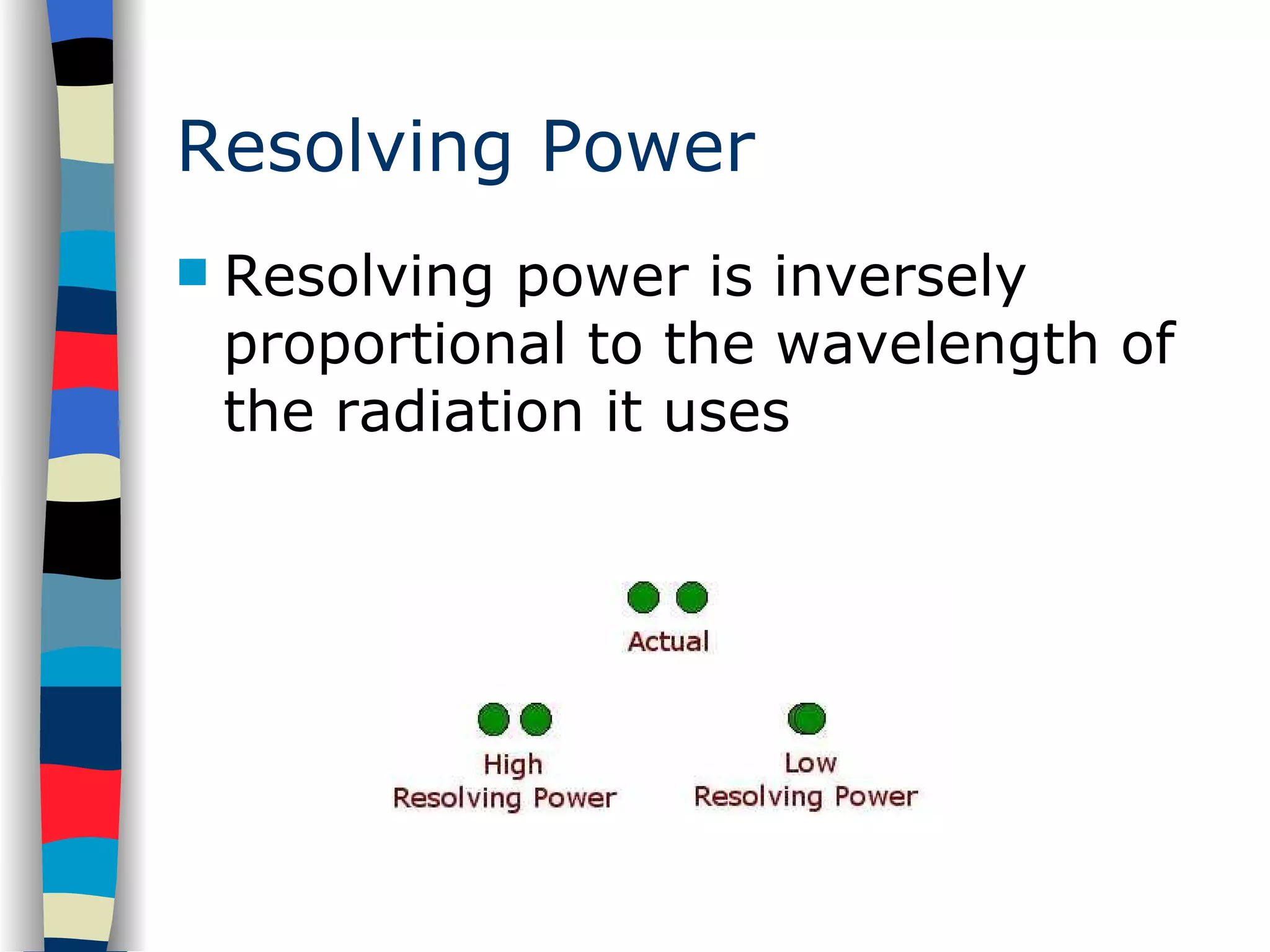
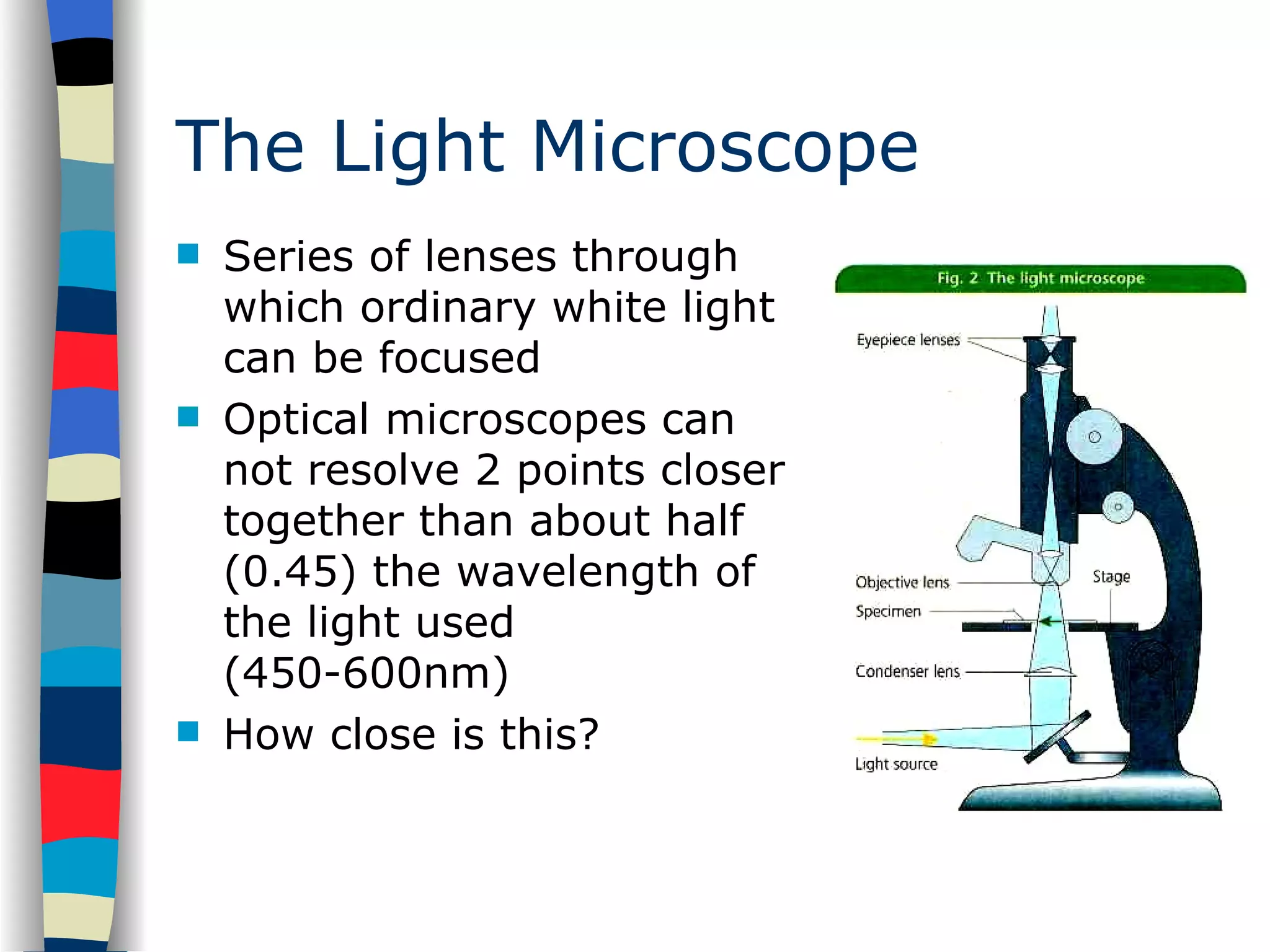
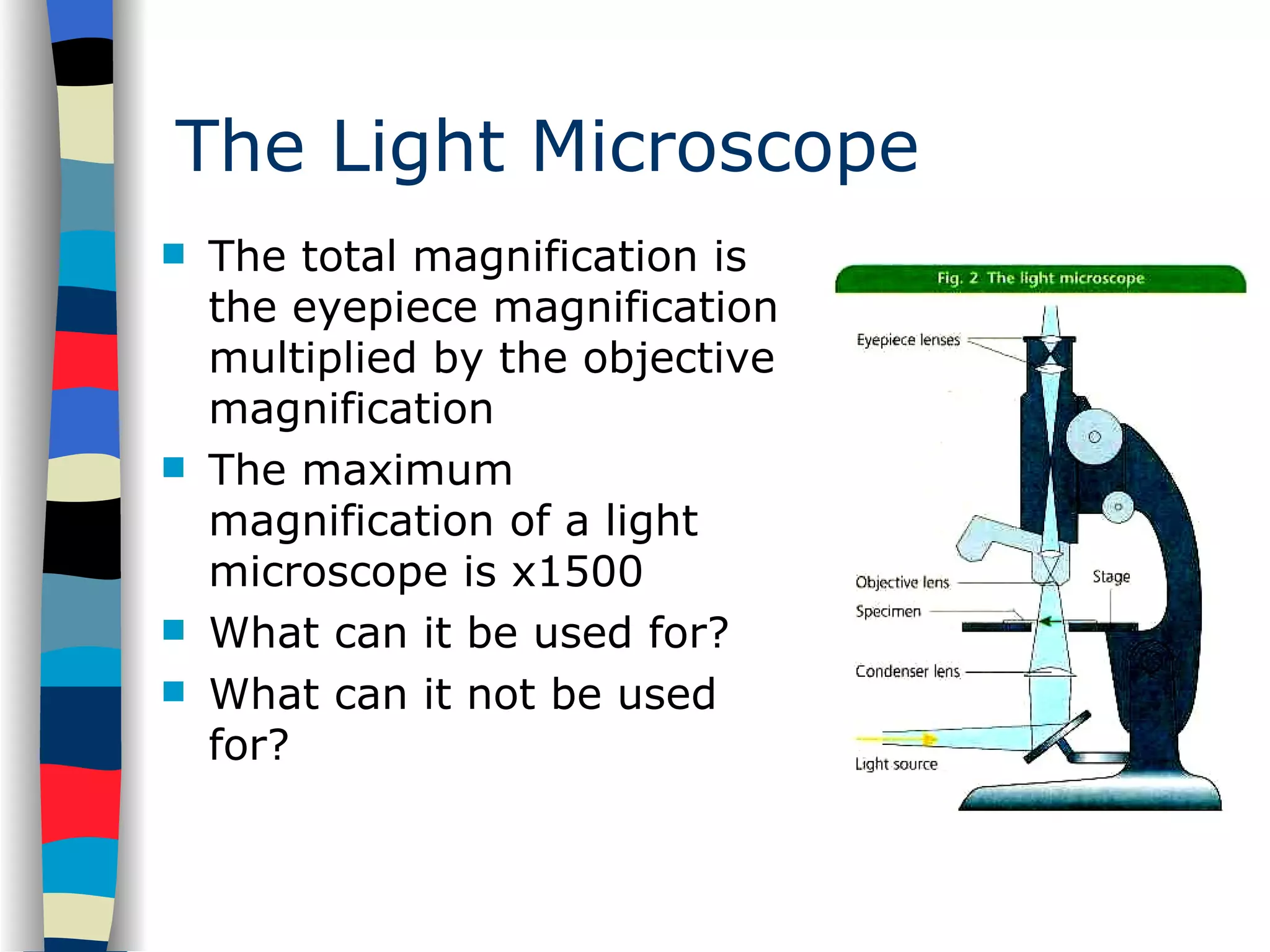
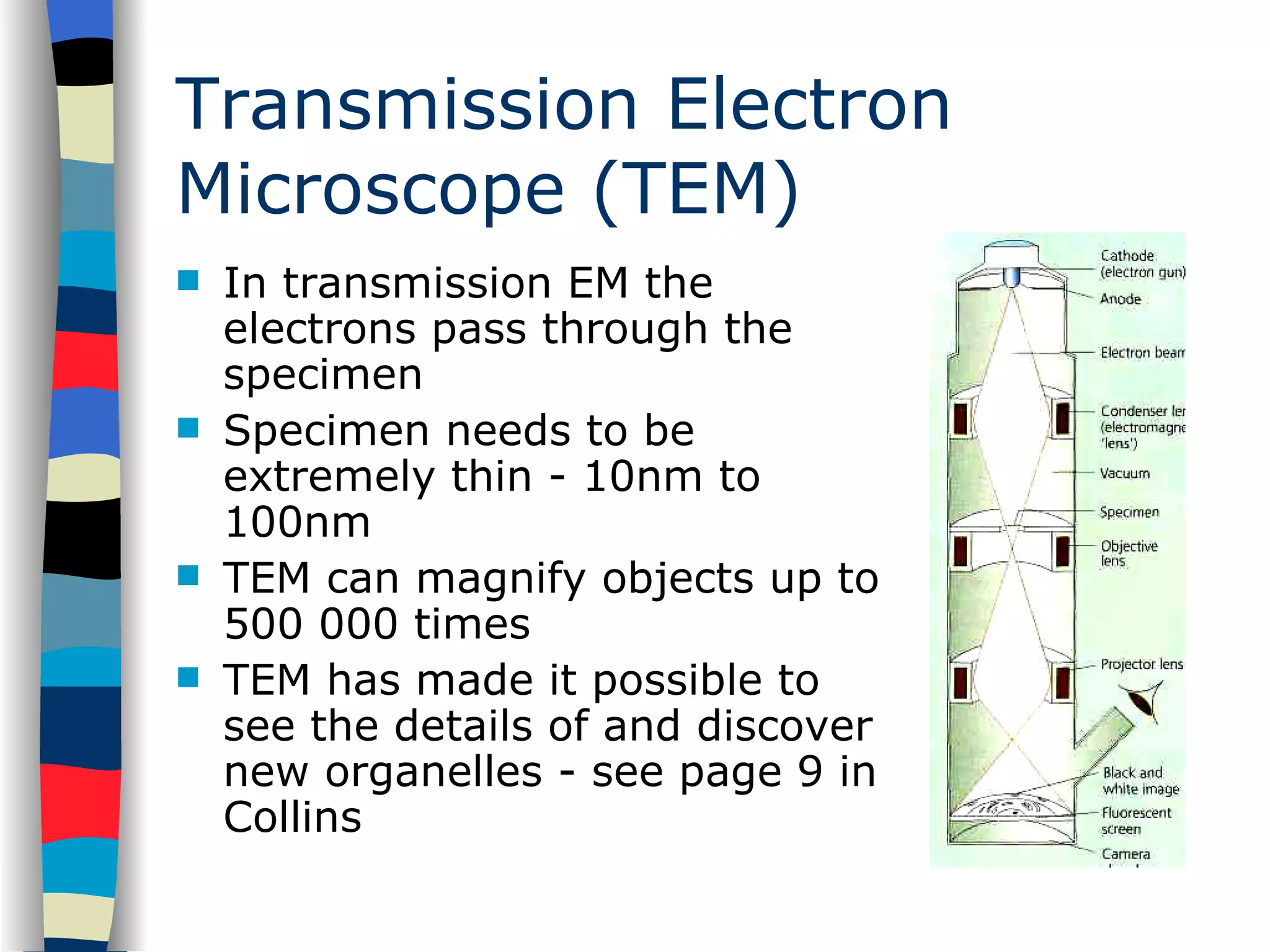
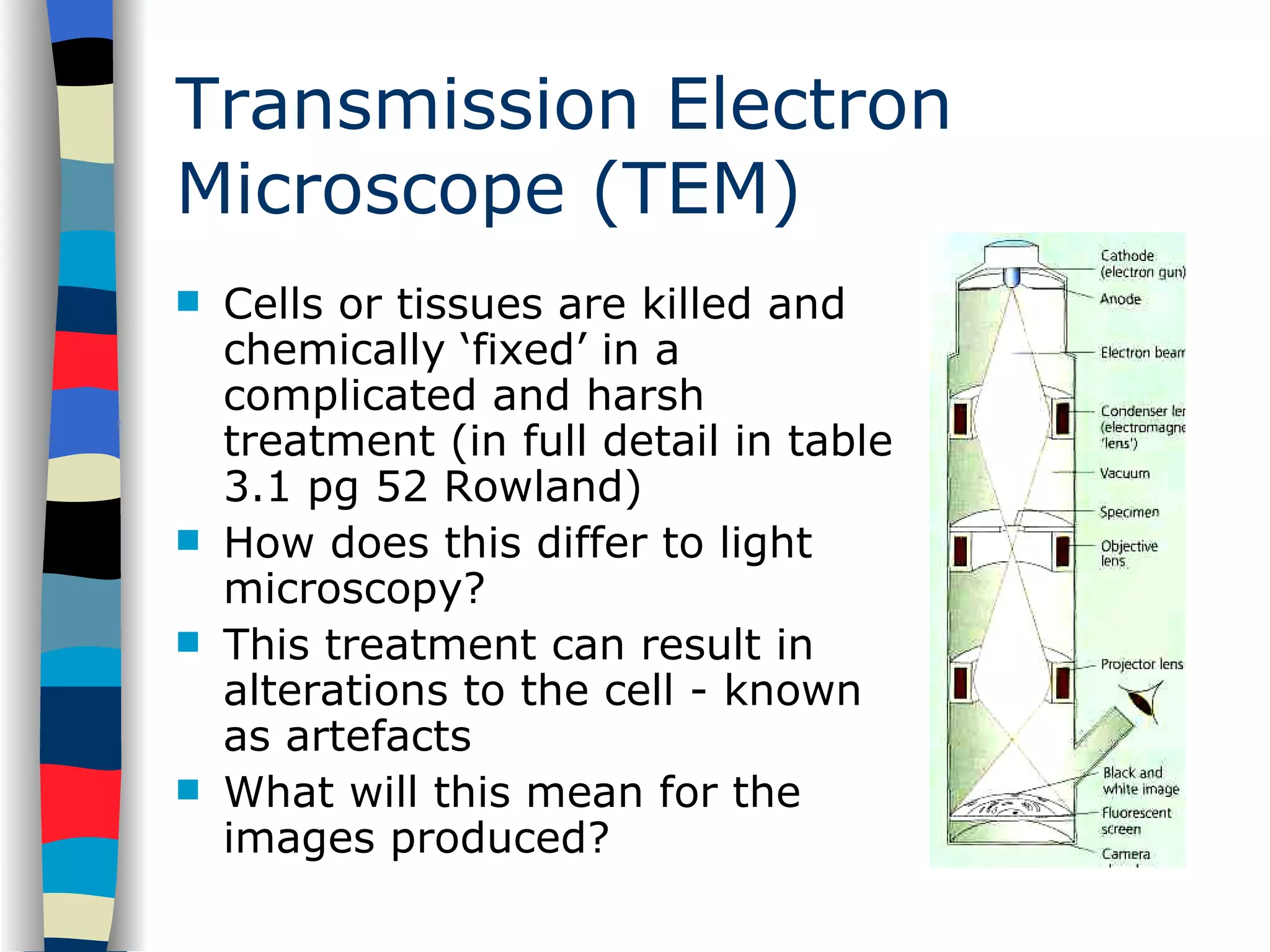
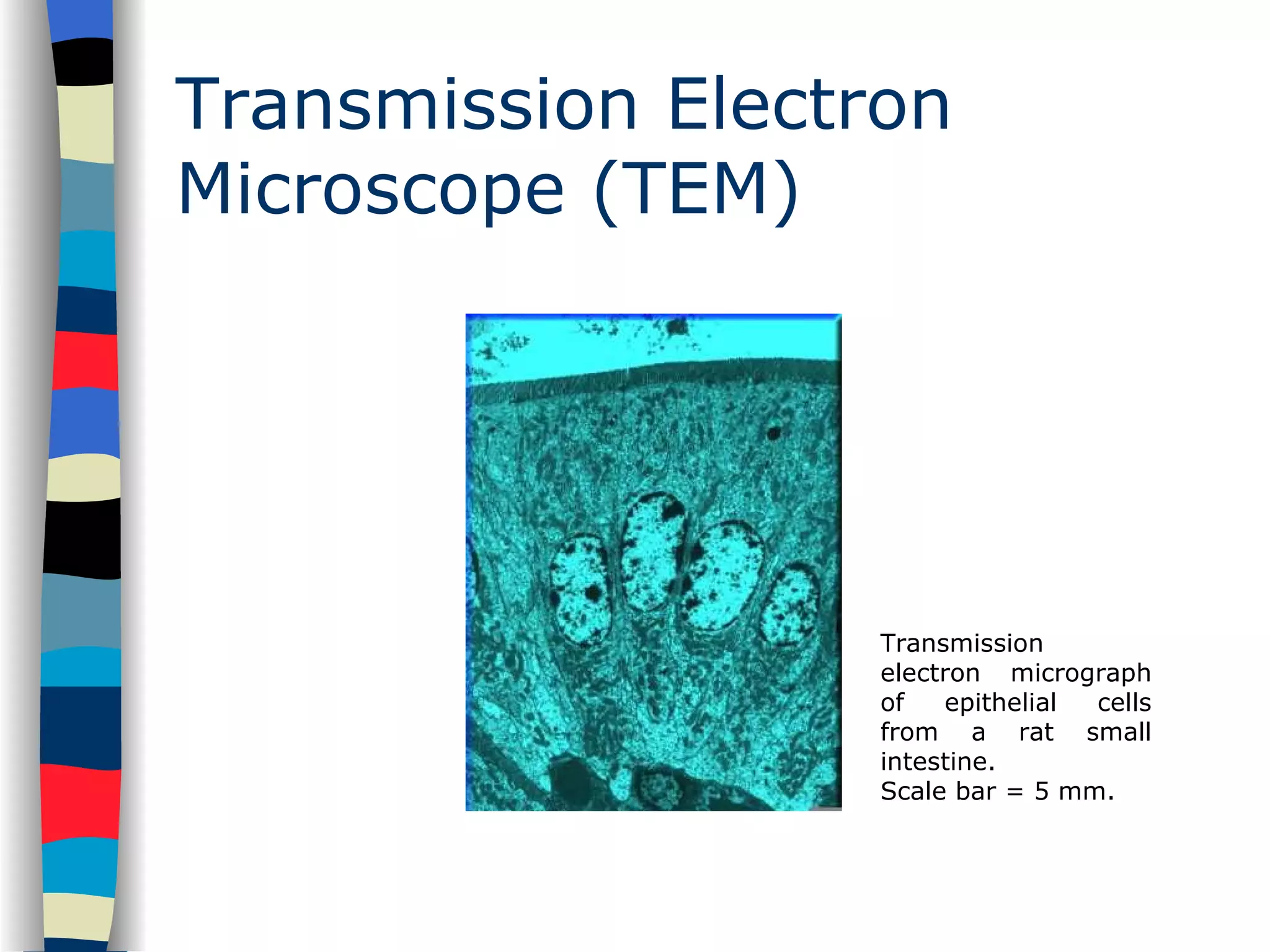
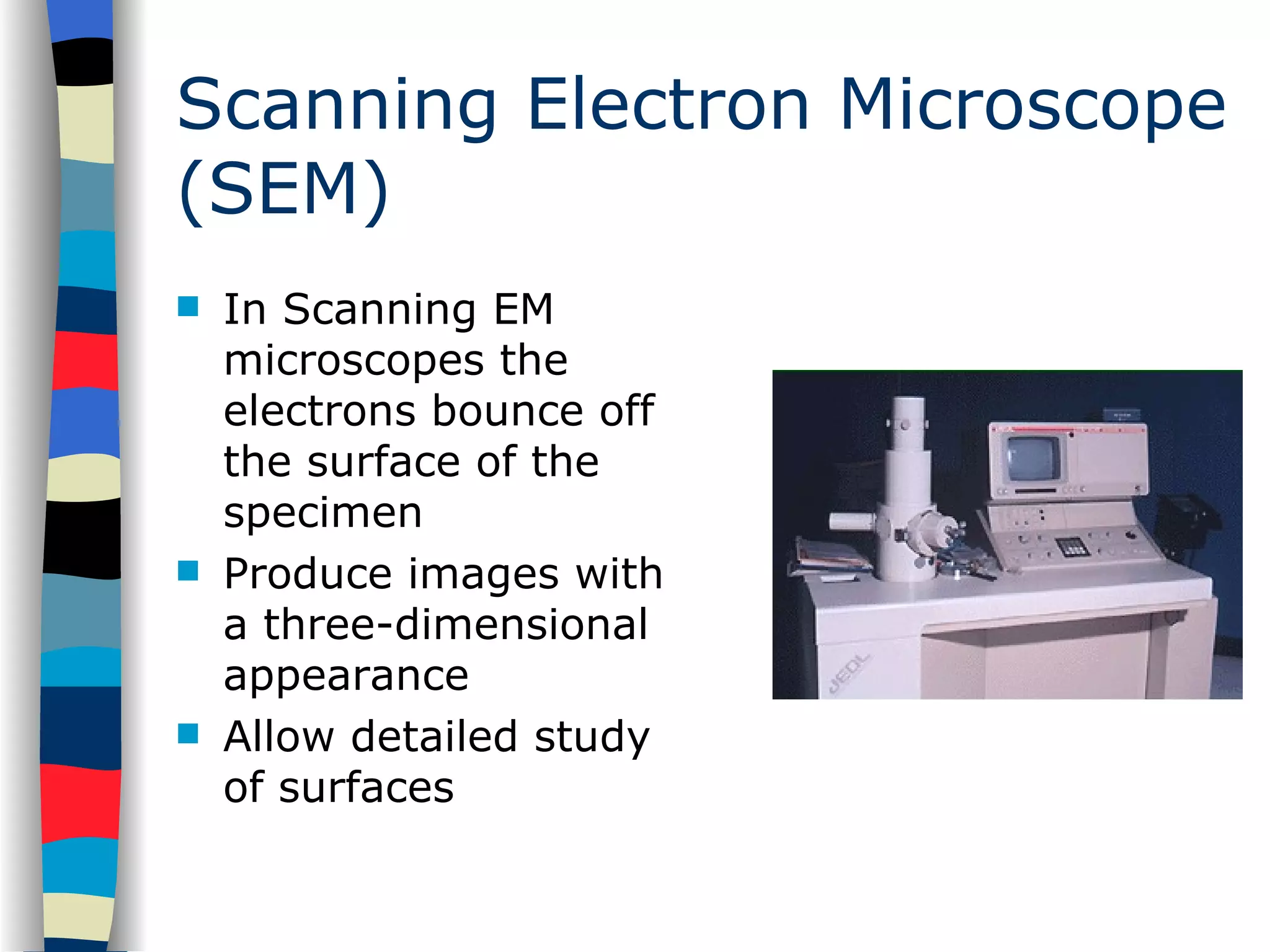
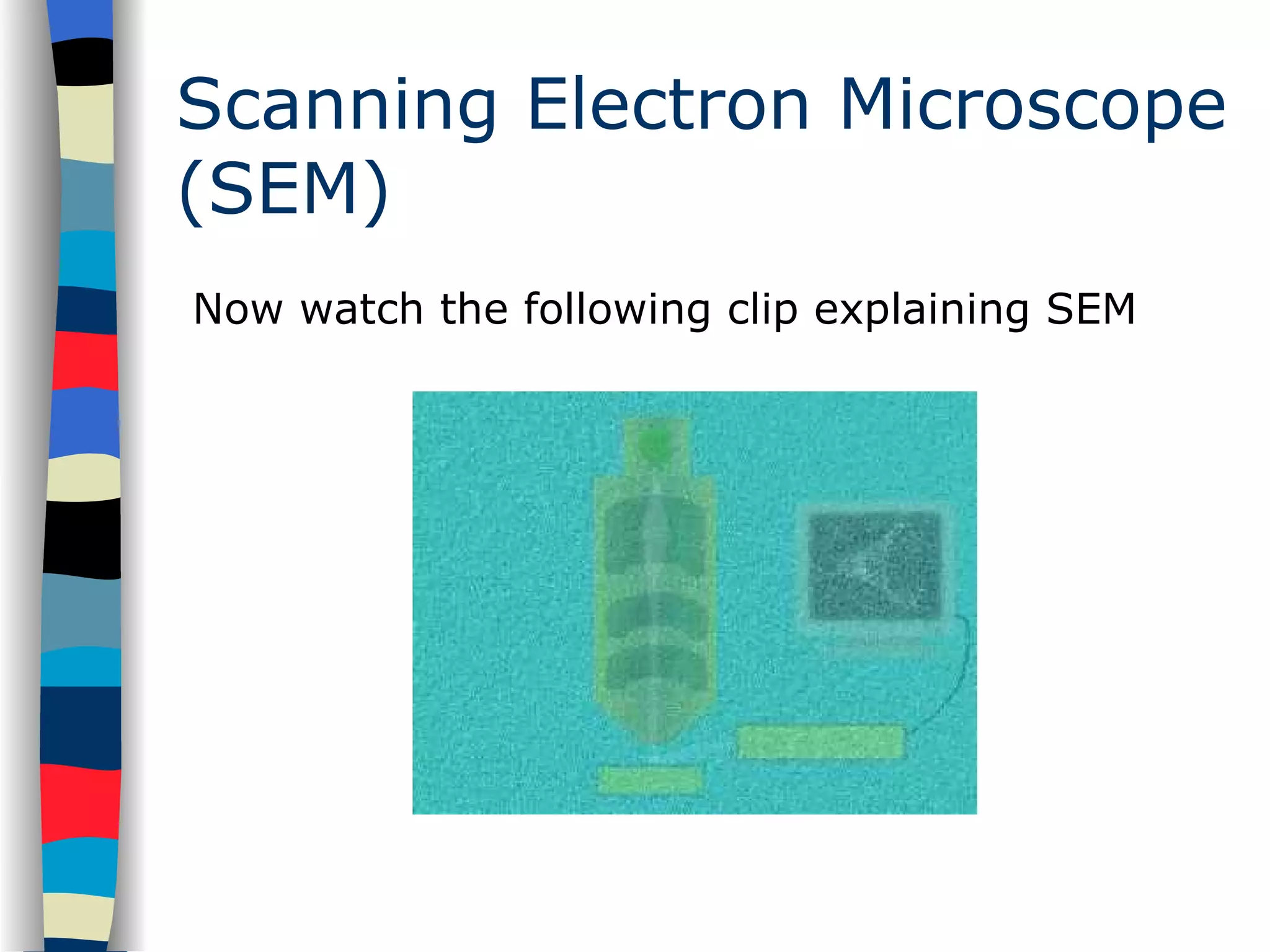
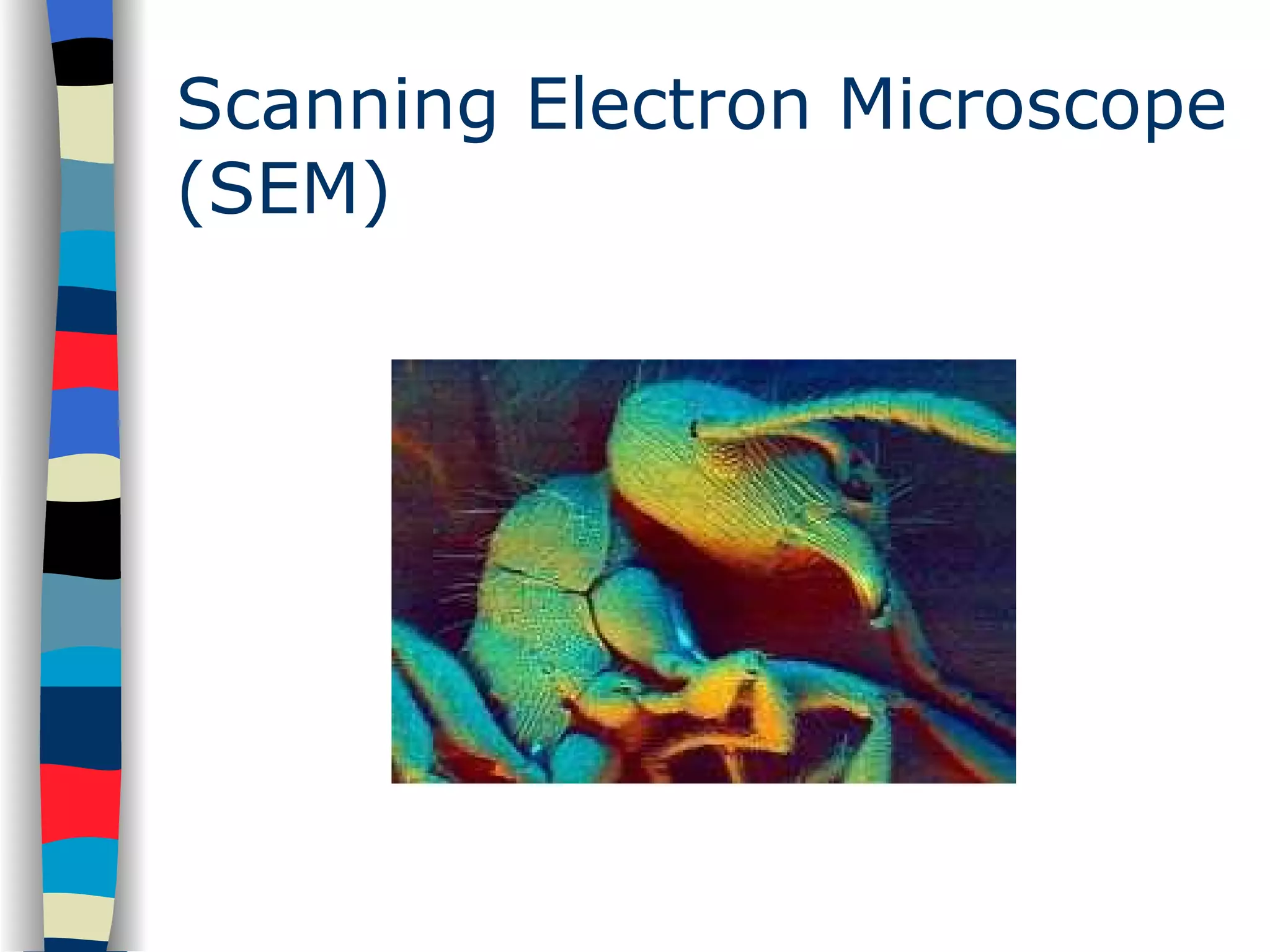



The document summarizes the key differences between light microscopes and electron microscopes. Light microscopes have a resolving power of about half the wavelength of visible light, limiting magnification to around 1500x. Electron microscopes use short wavelength electrons, allowing much higher resolving power and magnification over 500,000x. There are two main types: transmission electron microscopes (TEM) that pass electrons through thin samples, and scanning electron microscopes (SEM) that detect electrons reflected from surfaces to generate 3D images. TEMs require harsh chemical fixation of cells that can introduce artifacts.


