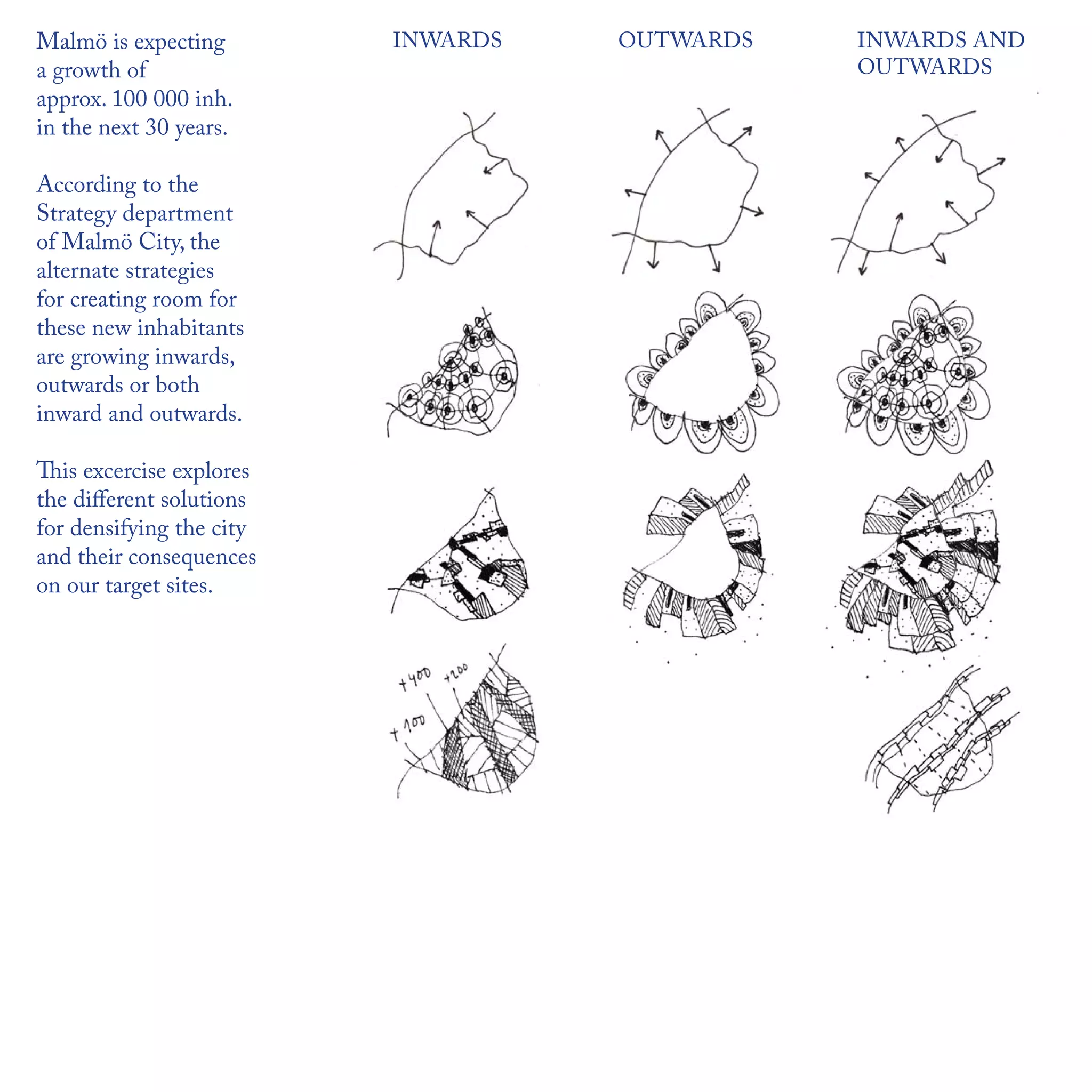
Malmö is expecting        INWARDS   OUTWARDS   INWARDS AND
a growth of                                    OUTWARDS
approx. 100 000 inh.
in the next 30 years.

According to the
Strategy department
of Malmö City, the
alternate strategies
for creating room for
these new inhabitants
are growing inwards,
outwards or both
inward and outwards.

This excercise explores
the different solutions
for densifying the city
and their consequences
on our target sites.
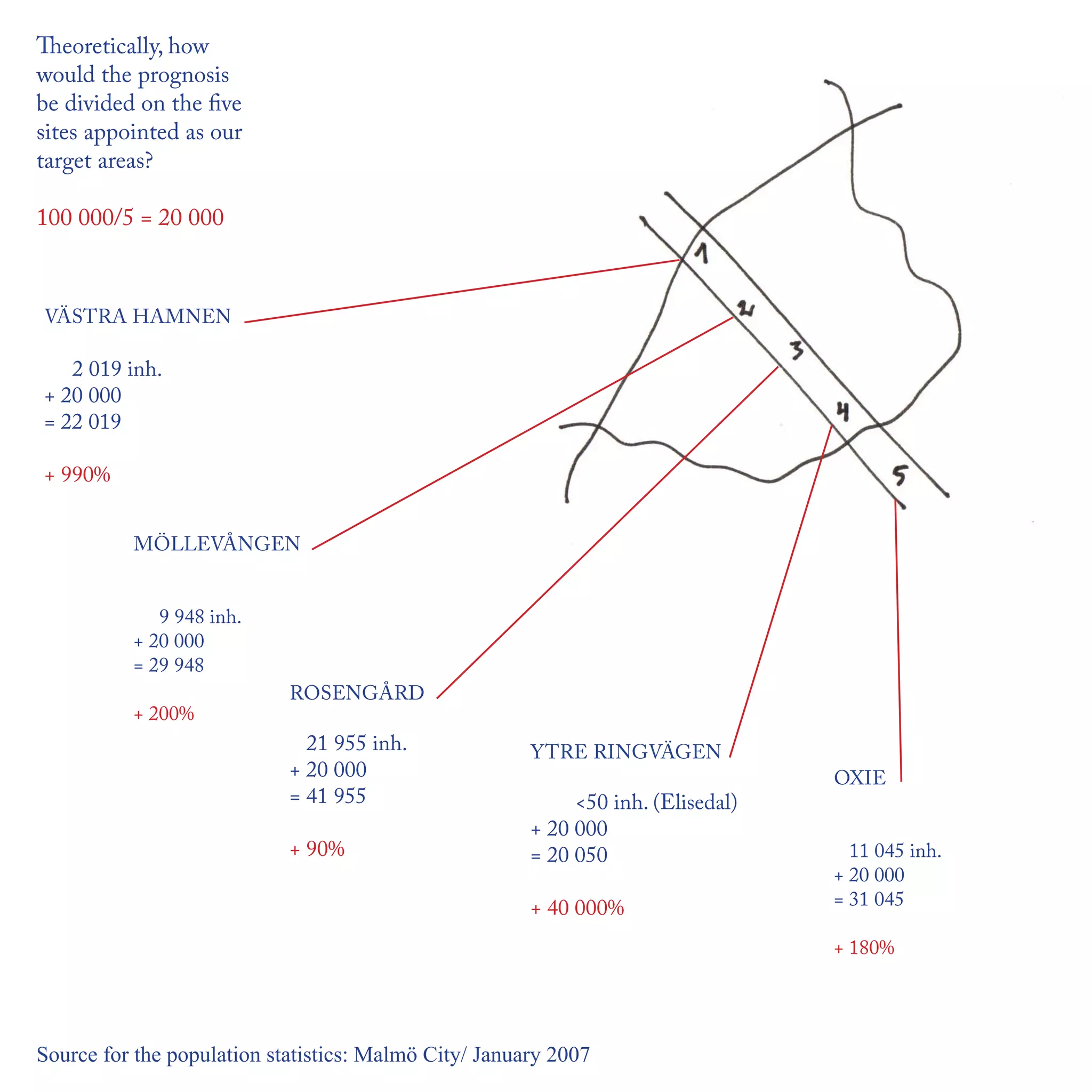
Theoretically, how
would the prognosis
be divided on the five
sites appointed as our
target areas?

100 000/5 = 20 000


VÄSTRA HAMNEN

   2 019 inh.
+ 20 000
= 22 019

+ 990%


          MÖLLEVÅNGEN


             9 948 inh.
          + 20 000
          = 29 948
                            ROSENGÅRD
          + 200%
                              21 955 inh.              YTRE RINGVÄGEN
                            + 20 000                                              OXIE
                            = 41 955                        <50 inh. (Elisedal)
                                                       + 20 000
                            + 90%                      = 20 050                     11 045 inh.
                                                                                  + 20 000
                                                       + 40 000%                  = 31 045

                                                                                  + 180%


Source for the population statistics: Malmö City/ January 2007
Different scenarios can be explored:

How will the sites transform through different growth strategies?

How will the sites transform if they gain 20 000 inhabitants each,
3300 per each 5 years?

What happens if one of the sites gains 50 000 inhabitants and the rest much
less?

What will these areas look like if they gain 100 000 inhabitants each?
Will it make any difference anymore?

How does this compare to some of the densest cities in the world?
Could Västra Hamnen pull off the density of Tokyo, for instance?

Can the limits of growth be tracked down in an excercise like this -
or are there any limits, if the growth balances itself in terms of sustainability?

Elasticity and growth

  • 1.
    Malmö is expecting INWARDS OUTWARDS INWARDS AND a growth of OUTWARDS approx. 100 000 inh. in the next 30 years. According to the Strategy department of Malmö City, the alternate strategies for creating room for these new inhabitants are growing inwards, outwards or both inward and outwards. This excercise explores the different solutions for densifying the city and their consequences on our target sites.
  • 2.
    Theoretically, how would theprognosis be divided on the five sites appointed as our target areas? 100 000/5 = 20 000 VÄSTRA HAMNEN 2 019 inh. + 20 000 = 22 019 + 990% MÖLLEVÅNGEN 9 948 inh. + 20 000 = 29 948 ROSENGÅRD + 200% 21 955 inh. YTRE RINGVÄGEN + 20 000 OXIE = 41 955 <50 inh. (Elisedal) + 20 000 + 90% = 20 050 11 045 inh. + 20 000 + 40 000% = 31 045 + 180% Source for the population statistics: Malmö City/ January 2007
  • 3.
    Different scenarios canbe explored: How will the sites transform through different growth strategies? How will the sites transform if they gain 20 000 inhabitants each, 3300 per each 5 years? What happens if one of the sites gains 50 000 inhabitants and the rest much less? What will these areas look like if they gain 100 000 inhabitants each? Will it make any difference anymore? How does this compare to some of the densest cities in the world? Could Västra Hamnen pull off the density of Tokyo, for instance? Can the limits of growth be tracked down in an excercise like this - or are there any limits, if the growth balances itself in terms of sustainability?