
From Concept to Reality:
Creating Shared Value
Elizabeth Walker Sobhani
From Concept to Reality:
Creating Shared Value
EBBF Conference
Ocotober 2013
Elizabeth Walker Sobhani
www.lotusconsultingasia.com
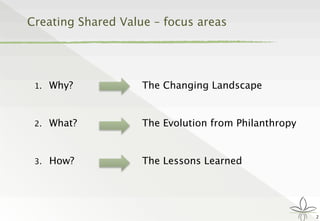
Creating Shared Value – focus areas
1. Why? 
 
 
 The Changing Landscape
2. What?
 
 
 The Evolution from Philanthropy
3. How?
 
 
 The Lessons Learned
2
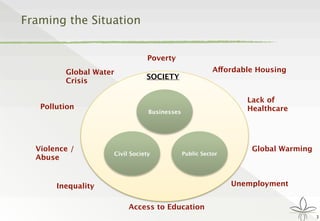
Framing the Situation
3
Businesses
Public SectorCivil Society
SOCIETY
Affordable Housing
Lack of
Healthcare
Global Warming
Unemployment
Access to Education
Inequality
Violence /
Abuse
Pollution
Global Water
Crisis
Poverty
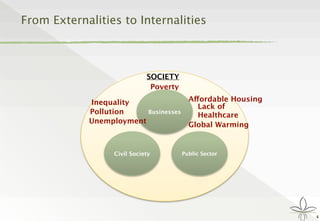
From Externalities to Internalities
4
Businesses
Public SectorCivil Society
SOCIETY
Affordable Housing
Lack of
Healthcare
Global Warming
Unemployment
Inequality
Pollution
Poverty
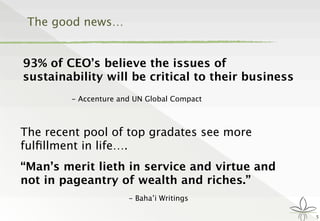
The good news…
93% of CEO’s believe the issues of
sustainability will be critical to their business

 
 - Accenture and UN Global Compact
5
The recent pool of top gradates see more
fulfillment in life….
“Man’s merit lieth in service and virtue and
not in pageantry of wealth and riches.”
- Baha’i Writings
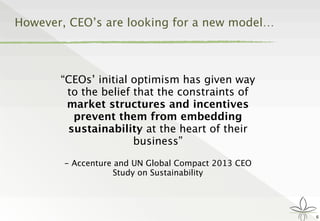
However, CEO’s are looking for a new model…
6
“CEOs’ initial optimism has given way
to the belief that the constraints of
market structures and incentives
prevent them from embedding
sustainability at the heart of their
business”
- Accenture and UN Global Compact 2013 CEO
Study on Sustainability
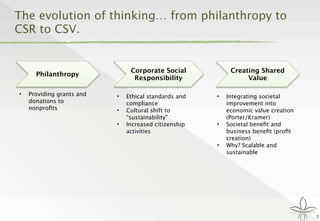
The evolution of thinking… from philanthropy to
CSR to CSV.
7
Philanthropy
• Providing grants and
donations to
nonprofits
Corporate Social
Responsibility
• Ethical standards and
compliance
• Cultural shift to
“sustainability”
• Increased citizenship
activities
Creating Shared
Value
• Integrating societal
improvement into
economic value creation
(Porter/Kramer)
• Societal benefit and
business benefit (profit
creation)
• Why? Scalable and
sustainable
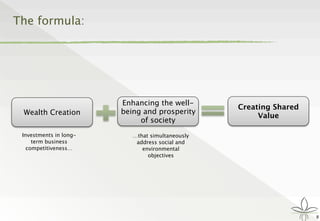
The formula:
8
Investments in long-
term business
competitiveness…
Wealth Creation
Creating Shared
Value
Enhancing the well-
being and prosperity
of society
…that simultaneously
address social and
environmental
objectives
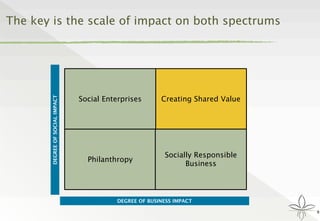
The key is the scale of impact on both spectrums
9
Creating Shared ValueSocial Enterprises
Philanthropy
Socially Responsible
Business
DEGREE OF BUSINESS IMPACT
DEGREEOFSOCIALIMPACT
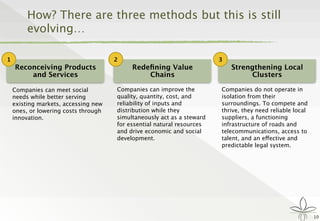
How? There are three methods but this is still
evolving…
10
Reconceiving Products
and Services
1
Redefining Value
Chains
2
Companies can improve the
quality, quantity, cost, and
reliability of inputs and
distribution while they
simultaneously act as a steward
for essential natural resources
and drive economic and social
development.
Strengthening Local
Clusters
3
Companies do not operate in
isolation from their
surroundings. To compete and
thrive, they need reliable local
suppliers, a functioning
infrastructure of roads and
telecommunications, access to
talent, and an effective and
predictable legal system.
Companies can meet social
needs while better serving
existing markets, accessing new
ones, or lowering costs through
innovation.
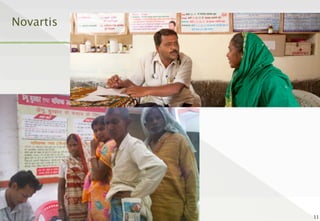
Novartis
11
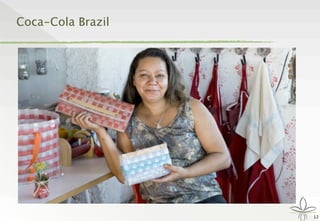
Coca-Cola Brazil
12
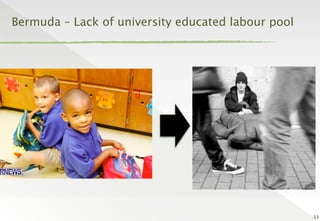
Bermuda – Lack of university educated labour pool
13
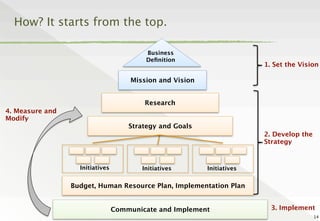
How? It starts from the top.
14
4. Measure and
Modify
Communicate and Implement 3. Implement
Budget, Human Resource Plan, Implementation Plan
Research
Strategy and Goals
2. Develop the
Strategy
Initiatives Initiatives Initiatives
Business
Definition
1. Set the Vision
Mission and Vision
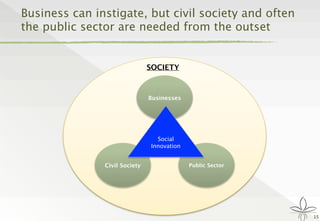
Business can instigate, but civil society and often
the public sector are needed from the outset
15
Public SectorCivil Society
SOCIETY
Businesses
Social
Innovation
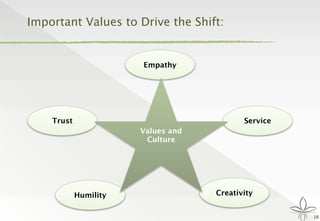
Important Values to Drive the Shift:
16
Empathy
Service
CreativityHumility
Trust
Values and
Culture
Lessons Learned and Advice
1. Takes time to discuss and educate the leadership team, but a shift is possible
due to the dual goal which includes bottom line benefits
2. Redefining the clear social purpose is the bedrock for the strategy
3. Change champions help shift the culture to align with the redefined purpose
4. Research is critical – we need to really understand the societal problems to
bring business solutions to bear
5. Partnerships make a stronger model – NGO’s, government, other distributors or
companies. Bring them to the table at the outset and co-create.
6. A learning culture is important as we are charting a new path
7. Measurement is not easy, but critical –even starting with outputs and
outcomes versus social impact
8. We should not be embarrassed to communicate our social impact even while
making a profit
9. The greatest social benefits will come with scale
17
The Challenge for each of us…
18
Challenge:
How can we infuse the concept of
simultaneously creating shared value (social
and business value) in our companies and
redefine the way business has traditionally
been done?
Within civil society, how can we leverage the
concept of shared value to partner with
companies to have greater social impact?
From Concept to Reality:
Creating Shared Value
Thank-you!
Elizabeth Walker Sobhani
www.lotusconsultingasia.com

ebbf2013 creating shared value - elizabeth sobhani walker

  • 1.
    From Concept toReality: Creating Shared Value Elizabeth Walker Sobhani
  • 2.
    From Concept toReality: Creating Shared Value EBBF Conference Ocotober 2013 Elizabeth Walker Sobhani www.lotusconsultingasia.com
  • 3.
    Creating Shared Value– focus areas 1. Why? The Changing Landscape 2. What? The Evolution from Philanthropy 3. How? The Lessons Learned 2
  • 4.
    Framing the Situation 3 Businesses PublicSectorCivil Society SOCIETY Affordable Housing Lack of Healthcare Global Warming Unemployment Access to Education Inequality Violence / Abuse Pollution Global Water Crisis Poverty
  • 5.
    From Externalities toInternalities 4 Businesses Public SectorCivil Society SOCIETY Affordable Housing Lack of Healthcare Global Warming Unemployment Inequality Pollution Poverty
  • 6.
    The good news… 93%of CEO’s believe the issues of sustainability will be critical to their business - Accenture and UN Global Compact 5 The recent pool of top gradates see more fulfillment in life…. “Man’s merit lieth in service and virtue and not in pageantry of wealth and riches.” - Baha’i Writings
  • 7.
    However, CEO’s arelooking for a new model… 6 “CEOs’ initial optimism has given way to the belief that the constraints of market structures and incentives prevent them from embedding sustainability at the heart of their business” - Accenture and UN Global Compact 2013 CEO Study on Sustainability
  • 8.
    The evolution ofthinking… from philanthropy to CSR to CSV. 7 Philanthropy • Providing grants and donations to nonprofits Corporate Social Responsibility • Ethical standards and compliance • Cultural shift to “sustainability” • Increased citizenship activities Creating Shared Value • Integrating societal improvement into economic value creation (Porter/Kramer) • Societal benefit and business benefit (profit creation) • Why? Scalable and sustainable
  • 9.
    The formula: 8 Investments inlong- term business competitiveness… Wealth Creation Creating Shared Value Enhancing the well- being and prosperity of society …that simultaneously address social and environmental objectives
  • 10.
    The key isthe scale of impact on both spectrums 9 Creating Shared ValueSocial Enterprises Philanthropy Socially Responsible Business DEGREE OF BUSINESS IMPACT DEGREEOFSOCIALIMPACT
  • 11.
    How? There arethree methods but this is still evolving… 10 Reconceiving Products and Services 1 Redefining Value Chains 2 Companies can improve the quality, quantity, cost, and reliability of inputs and distribution while they simultaneously act as a steward for essential natural resources and drive economic and social development. Strengthening Local Clusters 3 Companies do not operate in isolation from their surroundings. To compete and thrive, they need reliable local suppliers, a functioning infrastructure of roads and telecommunications, access to talent, and an effective and predictable legal system. Companies can meet social needs while better serving existing markets, accessing new ones, or lowering costs through innovation.
  • 12.
  • 13.
  • 14.
    Bermuda – Lackof university educated labour pool 13
  • 15.
    How? It startsfrom the top. 14 4. Measure and Modify Communicate and Implement 3. Implement Budget, Human Resource Plan, Implementation Plan Research Strategy and Goals 2. Develop the Strategy Initiatives Initiatives Initiatives Business Definition 1. Set the Vision Mission and Vision
  • 16.
    Business can instigate,but civil society and often the public sector are needed from the outset 15 Public SectorCivil Society SOCIETY Businesses Social Innovation
  • 17.
    Important Values toDrive the Shift: 16 Empathy Service CreativityHumility Trust Values and Culture
  • 18.
    Lessons Learned andAdvice 1. Takes time to discuss and educate the leadership team, but a shift is possible due to the dual goal which includes bottom line benefits 2. Redefining the clear social purpose is the bedrock for the strategy 3. Change champions help shift the culture to align with the redefined purpose 4. Research is critical – we need to really understand the societal problems to bring business solutions to bear 5. Partnerships make a stronger model – NGO’s, government, other distributors or companies. Bring them to the table at the outset and co-create. 6. A learning culture is important as we are charting a new path 7. Measurement is not easy, but critical –even starting with outputs and outcomes versus social impact 8. We should not be embarrassed to communicate our social impact even while making a profit 9. The greatest social benefits will come with scale 17
  • 19.
    The Challenge foreach of us… 18 Challenge: How can we infuse the concept of simultaneously creating shared value (social and business value) in our companies and redefine the way business has traditionally been done? Within civil society, how can we leverage the concept of shared value to partner with companies to have greater social impact?
  • 20.
    From Concept toReality: Creating Shared Value Thank-you! Elizabeth Walker Sobhani www.lotusconsultingasia.com