There is no template
questionnaire: No list of
questions………
NOT LIVING A
HETEROSEXUAL
NARRATIVE
1
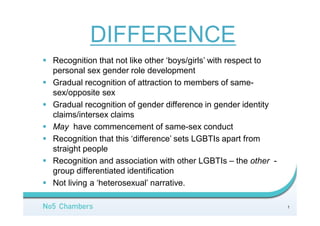
DIFFERENCE
STIGMA
SHAME
HARM
DIFFERENCE
3
 Recognition that not like other ‘boys/girls’ with respect to
personal sex gender role development
 Gradual recognition of attraction to members of same-
sex/opposite sex
 Gradual recognition of gender difference in gender identity
claims/intersex claims
 May have commencement of same-sex conduct
 Recognition that this ‘difference’ sets LGBTIs apart from
straight people
 Recognition and association with other LGBTIs – the other -
group differentiated identification
 Not living a ‘heterosexual’ narrative.
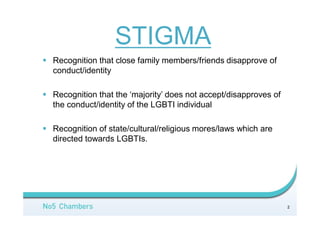
STIGMA
4
 Recognition that close family members/friends disapprove of
conduct/identity
 Recognition that the ‘majority’ does not accept/disapproves of
the conduct/identity of the LGBTI individual
 Recognition of state/cultural/religious mores/laws which are
directed towards LGBTIs.
SHAME
5
 Impact of STIGMA
 Feelings associated with isolation
 Impact of being the ‘other’ rather than the ‘same’
HARM
6
 State harm – criminalisation
 Fear of arrest/detention/torture
 Non-state agent harm - mob violence
 Family – honour killing
HARM
6
 State harm – criminalisation
 Fear of arrest/detention/torture
 Non-state agent harm - mob violence
 Family – honour killing

Difference, Stigma, Shame and Harm

  • 1.
    There is notemplate questionnaire: No list of questions……… NOT LIVING A HETEROSEXUAL NARRATIVE 1
  • 2.
  • 3.
    DIFFERENCE 3  Recognition thatnot like other ‘boys/girls’ with respect to personal sex gender role development  Gradual recognition of attraction to members of same- sex/opposite sex  Gradual recognition of gender difference in gender identity claims/intersex claims  May have commencement of same-sex conduct  Recognition that this ‘difference’ sets LGBTIs apart from straight people  Recognition and association with other LGBTIs – the other - group differentiated identification  Not living a ‘heterosexual’ narrative.
  • 4.
    STIGMA 4  Recognition thatclose family members/friends disapprove of conduct/identity  Recognition that the ‘majority’ does not accept/disapproves of the conduct/identity of the LGBTI individual  Recognition of state/cultural/religious mores/laws which are directed towards LGBTIs.
  • 5.
    SHAME 5  Impact ofSTIGMA  Feelings associated with isolation  Impact of being the ‘other’ rather than the ‘same’
  • 6.
    HARM 6  State harm– criminalisation  Fear of arrest/detention/torture  Non-state agent harm - mob violence  Family – honour killing
  • 7.
    HARM 6  State harm– criminalisation  Fear of arrest/detention/torture  Non-state agent harm - mob violence  Family – honour killing