Tycho Bovenschen
Wednesday, 15 November 2023
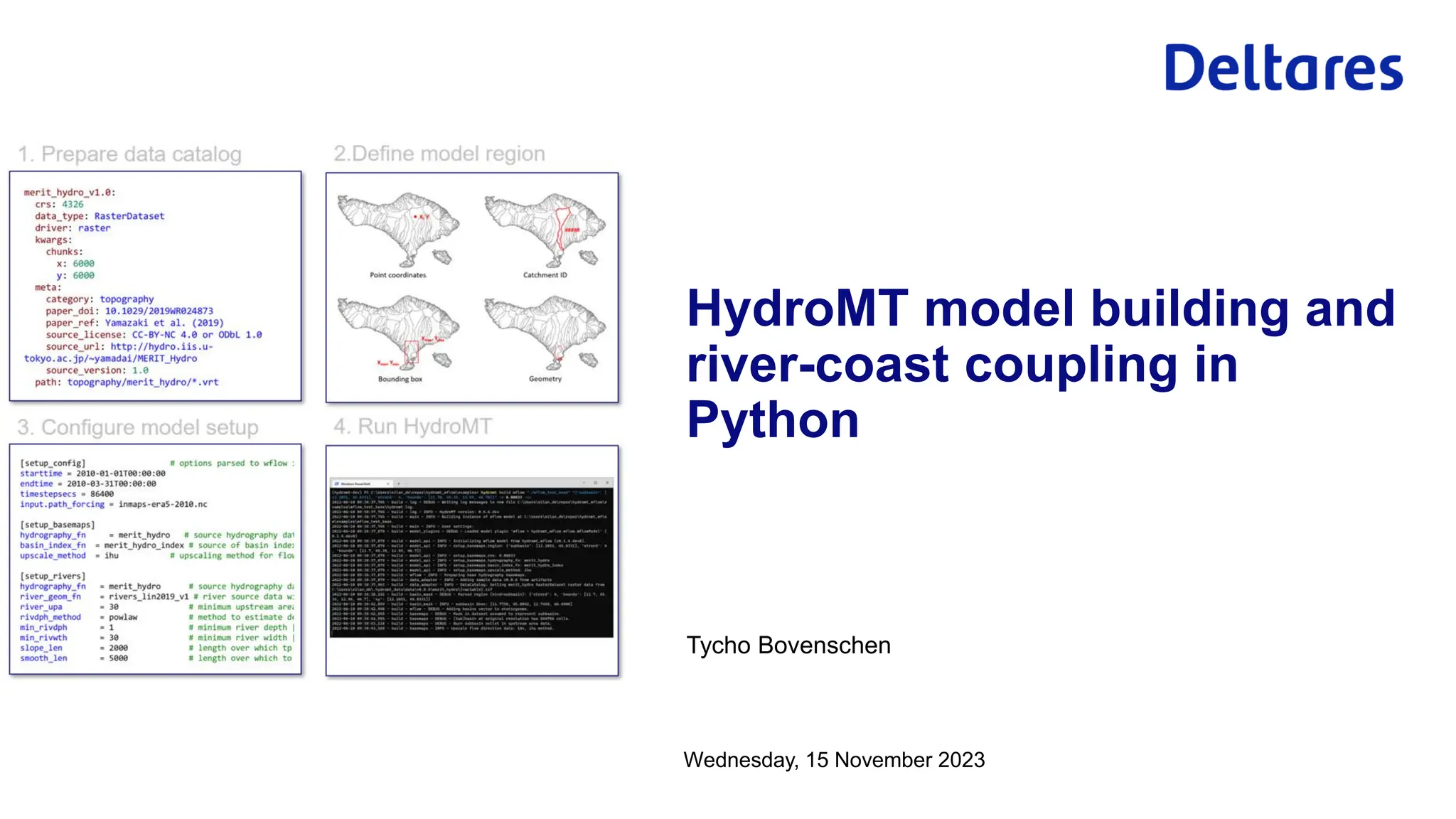
HydroMT model building and
river-coast coupling in
Python
About HydroMT
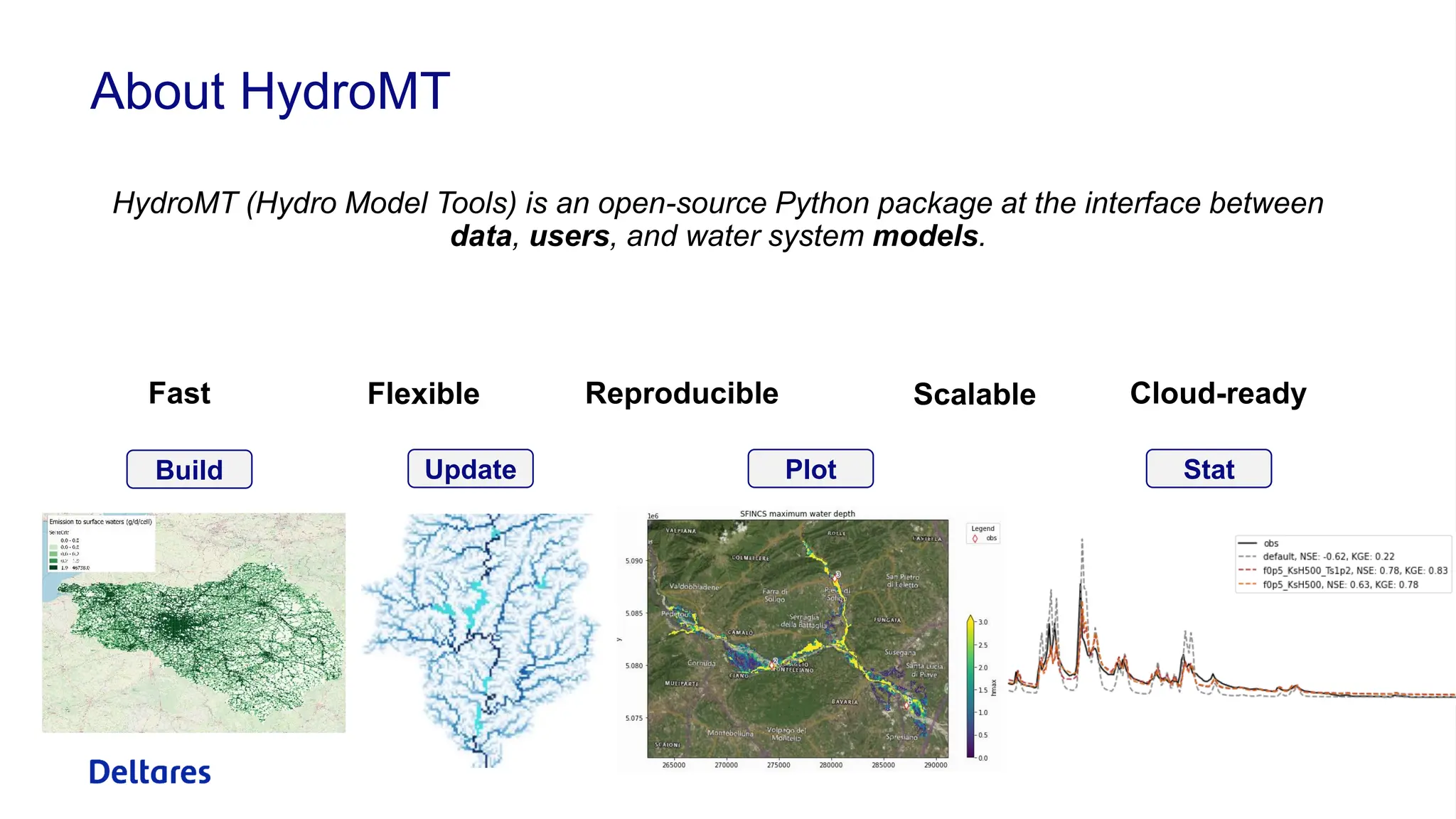
HydroMT (Hydro Model Tools) is an open-source Python package at the interface between
data, users, and water system models.
Build Update Plot Stat
Cloud-ready
Scalable
Reproducible
Flexible
Fast
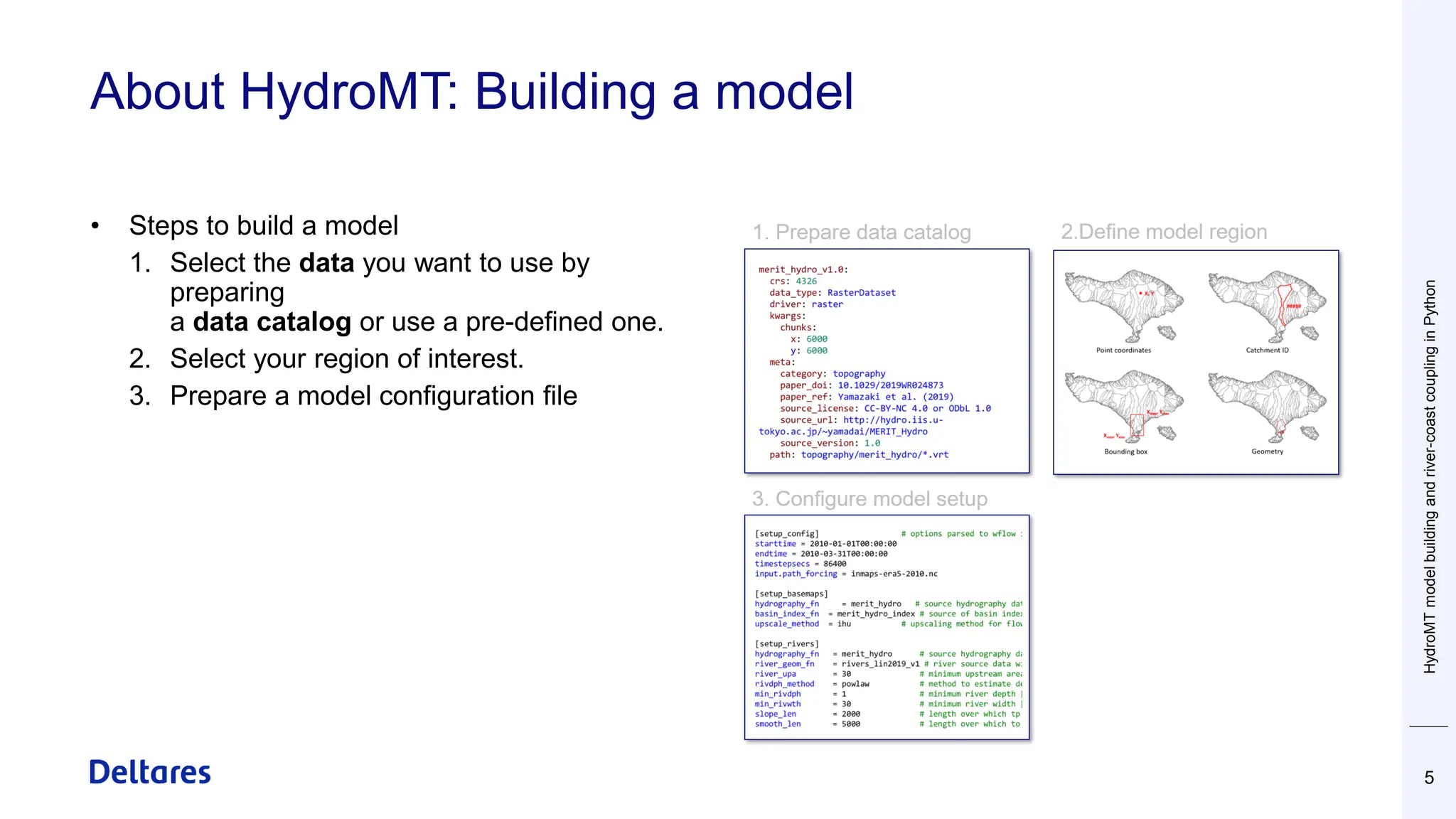
About HydroMT: Building a model
3
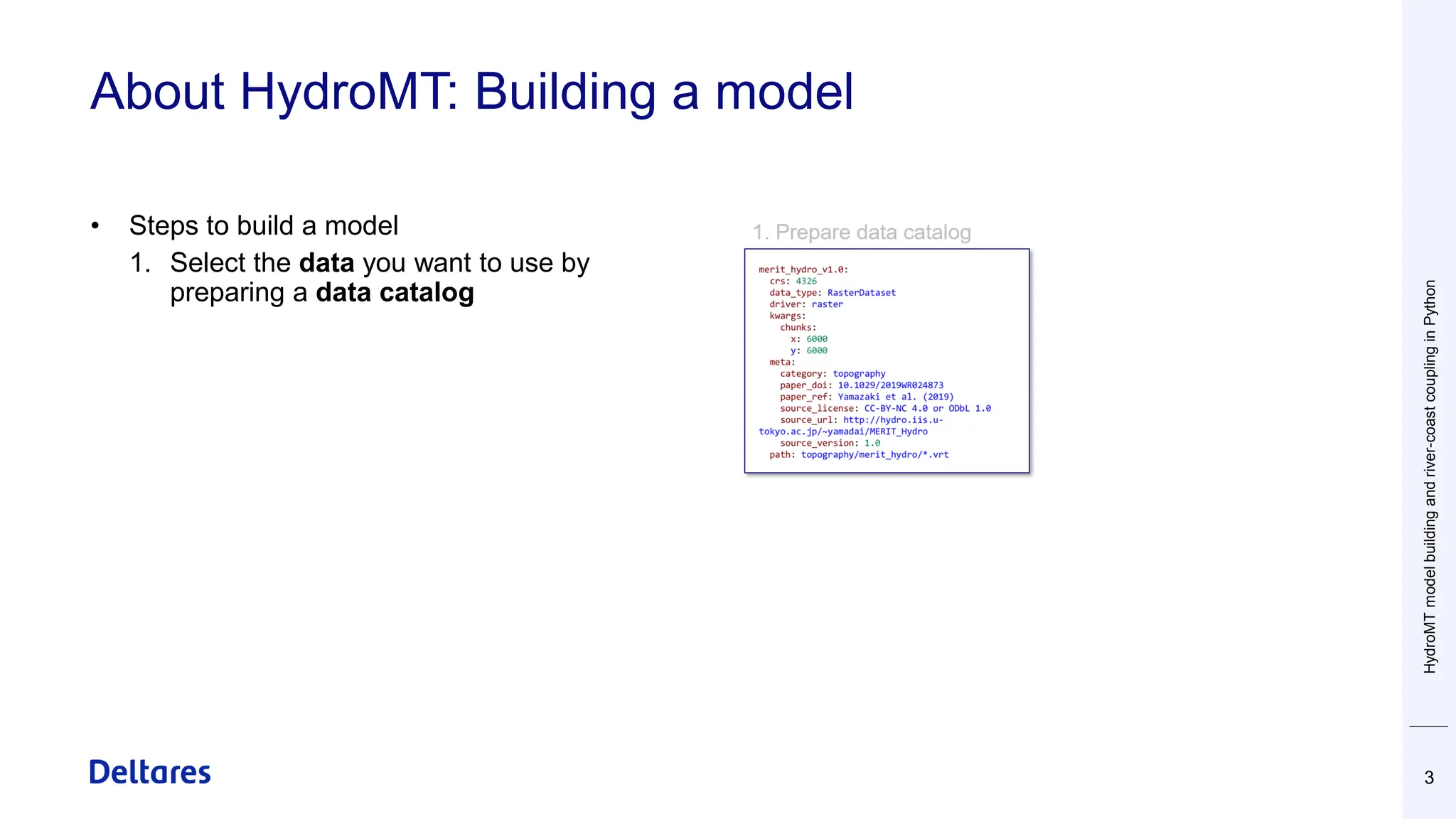
• Steps to build a model
1. Select the data you want to use by
preparing a data catalog
HydroMT
model
building
and
river-coast
coupling
in
Python
About HydroMT: Building a model
4
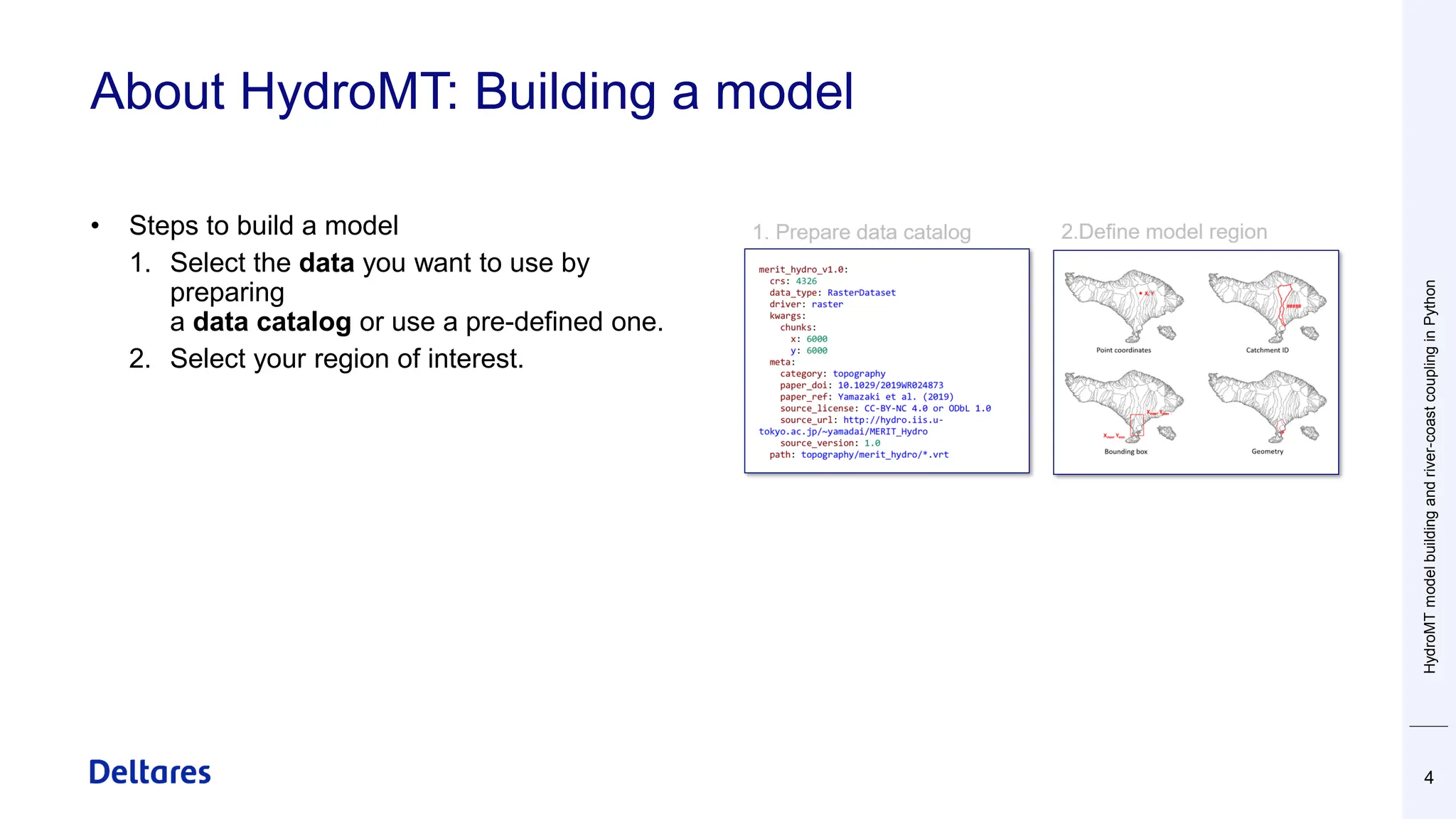
• Steps to build a model
1. Select the data you want to use by
preparing
a data catalog or use a pre-defined one.
2. Select your region of interest.
HydroMT
model
building
and
river-coast
coupling
in
Python
About HydroMT: Building a model
5
• Steps to build a model
1. Select the data you want to use by
preparing
a data catalog or use a pre-defined one.
2. Select your region of interest.
3. Prepare a model configuration file
HydroMT
model
building
and
river-coast
coupling
in
Python
About HydroMT: Building a model
6
• Steps to build a model
1. Select the data you want to use by
preparing
a data catalog or use a pre-defined one.
2. Select your region of interest.
3. Prepare a model configuration file
4. Build your model using the Command
Line Interface (CLI) or Python.
> hydromt build model “my_model” “{‘basin’: [x,y]}” -i model_build.ini
-d data_catalog.yml -vv
HydroMT
model
building
and
river-coast
coupling
in
Python
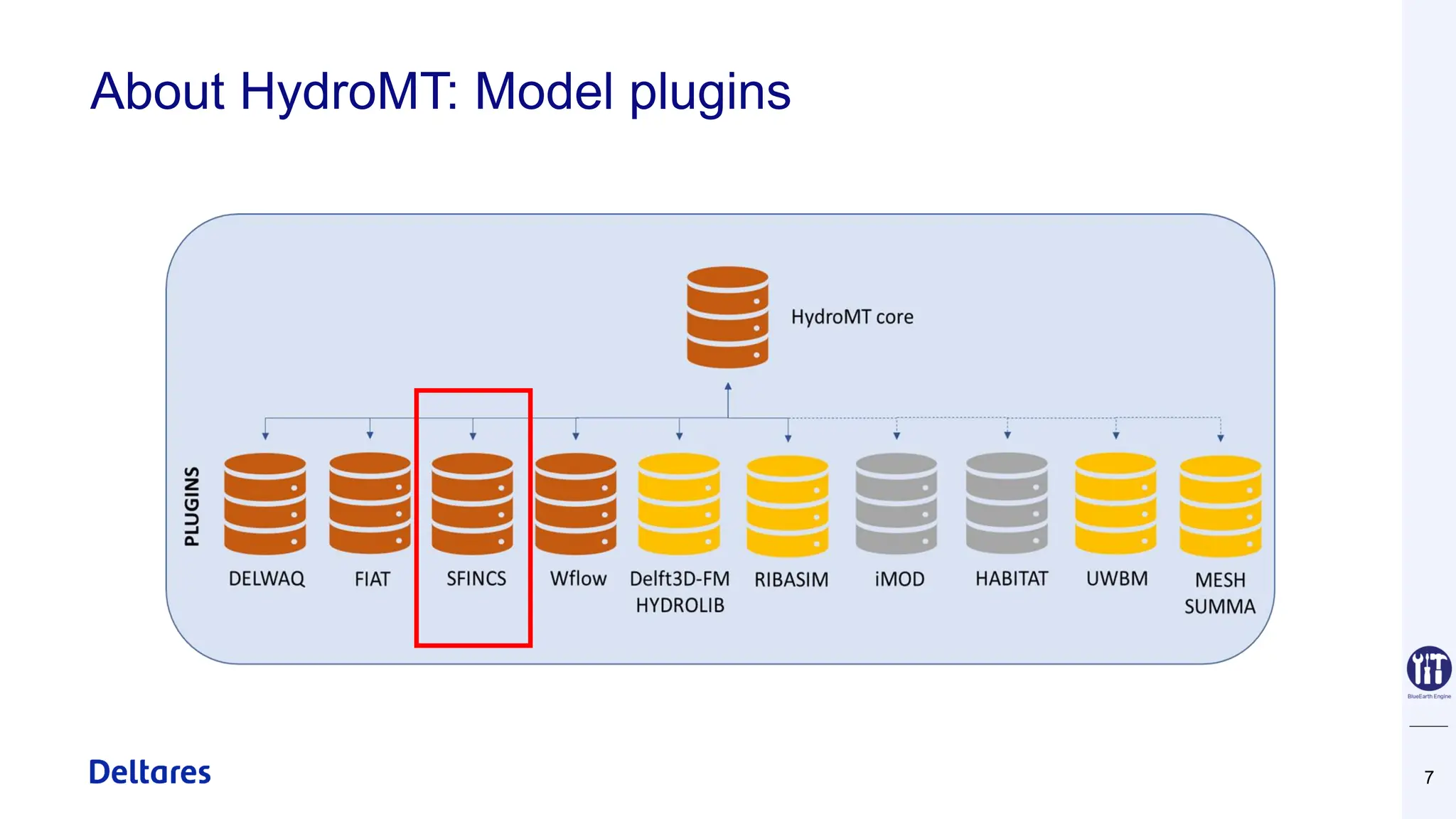
About HydroMT: Model plugins
7
HydroMT
model
building
and
river-coast
coupling
in
Python
8
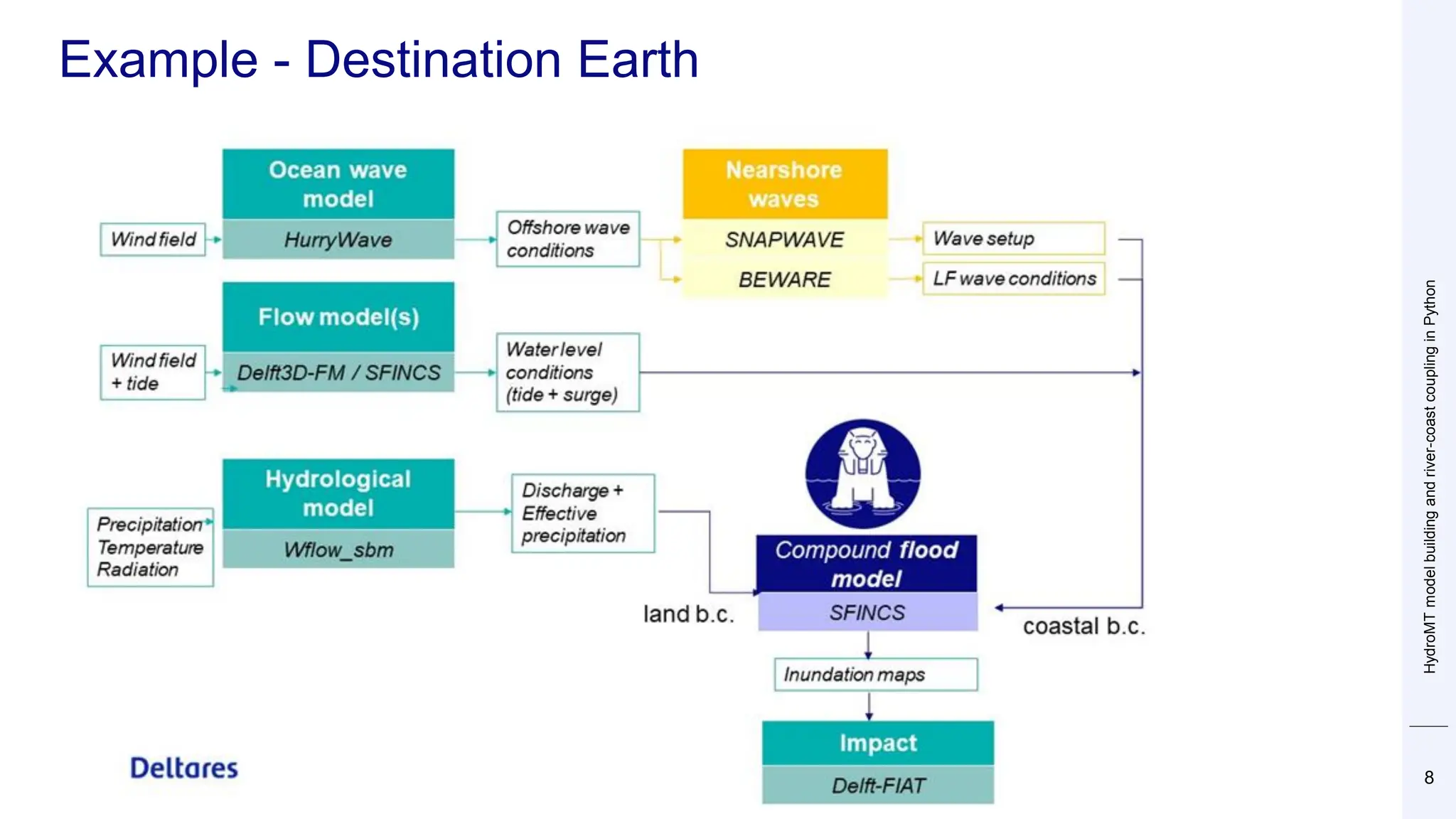
Example - Destination Earth
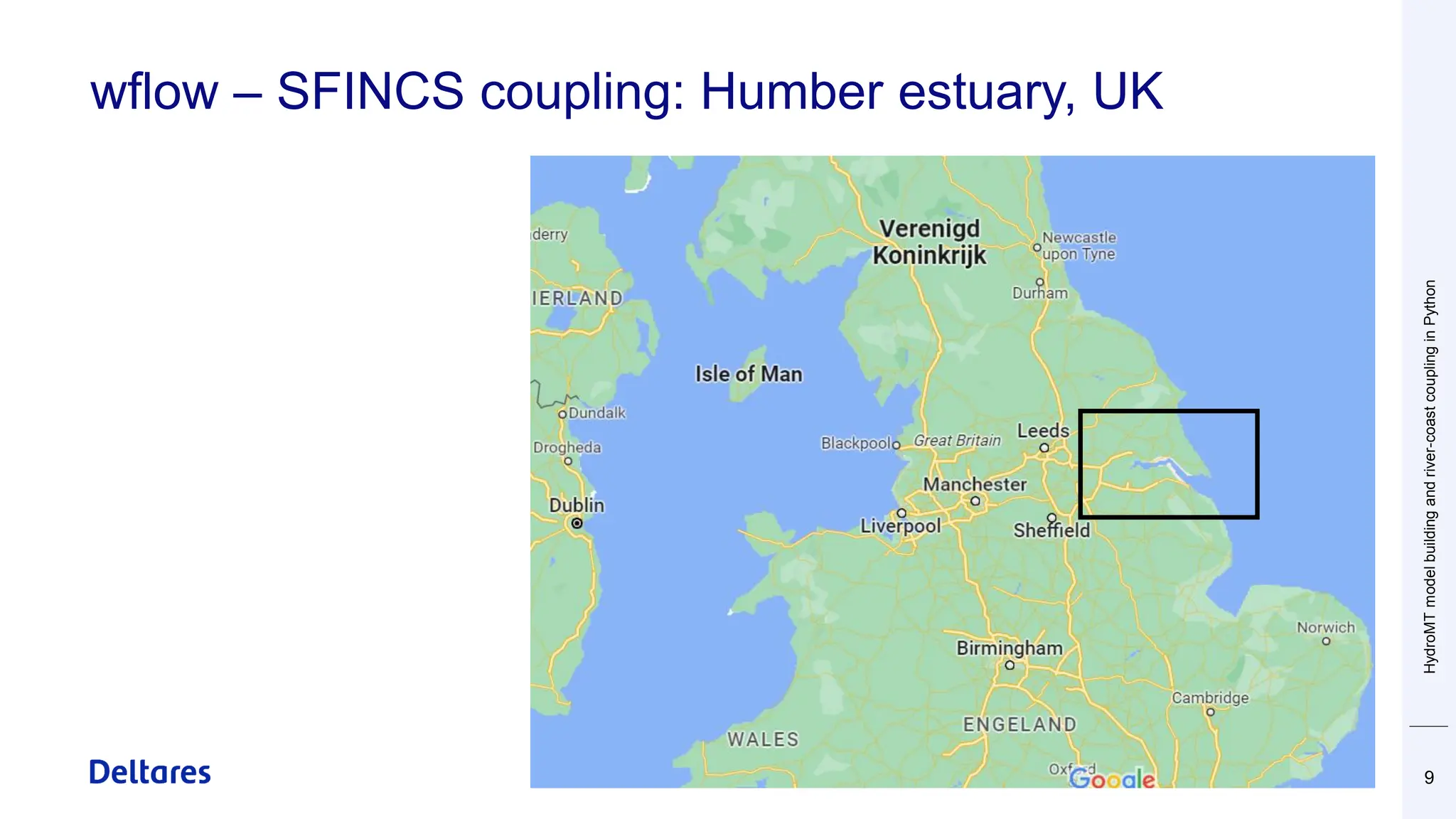
wflow – SFINCS coupling: Humber estuary, UK
HydroMT
model
building
and
river-coast
coupling
in
Python
9
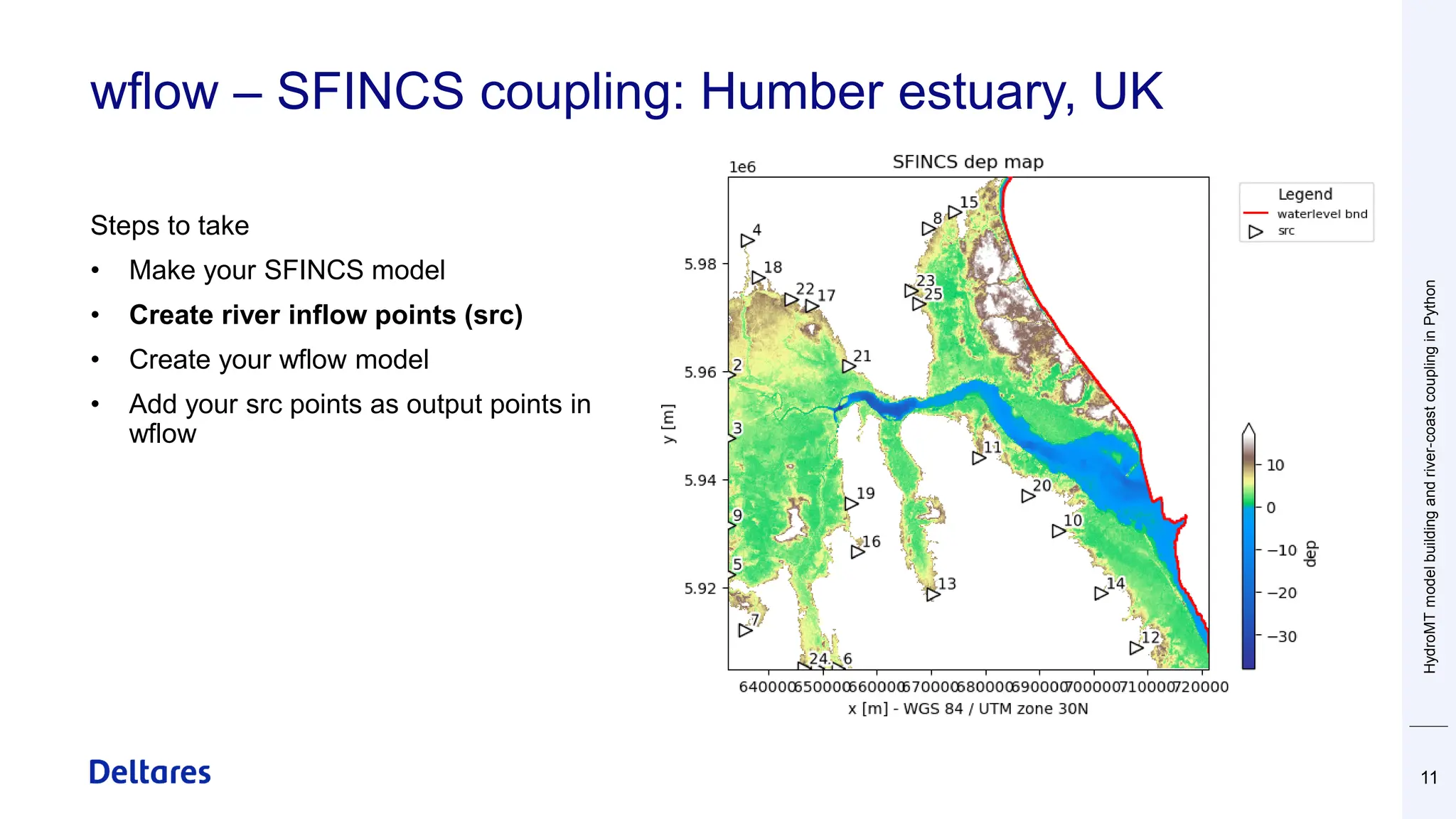
wflow – SFINCS coupling: Humber estuary, UK
Steps to take
• Make your SFINCS model
• Create river inflow points (src)
• Create your wflow model
• Add your src points as output points in
wflow
HydroMT
model
building
and
river-coast
coupling
in
Python
10
> hydromt build model “my_model” “{‘basin’: [x,y]}” -i model_build.ini
-d data_catalog.yml -vv
wflow – SFINCS coupling: Humber estuary, UK
Steps to take
• Make your SFINCS model
• Create river inflow points (src)
• Create your wflow model
• Add your src points as output points in
wflow
HydroMT
model
building
and
river-coast
coupling
in
Python
11
wflow – SFINCS coupling : Humber estuary, UK
HydroMT
model
building
and
river-coast
coupling
in
Python
12
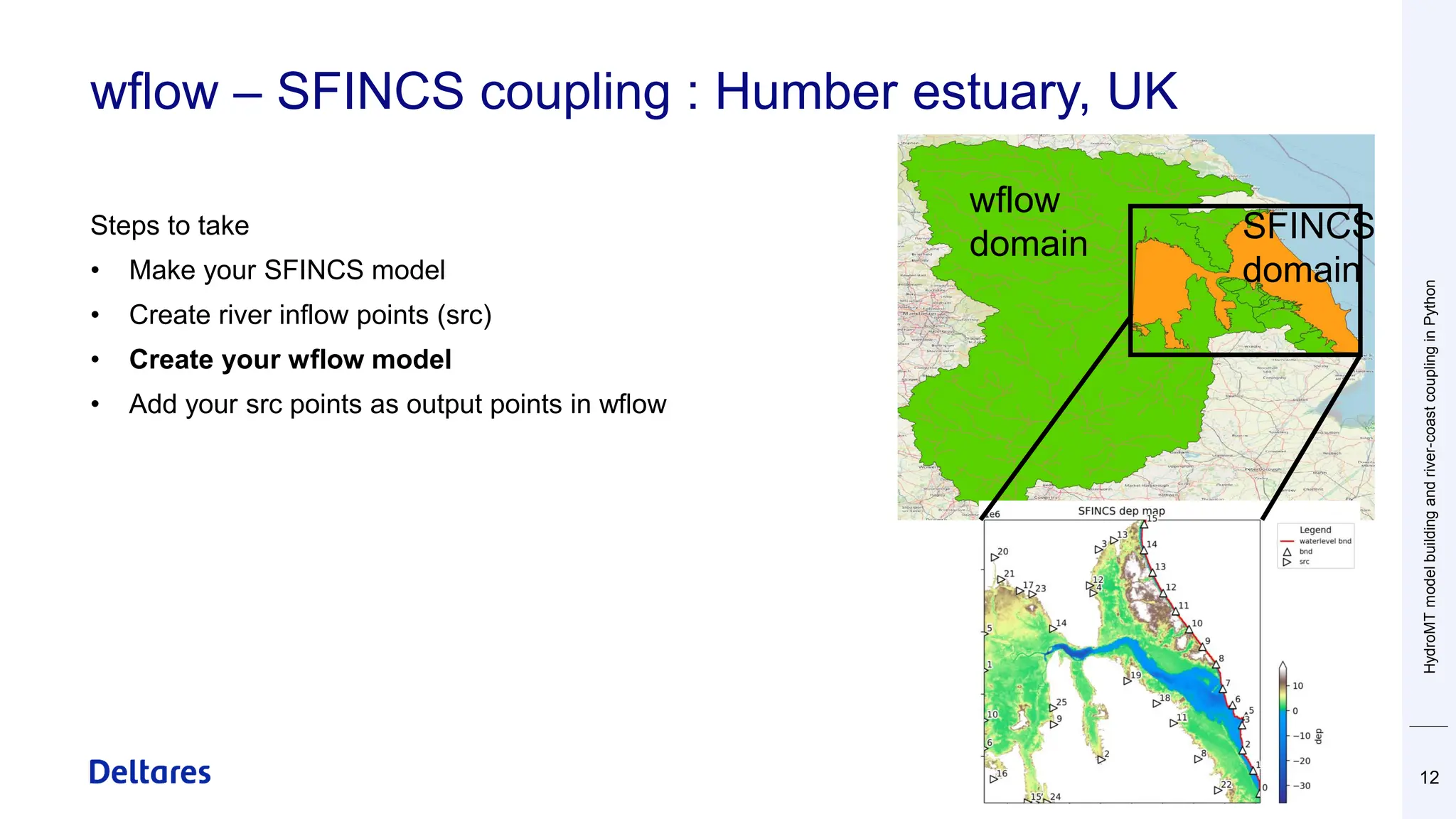
wflow
domain SFINCS
domain
Steps to take
• Make your SFINCS model
• Create river inflow points (src)
• Create your wflow model
• Add your src points as output points in wflow
wflow – SFINCS coupling : Humber estuary, UK
HydroMT
model
building
and
river-coast
coupling
in
Python
13
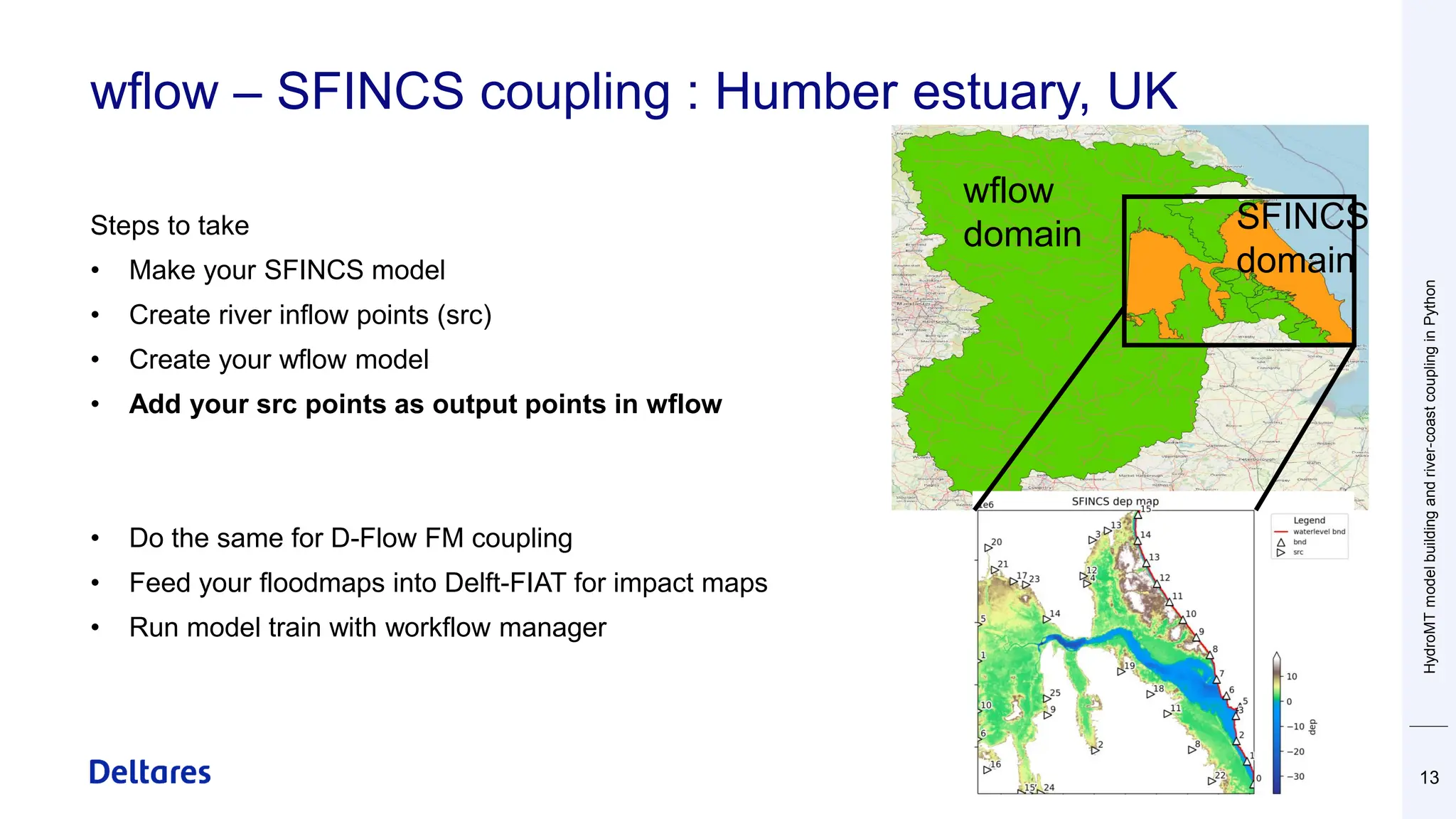
wflow
domain SFINCS
domain
Steps to take
• Make your SFINCS model
• Create river inflow points (src)
• Create your wflow model
• Add your src points as output points in wflow
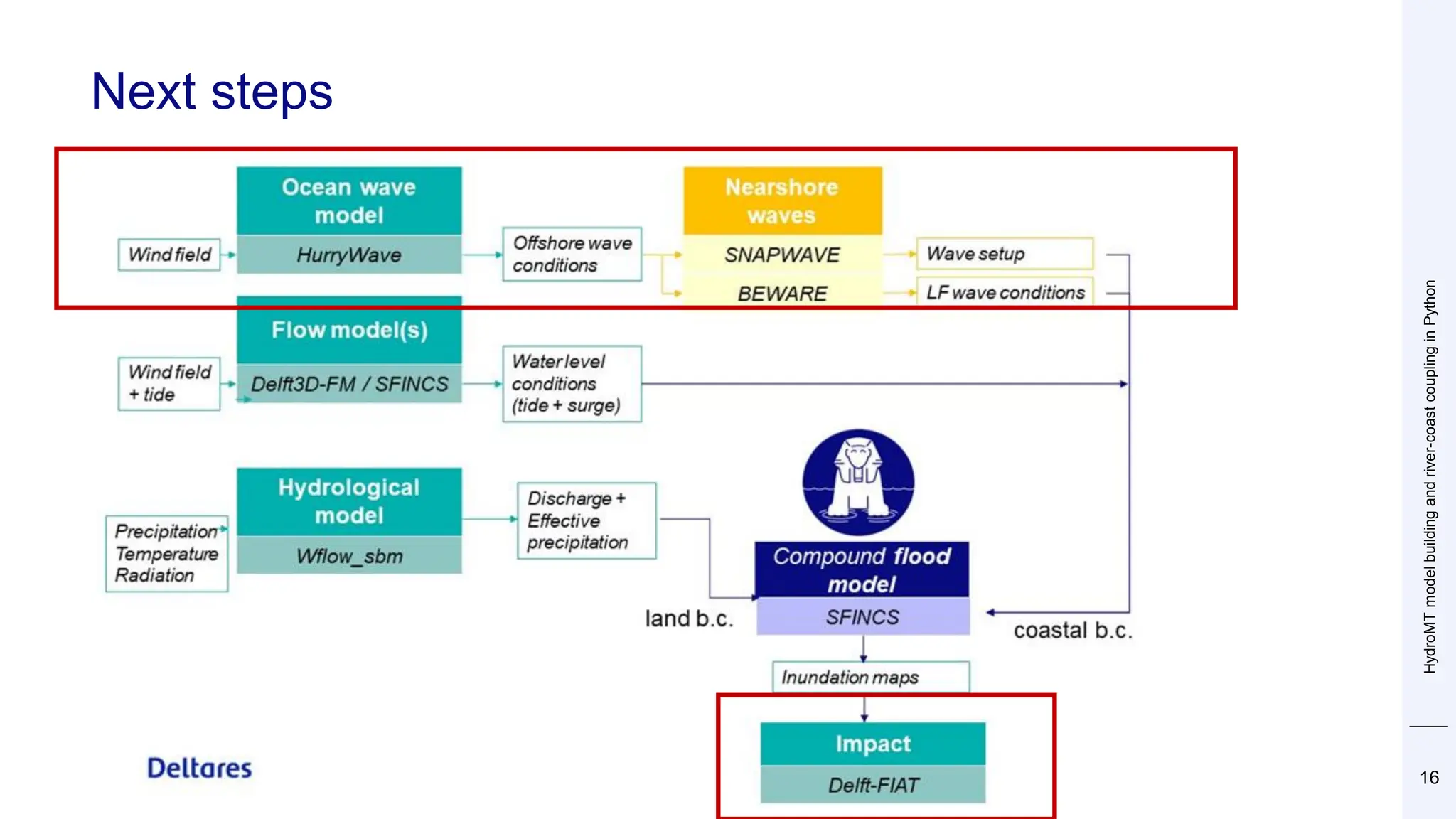
• Do the same for D-Flow FM coupling
• Feed your floodmaps into Delft-FIAT for impact maps
• Run model train with workflow manager
HydroMT
model
building
and
river-coast
coupling
in
Python
14
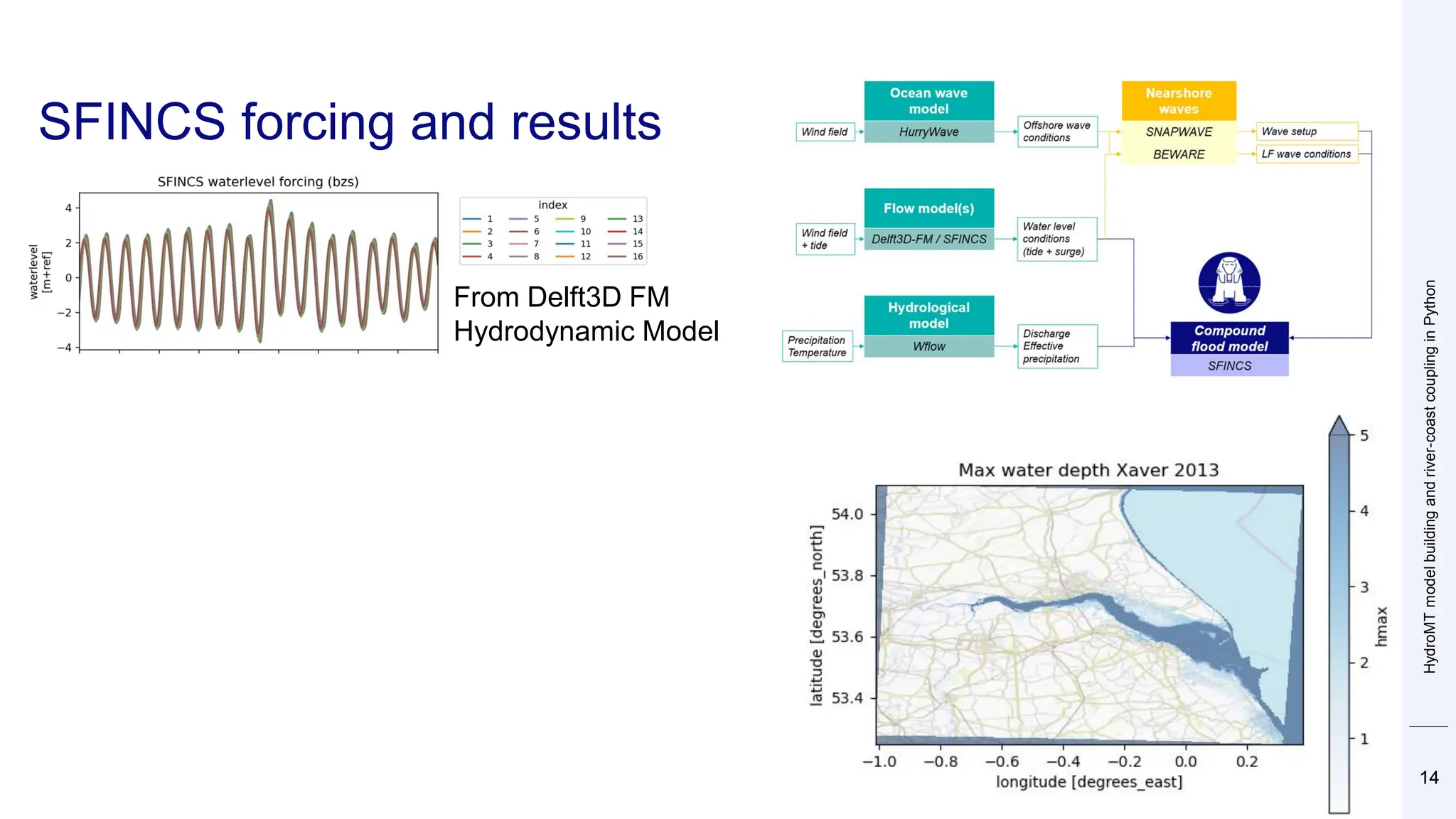
SFINCS forcing and results
14
From Delft3D FM
Hydrodynamic Model
From wflow
hydrological model
From ERA-5
reanalysis
HydroMT
model
building
and
river-coast
coupling
in
Python
16
Next steps
Take home message
• HydroMT is a very useful tool to create models in a fast, reproducable and scalable way
• Using HydroMT we can couple SFINCS multiple models with minimum manual effort
HydroMT
model
building
and
river-coast
coupling
in
Python
17
Contact
www.deltares.nl
info@deltares.nl
@deltares
@deltares
linkedin.com/company/deltares
facebook.com/deltaresNL

DSD-INT 2023 HydroMT model building and river-coast coupling in Python - Bovenschen

  • 1.
    Tycho Bovenschen Wednesday, 15November 2023 HydroMT model building and river-coast coupling in Python
  • 2.
    About HydroMT HydroMT (HydroModel Tools) is an open-source Python package at the interface between data, users, and water system models. Build Update Plot Stat Cloud-ready Scalable Reproducible Flexible Fast
  • 3.
    About HydroMT: Buildinga model 3 • Steps to build a model 1. Select the data you want to use by preparing a data catalog HydroMT model building and river-coast coupling in Python
  • 4.
    About HydroMT: Buildinga model 4 • Steps to build a model 1. Select the data you want to use by preparing a data catalog or use a pre-defined one. 2. Select your region of interest. HydroMT model building and river-coast coupling in Python
  • 5.
    About HydroMT: Buildinga model 5 • Steps to build a model 1. Select the data you want to use by preparing a data catalog or use a pre-defined one. 2. Select your region of interest. 3. Prepare a model configuration file HydroMT model building and river-coast coupling in Python
  • 6.
    About HydroMT: Buildinga model 6 • Steps to build a model 1. Select the data you want to use by preparing a data catalog or use a pre-defined one. 2. Select your region of interest. 3. Prepare a model configuration file 4. Build your model using the Command Line Interface (CLI) or Python. > hydromt build model “my_model” “{‘basin’: [x,y]}” -i model_build.ini -d data_catalog.yml -vv HydroMT model building and river-coast coupling in Python
  • 7.
  • 8.
  • 9.
    wflow – SFINCScoupling: Humber estuary, UK HydroMT model building and river-coast coupling in Python 9
  • 10.
    wflow – SFINCScoupling: Humber estuary, UK Steps to take • Make your SFINCS model • Create river inflow points (src) • Create your wflow model • Add your src points as output points in wflow HydroMT model building and river-coast coupling in Python 10 > hydromt build model “my_model” “{‘basin’: [x,y]}” -i model_build.ini -d data_catalog.yml -vv
  • 11.
    wflow – SFINCScoupling: Humber estuary, UK Steps to take • Make your SFINCS model • Create river inflow points (src) • Create your wflow model • Add your src points as output points in wflow HydroMT model building and river-coast coupling in Python 11
  • 12.
    wflow – SFINCScoupling : Humber estuary, UK HydroMT model building and river-coast coupling in Python 12 wflow domain SFINCS domain Steps to take • Make your SFINCS model • Create river inflow points (src) • Create your wflow model • Add your src points as output points in wflow
  • 13.
    wflow – SFINCScoupling : Humber estuary, UK HydroMT model building and river-coast coupling in Python 13 wflow domain SFINCS domain Steps to take • Make your SFINCS model • Create river inflow points (src) • Create your wflow model • Add your src points as output points in wflow • Do the same for D-Flow FM coupling • Feed your floodmaps into Delft-FIAT for impact maps • Run model train with workflow manager
  • 14.
    HydroMT model building and river-coast coupling in Python 14 SFINCS forcing andresults 14 From Delft3D FM Hydrodynamic Model From wflow hydrological model From ERA-5 reanalysis
  • 15.
  • 16.
    Take home message •HydroMT is a very useful tool to create models in a fast, reproducable and scalable way • Using HydroMT we can couple SFINCS multiple models with minimum manual effort HydroMT model building and river-coast coupling in Python 17
  • 17.