Integrating
Storytelling
Enhancing Design through Narrative Techniques
Introduction
This presentation explores how storytelling can enhance
design by fostering engagement, building connections,
and facilitating understanding. Discover techniques to
effectively integrate narrative into your design work.
Importance
01
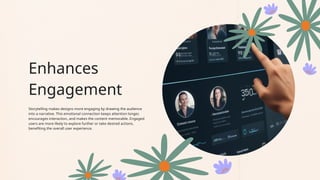
Enhances
Engagement
Storytelling makes designs more engaging by drawing the audience
into a narrative. This emotional connection keeps attention longer,
encourages interaction, and makes the content memorable. Engaged
users are more likely to explore further or take desired actions,
benefiting the overall user experience.
Builds Connection
Effective storytelling in design helps to build a connection between
the user and the brand. By sharing relatable narratives, values, and
experiences, users can identify with the brand on a personal level.
This emotional resonance fosters loyalty and trust, turning customers
into advocates.
Facilitates
Understanding
Storytelling simplifies complex ideas and concepts, making them more
accessible to the audience. By framing information within a narrative,
designers can present their messages in a relatable context. This
method enables users to visualize and comprehend abstract concepts
effectively, leading to better retention and application of information.
Techniques
02
Character
Development
Characters are central to engaging storytelling. In design, developing
relatable characters can help represent user personas or brand
values. Designers must identify key traits and backstories that
resonate with their target audience. This personalizes the design,
making users feel acknowledged and understood.
Narrative Arc
The narrative arc is critical to maintaining interest throughout the
design. It consists of exposition, rising action, climax, falling action, and
resolution. Designers can leverage this structure to guide users through
an experience, keeping them engaged with a clear progression of events
that evokes curiosity and emotional response.
Visual
Storytelling
Visual storytelling combines imagery with graphic elements to convey
narratives effectively. It utilizes colors, shapes, and symbols to evoke
emotions and guide user interpretations. By strategically designing
visuals that align with the story, designers can enhance user engagement
and convey concepts at a glance, making the information more digestible.
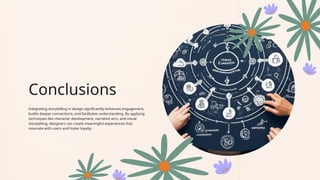
Conclusions
Integrating storytelling in design significantly enhances engagement,
builds deeper connections, and facilitates understanding. By applying
techniques like character development, narrative arcs, and visual
storytelling, designers can create meaningful experiences that
resonate with users and foster loyalty.
CREDITS: This presentation template was
created by Slidesgo, and includes icons by
Flaticon, and infographics & images by Freepik
Thank you!
Do you have any questions?

DriverPack Solution Crack Free Download

  • 1.
  • 2.
    Introduction This presentation exploreshow storytelling can enhance design by fostering engagement, building connections, and facilitating understanding. Discover techniques to effectively integrate narrative into your design work.
  • 3.
  • 4.
    Enhances Engagement Storytelling makes designsmore engaging by drawing the audience into a narrative. This emotional connection keeps attention longer, encourages interaction, and makes the content memorable. Engaged users are more likely to explore further or take desired actions, benefiting the overall user experience.
  • 5.
    Builds Connection Effective storytellingin design helps to build a connection between the user and the brand. By sharing relatable narratives, values, and experiences, users can identify with the brand on a personal level. This emotional resonance fosters loyalty and trust, turning customers into advocates.
  • 6.
    Facilitates Understanding Storytelling simplifies complexideas and concepts, making them more accessible to the audience. By framing information within a narrative, designers can present their messages in a relatable context. This method enables users to visualize and comprehend abstract concepts effectively, leading to better retention and application of information.
  • 7.
  • 8.
    Character Development Characters are centralto engaging storytelling. In design, developing relatable characters can help represent user personas or brand values. Designers must identify key traits and backstories that resonate with their target audience. This personalizes the design, making users feel acknowledged and understood.
  • 9.
    Narrative Arc The narrativearc is critical to maintaining interest throughout the design. It consists of exposition, rising action, climax, falling action, and resolution. Designers can leverage this structure to guide users through an experience, keeping them engaged with a clear progression of events that evokes curiosity and emotional response.
  • 10.
    Visual Storytelling Visual storytelling combinesimagery with graphic elements to convey narratives effectively. It utilizes colors, shapes, and symbols to evoke emotions and guide user interpretations. By strategically designing visuals that align with the story, designers can enhance user engagement and convey concepts at a glance, making the information more digestible.
  • 11.
    Conclusions Integrating storytelling indesign significantly enhances engagement, builds deeper connections, and facilitates understanding. By applying techniques like character development, narrative arcs, and visual storytelling, designers can create meaningful experiences that resonate with users and foster loyalty.
  • 12.
    CREDITS: This presentationtemplate was created by Slidesgo, and includes icons by Flaticon, and infographics & images by Freepik Thank you! Do you have any questions?