Drama: The 5 Elements of
Plot
Behavior: Students will discover the concepts behind the
5 essential elements of plot structure. NJCCCS 1.1.5.C.1
Conditions: Students will participate in devising stories
in "plot structure performance groups". NJCCCS 1.1.8.C.1
Criteria: After participating in students group
performances, 80% of students will be able to identify at
least 3/5 of the elements of plot structure.
Take out your Plot Structure
Homework!
With your Partner, take
turns discussing your
Fantasy Story!
Who are the Character?
What is the big change? The
Ending?
October 7th
, 2013
DO NOW DO NOW
DO NOW
•Take out your Greek Myth Packet
I will check your completed
homework.
•Take a seat in the Circle.
•Be ready to present a short
summary of your Original Greek
Myth.
Identifying the
Elements of A Plot
Diagram
Student Notes
FUNWORK HOMEWORK!
• Begin Brainstorming your own Plot Story!
• Use the provided handout
• You can write about anything and everything!
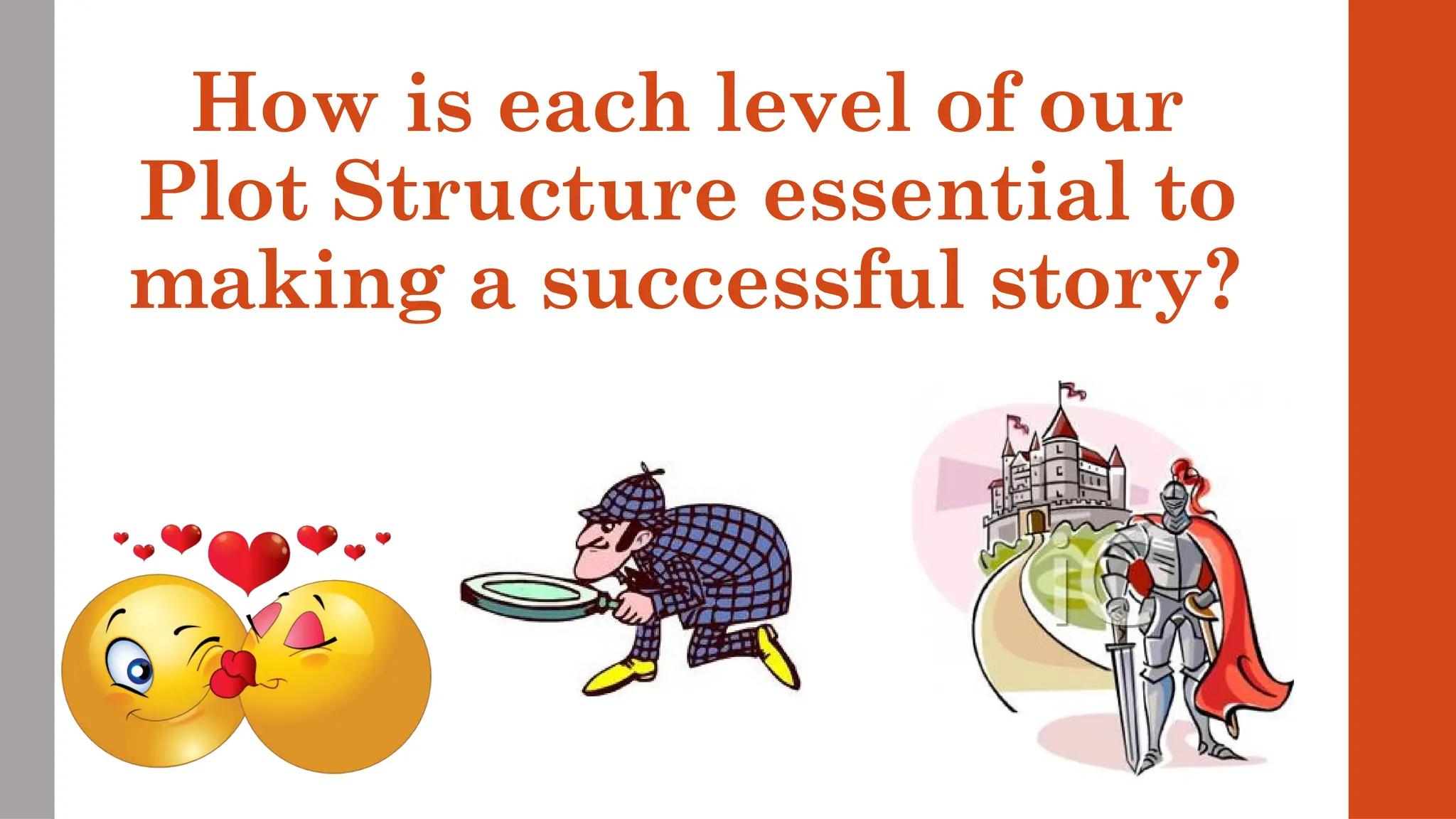
Love Story
Mystery Story
Just follow
the Plot
Structure &
Create!
How is each level of our
Plot Structure essential to
making a successful story?
Every Story
is like a
Roller
coaster!!
It has it’s
ups and
downs.
Enjoy
the
ride.
://www.youtube.com/watch?v=a5GZ1QOYdpk
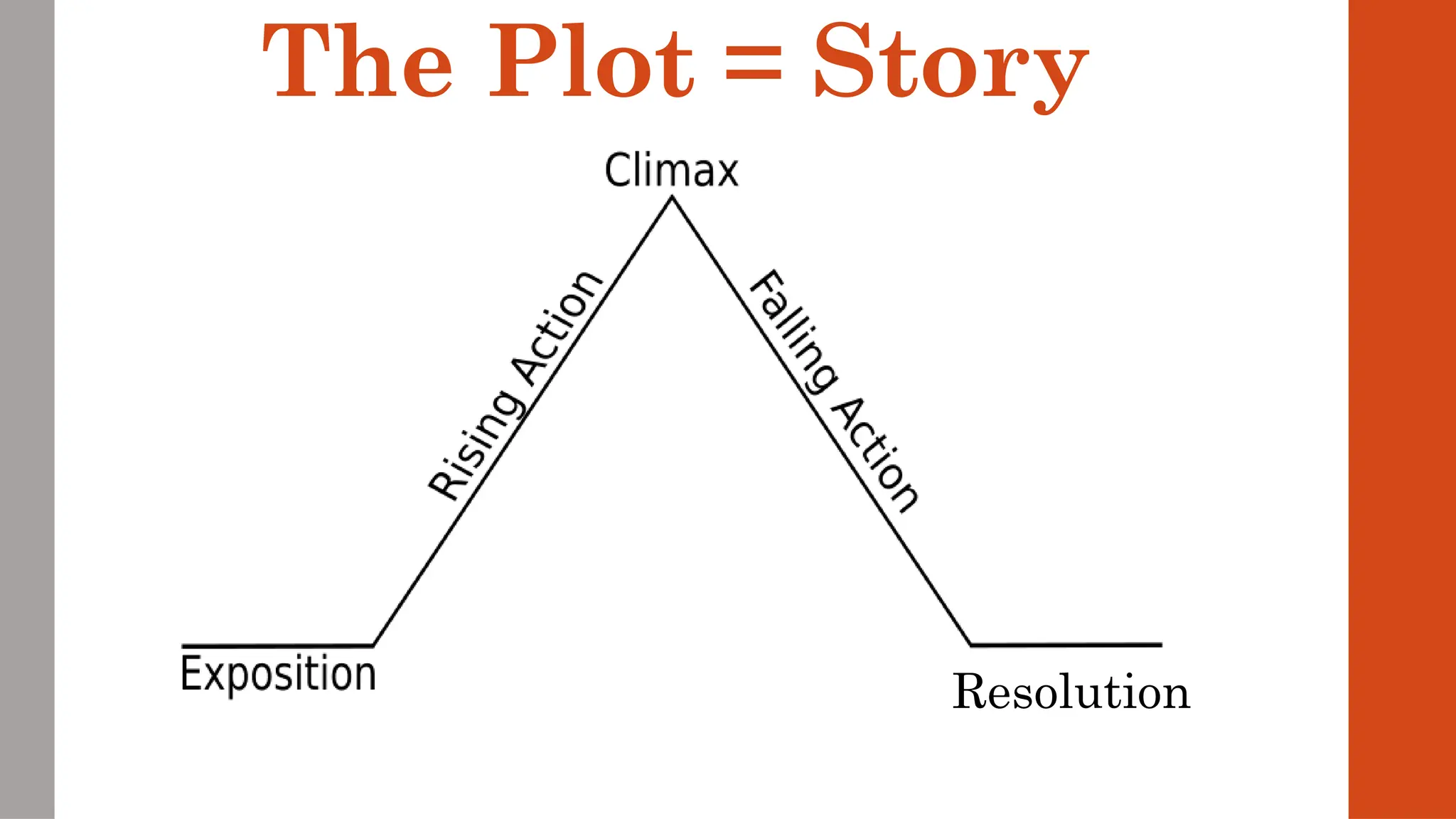
The Plot = Story
Resolution
Plot (definition)
• Plot is the organized
pattern or sequence
of events that make
up a story. Every
plot is made up of a
series of incidents
that are related to
one another.
1. Exposition
• This usually occurs at the beginning of a short
story. Here the characters are introduced. We
also learn about the setting of the story. Most
importantly, we are introduced to the main
conflict (main problem).
Sets the scene
Author introduces
the setting and
characters
Provides
description and
background
information
Plot structure: Exposition
2. Rising Action
• This part of the story begins to
develop the conflict(s). A building
of interest or suspense occurs.
Series of
conflicts
and crises
in the story
that lead to
the turning
point
• Example
Plot structure: Rising action
3. Climax
• This is the turning point of the story.
Usually the main character comes face to
face with a conflict. The main character
will change in some way.
 Also called the
“turning point”
 Event that the rising
action and central
conflict leads up to
 Place where plot
turns or “changes
direction” toward a
• Example
Plot structure: climax
4. Falling Action
•All loose ends of the
plot are tied up. The
conflict(s) and
climax are taken
care of.
Events that
happen as a
result of the
climax as
the conflict
grows closer
to being
resolved
Plot structure: Falling Action
5. Resolution
•The story
comes to a
reasonable
ending.
Main
conflict is
solved or
resolved
Plot structure: Resolution
Plot Diagram: Quiz
2
1
3
4
5
Exposition: Detailed
information revealing the facts
of a plot.
Falling Action: The
action following the climax
of the work that moves it
towards its denouement or
resolution.
Climax:
The point of greatest dramatic tension
or transition in a theatrical work.
RESOLUTION: The final
resolution of the conflict in a
plot.
Rising Action: The
part of a plot consisting of
complications and discoveries that
create conflict.
DO NOW DO NOW DO NOW
What causes great conflict?
1. Think of conflict in your life and the lives of others
2. Write a few of the reasons why there is conflict or
the types of conflict that you think are the most
common.
Plot: Conflict
Conflict is the dramatic struggle
between two forces in a story.
Without conflict, there is no plot.
Plot: Types of Conflict
Character vs Nature
Character vs Society
Character vs Self
Character vs Character
Character vs. Character
The main character is in conflict
with another character, human or
not human.
Plot: Character vs. Nature Conflict
The main
character is in
conflict with the
forces of nature,
which serve as the
antagonist.
Plot: Character vs. Society Conflict
The main
character in
conflict with a
larger group: a
community,
society, culture,
etc.
Plot: Character vs. Self Conflict
The main
character
experiences
some kind of
inner conflict.
3. PLOT
Title:_____________________
Author:___________________
4.
2._________
1._________________
Setting:
Situation:
Characters:
5.
THEME:
30 Second Plot Plays
•Group up with your Role Partners!
•Use your Reader’s Theater Scripts
•Discuss & Write down the plot points
on your Whiteboard (teacher example)
•Perform a 30 second Plot play.
Antagonist : The Bad Guy
Protagonist : The Hero
https://www.youtube.com/watch?v=Hhk4N9A0oCA
Loki and the Magic Hammer
•Can you
identify and
describe our
PLOT
POINTS?
How would take over
the world?
October 7th
, 2013
Drama 5-7 Plot Structure 2 english literature.pptx

Drama 5-7 Plot Structure 2 english literature.pptx

  • 1.
    Drama: The 5Elements of Plot Behavior: Students will discover the concepts behind the 5 essential elements of plot structure. NJCCCS 1.1.5.C.1 Conditions: Students will participate in devising stories in "plot structure performance groups". NJCCCS 1.1.8.C.1 Criteria: After participating in students group performances, 80% of students will be able to identify at least 3/5 of the elements of plot structure.
  • 2.
    Take out yourPlot Structure Homework! With your Partner, take turns discussing your Fantasy Story! Who are the Character? What is the big change? The Ending? October 7th , 2013
  • 3.
    DO NOW DONOW DO NOW •Take out your Greek Myth Packet I will check your completed homework. •Take a seat in the Circle. •Be ready to present a short summary of your Original Greek Myth.
  • 4.
    Identifying the Elements ofA Plot Diagram Student Notes
  • 5.
    FUNWORK HOMEWORK! • BeginBrainstorming your own Plot Story! • Use the provided handout • You can write about anything and everything! Love Story Mystery Story Just follow the Plot Structure & Create!
  • 6.
    How is eachlevel of our Plot Structure essential to making a successful story?
  • 7.
    Every Story is likea Roller coaster!! It has it’s ups and downs. Enjoy the ride. ://www.youtube.com/watch?v=a5GZ1QOYdpk
  • 8.
    The Plot =Story Resolution
  • 9.
    Plot (definition) • Plotis the organized pattern or sequence of events that make up a story. Every plot is made up of a series of incidents that are related to one another.
  • 10.
    1. Exposition • Thisusually occurs at the beginning of a short story. Here the characters are introduced. We also learn about the setting of the story. Most importantly, we are introduced to the main conflict (main problem).
  • 11.
    Sets the scene Authorintroduces the setting and characters Provides description and background information Plot structure: Exposition
  • 12.
    2. Rising Action •This part of the story begins to develop the conflict(s). A building of interest or suspense occurs.
  • 13.
    Series of conflicts and crises inthe story that lead to the turning point • Example Plot structure: Rising action
  • 14.
    3. Climax • Thisis the turning point of the story. Usually the main character comes face to face with a conflict. The main character will change in some way.
  • 15.
     Also calledthe “turning point”  Event that the rising action and central conflict leads up to  Place where plot turns or “changes direction” toward a • Example Plot structure: climax
  • 16.
    4. Falling Action •Allloose ends of the plot are tied up. The conflict(s) and climax are taken care of.
  • 17.
    Events that happen asa result of the climax as the conflict grows closer to being resolved Plot structure: Falling Action
  • 18.
    5. Resolution •The story comesto a reasonable ending.
  • 19.
  • 20.
  • 21.
    Exposition: Detailed information revealingthe facts of a plot. Falling Action: The action following the climax of the work that moves it towards its denouement or resolution. Climax: The point of greatest dramatic tension or transition in a theatrical work. RESOLUTION: The final resolution of the conflict in a plot. Rising Action: The part of a plot consisting of complications and discoveries that create conflict.
  • 22.
    DO NOW DONOW DO NOW What causes great conflict? 1. Think of conflict in your life and the lives of others 2. Write a few of the reasons why there is conflict or the types of conflict that you think are the most common.
  • 23.
    Plot: Conflict Conflict isthe dramatic struggle between two forces in a story. Without conflict, there is no plot.
  • 24.
    Plot: Types ofConflict Character vs Nature Character vs Society Character vs Self Character vs Character
  • 25.
    Character vs. Character Themain character is in conflict with another character, human or not human.
  • 26.
    Plot: Character vs.Nature Conflict The main character is in conflict with the forces of nature, which serve as the antagonist.
  • 27.
    Plot: Character vs.Society Conflict The main character in conflict with a larger group: a community, society, culture, etc.
  • 28.
    Plot: Character vs.Self Conflict The main character experiences some kind of inner conflict.
  • 29.
  • 30.
    30 Second PlotPlays •Group up with your Role Partners! •Use your Reader’s Theater Scripts •Discuss & Write down the plot points on your Whiteboard (teacher example) •Perform a 30 second Plot play.
  • 31.
  • 32.
  • 33.
  • 34.
    Loki and theMagic Hammer •Can you identify and describe our PLOT POINTS?
  • 35.
    How would takeover the world? October 7th , 2013