General Cleaning:
 Scrubbing with detergents and rinsing
with water
 Spot cleaning of walls and ceiling daily
 For open shelves – clean daily
 For closed cabinets – clean weekly
 For furnitures, lights, equipments –
Clean end of the day with lysol
 Lights and other equipments –
steamed weekly
 The floors should be scrubbed with warm water
and detergent and dried. No disinfectant is
necessary.
 The O.T. table and other non clinical
equipments must be wiped to remove all visible
dirt and left to dry.
 Weakly cleaning of all the areas inside the
operating theatre complex should be done
thoroughly with warm water and detergent and
dried.
 The storage shelves must be emptied and
wiped over, allowed to dry and restacked.
 HIGH:
Kills all the organisms except
Spores, Prions – Eg. Glutaraldehyde
 INTERMEDIATE:
Kills Mycobacteria, most viruses
and bacteria
 LOW:
Kills some viruses and bacteria
Formaldehyde fumigation
Commonly used to sterilize the OT.
Requirement (For an area of 1000 cubic
feet)
- 500 ml of 40% formaldehyde in one
liter of water
- Stove or hot plate for heating formalin
- 300 ml of 10% Ammonia
 Procedure
 Close all doors & windows air tight and
switch off fans and A.C.
 Heat formalin solution till boiling dry
 Leave the OT unentered over night
 Enter the OT next day morning with
300ml of ammonia
 Keep the ammonia solution for 2-3 hrs
to neutralize formalin vapours
 Open the OT to start surgery
 Advised fumigation at weekly intervals
 Mode of Action
 Formaldehyde inactivates
microorganisms by alkylating the
aminoacid and sulfhydryl groups
of proteins and ring nitrogen
atoms of purine bases.
 Disadvantages
 It acts as a potential carcinogen
 Toxic
 Irritant
Duration:
 In case of any construction in O.T.  48
hrs
 In case of inflected cases 
24hr
 For routine clean cases  12 hrs.
 Alternatively 250 ml of formalin and 3000 ml
of tap water are put into a machine (auto
mist) and time is set for 2 hrs. The mist is
circulated for 2hrs inside the closed room.
Commercially available disinfectant
 Baccilocid rasant
 A newer and effective compound in
environmental decontamination with very
good cost/benefit ratio, good material
compatibility, excellent cleaning properties .
It is a Formaldehyde-free disinfectant
cleaner with low use concentration.
 Active ingredients:
Glutaral 100 mg/g, benzyl-C12-18-
alkyldimethylammonium chlorides 60 mg/
g, didecyldimethylammonium chloride 60
mg/g.
 Advantages
 - Provides complete asepsis within
30 to 60 minutes.
 - Cleaning with detergent or
carbolic acid not required.
 - Formalin fumigation not
required.
 - Shutdown of O.T. for 24 hrs not
required.
 c) Aldekol
A new method of
fumigation has been evolved using
‘Aldekol’, a mixture containing 6%
formaldehyde, 6% glutaraldehyde
and 5% benzalkonium120 chloride
 Ultraviolet radiation
 - Daily U.V. Irradiation for 12 -16 hrs
 - To be switched off 2 hrs before
 Immediately after use, all surgical
instruments, reusable gloves, and other
items that have been in contact with
blood or other body fluids should be
placed in a plastic bucket containing a
solution of 0.5% chlorine for 10
minutes. After 10 minutes, the items
should be removed from the chlorine
solution and rinsed with water or
cleaned immediately
* The instruments and other items should be
scrubbed vigorously with a brush (a tooth
brush is a good option) in lukewarm water
with detergent to remove all blood, tissue.
* Cleaning instruments with ultrasonic
cleaner is used for cleaning of micro
surgical instruments .
 Chlorine solutions
 are fast acting, very effective against HBV, HCV
and HIV/ AIDS, inexpensive and readily available .
 Formaldehyde
 (8%), which is inexpensive and readily available,
is an effective high-level disinfectant (HLD) but,
the vapours are very irritating and it is classified
as a potential carcinogen. Do not dilute with
chlorinated water as a dangerous gas (bis-
chloromethyl-ether) can be produced.
 Glutaraldehyde:
 It is suitable for instruments that
cannot be autoclaved like sharp
cutting instruments, plastic &
rubber items, and endoscopes. It
is effective against vegetative
pathogens in 15 minutes and
resistant pathogenic spores in 3
hrs
 Hydrogen Peroxide
 (H2O2), which must be diluted
to a 6% solution, is less
expensive . The 3% H2O2
solutions used as antiseptics,
however, should not be used
as a disinfectant. The major
disadvantage of peroxide is
that it is highly corrosive
 Steam Sterilization (Autoclaving)
 Steam sterilization (frequently referred
to as autoclaving) depends on the use
of steam above 100 0C. Temperatures
ranging from 121-134 0C at pressures
of 15-30 psi are generally
recommended. Steam readily
penetrates all wrapped materials with
the destruction of all viruses and
bacteria, including the most resistant
spores. Minimum holding times for
the sterilization of medical equipment
 Ethylene Oxide (E. T. O.)
 Widely used for re -sterilizing
‘packaged heat sensitive devices’ like
sharp knives and blades.
 It is non-corrosive and safe for most
plastic and polyethylene materials. it is
the preferred method for sterilizing
heat labile tubings, vitrectomy cutters,
cryoprobes, light pipes, laser probes,
diathermy leads, cannulated
instruments like endoscopes etc.
 1. Linen (Gowns, Caps, Masks, Drapes)-
Autoclaving.
 2. Glassware (Syringes) - Dry heat
sterilization, or use disposables from
reputed firms.
 3. Metal instruments- Autoclaving.
 4. Plastic instruments/ Components-
Ethylene oxide sterilization, formalin
chamber.
 5. Sharp edges instruments - ETO/ Hot
air oven/ Chemical disinfection.
 6. Sutures - Can be autoclaved.
 7. Diathermy, Cautery electrodes-
Autoclaving.
 8. Endoilluminators/ probes- Ethylene
oxide sterilization.
 Swabs collected from various locations
in the OT include
 1. Operation table at the head end
 2. Over head lamp
 3. Four Walls
 4. Floor below the head end of the
table
 5. Instrument trolley
 6. AC duct
 7. Microscope handles.
 The swabs obtained are cultured for
aerobic (Chocolate agar) and
anaerobic (Robertson’s Cooked Meat
Medium) growth
 Solid culture medium
 Useful for the isolation of many
organisms including H.influenzae,
N.meningitidis, N.gonorrhoeae and
Moraxella species
 Most widely used fluid medium
for the culture of anaerobes.
 It consists of fat free minced
cooked meat in broth.
 Permits the growth of even strict
anaerobes
 Meat turned red – sacchrolysis
 Meat turned black - proteolysis
 Mc Intosh Fildes anaerobic jar
 Gaspak
 RCM
 Pre reduced anaerobic system
 Anaerobic glove box
 Clostridium perfringens
 Clostridium septicum
 Clostridium novyi
 Clostridium botulinum
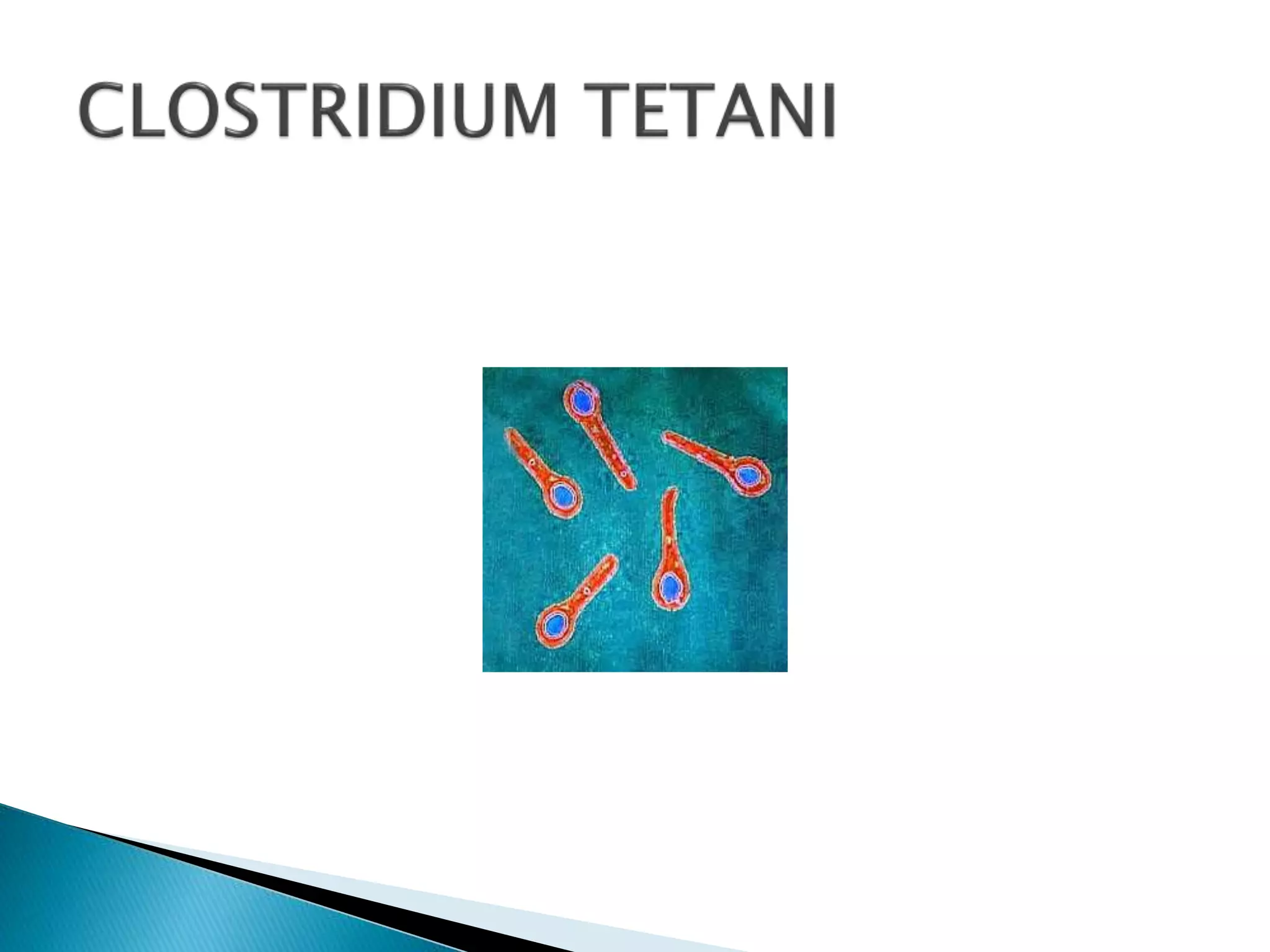
 CLOSTRIDIUM TETANI
 Swarming growth – detected on the
opposite half of the plate after 1-2
days of incubation
Thank you

OT sterilisation

  • 2.
    General Cleaning:  Scrubbingwith detergents and rinsing with water  Spot cleaning of walls and ceiling daily  For open shelves – clean daily  For closed cabinets – clean weekly  For furnitures, lights, equipments – Clean end of the day with lysol  Lights and other equipments – steamed weekly
  • 3.
     The floorsshould be scrubbed with warm water and detergent and dried. No disinfectant is necessary.  The O.T. table and other non clinical equipments must be wiped to remove all visible dirt and left to dry.  Weakly cleaning of all the areas inside the operating theatre complex should be done thoroughly with warm water and detergent and dried.  The storage shelves must be emptied and wiped over, allowed to dry and restacked.
  • 4.
     HIGH: Kills allthe organisms except Spores, Prions – Eg. Glutaraldehyde  INTERMEDIATE: Kills Mycobacteria, most viruses and bacteria  LOW: Kills some viruses and bacteria
  • 5.
    Formaldehyde fumigation Commonly usedto sterilize the OT. Requirement (For an area of 1000 cubic feet) - 500 ml of 40% formaldehyde in one liter of water - Stove or hot plate for heating formalin - 300 ml of 10% Ammonia
  • 6.
     Procedure  Closeall doors & windows air tight and switch off fans and A.C.  Heat formalin solution till boiling dry  Leave the OT unentered over night  Enter the OT next day morning with 300ml of ammonia  Keep the ammonia solution for 2-3 hrs to neutralize formalin vapours  Open the OT to start surgery  Advised fumigation at weekly intervals
  • 7.
     Mode ofAction  Formaldehyde inactivates microorganisms by alkylating the aminoacid and sulfhydryl groups of proteins and ring nitrogen atoms of purine bases.  Disadvantages  It acts as a potential carcinogen  Toxic  Irritant
  • 8.
    Duration:  In caseof any construction in O.T.  48 hrs  In case of inflected cases  24hr  For routine clean cases  12 hrs.  Alternatively 250 ml of formalin and 3000 ml of tap water are put into a machine (auto mist) and time is set for 2 hrs. The mist is circulated for 2hrs inside the closed room.
  • 9.
    Commercially available disinfectant Baccilocid rasant  A newer and effective compound in environmental decontamination with very good cost/benefit ratio, good material compatibility, excellent cleaning properties . It is a Formaldehyde-free disinfectant cleaner with low use concentration.  Active ingredients: Glutaral 100 mg/g, benzyl-C12-18- alkyldimethylammonium chlorides 60 mg/ g, didecyldimethylammonium chloride 60 mg/g.
  • 10.
     Advantages  -Provides complete asepsis within 30 to 60 minutes.  - Cleaning with detergent or carbolic acid not required.  - Formalin fumigation not required.  - Shutdown of O.T. for 24 hrs not required.
  • 11.
     c) Aldekol Anew method of fumigation has been evolved using ‘Aldekol’, a mixture containing 6% formaldehyde, 6% glutaraldehyde and 5% benzalkonium120 chloride
  • 12.
     Ultraviolet radiation - Daily U.V. Irradiation for 12 -16 hrs  - To be switched off 2 hrs before
  • 13.
     Immediately afteruse, all surgical instruments, reusable gloves, and other items that have been in contact with blood or other body fluids should be placed in a plastic bucket containing a solution of 0.5% chlorine for 10 minutes. After 10 minutes, the items should be removed from the chlorine solution and rinsed with water or cleaned immediately
  • 14.
    * The instrumentsand other items should be scrubbed vigorously with a brush (a tooth brush is a good option) in lukewarm water with detergent to remove all blood, tissue. * Cleaning instruments with ultrasonic cleaner is used for cleaning of micro surgical instruments .
  • 15.
     Chlorine solutions are fast acting, very effective against HBV, HCV and HIV/ AIDS, inexpensive and readily available .  Formaldehyde  (8%), which is inexpensive and readily available, is an effective high-level disinfectant (HLD) but, the vapours are very irritating and it is classified as a potential carcinogen. Do not dilute with chlorinated water as a dangerous gas (bis- chloromethyl-ether) can be produced.
  • 16.
     Glutaraldehyde:  Itis suitable for instruments that cannot be autoclaved like sharp cutting instruments, plastic & rubber items, and endoscopes. It is effective against vegetative pathogens in 15 minutes and resistant pathogenic spores in 3 hrs
  • 17.
     Hydrogen Peroxide (H2O2), which must be diluted to a 6% solution, is less expensive . The 3% H2O2 solutions used as antiseptics, however, should not be used as a disinfectant. The major disadvantage of peroxide is that it is highly corrosive
  • 18.
     Steam Sterilization(Autoclaving)  Steam sterilization (frequently referred to as autoclaving) depends on the use of steam above 100 0C. Temperatures ranging from 121-134 0C at pressures of 15-30 psi are generally recommended. Steam readily penetrates all wrapped materials with the destruction of all viruses and bacteria, including the most resistant spores. Minimum holding times for the sterilization of medical equipment
  • 19.
     Ethylene Oxide(E. T. O.)  Widely used for re -sterilizing ‘packaged heat sensitive devices’ like sharp knives and blades.  It is non-corrosive and safe for most plastic and polyethylene materials. it is the preferred method for sterilizing heat labile tubings, vitrectomy cutters, cryoprobes, light pipes, laser probes, diathermy leads, cannulated instruments like endoscopes etc.
  • 20.
     1. Linen(Gowns, Caps, Masks, Drapes)- Autoclaving.  2. Glassware (Syringes) - Dry heat sterilization, or use disposables from reputed firms.  3. Metal instruments- Autoclaving.  4. Plastic instruments/ Components- Ethylene oxide sterilization, formalin chamber.  5. Sharp edges instruments - ETO/ Hot air oven/ Chemical disinfection.
  • 21.
     6. Sutures- Can be autoclaved.  7. Diathermy, Cautery electrodes- Autoclaving.  8. Endoilluminators/ probes- Ethylene oxide sterilization.
  • 22.
     Swabs collectedfrom various locations in the OT include  1. Operation table at the head end  2. Over head lamp  3. Four Walls  4. Floor below the head end of the table  5. Instrument trolley  6. AC duct  7. Microscope handles.
  • 23.
     The swabsobtained are cultured for aerobic (Chocolate agar) and anaerobic (Robertson’s Cooked Meat Medium) growth
  • 24.
     Solid culturemedium  Useful for the isolation of many organisms including H.influenzae, N.meningitidis, N.gonorrhoeae and Moraxella species
  • 25.
     Most widelyused fluid medium for the culture of anaerobes.  It consists of fat free minced cooked meat in broth.  Permits the growth of even strict anaerobes  Meat turned red – sacchrolysis  Meat turned black - proteolysis
  • 27.
     Mc IntoshFildes anaerobic jar  Gaspak  RCM  Pre reduced anaerobic system  Anaerobic glove box
  • 29.
     Clostridium perfringens Clostridium septicum  Clostridium novyi  Clostridium botulinum  CLOSTRIDIUM TETANI
  • 31.
     Swarming growth– detected on the opposite half of the plate after 1-2 days of incubation
  • 34.