Direct License file Link Below👇
https://dr-up-community.info/
FreeVimager is a Free and Fast Image Viewer and Editor for Windows. It allows you to modify pictures in an easy and simple way.
Definition of climate
change
Climatechange refers to significant changes
in global temperatures and weather patterns
over time. Although climate change is a
natural phenomenon, scientific evidence
shows that human activities have
dramatically accelerated these changes,
particularly since the late 20th century.
5.
Causes of climate
change
Theprimary causes of climate change
include the burning of fossil fuels,
deforestation, and various industrial
activities that increase the concentration of
greenhouse gases in the atmosphere,
leading to the greenhouse effect.
6.
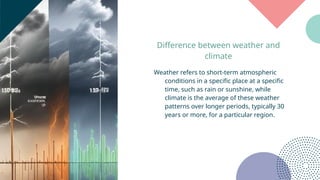
Difference between weatherand
climate
Weather refers to short-term atmospheric
conditions in a specific place at a specific
time, such as rain or sunshine, while
climate is the average of these weather
patterns over longer periods, typically 30
years or more, for a particular region.
Rising sea levels
Oneof the most alarming effects of climate
change is the rising sea levels caused by
melting glaciers and ice caps, which threaten
coastal habitats, and human settlements,
leading to increased flooding and loss of
land.
9.
Extreme weather
events
Climate changeamplifies the frequency and
intensity of extreme weather events, such as
hurricanes, heatwaves, and heavy rainfall,
resulting in significant damage to
infrastructure, ecosystems, and economies
globally.
10.
Impact on biodiversity
Changesin climate disrupt ecosystems, threaten species extinction, and
lead to shifts in habitats. Many animal and plant species are struggling to
adapt to the rapid environmental changes, leading to loss of biodiversity.
Greenhouse gas
emissions
Greenhouse gases,such as carbon dioxide
and methane, are released primarily from
burning fossil fuels for energy,
transportation, and industry. These
emissions trap heat in the atmosphere and
contribute to global warming, leading to
various environmental changes and extreme
weather patterns.
13.
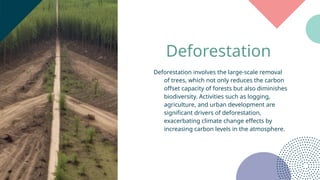
Deforestation
Deforestation involves thelarge-scale removal
of trees, which not only reduces the carbon
offset capacity of forests but also diminishes
biodiversity. Activities such as logging,
agriculture, and urban development are
significant drivers of deforestation,
exacerbating climate change effects by
increasing carbon levels in the atmosphere.
14.
Industrial activities
Manufacturing andindustrial processes
contribute significantly to climate change
through carbon emissions, pollution, and
waste production. Industries reliant on fossil
fuels for energy release large amounts of
greenhouse gases, making industrial reform
and cleaner technology essential for
mitigating climate change.
Renewable energy
sources
Transitioning torenewable energy, such as
solar, wind, and hydroelectric power, is crucial
for reducing greenhouse gas emissions.
These energy sources are sustainable and
provide cleaner alternatives to fossil fuels,
minimizing the impact of energy production
on climate change.
17.
Energy efficiency practices
Improvingenergy efficiency in homes, buildings, and industries can significantly decrease energy
consumption and emissions. This can be achieved through better insulation, energy-efficient
appliances, and smart technologies that reduce overall energy needs without sacrificing comfort or
productivity.
18.
Sustainable
transportation options
Shifting towardssustainable transportation
methods, including public transit, biking,
walking, and electric vehicles, can greatly
reduce the carbon footprint associated with
travel. Promoting these alternatives not only
helps mitigate climate change but also
improves public health and air quality.
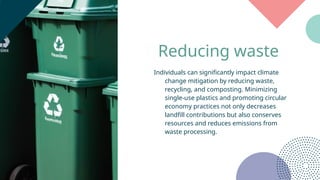
Reducing waste
Individuals cansignificantly impact climate
change mitigation by reducing waste,
recycling, and composting. Minimizing
single-use plastics and promoting circular
economy practices not only decreases
landfill contributions but also conserves
resources and reduces emissions from
waste processing.
21.
Conserving energy
Simple energyconservation practices, such
as turning off lights when not in use, using
energy-efficient devices, and setting
thermostats efficiently, can lower energy
consumption. Being mindful of energy use at
home and in the workplace contributes to
reduced greenhouse gas emissions.
22.
Advocating for policy
changes
Advocacyfor climate-friendly policies at local,
national, and global levels is essential.
Supporting legislation that promotes renewable
energy, emissions reductions, and
environmental protection can lead to significant
changes. Engaging in community efforts and
raising awareness can amplify individual voices
towards impactful climate action.
23.
Conclusions
In conclusion, understandingclimate change,
its impacts, and taking both collective and
individual actions are crucial in combating
this global crisis. Through education,
policy changes, and personal
responsibility, we can play a vital role in
mitigating the effects of climate change.
24.
CREDITS: This presentationtemplate was
created by Slidesgo, including icons,
infographics & images by Freepik
Do you have any questions?
Thank you!











![PassFab Duplicate File Deleter With Crack [Latest]](https://cdn.slidesharecdn.com/ss_thumbnails/climatechangeexplained-250324165221-4bcd6674-thumbnail.jpg?width=640&height=640&fit=bounds)
![Capcut Pro [2025] Crack Latest Version Free](https://cdn.slidesharecdn.com/ss_thumbnails/climatechangeexplained1-250324192307-2a0ea107-thumbnail.jpg?width=640&height=640&fit=bounds)

![CCleaner Professional Key 2025 Plus Full Crack [Latest]](https://cdn.slidesharecdn.com/ss_thumbnails/climatechangeexplained1-250324190013-c706368c-thumbnail.jpg?width=640&height=640&fit=bounds)


![Advanced Renamer Crack + Full Version For [Window & Mac]](https://cdn.slidesharecdn.com/ss_thumbnails/climatechangeexplained2-250324210858-40dfe893-thumbnail.jpg?width=640&height=640&fit=bounds)


