Dorothea Lange
By: Itzel Molano
Dorothea Lange
● Dorothea Lange was born in Hoboken, New Jersey May 26, 1895 and died
October 11, 1965.
● Lange’s main theme for her photographs is The Great Depression which
caused a lot of sadness and hurt for the men, farmers, children, and women.
What is Lange known for ?
● Lange is known for taking documentary photos during The Great Depression.
● She’s also known for leading the Information Division of Farm Security
Administration ( FSA).
Interesting details
● At age 7 Lange contracted polio, weakening her right leg and foot.
● She studied art form at Columbia University.
● Lange was married and lived in San Francisco, as well as running a portrait
studio.
● As she started traveling she took documentary photographs of Native
Americans.
● In the early 1930’s she left her husband and traveled through the FSA taking
photos during the hardships of the farmers
● Dorothea Lange is really know for “ Migrant Mother” photo. Which made her
more famous.
Florence Thompson and her children in a pea pickers' camp.
March 1936.
● This photo has the same subject as the
“ Migrant Mother “ . This was taken in
Nipomo California.
● This is part of a series of photographs
made of Florence and her children.
● It was taken with a Graflex camera.
● The original negatives are “4x5” film.
"Migrant Mother"(California, 1936).
● This is Lange’s most famous photo. It captures the pain of an Migrant
Mother.
Dorothea Lange, Migrant Mother Series 3, Nipomo, California, 1936,
"Migrant Agricultural Worker's Family" by
Dorothea Lange, 1936 (LOC)
● M
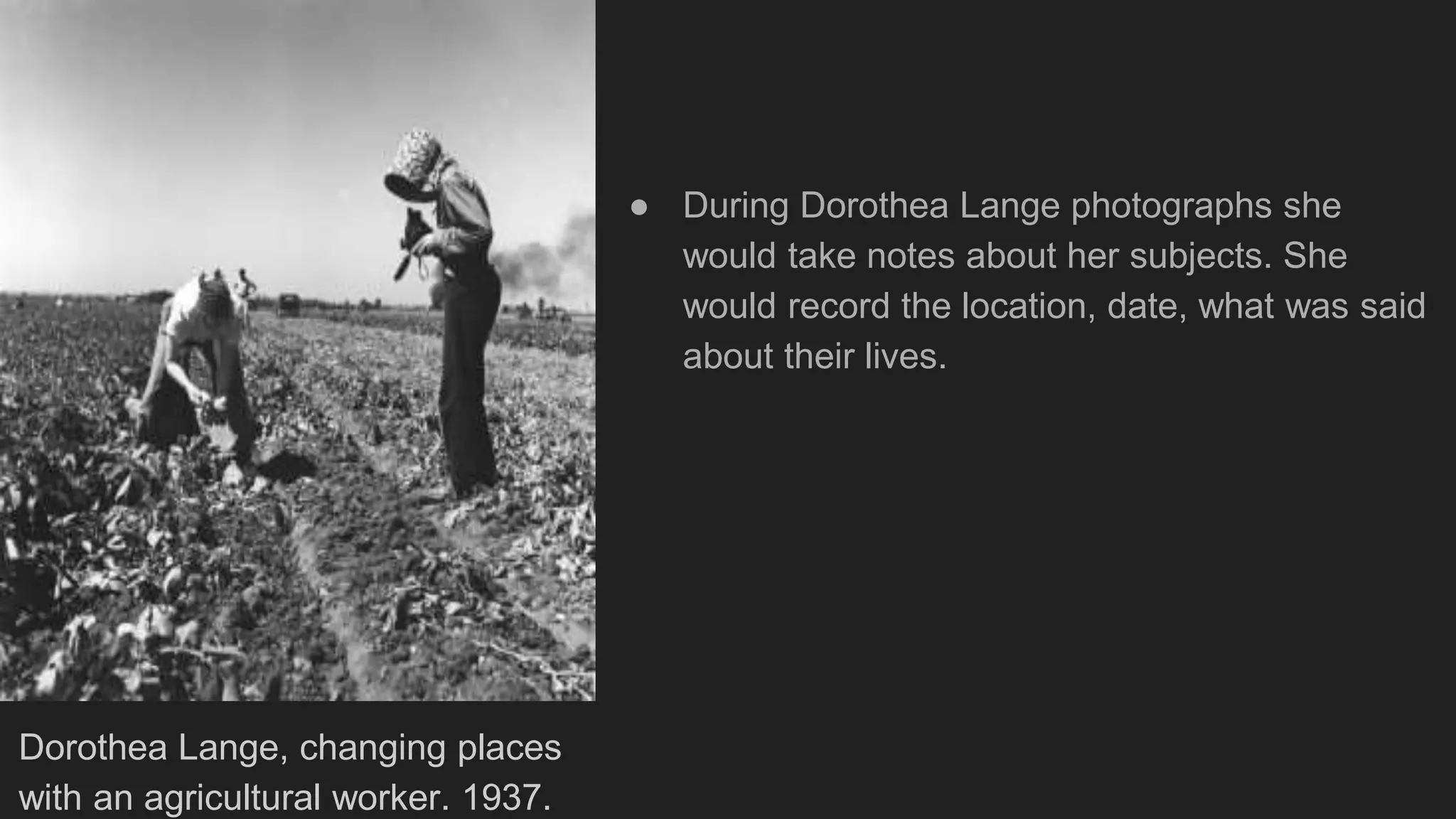
● During Dorothea Lange photographs she
would take notes about her subjects. She
would record the location, date, what was said
about their lives.
Dorothea Lange, changing places
with an agricultural worker. 1937.
● In this photo it’s
showing a desperate
girl.
● Like in Dorothea
Lange’s photographs
were taken during a
desperate and
hardship time.
● Lange photographed children living in a camp hiding inside a building with their
faces looking out.
● The children look really sad.
● There outside sitting against the fence with
no parents around.
● The little girl looks cold because she has no
covering for her legs.
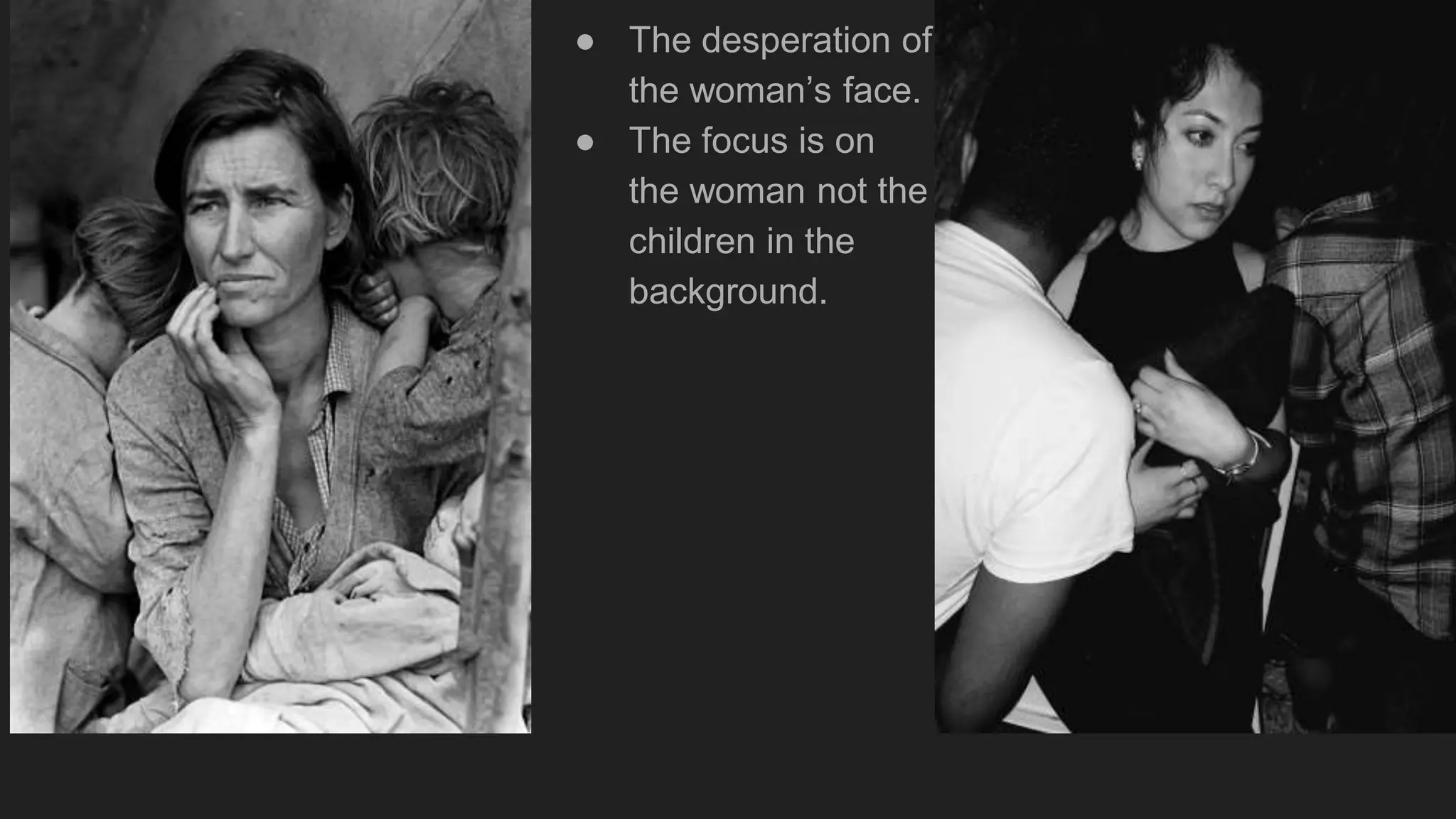
● Black and white photo copying her style
● The desperation of
the woman’s face.
● The focus is on
the woman not the
children in the
background.
● Mother feeding her child.
● Holding them in a loving matter.
The reason why I choosed Dorothea Lange was because I knew about her
photographs. One reason why I liked her style is that it was during a hard time,
The Great Depression. She took pictures of everyday people. They were not
models, the pictures were taken of their lives. Compared to my photographs and
Dorothea Lange I actually had to use models and props to make it look like they
were living in the hardship times.
websites
Bio.com. A&E Networks Television, n.d. Web. 17 Nov. 2016.
http://www.biography.com/people/dorothea-lange-9372993
https://www.britannica.com/biography/Dorothea-Lange "Dorothea Lange." Encyclopedia
Britannica Online. Encyclopedia Britannica, n.d. Web. 17 Nov. 2016.
http://www.historyplace.com/unitedstates/lange/
"The History Place - Dorothea Lange Photo Gallery: Migrant Farm Families." The History Place -
Dorothea Lange Photo Gallery: Migrant Farm Families. N.p., n.d. Web. 17 Nov. 2016.
http://www.pbs.org/kenburns/dustbowl/bios/dorothea-lange/?scrlybrkr=fe2b590c
● "Dorothea Lange Biography, Art, and Analysis of Works." The Art Story. N.p., n.d. Web. 17 Nov.
2016.

Dorothea Lange photography .pptx

  • 1.
  • 2.
    Dorothea Lange ● DorotheaLange was born in Hoboken, New Jersey May 26, 1895 and died October 11, 1965. ● Lange’s main theme for her photographs is The Great Depression which caused a lot of sadness and hurt for the men, farmers, children, and women.
  • 3.
    What is Langeknown for ? ● Lange is known for taking documentary photos during The Great Depression. ● She’s also known for leading the Information Division of Farm Security Administration ( FSA).
  • 4.
    Interesting details ● Atage 7 Lange contracted polio, weakening her right leg and foot. ● She studied art form at Columbia University. ● Lange was married and lived in San Francisco, as well as running a portrait studio. ● As she started traveling she took documentary photographs of Native Americans. ● In the early 1930’s she left her husband and traveled through the FSA taking photos during the hardships of the farmers ● Dorothea Lange is really know for “ Migrant Mother” photo. Which made her more famous.
  • 5.
    Florence Thompson andher children in a pea pickers' camp. March 1936. ● This photo has the same subject as the “ Migrant Mother “ . This was taken in Nipomo California. ● This is part of a series of photographs made of Florence and her children. ● It was taken with a Graflex camera. ● The original negatives are “4x5” film.
  • 6.
    "Migrant Mother"(California, 1936). ●This is Lange’s most famous photo. It captures the pain of an Migrant Mother.
  • 7.
    Dorothea Lange, MigrantMother Series 3, Nipomo, California, 1936,
  • 8.
    "Migrant Agricultural Worker'sFamily" by Dorothea Lange, 1936 (LOC) ● M
  • 9.
    ● During DorotheaLange photographs she would take notes about her subjects. She would record the location, date, what was said about their lives. Dorothea Lange, changing places with an agricultural worker. 1937.
  • 10.
    ● In thisphoto it’s showing a desperate girl. ● Like in Dorothea Lange’s photographs were taken during a desperate and hardship time.
  • 11.
    ● Lange photographedchildren living in a camp hiding inside a building with their faces looking out.
  • 12.
    ● The childrenlook really sad. ● There outside sitting against the fence with no parents around. ● The little girl looks cold because she has no covering for her legs. ● Black and white photo copying her style
  • 13.
    ● The desperationof the woman’s face. ● The focus is on the woman not the children in the background.
  • 14.
    ● Mother feedingher child. ● Holding them in a loving matter.
  • 15.
    The reason whyI choosed Dorothea Lange was because I knew about her photographs. One reason why I liked her style is that it was during a hard time, The Great Depression. She took pictures of everyday people. They were not models, the pictures were taken of their lives. Compared to my photographs and Dorothea Lange I actually had to use models and props to make it look like they were living in the hardship times.
  • 16.
    websites Bio.com. A&E NetworksTelevision, n.d. Web. 17 Nov. 2016. http://www.biography.com/people/dorothea-lange-9372993 https://www.britannica.com/biography/Dorothea-Lange "Dorothea Lange." Encyclopedia Britannica Online. Encyclopedia Britannica, n.d. Web. 17 Nov. 2016. http://www.historyplace.com/unitedstates/lange/ "The History Place - Dorothea Lange Photo Gallery: Migrant Farm Families." The History Place - Dorothea Lange Photo Gallery: Migrant Farm Families. N.p., n.d. Web. 17 Nov. 2016. http://www.pbs.org/kenburns/dustbowl/bios/dorothea-lange/?scrlybrkr=fe2b590c ● "Dorothea Lange Biography, Art, and Analysis of Works." The Art Story. N.p., n.d. Web. 17 Nov. 2016.