DIY	IoT	Backend
Voon	Siong	WONG
greenfields
greenfields
4	years	ago,	wanted	IoT	platform
no	clear	requirements
grew	organically
flaws	in	hindsight
never	in	production,	never	fixed
hobby	project
revisited	the	project
made	list	of	good,	bad,	and	how	it	can	be	better
development	~2	weeks,	~800	LOC	Ruby
runs	on	1x	t2.small	instance
response	time	average	50ms,	95%	<	80ms
learnt	from	a	lot	of	bad	experiences
disclaimer
not	necessarily	advocating	DIY
outsourcing	to	3rd	party	vendors	can	be	cheaper
depends	on	in-house	capabilities
Let's	Get	Started
item	1:	time	series
don't	DIY	time	series
v1	had	to	do	it,	not	many	open	source
v2	used	open	source	database,	threw	out	a	ton	of	code
read/write	optimisation	is	hard
use	1-D	sort	for	index	optimisation
usually	time	as	primary	index
overwrite	or	append	for	same	timestamp?
aggregating	across	multiple	tables?
geo-spatial	capabilities
eg.	measurements	in	this	area	at	this	time
4-D	"sort"
we	tried	building	one	based	on	
careful	planning	of	Row-key	&	Column-key
only	supported	overwrite,	no	appends
fixed	time	intervals
aggregation	were	scheduled	tasks,	rather	than	queries
poor	performance
HBase
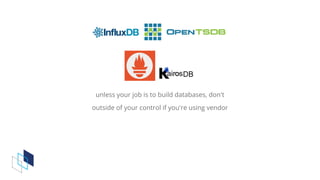
unless	your	job	is	to	build	databases,	don't
outside	of	your	control	if	you're	using	vendor
item	2:	authentication
treat	browsers	and	iot	devices	equally	as	first	class	citizens
accessible	with	fixed	or	variable	API	keys
optionally	with	username/password
avoid	client	SSL
cumbersome	to	generate/manage
impractical	to	install	on	browsers
thus	requires	proxy	server
use	API	Keys
fixed	API	keys
variable	API	key,	HMAC	request	and	time
deploy	with	environment	variables
interactive	logins
username/password
oauth
item	3:	expect	change
plan	for	it
very	relevant	when	DIY
but	use	as	criteria	for	judging	vendors
many	vendors	are	still	young
ensure	APIs	are	versioned
using	path,	headers,	request	params,	etc.
deprecations
devices	don't	/	can't	understand	warning	messages
warn	developers	directly
return	success	on	dead	APIs
don't	care	about	their	behaviour	any	more
avoid	old	devices's	retry	logic	from	hammering	it
API	ownership
APIs	can	make	or	break	your	application
one	of	strongest	reasons	to	DIY
don't	forget	that	it	changes!
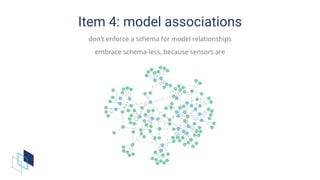
Item	4:	model	associations
don't	enforce	a	schema	for	model	relationships
embrace	schema-less,	because	sensors	are
schema	/	syntactic
fixed	associations,	inflexible
need	to	know	"position"	in	hierarchy	/	grouping
conflicts	when	reusing	names
schema-less	/	semantic
uniqueness	by	credentials	and	name
hierarchies	or	grouping	stored	in	text,	eg.	"state/suburb/street",
arbitrarily	delimited
item	5:	data	flows
trickles	from	device	to	server
streams	from	server	to	advanced	clients
use	regular	session-less	HTTP	for	small	volumes
for	greater	volume,	use	a	pub-sub	mechanism
,	subscribe	to	desired	channels
modern	clients	use	(uni-directional)	websockets,	resume	on
connection	failures
older	clients	fallback	to	long-polling
firehose	server
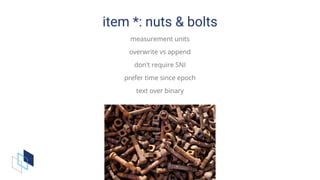
item	*:	nuts	&	bolts
measurement	units
overwrite	vs	append
don't	require	SNI
prefer	time	since	epoch
text	over	binary
IoT	Backend:	Solved
Problem?
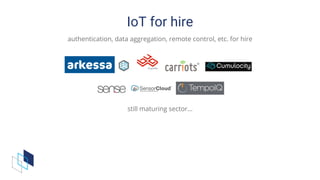
IoT	for	hire
authentication,	data	aggregation,	remote	control,	etc.	for	hire
	 	 	 	 	
	 	
still	maturing	sector...
focus	on	value
this	list	apply	whether	you're	DIY	backend,	or	evaluating	vendors
not	suggesting	one	or	the	other,	that's	up	to	you
suggest	you	think	about	value,	rather	than	technical	capability
I	can,	should	I?
worth	it?
in	our	case,	DIY	was	worth	it
(re)development	effort	was	small
lessons	from	previous	generation
in-house	knowledge	on	how	to	fix	things
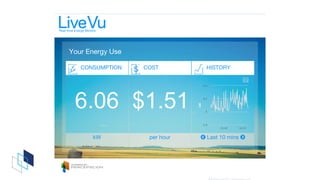
LiveVu
Realtime	energy	monitoring
Real-time Energy Monitor
Your Energy Use
CONSUMPTION
6.06
kW
COST
$1.51
per hour
HISTORY
kW
6
5.8
6.2
6.4
10:40 10:45
Last 10 mins 
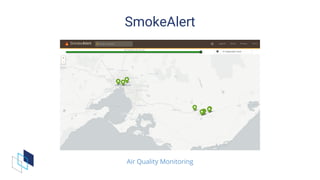
SmokeAlert
Air	Quality	Monitoring
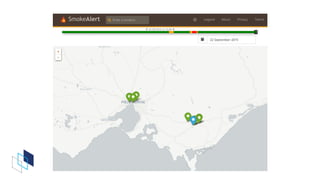
22/09/2015	@	10:00	 
 22-September-2015
 
 
+
-
	SmokeAlert Enter a location Legend About Privacy Terms
disclaimer	(repeat)
not	necessarily	advocating	DIY
outsourcing	to	3rd	party	vendors	can	be	cheaper
depends	on	in-house	capabilities
Thanks!

DIY IoT Backend