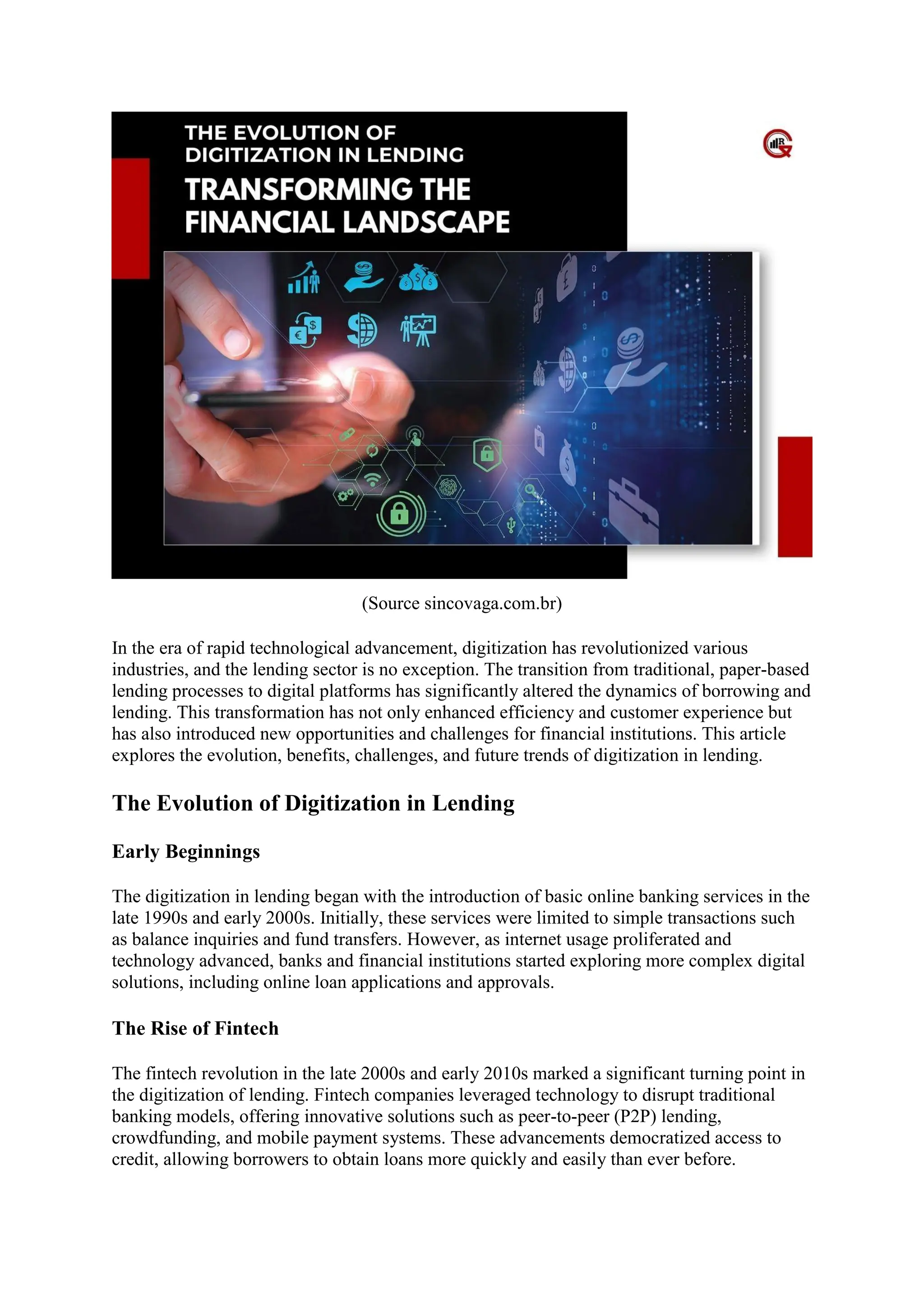
(Source sincovaga.com.br)
In the era of rapid technological advancement, digitization has revolutionized various
industries, and the lending sector is no exception. The transition from traditional, paper-based
lending processes to digital platforms has significantly altered the dynamics of borrowing and
lending. This transformation has not only enhanced efficiency and customer experience but
has also introduced new opportunities and challenges for financial institutions. This article
explores the evolution, benefits, challenges, and future trends of digitization in lending.
The Evolution of Digitization in Lending
Early Beginnings
The digitization in lending began with the introduction of basic online banking services in the
late 1990s and early 2000s. Initially, these services were limited to simple transactions such
as balance inquiries and fund transfers. However, as internet usage proliferated and
technology advanced, banks and financial institutions started exploring more complex digital
solutions, including online loan applications and approvals.
The Rise of Fintech
The fintech revolution in the late 2000s and early 2010s marked a significant turning point in
the digitization of lending. Fintech companies leveraged technology to disrupt traditional
banking models, offering innovative solutions such as peer-to-peer (P2P) lending,
crowdfunding, and mobile payment systems. These advancements democratized access to
credit, allowing borrowers to obtain loans more quickly and easily than ever before.
Integration with Advanced Technologies
In recent years, the integration of advanced technologies such as artificial intelligence (AI),
machine learning (ML), blockchain, and big data analytics has further accelerated the
digitization in lending. These technologies have enabled lenders to enhance their decision-
making processes, streamline operations, and offer personalized lending solutions to
customers.
Benefits of Digitization in Lending
Enhanced Efficiency
Digitization in lending has significantly improved the efficiency of lending processes.
Automated systems can process loan applications in a fraction of the time it takes traditional
methods, reducing the need for manual intervention and minimizing errors. This efficiency
not only speeds up the approval process but also lowers operational costs for lenders.
Improved Customer Experience
Digitization in lending platforms offers a seamless and convenient experience for borrowers.
Customers can apply for loans online, track the status of their applications, and receive funds
without visiting a physical branch. Moreover, digital platforms provide greater transparency,
enabling borrowers to compare loan products, interest rates, and terms easily.
Data-Driven Decision Making
Advanced data analytics and AI enable lenders to make more informed decisions by
analyzing vast amounts of data from various sources. This data-driven approach helps in
assessing creditworthiness more accurately, identifying potential risks, and offering
personalized loan products tailored to the needs of individual borrowers.
Greater Accessibility
Digitization has democratized access to credit, particularly for underserved and unbanked
populations. Digitization in lending platforms can reach customers in remote areas, providing
them with access to financial services that were previously unavailable. Additionally, fintech
companies often use alternative data sources to assess creditworthiness, enabling individuals
with limited credit histories to obtain loans.
Enhanced Security and Compliance
Digitization in lending platforms incorporate robust security measures, such as encryption
and biometric authentication, to protect sensitive customer information. Moreover, automated
systems ensure compliance with regulatory requirements by maintaining accurate records and
generating real-time reports, reducing the risk of non-compliance.
Challenges of Digitization in Lending
Cybersecurity Risks
As lending processes become increasingly digitized, the risk of cyberattacks and data
breaches also rises. Financial institutions must invest in advanced cybersecurity measures to
protect sensitive customer information and maintain trust.
Regulatory Challenges
The rapid pace of technological advancement often outstrips the development of regulatory
frameworks. Financial institutions must navigate complex and evolving regulations to ensure
compliance while leveraging digital solutions. This requires continuous monitoring of
regulatory changes and the adoption of flexible and adaptive compliance strategies.
Digital Divide
Despite the proliferation of digital technologies, a significant portion of the population still
lacks access to the internet or digital devices. This digital divide can exclude certain
individuals from accessing digital lending services, exacerbating existing inequalities in
financial inclusion.
Technology Integration
Integrating new digital solutions with existing legacy systems can be challenging for
traditional financial institutions. This integration often requires significant investment in
technology and infrastructure, as well as the retraining of staff to adapt to new processes and
systems.
Customer Trust and Adoption
Building and maintaining customer trust in digital lending platforms is crucial. Customers
must feel confident that their personal and financial information is secure and that the lending
process is transparent and fair. Financial institutions must prioritize customer education and
communication to foster trust and encourage the adoption of digitization in lending solutions.
Future Trends in Digitization in Lending
Artificial Intelligence and Machine Learning
AI and ML will continue to play a pivotal role in the future of digitization in lending. These
technologies can enhance credit scoring models, automate underwriting processes, and
provide personalized lending solutions. AI-powered chatbots and virtual assistants will
further improve customer service by offering real-time support and guidance.
Blockchain Technology
Blockchain has the potential to revolutionize the lending industry by providing secure,
transparent, and immutable records of transactions. Smart contracts on blockchain platforms
can automate and enforce the terms of lending agreements, reducing the need for
intermediaries and minimizing the risk of fraud.
Open Banking
Open banking initiatives, which mandate financial institutions to share customer data with
third-party providers (with customer consent), will drive innovation in digitization in lending.
This data-sharing model will enable lenders to gain deeper insights into customers’ financial
behaviors, offering more tailored and competitive loan products.
Biometric Authentication
As security concerns remain paramount, biometric authentication methods such as fingerprint
scanning, facial recognition, and voice recognition will become more prevalent in digital
lending platforms. These technologies offer enhanced security and a seamless user
experience, reducing the risk of fraud and identity theft.
Inclusive Lending
Future digital lending platforms will increasingly focus on inclusivity, leveraging alternative
data sources to assess creditworthiness and provide loans to underserved populations. Fintech
companies and traditional lenders alike will collaborate with non-traditional partners to
extend credit to those previously excluded from formal financial systems.
Sustainable Lending
Sustainability will become a key consideration in the lending industry. Digital platforms will
incorporate environmental, social, and governance (ESG) criteria into their lending decisions,
promoting responsible and sustainable lending practices. This shift will be driven by both
regulatory requirements and increasing consumer demand for ethical financial products.
Conclusion
The digitization in lending is transforming the financial landscape, offering numerous
benefits such as enhanced efficiency, improved customer experience, and greater accessibility
to credit. However, this transformation also presents challenges, including cybersecurity
risks, regulatory complexities, and the digital divide. As technology continues to evolve, the
future of digital lending will be shaped by innovations such as AI, blockchain, and open
banking, driving further advancements and opportunities in the industry. Financial
institutions must navigate these changes carefully, balancing innovation with security and
compliance, to fully realize the potential of digitization in lending.

Digitization in Lending: Evolution, Benefits, Challenges, Future Trends | GQ Research

  • 1.
    (Source sincovaga.com.br) In theera of rapid technological advancement, digitization has revolutionized various industries, and the lending sector is no exception. The transition from traditional, paper-based lending processes to digital platforms has significantly altered the dynamics of borrowing and lending. This transformation has not only enhanced efficiency and customer experience but has also introduced new opportunities and challenges for financial institutions. This article explores the evolution, benefits, challenges, and future trends of digitization in lending. The Evolution of Digitization in Lending Early Beginnings The digitization in lending began with the introduction of basic online banking services in the late 1990s and early 2000s. Initially, these services were limited to simple transactions such as balance inquiries and fund transfers. However, as internet usage proliferated and technology advanced, banks and financial institutions started exploring more complex digital solutions, including online loan applications and approvals. The Rise of Fintech The fintech revolution in the late 2000s and early 2010s marked a significant turning point in the digitization of lending. Fintech companies leveraged technology to disrupt traditional banking models, offering innovative solutions such as peer-to-peer (P2P) lending, crowdfunding, and mobile payment systems. These advancements democratized access to credit, allowing borrowers to obtain loans more quickly and easily than ever before.
  • 2.
    Integration with AdvancedTechnologies In recent years, the integration of advanced technologies such as artificial intelligence (AI), machine learning (ML), blockchain, and big data analytics has further accelerated the digitization in lending. These technologies have enabled lenders to enhance their decision- making processes, streamline operations, and offer personalized lending solutions to customers. Benefits of Digitization in Lending Enhanced Efficiency Digitization in lending has significantly improved the efficiency of lending processes. Automated systems can process loan applications in a fraction of the time it takes traditional methods, reducing the need for manual intervention and minimizing errors. This efficiency not only speeds up the approval process but also lowers operational costs for lenders. Improved Customer Experience Digitization in lending platforms offers a seamless and convenient experience for borrowers. Customers can apply for loans online, track the status of their applications, and receive funds without visiting a physical branch. Moreover, digital platforms provide greater transparency, enabling borrowers to compare loan products, interest rates, and terms easily. Data-Driven Decision Making
  • 3.
    Advanced data analyticsand AI enable lenders to make more informed decisions by analyzing vast amounts of data from various sources. This data-driven approach helps in assessing creditworthiness more accurately, identifying potential risks, and offering personalized loan products tailored to the needs of individual borrowers. Greater Accessibility Digitization has democratized access to credit, particularly for underserved and unbanked populations. Digitization in lending platforms can reach customers in remote areas, providing them with access to financial services that were previously unavailable. Additionally, fintech companies often use alternative data sources to assess creditworthiness, enabling individuals with limited credit histories to obtain loans. Enhanced Security and Compliance Digitization in lending platforms incorporate robust security measures, such as encryption and biometric authentication, to protect sensitive customer information. Moreover, automated systems ensure compliance with regulatory requirements by maintaining accurate records and generating real-time reports, reducing the risk of non-compliance. Challenges of Digitization in Lending Cybersecurity Risks As lending processes become increasingly digitized, the risk of cyberattacks and data breaches also rises. Financial institutions must invest in advanced cybersecurity measures to protect sensitive customer information and maintain trust.
  • 4.
    Regulatory Challenges The rapidpace of technological advancement often outstrips the development of regulatory frameworks. Financial institutions must navigate complex and evolving regulations to ensure compliance while leveraging digital solutions. This requires continuous monitoring of regulatory changes and the adoption of flexible and adaptive compliance strategies. Digital Divide Despite the proliferation of digital technologies, a significant portion of the population still lacks access to the internet or digital devices. This digital divide can exclude certain individuals from accessing digital lending services, exacerbating existing inequalities in financial inclusion. Technology Integration Integrating new digital solutions with existing legacy systems can be challenging for traditional financial institutions. This integration often requires significant investment in technology and infrastructure, as well as the retraining of staff to adapt to new processes and systems. Customer Trust and Adoption Building and maintaining customer trust in digital lending platforms is crucial. Customers must feel confident that their personal and financial information is secure and that the lending process is transparent and fair. Financial institutions must prioritize customer education and communication to foster trust and encourage the adoption of digitization in lending solutions. Future Trends in Digitization in Lending Artificial Intelligence and Machine Learning AI and ML will continue to play a pivotal role in the future of digitization in lending. These technologies can enhance credit scoring models, automate underwriting processes, and provide personalized lending solutions. AI-powered chatbots and virtual assistants will further improve customer service by offering real-time support and guidance. Blockchain Technology
  • 5.
    Blockchain has thepotential to revolutionize the lending industry by providing secure, transparent, and immutable records of transactions. Smart contracts on blockchain platforms can automate and enforce the terms of lending agreements, reducing the need for intermediaries and minimizing the risk of fraud. Open Banking Open banking initiatives, which mandate financial institutions to share customer data with third-party providers (with customer consent), will drive innovation in digitization in lending. This data-sharing model will enable lenders to gain deeper insights into customers’ financial behaviors, offering more tailored and competitive loan products. Biometric Authentication As security concerns remain paramount, biometric authentication methods such as fingerprint scanning, facial recognition, and voice recognition will become more prevalent in digital lending platforms. These technologies offer enhanced security and a seamless user experience, reducing the risk of fraud and identity theft. Inclusive Lending Future digital lending platforms will increasingly focus on inclusivity, leveraging alternative data sources to assess creditworthiness and provide loans to underserved populations. Fintech companies and traditional lenders alike will collaborate with non-traditional partners to extend credit to those previously excluded from formal financial systems. Sustainable Lending
  • 6.
    Sustainability will becomea key consideration in the lending industry. Digital platforms will incorporate environmental, social, and governance (ESG) criteria into their lending decisions, promoting responsible and sustainable lending practices. This shift will be driven by both regulatory requirements and increasing consumer demand for ethical financial products. Conclusion The digitization in lending is transforming the financial landscape, offering numerous benefits such as enhanced efficiency, improved customer experience, and greater accessibility to credit. However, this transformation also presents challenges, including cybersecurity risks, regulatory complexities, and the digital divide. As technology continues to evolve, the future of digital lending will be shaped by innovations such as AI, blockchain, and open banking, driving further advancements and opportunities in the industry. Financial institutions must navigate these changes carefully, balancing innovation with security and compliance, to fully realize the potential of digitization in lending.