DIGITALIZATION
OF SEAGOING VESSELS
UNDER HIGH DIMENSIONAL DATA DRIVEN MODELS (Digital Models)
Lokukaluge P. Perera
Brage Mo
SINTEF Ocean
{Prasad.Perera, Brage.Mo}@sintef.no
Proceedings of the 36th International Conference on Ocean,
Offshore and Arctic Engineering
OMAE2017, June 25-30, 2017, Trondheim, Norway.
1
Outline
•Introduction
•Objectives
•Challenges
•Digital Models
•Discussion
•Conclusions
2
Introduction
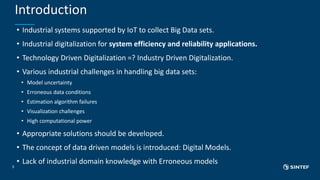
• Industrial systems supported by IoT to collect Big Data sets.
• Industrial digitalization for system efficiency and reliability applications.
• Technology Driven Digitalization =? Industry Driven Digitalization.
• Various industrial challenges in handling big data sets:
• Model uncertainty
• Erroneous data conditions
• Estimation algorithm failures
• Visualization challenges
• High computational power
• Appropriate solutions should be developed.
• The concept of data driven models is introduced: Digital Models.
• Lack of industrial domain knowledge with Erroneous models
3
Objectives
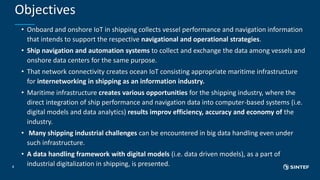
• Onboard and onshore IoT in shipping collects vessel performance and navigation information
that intends to support the respective navigational and operational strategies.
• Ship navigation and automation systems to collect and exchange the data among vessels and
onshore data centers for the same purpose.
• That network connectivity creates ocean IoT consisting appropriate maritime infrastructure
for internetworking in shipping as an information industry.
• Maritime infrastructure creates various opportunities for the shipping industry, where the
direct integration of ship performance and navigation data into computer-based systems (i.e.
digital models and data analytics) results improv efficiency, accuracy and economy of the
industry.
• Many shipping industrial challenges can be encountered in big data handling even under
such infrastructure.
• A data handling framework with digital models (i.e. data driven models), as a part of
industrial digitalization in shipping, is presented.4
Data Handling Framework
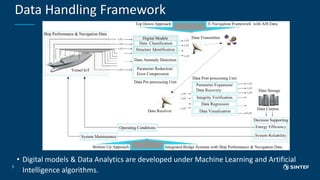
• Digital models & Data Analytics are developed under Machine Learning and Artificial
Intelligence algorithms.
5
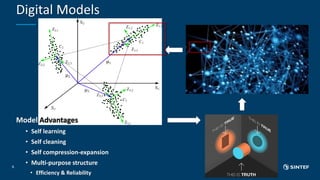
Digital Models
6
Model Advantages
• Self learning
• Self cleaning
• Self compression-expansion
• Multi-purpose structure
• Efficiency & Reliability
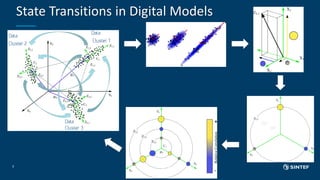
State Transitions in Digital Models
7
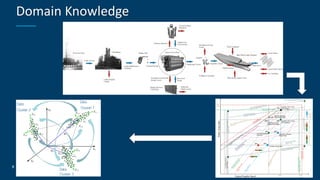
Domain Knowledge
8
Vessel Particulars
9
• Onboard A ship performance and navigation data set of a selected vessel is considered in this
study to develop digital models.
• The data set is collected from a bulk carrier with following particulars:
• ship length: 225 (m),
• beam: 32.29 (m),
• gross tonnage: 38.889 (tons),
• deadweight at max draft: 72.562 (tons).
• The vessel is powered by a 2-stroke main engine(ME) with maximum continuous rating (MCR):
7564 (kW) at the shaft rotational speed of 105 (rpm).
• The vessel is powered by two auxiliary engines with MCR: 850 (kW) at the respective shaft
rotational speed of 800 (rpm).
• The vessel has a fixed pitch propeller diameter 6.20 (m) with 4 blades.
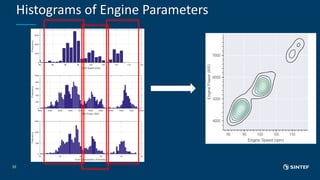
Histograms of Engine Parameters
10
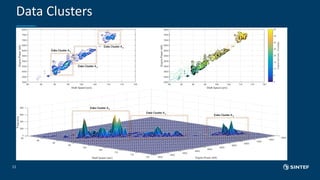
Data Clusters
11
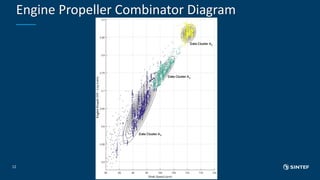
Engine Propeller Combinator Diagram
12
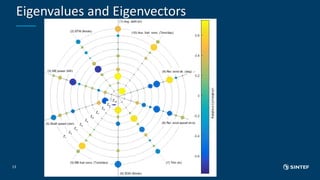
Eigenvalues and Eigenvectors
13
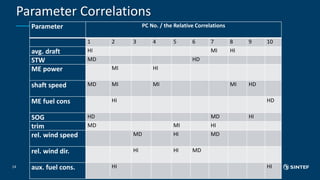
Parameter Correlations
14
Parameter PC No. / the Relative Correlations
1 2 3 4 5 6 7 8 9 10
avg. draft HI MI HI
STW MD HD
ME power MI HI
shaft speed MD MI MI MI HD
ME fuel cons HI HD
SOG HD MD HI
trim MD MI HI
rel. wind speed MD HI MD
rel. wind dir. HI HI MD
aux. fuel cons. HI HI
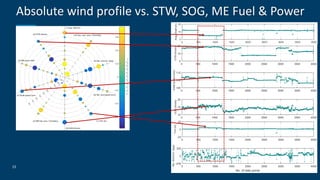
Absolute wind profile vs. STW, SOG, ME Fuel & Power
15
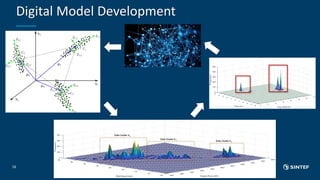
Digital Model Development
16
Discussion
• An appropriate data handling framework with digital models is also presented.
• That consist of data handling layers that are vital to ship onboard and shore based data
handling applications to overcome the respective challenges in data handling.
• Digital models are derived by identifying the respective data clusters and the structure of
each data cluster of ship performance and navigation parameters.
• Vessel operational and navigation knowledge is used during this process to derive a
meaningful structure into these models:
• engine-propeller combinator diagram
• vessel trim-draft conditions.
• The distribution and structure of each data cluster and their variations along the time line
improve the visualization of vessel performance and navigation information.
17
Conclusions
• The same models can also be used to
• identify the erroneous data conditions (i.e. sensor and DAQ faults) and robust to sensor noise situations.
• reduce the dimensions of the data set and that can improve the information visibility.
• improve the data handling framework by introducing much smaller data sets.
• The data structure can play an important role in the proposed data handling framework.
• These digital models under the proposed framework may have special features of: self-learning , self-
cleaning, self-compression & expansion.
• A multi-purpose structure for both ship energy efficiency and system reliability applications.
• This approach opens a novel path towards digitalizing seagoing vessels under high dimensional data
spaces.
• Additional steps to develop suitable data structures in these driven models, based on ship
operational and navigational conditions, should also be investigated.
• Advanced data classification and structural identification steps should be implemented.
18
Thank You
Any Questions ?
This work has been conducted under the project of "SFI Smart Maritime (237917/O30) -
Norwegian Centre for improved energy-efficiency and reduced emissions from the
maritime sector" that is partly funded by the Research Council of Norway.
19

Digitalization of Sea going Vessels under High Dimensional Data Driven Models (Digital Models)

  • 1.
    DIGITALIZATION OF SEAGOING VESSELS UNDERHIGH DIMENSIONAL DATA DRIVEN MODELS (Digital Models) Lokukaluge P. Perera Brage Mo SINTEF Ocean {Prasad.Perera, Brage.Mo}@sintef.no Proceedings of the 36th International Conference on Ocean, Offshore and Arctic Engineering OMAE2017, June 25-30, 2017, Trondheim, Norway. 1
  • 2.
  • 3.
    Introduction • Industrial systemssupported by IoT to collect Big Data sets. • Industrial digitalization for system efficiency and reliability applications. • Technology Driven Digitalization =? Industry Driven Digitalization. • Various industrial challenges in handling big data sets: • Model uncertainty • Erroneous data conditions • Estimation algorithm failures • Visualization challenges • High computational power • Appropriate solutions should be developed. • The concept of data driven models is introduced: Digital Models. • Lack of industrial domain knowledge with Erroneous models 3
  • 4.
    Objectives • Onboard andonshore IoT in shipping collects vessel performance and navigation information that intends to support the respective navigational and operational strategies. • Ship navigation and automation systems to collect and exchange the data among vessels and onshore data centers for the same purpose. • That network connectivity creates ocean IoT consisting appropriate maritime infrastructure for internetworking in shipping as an information industry. • Maritime infrastructure creates various opportunities for the shipping industry, where the direct integration of ship performance and navigation data into computer-based systems (i.e. digital models and data analytics) results improv efficiency, accuracy and economy of the industry. • Many shipping industrial challenges can be encountered in big data handling even under such infrastructure. • A data handling framework with digital models (i.e. data driven models), as a part of industrial digitalization in shipping, is presented.4
  • 5.
    Data Handling Framework •Digital models & Data Analytics are developed under Machine Learning and Artificial Intelligence algorithms. 5
  • 6.
    Digital Models 6 Model Advantages •Self learning • Self cleaning • Self compression-expansion • Multi-purpose structure • Efficiency & Reliability
  • 7.
    State Transitions inDigital Models 7
  • 8.
  • 9.
    Vessel Particulars 9 • OnboardA ship performance and navigation data set of a selected vessel is considered in this study to develop digital models. • The data set is collected from a bulk carrier with following particulars: • ship length: 225 (m), • beam: 32.29 (m), • gross tonnage: 38.889 (tons), • deadweight at max draft: 72.562 (tons). • The vessel is powered by a 2-stroke main engine(ME) with maximum continuous rating (MCR): 7564 (kW) at the shaft rotational speed of 105 (rpm). • The vessel is powered by two auxiliary engines with MCR: 850 (kW) at the respective shaft rotational speed of 800 (rpm). • The vessel has a fixed pitch propeller diameter 6.20 (m) with 4 blades.
  • 10.
    Histograms of EngineParameters 10
  • 11.
  • 12.
  • 13.
  • 14.
    Parameter Correlations 14 Parameter PCNo. / the Relative Correlations 1 2 3 4 5 6 7 8 9 10 avg. draft HI MI HI STW MD HD ME power MI HI shaft speed MD MI MI MI HD ME fuel cons HI HD SOG HD MD HI trim MD MI HI rel. wind speed MD HI MD rel. wind dir. HI HI MD aux. fuel cons. HI HI
  • 15.
    Absolute wind profilevs. STW, SOG, ME Fuel & Power 15
  • 16.
  • 17.
    Discussion • An appropriatedata handling framework with digital models is also presented. • That consist of data handling layers that are vital to ship onboard and shore based data handling applications to overcome the respective challenges in data handling. • Digital models are derived by identifying the respective data clusters and the structure of each data cluster of ship performance and navigation parameters. • Vessel operational and navigation knowledge is used during this process to derive a meaningful structure into these models: • engine-propeller combinator diagram • vessel trim-draft conditions. • The distribution and structure of each data cluster and their variations along the time line improve the visualization of vessel performance and navigation information. 17
  • 18.
    Conclusions • The samemodels can also be used to • identify the erroneous data conditions (i.e. sensor and DAQ faults) and robust to sensor noise situations. • reduce the dimensions of the data set and that can improve the information visibility. • improve the data handling framework by introducing much smaller data sets. • The data structure can play an important role in the proposed data handling framework. • These digital models under the proposed framework may have special features of: self-learning , self- cleaning, self-compression & expansion. • A multi-purpose structure for both ship energy efficiency and system reliability applications. • This approach opens a novel path towards digitalizing seagoing vessels under high dimensional data spaces. • Additional steps to develop suitable data structures in these driven models, based on ship operational and navigational conditions, should also be investigated. • Advanced data classification and structural identification steps should be implemented. 18
  • 19.
    Thank You Any Questions? This work has been conducted under the project of "SFI Smart Maritime (237917/O30) - Norwegian Centre for improved energy-efficiency and reduced emissions from the maritime sector" that is partly funded by the Research Council of Norway. 19