Digital Marketing
Workshop
Digital Marketing Essentials
 Introduction to Digital Marketing
 Core Digital Marketing Channels
 Tools and Analytics
 Strategy and Campaign Planning
 Career Pathways and Professional Insights
 Case Studies and Exercises
 Q&A and Wrap-Up
Workshop Agenda
Section 1
Introduction to Digital Marketing
What is Digital Marketing?
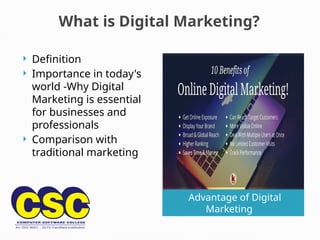
Advantage of Digital
Marketing
 Definition
 Importance in today's
world -Why Digital
Marketing is essential
for businesses and
professionals
 Comparison with
traditional marketing
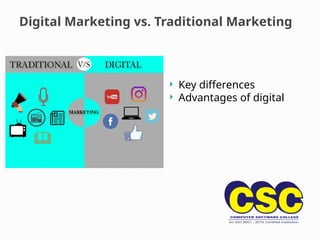
Digital Marketing vs. Traditional Marketing
 Key differences
 Advantages of digital
 Search Engines
 Social Media
 Email Marketing
 Content Marketing
 Paid Advertising
The Digital Marketing Ecosystem
 Skills required
 Typical responsibilities
 Career prospects
The Role of a Digital Marketing Professional
 AI and Automation
 Video Content Dominance
 Personalization
Current Trends in Digital Marketing
Key Channels and
Strategies
Core Digital Marketing
Channels
 What is SEO?
 On-page vs. Off-page SEO
 Tools for SEO
Search Engine Optimization (SEO)
 Popular platforms and their audiences
 Content strategies for each platform
 Engagement and community building
Social Media Marketing
 Building an email list
 Creating effective campaigns
 Tracking performance
Email Marketing
 Overview of PPC platforms
 Keyword targeting
 ROI and budget management
Pay-Per-Click (PPC) Advertising
 Importance of storytelling
 Blog posts, videos, infographics
 Measuring content performance
Content Marketing
Tools and Analytics
Tools and Techniques for
Professionals
 Google Analytics
 Google Search Console
 Google Trends
 Google Keyword Planner
 SEO Quake
 SEMRush
 Schema.org
Essential Digital Marketing Tools
 Key Performance Indicators (KPIs)
 Metrics for different channels(CTR, CPC,
Conversion Rate)
 Understanding reports
Basics of Digital Marketing Analytics
Strategy and Campaign
Planning
 Setting objectives (SMART goals)
 Identifying target audiences
 Choosing the right channels
Creating a Digital Marketing Plan
 Crafting a message and call-to-action
 Designing a customer journey
 Launching and monitoring campaigns
 ROI calculation basics
Step-by-Step Campaign Development
Career Pathways and
Professional Insights
 Certifications to pursue (Google Ads, HubSpot,
etc.)
 Building a strong portfolio
 Freelancing vs. working for an agency
Becoming a Digital Marketing Professional
 Trends in digital marketing
 Skills in demand
Industry Insights
Case Studies and Exercises
 Create a mock digital marketing strategy for a
hypothetical business.
 Split participants into teams for brainstorming.
Interactive Exercise
 Recap of Key Points
 Open Floor for Questions
Q&A and Wrap-Up
Digital_Marketing_Presentation1_Dec2024.pptx

Digital_Marketing_Presentation1_Dec2024.pptx

  • 1.
  • 2.
  • 3.
     Introduction toDigital Marketing  Core Digital Marketing Channels  Tools and Analytics  Strategy and Campaign Planning  Career Pathways and Professional Insights  Case Studies and Exercises  Q&A and Wrap-Up Workshop Agenda
  • 4.
    Section 1 Introduction toDigital Marketing
  • 5.
    What is DigitalMarketing? Advantage of Digital Marketing  Definition  Importance in today's world -Why Digital Marketing is essential for businesses and professionals  Comparison with traditional marketing
  • 6.
    Digital Marketing vs.Traditional Marketing  Key differences  Advantages of digital
  • 7.
     Search Engines Social Media  Email Marketing  Content Marketing  Paid Advertising The Digital Marketing Ecosystem
  • 8.
     Skills required Typical responsibilities  Career prospects The Role of a Digital Marketing Professional
  • 9.
     AI andAutomation  Video Content Dominance  Personalization Current Trends in Digital Marketing
  • 10.
    Key Channels and Strategies CoreDigital Marketing Channels
  • 11.
     What isSEO?  On-page vs. Off-page SEO  Tools for SEO Search Engine Optimization (SEO)
  • 12.
     Popular platformsand their audiences  Content strategies for each platform  Engagement and community building Social Media Marketing
  • 13.
     Building anemail list  Creating effective campaigns  Tracking performance Email Marketing
  • 14.
     Overview ofPPC platforms  Keyword targeting  ROI and budget management Pay-Per-Click (PPC) Advertising
  • 15.
     Importance ofstorytelling  Blog posts, videos, infographics  Measuring content performance Content Marketing
  • 16.
    Tools and Analytics Toolsand Techniques for Professionals
  • 17.
     Google Analytics Google Search Console  Google Trends  Google Keyword Planner  SEO Quake  SEMRush  Schema.org Essential Digital Marketing Tools
  • 18.
     Key PerformanceIndicators (KPIs)  Metrics for different channels(CTR, CPC, Conversion Rate)  Understanding reports Basics of Digital Marketing Analytics
  • 19.
  • 20.
     Setting objectives(SMART goals)  Identifying target audiences  Choosing the right channels Creating a Digital Marketing Plan
  • 21.
     Crafting amessage and call-to-action  Designing a customer journey  Launching and monitoring campaigns  ROI calculation basics Step-by-Step Campaign Development
  • 22.
  • 23.
     Certifications topursue (Google Ads, HubSpot, etc.)  Building a strong portfolio  Freelancing vs. working for an agency Becoming a Digital Marketing Professional
  • 24.
     Trends indigital marketing  Skills in demand Industry Insights
  • 25.
  • 26.
     Create amock digital marketing strategy for a hypothetical business.  Split participants into teams for brainstorming. Interactive Exercise
  • 27.
     Recap ofKey Points  Open Floor for Questions Q&A and Wrap-Up