Differentiated Instruction Jennifer Luff August 11, 2008
Goals At the end of the presentation we will have: Developed a stronger understanding of the principles of differentiated instruction. Gained knowledge of effective strategies that support varied student learning.
What is Differentiated Instruction? *Reflection Activity* Turn to your neighbor and discuss what differentiated instruction means to you. You have 30 seconds!
 
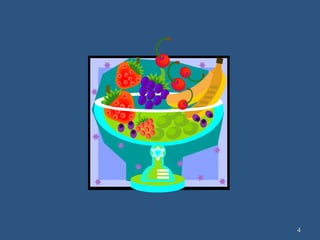
A Garden of Growing
One size does  NOT  fit all!
Recognize that they are all different… “ Children come to us in a variety of shapes, sizes, intellectual abilities, creative abilities, inter/intra personal skills, and a myriad more characteristics that makes each child we deal with unique and special.” Carol Ann Tomlinson
Differentiated Instruction is… A model of teaching that requires teachers to have flexible approaches in their instruction.  This means adjusting the curriculum and instruction to fit the needs of the learners, instead of the students being expected to modify themselves for the curriculum. Adapted from: Hall, Tracey  NCAC
Why Differentiate?? To access learning Motivation to learn Efficiency of learning
To recognize students varying background of knowledge, their readiness level, preferences in learning, interests, and to model instruction based on their differences. The goal is to maximize every student’s growth and individual success by instructing to a level that they can learn and reach their own personal goals. Adapted from Hall, Tracey;  NCAC
READINESS Differentiated Instruction follows the principle of readiness to learn. Taken from the work of Lev Vygotsky, and the zone of proximal development (ZPD) OR the range at which learning takes place Multiple Intelligences (Gardner) Model began in general education classes for students who were to be considered “gifted”
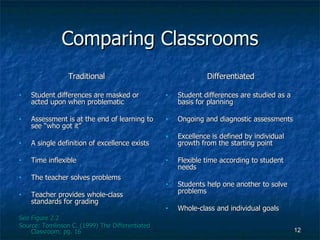
Comparing Classrooms Traditional Student differences are masked or acted upon when problematic Assessment is at the end of learning to see “who got it” A single definition of excellence exists Time inflexible The teacher solves problems Teacher provides whole-class standards for grading See Figure 2.2 Source: Tomlinson C. (1999) The Differentiated Classroom; pg. 16 Differentiated Student differences are studied as a basis for planning Ongoing and diagnostic assessments Excellence is defined by individual growth from the starting point Flexible time according to student needs Students help one another to solve problems Whole-class and individual goals
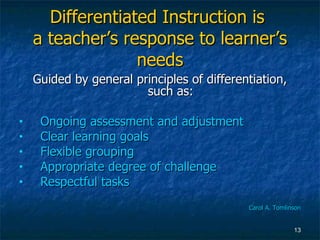
Differentiated Instruction is  a teacher’s response to learner’s needs Guided by general principles of differentiation, such as: Ongoing assessment and adjustment Clear learning goals Flexible grouping Appropriate degree of challenge Respectful tasks Carol A. Tomlinson
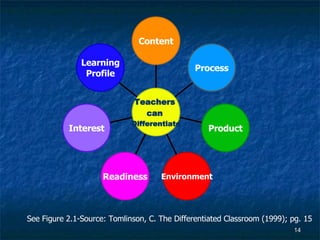
See Figure 2.1-Source: Tomlinson, C. The Differentiated Classroom (1999); pg. 15 Learning Profile Interest Readiness Environment Product Process Content Teachers  can  Differentiate
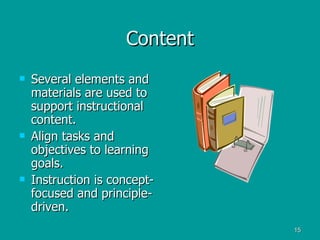
Content Several elements and materials are used to support instructional content. Align tasks and objectives to learning goals. Instruction is concept-focused and principle-driven.
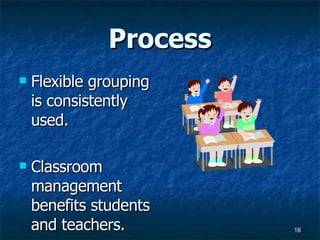
Process Flexible grouping is consistently used. Classroom management benefits students and teachers.
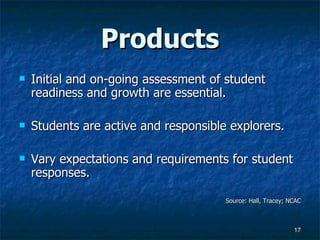
Products Initial and on-going assessment of student readiness and growth are essential. Students are active and responsible explorers. Vary expectations and requirements for student responses. Source: Hall, Tracey; NCAC
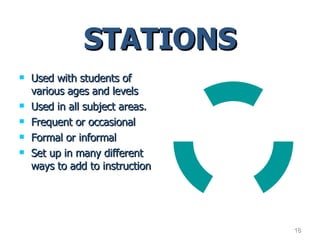
STATIONS Used with students of various ages and levels Used in all subject areas. Frequent or occasional Formal or informal Set up in many different ways to add to instruction Blue Yellow Red
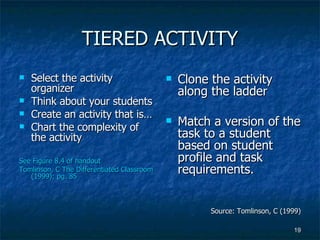
TIERED ACTIVITY Select the activity organizer  Think about your students Create an activity that is… Chart the complexity of the activity See Figure 8.4 of handout Tomlinson, C The Differentiated Classroom (1999); pg. 85 Clone the activity along the ladder Match a version of the task to a student based on student profile and task requirements. Source: Tomlinson, C (1999)
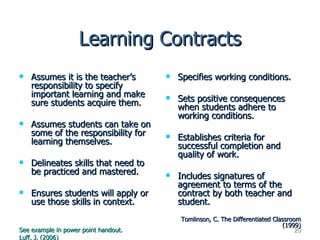
Learning Contracts Assumes it is the teacher’s responsibility to specify important learning and make sure students acquire them. Assumes students can take on some of the responsibility for learning themselves. Delineates skills that need to be practiced and mastered. Ensures students will apply or use those skills in context. See example in power point handout. Luff, J. (2006) Specifies working conditions. Sets positive consequences when students adhere to working conditions. Establishes criteria for successful completion and quality of work. Includes signatures of agreement to terms of the contract by both teacher and student. Tomlinson, C. The Differentiated Classroom (1999)
Thank you  for sharing your time today! Jennifer Luff [email_address]

Differentiated Instruction 2

  • 1.
  • 2.
    Goals At theend of the presentation we will have: Developed a stronger understanding of the principles of differentiated instruction. Gained knowledge of effective strategies that support varied student learning.
  • 3.
    What is DifferentiatedInstruction? *Reflection Activity* Turn to your neighbor and discuss what differentiated instruction means to you. You have 30 seconds!
  • 4.
  • 5.
    A Garden ofGrowing
  • 6.
    One size does NOT fit all!
  • 7.
    Recognize that theyare all different… “ Children come to us in a variety of shapes, sizes, intellectual abilities, creative abilities, inter/intra personal skills, and a myriad more characteristics that makes each child we deal with unique and special.” Carol Ann Tomlinson
  • 8.
    Differentiated Instruction is…A model of teaching that requires teachers to have flexible approaches in their instruction. This means adjusting the curriculum and instruction to fit the needs of the learners, instead of the students being expected to modify themselves for the curriculum. Adapted from: Hall, Tracey NCAC
  • 9.
    Why Differentiate?? Toaccess learning Motivation to learn Efficiency of learning
  • 10.
    To recognize studentsvarying background of knowledge, their readiness level, preferences in learning, interests, and to model instruction based on their differences. The goal is to maximize every student’s growth and individual success by instructing to a level that they can learn and reach their own personal goals. Adapted from Hall, Tracey; NCAC
  • 11.
    READINESS Differentiated Instructionfollows the principle of readiness to learn. Taken from the work of Lev Vygotsky, and the zone of proximal development (ZPD) OR the range at which learning takes place Multiple Intelligences (Gardner) Model began in general education classes for students who were to be considered “gifted”
  • 12.
    Comparing Classrooms TraditionalStudent differences are masked or acted upon when problematic Assessment is at the end of learning to see “who got it” A single definition of excellence exists Time inflexible The teacher solves problems Teacher provides whole-class standards for grading See Figure 2.2 Source: Tomlinson C. (1999) The Differentiated Classroom; pg. 16 Differentiated Student differences are studied as a basis for planning Ongoing and diagnostic assessments Excellence is defined by individual growth from the starting point Flexible time according to student needs Students help one another to solve problems Whole-class and individual goals
  • 13.
    Differentiated Instruction is a teacher’s response to learner’s needs Guided by general principles of differentiation, such as: Ongoing assessment and adjustment Clear learning goals Flexible grouping Appropriate degree of challenge Respectful tasks Carol A. Tomlinson
  • 14.
    See Figure 2.1-Source:Tomlinson, C. The Differentiated Classroom (1999); pg. 15 Learning Profile Interest Readiness Environment Product Process Content Teachers can Differentiate
  • 15.
    Content Several elementsand materials are used to support instructional content. Align tasks and objectives to learning goals. Instruction is concept-focused and principle-driven.
  • 16.
    Process Flexible groupingis consistently used. Classroom management benefits students and teachers.
  • 17.
    Products Initial andon-going assessment of student readiness and growth are essential. Students are active and responsible explorers. Vary expectations and requirements for student responses. Source: Hall, Tracey; NCAC
  • 18.
    STATIONS Used withstudents of various ages and levels Used in all subject areas. Frequent or occasional Formal or informal Set up in many different ways to add to instruction Blue Yellow Red
  • 19.
    TIERED ACTIVITY Selectthe activity organizer Think about your students Create an activity that is… Chart the complexity of the activity See Figure 8.4 of handout Tomlinson, C The Differentiated Classroom (1999); pg. 85 Clone the activity along the ladder Match a version of the task to a student based on student profile and task requirements. Source: Tomlinson, C (1999)
  • 20.
    Learning Contracts Assumesit is the teacher’s responsibility to specify important learning and make sure students acquire them. Assumes students can take on some of the responsibility for learning themselves. Delineates skills that need to be practiced and mastered. Ensures students will apply or use those skills in context. See example in power point handout. Luff, J. (2006) Specifies working conditions. Sets positive consequences when students adhere to working conditions. Establishes criteria for successful completion and quality of work. Includes signatures of agreement to terms of the contract by both teacher and student. Tomlinson, C. The Differentiated Classroom (1999)
  • 21.
    Thank you for sharing your time today! Jennifer Luff [email_address]