Different types of Single Board
Computers
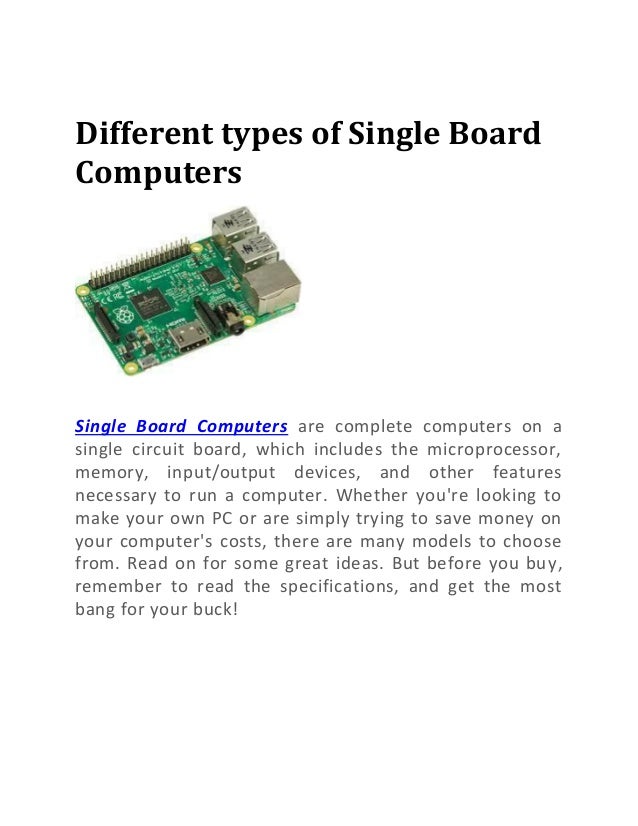
Single Board Computers are complete computers on a
single circuit board, which includes the microprocessor,
memory, input/output devices, and other features
necessary to run a computer. Whether you're looking to
make your own PC or are simply trying to save money on
your computer's costs, there are many models to choose
from. Read on for some great ideas. But before you buy,
remember to read the specifications, and get the most
bang for your buck!
Raspberry Pi
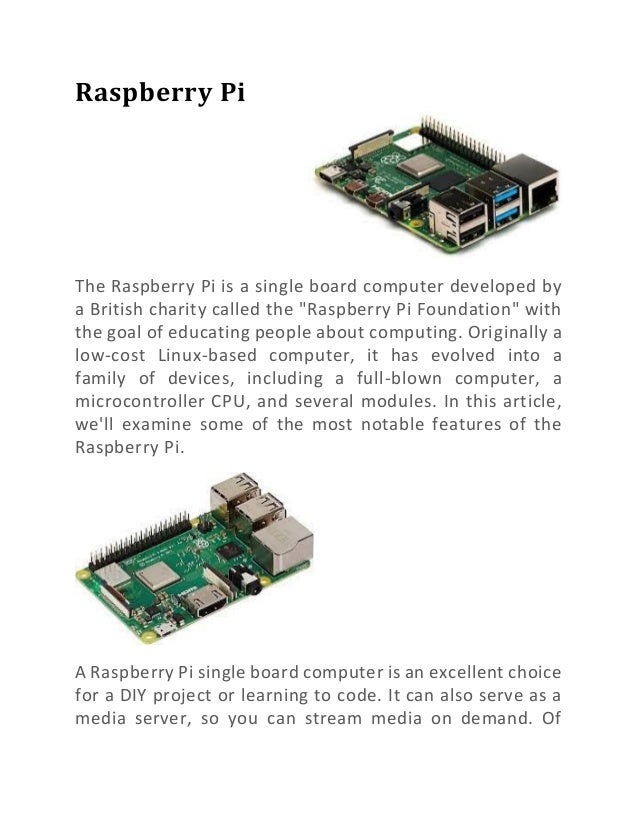
The Raspberry Pi is a single board computer developed by
a British charity called the "Raspberry Pi Foundation" with
the goal of educating people about computing. Originally a
low-cost Linux-based computer, it has evolved into a
family of devices, including a full-blown computer, a
microcontroller CPU, and several modules. In this article,
we'll examine some of the most notable features of the
Raspberry Pi.
A Raspberry Pi single board computer is an excellent choice
for a DIY project or learning to code. It can also serve as a
media server, so you can stream media on demand. Of
course, the Raspberry Pi is not the perfect solution for
every tinker. You might want a more powerful board, or
perhaps you'd like to save money. In the end, it's your call.
But whatever your needs are, the Raspberry Pi is an
excellent option.
Beagle Bone Black
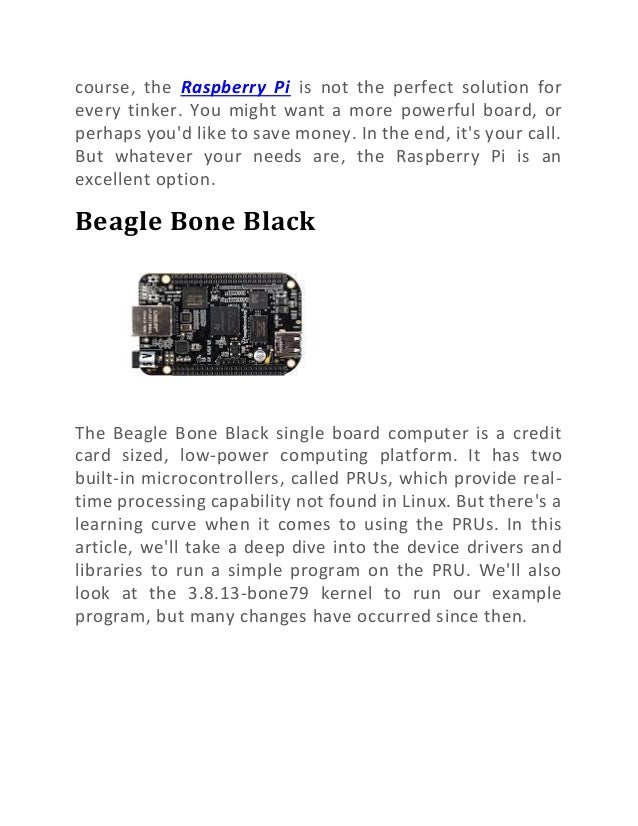
The Beagle Bone Black single board computer is a credit
card sized, low-power computing platform. It has two
built-in microcontrollers, called PRUs, which provide real-
time processing capability not found in Linux. But there's a
learning curve when it comes to using the PRUs. In this
article, we'll take a deep dive into the device drivers and
libraries to run a simple program on the PRU. We'll also
look at the 3.8.13-bone79 kernel to run our example
program, but many changes have occurred since then.
X-ES embedded Single Board
Computers
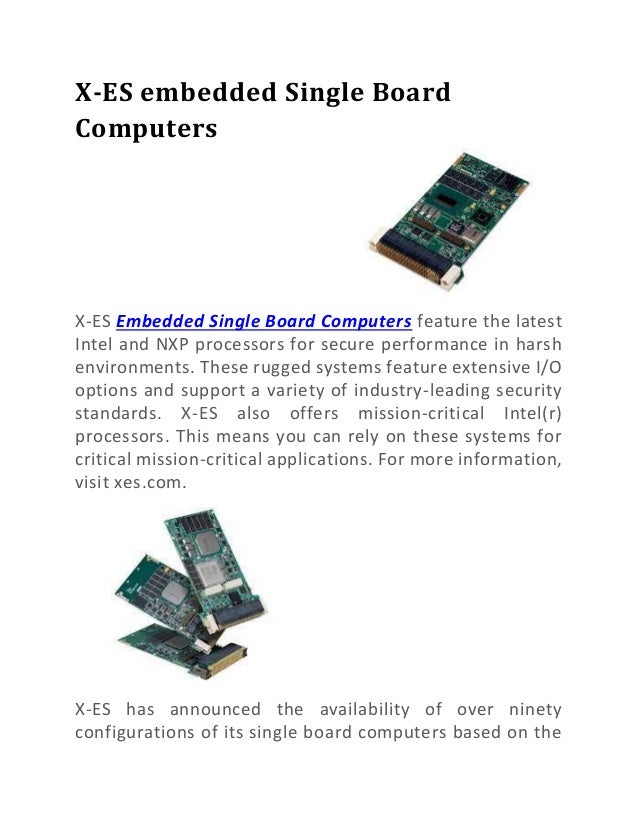
X-ES Embedded Single Board Computers feature the latest
Intel and NXP processors for secure performance in harsh
environments. These rugged systems feature extensive I/O
options and support a variety of industry-leading security
standards. X-ES also offers mission-critical Intel(r)
processors. This means you can rely on these systems for
critical mission-critical applications. For more information,
visit xes.com.
X-ES has announced the availability of over ninety
configurations of its single board computers based on the
Intel Xeon D-1500 processor family. These systems are
well-suited for military and commercial unmanned systems
applications. X-ES single board computers are available in
a variety of form factors, from custom-made systems to
standard PCBs. X-ES has delivered at least one unit of each
of its 16 Xeon D processor-based products to date. They
have also included dual mezzanine support and integrated
FPGAs, ensuring they are well-suited for a variety of
applications.
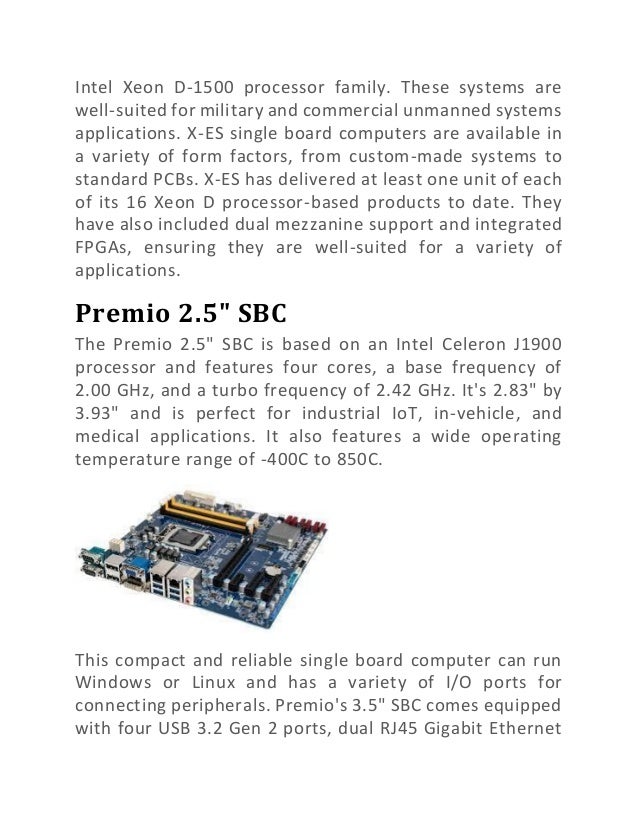
Premio 2.5" SBC
The Premio 2.5" SBC is based on an Intel Celeron J1900
processor and features four cores, a base frequency of
2.00 GHz, and a turbo frequency of 2.42 GHz. It's 2.83" by
3.93" and is perfect for industrial IoT, in-vehicle, and
medical applications. It also features a wide operating
temperature range of -400C to 850C.
This compact and reliable single board computer can run
Windows or Linux and has a variety of I/O ports for
connecting peripherals. Premio's 3.5" SBC comes equipped
with four USB 3.2 Gen 2 ports, dual RJ45 Gigabit Ethernet
ports, HDMI port, and 4x internal RS-232/422/485 headers.
It also features two x Gen 3 mini PCIe slots.
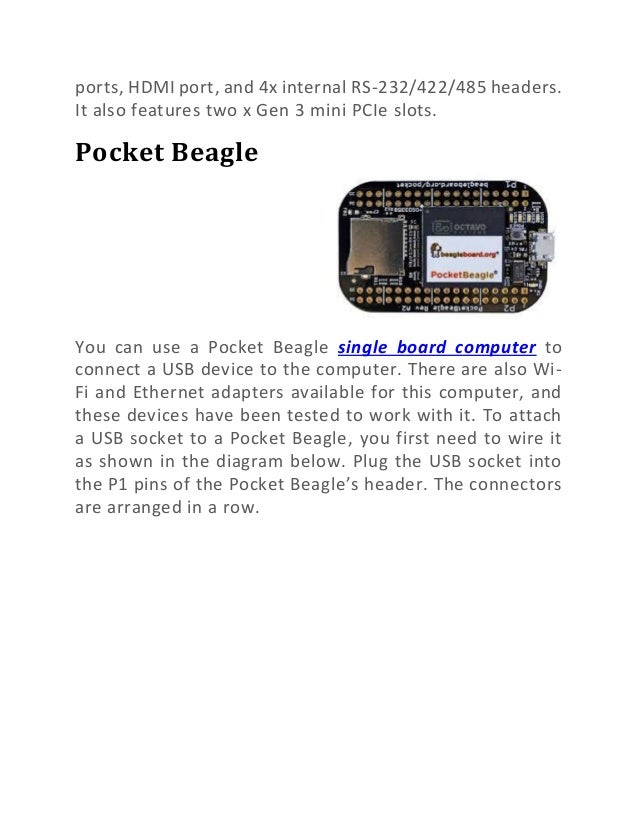
Pocket Beagle
You can use a Pocket Beagle single board computer to
connect a USB device to the computer. There are also Wi-
Fi and Ethernet adapters available for this computer, and
these devices have been tested to work with it. To attach
a USB socket to a Pocket Beagle, you first need to wire it
as shown in the diagram below. Plug the USB socket into
the P1 pins of the Pocket Beagle’s header. The connectors
are arranged in a row.

Different types of Single Board Computers.pdf

  • 1.
    Different types ofSingle Board Computers Single Board Computers are complete computers on a single circuit board, which includes the microprocessor, memory, input/output devices, and other features necessary to run a computer. Whether you're looking to make your own PC or are simply trying to save money on your computer's costs, there are many models to choose from. Read on for some great ideas. But before you buy, remember to read the specifications, and get the most bang for your buck!
  • 2.
    Raspberry Pi The RaspberryPi is a single board computer developed by a British charity called the "Raspberry Pi Foundation" with the goal of educating people about computing. Originally a low-cost Linux-based computer, it has evolved into a family of devices, including a full-blown computer, a microcontroller CPU, and several modules. In this article, we'll examine some of the most notable features of the Raspberry Pi. A Raspberry Pi single board computer is an excellent choice for a DIY project or learning to code. It can also serve as a media server, so you can stream media on demand. Of
  • 3.
    course, the RaspberryPi is not the perfect solution for every tinker. You might want a more powerful board, or perhaps you'd like to save money. In the end, it's your call. But whatever your needs are, the Raspberry Pi is an excellent option. Beagle Bone Black The Beagle Bone Black single board computer is a credit card sized, low-power computing platform. It has two built-in microcontrollers, called PRUs, which provide real- time processing capability not found in Linux. But there's a learning curve when it comes to using the PRUs. In this article, we'll take a deep dive into the device drivers and libraries to run a simple program on the PRU. We'll also look at the 3.8.13-bone79 kernel to run our example program, but many changes have occurred since then.
  • 4.
    X-ES embedded SingleBoard Computers X-ES Embedded Single Board Computers feature the latest Intel and NXP processors for secure performance in harsh environments. These rugged systems feature extensive I/O options and support a variety of industry-leading security standards. X-ES also offers mission-critical Intel(r) processors. This means you can rely on these systems for critical mission-critical applications. For more information, visit xes.com. X-ES has announced the availability of over ninety configurations of its single board computers based on the
  • 5.
    Intel Xeon D-1500processor family. These systems are well-suited for military and commercial unmanned systems applications. X-ES single board computers are available in a variety of form factors, from custom-made systems to standard PCBs. X-ES has delivered at least one unit of each of its 16 Xeon D processor-based products to date. They have also included dual mezzanine support and integrated FPGAs, ensuring they are well-suited for a variety of applications. Premio 2.5" SBC The Premio 2.5" SBC is based on an Intel Celeron J1900 processor and features four cores, a base frequency of 2.00 GHz, and a turbo frequency of 2.42 GHz. It's 2.83" by 3.93" and is perfect for industrial IoT, in-vehicle, and medical applications. It also features a wide operating temperature range of -400C to 850C. This compact and reliable single board computer can run Windows or Linux and has a variety of I/O ports for connecting peripherals. Premio's 3.5" SBC comes equipped with four USB 3.2 Gen 2 ports, dual RJ45 Gigabit Ethernet
  • 6.
    ports, HDMI port,and 4x internal RS-232/422/485 headers. It also features two x Gen 3 mini PCIe slots. Pocket Beagle You can use a Pocket Beagle single board computer to connect a USB device to the computer. There are also Wi- Fi and Ethernet adapters available for this computer, and these devices have been tested to work with it. To attach a USB socket to a Pocket Beagle, you first need to wire it as shown in the diagram below. Plug the USB socket into the P1 pins of the Pocket Beagle’s header. The connectors are arranged in a row.