CONSIGNMENT Vs SALES
PREPARED BY
Dr. MARIA FULGEN
ASSISTANT PROFESSOR
B.COM RETAIL MARKETING
SRI RAMAKRISHNA COLLEGE OF ARTS AND SCIENCE
COIMBATORE
CONSIGNMENT
MEANING
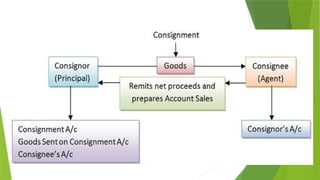
Consignment is a game plan where products are left in the ownership of an approved outsider to sell.
Regularly, the dispatcher gets a level of the income from the deal (in some cases, an exceptionally
enormous rate or percentage) as commission.Consignment bargains are made on an assortment of
items, like fine art, dress, accessories, drinks, and books.
PARTIES IN A CONSIGNMENT
Principal or Consignor: This is the party that sends the merchandise. He is the genuine
proprietor of the merchandise.
Agent or Consignee: This is the party that gets the merchandise. He does not claim the
merchandise however keeps command over them

Key features of a Consignment
1. Designed to make sales at a profit.
2. Handled by a consignor and a consignee who have the relationship of a
principal and an agent.
3. The consignee is merely responsible for the products and is not the owner.
4. The earnings made through the sale of the products are given to the
consignor.
5. The consignee is not responsible for any loss due to the destruction of
goods during shipping.
6. Unsold goods are returned to the consignor post the period of sale.
7. All proceedings irrespective of profit or loss are to be given to the


SALE
MEANING
The sale is a shared agreement wherein the responsibility is moved from the vendor to
the purchaser at a cost or remuneration.
FEATURES OF A SALE
 Sale or agreement of offer.
 Payment or guarantee of payments on the cost.
 Conveyance of products.
 Move the responsibility of products.
CONSIGNMENT VS SALE
Key Differences Between Consignment and Sale
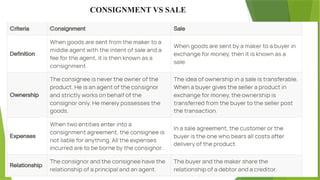
1.When goods are forwarded by the owner to his agent conclude the sale, it is known as
Consignment. A Sale is a transaction between two parties whereby goods are traded for a
mutual benefit i.e. price.
2.The parties to a consignment are consignor and consignee whereas the parties to the sale are
buyer and seller.
3.The relationship amidst parties of consignment are of principal and agent, but if we talk about
the sale, they are debtor and creditor.
4.In consignment, only the possession of goods transfers not the ownership. On the other hand,
in the sale, both the ownership and possession are transferred to the buyer.
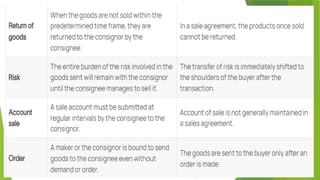
5.The consignee can return the unsold goods to the consignor in case of consignment
while, in the sale, the buyer has to take permission of the seller for returning the
goods.
6.In consignment, all the risks and rewards rest with the consignor. Conversely, in the
sale, the risks and rewards are transferred to the buyer by the seller.
7.The consignee gets remuneration for his services in the form of commission based
on sales made by him. In contrast to sale, whereby the seller earns profit from the
sales made.
CONCLUSION
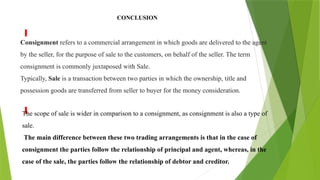
Consignment refers to a commercial arrangement in which goods are delivered to the agent
by the seller, for the purpose of sale to the customers, on behalf of the seller. The term
consignment is commonly juxtaposed with Sale.
Typically, Sale is a transaction between two parties in which the ownership, title and
possession goods are transferred from seller to buyer for the money consideration.
The scope of sale is wider in comparison to a consignment, as consignment is also a type of
sale.
The main difference between these two trading arrangements is that in the case of
consignment the parties follow the relationship of principal and agent, whereas, in the
case of the sale, the parties follow the relationship of debtor and creditor.

DIFFERENCE BETWEEN CONSIGNMENT AND SALES.pptx

  • 1.
    CONSIGNMENT Vs SALES PREPAREDBY Dr. MARIA FULGEN ASSISTANT PROFESSOR B.COM RETAIL MARKETING SRI RAMAKRISHNA COLLEGE OF ARTS AND SCIENCE COIMBATORE
  • 2.
    CONSIGNMENT MEANING Consignment is agame plan where products are left in the ownership of an approved outsider to sell. Regularly, the dispatcher gets a level of the income from the deal (in some cases, an exceptionally enormous rate or percentage) as commission.Consignment bargains are made on an assortment of items, like fine art, dress, accessories, drinks, and books. PARTIES IN A CONSIGNMENT Principal or Consignor: This is the party that sends the merchandise. He is the genuine proprietor of the merchandise. Agent or Consignee: This is the party that gets the merchandise. He does not claim the merchandise however keeps command over them
  • 3.
     Key features ofa Consignment 1. Designed to make sales at a profit. 2. Handled by a consignor and a consignee who have the relationship of a principal and an agent. 3. The consignee is merely responsible for the products and is not the owner. 4. The earnings made through the sale of the products are given to the consignor. 5. The consignee is not responsible for any loss due to the destruction of goods during shipping. 6. Unsold goods are returned to the consignor post the period of sale. 7. All proceedings irrespective of profit or loss are to be given to the
  • 5.
      SALE MEANING The sale isa shared agreement wherein the responsibility is moved from the vendor to the purchaser at a cost or remuneration. FEATURES OF A SALE  Sale or agreement of offer.  Payment or guarantee of payments on the cost.  Conveyance of products.  Move the responsibility of products.
  • 6.
  • 8.
    Key Differences BetweenConsignment and Sale 1.When goods are forwarded by the owner to his agent conclude the sale, it is known as Consignment. A Sale is a transaction between two parties whereby goods are traded for a mutual benefit i.e. price. 2.The parties to a consignment are consignor and consignee whereas the parties to the sale are buyer and seller. 3.The relationship amidst parties of consignment are of principal and agent, but if we talk about the sale, they are debtor and creditor. 4.In consignment, only the possession of goods transfers not the ownership. On the other hand, in the sale, both the ownership and possession are transferred to the buyer.
  • 9.
    5.The consignee canreturn the unsold goods to the consignor in case of consignment while, in the sale, the buyer has to take permission of the seller for returning the goods. 6.In consignment, all the risks and rewards rest with the consignor. Conversely, in the sale, the risks and rewards are transferred to the buyer by the seller. 7.The consignee gets remuneration for his services in the form of commission based on sales made by him. In contrast to sale, whereby the seller earns profit from the sales made.
  • 10.
    CONCLUSION Consignment refers toa commercial arrangement in which goods are delivered to the agent by the seller, for the purpose of sale to the customers, on behalf of the seller. The term consignment is commonly juxtaposed with Sale. Typically, Sale is a transaction between two parties in which the ownership, title and possession goods are transferred from seller to buyer for the money consideration. The scope of sale is wider in comparison to a consignment, as consignment is also a type of sale. The main difference between these two trading arrangements is that in the case of consignment the parties follow the relationship of principal and agent, whereas, in the case of the sale, the parties follow the relationship of debtor and creditor.