type 2 diabetes and cardiovascular diseases
Professor / Mohammed Ahmed Bamashmos
Professor of Internal Medicine and Endocrinology
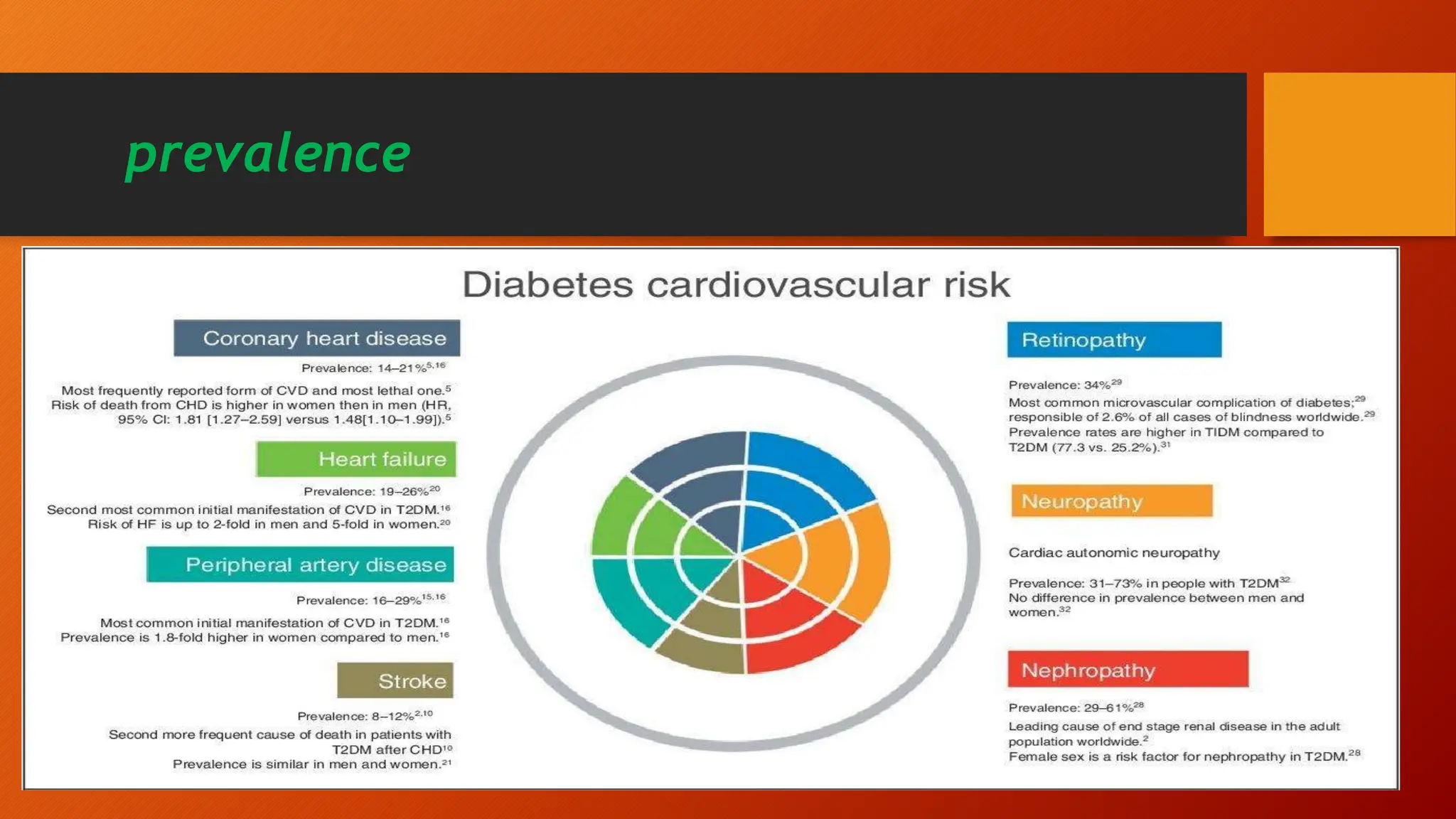
prevalence
risk factors
1- type 2 DM is one of major four independent risk factors of CVD
2- Diabetes and other associated CVD risk factors
- Glycemic variability
- Hypoglycemic complication
- Age and gender
- Hypertension
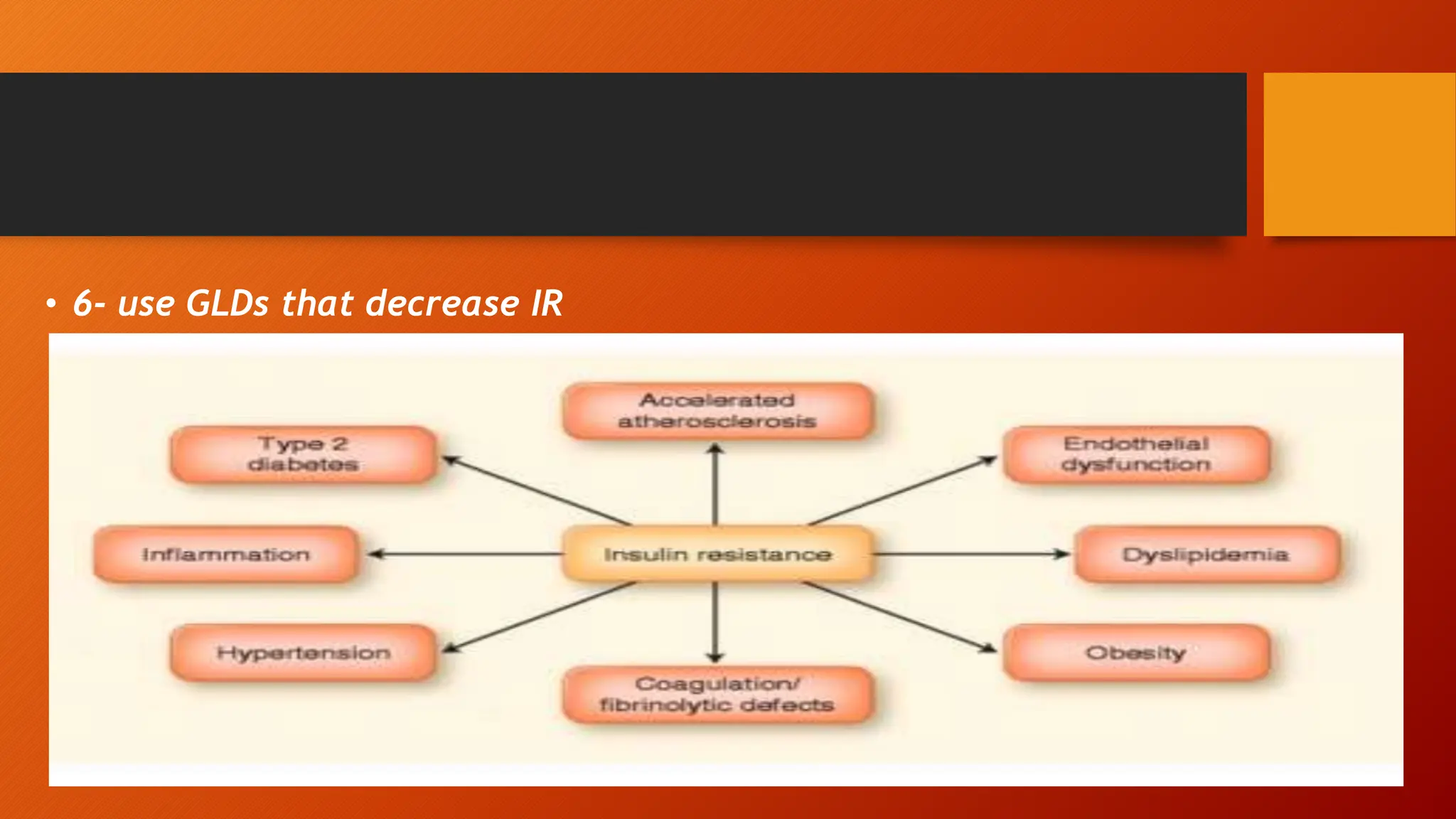
- Insulin resistance
- obesity
- Dyslipidemia
- Endothelial dysfunction
- inflammation
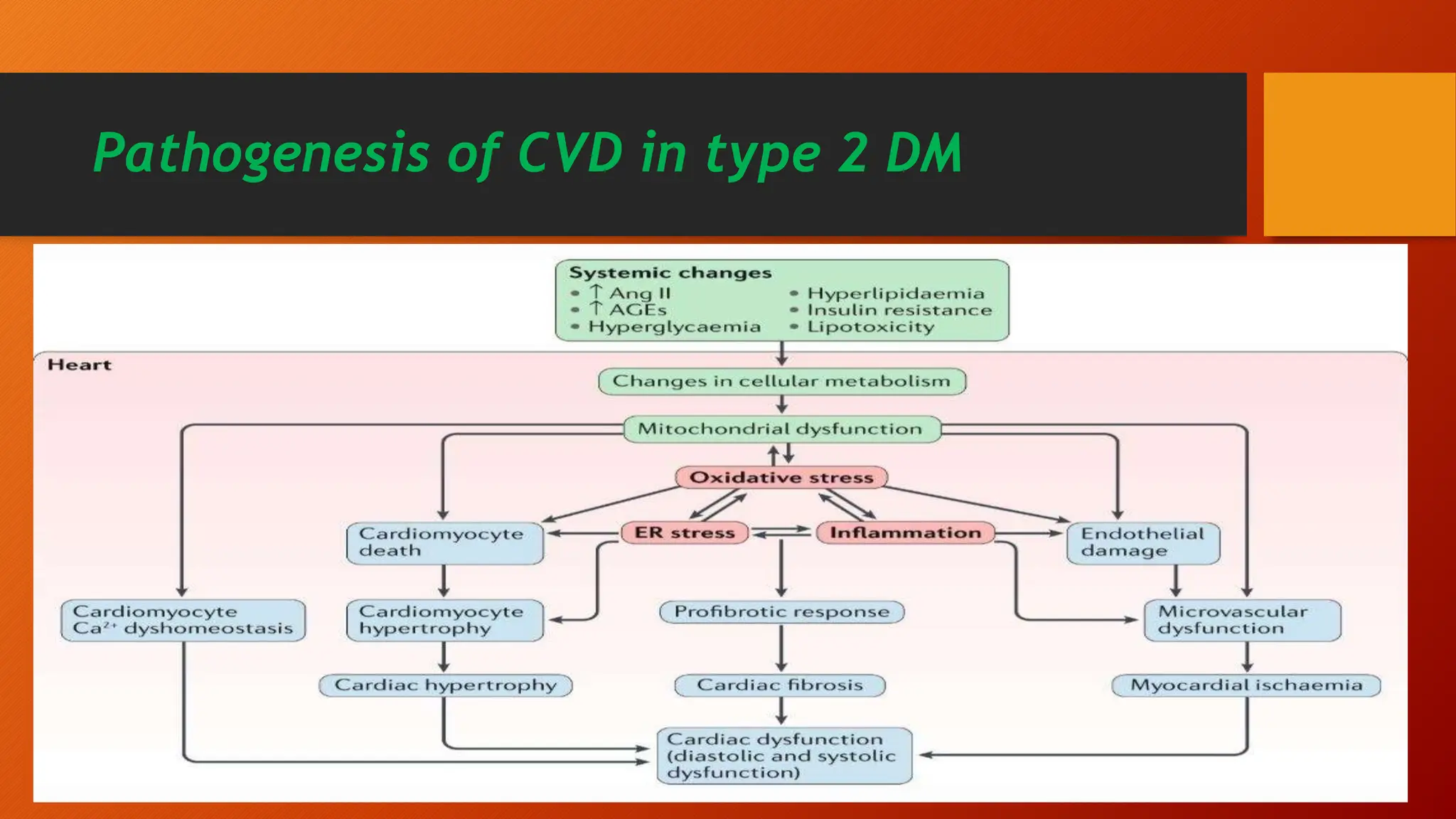
Pathogenesis of CVD in type 2 DM
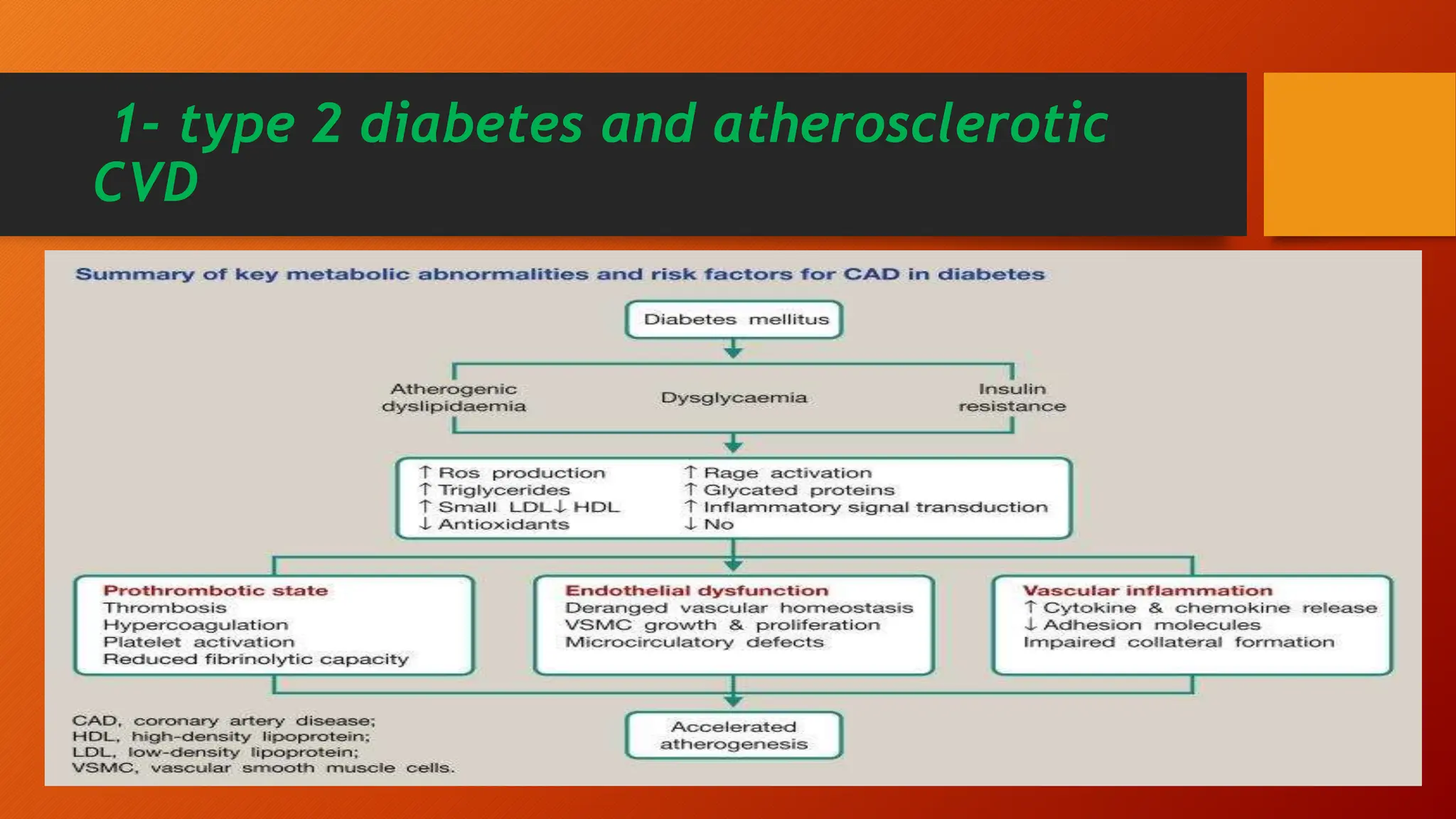
1- type 2 diabetes and atherosclerotic
CVD
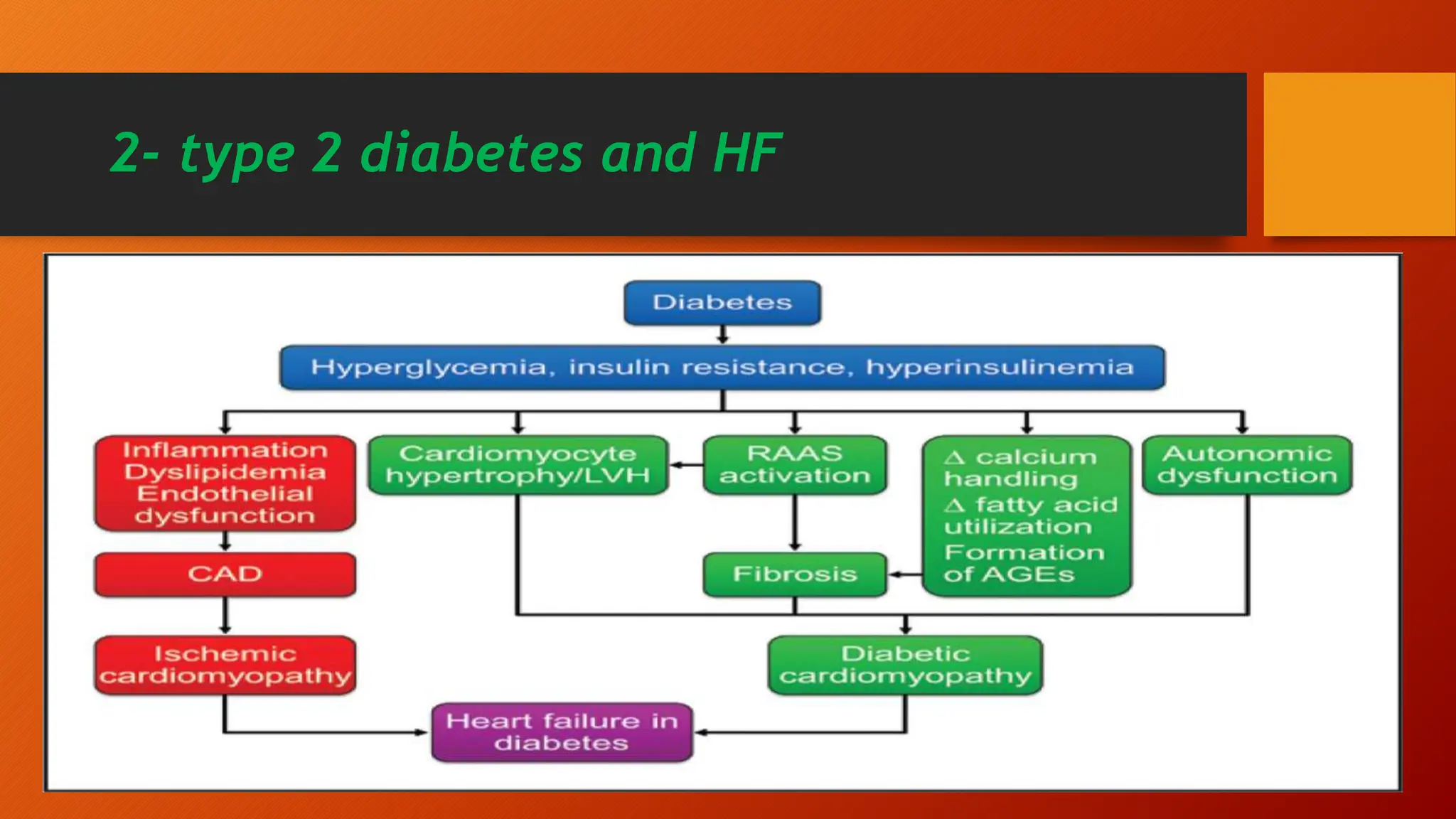
2- type 2 diabetes and HF
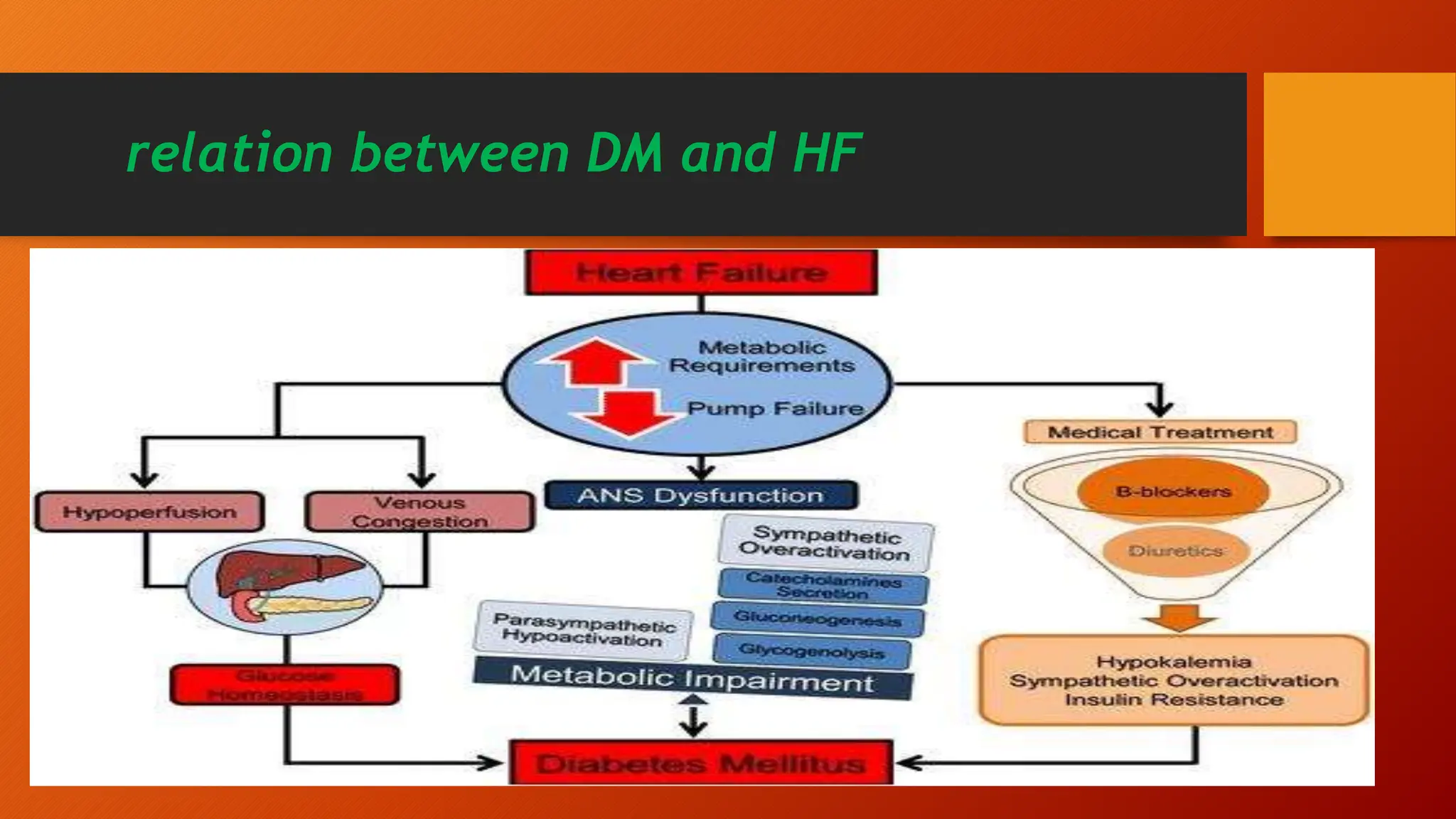
relation between DM and HF
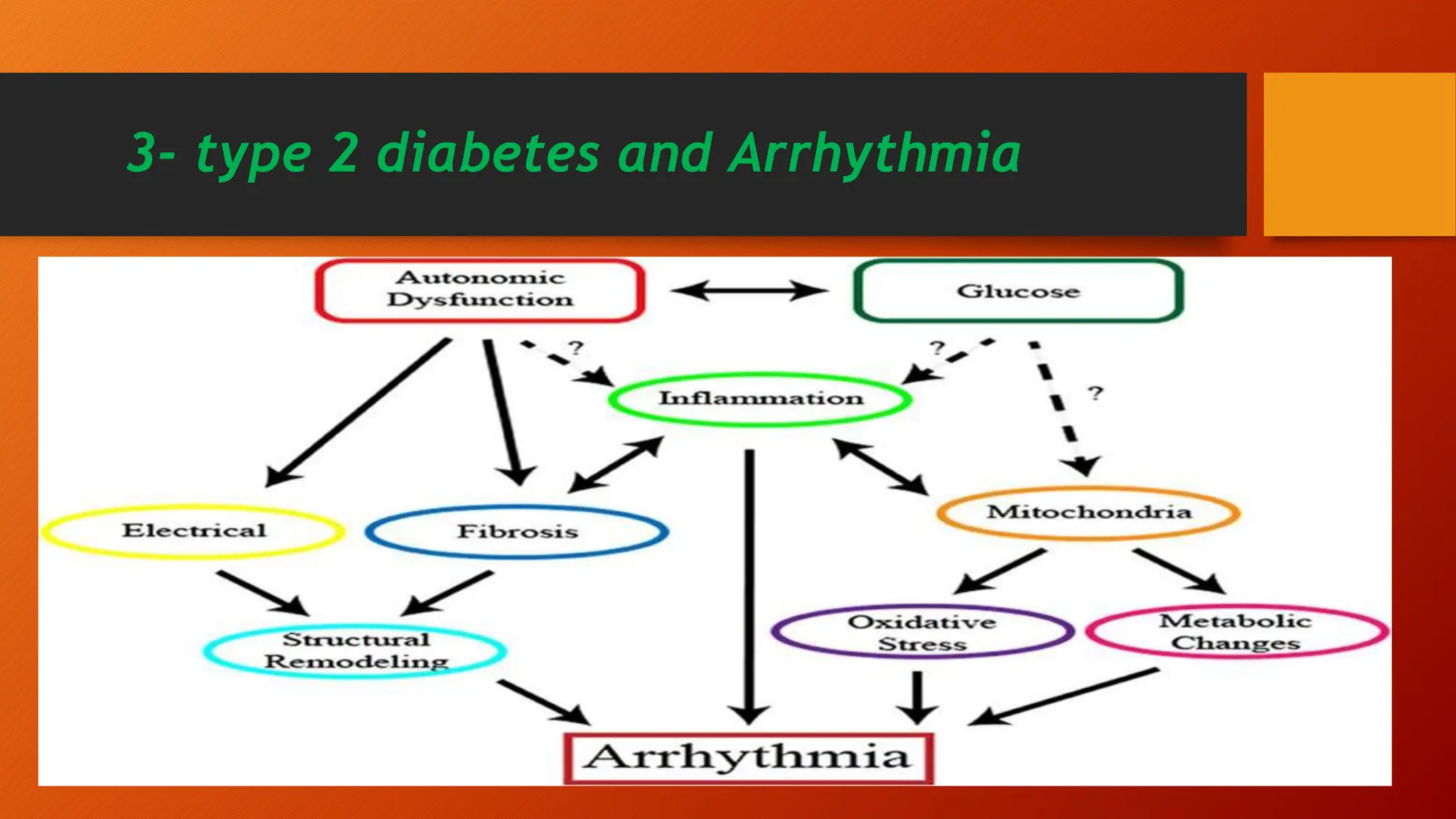
3- type 2 diabetes and Arrhythmia
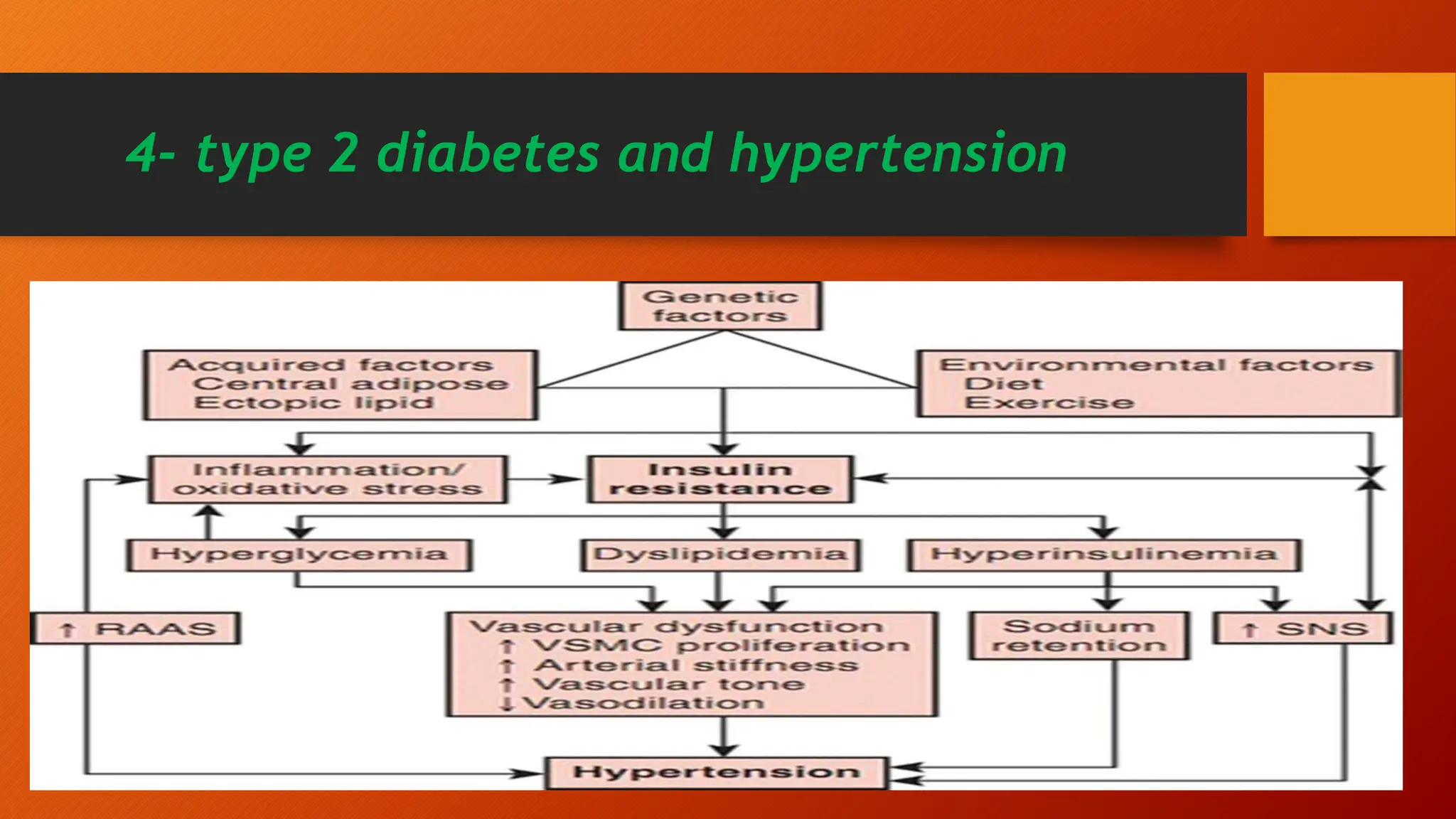
4- type 2 diabetes and hypertension
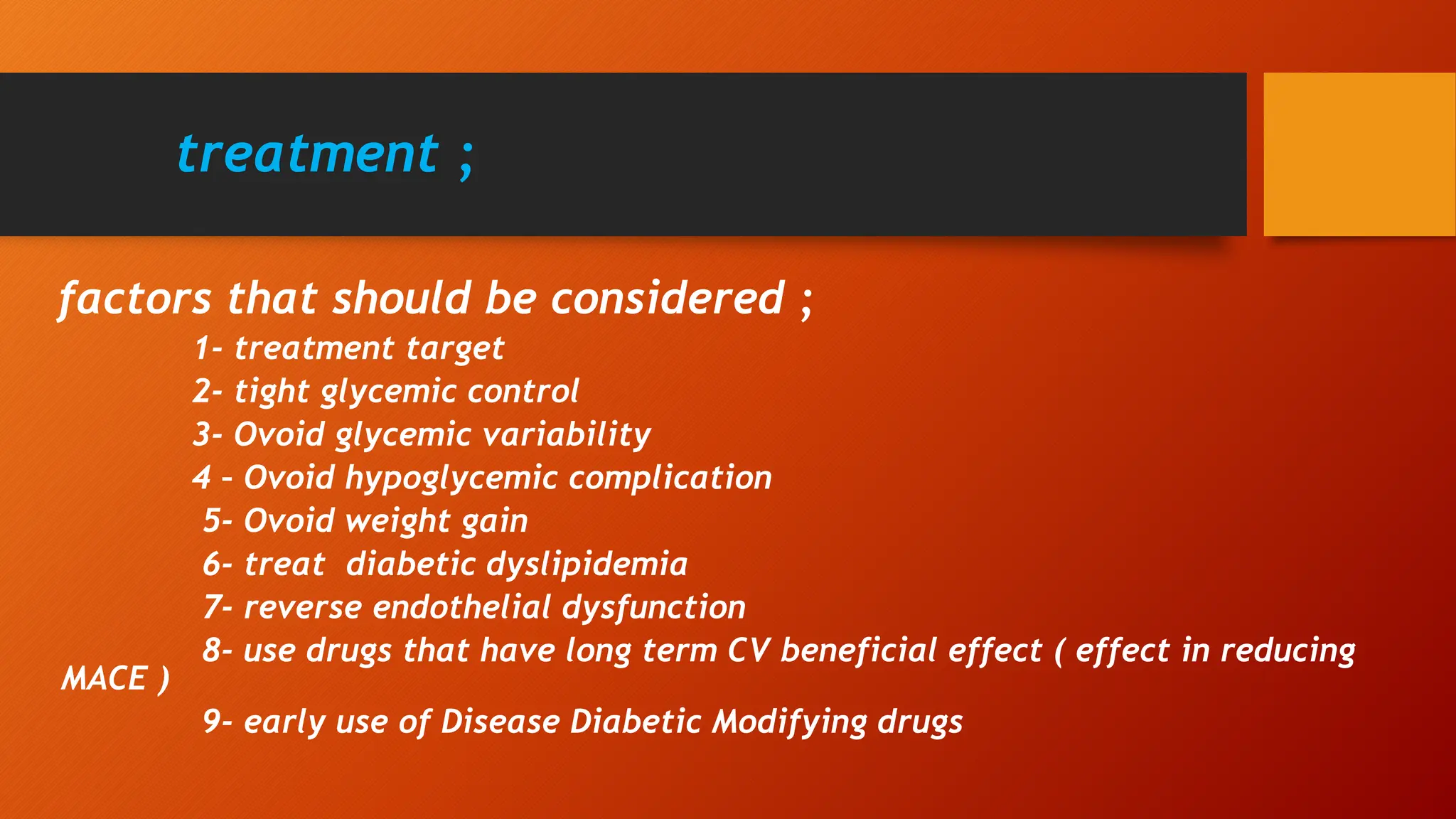
treatment ;
factors that should be considered ;
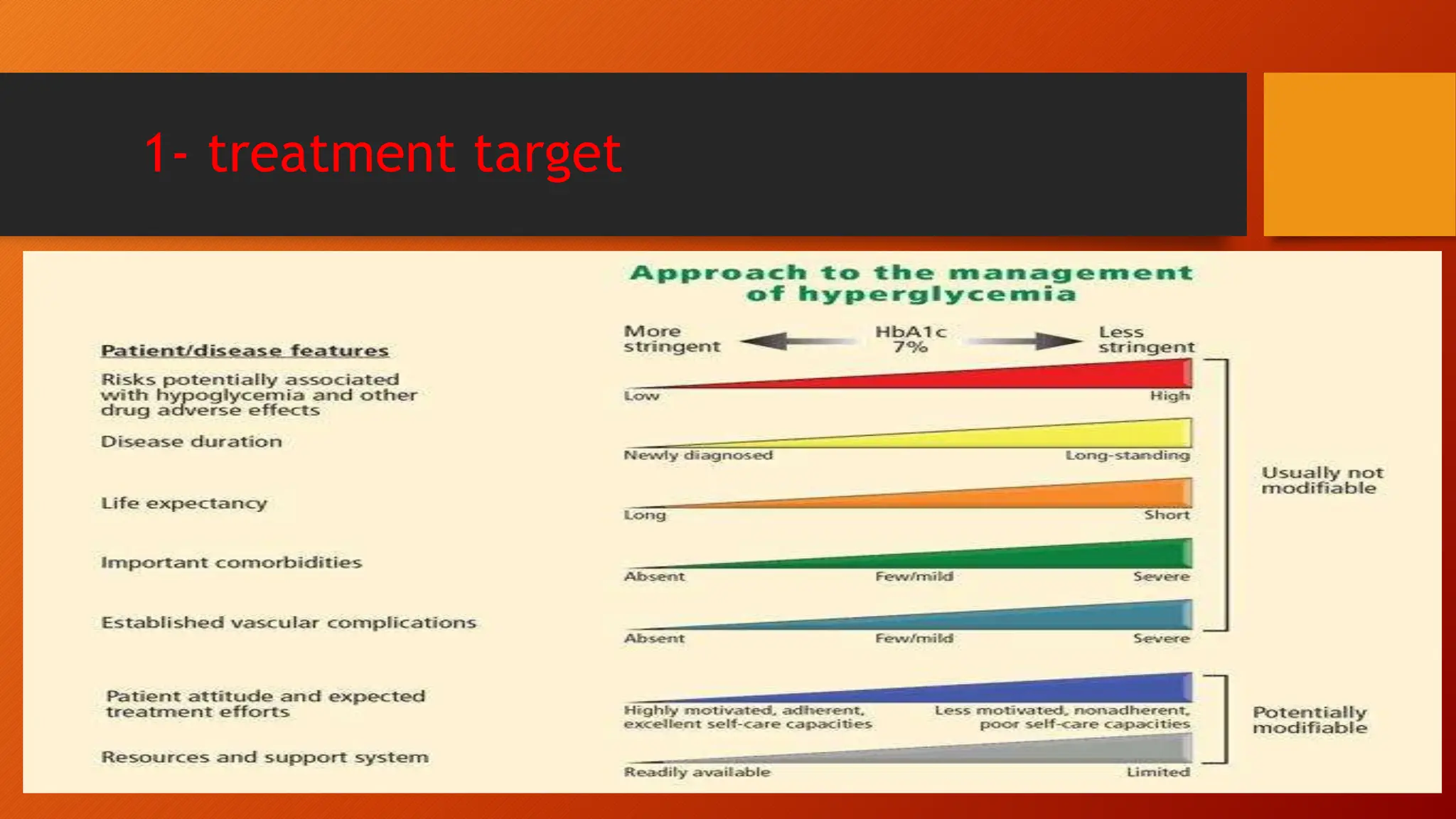
1- treatment target
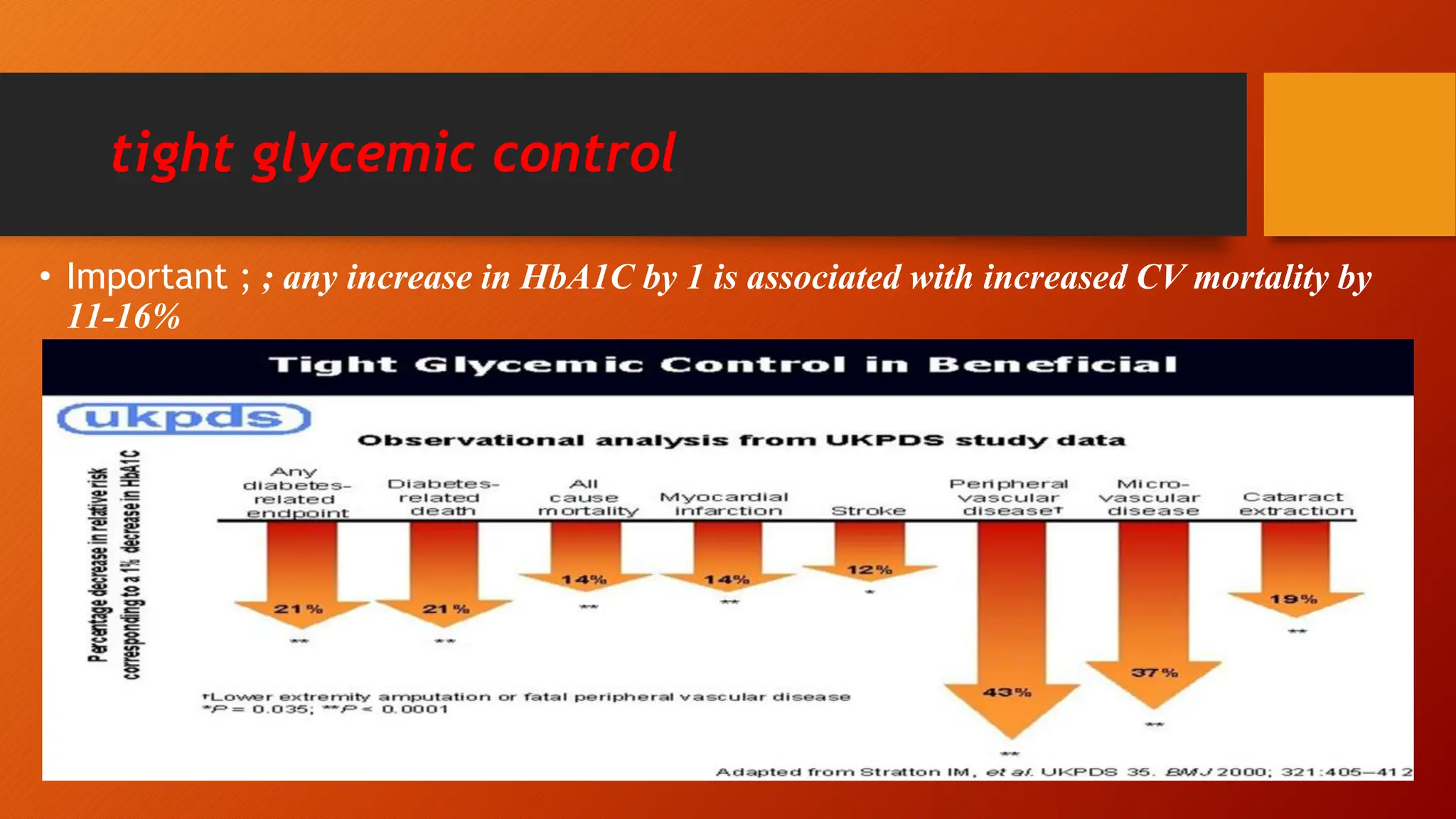
2- tight glycemic control
3- Ovoid glycemic variability
4 – Ovoid hypoglycemic complication
5- Ovoid weight gain
6- treat diabetic dyslipidemia
7- reverse endothelial dysfunction
8- use drugs that have long term CV beneficial effect ( effect in reducing
MACE )
9- early use of Disease Diabetic Modifying drugs
1- treatment target
tight glycemic control
• Important ; ; any increase in HbA1C by 1 is associated with increased CV mortality by
11-16%
treat all CV risk factors in type 2
diabetes
1- Avoid hypoglycemia ;
adverse effect of hypoglycemia ;
- increased inflammation and CRP
- Endothelial dysfunction
- Sympatho adrenal response and increased adrenaline
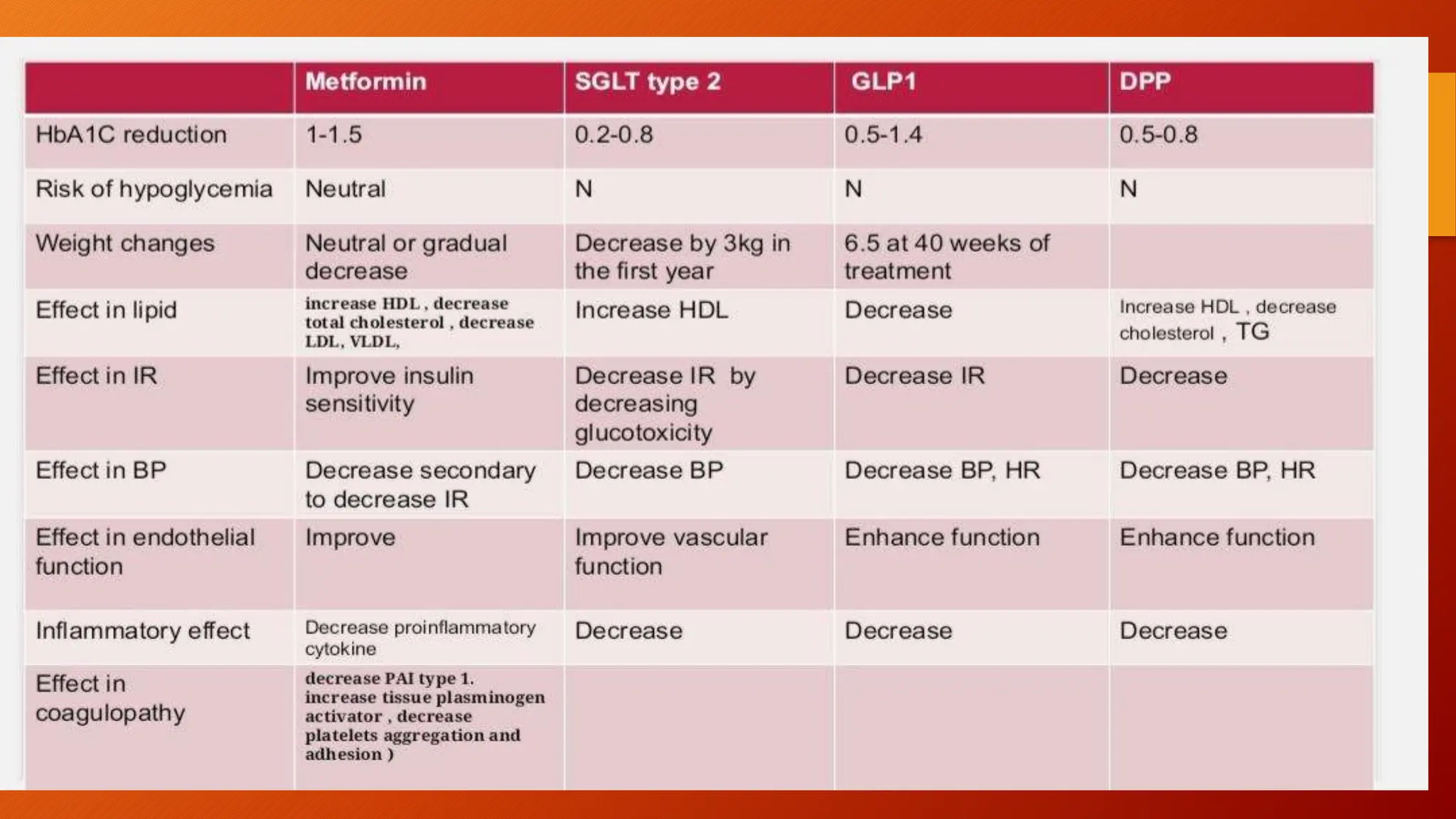
2- use drugs that has effect in both FBS , PPBS and GV ;
adverse effect of GV ; endothelial dysfunction , thrombosis and increased
plaque instability
•
• 3- use GLDs that improve dyslipidemia and decrease BP
4- use GLDs that overcome endothelial dysfunction;
endothelial dysfunction leads to ;
- vasoconstriction , inflammation and thrombosis
5- use GLDs that decrease body weight ;
effect of weight gain ;
- insulin resistance
- hyperglycemia
- increased BP
- inflammation , dyslipidemia
- endothelial dysfunction
• 6- use GLDs that decrease IR
7 use GLDs that ;
- decrease inflammation
- decrease coagulation
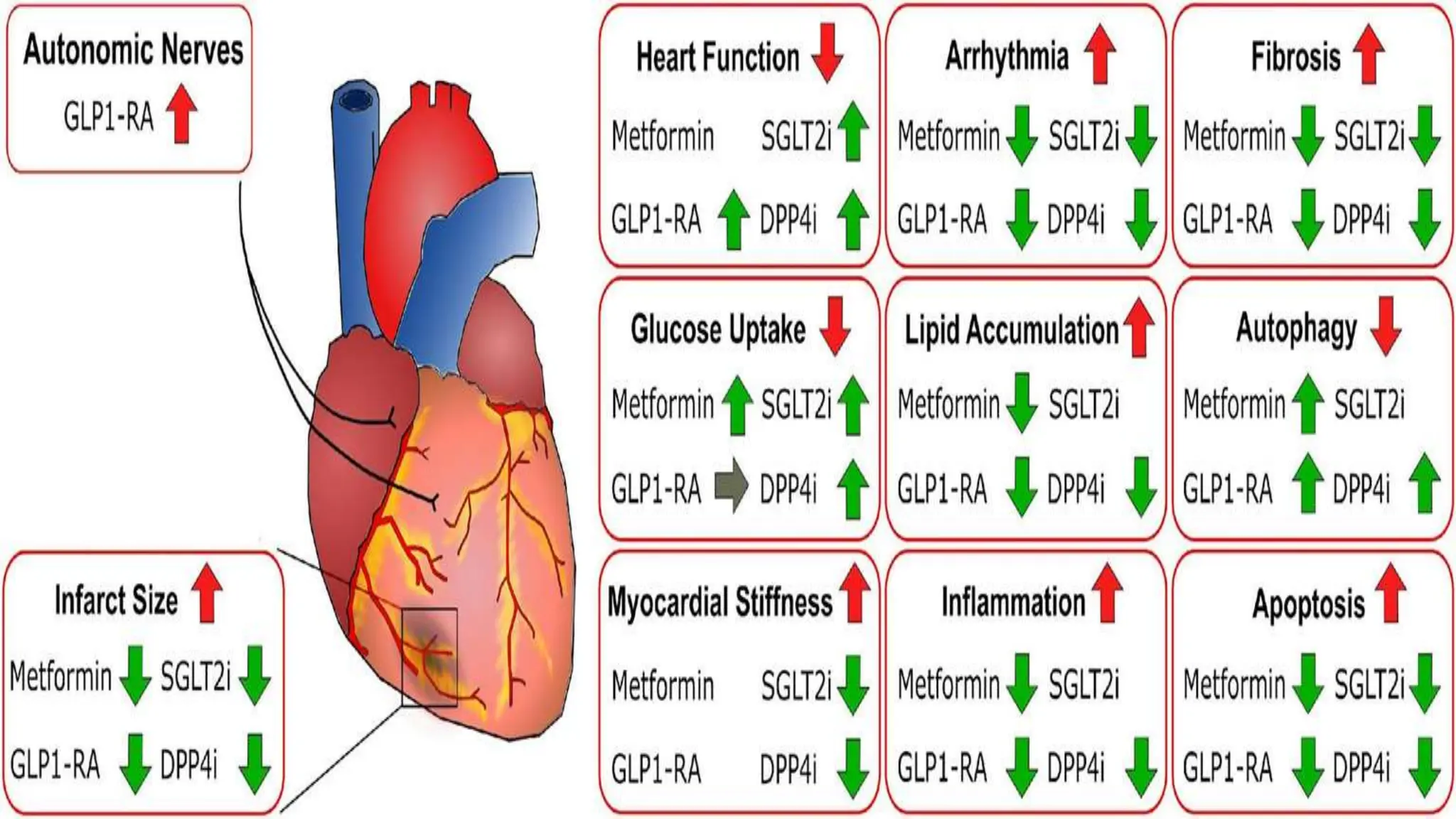
8- Early use of diabetic diseases modifying drugs irrespective of
glycemic control as ( SGLT2I, GLP1RA , DPPT4I , and Metformin )
9- use GLDs that has beneficial effect in reducing MCVE (
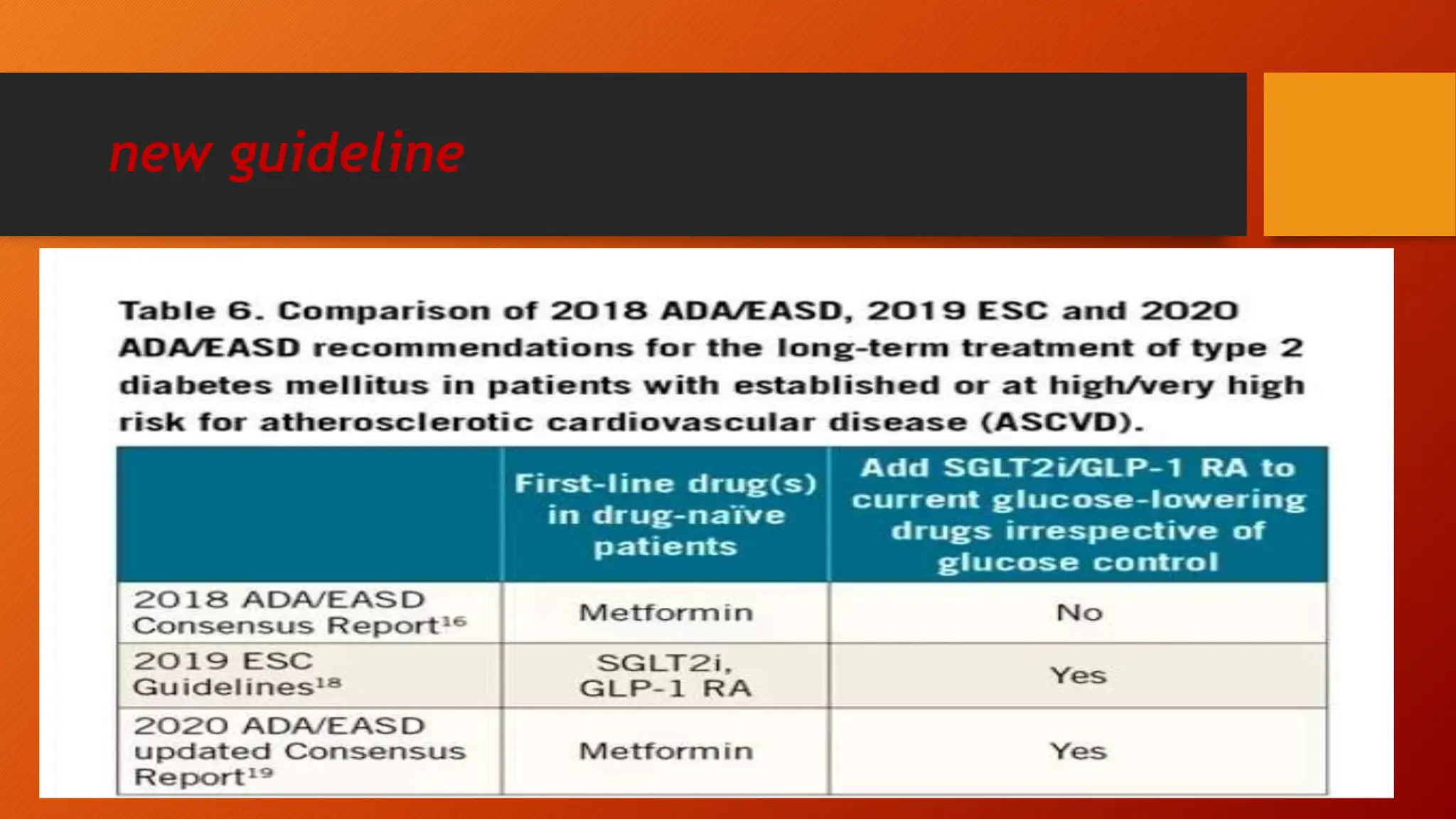
new guideline
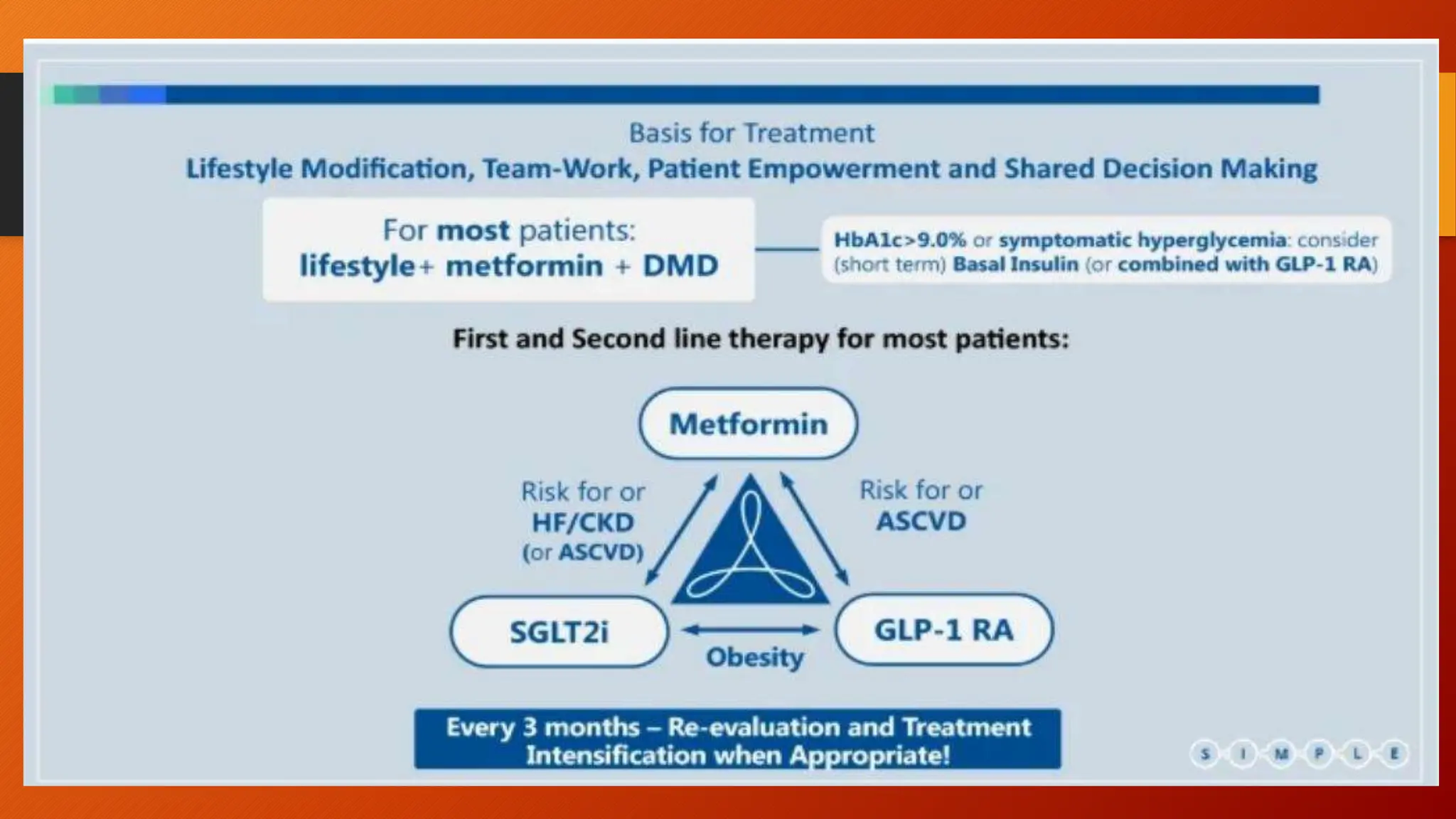
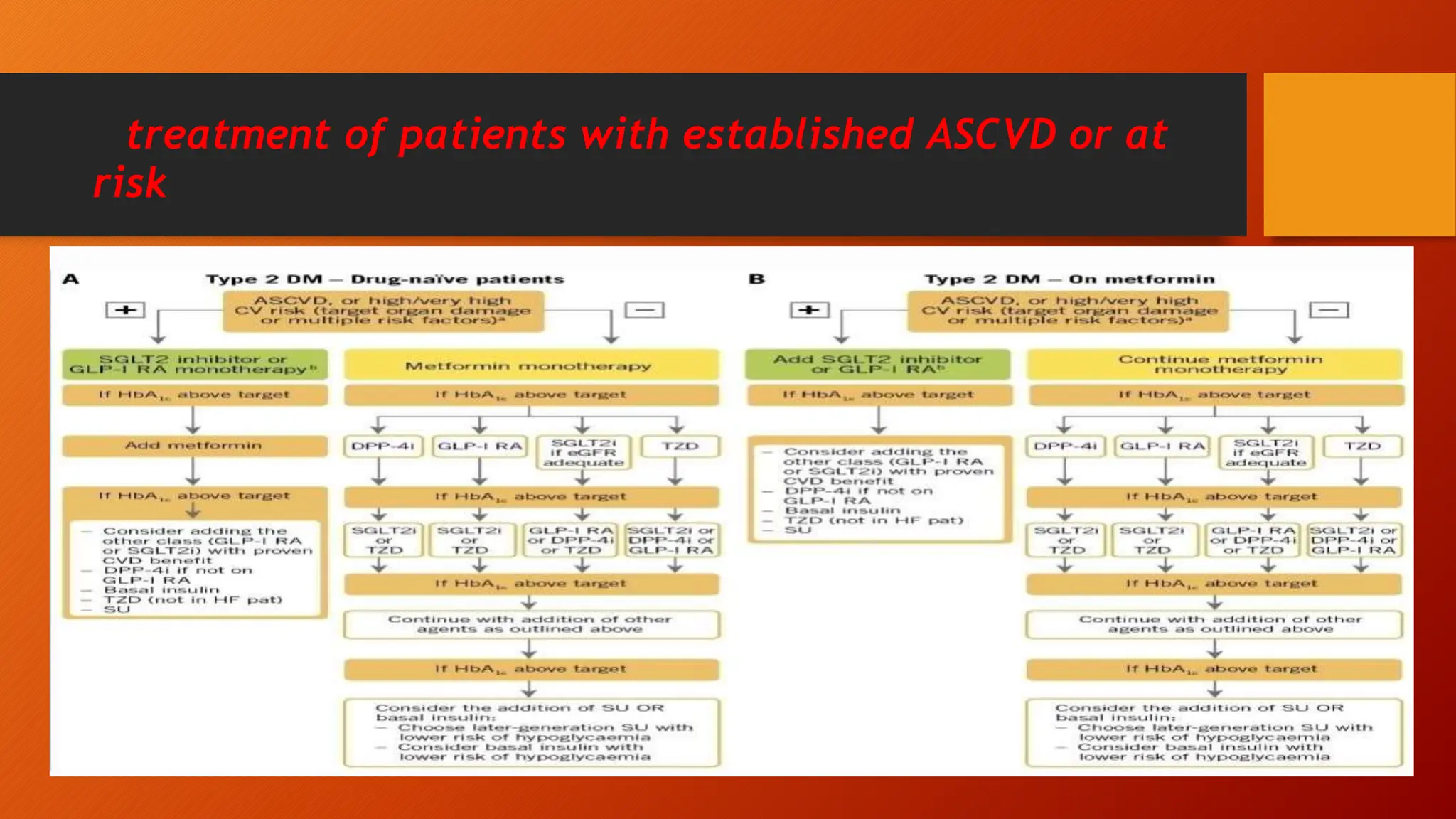
treatment of patients with established ASCVD or at
risk
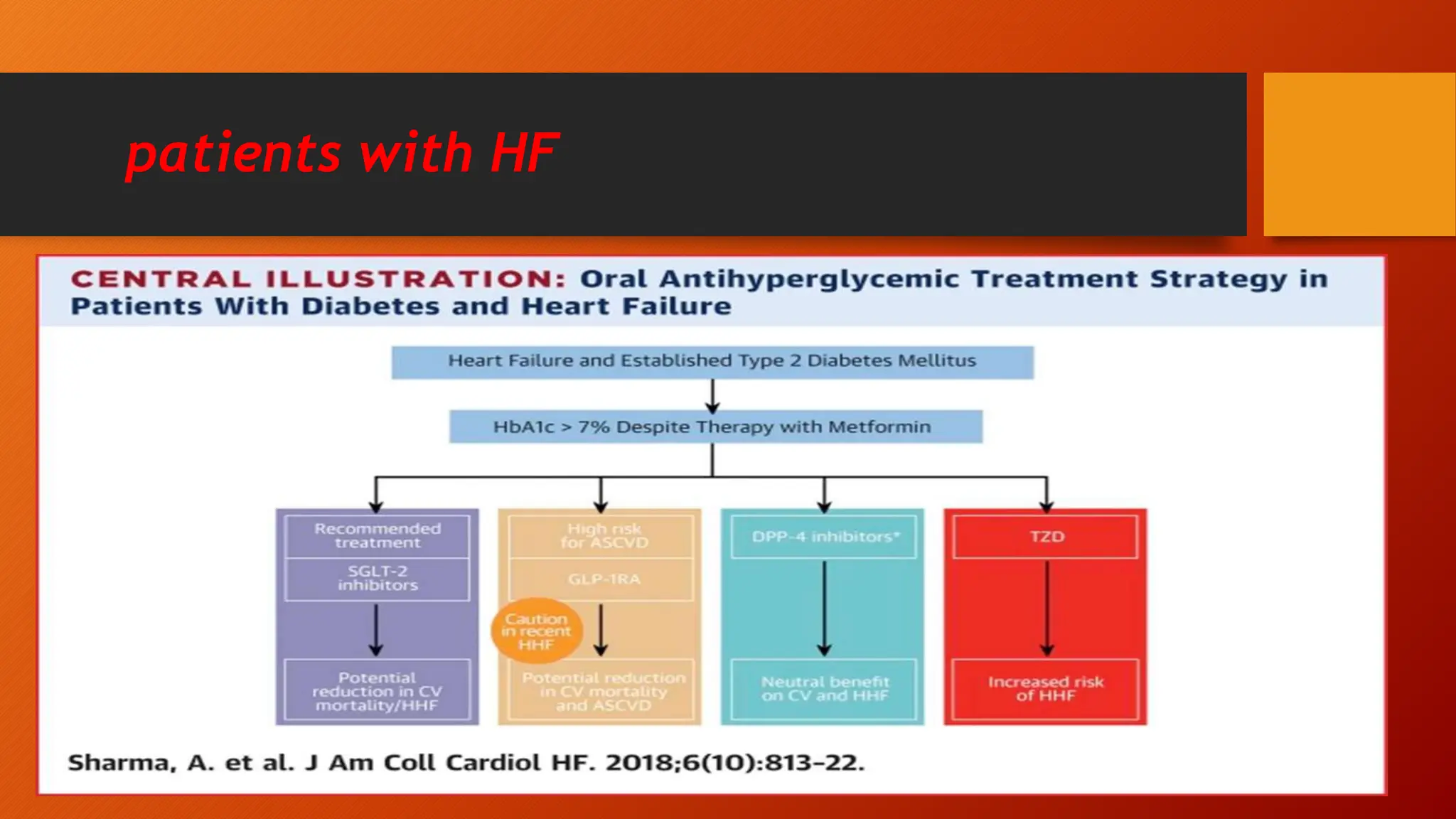
patients with HF
diabetes and cardiovascular disease .pptx

diabetes and cardiovascular disease .pptx

  • 1.
    type 2 diabetesand cardiovascular diseases Professor / Mohammed Ahmed Bamashmos Professor of Internal Medicine and Endocrinology
  • 2.
  • 3.
    risk factors 1- type2 DM is one of major four independent risk factors of CVD 2- Diabetes and other associated CVD risk factors - Glycemic variability - Hypoglycemic complication - Age and gender - Hypertension - Insulin resistance - obesity - Dyslipidemia - Endothelial dysfunction - inflammation
  • 4.
    Pathogenesis of CVDin type 2 DM
  • 5.
    1- type 2diabetes and atherosclerotic CVD
  • 6.
    2- type 2diabetes and HF
  • 7.
  • 8.
    3- type 2diabetes and Arrhythmia
  • 9.
    4- type 2diabetes and hypertension
  • 10.
    treatment ; factors thatshould be considered ; 1- treatment target 2- tight glycemic control 3- Ovoid glycemic variability 4 – Ovoid hypoglycemic complication 5- Ovoid weight gain 6- treat diabetic dyslipidemia 7- reverse endothelial dysfunction 8- use drugs that have long term CV beneficial effect ( effect in reducing MACE ) 9- early use of Disease Diabetic Modifying drugs
  • 11.
  • 12.
    tight glycemic control •Important ; ; any increase in HbA1C by 1 is associated with increased CV mortality by 11-16%
  • 13.
    treat all CVrisk factors in type 2 diabetes 1- Avoid hypoglycemia ; adverse effect of hypoglycemia ; - increased inflammation and CRP - Endothelial dysfunction - Sympatho adrenal response and increased adrenaline 2- use drugs that has effect in both FBS , PPBS and GV ; adverse effect of GV ; endothelial dysfunction , thrombosis and increased plaque instability
  • 14.
    • • 3- useGLDs that improve dyslipidemia and decrease BP 4- use GLDs that overcome endothelial dysfunction; endothelial dysfunction leads to ; - vasoconstriction , inflammation and thrombosis 5- use GLDs that decrease body weight ; effect of weight gain ; - insulin resistance - hyperglycemia - increased BP - inflammation , dyslipidemia - endothelial dysfunction
  • 15.
    • 6- useGLDs that decrease IR
  • 16.
    7 use GLDsthat ; - decrease inflammation - decrease coagulation 8- Early use of diabetic diseases modifying drugs irrespective of glycemic control as ( SGLT2I, GLP1RA , DPPT4I , and Metformin ) 9- use GLDs that has beneficial effect in reducing MCVE (
  • 19.
  • 21.
    treatment of patientswith established ASCVD or at risk
  • 22.