Standards of Care
in Diabetes—2023
Intended to provide clinicians, patients,
researchers, payers, and other
interested individuals with the
components of diabetes care, general
treatment goals, and tools to evaluate
the quality of care.
The Standards.
| 3
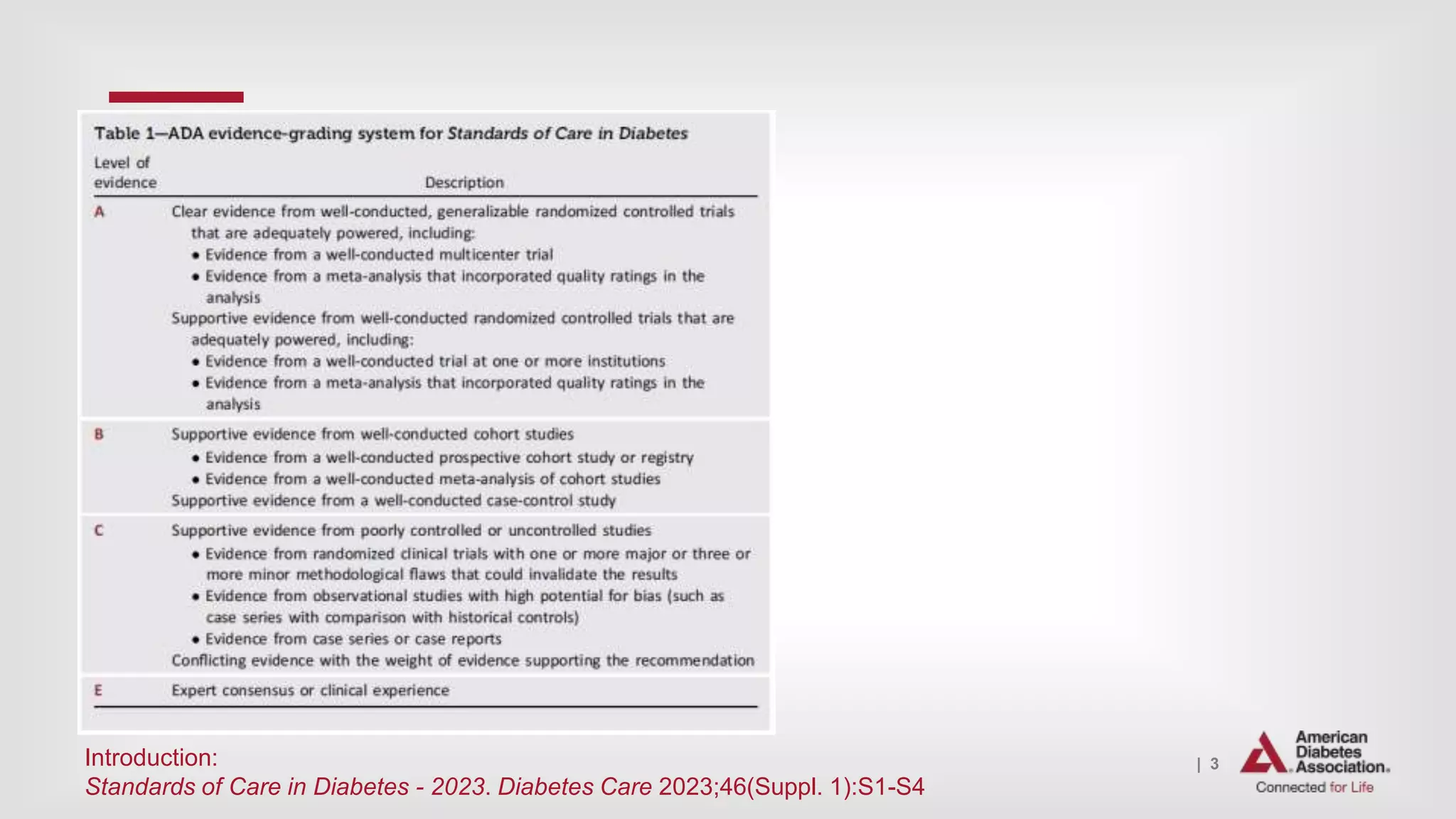
Introduction:
Standards of Care in Diabetes - 2023. Diabetes Care 2023;46(Suppl. 1):S1-S4
| 4
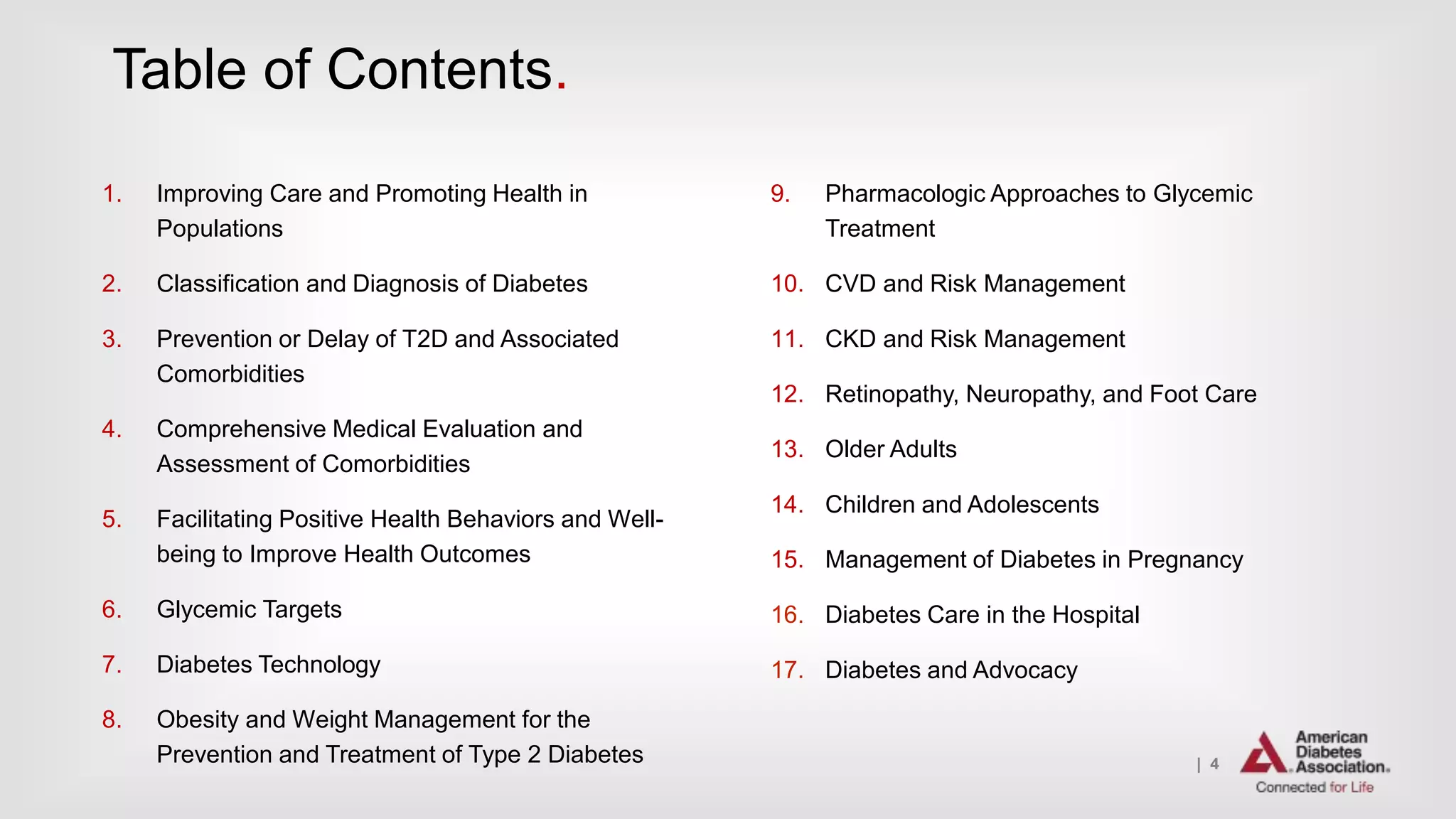
Table of Contents.
1. Improving Care and Promoting Health in
Populations
2. Classification and Diagnosis of Diabetes
3. Prevention or Delay of T2D and Associated
Comorbidities
4. Comprehensive Medical Evaluation and
Assessment of Comorbidities
5. Facilitating Positive Health Behaviors and Well-
being to Improve Health Outcomes
6. Glycemic Targets
7. Diabetes Technology
8. Obesity and Weight Management for the
Prevention and Treatment of Type 2 Diabetes
9. Pharmacologic Approaches to Glycemic
Treatment
10. CVD and Risk Management
11. CKD and Risk Management
12. Retinopathy, Neuropathy, and Foot Care
13. Older Adults
14. Children and Adolescents
15. Management of Diabetes in Pregnancy
16. Diabetes Care in the Hospital
17. Diabetes and Advocacy
Section 2.
Classification and
Diagnosis of
Diabetes
| 6
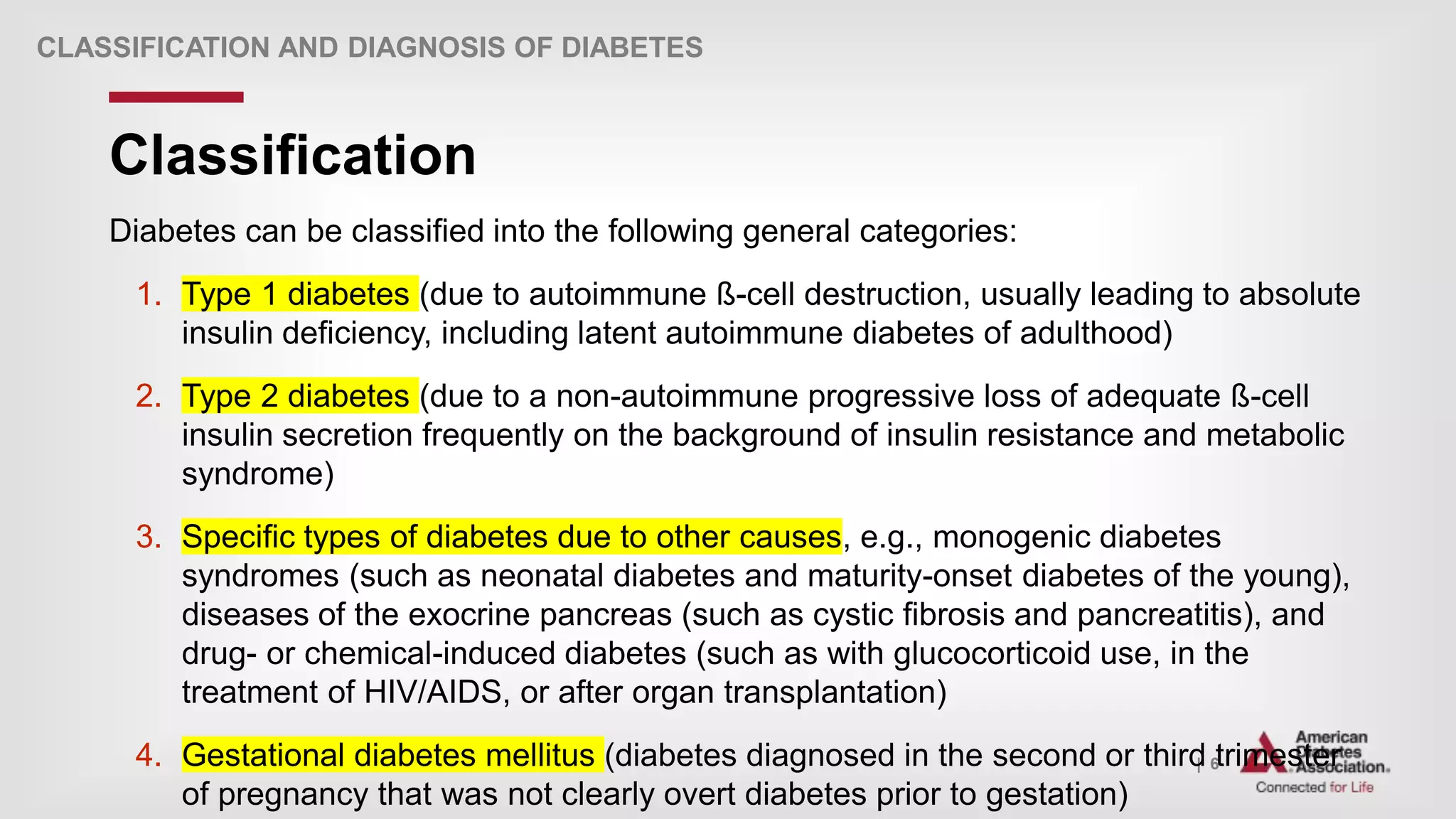
Classification
CLASSIFICATION AND DIAGNOSIS OF DIABETES
Diabetes can be classified into the following general categories:
1. Type 1 diabetes (due to autoimmune ß-cell destruction, usually leading to absolute
insulin deficiency, including latent autoimmune diabetes of adulthood)
2. Type 2 diabetes (due to a non-autoimmune progressive loss of adequate ß-cell
insulin secretion frequently on the background of insulin resistance and metabolic
syndrome)
3. Specific types of diabetes due to other causes, e.g., monogenic diabetes
syndromes (such as neonatal diabetes and maturity-onset diabetes of the young),
diseases of the exocrine pancreas (such as cystic fibrosis and pancreatitis), and
drug- or chemical-induced diabetes (such as with glucocorticoid use, in the
treatment of HIV/AIDS, or after organ transplantation)
4. Gestational diabetes mellitus (diabetes diagnosed in the second or third trimester
of pregnancy that was not clearly overt diabetes prior to gestation)
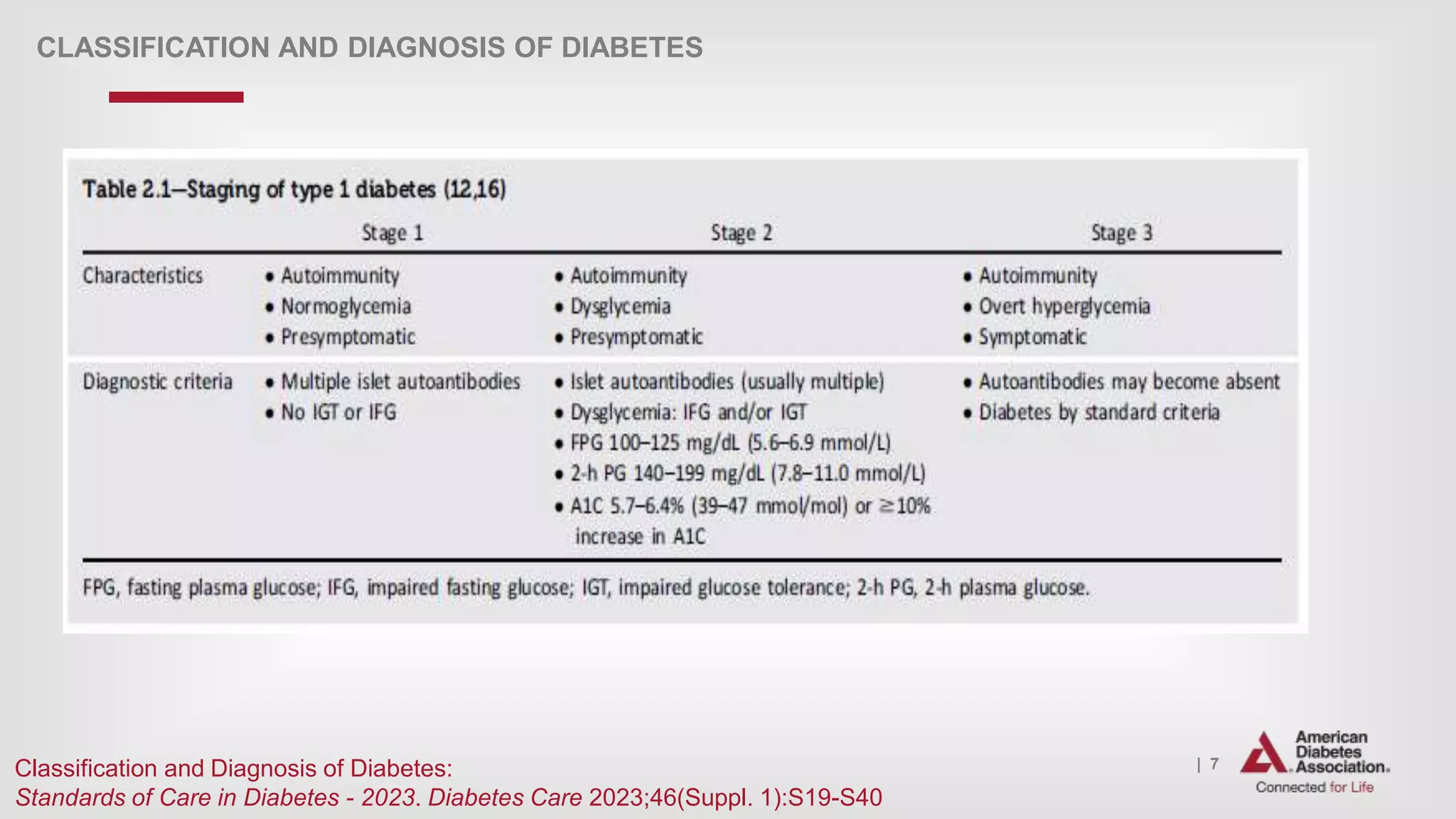
| 7
CLASSIFICATION AND DIAGNOSIS OF DIABETES
Hold for table 2.1
Classification and Diagnosis of Diabetes:
Standards of Care in Diabetes - 2023. Diabetes Care 2023;46(Suppl. 1):S19-S40
| 8
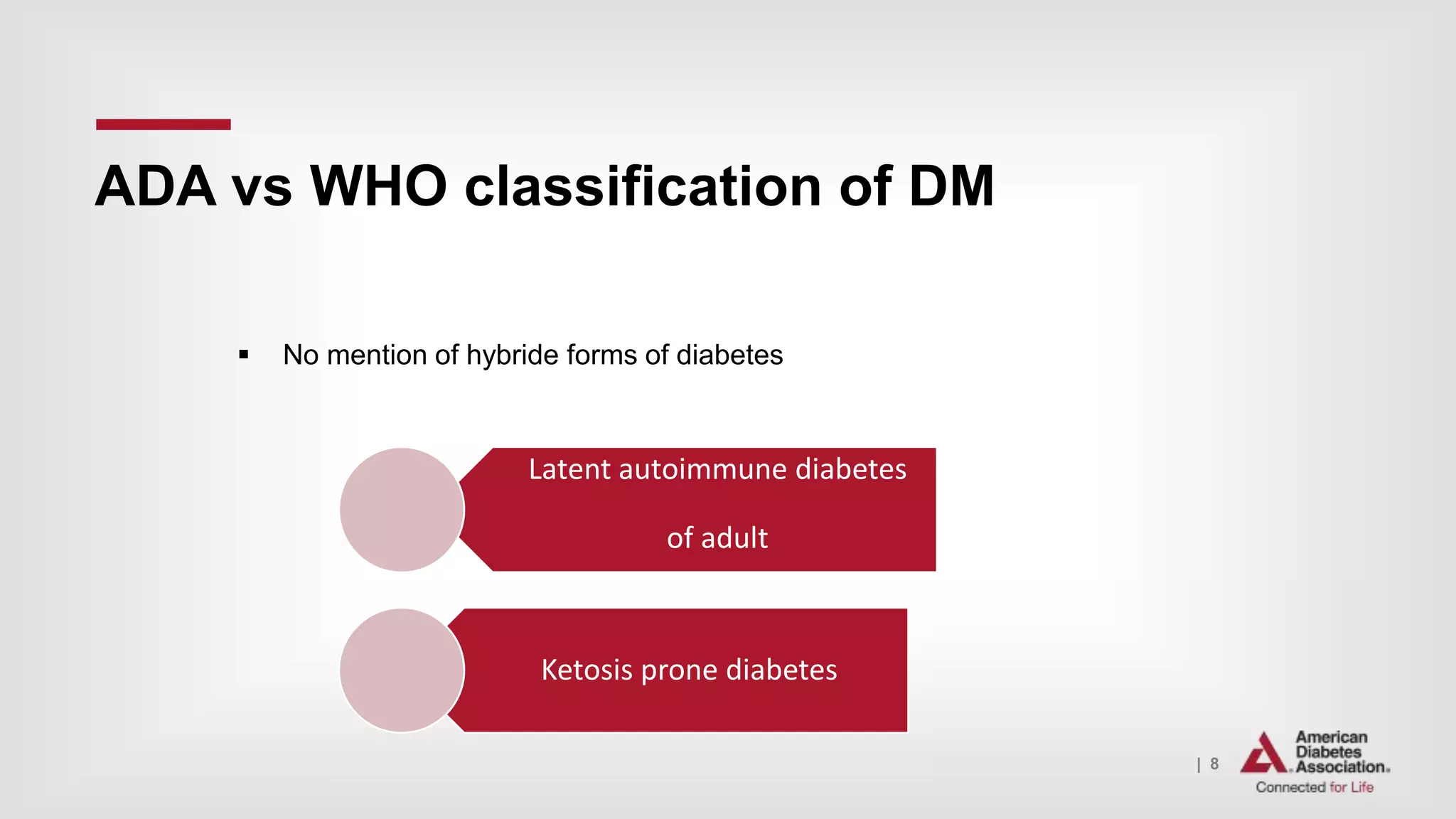
 No mention of hybride forms of diabetes
ADA vs WHO classification of DM
Latent autoimmune diabetes
of adult
Ketosis prone diabetes
| 9
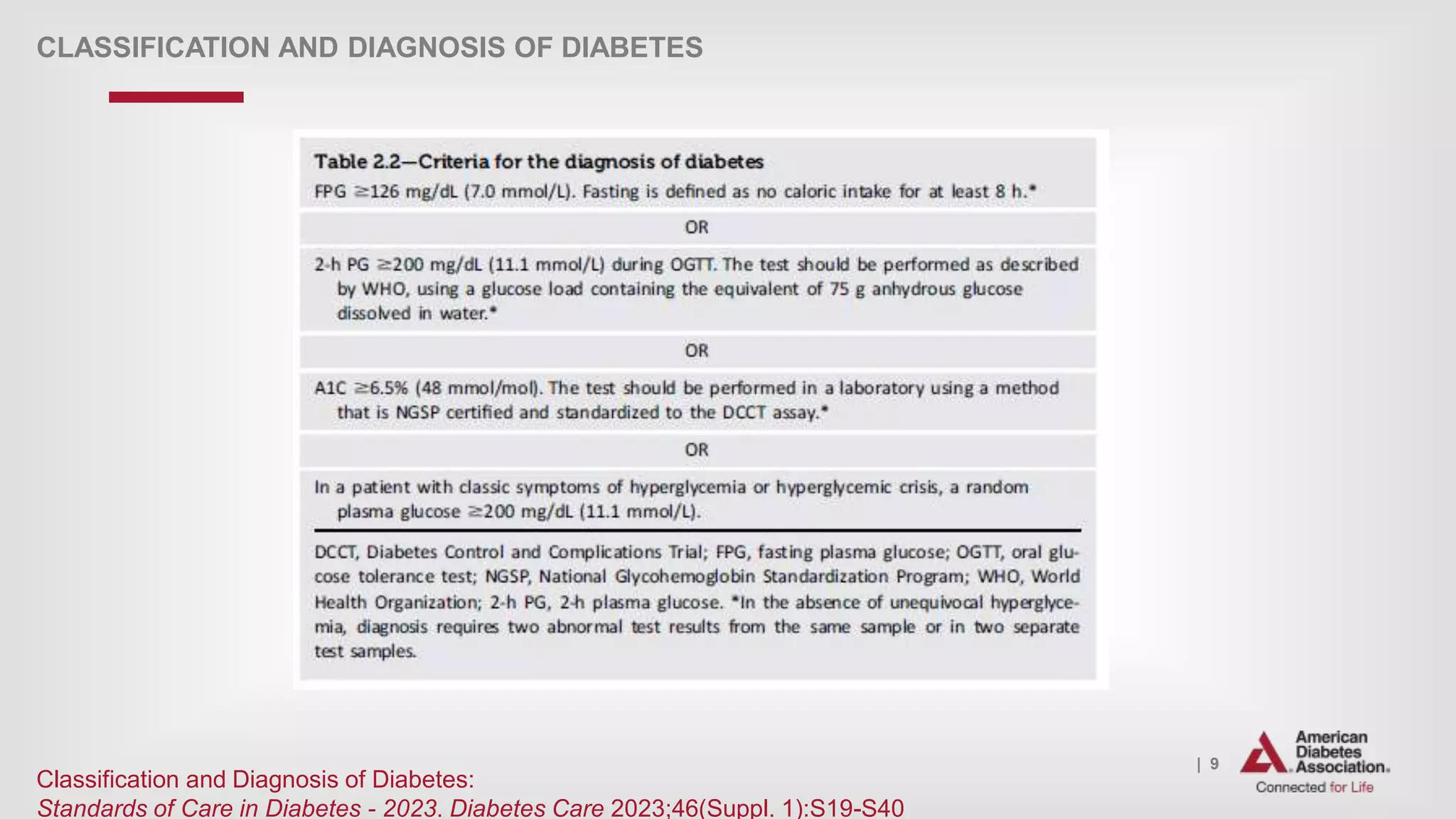
CLASSIFICATION AND DIAGNOSIS OF DIABETES
Table 2.2
Classification and Diagnosis of Diabetes:
Standards of Care in Diabetes - 2023. Diabetes Care 2023;46(Suppl. 1):S19-S40
| 10
Classic symptoms of hyperglycemia
 Polyuria
 Polydipsia
 Weight loss
Polyphagia no longer considered a classic symptom
| 11
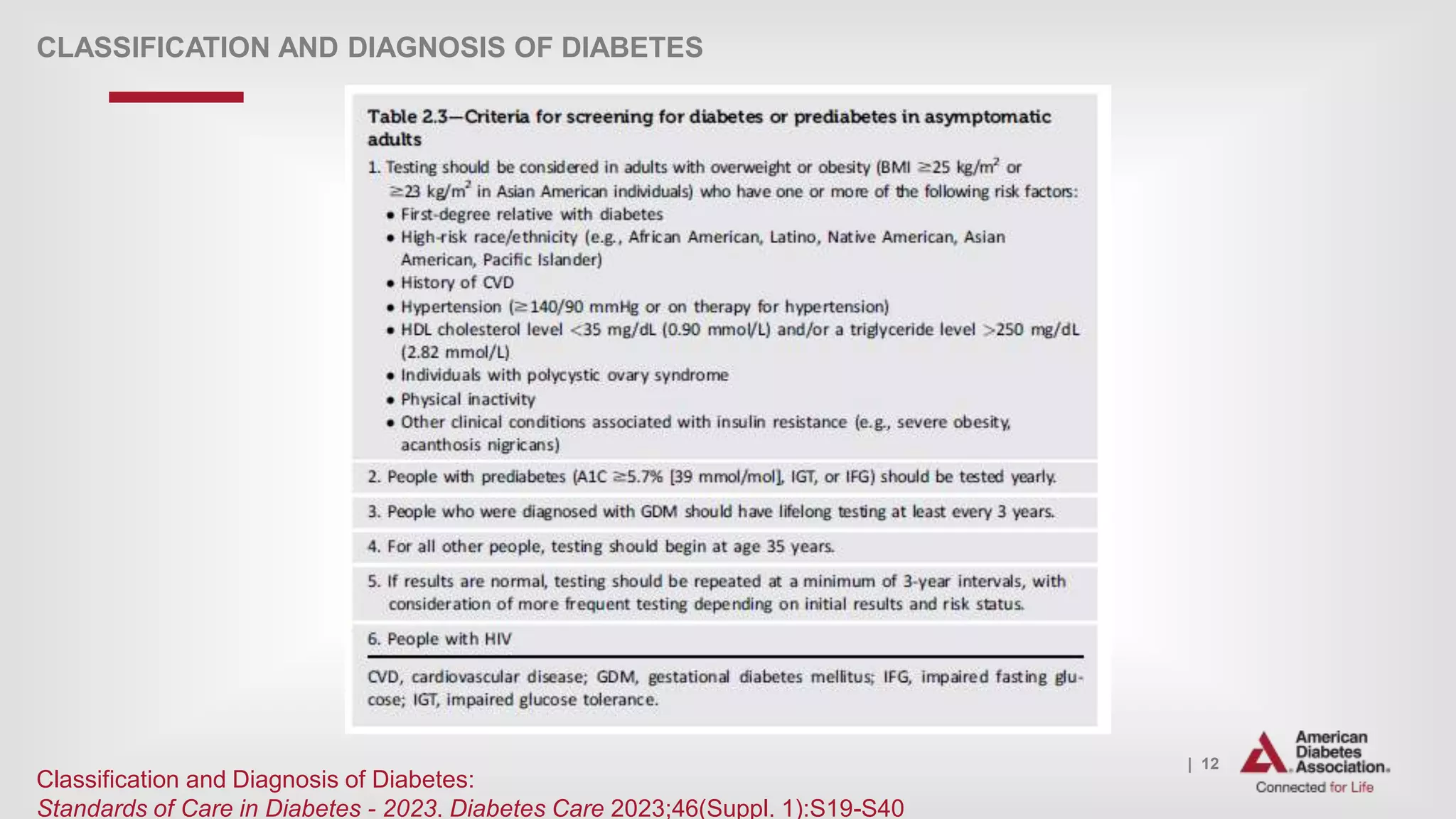
Screening for type 2 DM
Screening of high risk population
Screening of subject with pre – diabetes
Screening of women with GDM
Universal screening of population
| 12
CLASSIFICATION AND DIAGNOSIS OF DIABETES
Classification and Diagnosis of Diabetes:
Standards of Care in Diabetes - 2023. Diabetes Care 2023;46(Suppl. 1):S19-S40
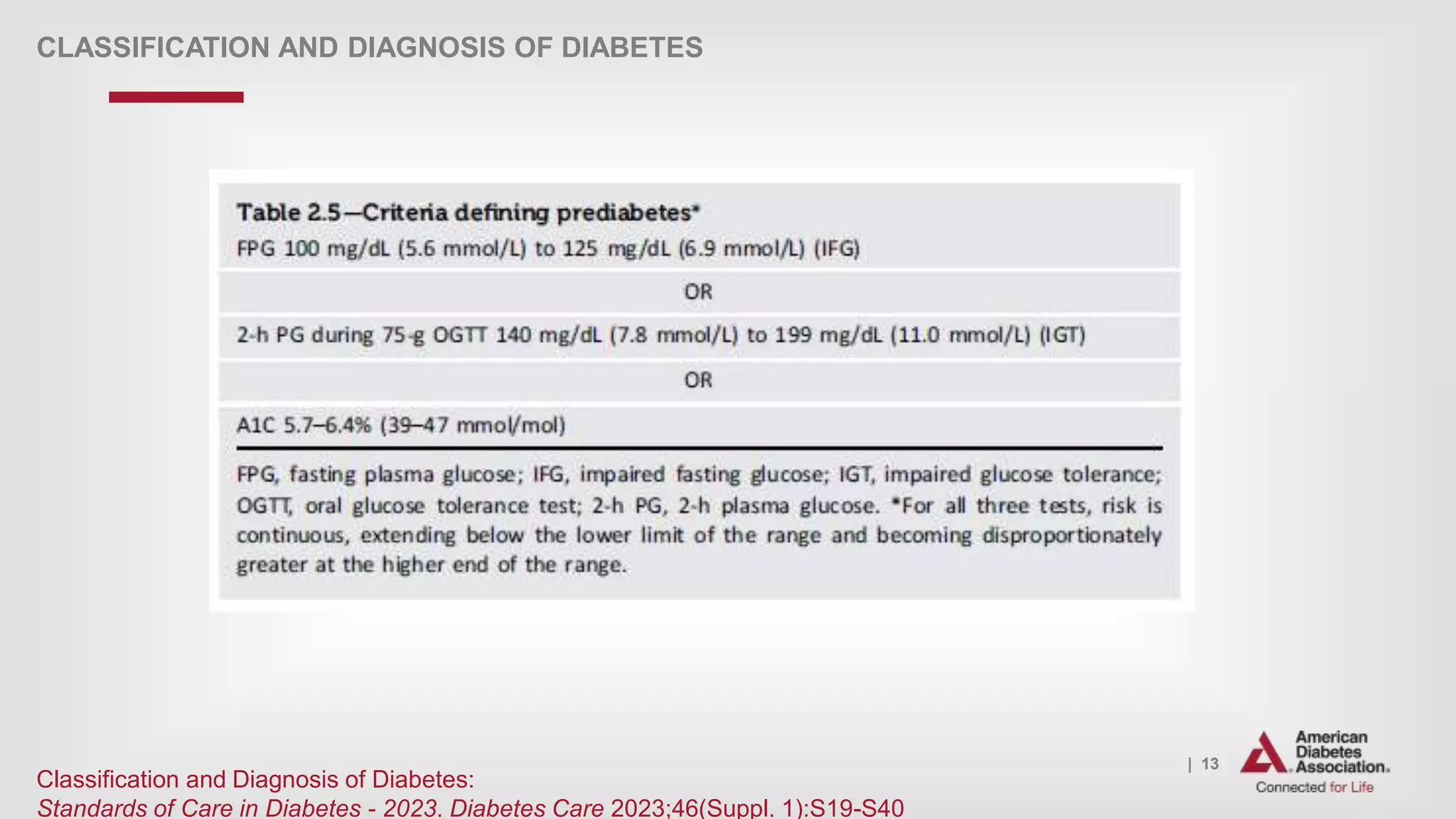
| 13
CLASSIFICATION AND DIAGNOSIS OF DIABETES
Classification and Diagnosis of Diabetes:
Standards of Care in Diabetes - 2023. Diabetes Care 2023;46(Suppl. 1):S19-S40
| 14
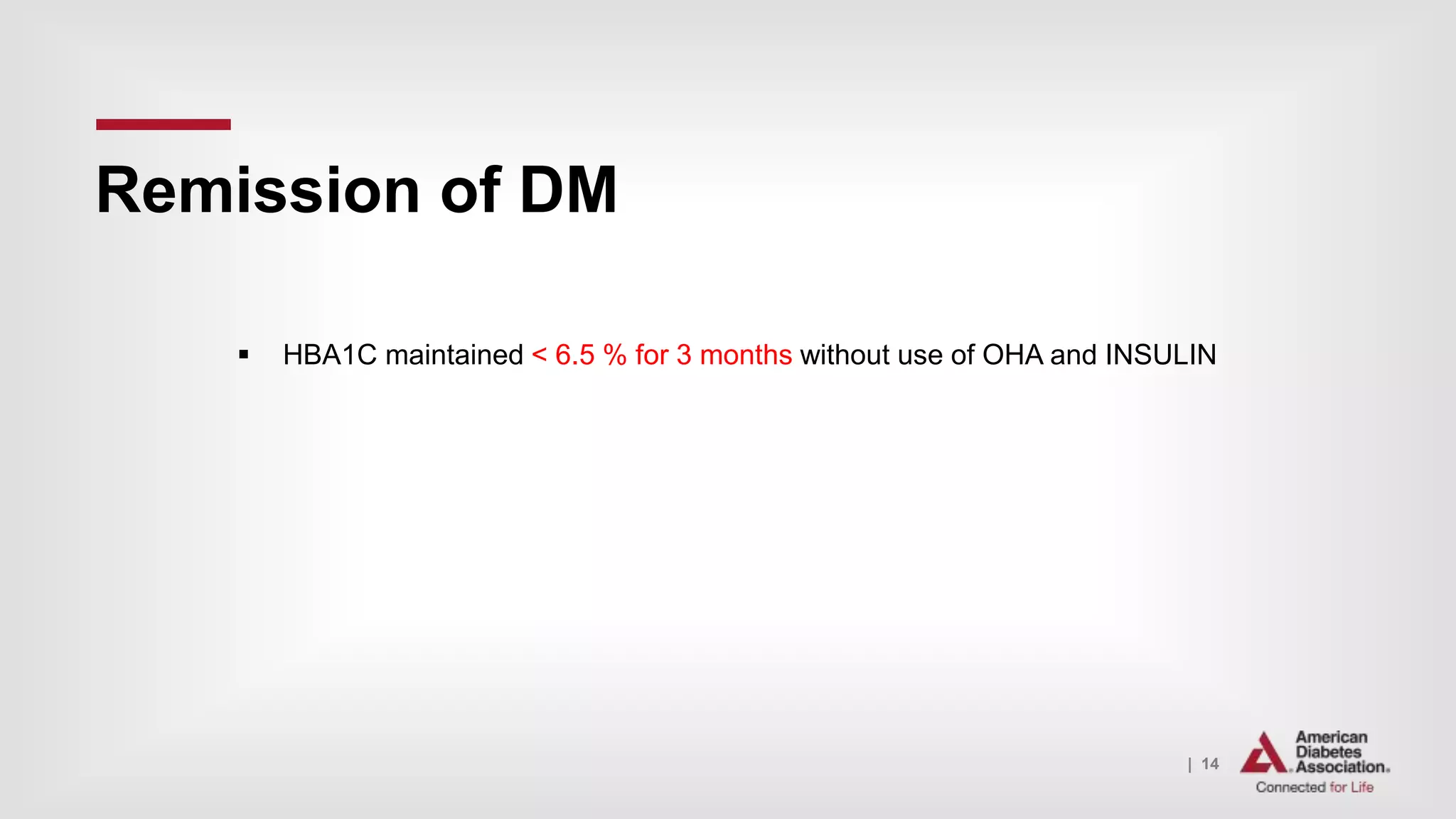
 HBA1C maintained < 6.5 % for 3 months without use of OHA and INSULIN
Remission of DM
| 15
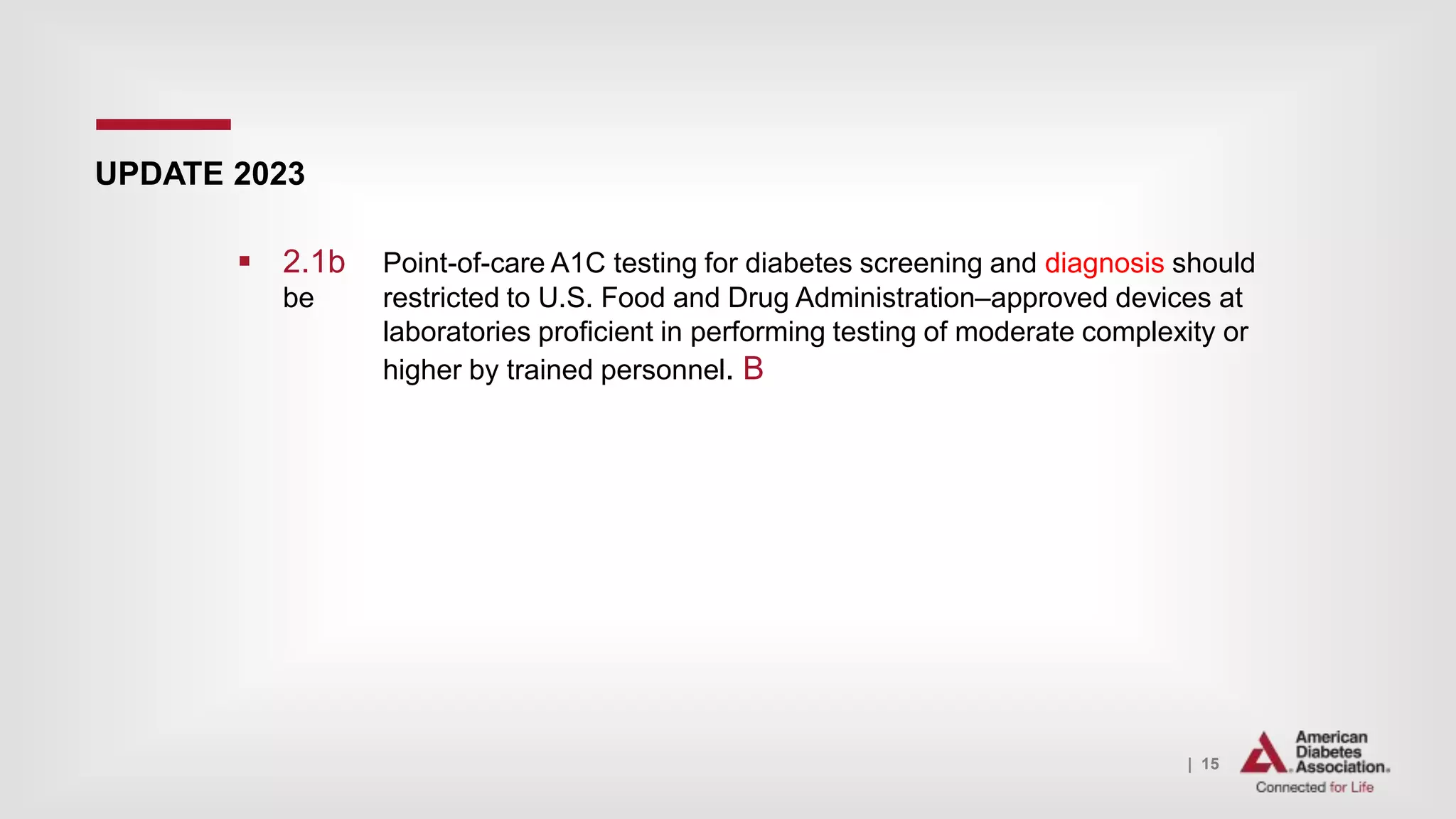
 2.1b Point-of-care A1C testing for diabetes screening and diagnosis should
be restricted to U.S. Food and Drug Administration–approved devices at
laboratories proficient in performing testing of moderate complexity or
higher by trained personnel. B
UPDATE 2023
Section 3.
Prevention or
Delay of Type 2
Diabetes and
Associated
Comorbidities
Prevention of DM
Life style
changes
• 150 min / week
• 7 % weight loss
Metformin
• Age 25 to 59
years with
• BMI > 35
• FBS > 110
• HBAIC >6
• Previous GDM
Pioglitazone
• Lower the risk of
stroke , MI and
progression to
DM
 3.1 Monitor for the development of type 2 diabetes in those with
prediabetes at least annually; modified based on individual
risk/benefit assessment. E
 3.9 Statin therapy may increase the risk of type 2 diabetes in
people at high risk of developing type 2 diabetes. In such individuals,
glucose status should be monitored regularly and diabetes
prevention approaches reinforced. It is not recommended that
statins be discontinued. B
 3.10 In people with a history of stroke and evidence of insulin
resistance and prediabetes, pioglitazone may be considered to
lower the risk of stroke or myocardial infarction. However, this
benefit needs to be balanced with the increased risk of weight gain,
edema, and fracture. A Lower doses may mitigate the risk of
adverse effects. C
UPDATE 2023
Section 4.
Comprehensive
Medical
Evaluation and
Assessment of
Comorbidities
Comordities in DM
Systemic HTN
DLP
NAFLD
CAD
Cognitive impairment
Fractures
Hearing loss
Peridontal disease
Hypogonadism / pcod
| 21
Immunizations
COMPREHENSIVE MEDICAL EVALUATION AND ASSESSMENT OF COMORBIDITIES
| 22
Immunizations
COMPREHENSIVE MEDICAL EVALUATION AND ASSESSMENT OF COMORBIDITIES
| 23
Immunizations
COMPREHENSIVE MEDICAL EVALUATION AND ASSESSMENT OF COMORBIDITIES
Section 5.
Facilitating
Positive
Behaviors and
Well-being to
Improve Health
Outcomes
 Should engage in 150 min or more of moderate – to vigorous intensity activity
weekly , spread over atleast 3 days / week
 No more than 2 consecutive days without activity
 Resistance training in 2 -3 sessions / week on non consecutive days
 Flexibility training and balance training are recommended 2-3 times / week for older
adult with DM
EXERCISE PLAN
| 26
FACILITATING POSITIVE HEALTH BEHAVIORS AND WELL-BEING TO IMPROVE HEALTH
OUTCOMES
Medical Nutrition Therapy
Facilitating Positive Health Behaviors and Well-being to Improve Health Outcomes:
Standards of Care in Diabetes - 2023. Diabetes Care 2023;46(Suppl. 1):S68-S96
| 27
FACILITATING POSITIVE HEALTH BEHAVIORS AND WELL-BEING TO IMPROVE HEALTH
OUTCOMES
Medical Nutrition Therapy (continued)
Facilitating Positive Health Behaviors and Well-being to Improve Health Outcomes:
Standards of Care in Diabetes - 2023. Diabetes Care 2023;46(Suppl. 1):S68-S96
| 28
FACILITATING POSITIVE HEALTH BEHAVIORS AND WELL-BEING TO IMPROVE HEALTH
OUTCOMES
Medical Nutrition Therapy (continued)
Facilitating Positive Health Behaviors and Well-being to Improve Health Outcomes:
Standards of Care in Diabetes - 2023. Diabetes Care 2023;46(Suppl. 1):S68-S96
| 29
 Time restricted eating and intermittent fasting
 Time restricted eating is generally easier to follow compared with alternative day
fasting or the 5:2 plan
 No significant difference in weight loss when compared with contious calorie
restriction
Update 2023
Section 6.
Glycemic Targets
Glycemic targets
FBS
• 80 – 130 mg/dl
PPBS
• < 180 mg/dl
HBA1C
• < 7%
• < 7.5 % type 1 DM
with hypoglycemia
• < 8 % Elderly , frail
individual
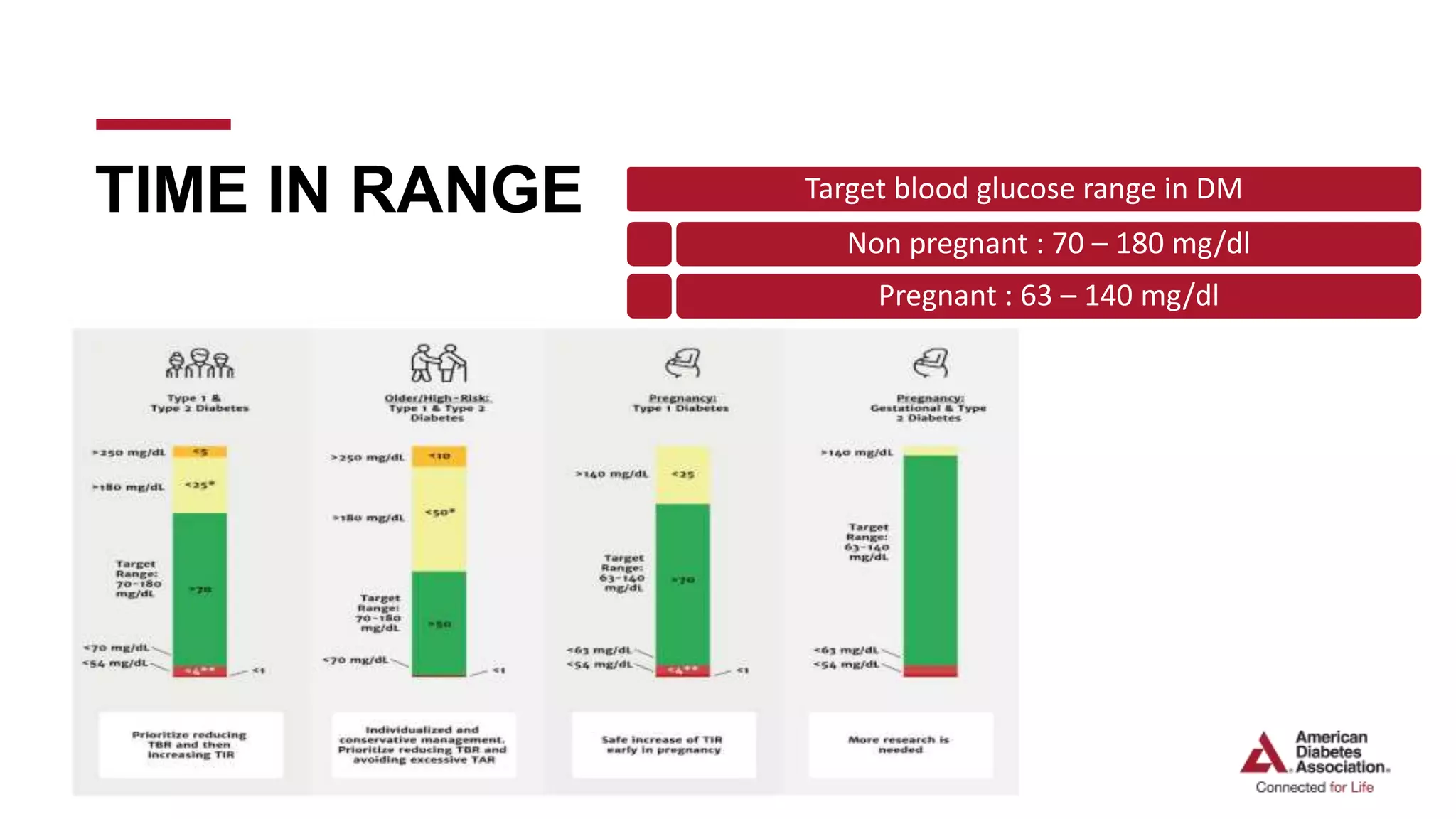
TIME IN RANGE Target blood glucose range in DM
Non pregnant : 70 – 180 mg/dl
Pregnant : 63 – 140 mg/dl
Section 8.
Obesity and Weight
Management for the
Treatment of Type 2
Diabetes
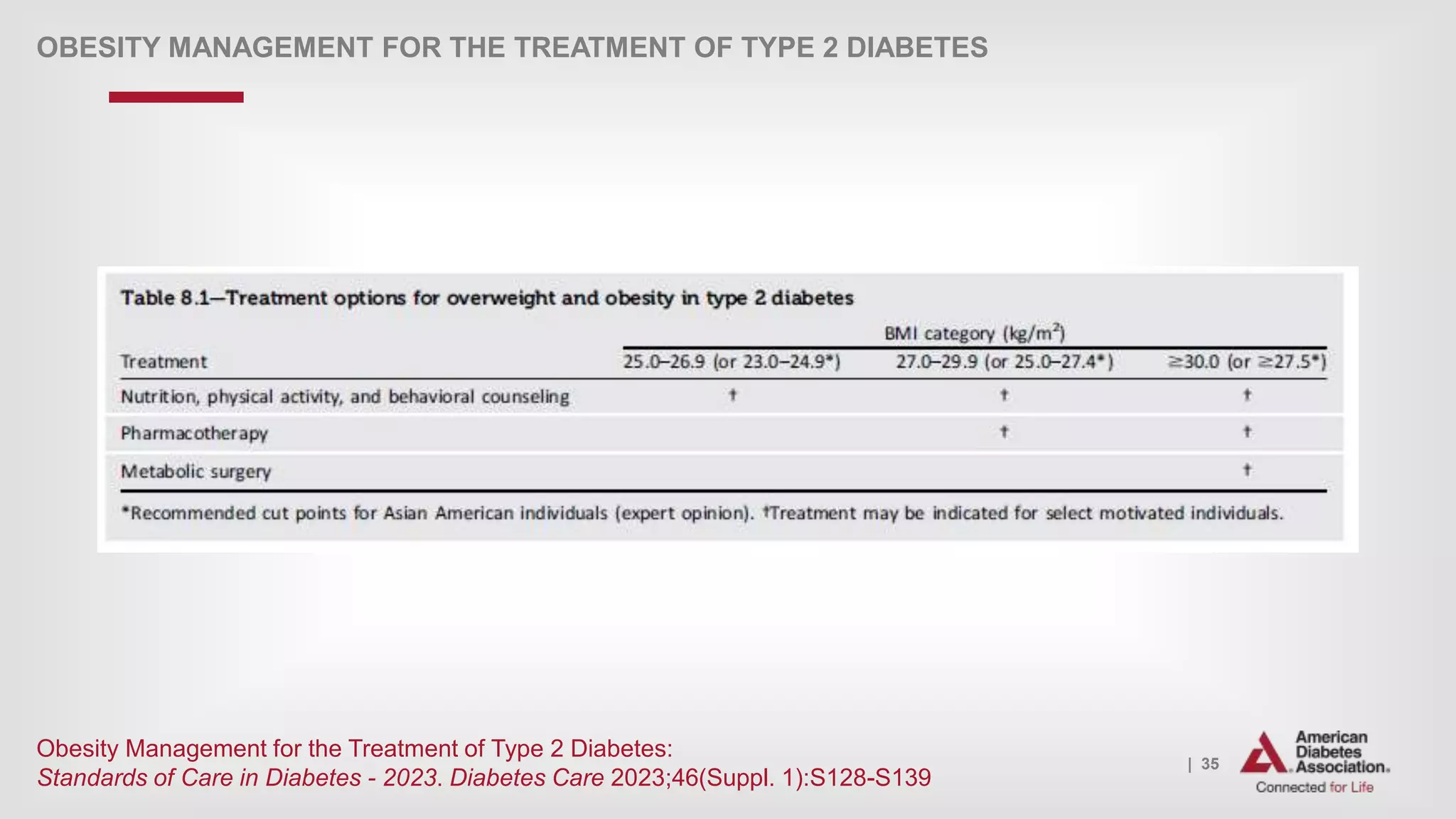
Obesity management
5 % weight loss improves glycemia
> 10 % weight loss has disease modifying
effects and impact on long term CV mortality
500 – 750 kcal deficit required for significant
weight loss
| 35
OBESITY MANAGEMENT FOR THE TREATMENT OF TYPE 2 DIABETES
Obesity Management for the Treatment of Type 2 Diabetes:
Standards of Care in Diabetes - 2023. Diabetes Care 2023;46(Suppl. 1):S128-S139
| 36
Pharmacotherapy
Section 9.
Pharmacologic
Approaches to
Glycemic
Treatment
Insulin as default
HBA1C > 10 % / RBS > 300 mg/dl
Features of catabolism ( significant weight loss )
Ongoing ketosis
Pregnancy
HBA1C > 9 % with 3 or more OHA
Severe organ involvement
Perioperative patients
| 39
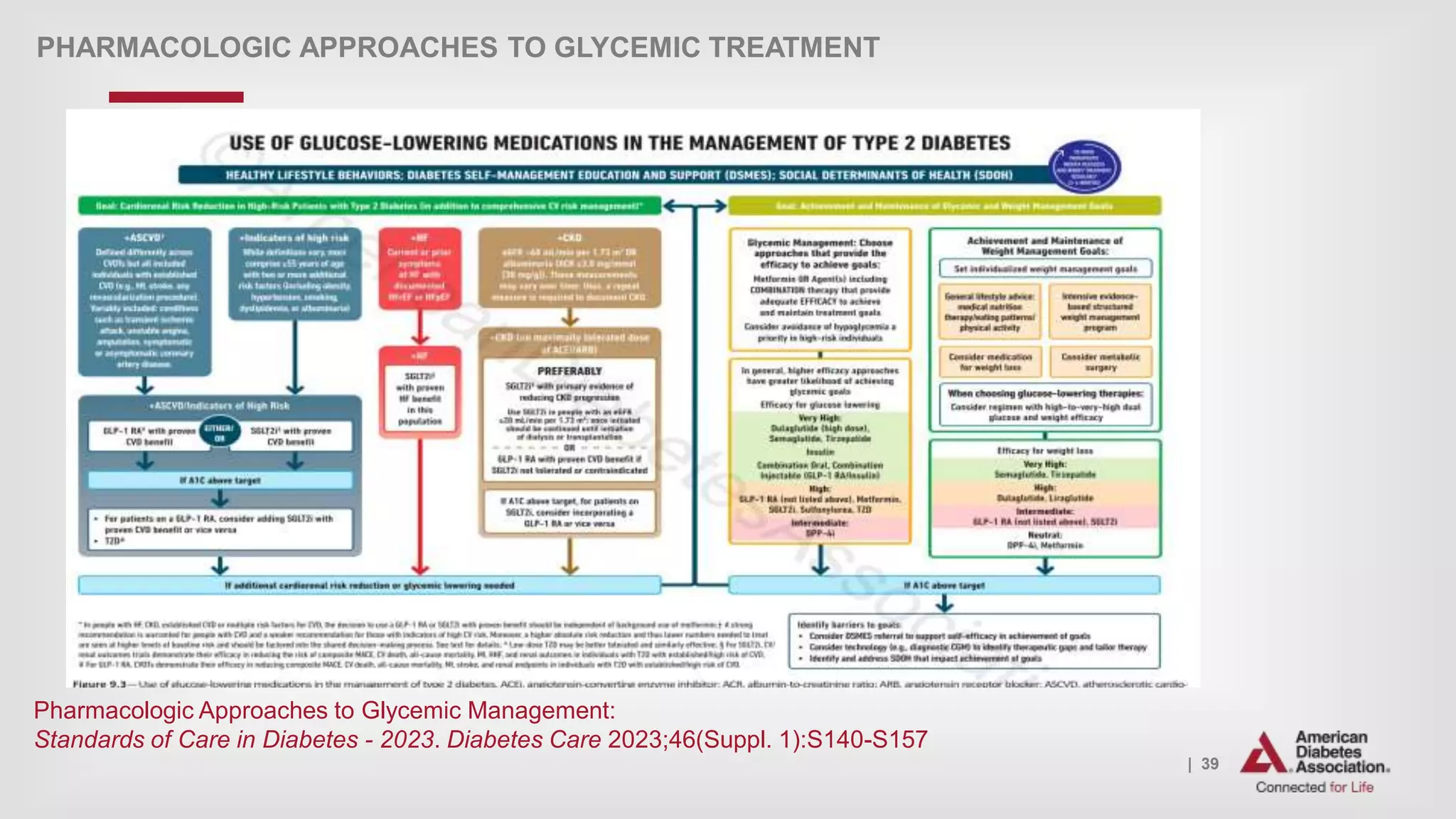
PHARMACOLOGIC APPROACHES TO GLYCEMIC TREATMENT
Pharmacologic Approaches to Glycemic Management:
Standards of Care in Diabetes - 2023. Diabetes Care 2023;46(Suppl. 1):S140-S157
| 40
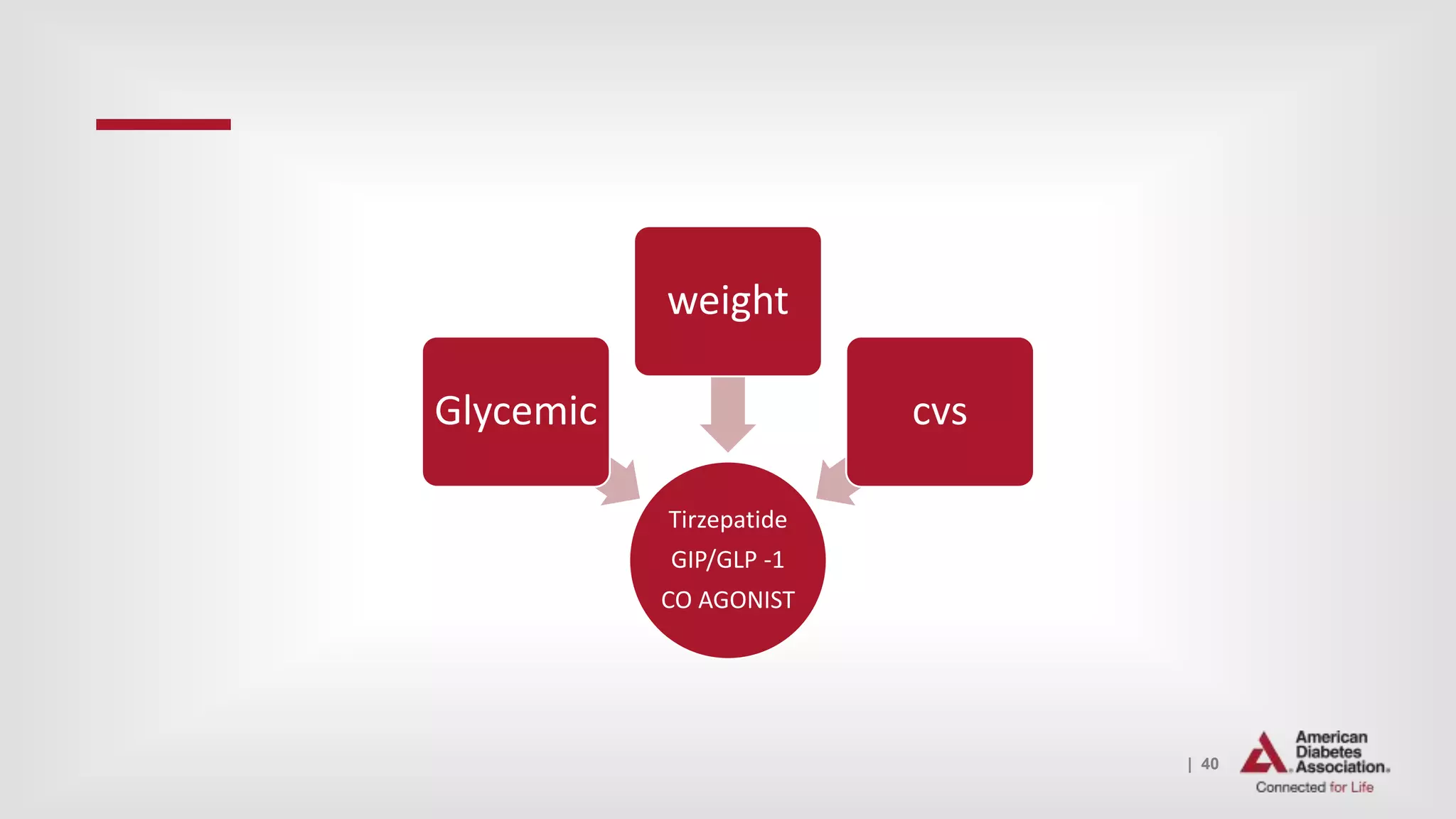
Tirzepatide
GIP/GLP -1
CO AGONIST
Glycemic
weight
cvs
Section 10.
Cardiovascular
Disease and Risk
Management
| 42
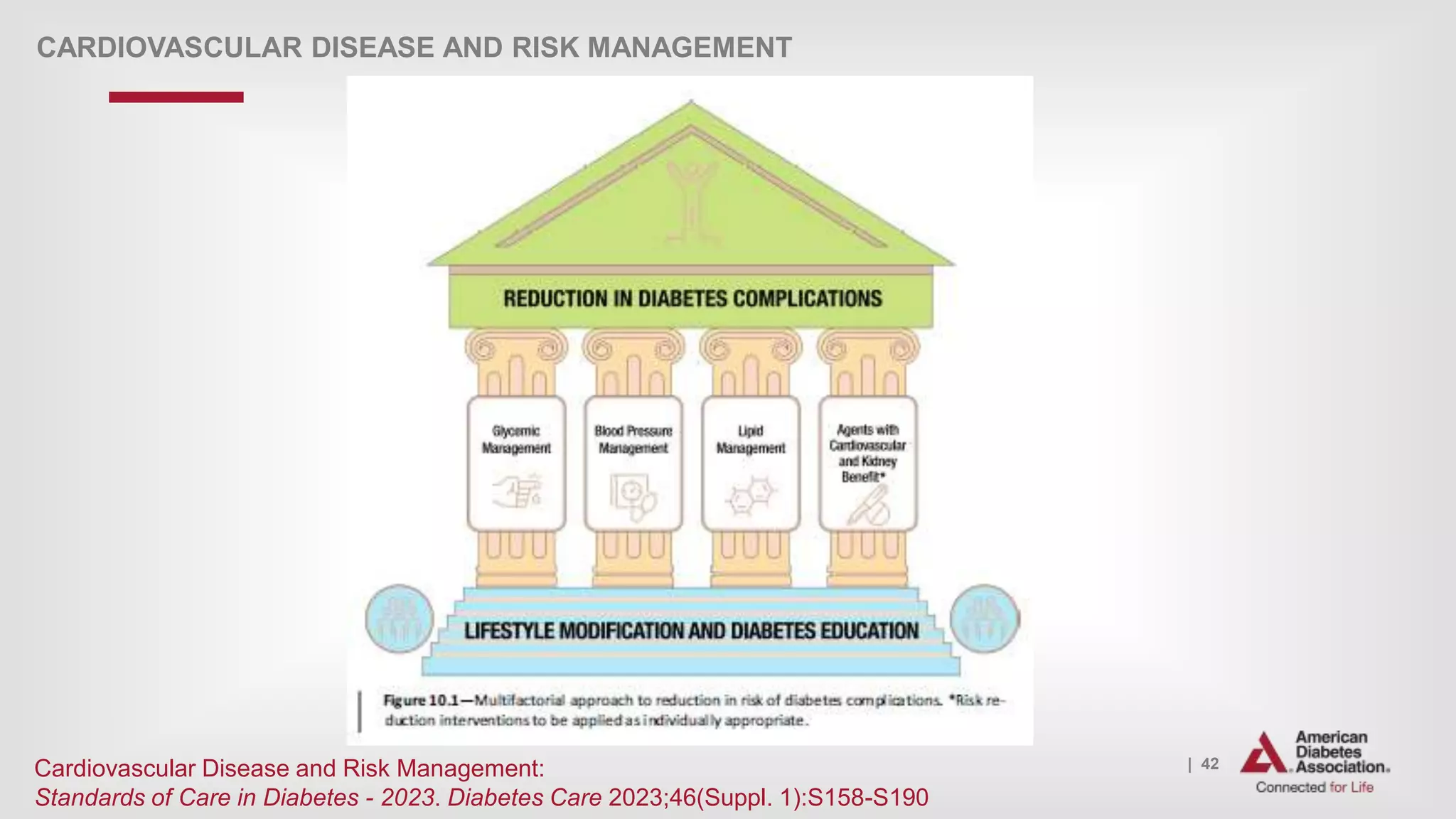
CARDIOVASCULAR DISEASE AND RISK MANAGEMENT
Cardiovascular Disease and Risk Management:
Standards of Care in Diabetes - 2023. Diabetes Care 2023;46(Suppl. 1):S158-S190
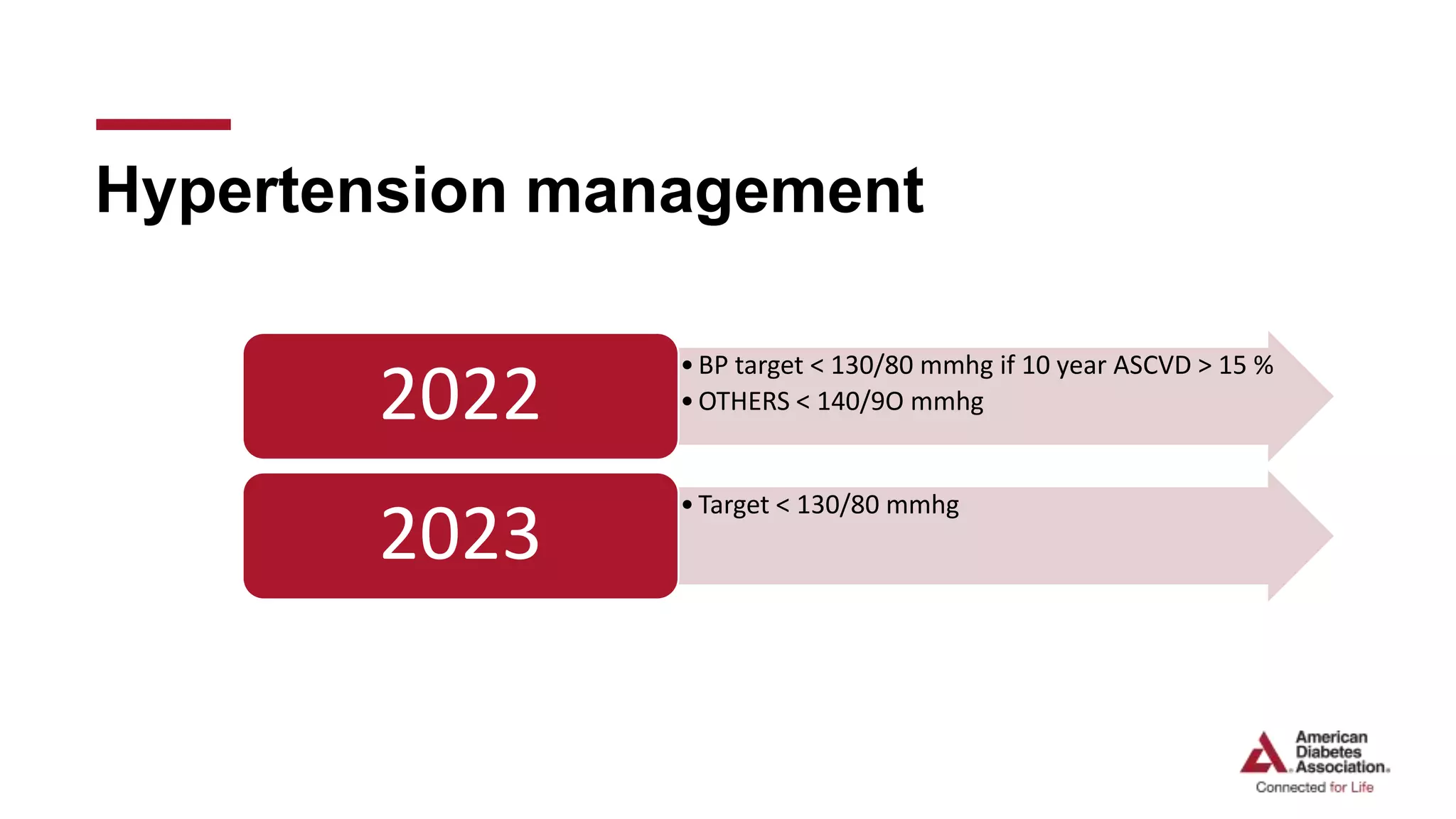
Hypertension management
•BP target < 130/80 mmhg if 10 year ASCVD > 15 %
•OTHERS < 140/9O mmhg
2022
•Target < 130/80 mmhg
2023
| 44
CARDIOVASCULAR DISEASE AND RISK MANAGEMENT
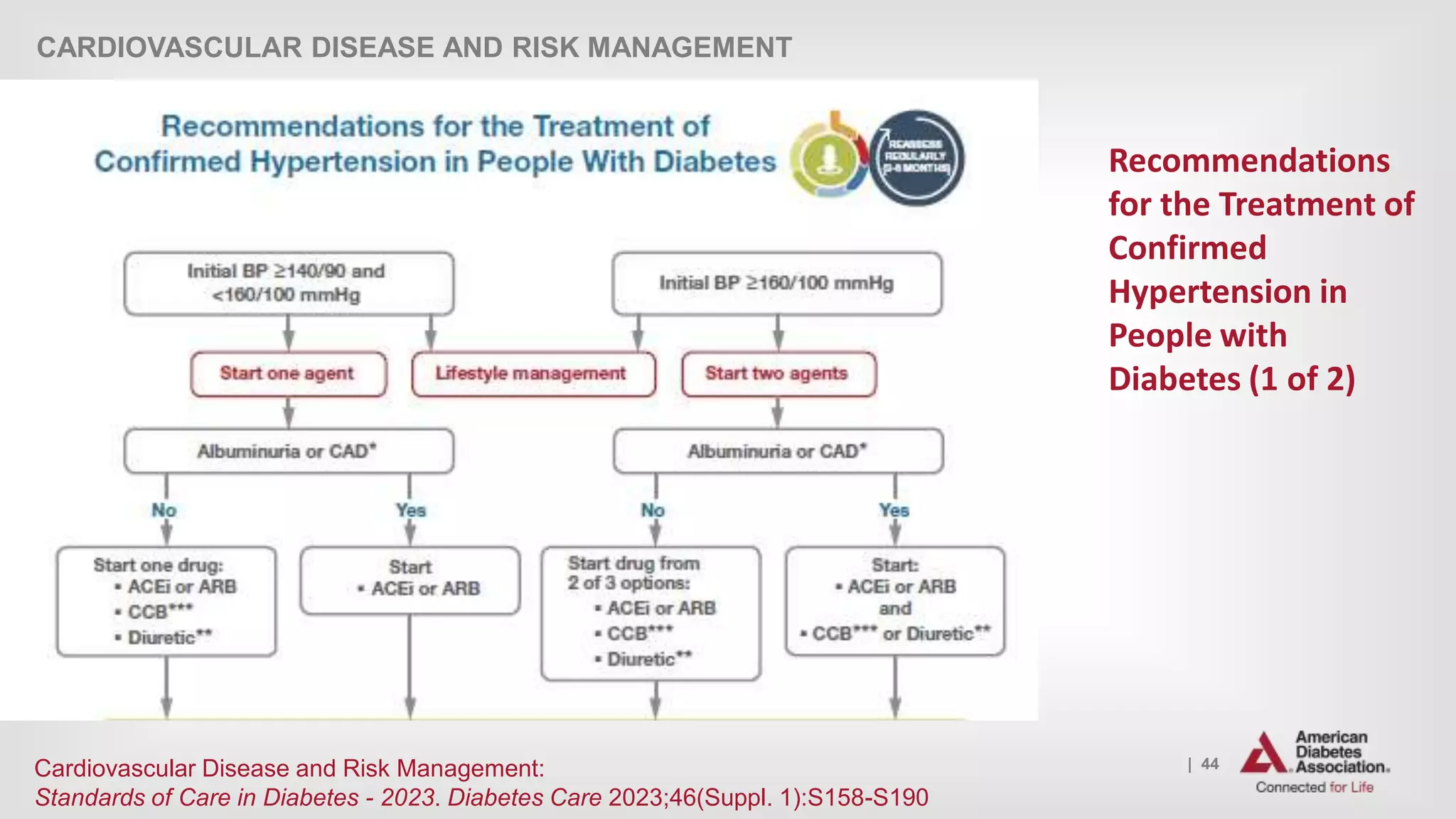
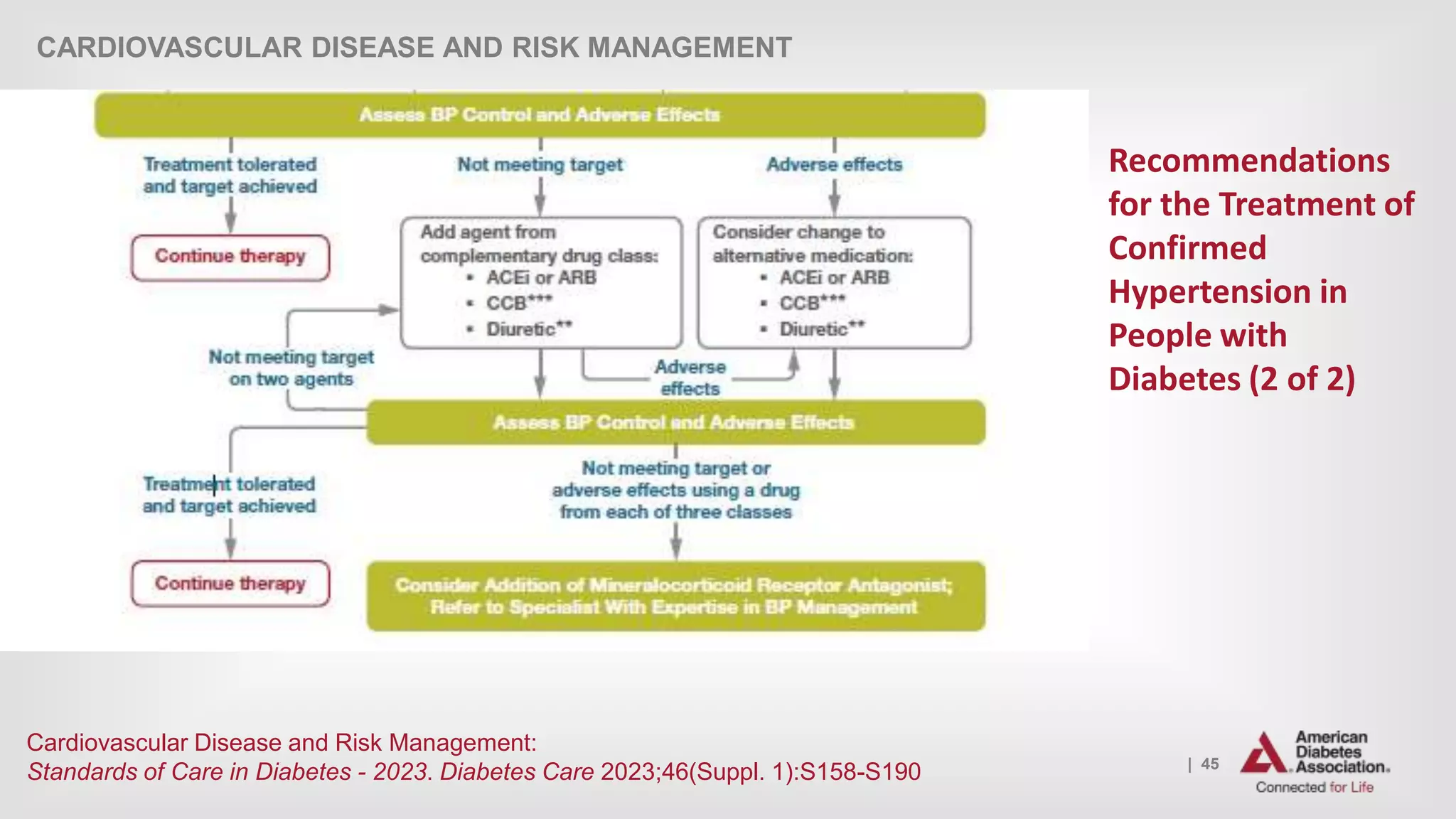
Recommendations
for the Treatment of
Confirmed
Hypertension in
People with
Diabetes (1 of 2)
Cardiovascular Disease and Risk Management:
Standards of Care in Diabetes - 2023. Diabetes Care 2023;46(Suppl. 1):S158-S190
| 45
CARDIOVASCULAR DISEASE AND RISK MANAGEMENT
Recommendations
for the Treatment of
Confirmed
Hypertension in
People with
Diabetes (2 of 2)
Cardiovascular Disease and Risk Management:
Standards of Care in Diabetes - 2023. Diabetes Care 2023;46(Suppl. 1):S158-S190
| 46
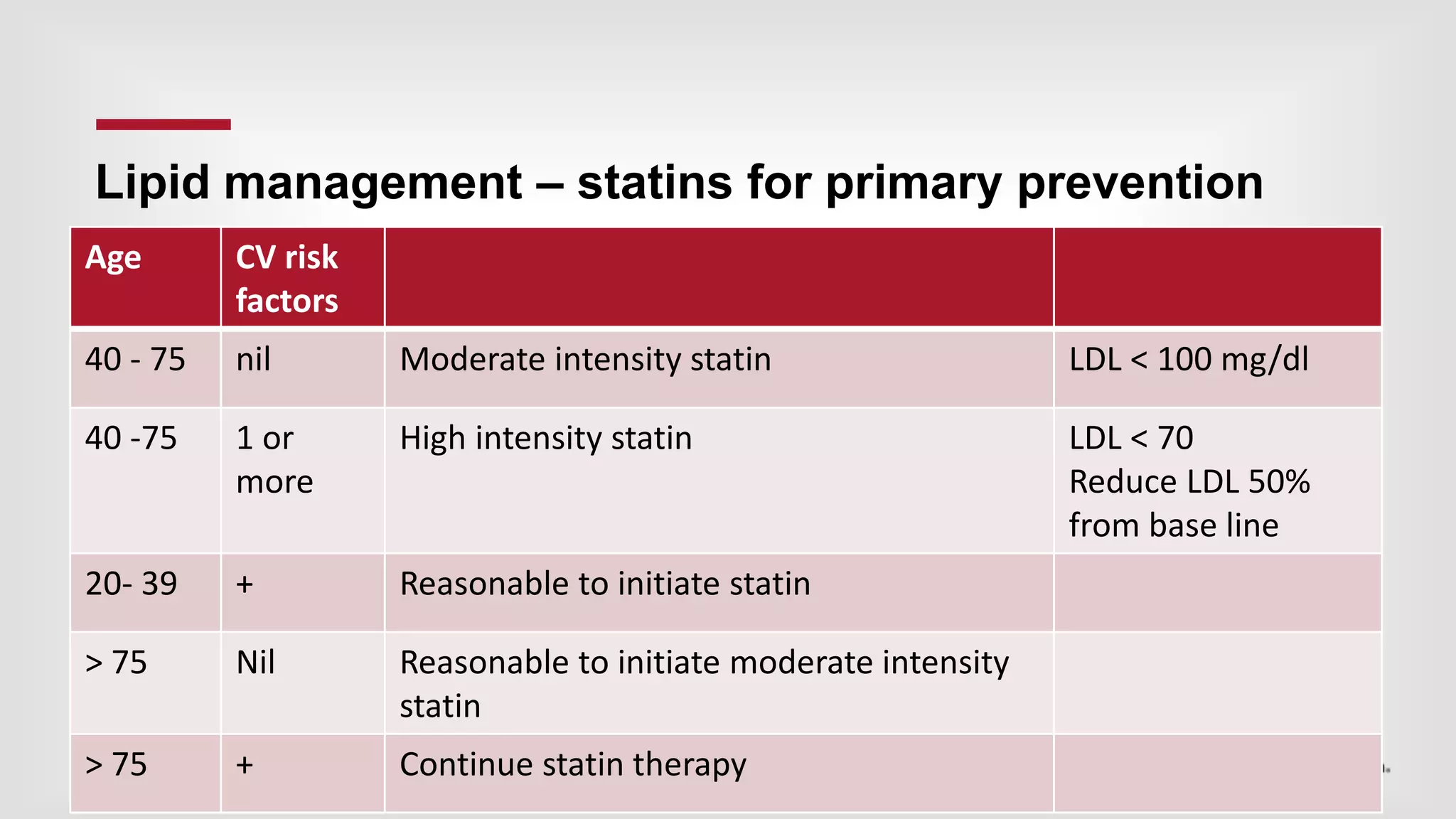
Lipid management – statins for primary prevention
Age CV risk
factors
40 - 75 nil Moderate intensity statin LDL < 100 mg/dl
40 -75 1 or
more
High intensity statin LDL < 70
Reduce LDL 50%
from base line
20- 39 + Reasonable to initiate statin
> 75 Nil Reasonable to initiate moderate intensity
statin
> 75 + Continue statin therapy
| 47
 For people of all age with diabetes and ASCVD , high intensity
statin therapy should be added to lifestyle therapy
 Target LDL < 55mg / dl ( add ezetimibe / PCSK9 inhibitors if
target not achieved
 ASCVD or other CV risk factors on a statin with controlled LDL
cholesterol but elevated triglycerides ( 135 – 499) the addition of
icosapent ethyl can be considered to reduce CV risk
Lipid management – statins for
secondary prevention
| 48
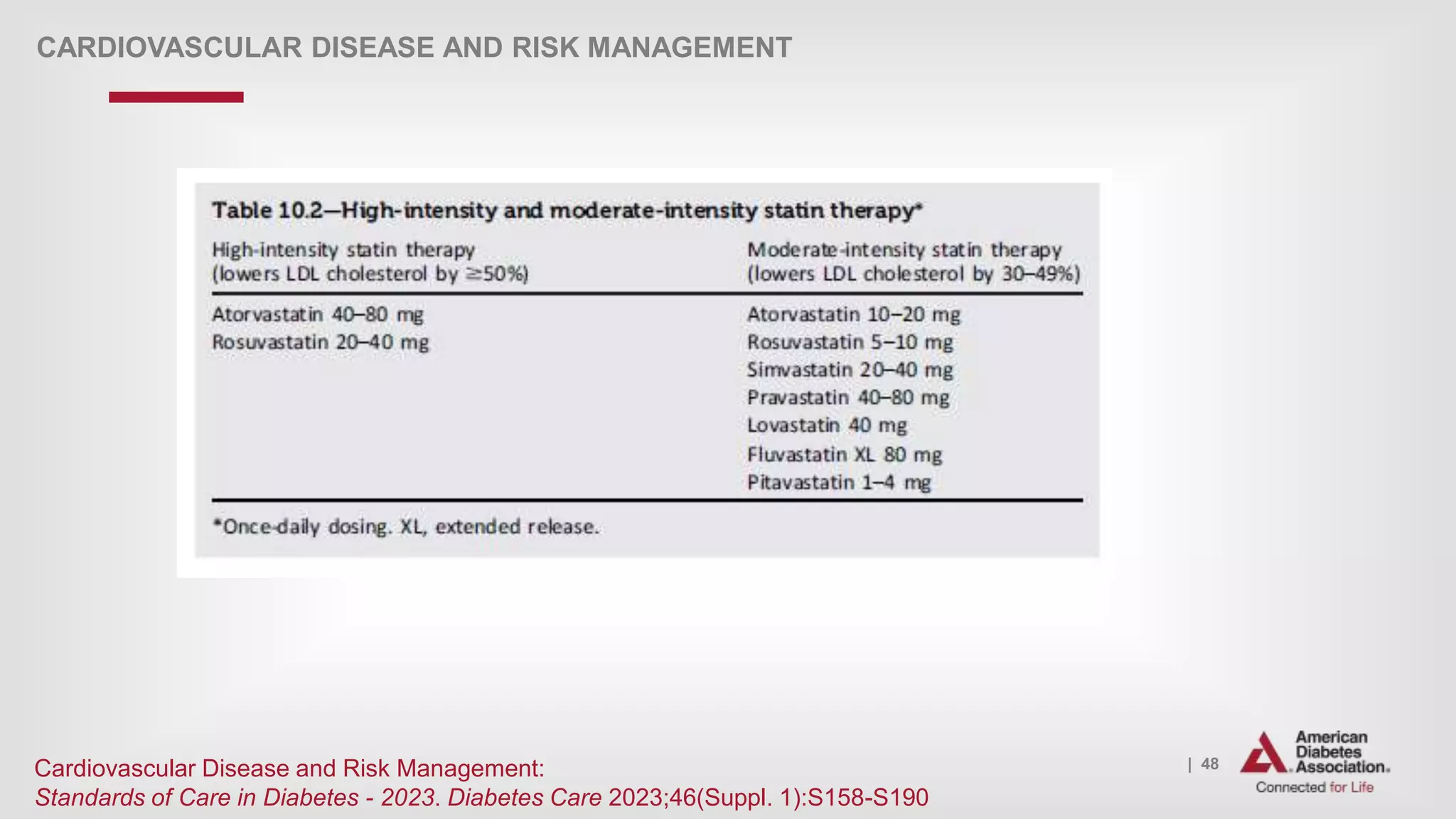
CARDIOVASCULAR DISEASE AND RISK MANAGEMENT
Cardiovascular Disease and Risk Management:
Standards of Care in Diabetes - 2023. Diabetes Care 2023;46(Suppl. 1):S158-S190
| 49
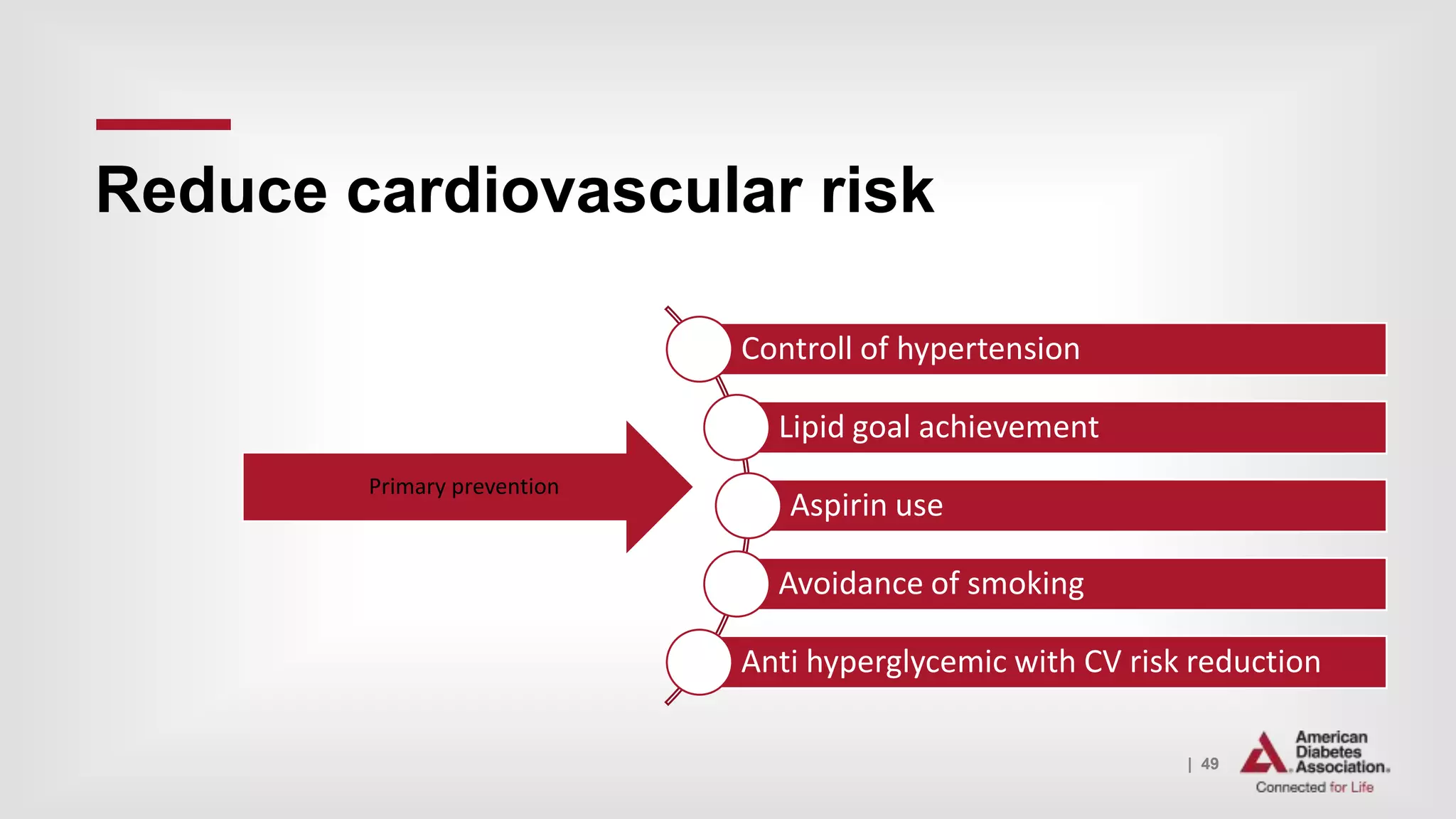
Reduce cardiovascular risk
Controll of hypertension
Lipid goal achievement
Aspirin use
Avoidance of smoking
Anti hyperglycemic with CV risk reduction
Primary prevention
| 50
Reduce cardiovascular risk
ASPIRIN
HIGH INTENSITY STATINS
BETA BLOCKERS
Avoidance of smoking
ACEI/ARBs
GLP 1RA/ SGLT 2i
SECONDARY
prevention
| 51
Aspirin in DM
Secondary
prevention
• HTN
• DLP
• SMOKING
• FAMILY H/O CAD
• ALBUMINURIA
Primary prevention
DM > 50 YR with one
or more hish risk
Section 11.
Chronic Kidney
Disease and Risk
Management
 ACEI/ARB
recommended in moderately increased albuminuria ( 30 -299 mg/g cr)
strongly recommened in severly increased albuminuria ( >300 mg/g cr )
and or e GFR < 60
 SGLT2i
In all patients with DKD , recommended to reduce CKD progression and
CV events in patient with an e GFR > 20 Ml/min/1.73m2 and urinary
albumin > 200mg/g cr
CKD and risk management
 FINERENONE
used if e GFR > 25 Ml /min/1,73m2 and k+ < 5 mEq/L
10 mg / 20 mg once weekly
weekly e GFR , K + monitoring
CKD and risk management
Section 12.
Retinopathy,
Neuropathy, and
Foot Care
 12.20 Gabapentinoids, serotoninnorepinephrine reuptake inhibitors,
tricyclic antidepressants, and sodium channel blockers are recommended as
initial pharmacologic treatments for neuropathic pain in diabetes. A Refer to
neurologist or pain specialist when pain control is not achieved within the
scope of practice of the treating physician. E
 SNRI – duloxetine , venlafaxine , all selective SNRI
 TCA – amitriptyline
 Capsaicin – FDA approved for pain as 8% patch
Neuropathy
 Sodium channel blockers – lamotrigine , lacosamide , oxcarbamazepine ,
and valproic acid
 Carbamazepine not approved
Neuropathy
| 58
 Fatty infiltration of > 5 %
 Hepatic steatosis associated with inflammation and hepatocyte injury with or
without fibrosis – NASH
 ASSESSMENT
FIB 4 SCORE – age , SGOT, SGPT, platelet count
Fibroelastography
NAFLD
| 59
| 60
THANK YOU

ADA GUIDELINE.pptx

  • 1.
    Standards of Care inDiabetes—2023
  • 2.
    Intended to provideclinicians, patients, researchers, payers, and other interested individuals with the components of diabetes care, general treatment goals, and tools to evaluate the quality of care. The Standards.
  • 3.
    | 3 Introduction: Standards ofCare in Diabetes - 2023. Diabetes Care 2023;46(Suppl. 1):S1-S4
  • 4.
    | 4 Table ofContents. 1. Improving Care and Promoting Health in Populations 2. Classification and Diagnosis of Diabetes 3. Prevention or Delay of T2D and Associated Comorbidities 4. Comprehensive Medical Evaluation and Assessment of Comorbidities 5. Facilitating Positive Health Behaviors and Well- being to Improve Health Outcomes 6. Glycemic Targets 7. Diabetes Technology 8. Obesity and Weight Management for the Prevention and Treatment of Type 2 Diabetes 9. Pharmacologic Approaches to Glycemic Treatment 10. CVD and Risk Management 11. CKD and Risk Management 12. Retinopathy, Neuropathy, and Foot Care 13. Older Adults 14. Children and Adolescents 15. Management of Diabetes in Pregnancy 16. Diabetes Care in the Hospital 17. Diabetes and Advocacy
  • 5.
  • 6.
    | 6 Classification CLASSIFICATION ANDDIAGNOSIS OF DIABETES Diabetes can be classified into the following general categories: 1. Type 1 diabetes (due to autoimmune ß-cell destruction, usually leading to absolute insulin deficiency, including latent autoimmune diabetes of adulthood) 2. Type 2 diabetes (due to a non-autoimmune progressive loss of adequate ß-cell insulin secretion frequently on the background of insulin resistance and metabolic syndrome) 3. Specific types of diabetes due to other causes, e.g., monogenic diabetes syndromes (such as neonatal diabetes and maturity-onset diabetes of the young), diseases of the exocrine pancreas (such as cystic fibrosis and pancreatitis), and drug- or chemical-induced diabetes (such as with glucocorticoid use, in the treatment of HIV/AIDS, or after organ transplantation) 4. Gestational diabetes mellitus (diabetes diagnosed in the second or third trimester of pregnancy that was not clearly overt diabetes prior to gestation)
  • 7.
    | 7 CLASSIFICATION ANDDIAGNOSIS OF DIABETES Hold for table 2.1 Classification and Diagnosis of Diabetes: Standards of Care in Diabetes - 2023. Diabetes Care 2023;46(Suppl. 1):S19-S40
  • 8.
    | 8  Nomention of hybride forms of diabetes ADA vs WHO classification of DM Latent autoimmune diabetes of adult Ketosis prone diabetes
  • 9.
    | 9 CLASSIFICATION ANDDIAGNOSIS OF DIABETES Table 2.2 Classification and Diagnosis of Diabetes: Standards of Care in Diabetes - 2023. Diabetes Care 2023;46(Suppl. 1):S19-S40
  • 10.
    | 10 Classic symptomsof hyperglycemia  Polyuria  Polydipsia  Weight loss Polyphagia no longer considered a classic symptom
  • 11.
    | 11 Screening fortype 2 DM Screening of high risk population Screening of subject with pre – diabetes Screening of women with GDM Universal screening of population
  • 12.
    | 12 CLASSIFICATION ANDDIAGNOSIS OF DIABETES Classification and Diagnosis of Diabetes: Standards of Care in Diabetes - 2023. Diabetes Care 2023;46(Suppl. 1):S19-S40
  • 13.
    | 13 CLASSIFICATION ANDDIAGNOSIS OF DIABETES Classification and Diagnosis of Diabetes: Standards of Care in Diabetes - 2023. Diabetes Care 2023;46(Suppl. 1):S19-S40
  • 14.
    | 14  HBA1Cmaintained < 6.5 % for 3 months without use of OHA and INSULIN Remission of DM
  • 15.
    | 15  2.1bPoint-of-care A1C testing for diabetes screening and diagnosis should be restricted to U.S. Food and Drug Administration–approved devices at laboratories proficient in performing testing of moderate complexity or higher by trained personnel. B UPDATE 2023
  • 16.
    Section 3. Prevention or Delayof Type 2 Diabetes and Associated Comorbidities
  • 17.
    Prevention of DM Lifestyle changes • 150 min / week • 7 % weight loss Metformin • Age 25 to 59 years with • BMI > 35 • FBS > 110 • HBAIC >6 • Previous GDM Pioglitazone • Lower the risk of stroke , MI and progression to DM
  • 18.
     3.1 Monitorfor the development of type 2 diabetes in those with prediabetes at least annually; modified based on individual risk/benefit assessment. E  3.9 Statin therapy may increase the risk of type 2 diabetes in people at high risk of developing type 2 diabetes. In such individuals, glucose status should be monitored regularly and diabetes prevention approaches reinforced. It is not recommended that statins be discontinued. B  3.10 In people with a history of stroke and evidence of insulin resistance and prediabetes, pioglitazone may be considered to lower the risk of stroke or myocardial infarction. However, this benefit needs to be balanced with the increased risk of weight gain, edema, and fracture. A Lower doses may mitigate the risk of adverse effects. C UPDATE 2023
  • 19.
  • 20.
    Comordities in DM SystemicHTN DLP NAFLD CAD Cognitive impairment Fractures Hearing loss Peridontal disease Hypogonadism / pcod
  • 21.
    | 21 Immunizations COMPREHENSIVE MEDICALEVALUATION AND ASSESSMENT OF COMORBIDITIES
  • 22.
    | 22 Immunizations COMPREHENSIVE MEDICALEVALUATION AND ASSESSMENT OF COMORBIDITIES
  • 23.
    | 23 Immunizations COMPREHENSIVE MEDICALEVALUATION AND ASSESSMENT OF COMORBIDITIES
  • 24.
  • 25.
     Should engagein 150 min or more of moderate – to vigorous intensity activity weekly , spread over atleast 3 days / week  No more than 2 consecutive days without activity  Resistance training in 2 -3 sessions / week on non consecutive days  Flexibility training and balance training are recommended 2-3 times / week for older adult with DM EXERCISE PLAN
  • 26.
    | 26 FACILITATING POSITIVEHEALTH BEHAVIORS AND WELL-BEING TO IMPROVE HEALTH OUTCOMES Medical Nutrition Therapy Facilitating Positive Health Behaviors and Well-being to Improve Health Outcomes: Standards of Care in Diabetes - 2023. Diabetes Care 2023;46(Suppl. 1):S68-S96
  • 27.
    | 27 FACILITATING POSITIVEHEALTH BEHAVIORS AND WELL-BEING TO IMPROVE HEALTH OUTCOMES Medical Nutrition Therapy (continued) Facilitating Positive Health Behaviors and Well-being to Improve Health Outcomes: Standards of Care in Diabetes - 2023. Diabetes Care 2023;46(Suppl. 1):S68-S96
  • 28.
    | 28 FACILITATING POSITIVEHEALTH BEHAVIORS AND WELL-BEING TO IMPROVE HEALTH OUTCOMES Medical Nutrition Therapy (continued) Facilitating Positive Health Behaviors and Well-being to Improve Health Outcomes: Standards of Care in Diabetes - 2023. Diabetes Care 2023;46(Suppl. 1):S68-S96
  • 29.
    | 29  Timerestricted eating and intermittent fasting  Time restricted eating is generally easier to follow compared with alternative day fasting or the 5:2 plan  No significant difference in weight loss when compared with contious calorie restriction Update 2023
  • 30.
  • 31.
    Glycemic targets FBS • 80– 130 mg/dl PPBS • < 180 mg/dl HBA1C • < 7% • < 7.5 % type 1 DM with hypoglycemia • < 8 % Elderly , frail individual
  • 32.
    TIME IN RANGETarget blood glucose range in DM Non pregnant : 70 – 180 mg/dl Pregnant : 63 – 140 mg/dl
  • 33.
    Section 8. Obesity andWeight Management for the Treatment of Type 2 Diabetes
  • 34.
    Obesity management 5 %weight loss improves glycemia > 10 % weight loss has disease modifying effects and impact on long term CV mortality 500 – 750 kcal deficit required for significant weight loss
  • 35.
    | 35 OBESITY MANAGEMENTFOR THE TREATMENT OF TYPE 2 DIABETES Obesity Management for the Treatment of Type 2 Diabetes: Standards of Care in Diabetes - 2023. Diabetes Care 2023;46(Suppl. 1):S128-S139
  • 36.
  • 37.
  • 38.
    Insulin as default HBA1C> 10 % / RBS > 300 mg/dl Features of catabolism ( significant weight loss ) Ongoing ketosis Pregnancy HBA1C > 9 % with 3 or more OHA Severe organ involvement Perioperative patients
  • 39.
    | 39 PHARMACOLOGIC APPROACHESTO GLYCEMIC TREATMENT Pharmacologic Approaches to Glycemic Management: Standards of Care in Diabetes - 2023. Diabetes Care 2023;46(Suppl. 1):S140-S157
  • 40.
    | 40 Tirzepatide GIP/GLP -1 COAGONIST Glycemic weight cvs
  • 41.
  • 42.
    | 42 CARDIOVASCULAR DISEASEAND RISK MANAGEMENT Cardiovascular Disease and Risk Management: Standards of Care in Diabetes - 2023. Diabetes Care 2023;46(Suppl. 1):S158-S190
  • 43.
    Hypertension management •BP target< 130/80 mmhg if 10 year ASCVD > 15 % •OTHERS < 140/9O mmhg 2022 •Target < 130/80 mmhg 2023
  • 44.
    | 44 CARDIOVASCULAR DISEASEAND RISK MANAGEMENT Recommendations for the Treatment of Confirmed Hypertension in People with Diabetes (1 of 2) Cardiovascular Disease and Risk Management: Standards of Care in Diabetes - 2023. Diabetes Care 2023;46(Suppl. 1):S158-S190
  • 45.
    | 45 CARDIOVASCULAR DISEASEAND RISK MANAGEMENT Recommendations for the Treatment of Confirmed Hypertension in People with Diabetes (2 of 2) Cardiovascular Disease and Risk Management: Standards of Care in Diabetes - 2023. Diabetes Care 2023;46(Suppl. 1):S158-S190
  • 46.
    | 46 Lipid management– statins for primary prevention Age CV risk factors 40 - 75 nil Moderate intensity statin LDL < 100 mg/dl 40 -75 1 or more High intensity statin LDL < 70 Reduce LDL 50% from base line 20- 39 + Reasonable to initiate statin > 75 Nil Reasonable to initiate moderate intensity statin > 75 + Continue statin therapy
  • 47.
    | 47  Forpeople of all age with diabetes and ASCVD , high intensity statin therapy should be added to lifestyle therapy  Target LDL < 55mg / dl ( add ezetimibe / PCSK9 inhibitors if target not achieved  ASCVD or other CV risk factors on a statin with controlled LDL cholesterol but elevated triglycerides ( 135 – 499) the addition of icosapent ethyl can be considered to reduce CV risk Lipid management – statins for secondary prevention
  • 48.
    | 48 CARDIOVASCULAR DISEASEAND RISK MANAGEMENT Cardiovascular Disease and Risk Management: Standards of Care in Diabetes - 2023. Diabetes Care 2023;46(Suppl. 1):S158-S190
  • 49.
    | 49 Reduce cardiovascularrisk Controll of hypertension Lipid goal achievement Aspirin use Avoidance of smoking Anti hyperglycemic with CV risk reduction Primary prevention
  • 50.
    | 50 Reduce cardiovascularrisk ASPIRIN HIGH INTENSITY STATINS BETA BLOCKERS Avoidance of smoking ACEI/ARBs GLP 1RA/ SGLT 2i SECONDARY prevention
  • 51.
    | 51 Aspirin inDM Secondary prevention • HTN • DLP • SMOKING • FAMILY H/O CAD • ALBUMINURIA Primary prevention DM > 50 YR with one or more hish risk
  • 52.
  • 53.
     ACEI/ARB recommended inmoderately increased albuminuria ( 30 -299 mg/g cr) strongly recommened in severly increased albuminuria ( >300 mg/g cr ) and or e GFR < 60  SGLT2i In all patients with DKD , recommended to reduce CKD progression and CV events in patient with an e GFR > 20 Ml/min/1.73m2 and urinary albumin > 200mg/g cr CKD and risk management
  • 54.
     FINERENONE used ife GFR > 25 Ml /min/1,73m2 and k+ < 5 mEq/L 10 mg / 20 mg once weekly weekly e GFR , K + monitoring CKD and risk management
  • 55.
  • 56.
     12.20 Gabapentinoids,serotoninnorepinephrine reuptake inhibitors, tricyclic antidepressants, and sodium channel blockers are recommended as initial pharmacologic treatments for neuropathic pain in diabetes. A Refer to neurologist or pain specialist when pain control is not achieved within the scope of practice of the treating physician. E  SNRI – duloxetine , venlafaxine , all selective SNRI  TCA – amitriptyline  Capsaicin – FDA approved for pain as 8% patch Neuropathy
  • 57.
     Sodium channelblockers – lamotrigine , lacosamide , oxcarbamazepine , and valproic acid  Carbamazepine not approved Neuropathy
  • 58.
    | 58  Fattyinfiltration of > 5 %  Hepatic steatosis associated with inflammation and hepatocyte injury with or without fibrosis – NASH  ASSESSMENT FIB 4 SCORE – age , SGOT, SGPT, platelet count Fibroelastography NAFLD
  • 59.
  • 60.
  • 61.

Editor's Notes