DESIGN PRINCIPLES
ALEXANDRIA MISTHOS – OCTOBER 2011 – PHOTO 1
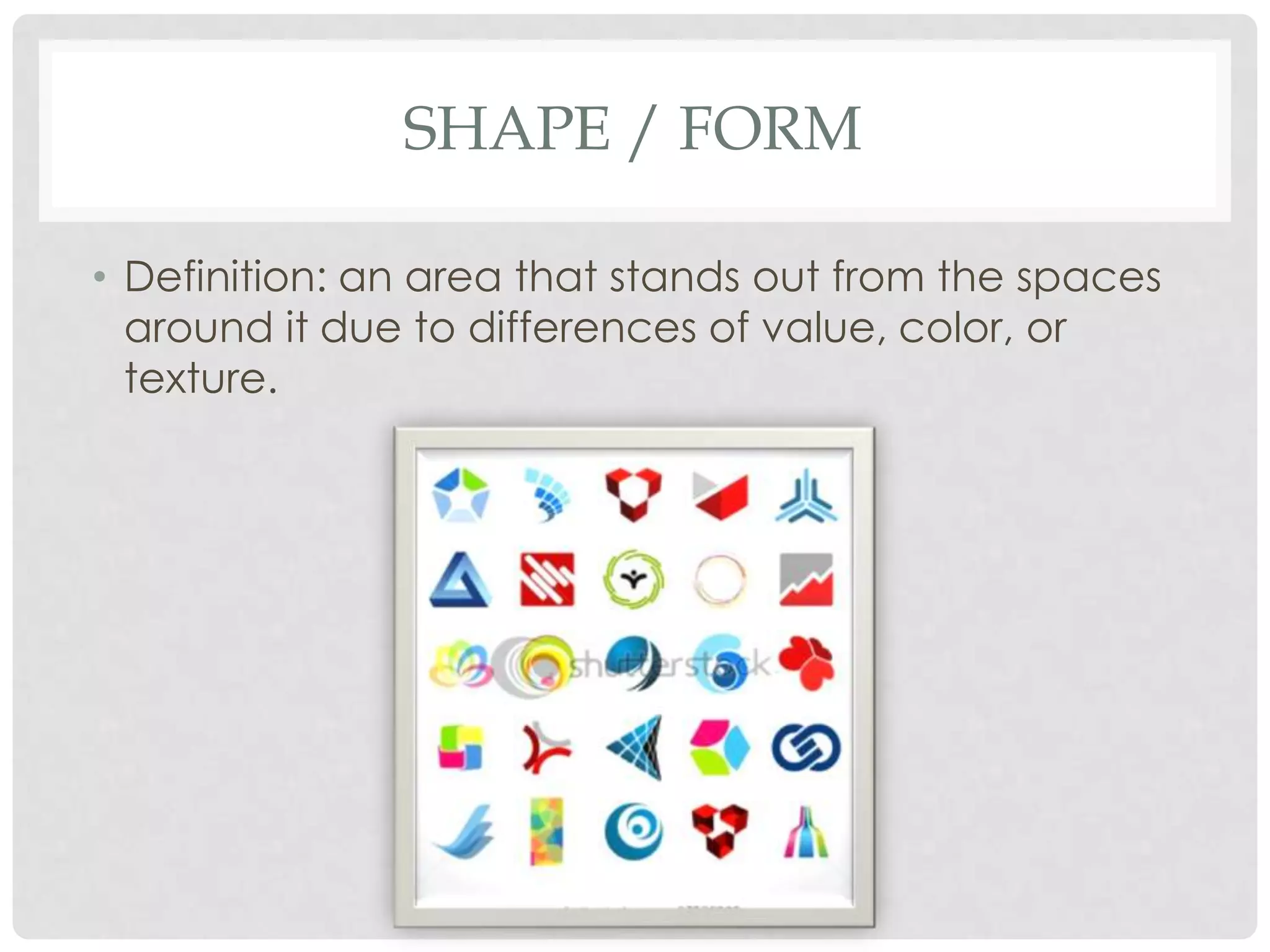
SHAPE / FORM

• Definition: an area that stands out from the spaces
  around it due to differences of value, color, or
  texture.
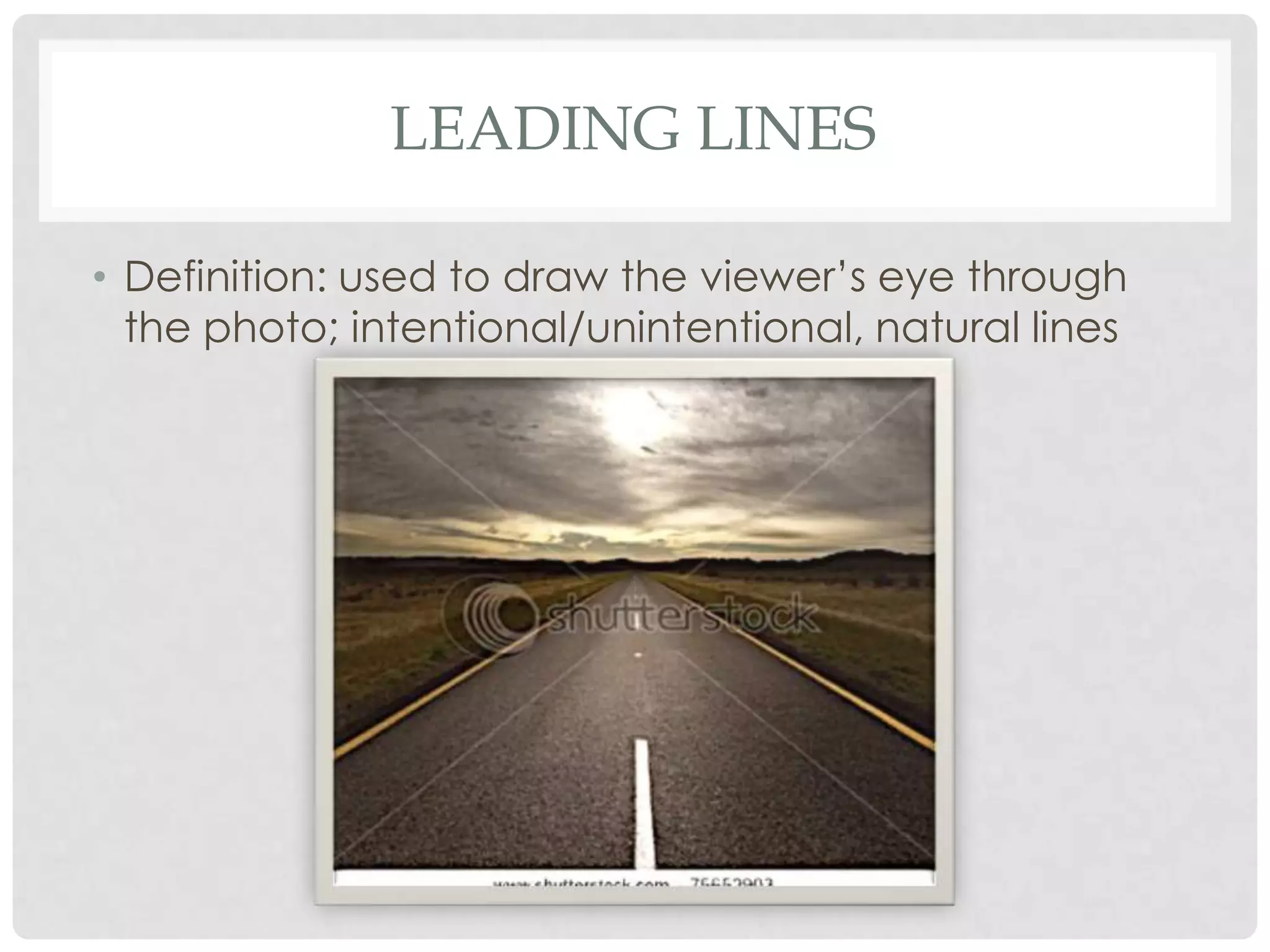
LEADING LINES

• Definition: used to draw the viewer’s eye through
  the photo; intentional/unintentional, natural lines
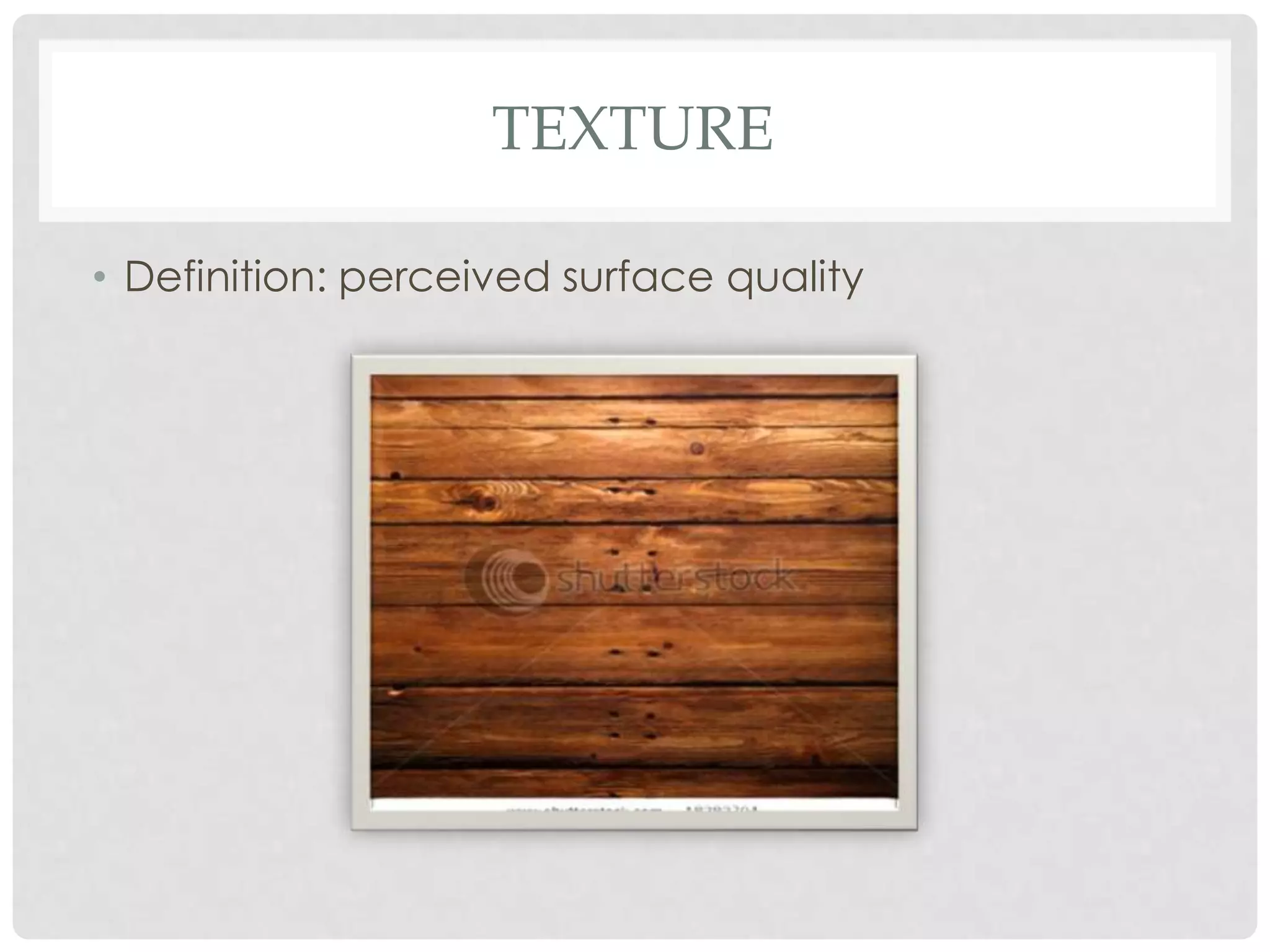
TEXTURE

• Definition: perceived surface quality
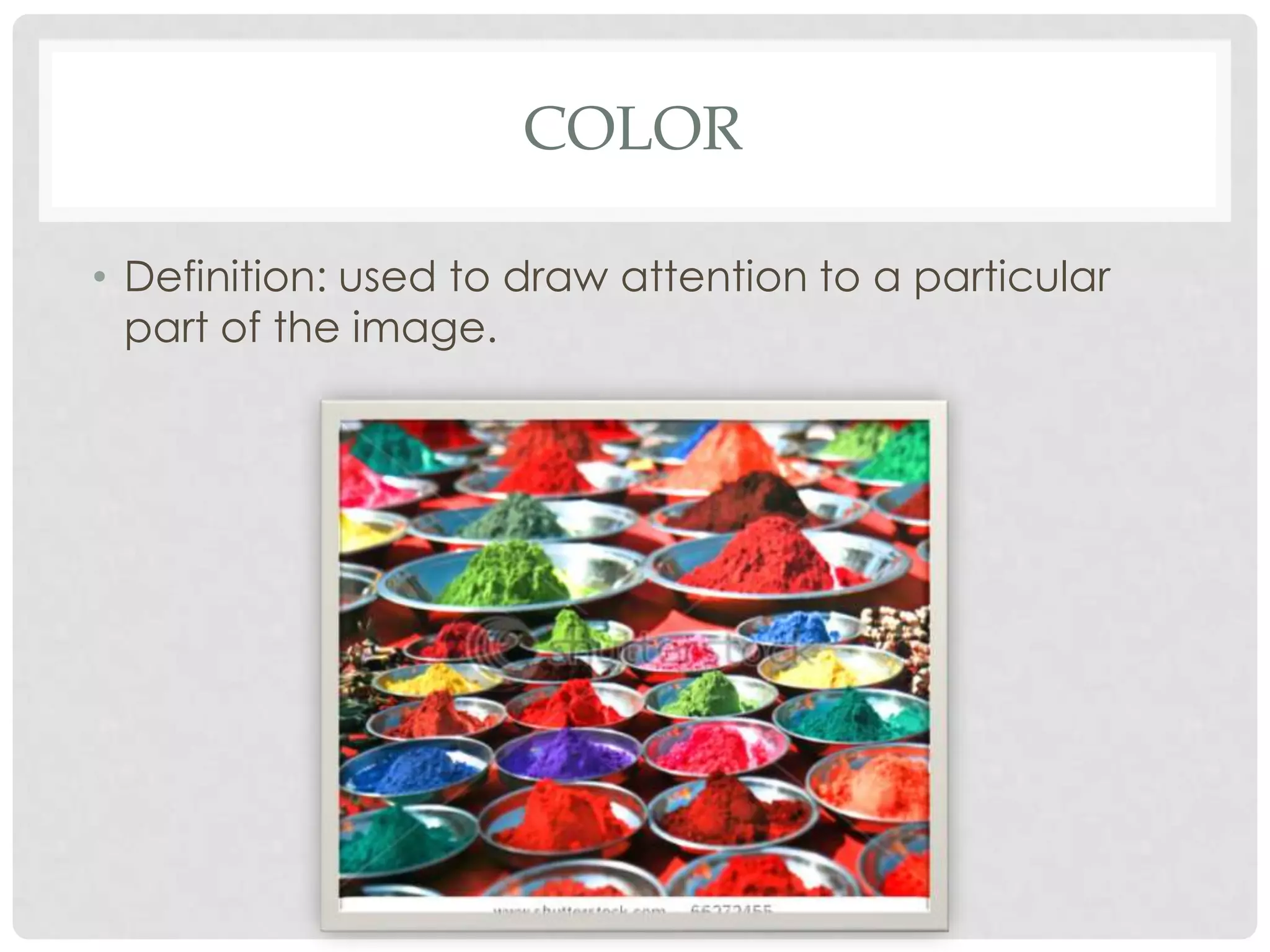
COLOR

• Definition: used to draw attention to a particular
  part of the image.
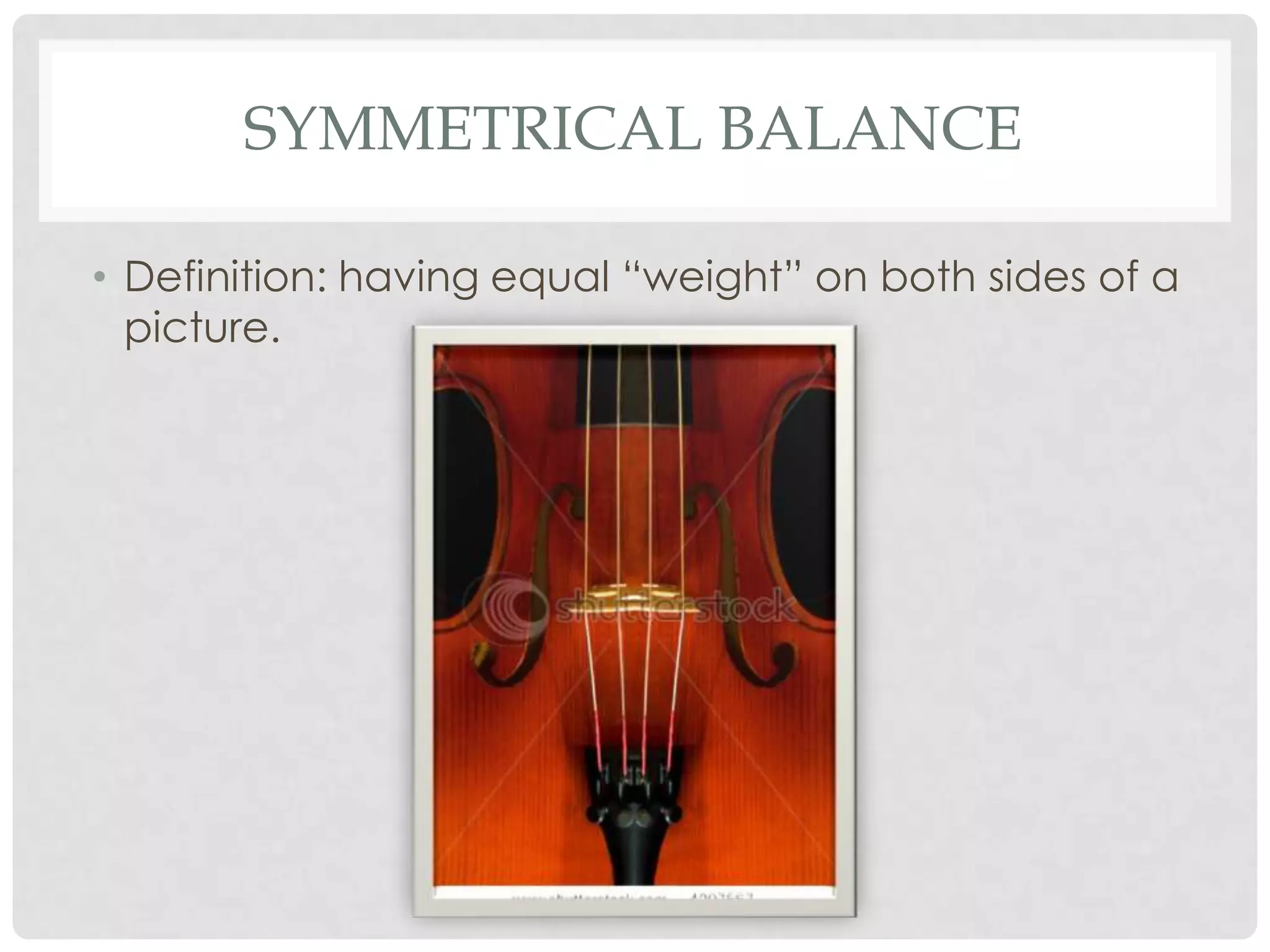
SYMMETRICAL BALANCE

• Definition: having equal “weight” on both sides of a
  picture.
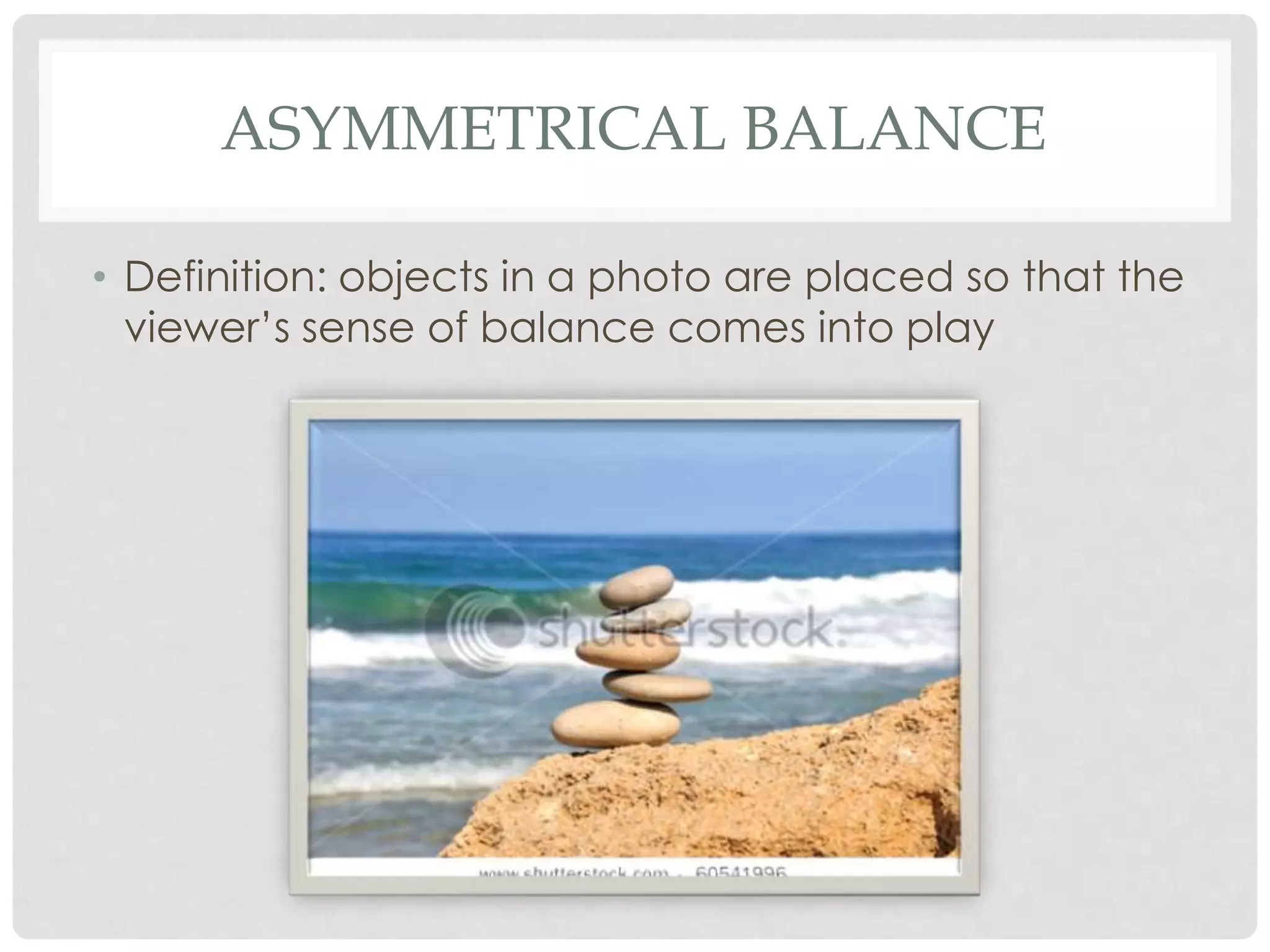
ASYMMETRICAL BALANCE

• Definition: objects in a photo are placed so that the
  viewer’s sense of balance comes into play
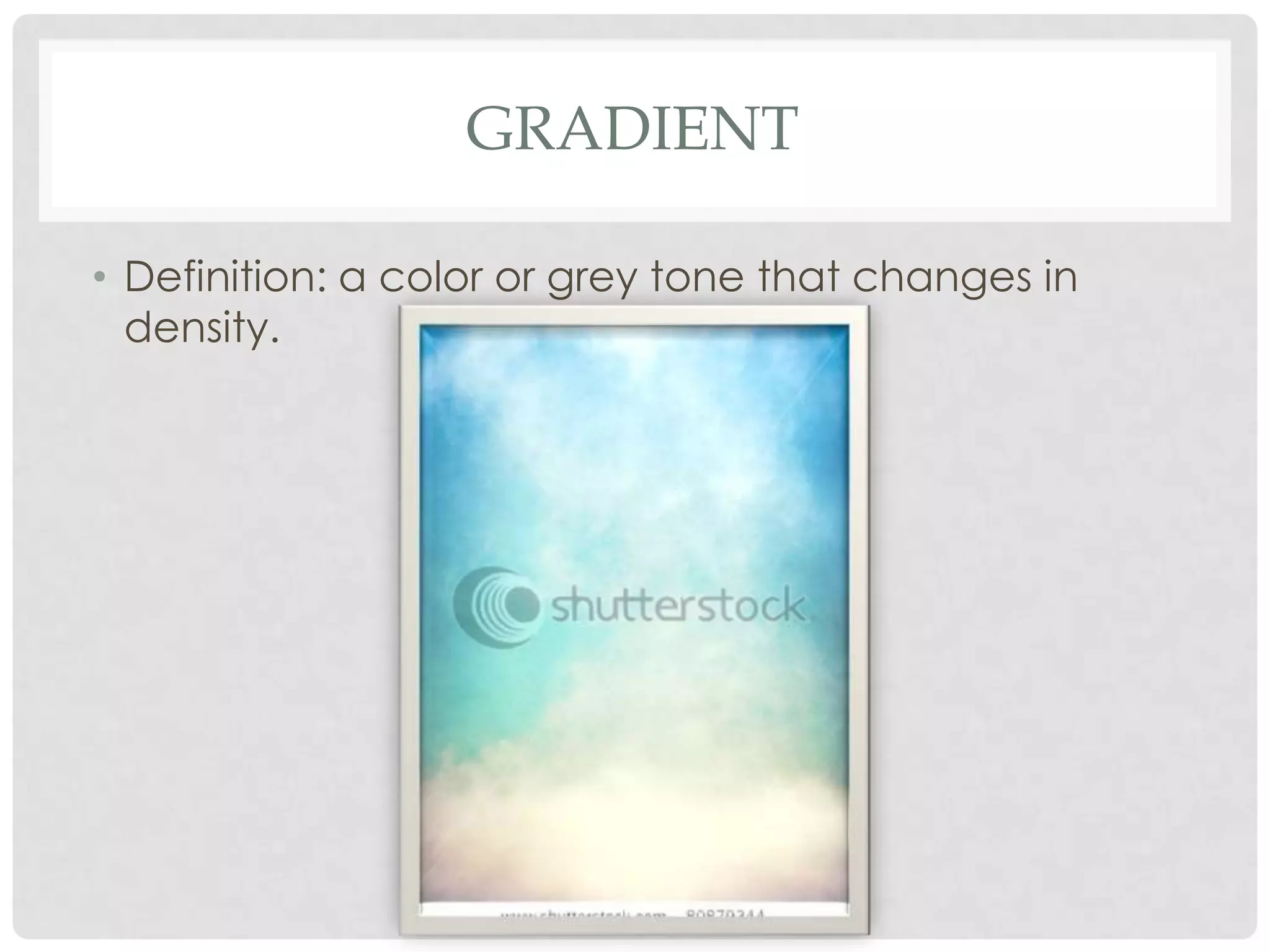
GRADIENT

• Definition: a color or grey tone that changes in
  density.
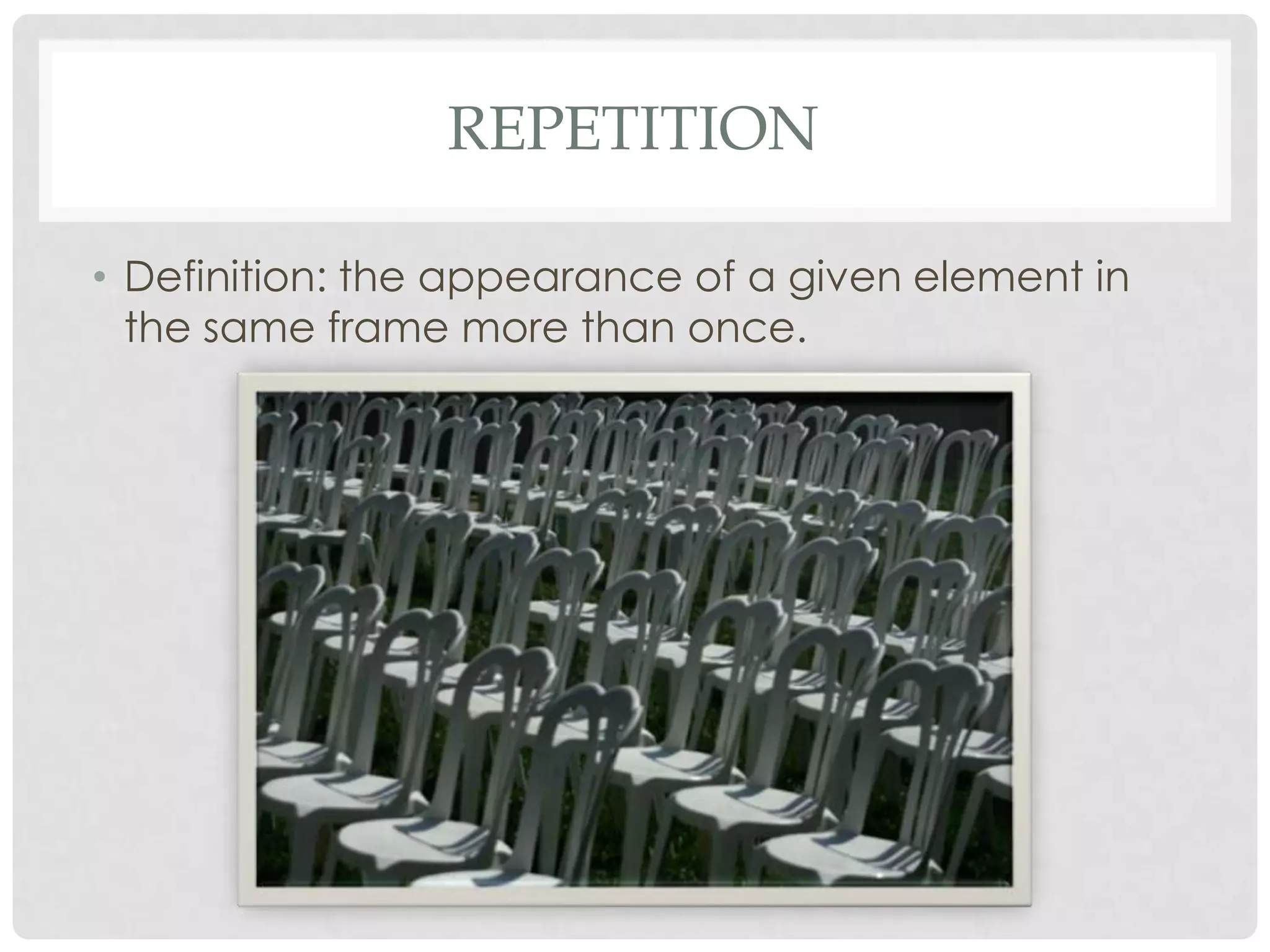
REPETITION

• Definition: the appearance of a given element in
  the same frame more than once.
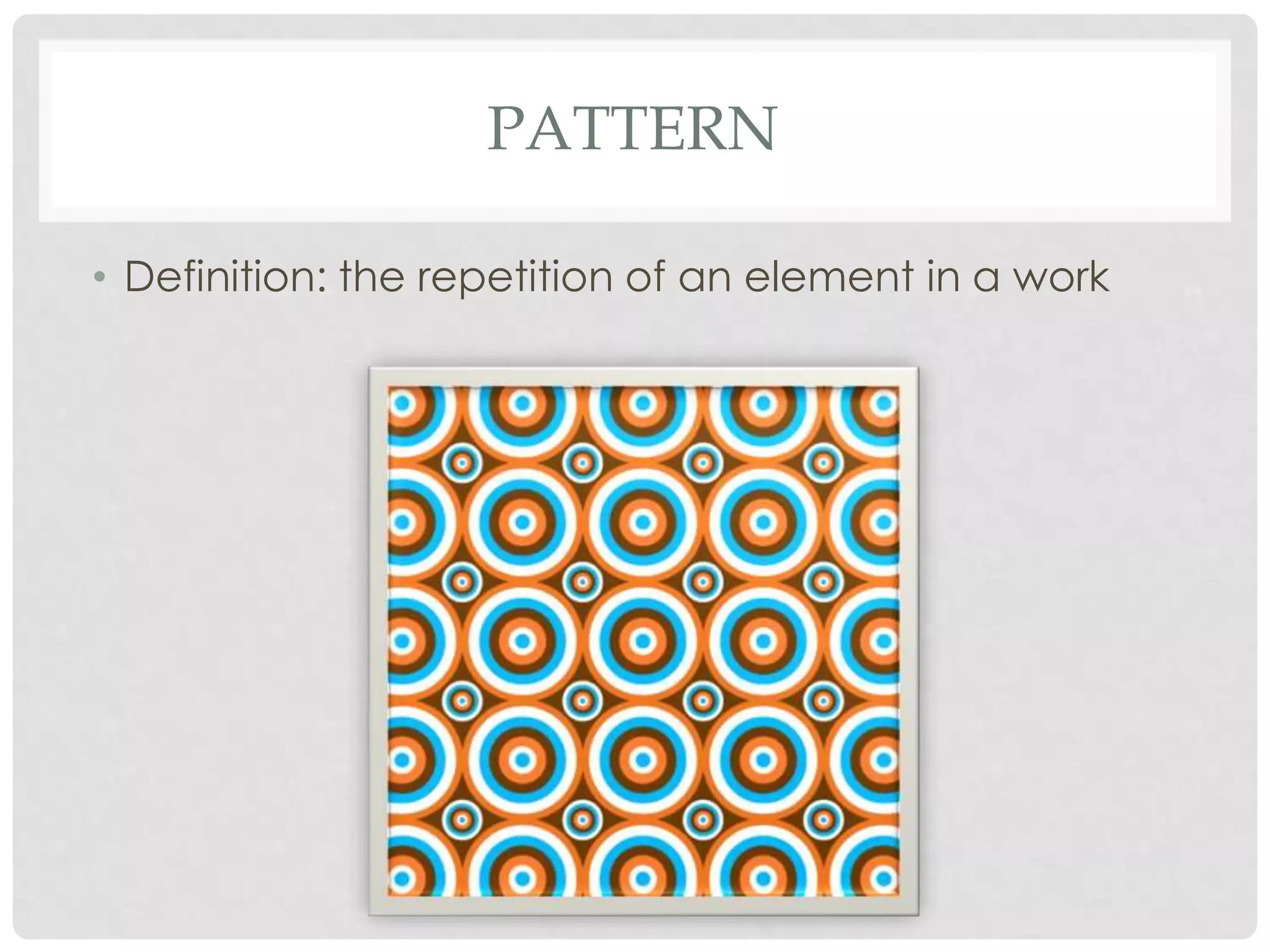
PATTERN

• Definition: the repetition of an element in a work
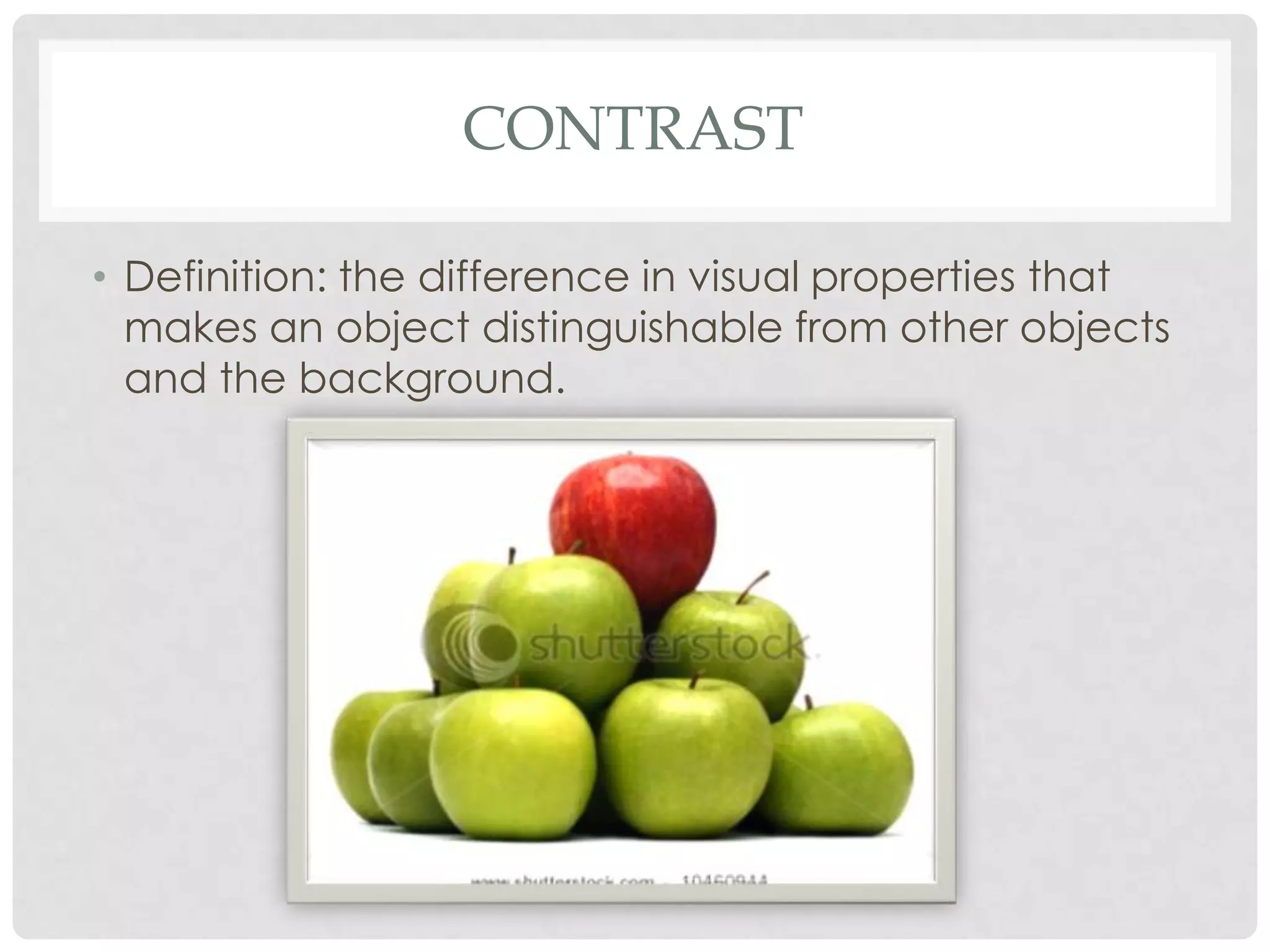
CONTRAST

• Definition: the difference in visual properties that
  makes an object distinguishable from other objects
  and the background.
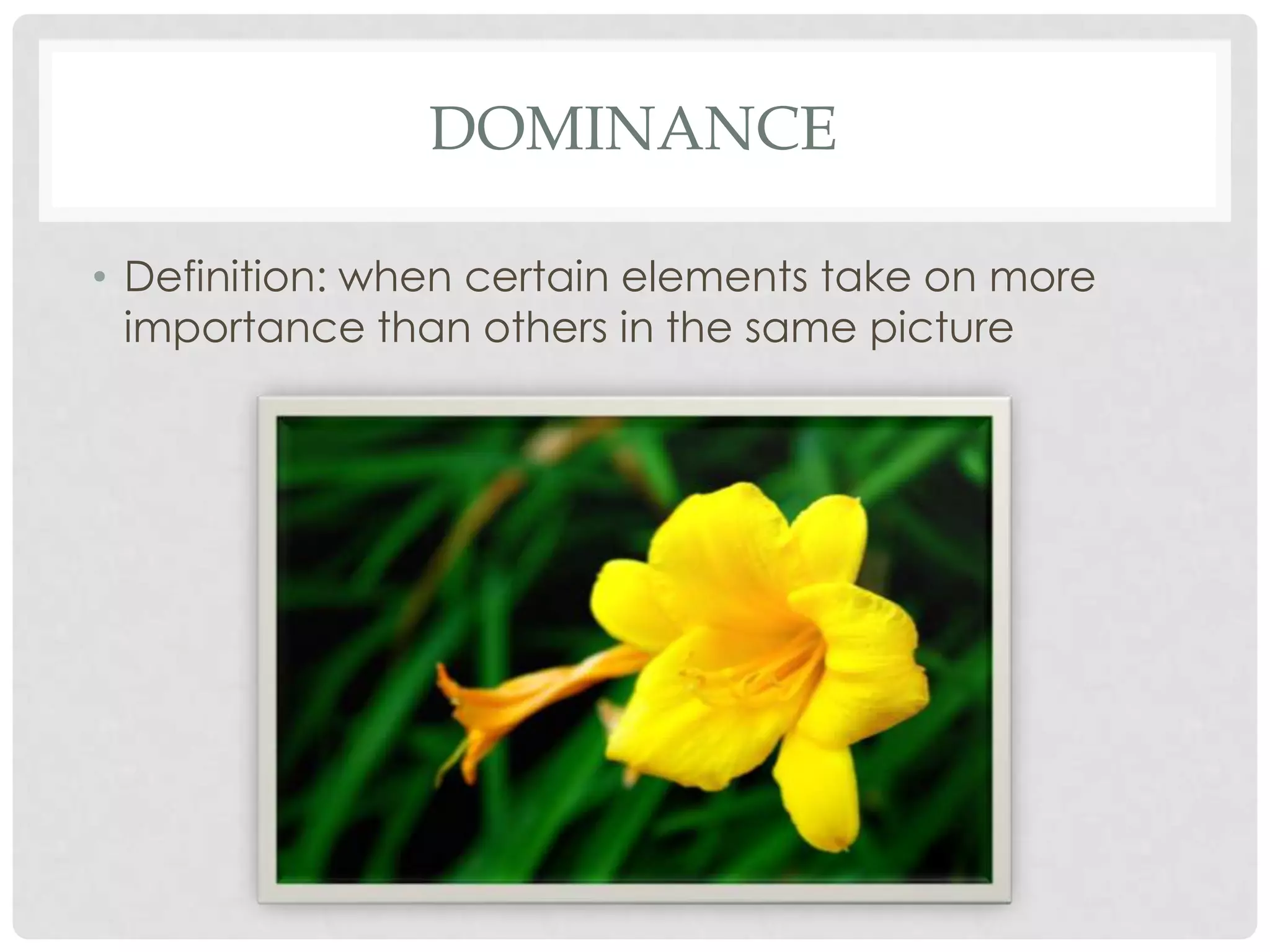
DOMINANCE

• Definition: when certain elements take on more
  importance than others in the same picture
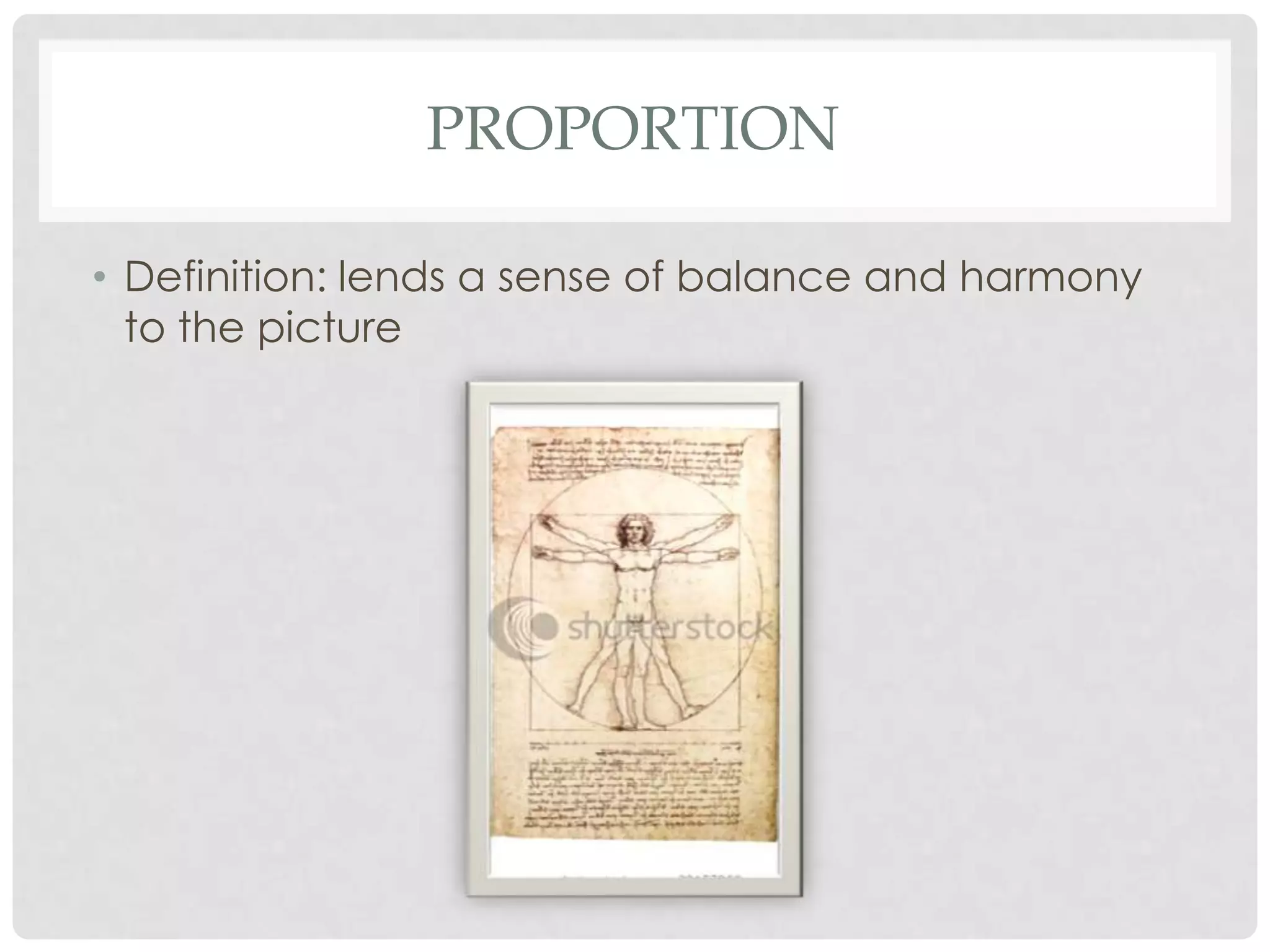
PROPORTION

• Definition: lends a sense of balance and harmony
  to the picture
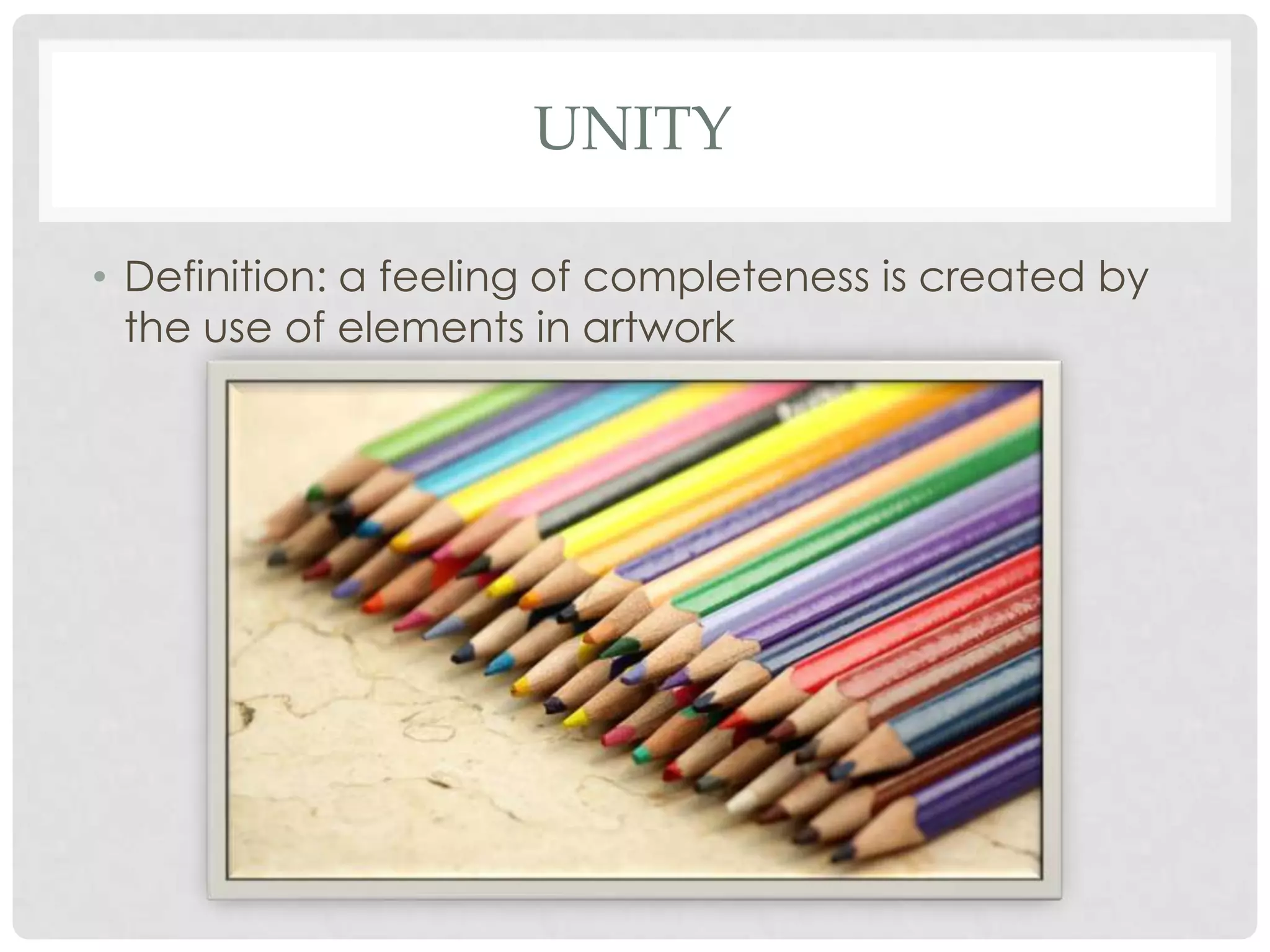
UNITY

• Definition: a feeling of completeness is created by
  the use of elements in artwork
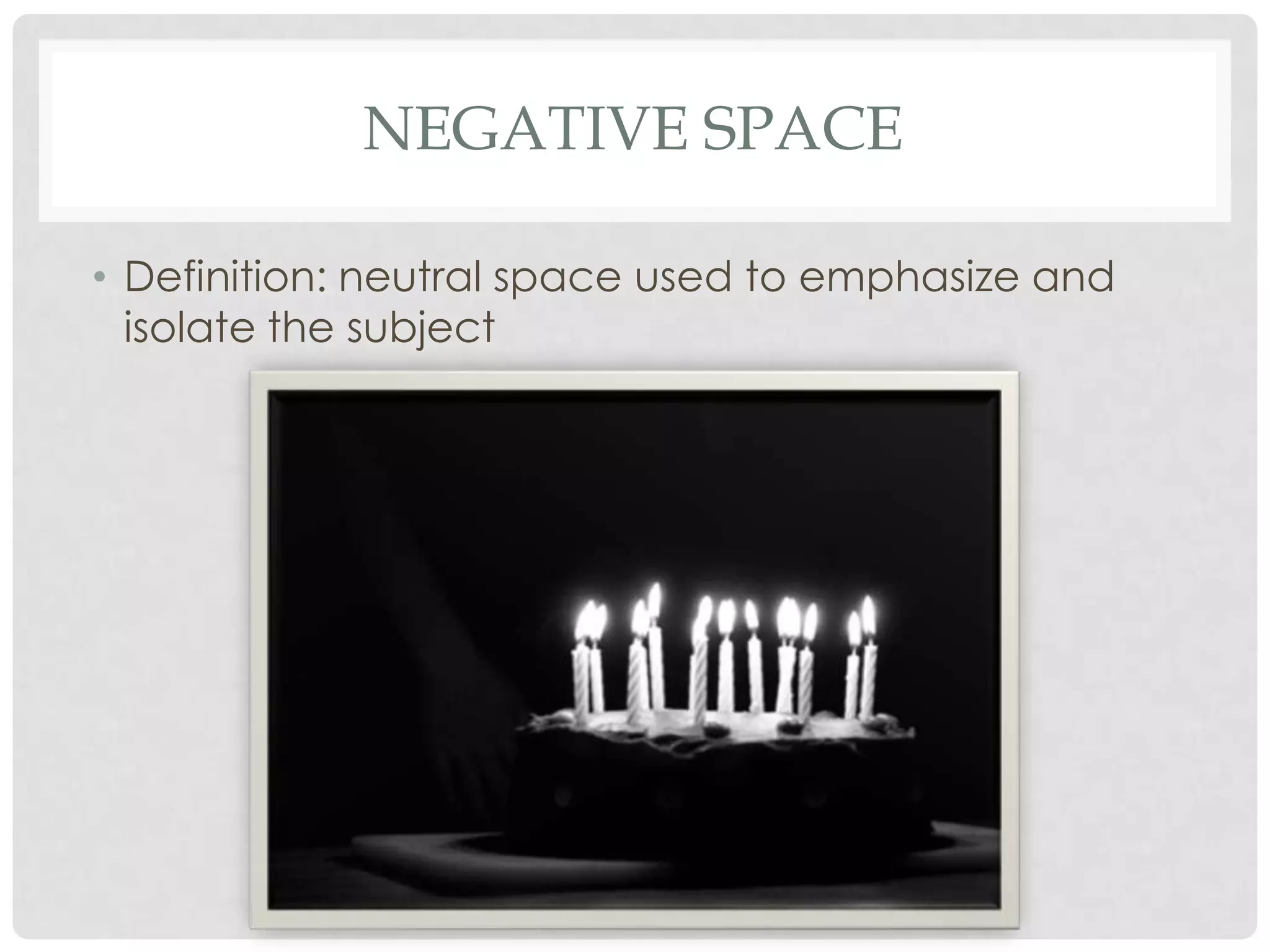
NEGATIVE SPACE

• Definition: neutral space used to emphasize and
  isolate the subject
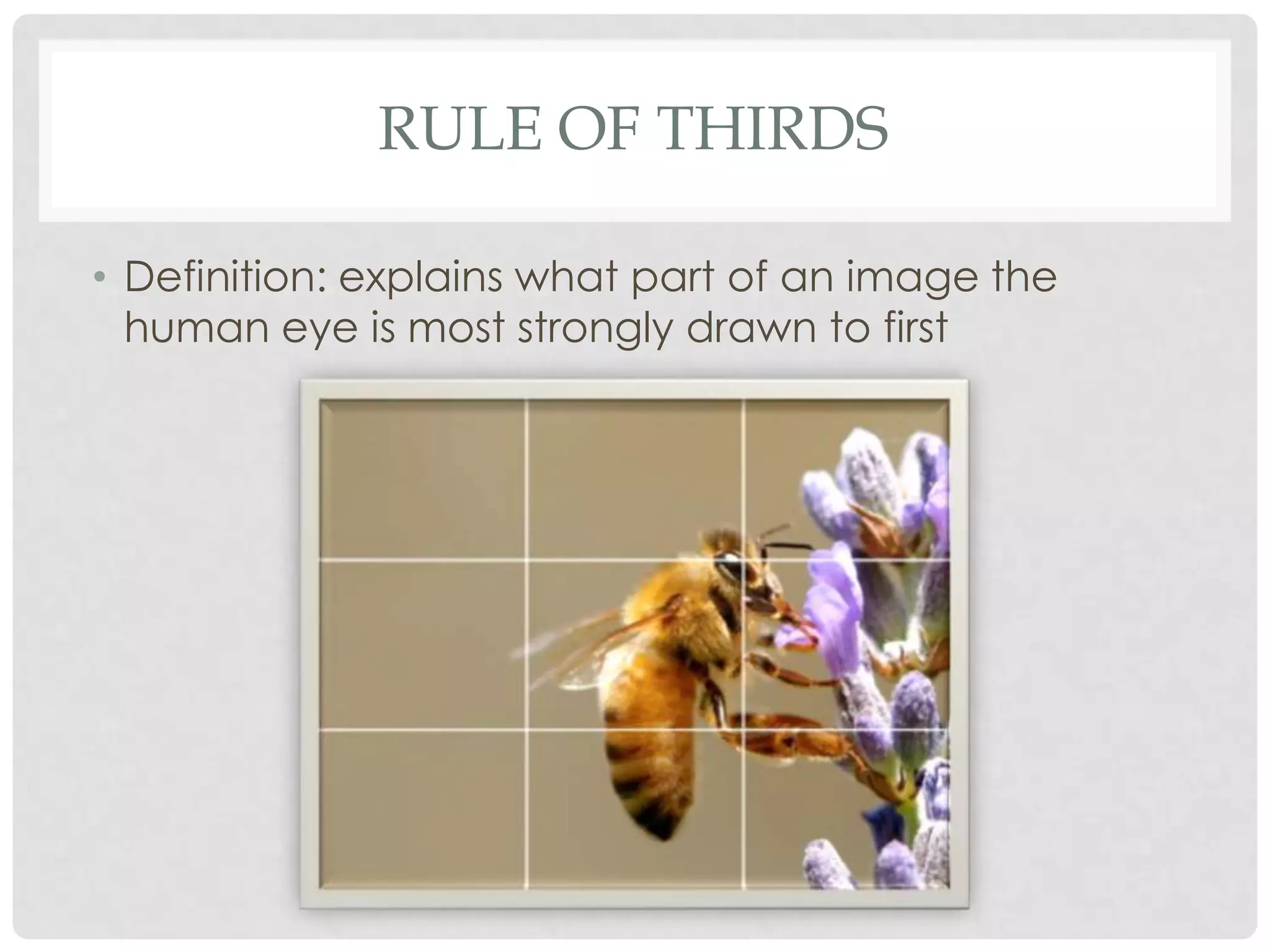
RULE OF THIRDS

• Definition: explains what part of an image the
  human eye is most strongly drawn to first
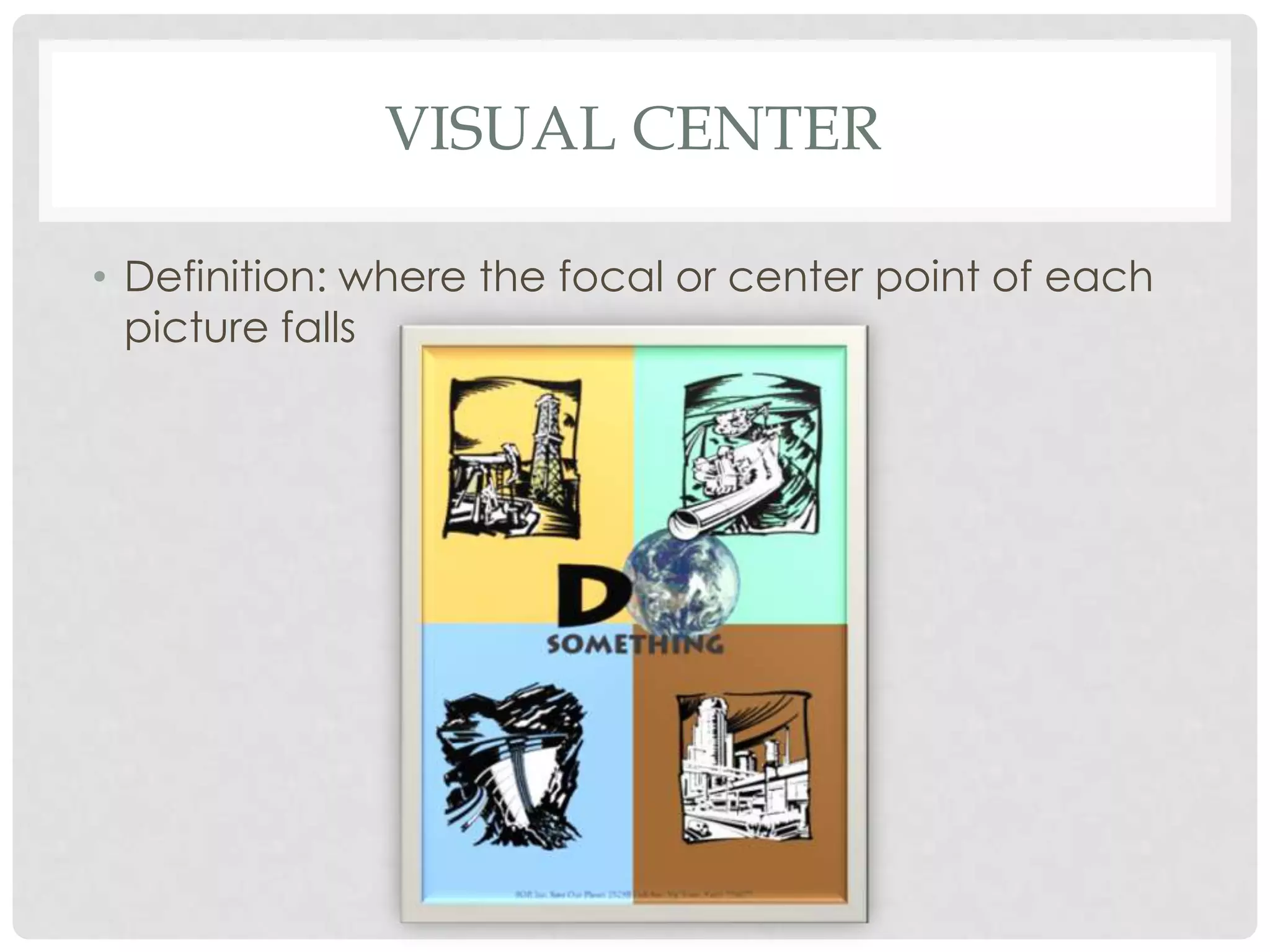
VISUAL CENTER

• Definition: where the focal or center point of each
  picture falls

Design Principles