 EHTISHAM ALI HUSSAIN
 BAGF15E258
 University College Of Agriculture, University
of Sargodha
 Shamu.hassan.eh@gmail.com
Insect pest of general agricultural crops
Presentation topic:
Desert locus
Presented by:
Muhammad Adil
Presented to:
Dr. syed usman mahmood
Tehanical name:
Schistocera gregaria
Locusta migratoria
Family:
Acrididae
Order:
Orthoptera
Introduction:
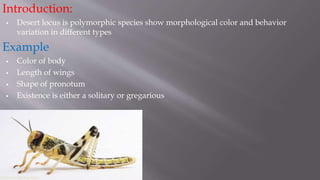
 Desert locus is polymorphic species show morphological color and behavior
variation in different types
Example
 Color of body
 Length of wings
 Shape of pronotum
 Existence is either a solitary or gregarious
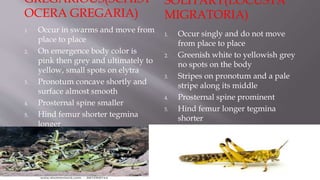
GREGARIOUS(SCHIST
OCERA GREGARIA)
SOLITARY(LOCUSTA
MIGRATORIA)
1. Occur in swarms and move from
place to place
2. On emergence body color is
pink then grey and ultimately to
yellow, small spots on elytra
3. Pronotum concave shortly and
surface almost smooth
4. Prosternal spine smaller
5. Hind femur shorter tegmina
longer
6. Body size smaller
7. Move in bands
1. Occur singly and do not move
from place to place
2. Greenish white to yellowish grey
no spots on the body
3. Stripes on pronotum and a pale
stripe along its middle
4. Prosternal spine prominent
5. Hind femur longer tegmina
shorter
6. Body size robust
7. Solitary life
Distribution
 Africa
 Portugal
 Spain
 North Siberia
 Sudan
 Arabia
 Syria
 Iran
 Afghanistan
 West Pakistan and india
 It is connected with dry region and semi dry region
 Feeds on about all kind of vegetation, eye lashes
of children and also on moist wool of sheep
 Also show cannibalism(feed on their fellows)
Habits and behavior
 Feeding habit is extremely wasteful
 Positively geotropic in the morning and afternoon
 Feed 24 hours
 Sluggish during cold and cloudy weather
Life cycle
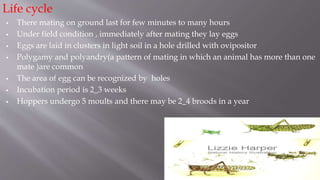
 There mating on ground last for few minutes to many hours
 Under field condition , immediately after mating they lay eggs
 Eggs are laid in clusters in light soil in a hole drilled with ovipositor
 Polygamy and polyandry(a pattern of mating in which an animal has more than one
mate )are common
 The area of egg can be recognized by holes
 Incubation period is 2_3 weeks
 Hoppers undergo 5 moults and there may be 2_4 broods in a year
Damage
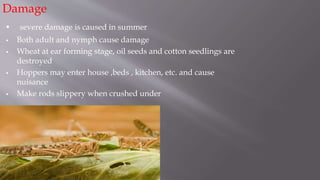
 severe damage is caused in summer
 Both adult and nymph cause damage
 Wheat at ear forming stage, oil seeds and cotton seedlings are
destroyed
 Hoppers may enter house ,beds , kitchen, etc. and cause
nuisance
 Make rods slippery when crushed under
Control:
1. Prevent swarm by beating drums
2. During mating and egg laying adults are sluggish and should be
killed by
 Beating them with brooms
 Running a sohaga(planker) over them
 Burning
3 Destruction of eggs by
 Ploughing
 Digging and feeding to poultry
 Irrigation at the time of hatching

Desert locus

  • 2.
     EHTISHAM ALIHUSSAIN  BAGF15E258  University College Of Agriculture, University of Sargodha  Shamu.hassan.eh@gmail.com
  • 3.
    Insect pest ofgeneral agricultural crops Presentation topic: Desert locus Presented by: Muhammad Adil Presented to: Dr. syed usman mahmood
  • 4.
    Tehanical name: Schistocera gregaria Locustamigratoria Family: Acrididae Order: Orthoptera
  • 5.
    Introduction:  Desert locusis polymorphic species show morphological color and behavior variation in different types Example  Color of body  Length of wings  Shape of pronotum  Existence is either a solitary or gregarious
  • 6.
    GREGARIOUS(SCHIST OCERA GREGARIA) SOLITARY(LOCUSTA MIGRATORIA) 1. Occurin swarms and move from place to place 2. On emergence body color is pink then grey and ultimately to yellow, small spots on elytra 3. Pronotum concave shortly and surface almost smooth 4. Prosternal spine smaller 5. Hind femur shorter tegmina longer 6. Body size smaller 7. Move in bands 1. Occur singly and do not move from place to place 2. Greenish white to yellowish grey no spots on the body 3. Stripes on pronotum and a pale stripe along its middle 4. Prosternal spine prominent 5. Hind femur longer tegmina shorter 6. Body size robust 7. Solitary life
  • 7.
    Distribution  Africa  Portugal Spain  North Siberia  Sudan  Arabia  Syria  Iran  Afghanistan  West Pakistan and india  It is connected with dry region and semi dry region
  • 8.
     Feeds onabout all kind of vegetation, eye lashes of children and also on moist wool of sheep  Also show cannibalism(feed on their fellows) Habits and behavior  Feeding habit is extremely wasteful  Positively geotropic in the morning and afternoon  Feed 24 hours  Sluggish during cold and cloudy weather
  • 9.
    Life cycle  Theremating on ground last for few minutes to many hours  Under field condition , immediately after mating they lay eggs  Eggs are laid in clusters in light soil in a hole drilled with ovipositor  Polygamy and polyandry(a pattern of mating in which an animal has more than one mate )are common  The area of egg can be recognized by holes  Incubation period is 2_3 weeks  Hoppers undergo 5 moults and there may be 2_4 broods in a year
  • 10.
    Damage  severe damageis caused in summer  Both adult and nymph cause damage  Wheat at ear forming stage, oil seeds and cotton seedlings are destroyed  Hoppers may enter house ,beds , kitchen, etc. and cause nuisance  Make rods slippery when crushed under
  • 11.
    Control: 1. Prevent swarmby beating drums 2. During mating and egg laying adults are sluggish and should be killed by  Beating them with brooms  Running a sohaga(planker) over them  Burning 3 Destruction of eggs by  Ploughing  Digging and feeding to poultry  Irrigation at the time of hatching