Demonstrating the Application of
Design Thinking Methodology in MBA
Fieldwork Consulting
Tara Peters, Ph.D.
Associate Professor
Northwood University
DeVos Graduate School of Management
@ACBSPAccredited #ACBSP2016
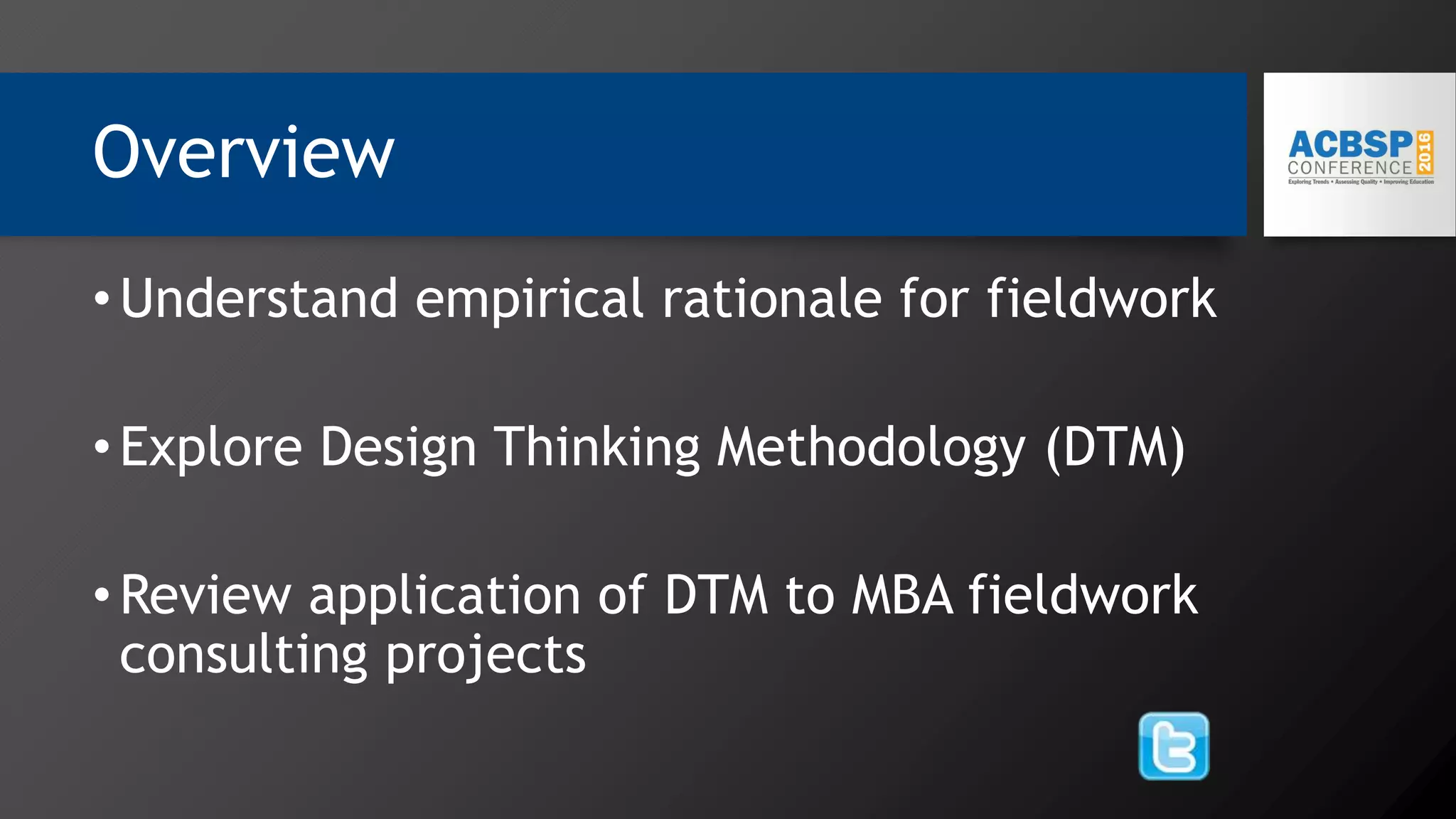
Overview
•Understand empirical rationale for fieldwork
•Explore Design Thinking Methodology (DTM)
•Review application of DTM to MBA fieldwork
consulting projects
Why Fieldwork?
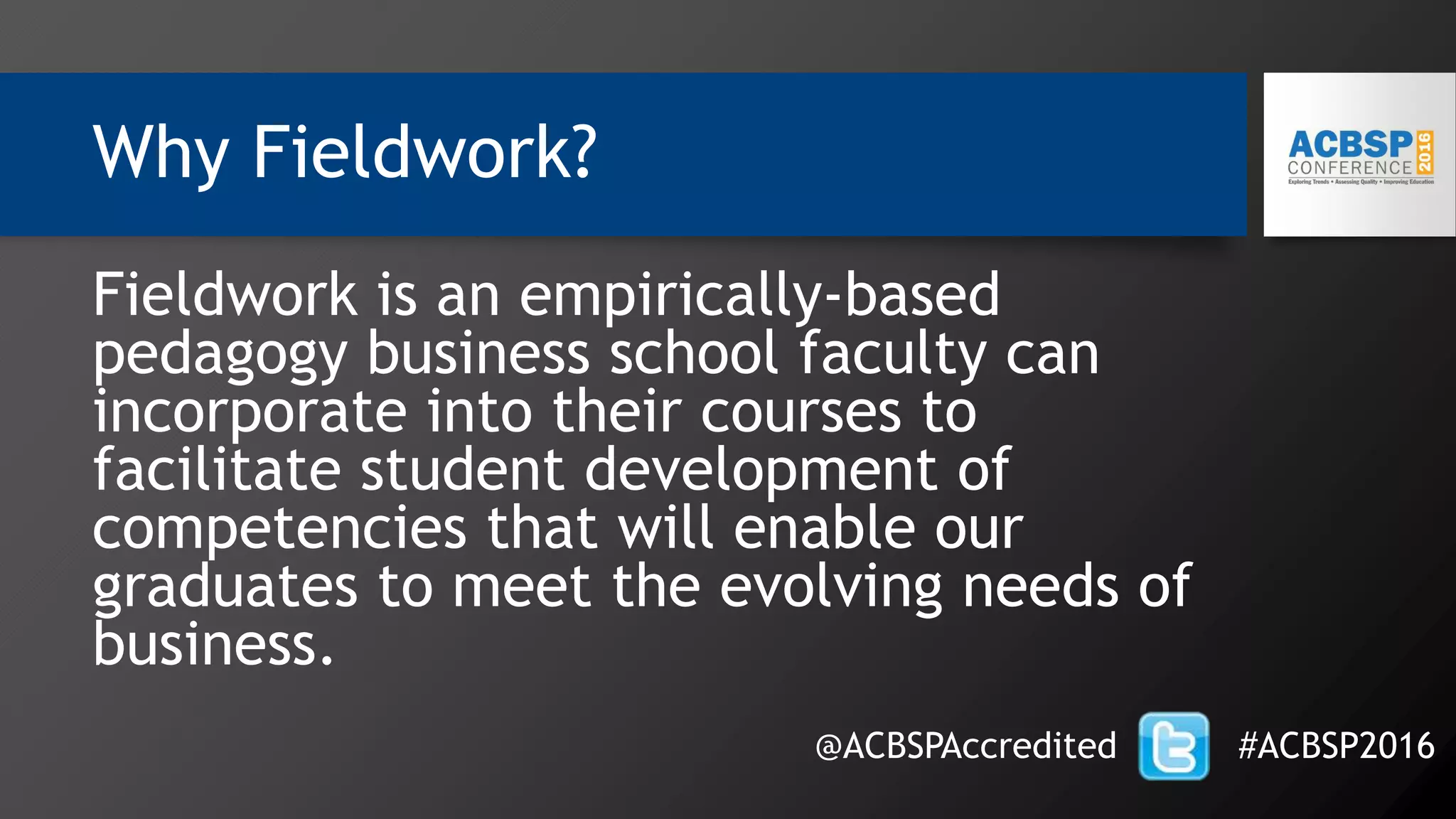
Fieldwork is an empirically-based
pedagogy business school faculty can
incorporate into their courses to
facilitate student development of
competencies that will enable our
graduates to meet the evolving needs of
business.
@ACBSPAccredited #ACBSP2016
Why Fieldwork?
One of the ways in which scholars theorize is by conducting rigorous,
high-quality fieldwork. Collecting original data in real organizations
makes fieldwork different not only from desk research in general but
also from working with computer simulations, laboratory experiments,
and secondary databases. Fieldwork is challenging and rewarding
because it occurs outside controlled settings; employs a more
idiographic, open-ended research mode (McCall, 2006); and has no
prespecified algorithms for producing it (Gephart, 2004)—it is “a
journey that may involve almost as many steps backward as
forward” (Edmondson & McManus, 2007: 1173)
(As cited in Michailova, S, Piekkari, R, Plakoyiannaki, E. Ritvala, T., Mihailova, I., & Salmi, A., 2014).
@ACBSPAccredited #ACBSP2016
Why Fieldwork?
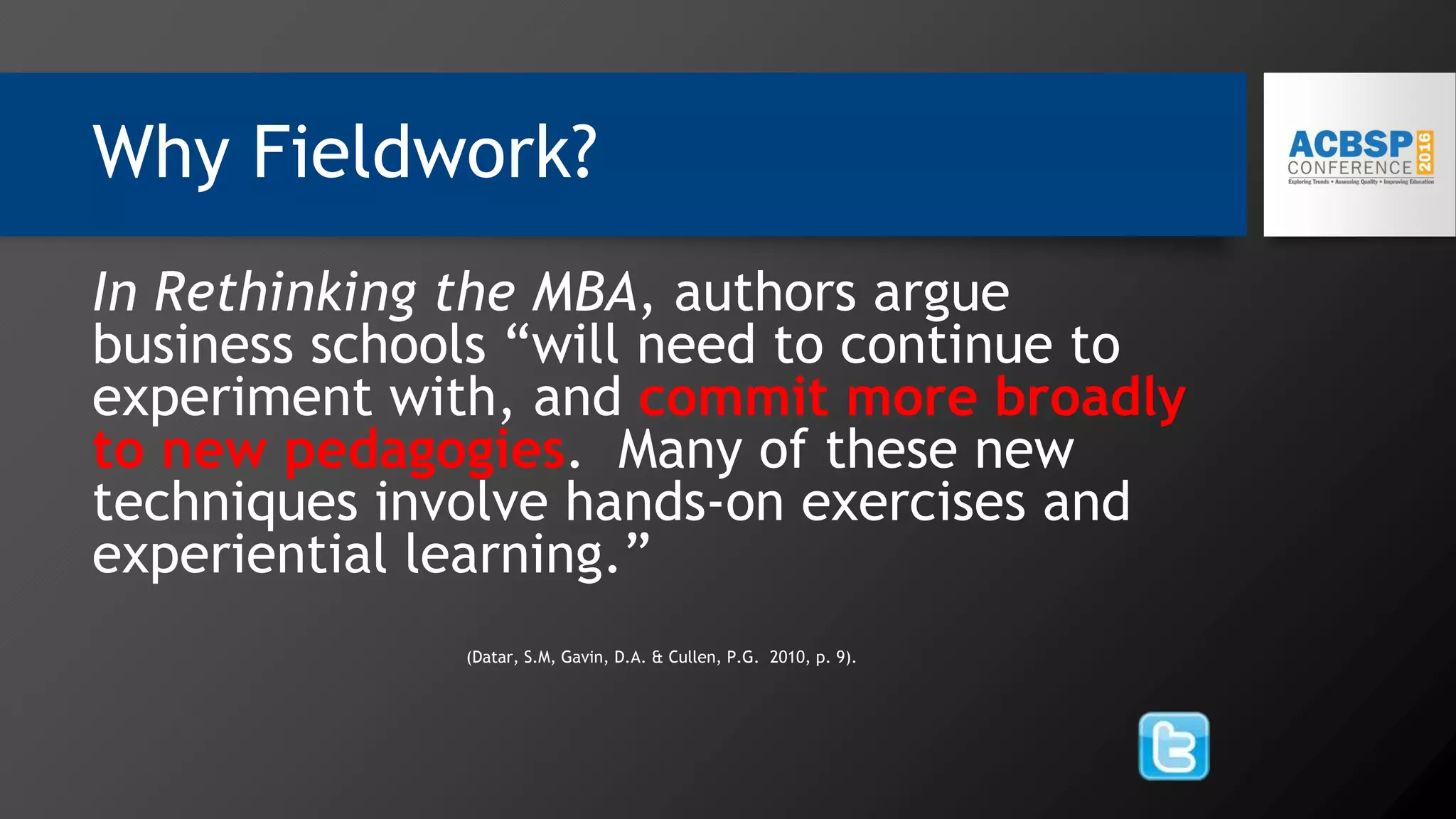
In Rethinking the MBA, authors argue
business schools “will need to continue to
experiment with, and commit more broadly
to new pedagogies. Many of these new
techniques involve hands-on exercises and
experiential learning.”
(Datar, S.M, Gavin, D.A. & Cullen, P.G. 2010, p. 9).
IDEO: The Deep Dive
IDEO Video
@ACBSPAccredited #ACBSP2016
Design Thinking
@ACBSPAccredited #ACBSP2016
“Design thinking is a human-centered
approach to innovation that draws from the
designer's toolkit to integrate the needs of
people, the possibilities of technology, and
the requirements for business success.”
—Tim Brown, CEO & president
3 Guiding Principles
•Inspiration
•Ideation
•Implementation
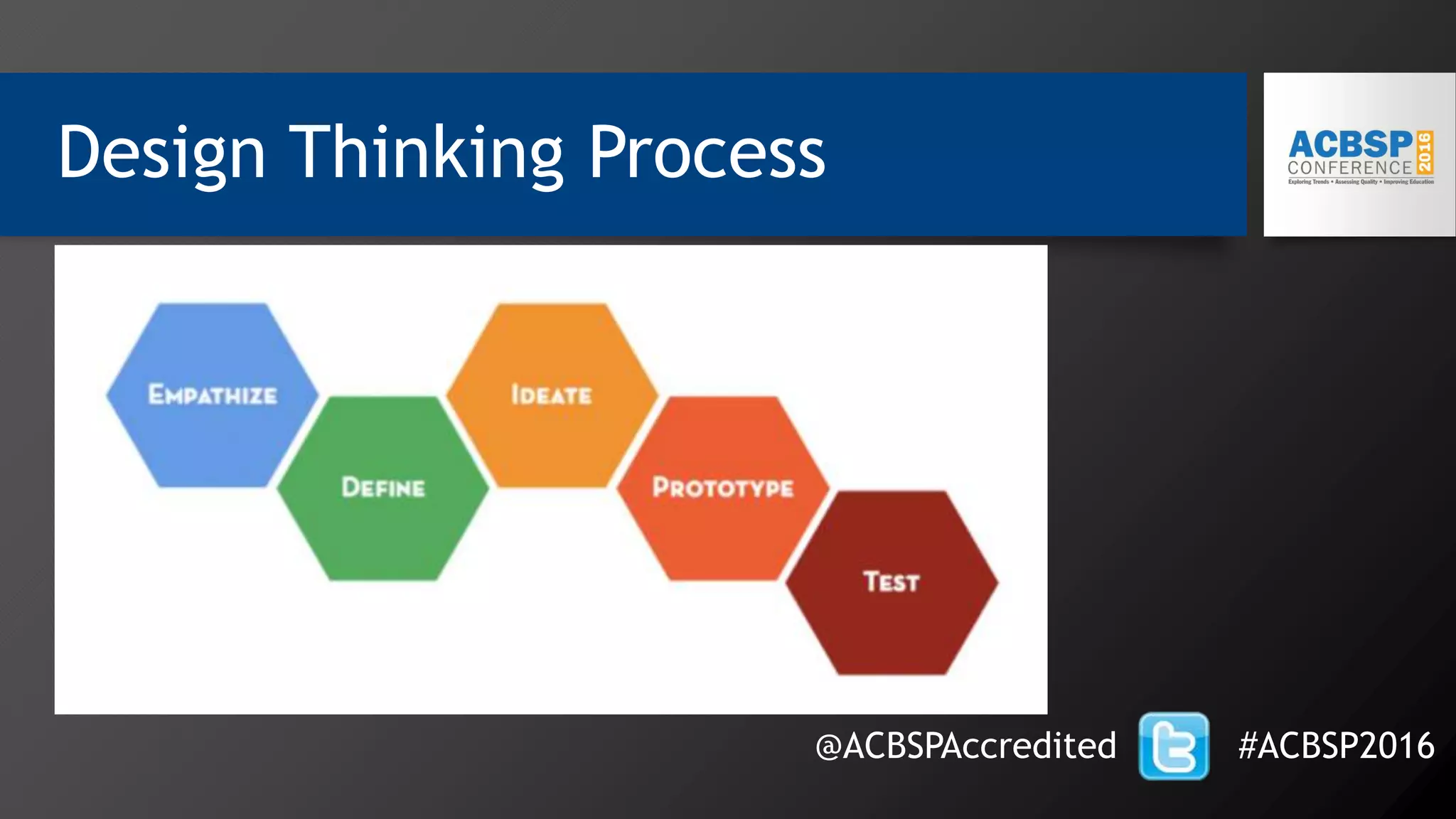
Design Thinking Process
@ACBSPAccredited #ACBSP2016
Fieldwork Project Overview
 Organization:
 Blue Haze Elementary Parent Teacher Association (PTA)
 How/Why Chosen:
 The PTA needed a non-cost professional group to help
evaluate and resolve its issue/problem, and we needed a
design challenge fieldwork project for a grade.
 Issue/Problem:
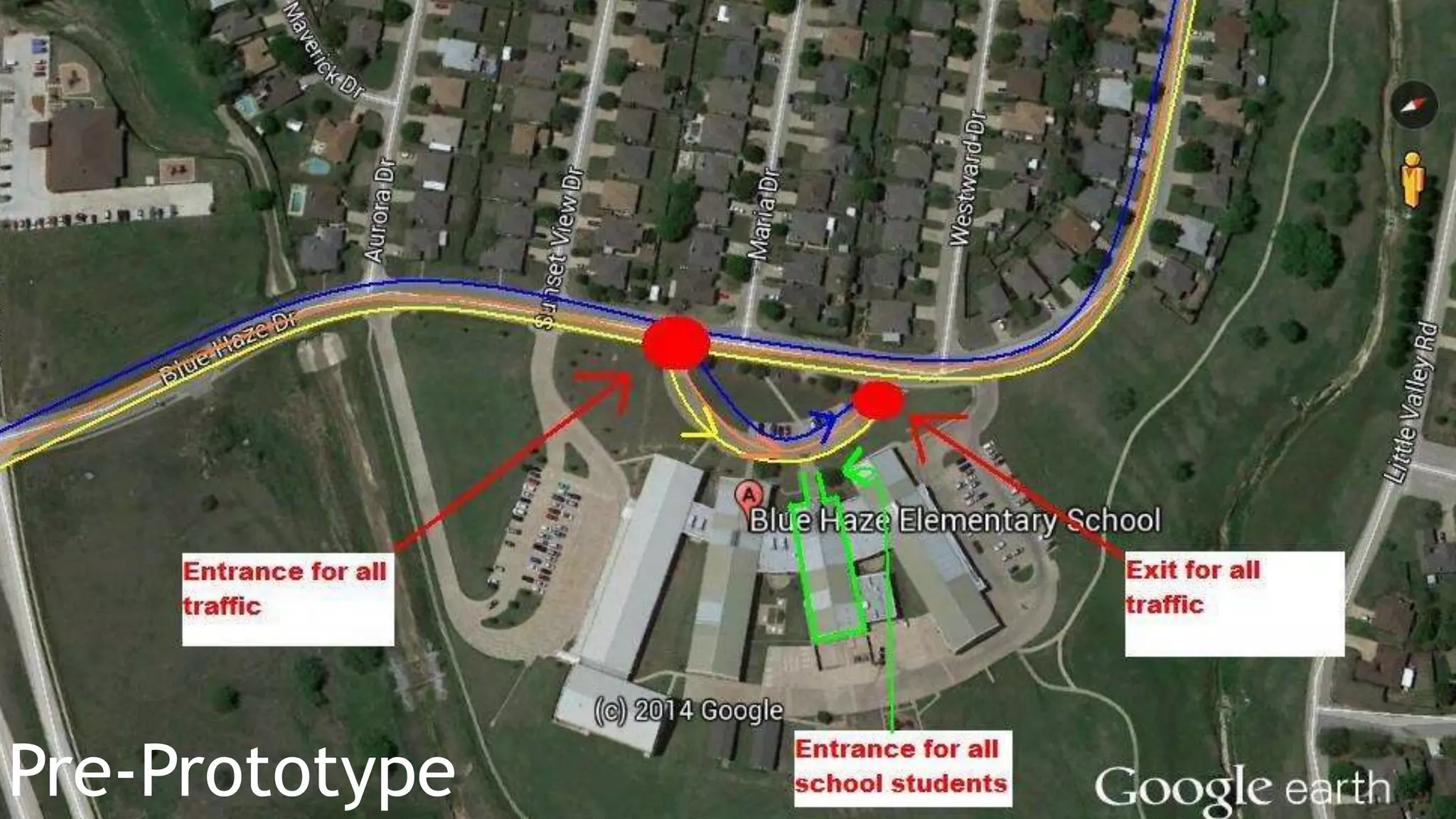
 Blue Haze Elementary tardy students percentages increased
significantly after district busing was eliminated and parents
were forced to drop-off and pick-up students. The
administration asked the PTA to recommend a strategy to
reduce or eliminate excessive tardiness.
Empathy
 How does the problem impact the end-user?
 Reduced federal and state funding support.
 Class interruptions.
 Administrative burden.
Define
 Who is the end-user and why were they chosen?
 Blue Hayes Elementary Administration
o Students
o Parents
o Teachers
o Support staff
o Administrators
Ideate
What were some of the options considered?
Private busing, car pooling, tougher consequences
for excessive tardiness.
Surveys to parents, teachers, support staff and
administrators.
Ideate
 Actions performed.
 Sent out surveys.
 Survey findings revealed a strong correlation between tardiness and
increased traffic congestion at the school.
 Observed current traffic flow conditions over multiple periods.
 Rejected private busing, car pooling, and tougher consequences for excessive
tardiness after determining that traffic flow observations support survey
findings.
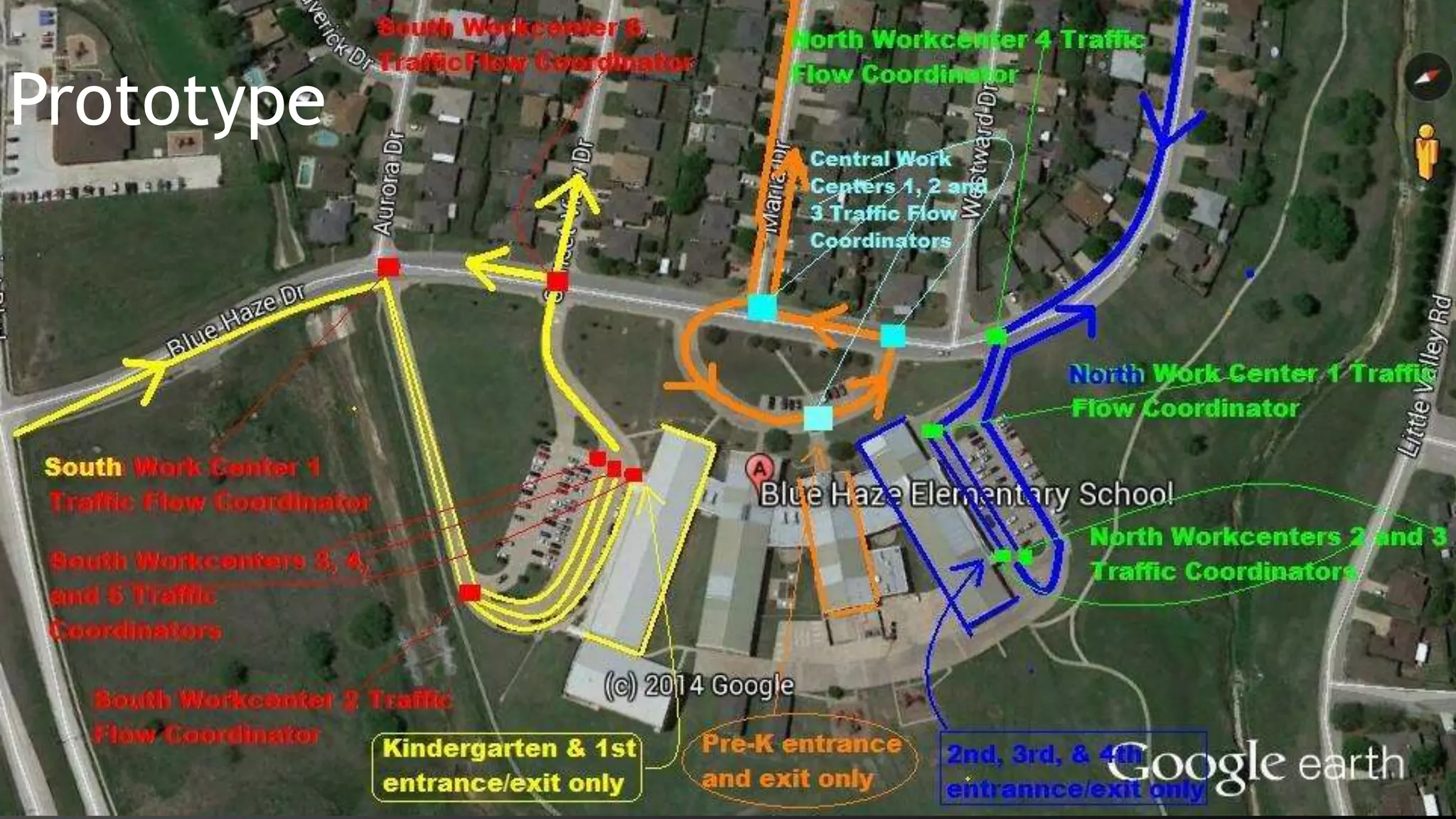
 Shared survey findings, observation results, and solution/recommendation
(prototype) with the PTA.
Pre-Prototype
Prototype
Test
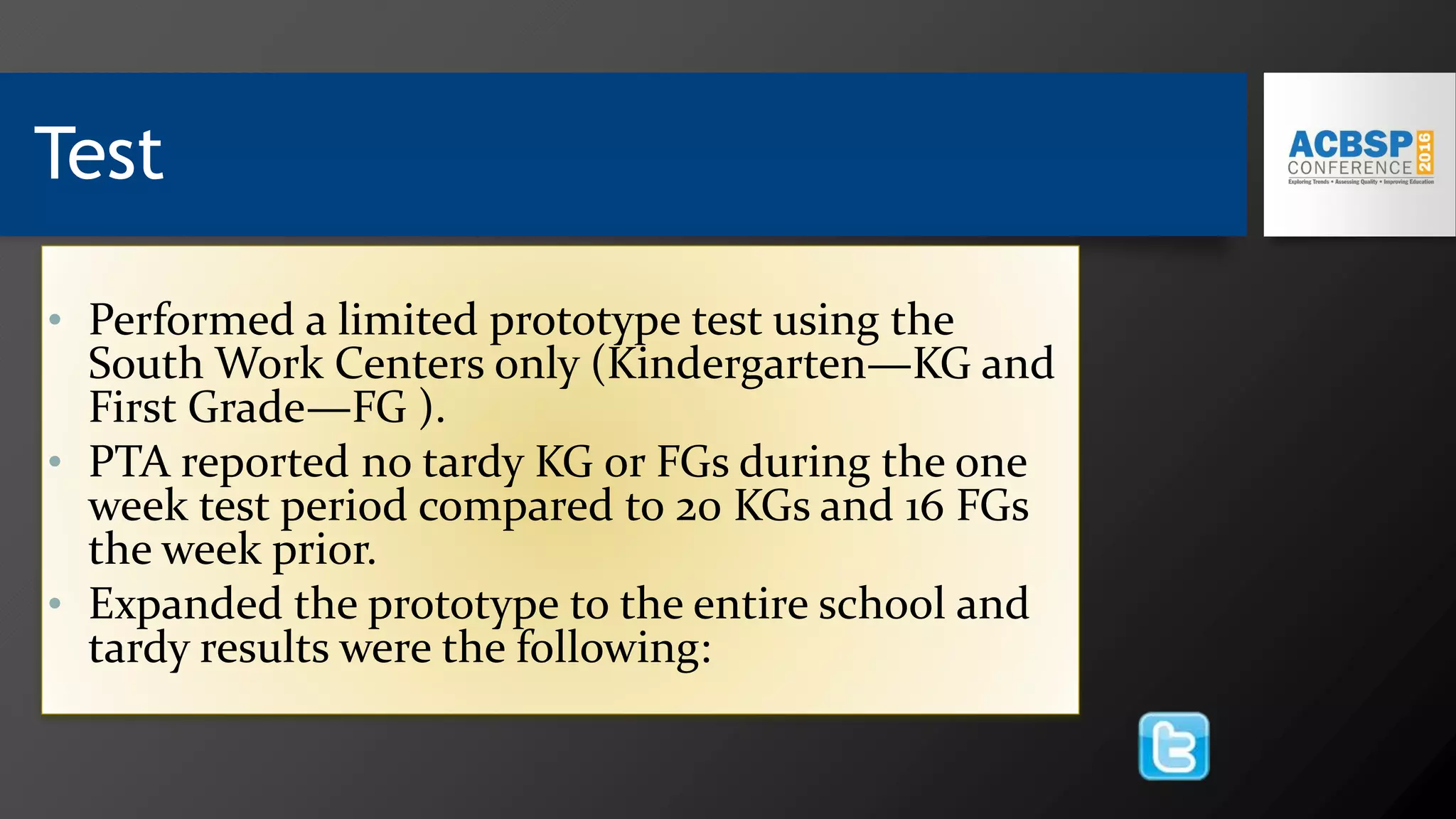
• Performed a limited prototype test using the
South Work Centers only (Kindergarten—KG and
First Grade—FG ).
• PTA reported no tardy KG or FGs during the one
week test period compared to 20 KGs and 16 FGs
the week prior.
• Expanded the prototype to the entire school and
tardy results were the following:
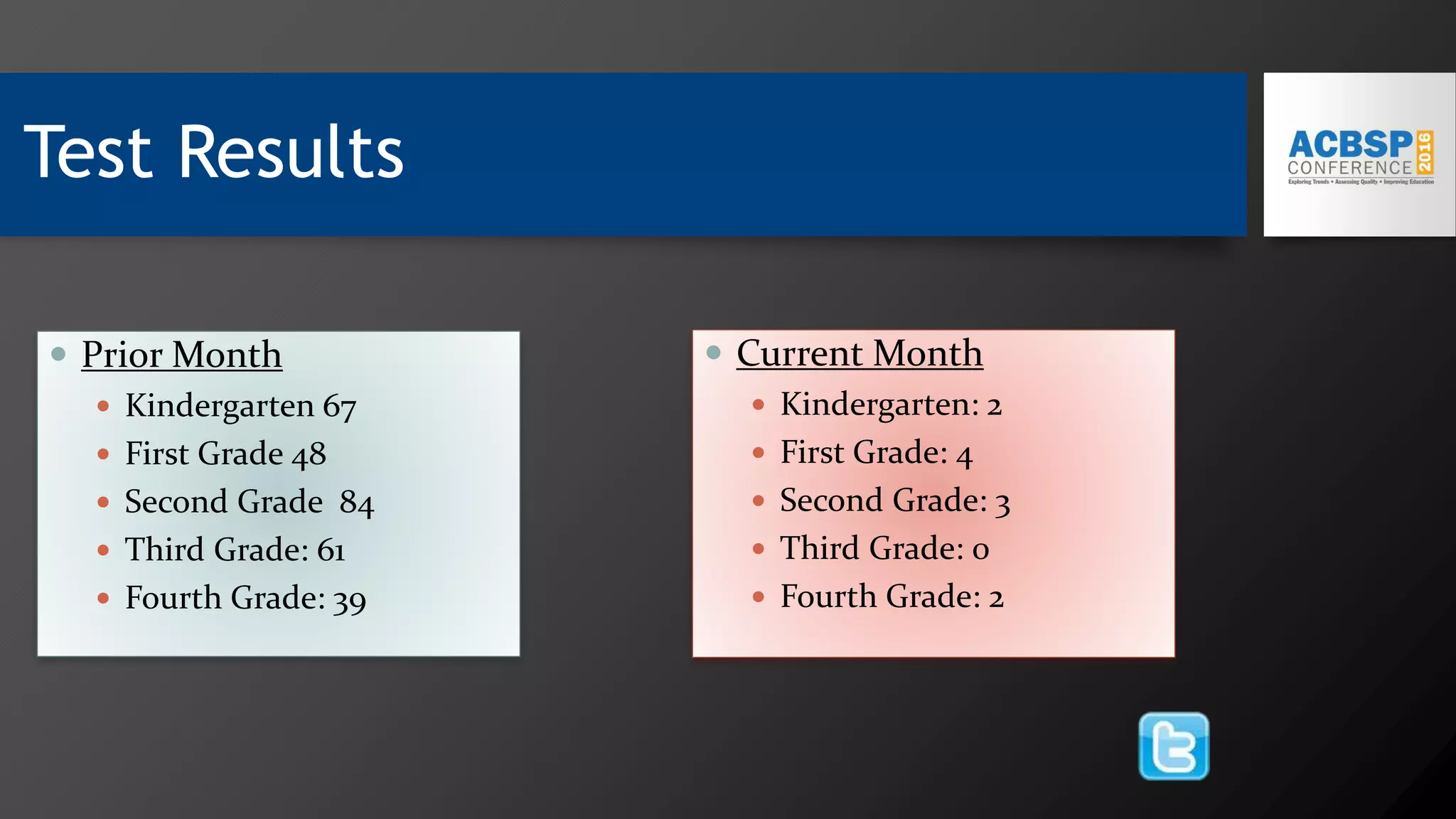
Test Results
 Current Month
 Kindergarten: 2
 First Grade: 4
 Second Grade: 3
 Third Grade: 0
 Fourth Grade: 2
 Prior Month
 Kindergarten 67
 First Grade 48
 Second Grade 84
 Third Grade: 61
 Fourth Grade: 39
Benchmarking
 Northwood University – MBA Fieldwork Consulting
 Harvard Business School – FIELD Method
 Rutgers Business School – Team Consulting
 University of California Riverside – Fieldwork in Management
 Tuck School of Business – Global Consulting Project
Q&A
Contact Information
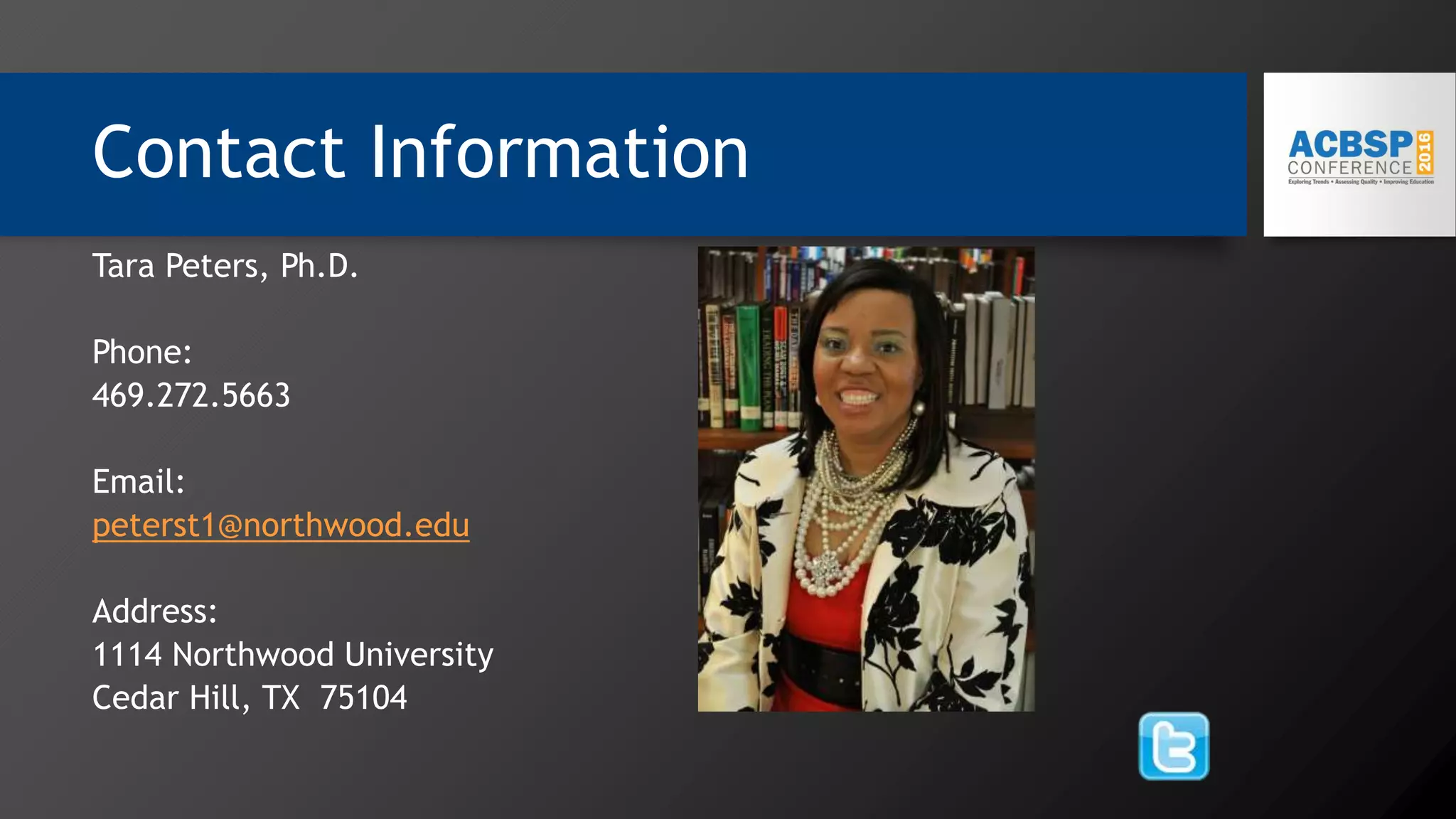
Tara Peters, Ph.D.
Phone:
469.272.5663
Email:
peterst1@northwood.edu
Address:
1114 Northwood University
Cedar Hill, TX 75104

Demonstrating the Application of Design Thinking Methodology in MBA Fieldwork Consulting

  • 1.
    Demonstrating the Applicationof Design Thinking Methodology in MBA Fieldwork Consulting Tara Peters, Ph.D. Associate Professor Northwood University DeVos Graduate School of Management @ACBSPAccredited #ACBSP2016
  • 2.
    Overview •Understand empirical rationalefor fieldwork •Explore Design Thinking Methodology (DTM) •Review application of DTM to MBA fieldwork consulting projects
  • 3.
    Why Fieldwork? Fieldwork isan empirically-based pedagogy business school faculty can incorporate into their courses to facilitate student development of competencies that will enable our graduates to meet the evolving needs of business. @ACBSPAccredited #ACBSP2016
  • 4.
    Why Fieldwork? One ofthe ways in which scholars theorize is by conducting rigorous, high-quality fieldwork. Collecting original data in real organizations makes fieldwork different not only from desk research in general but also from working with computer simulations, laboratory experiments, and secondary databases. Fieldwork is challenging and rewarding because it occurs outside controlled settings; employs a more idiographic, open-ended research mode (McCall, 2006); and has no prespecified algorithms for producing it (Gephart, 2004)—it is “a journey that may involve almost as many steps backward as forward” (Edmondson & McManus, 2007: 1173) (As cited in Michailova, S, Piekkari, R, Plakoyiannaki, E. Ritvala, T., Mihailova, I., & Salmi, A., 2014). @ACBSPAccredited #ACBSP2016
  • 5.
    Why Fieldwork? In Rethinkingthe MBA, authors argue business schools “will need to continue to experiment with, and commit more broadly to new pedagogies. Many of these new techniques involve hands-on exercises and experiential learning.” (Datar, S.M, Gavin, D.A. & Cullen, P.G. 2010, p. 9).
  • 6.
    IDEO: The DeepDive IDEO Video
  • 8.
  • 9.
  • 10.
  • 11.
    Design Thinking @ACBSPAccredited #ACBSP2016 “Designthinking is a human-centered approach to innovation that draws from the designer's toolkit to integrate the needs of people, the possibilities of technology, and the requirements for business success.” —Tim Brown, CEO & president
  • 12.
  • 13.
  • 14.
    Fieldwork Project Overview Organization:  Blue Haze Elementary Parent Teacher Association (PTA)  How/Why Chosen:  The PTA needed a non-cost professional group to help evaluate and resolve its issue/problem, and we needed a design challenge fieldwork project for a grade.  Issue/Problem:  Blue Haze Elementary tardy students percentages increased significantly after district busing was eliminated and parents were forced to drop-off and pick-up students. The administration asked the PTA to recommend a strategy to reduce or eliminate excessive tardiness.
  • 15.
    Empathy  How doesthe problem impact the end-user?  Reduced federal and state funding support.  Class interruptions.  Administrative burden.
  • 16.
    Define  Who isthe end-user and why were they chosen?  Blue Hayes Elementary Administration o Students o Parents o Teachers o Support staff o Administrators
  • 17.
    Ideate What were someof the options considered? Private busing, car pooling, tougher consequences for excessive tardiness. Surveys to parents, teachers, support staff and administrators.
  • 18.
    Ideate  Actions performed. Sent out surveys.  Survey findings revealed a strong correlation between tardiness and increased traffic congestion at the school.  Observed current traffic flow conditions over multiple periods.  Rejected private busing, car pooling, and tougher consequences for excessive tardiness after determining that traffic flow observations support survey findings.  Shared survey findings, observation results, and solution/recommendation (prototype) with the PTA.
  • 19.
  • 20.
  • 21.
    Test • Performed alimited prototype test using the South Work Centers only (Kindergarten—KG and First Grade—FG ). • PTA reported no tardy KG or FGs during the one week test period compared to 20 KGs and 16 FGs the week prior. • Expanded the prototype to the entire school and tardy results were the following:
  • 22.
    Test Results  CurrentMonth  Kindergarten: 2  First Grade: 4  Second Grade: 3  Third Grade: 0  Fourth Grade: 2  Prior Month  Kindergarten 67  First Grade 48  Second Grade 84  Third Grade: 61  Fourth Grade: 39
  • 23.
    Benchmarking  Northwood University– MBA Fieldwork Consulting  Harvard Business School – FIELD Method  Rutgers Business School – Team Consulting  University of California Riverside – Fieldwork in Management  Tuck School of Business – Global Consulting Project
  • 24.
  • 25.
    Contact Information Tara Peters,Ph.D. Phone: 469.272.5663 Email: peterst1@northwood.edu Address: 1114 Northwood University Cedar Hill, TX 75104