DEMATERIALISATION SYSTEM IN INDIA
AIMAN ABID 2606
NAYEEM KHAN 2578
RUMANA SHAH 2597
SHARIQ ALTAF 2595
UMER ASHRAF 2618
DEPARTMENT OF COMMERCE
ISLAMIA COLLEGE OF SCIENCE AND COMMERCE
Supervisor: Prof. Dr MOHMED AMIN MIR.
OCTOBER 2017
Contents
1 INTRODUCTION 5
1.1 COMPARISON OF DEPOSITORY SYSTEM WITH PHYSICAL
SHARE SYSTEM . . . . . . . . . . . . . . . . . . . . . . . . . 6
1.1.1 DEPOSITORY . . . . . . . . . . . . . . . . . . . . . . . . 7
1.1.2 DEMATERIALIZATION - THE CORE ACTIVITY OF
DEPOSITORY . . . . . . . . . . . . . . . . . . . . . . . . 8
2 DEPOSITORIES IN INDIA 9
2.1 NATIONAL SECURITIES DEPOSITORY LTD. (NSDL) . . . . . 9
2.2 BASIC SERVICES . . . . . . . . . . . . . . . . . . . . . . . . . 10
2.3 CENTRAL DEPOSITORY SERVICES LTD. (CDSL) . . . . . . . 10
2.4 DEPOSITORY PARTICIPANTS . . . . . . . . . . . . . . . . . . 11
2.4.1 CHARGES PRESCRIBED BY THE NSDL . . . . . . . . . 12
2.4.2 ACCOUNT OPENING CHARGES . . . . . . . . . . . . . 12
2.4.3 CUSTODY CHARGES . . . . . . . . . . . . . . . . . . . . 13
2.4.4 TRANSACTION CHARGES . . . . . . . . . . . . . . . . 13
2.4.5 REMATERIALISATION CHARGES . . . . . . . . . . . . 13
2.4.6 OTHER CHARGES . . . . . . . . . . . . . . . . . . . . . 14
3 DEMATERIALIZATION 15
3.1 PROCESS OF DEMATERIALIZATION . . . . . . . . . . . . . 16
3.2 MANDATORY REQUIREMENTS . . . . . . . . . . . . . . . . . 16
3.2.1 PROCEDURE OF OPENING A DEMAT ACCOUNT . . . 17
3.3 BENEFITS OF A DEMAT ACCOUNT . . . . . . . . . . . . . . 17
3
4 CONCLUSION 19
5 RECOMMENDATIONS 23
Bibliography 25
4
Chapter 1
INTRODUCTION
In this new era of change and transformation, where time zones have
disappeared and distance does not matter anymore, each and every
aspect of our life is being governed by knowledge-driven technology
and communication. Even in a developing country like India, where
nearly 33% of the population still lives below the poverty line, we can
observe the transformation of the country from an agricultural and
industrial economy, into knowledge and information-based economy.
India has had a vibrant capital market that is more than a century old,
and the Indian shareholders are very much involved in it, which has
largely contributed to its economic growth and development. Two of the
major share markets in India, BSE and NSE, are widely reflective of the
pattern of growth of the Indian economy. We can see that a large
numbers of players are stepping into the share bazaar with an
expectation of reaping huge benefits – some for long-term investment
purposes and others for windfall profits. Most of these new players are
tech-savvy and constantly in shortage of time. Modernization in the
trading and settlement system has been witnessed in the capital market
through automated trading mechanism of Demat. The advent of
Electronic trading and settlement has brought in transparency in trading
and has eliminated risks associated with Bad Delivery and handling
huge load of paperwork. The country has made a remarkable growth in
the capital market by switching over to electronic trading. Indian
investor community has undergone sea changes in the past few years.
5
India now has a very large investor population and ever increasing
volumes of trades.However; this continuous growth in activities has also
increased problems associated with stock trading. Most of these
problems arise due to the intrinsic nature of paper based trading and
settlement, like theft or loss of share certificates. This system requires
handling of huge volumes of paper leading to increased costs and
inefficiencies. Risk exposure of the investor also increases due to this
trading in paper. Your money may be held in the form of liquid cash at
your home or may be deposited in a bank. The bank holds your funds
in the electronic form and subsequently debits or credits the account,
depending on your issuance of cheques or deposit of cheques. The
advantages of safety and convenience of dealing with a bank overweigh
the reasons for holding liquid cash in your home. Your financial assets
such as Equity Shares may be compared to the above example. You
may hold physical share certificates in your home and be exposed to
the various risks of lack of safety, mutilation, loss etc.Alternatively; you
may deposit your shares in an organization called a Depository, which
holds your shares in the electronic form. A Depository is a securities
"bank," where dematerialized physical securities are held in custody,
and from where they can be traded. This facilitates faster, risk-free and
low cost settlement. Thus, a Depository is akin to a bank and performs
activities similar in nature.
1.1 COMPARISON OF DEPOSITORY SYSTEM WITH PHYSICAL
SHARE SYSTEM
• The risk of loss, mutilation is common for physical certificates and
completely removed in electronic shares.
• Handling of a large number of physical certificates is ended in the
Depository mode.
• In the electronic segment, there are no bad delivers as in physical
segment.
6
• There is no stamp duty payable in electronic shares compared to
the duty of 0.50
• In loans against shares, banks usually charge a lower interest rate
and margin money than in the physical share certificates.
• Settlements in the Stock Exchanges have commenced in the elec-
tronic segment and have proven to be far more efficient and conve-
nient compared to physical shares.
1.1.1 DEPOSITORY
Depository means a company formed and registered under the
Companies Act, 1956 and which has been granted a certificate of
registration under sub-section (1A) of section 12 of the Securities
Exchange Board of India Act, 1992. A Depository is an Organization
which holds Securities in Dematerialized Form i.e. by way of Electronic
Records and which enables Securities Transactions to be processed by
Book Entry, at the request of the shareholder. This eliminates the
physical form of holding. A Depository can be compared to a bank,
which holds securities, such as shares, debentures, bonds,
Government Securities, units etc., of investors in an electronic form.
Besides holding securities, it also provides services related to
transactions in securities. A Depository interacts with the investors
through its agents called Depository Participants (DPs). If an investor
wants to avail the services offered by the Depository, he/she has to
open an account with a DP. This is similar to opening an account with
any branch of a bank, in order to utilize the bank’s services. The
Depository is obligated to maintain the Client Holdings,enable Demat
and Remat of eligible securities, disbursement of corporate benefits,
and effect settlement of securities traded.
7
1.1.2 DEMATERIALIZATION - THE CORE ACTIVITY OF DEPOSITORY
The Dematerialization is back bone of the Depository .The term
depository is explained as “a depository is an Organization which holds
Securities in Dematerialized Form i.e. by way of Electronic Records
which enables Securities Transactions to be processed by Book Entry”.
The Section 9 (1) of Depositories Act, 1996 state, “all securities held by
a depository shall be dematerialized and shall be in a fungible form ",
which implies that without dematerialization the depository cannot
function. At present, there are two Depositories in India, National
Securities Depository Limited (NSDL) and Central Depository Services
(CDSL).
8
Chapter 2
DEPOSITORIES IN INDIA
2.1 NATIONAL SECURITIES DEPOSITORY LTD. (NSDL)
National Securities Depositories Ltd. (NSDL) was set up as the first
depository in the country having various depository participants
registered with it. NSDL was inaugurated on 8th November 1996. It
was set up with an initial capital of Rs.124 crore, promoted by Industrial
Development Bank of India (IDBI), Unit Trust of India (UTI). National
Stock Exchange of India Ltd. (NSEIL) and the State Bank of India (SBI).
The actual trading in dematerialized securities started at National Stock
Exchange on 26thDecember 1996. Although India had a vibrant capital
market, which is more than a century old, the paper based settlement
of trades caused substantial problems like bad delivery anddelayed
transfer of title till recently. The enactment of Depositories Act in August
1996 paved the way for establishment of NSDL, the first depository in
India. This depository promoted by institutions of national stature
responsible for economic development of thecountry has since
established a national infrastructure of international standard
thathandles most of the trading and settlement in dematerialized form in
Indian capital market. Using innovative and flexible technology systems,
NSDL works to support the investors and brokers in the capital market
of the country. NSDL aims at ensuring the safety and soundness of
Indian marketplaces by developing settlement solutions that increase
efficiency, minimize risk and reduce costs. NSDL plays a quiet but
central role in developing products and services that will continue to
9
nurture the growing needs of the financial services industry. In the
depository system, securities are held in depository accounts, which is
more or less similar to holding funds in bank accounts. Transfer of
ownership of securities is done through simple account transfers. This
method does away with all the risks and hassles normally associated
with paperwork. Consequently, the cost of transacting in depository
environment is considerably lower as compared to transacting in
certificates.
2.2 BASIC SERVICES
Under the provisions of the Depositories Act, NSDL provides various
services to investors and other participants in the capital market like,
clearing members, stock exchanges, banks and issuers of securities.
These include basic facilities like account maintenance,
dematerialization, re-materialisation, settlement of trades through
market transfers, off market transfers inter-depository transfers,
distribution of non-cash corporate actions and nomination/transmission.
The Depository System, which links the issuers, depository participants
(DPs), NSDL and Clearing Corporation/ clearing house of stock
exchanges, facilitates holding of securities in dematerialized form and
effects transfers by means of account transfers. This system, which
facilitates scrip less trading, offers various direct and indirect benefits to
the market participants.
2.3 CENTRAL DEPOSITORY SERVICES LTD. (CDSL)
The second depository, Central Depository Services (India), was
promoted by the Stock Exchange, Mumbai (BSE) jointly with leading
banks such as State Bank of India, Bank of India, Bank of Baroda,
HDFC Bank, Standard Chartered Bank, Union Bank of India and
Centurion Bank. CDSL got the certificate of commencement on 8th
February1999 and commenced limited operations at Bombay Stock
Exchange, of opening accounts and processing Demat request from
10
22nd March 1999. The initial capital of the company is Rs.104.50
crores All leading stock exchanges like the National Stock Exchange,
Calcutta Stock Exchange, Delhi Stock Exchange, the Stock Exchange
of Ahmedabad, etc have established connectivity with CDSL.CDSL was
set up with the objective of providing convenient, dependable and
secure depository services at affordable cost to all market participants.
Some of the important milestones of CDSL system are:
• CDSL received the certificate of commencement of business from
SEBI in February 1999.
• Honorable Union Finance Minister, Shri Yashwant Sinha flagged off
the operations of CDSL on July 15, 1999.
• Settlement of trades in the Demat mode through BOI Shareholding
Limited, the clearinghouse of BSE, started in July 1999.
• As at the end of July 2003, over 4600 issuers have admitted their se-
curities (equities, bonds, debentures, and commercial papers), units
of mutual funds, certificate of deposits etc. into the CDSL system.
2.4 DEPOSITORY PARTICIPANTS
The operations in the Depository System involve the participation of a
Depository, Depository Participants, Company/Registrars and Investors.
NSDL provides its services to investors through its intermediary called
depository participants (DPs). Depository Participant is the agent of the
Depository and is the medium through which the shares are held in the
electronic form. They are also the representatives of the investor,
providing the link between the investor and the company through the
Depository. These agents are appointed by NSDL with the approval of
SEBI. According to SEBI regulations, amongst others, three categories
of entities i.e. Banks, Financial Institutions and Members of Stock
Exchanges [brokers] registered with SEBI can become DPs. All the
DPs are appointed subject to fulfillment of uniform requirements of
SEBI (Depositories and Participants) Regulations, 1996 and
11
requirements of NSDL. However, the type of services offered and the
service standards may differ among various DPs. For example, a DP
branch having direct connectivity with the main office having depository
set-up may be in a position to execute instructions faster.
2.4.1 CHARGES PRESCRIBED BY THE NSDL
Charges prescribed by the NSDL are as follows:
1. Account Opening Charges
2. Custody Charges
3. Transaction Charges.
4. Rematerialisation Charges.
5. Other Charges.
2.4.2 ACCOUNT OPENING CHARGES
Clause No.1 stipulates that the client shall pay the charges to the
Depository Participant for the purpose of opening maintaining his
account.
• Account Maintaining Charges:
This clearly means that charges paid by the clients for Opening of
Accounts also covers Account Maintaining Charges as well. Depos-
itory Participants can collect either Accounts Opening Charges or
Account Maintain Charges. But in no case Client should be made li-
able to pay both the Charges that to Account Maintenance Charges
on Periodically.
• Annual Membership Charges:
Without clearly specifying the difference between Accounts Mainte-
nance Charges, the same charge is recovered under the different
nomenclature as Annual Membership Charges. Depository Environ-
ment had actually provided Depository Participants with free hand
12
to Charge same Charge time again under different nomenclature
as per their own will.
2.4.3 CUSTODY CHARGES
No periodicity for collecting these charges is fixed by the NSDL. Hence
some Depository Participants are collecting Custody Charges at
Quarterly Interval some are collecting at Yearly Interval. Collection at
Quarterly Interval has an effect of compounding nature. Again at NSDL
“scale of Custody Charges varies from one Depository Participant to
another Depository Participant as per our contention the Custody
Charges are recovered twice from the Beneficial Account Holder. First,
through issuer where in the Beneficial Account Holder is a Share-Holder
when this issuer pays to the Depository One Time Custody Charges.
Secondly, in spite of paying one time custody charges, the Beneficial
Account holder are again made to pay custody charges to the
Depository Participants as a Client. The absolute minimum custody
charge is another ploy to recover much more than the applicable rate.
2.4.4 TRANSACTION CHARGES
The DP levies these charges for effecting Credit or Debit to the Clients
Accounts. A) Non-Scheduled Charges of Dematerialization. The
Schedule “A” at Annexure “B” has not prescribed this sort of Charges,
which referred as Charges of Dematerialization. The NSDL business
rule has prescribed fee for dematerialization rematerialisation asunder:
The Depository on Dematerialization requests shall charge no fee.
However, in case of Rematerialisation, a fee at the rate of 0.10% of the
value of the securities requested for rematerialisation or Rs.10/- per
certificate, whichever is higher will be charged.
2.4.5 REMATERIALISATION CHARGES
This charges becomes payable at the time of Beneficial Owner Opting
to withdraw from the Depository Environment requires his Securities in
Physical Mode.
13
2.4.6 OTHER CHARGES
These Charges are actually designed to carter need of Depository
Participants, for providing extra facilities i.e. more than outside
statutory obligation to the Client. Some banks which are also
Depository Participants are asking the Account Holder to keep Fixed
Deposit linked with Depository Account, before opening of accounts in
depository. This clearly shows that in reality , with the protection of
Business Rule : 5.3 ,each every charges outside the prescribed set of
charges at Annexure " B " - Schedule" A " is classified under this head.
Use Link for Complete Annexure “B” with Schedule "A" as prescribed
by NSDL. Only solidarity of Beneficial Owner will provide the justice
from Other Charges.
14
Chapter 3
DEMATERIALIZATION
Demat is a commonly used abbreviation of Dematerialization, which is
a process whereby securities like shares, debentures are converted
from the "material" (paper documents) into electronic data and stored in
the computers of an electronic Depository. Securities registered in your
name are surrendered to depository participant (DP) and these are
sent to the respective companies who will cancel them after
“Dematerialization” and credit your depository account with the DP. The
securities on Dematerialization appear as balances in your depository
account. These Balances are transferable like physical shares. If at a
later date, you wish to have these “Demat" securities converted back
into paper certificates, the Depository helps you to do this by a process
called Rematerialization. By dematerialization of shares the
cumbersome process of paper work is eliminated. It offers scope for
paperless trading through state-of-the-art technology, whereby share
transactions and transfers are processed electronically without involving
any share certificate or transfer deed after the share certificates have
been converted from physical form to electronic form. Dematerialization
of shares is optional and an investor can still hold shares in physical
form. However, he/she has to demat the shares if he/she wishes to sell
the same through the Stock Exchanges. Similarly, if an investor
purchases shares, he/she will get delivery of the shares in Demat form.
15
3.1 PROCESS OF DEMATERIALIZATION
Prescribed Demat Request Form (DRF) needs to be filled in by the
client who wishes to convert the physical shares into Demat form.
Client should verify whether the scrip, he wishes to Demat, is listed on
NSDL or not. Only those scrips that are listed can be given for
dematerialization. The list of tentative scrips listed on NSDL is made
available to the branch. The same can be downloaded from NSDL’s
Internet site also, viz.www.nsdl.com. The client should also deface the
share certificates with the rubber stamp stating “SURRENDERED FOR
DEMATERIALISATION". The said stamp is made available to the
branch to facilitate the client to use the same. Also the said shares
should be punched with minimum two holes on / near the name of the
Company Separate DRF needs to be filled in per account per scrip.
The said DRF, received by the branch from the client, should be verified
for mandatory requirements in the DRF and also should verify the
Physical shares. The details mentioned on DRF needs to tally with the
physical shares and that the said shares are properly defaced with the
required stamp and holes. The complete form with share certificates
should be send to Ho for further processing. Normal process of
completion of the Demat is 20 to 30 days. As per NSDL Bye Law, Client
in relation to a Participant means a Beneficial Owner who has opened
an account with the participant has entered into the agreement in
accordance with the provision of Chapter 6 of NSDL Bye Laws.
3.2 MANDATORY REQUIREMENTS
Firstly the client has to open an account with a Depository Participant
and get a unique Client ID number. Thereafter, he has to fill the
Dematerialization Request Form (DRF) provided by the DP and
surrender the shares in physical form to the DP. The Depository
participant on receipt of the above documents will send an electronic
request to the companies through the Depository for confirmation of
16
demats. Each request will bear a unique transaction number. The DP
will surrender the DRF and the above-mentioned documents with a
covering letter requesting the company to confirm Demat. Thecompany
will confirm Demat to the Depository after necessary verification. This
depository will confirm the Dematerialization to DP, which is holding the
account. Then DP will credit the account with the shares so
dematerialized. The DP will hold the shares in the dematerialized form
thereafter on behalf of the client. The client will be beneficial owner of
these dematerialized shares
3.2.1 PROCEDURE OF OPENING A DEMAT ACCOUNT
Following is the procedure of opening a Demat account:
• Choose a DP.
• Fill up an account opening form provided by DP, and sign an agree-
ment with DP in a standard format prescribed by the depository.
• DP provides the investor with a copy of the agreement and sched-
ule of charges for his future reference. DP opens the account and
provides the investor with a unique account number, also known as
Beneficiary Owner Identification Number (BOID).
3.3 BENEFITS OF A DEMAT ACCOUNT
In the depository system, the ownership and transfer of securities takes
place by means of electronic book entries. This provides numerous
benefits. Dealing in physical securities is open to risks like theft of
stocks, mutilation of certificates and loss of certificates during
movements to and from the registrars. This problem does not arise in
the depository environment. There is no stamp duty for transfer of
shares in electronic form, unlike the physical segment. In the depository
environment, once the securities are credited to your account, you
become the legal owner of the securities. There is no further need to
send it to the company’s registrar. Also, the depository provides for
17
direct credit of non-cash corporate entitlements, like rights and bonus to
your account, thereby ensuring faster disbursement and also leading to
reduction in brokerage costs. Closing an account: However, if you are
one of those who does not use the account, closing it is necessary. For
one, there yearly maintenance costs. There is also a threat that
dormant account can be used for fraudulent purposes. For the closure,
you need to submit an application with the DP. And return all unused
delivery instruction slips and pay off all the dues. Remember, a Demat
account can be closed only if there are no shares in it. By having a
Demat account, you will always an opportunity to invest in various asset
classes. These include gold ETFs and commodity futures as well.
Many investors are unable to participate in the markets because they
don’t have one.
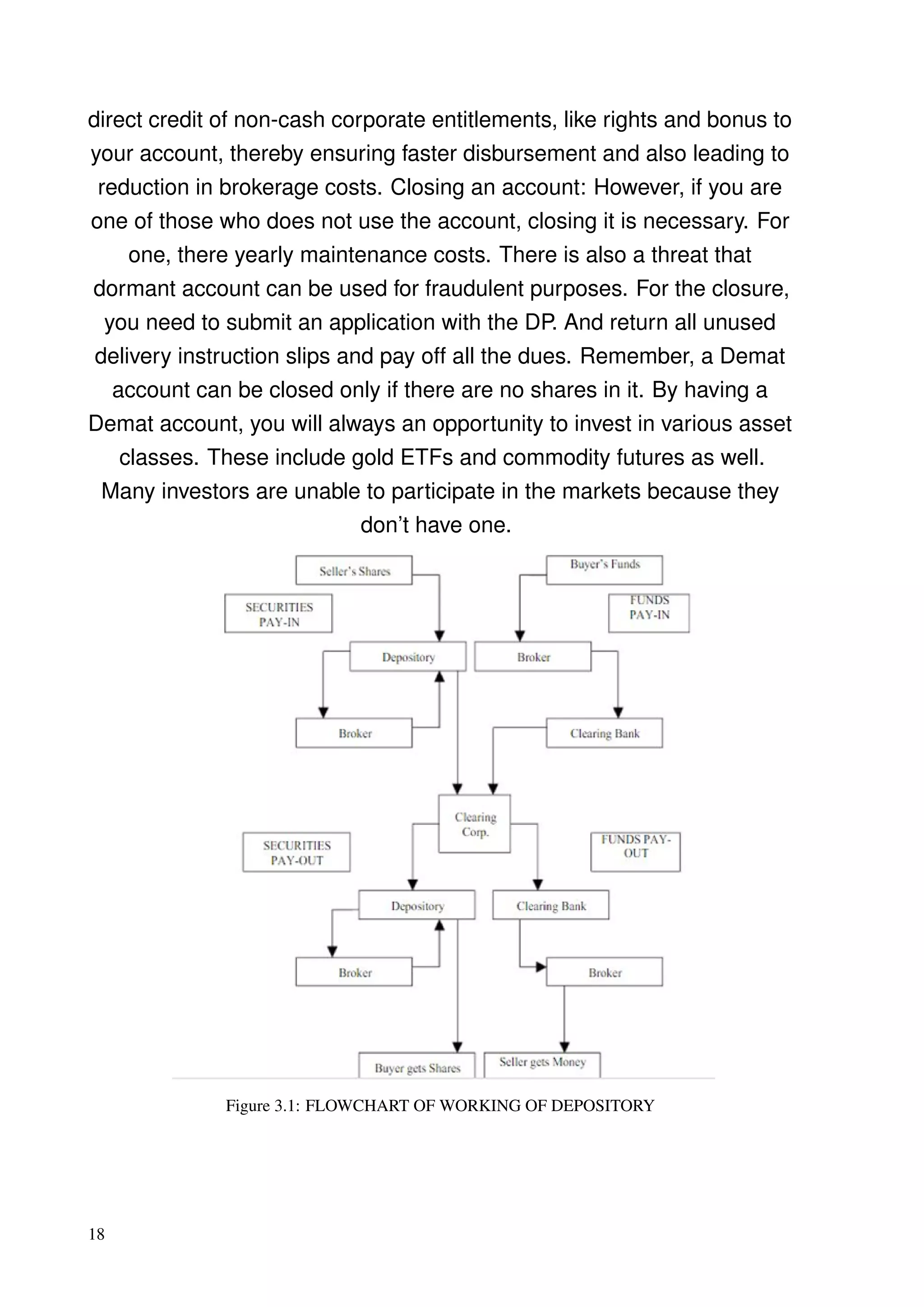
Figure 3.1: FLOWCHART OF WORKING OF DEPOSITORY
18
Chapter 4
CONCLUSION
Post 1990’s, many important policy initiatives have focused on fostering
liquidity and efficiency of the Indian Securities Market. Indian stock
markets had taken significantly less time to complete the
dematerialization task as compared to some of the developed markets.
This was mainly because of the deadlines kept by SEBI for
dematerialisation and compulsory compliance norms issued by the
regulatory authority in order to finish the entire dematerialisation
process in a time bound manner. All must appreciate that no market in
the world is both foolproof and fail proof at any point in time. Therefore,
malpractices and misconducts prevail in the Indian stock markets too,
but their degree and impact varies. The Indian Stock Markets has
encountered its fair proportion of market misconducts and malpractices
over the period of time. But, every such act that has occurred in the
Indian stock market has lifted the entire system to better standards.
The attempts of the regulators have been to improve the overall
systems by taking the appropriate cues from every such damaging
event. In short, the Indian stock market has experienced some
revolutionary changes in its functioning over the years, especially with
the introduction of dematerialisation and post dematerialisation era.
Today the Indian stock market is at par with the international standards
in the following paradigms:
• Fully dematerialised stock markets.
19
• Fully electronic and state of the art trading platform.
• Shift of the settlement cycle to T+2 rolling settlement.
• Establishment of Central Listing Authority (CLA).
The improved attractiveness of the Indian Stock Markets is the effect of
all these ongoing reforms and adoption of international standard
practices. It has already been felt and its reflection is seen in the growth
of SENSEX as well as Nifty. The enactment of Depositories Act in 1996
made by Government of India, with the objective of ensuring free
transferability of securities with speed, accuracy and security lead to an
orderly growth and development of the Indian capital market.
• Indian capital market has shown rapid growth in the last decade
with foreign investors, and more market intermediaries through elec-
tronic book entry for the transfer of securities, and settlement with
the support of Depositories, Depository Participants, Stock Exchanges,
Clearing Houses, and Registrars Transfer Agents.
• The depository model has two organizations, primarily promoted by
NSE and BSE, such as National Securities Depositary Ltd. (NSDL)
and Central Depositary Services (India) Ltd. (CDSL). Leading In-
dian Institutions are promoters of both these depositories.
• In a period of about nine years, investors have switched over to de-
mat settlement and NSDL stands at the centre of this change. CDSL
also plays a key role.
• NSDL provides the software required by depository participants, com-
panies, RT Agents and clearing corporations for conducting depos-
itory operations, the export and import facility to take out the trans-
action details.
• Use of National Exchange for Automated Trading (NEAT) with proper
up-gradation, setting up of STP Central Hub, Central Listing Author-
ity, Unique Identification Number (UIN), the facility of Direct Market
20
Access (DMA), replacing of Badla by “Rolling-Settlement, widening
of geographical coverage of depository participants of NSDL and
CDSL etc has contributed to the progress of Dematerialisation.
• There has been a growth of 6.3 times in BSE and 7.99 times at NSE
regarding the total number of shares delivered. Regarding the total
value of shares delivered the growth came to 5.19 times in BSE
and 12.77 times in NSE during the same period. 23.84 percent
of the total shares traded in NSE and 35.71 percent of the total
shares traded in BSE were delivered in the market. The variation
observed in the number and value of shares traded and delivered
clearly indicates the influence of dematerialisation process in stock
exchanges.
• Correlation coefficient between the number of shares traded (0.9591),
number of shares delivered (0.9045) and the value of shares deliv-
ered (0.9282) occurred in NSE and BSE indicated highly significant
relatedness between these variables and it is clearly identified as a
major outcome of dematerialisation
21
Chapter 5
RECOMMENDATIONS
1. Market misconducts and other fraudulent activities should be tack-
led and initiatives should be taken to prevent the recurrence of such
events in the future in order to uphold investor’s confidence in the
Indian Stock Exchanges.
2. Involvement of illegal activities such as terrorist financing, money
laundering etc that hopes the free interplay of market forces of de-
mand and supply should be monitored.
3. The Indian capital market should move to the era of T+0 settlement
mechanism in order to face the emerging global competition.
4. Further simplification of IPO process will attract new investors and
fresh money into the stock markets.
5. In order to further promote small investors, DPs should reduce De-
mat charges and account maintenance charges from them.
6. More robust software that would bring in more integration between
trading end and back end should be developed and implemented
in order to enhance real time updating of investor position in the
market.
7. Bank automation that facilitates real time clearing system should be
developed to bring in real time settlements in stock market opera-
tions.
23
8. Indian universities and leading management schools should pro-
mote and provide specializations in capital market in order to infuse
more professionalism and corporate governance.
24
Bibliography
• http://business.rediff.com/report/2010/may/03/perfin-benefits-of-a-
demat-account.htm
• https://www.scribd.com/doc/30692690/Demat-System-in-India
• https://www.cdslindia.com/
• https://nsdl.co.in
• www.investopedia.com
• www.bseindia.com
• www.nseindia.com
• www.demat.com
• www.equitymarket.com
• www.moneycontrol.com
25

Dematerialisation In India

  • 1.
    DEMATERIALISATION SYSTEM ININDIA AIMAN ABID 2606 NAYEEM KHAN 2578 RUMANA SHAH 2597 SHARIQ ALTAF 2595 UMER ASHRAF 2618 DEPARTMENT OF COMMERCE ISLAMIA COLLEGE OF SCIENCE AND COMMERCE Supervisor: Prof. Dr MOHMED AMIN MIR. OCTOBER 2017
  • 3.
    Contents 1 INTRODUCTION 5 1.1COMPARISON OF DEPOSITORY SYSTEM WITH PHYSICAL SHARE SYSTEM . . . . . . . . . . . . . . . . . . . . . . . . . 6 1.1.1 DEPOSITORY . . . . . . . . . . . . . . . . . . . . . . . . 7 1.1.2 DEMATERIALIZATION - THE CORE ACTIVITY OF DEPOSITORY . . . . . . . . . . . . . . . . . . . . . . . . 8 2 DEPOSITORIES IN INDIA 9 2.1 NATIONAL SECURITIES DEPOSITORY LTD. (NSDL) . . . . . 9 2.2 BASIC SERVICES . . . . . . . . . . . . . . . . . . . . . . . . . 10 2.3 CENTRAL DEPOSITORY SERVICES LTD. (CDSL) . . . . . . . 10 2.4 DEPOSITORY PARTICIPANTS . . . . . . . . . . . . . . . . . . 11 2.4.1 CHARGES PRESCRIBED BY THE NSDL . . . . . . . . . 12 2.4.2 ACCOUNT OPENING CHARGES . . . . . . . . . . . . . 12 2.4.3 CUSTODY CHARGES . . . . . . . . . . . . . . . . . . . . 13 2.4.4 TRANSACTION CHARGES . . . . . . . . . . . . . . . . 13 2.4.5 REMATERIALISATION CHARGES . . . . . . . . . . . . 13 2.4.6 OTHER CHARGES . . . . . . . . . . . . . . . . . . . . . 14 3 DEMATERIALIZATION 15 3.1 PROCESS OF DEMATERIALIZATION . . . . . . . . . . . . . 16 3.2 MANDATORY REQUIREMENTS . . . . . . . . . . . . . . . . . 16 3.2.1 PROCEDURE OF OPENING A DEMAT ACCOUNT . . . 17 3.3 BENEFITS OF A DEMAT ACCOUNT . . . . . . . . . . . . . . 17 3
  • 4.
    4 CONCLUSION 19 5RECOMMENDATIONS 23 Bibliography 25 4
  • 5.
    Chapter 1 INTRODUCTION In thisnew era of change and transformation, where time zones have disappeared and distance does not matter anymore, each and every aspect of our life is being governed by knowledge-driven technology and communication. Even in a developing country like India, where nearly 33% of the population still lives below the poverty line, we can observe the transformation of the country from an agricultural and industrial economy, into knowledge and information-based economy. India has had a vibrant capital market that is more than a century old, and the Indian shareholders are very much involved in it, which has largely contributed to its economic growth and development. Two of the major share markets in India, BSE and NSE, are widely reflective of the pattern of growth of the Indian economy. We can see that a large numbers of players are stepping into the share bazaar with an expectation of reaping huge benefits – some for long-term investment purposes and others for windfall profits. Most of these new players are tech-savvy and constantly in shortage of time. Modernization in the trading and settlement system has been witnessed in the capital market through automated trading mechanism of Demat. The advent of Electronic trading and settlement has brought in transparency in trading and has eliminated risks associated with Bad Delivery and handling huge load of paperwork. The country has made a remarkable growth in the capital market by switching over to electronic trading. Indian investor community has undergone sea changes in the past few years. 5
  • 6.
    India now hasa very large investor population and ever increasing volumes of trades.However; this continuous growth in activities has also increased problems associated with stock trading. Most of these problems arise due to the intrinsic nature of paper based trading and settlement, like theft or loss of share certificates. This system requires handling of huge volumes of paper leading to increased costs and inefficiencies. Risk exposure of the investor also increases due to this trading in paper. Your money may be held in the form of liquid cash at your home or may be deposited in a bank. The bank holds your funds in the electronic form and subsequently debits or credits the account, depending on your issuance of cheques or deposit of cheques. The advantages of safety and convenience of dealing with a bank overweigh the reasons for holding liquid cash in your home. Your financial assets such as Equity Shares may be compared to the above example. You may hold physical share certificates in your home and be exposed to the various risks of lack of safety, mutilation, loss etc.Alternatively; you may deposit your shares in an organization called a Depository, which holds your shares in the electronic form. A Depository is a securities "bank," where dematerialized physical securities are held in custody, and from where they can be traded. This facilitates faster, risk-free and low cost settlement. Thus, a Depository is akin to a bank and performs activities similar in nature. 1.1 COMPARISON OF DEPOSITORY SYSTEM WITH PHYSICAL SHARE SYSTEM • The risk of loss, mutilation is common for physical certificates and completely removed in electronic shares. • Handling of a large number of physical certificates is ended in the Depository mode. • In the electronic segment, there are no bad delivers as in physical segment. 6
  • 7.
    • There isno stamp duty payable in electronic shares compared to the duty of 0.50 • In loans against shares, banks usually charge a lower interest rate and margin money than in the physical share certificates. • Settlements in the Stock Exchanges have commenced in the elec- tronic segment and have proven to be far more efficient and conve- nient compared to physical shares. 1.1.1 DEPOSITORY Depository means a company formed and registered under the Companies Act, 1956 and which has been granted a certificate of registration under sub-section (1A) of section 12 of the Securities Exchange Board of India Act, 1992. A Depository is an Organization which holds Securities in Dematerialized Form i.e. by way of Electronic Records and which enables Securities Transactions to be processed by Book Entry, at the request of the shareholder. This eliminates the physical form of holding. A Depository can be compared to a bank, which holds securities, such as shares, debentures, bonds, Government Securities, units etc., of investors in an electronic form. Besides holding securities, it also provides services related to transactions in securities. A Depository interacts with the investors through its agents called Depository Participants (DPs). If an investor wants to avail the services offered by the Depository, he/she has to open an account with a DP. This is similar to opening an account with any branch of a bank, in order to utilize the bank’s services. The Depository is obligated to maintain the Client Holdings,enable Demat and Remat of eligible securities, disbursement of corporate benefits, and effect settlement of securities traded. 7
  • 8.
    1.1.2 DEMATERIALIZATION -THE CORE ACTIVITY OF DEPOSITORY The Dematerialization is back bone of the Depository .The term depository is explained as “a depository is an Organization which holds Securities in Dematerialized Form i.e. by way of Electronic Records which enables Securities Transactions to be processed by Book Entry”. The Section 9 (1) of Depositories Act, 1996 state, “all securities held by a depository shall be dematerialized and shall be in a fungible form ", which implies that without dematerialization the depository cannot function. At present, there are two Depositories in India, National Securities Depository Limited (NSDL) and Central Depository Services (CDSL). 8
  • 9.
    Chapter 2 DEPOSITORIES ININDIA 2.1 NATIONAL SECURITIES DEPOSITORY LTD. (NSDL) National Securities Depositories Ltd. (NSDL) was set up as the first depository in the country having various depository participants registered with it. NSDL was inaugurated on 8th November 1996. It was set up with an initial capital of Rs.124 crore, promoted by Industrial Development Bank of India (IDBI), Unit Trust of India (UTI). National Stock Exchange of India Ltd. (NSEIL) and the State Bank of India (SBI). The actual trading in dematerialized securities started at National Stock Exchange on 26thDecember 1996. Although India had a vibrant capital market, which is more than a century old, the paper based settlement of trades caused substantial problems like bad delivery anddelayed transfer of title till recently. The enactment of Depositories Act in August 1996 paved the way for establishment of NSDL, the first depository in India. This depository promoted by institutions of national stature responsible for economic development of thecountry has since established a national infrastructure of international standard thathandles most of the trading and settlement in dematerialized form in Indian capital market. Using innovative and flexible technology systems, NSDL works to support the investors and brokers in the capital market of the country. NSDL aims at ensuring the safety and soundness of Indian marketplaces by developing settlement solutions that increase efficiency, minimize risk and reduce costs. NSDL plays a quiet but central role in developing products and services that will continue to 9
  • 10.
    nurture the growingneeds of the financial services industry. In the depository system, securities are held in depository accounts, which is more or less similar to holding funds in bank accounts. Transfer of ownership of securities is done through simple account transfers. This method does away with all the risks and hassles normally associated with paperwork. Consequently, the cost of transacting in depository environment is considerably lower as compared to transacting in certificates. 2.2 BASIC SERVICES Under the provisions of the Depositories Act, NSDL provides various services to investors and other participants in the capital market like, clearing members, stock exchanges, banks and issuers of securities. These include basic facilities like account maintenance, dematerialization, re-materialisation, settlement of trades through market transfers, off market transfers inter-depository transfers, distribution of non-cash corporate actions and nomination/transmission. The Depository System, which links the issuers, depository participants (DPs), NSDL and Clearing Corporation/ clearing house of stock exchanges, facilitates holding of securities in dematerialized form and effects transfers by means of account transfers. This system, which facilitates scrip less trading, offers various direct and indirect benefits to the market participants. 2.3 CENTRAL DEPOSITORY SERVICES LTD. (CDSL) The second depository, Central Depository Services (India), was promoted by the Stock Exchange, Mumbai (BSE) jointly with leading banks such as State Bank of India, Bank of India, Bank of Baroda, HDFC Bank, Standard Chartered Bank, Union Bank of India and Centurion Bank. CDSL got the certificate of commencement on 8th February1999 and commenced limited operations at Bombay Stock Exchange, of opening accounts and processing Demat request from 10
  • 11.
    22nd March 1999.The initial capital of the company is Rs.104.50 crores All leading stock exchanges like the National Stock Exchange, Calcutta Stock Exchange, Delhi Stock Exchange, the Stock Exchange of Ahmedabad, etc have established connectivity with CDSL.CDSL was set up with the objective of providing convenient, dependable and secure depository services at affordable cost to all market participants. Some of the important milestones of CDSL system are: • CDSL received the certificate of commencement of business from SEBI in February 1999. • Honorable Union Finance Minister, Shri Yashwant Sinha flagged off the operations of CDSL on July 15, 1999. • Settlement of trades in the Demat mode through BOI Shareholding Limited, the clearinghouse of BSE, started in July 1999. • As at the end of July 2003, over 4600 issuers have admitted their se- curities (equities, bonds, debentures, and commercial papers), units of mutual funds, certificate of deposits etc. into the CDSL system. 2.4 DEPOSITORY PARTICIPANTS The operations in the Depository System involve the participation of a Depository, Depository Participants, Company/Registrars and Investors. NSDL provides its services to investors through its intermediary called depository participants (DPs). Depository Participant is the agent of the Depository and is the medium through which the shares are held in the electronic form. They are also the representatives of the investor, providing the link between the investor and the company through the Depository. These agents are appointed by NSDL with the approval of SEBI. According to SEBI regulations, amongst others, three categories of entities i.e. Banks, Financial Institutions and Members of Stock Exchanges [brokers] registered with SEBI can become DPs. All the DPs are appointed subject to fulfillment of uniform requirements of SEBI (Depositories and Participants) Regulations, 1996 and 11
  • 12.
    requirements of NSDL.However, the type of services offered and the service standards may differ among various DPs. For example, a DP branch having direct connectivity with the main office having depository set-up may be in a position to execute instructions faster. 2.4.1 CHARGES PRESCRIBED BY THE NSDL Charges prescribed by the NSDL are as follows: 1. Account Opening Charges 2. Custody Charges 3. Transaction Charges. 4. Rematerialisation Charges. 5. Other Charges. 2.4.2 ACCOUNT OPENING CHARGES Clause No.1 stipulates that the client shall pay the charges to the Depository Participant for the purpose of opening maintaining his account. • Account Maintaining Charges: This clearly means that charges paid by the clients for Opening of Accounts also covers Account Maintaining Charges as well. Depos- itory Participants can collect either Accounts Opening Charges or Account Maintain Charges. But in no case Client should be made li- able to pay both the Charges that to Account Maintenance Charges on Periodically. • Annual Membership Charges: Without clearly specifying the difference between Accounts Mainte- nance Charges, the same charge is recovered under the different nomenclature as Annual Membership Charges. Depository Environ- ment had actually provided Depository Participants with free hand 12
  • 13.
    to Charge sameCharge time again under different nomenclature as per their own will. 2.4.3 CUSTODY CHARGES No periodicity for collecting these charges is fixed by the NSDL. Hence some Depository Participants are collecting Custody Charges at Quarterly Interval some are collecting at Yearly Interval. Collection at Quarterly Interval has an effect of compounding nature. Again at NSDL “scale of Custody Charges varies from one Depository Participant to another Depository Participant as per our contention the Custody Charges are recovered twice from the Beneficial Account Holder. First, through issuer where in the Beneficial Account Holder is a Share-Holder when this issuer pays to the Depository One Time Custody Charges. Secondly, in spite of paying one time custody charges, the Beneficial Account holder are again made to pay custody charges to the Depository Participants as a Client. The absolute minimum custody charge is another ploy to recover much more than the applicable rate. 2.4.4 TRANSACTION CHARGES The DP levies these charges for effecting Credit or Debit to the Clients Accounts. A) Non-Scheduled Charges of Dematerialization. The Schedule “A” at Annexure “B” has not prescribed this sort of Charges, which referred as Charges of Dematerialization. The NSDL business rule has prescribed fee for dematerialization rematerialisation asunder: The Depository on Dematerialization requests shall charge no fee. However, in case of Rematerialisation, a fee at the rate of 0.10% of the value of the securities requested for rematerialisation or Rs.10/- per certificate, whichever is higher will be charged. 2.4.5 REMATERIALISATION CHARGES This charges becomes payable at the time of Beneficial Owner Opting to withdraw from the Depository Environment requires his Securities in Physical Mode. 13
  • 14.
    2.4.6 OTHER CHARGES TheseCharges are actually designed to carter need of Depository Participants, for providing extra facilities i.e. more than outside statutory obligation to the Client. Some banks which are also Depository Participants are asking the Account Holder to keep Fixed Deposit linked with Depository Account, before opening of accounts in depository. This clearly shows that in reality , with the protection of Business Rule : 5.3 ,each every charges outside the prescribed set of charges at Annexure " B " - Schedule" A " is classified under this head. Use Link for Complete Annexure “B” with Schedule "A" as prescribed by NSDL. Only solidarity of Beneficial Owner will provide the justice from Other Charges. 14
  • 15.
    Chapter 3 DEMATERIALIZATION Demat isa commonly used abbreviation of Dematerialization, which is a process whereby securities like shares, debentures are converted from the "material" (paper documents) into electronic data and stored in the computers of an electronic Depository. Securities registered in your name are surrendered to depository participant (DP) and these are sent to the respective companies who will cancel them after “Dematerialization” and credit your depository account with the DP. The securities on Dematerialization appear as balances in your depository account. These Balances are transferable like physical shares. If at a later date, you wish to have these “Demat" securities converted back into paper certificates, the Depository helps you to do this by a process called Rematerialization. By dematerialization of shares the cumbersome process of paper work is eliminated. It offers scope for paperless trading through state-of-the-art technology, whereby share transactions and transfers are processed electronically without involving any share certificate or transfer deed after the share certificates have been converted from physical form to electronic form. Dematerialization of shares is optional and an investor can still hold shares in physical form. However, he/she has to demat the shares if he/she wishes to sell the same through the Stock Exchanges. Similarly, if an investor purchases shares, he/she will get delivery of the shares in Demat form. 15
  • 16.
    3.1 PROCESS OFDEMATERIALIZATION Prescribed Demat Request Form (DRF) needs to be filled in by the client who wishes to convert the physical shares into Demat form. Client should verify whether the scrip, he wishes to Demat, is listed on NSDL or not. Only those scrips that are listed can be given for dematerialization. The list of tentative scrips listed on NSDL is made available to the branch. The same can be downloaded from NSDL’s Internet site also, viz.www.nsdl.com. The client should also deface the share certificates with the rubber stamp stating “SURRENDERED FOR DEMATERIALISATION". The said stamp is made available to the branch to facilitate the client to use the same. Also the said shares should be punched with minimum two holes on / near the name of the Company Separate DRF needs to be filled in per account per scrip. The said DRF, received by the branch from the client, should be verified for mandatory requirements in the DRF and also should verify the Physical shares. The details mentioned on DRF needs to tally with the physical shares and that the said shares are properly defaced with the required stamp and holes. The complete form with share certificates should be send to Ho for further processing. Normal process of completion of the Demat is 20 to 30 days. As per NSDL Bye Law, Client in relation to a Participant means a Beneficial Owner who has opened an account with the participant has entered into the agreement in accordance with the provision of Chapter 6 of NSDL Bye Laws. 3.2 MANDATORY REQUIREMENTS Firstly the client has to open an account with a Depository Participant and get a unique Client ID number. Thereafter, he has to fill the Dematerialization Request Form (DRF) provided by the DP and surrender the shares in physical form to the DP. The Depository participant on receipt of the above documents will send an electronic request to the companies through the Depository for confirmation of 16
  • 17.
    demats. Each requestwill bear a unique transaction number. The DP will surrender the DRF and the above-mentioned documents with a covering letter requesting the company to confirm Demat. Thecompany will confirm Demat to the Depository after necessary verification. This depository will confirm the Dematerialization to DP, which is holding the account. Then DP will credit the account with the shares so dematerialized. The DP will hold the shares in the dematerialized form thereafter on behalf of the client. The client will be beneficial owner of these dematerialized shares 3.2.1 PROCEDURE OF OPENING A DEMAT ACCOUNT Following is the procedure of opening a Demat account: • Choose a DP. • Fill up an account opening form provided by DP, and sign an agree- ment with DP in a standard format prescribed by the depository. • DP provides the investor with a copy of the agreement and sched- ule of charges for his future reference. DP opens the account and provides the investor with a unique account number, also known as Beneficiary Owner Identification Number (BOID). 3.3 BENEFITS OF A DEMAT ACCOUNT In the depository system, the ownership and transfer of securities takes place by means of electronic book entries. This provides numerous benefits. Dealing in physical securities is open to risks like theft of stocks, mutilation of certificates and loss of certificates during movements to and from the registrars. This problem does not arise in the depository environment. There is no stamp duty for transfer of shares in electronic form, unlike the physical segment. In the depository environment, once the securities are credited to your account, you become the legal owner of the securities. There is no further need to send it to the company’s registrar. Also, the depository provides for 17
  • 18.
    direct credit ofnon-cash corporate entitlements, like rights and bonus to your account, thereby ensuring faster disbursement and also leading to reduction in brokerage costs. Closing an account: However, if you are one of those who does not use the account, closing it is necessary. For one, there yearly maintenance costs. There is also a threat that dormant account can be used for fraudulent purposes. For the closure, you need to submit an application with the DP. And return all unused delivery instruction slips and pay off all the dues. Remember, a Demat account can be closed only if there are no shares in it. By having a Demat account, you will always an opportunity to invest in various asset classes. These include gold ETFs and commodity futures as well. Many investors are unable to participate in the markets because they don’t have one. Figure 3.1: FLOWCHART OF WORKING OF DEPOSITORY 18
  • 19.
    Chapter 4 CONCLUSION Post 1990’s,many important policy initiatives have focused on fostering liquidity and efficiency of the Indian Securities Market. Indian stock markets had taken significantly less time to complete the dematerialization task as compared to some of the developed markets. This was mainly because of the deadlines kept by SEBI for dematerialisation and compulsory compliance norms issued by the regulatory authority in order to finish the entire dematerialisation process in a time bound manner. All must appreciate that no market in the world is both foolproof and fail proof at any point in time. Therefore, malpractices and misconducts prevail in the Indian stock markets too, but their degree and impact varies. The Indian Stock Markets has encountered its fair proportion of market misconducts and malpractices over the period of time. But, every such act that has occurred in the Indian stock market has lifted the entire system to better standards. The attempts of the regulators have been to improve the overall systems by taking the appropriate cues from every such damaging event. In short, the Indian stock market has experienced some revolutionary changes in its functioning over the years, especially with the introduction of dematerialisation and post dematerialisation era. Today the Indian stock market is at par with the international standards in the following paradigms: • Fully dematerialised stock markets. 19
  • 20.
    • Fully electronicand state of the art trading platform. • Shift of the settlement cycle to T+2 rolling settlement. • Establishment of Central Listing Authority (CLA). The improved attractiveness of the Indian Stock Markets is the effect of all these ongoing reforms and adoption of international standard practices. It has already been felt and its reflection is seen in the growth of SENSEX as well as Nifty. The enactment of Depositories Act in 1996 made by Government of India, with the objective of ensuring free transferability of securities with speed, accuracy and security lead to an orderly growth and development of the Indian capital market. • Indian capital market has shown rapid growth in the last decade with foreign investors, and more market intermediaries through elec- tronic book entry for the transfer of securities, and settlement with the support of Depositories, Depository Participants, Stock Exchanges, Clearing Houses, and Registrars Transfer Agents. • The depository model has two organizations, primarily promoted by NSE and BSE, such as National Securities Depositary Ltd. (NSDL) and Central Depositary Services (India) Ltd. (CDSL). Leading In- dian Institutions are promoters of both these depositories. • In a period of about nine years, investors have switched over to de- mat settlement and NSDL stands at the centre of this change. CDSL also plays a key role. • NSDL provides the software required by depository participants, com- panies, RT Agents and clearing corporations for conducting depos- itory operations, the export and import facility to take out the trans- action details. • Use of National Exchange for Automated Trading (NEAT) with proper up-gradation, setting up of STP Central Hub, Central Listing Author- ity, Unique Identification Number (UIN), the facility of Direct Market 20
  • 21.
    Access (DMA), replacingof Badla by “Rolling-Settlement, widening of geographical coverage of depository participants of NSDL and CDSL etc has contributed to the progress of Dematerialisation. • There has been a growth of 6.3 times in BSE and 7.99 times at NSE regarding the total number of shares delivered. Regarding the total value of shares delivered the growth came to 5.19 times in BSE and 12.77 times in NSE during the same period. 23.84 percent of the total shares traded in NSE and 35.71 percent of the total shares traded in BSE were delivered in the market. The variation observed in the number and value of shares traded and delivered clearly indicates the influence of dematerialisation process in stock exchanges. • Correlation coefficient between the number of shares traded (0.9591), number of shares delivered (0.9045) and the value of shares deliv- ered (0.9282) occurred in NSE and BSE indicated highly significant relatedness between these variables and it is clearly identified as a major outcome of dematerialisation 21
  • 23.
    Chapter 5 RECOMMENDATIONS 1. Marketmisconducts and other fraudulent activities should be tack- led and initiatives should be taken to prevent the recurrence of such events in the future in order to uphold investor’s confidence in the Indian Stock Exchanges. 2. Involvement of illegal activities such as terrorist financing, money laundering etc that hopes the free interplay of market forces of de- mand and supply should be monitored. 3. The Indian capital market should move to the era of T+0 settlement mechanism in order to face the emerging global competition. 4. Further simplification of IPO process will attract new investors and fresh money into the stock markets. 5. In order to further promote small investors, DPs should reduce De- mat charges and account maintenance charges from them. 6. More robust software that would bring in more integration between trading end and back end should be developed and implemented in order to enhance real time updating of investor position in the market. 7. Bank automation that facilitates real time clearing system should be developed to bring in real time settlements in stock market opera- tions. 23
  • 24.
    8. Indian universitiesand leading management schools should pro- mote and provide specializations in capital market in order to infuse more professionalism and corporate governance. 24
  • 25.
    Bibliography • http://business.rediff.com/report/2010/may/03/perfin-benefits-of-a- demat-account.htm • https://www.scribd.com/doc/30692690/Demat-System-in-India •https://www.cdslindia.com/ • https://nsdl.co.in • www.investopedia.com • www.bseindia.com • www.nseindia.com • www.demat.com • www.equitymarket.com • www.moneycontrol.com 25