Download to read offline
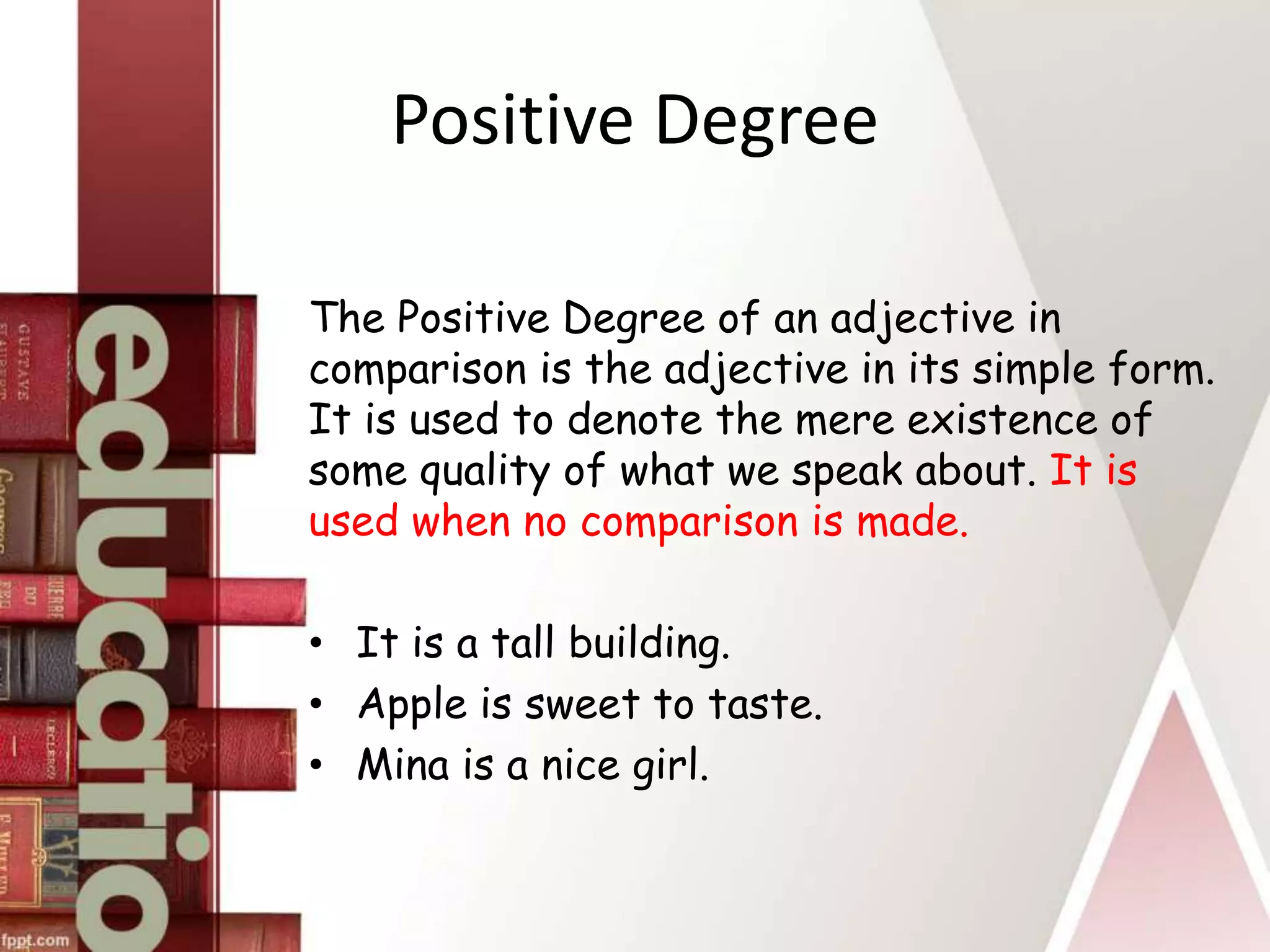
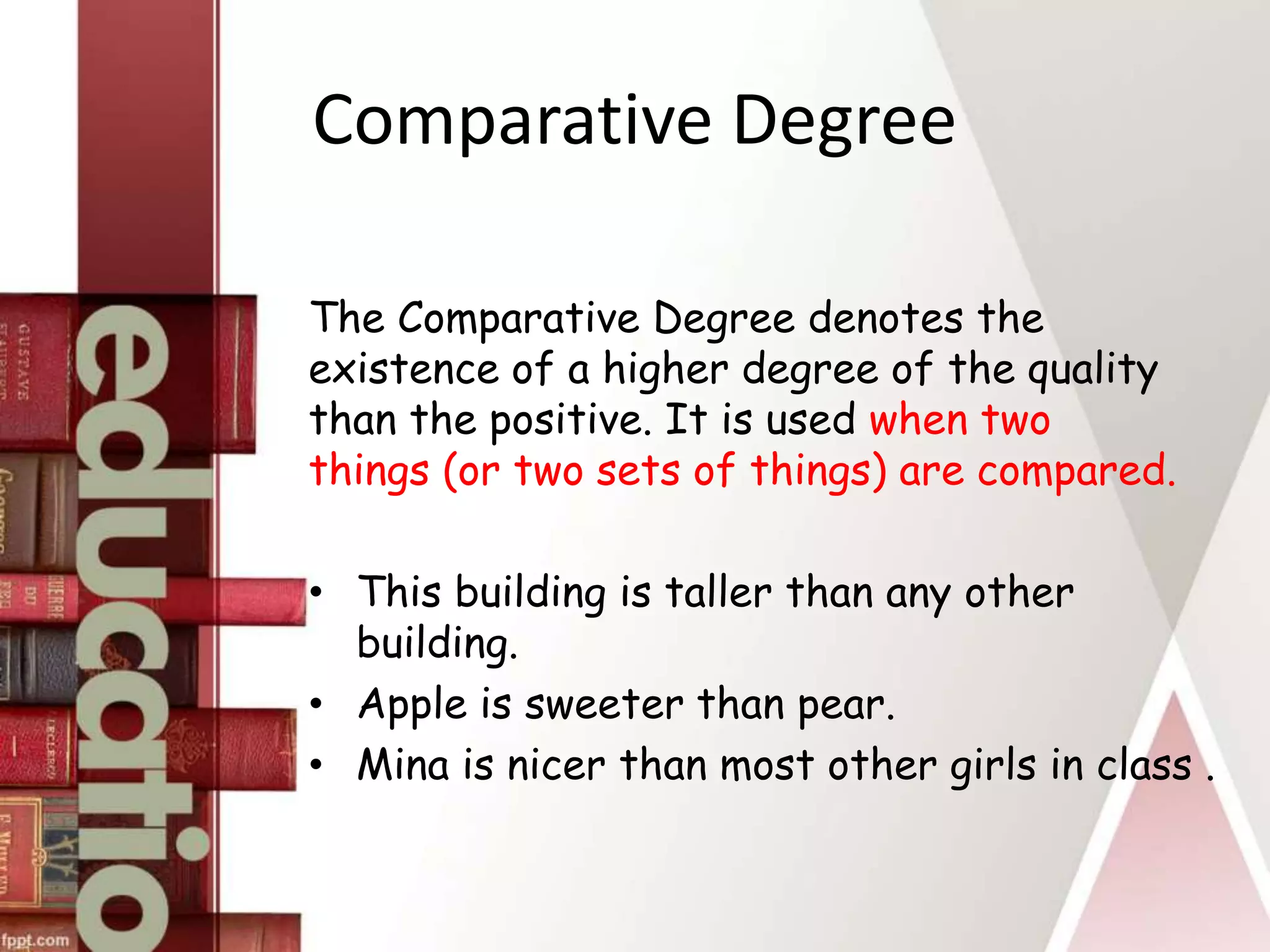
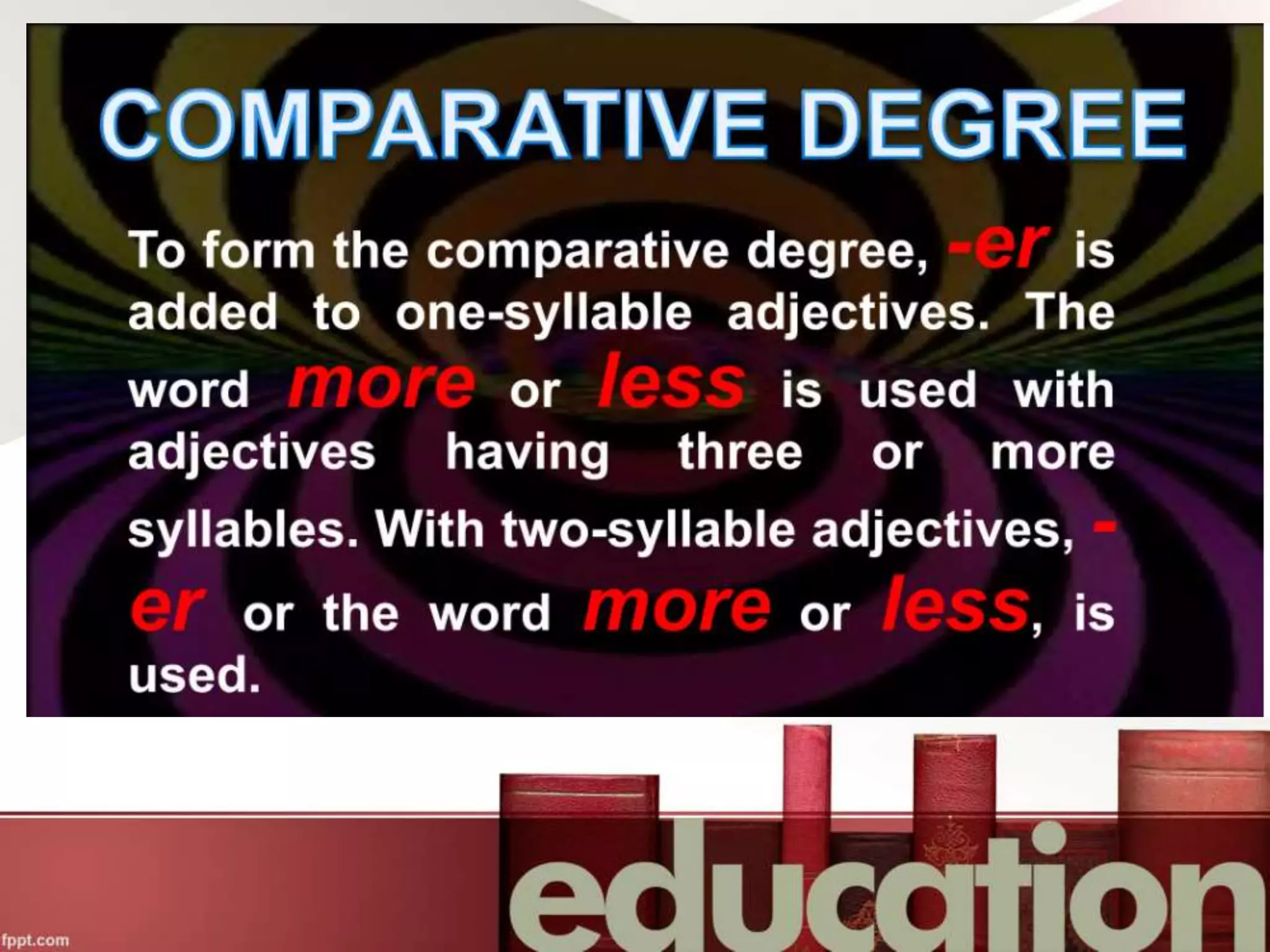
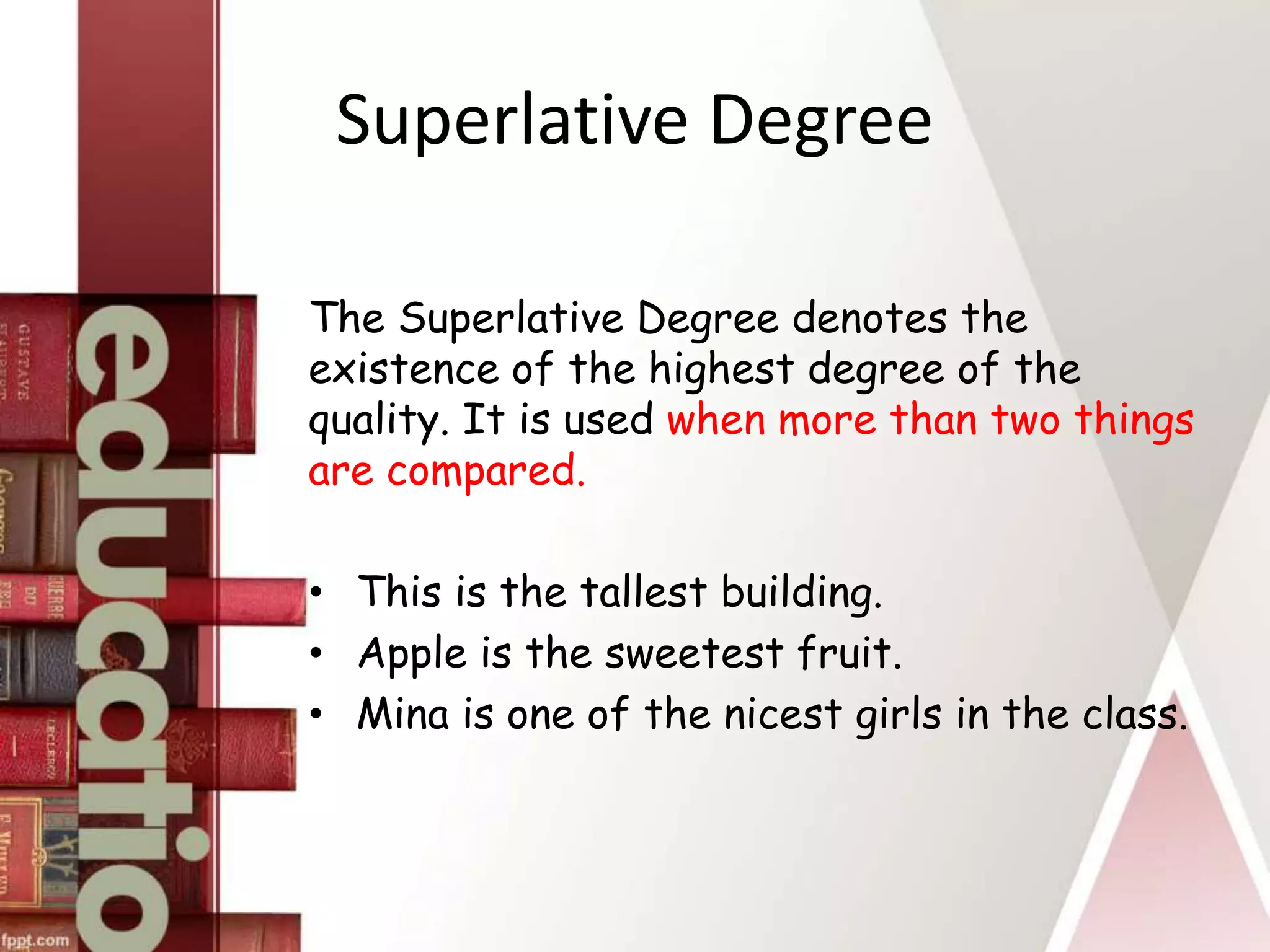

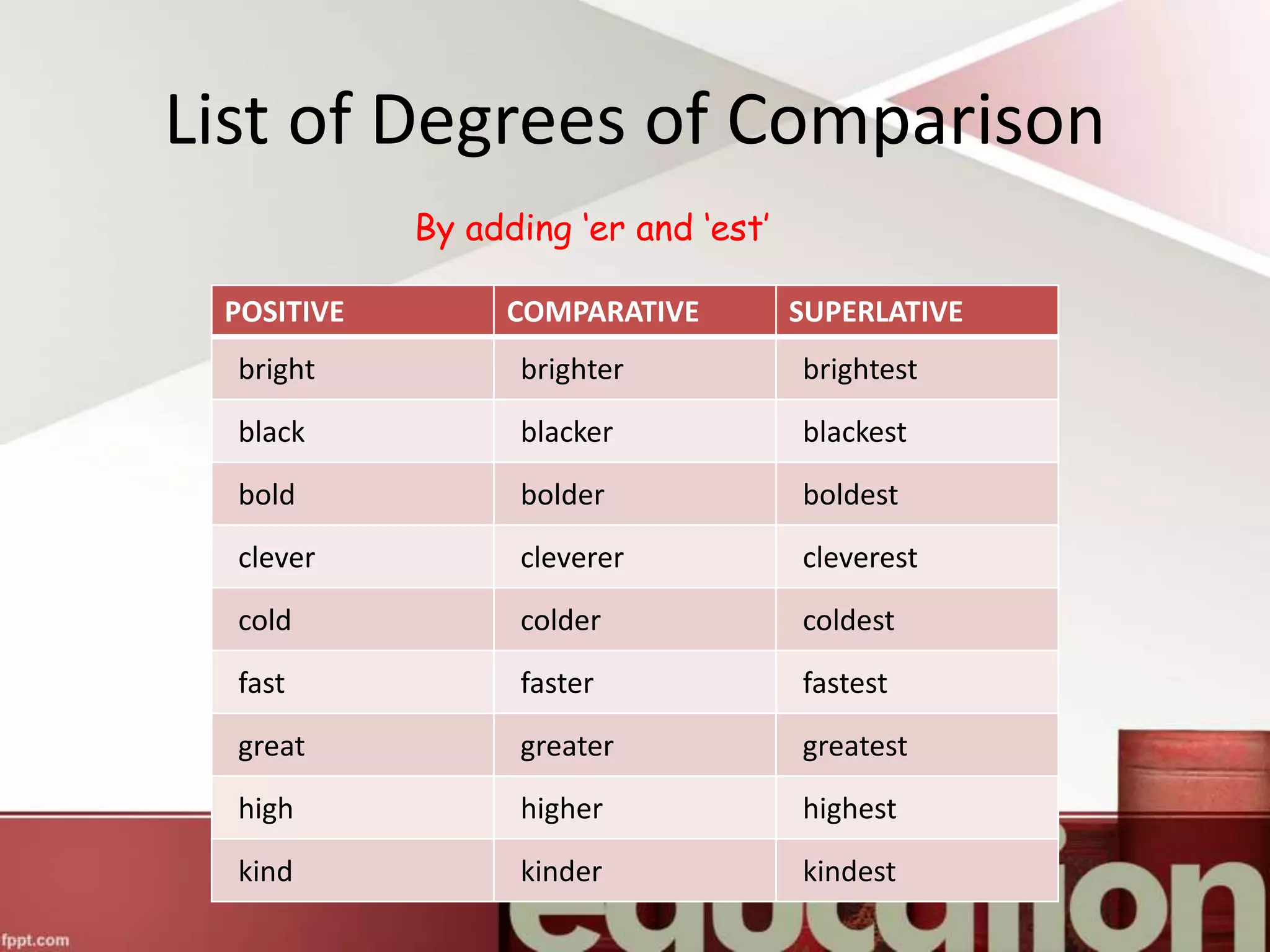
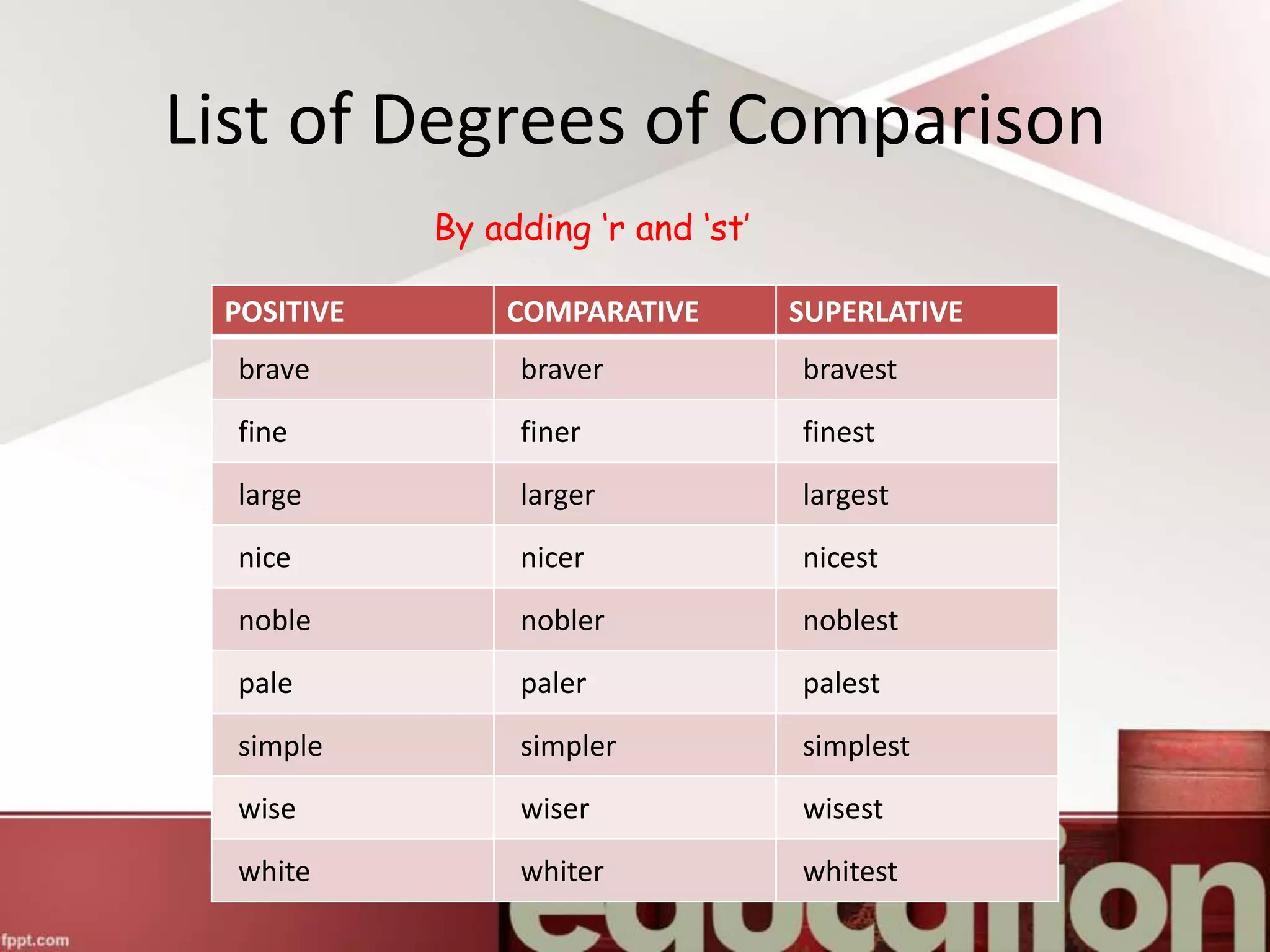
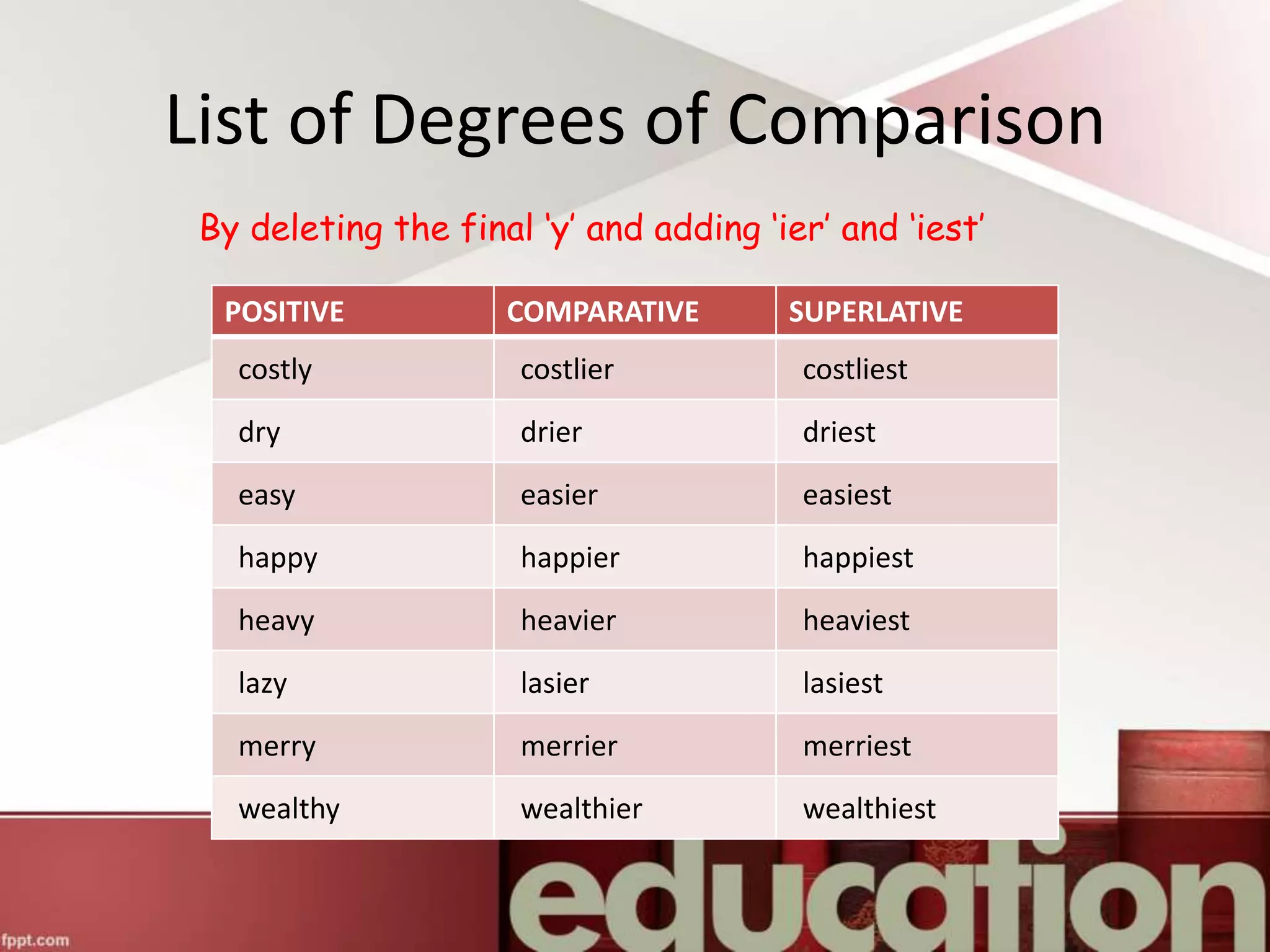
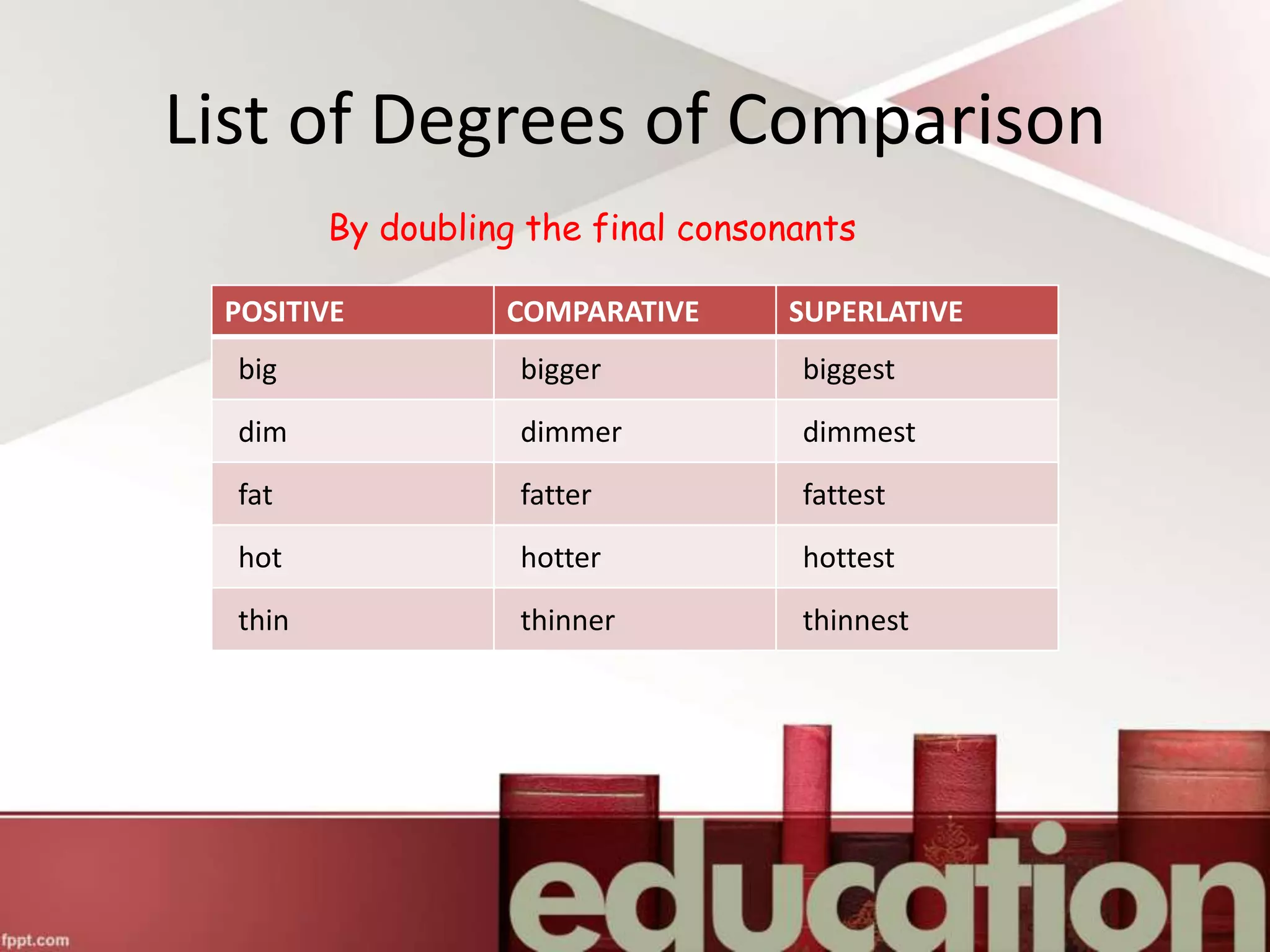

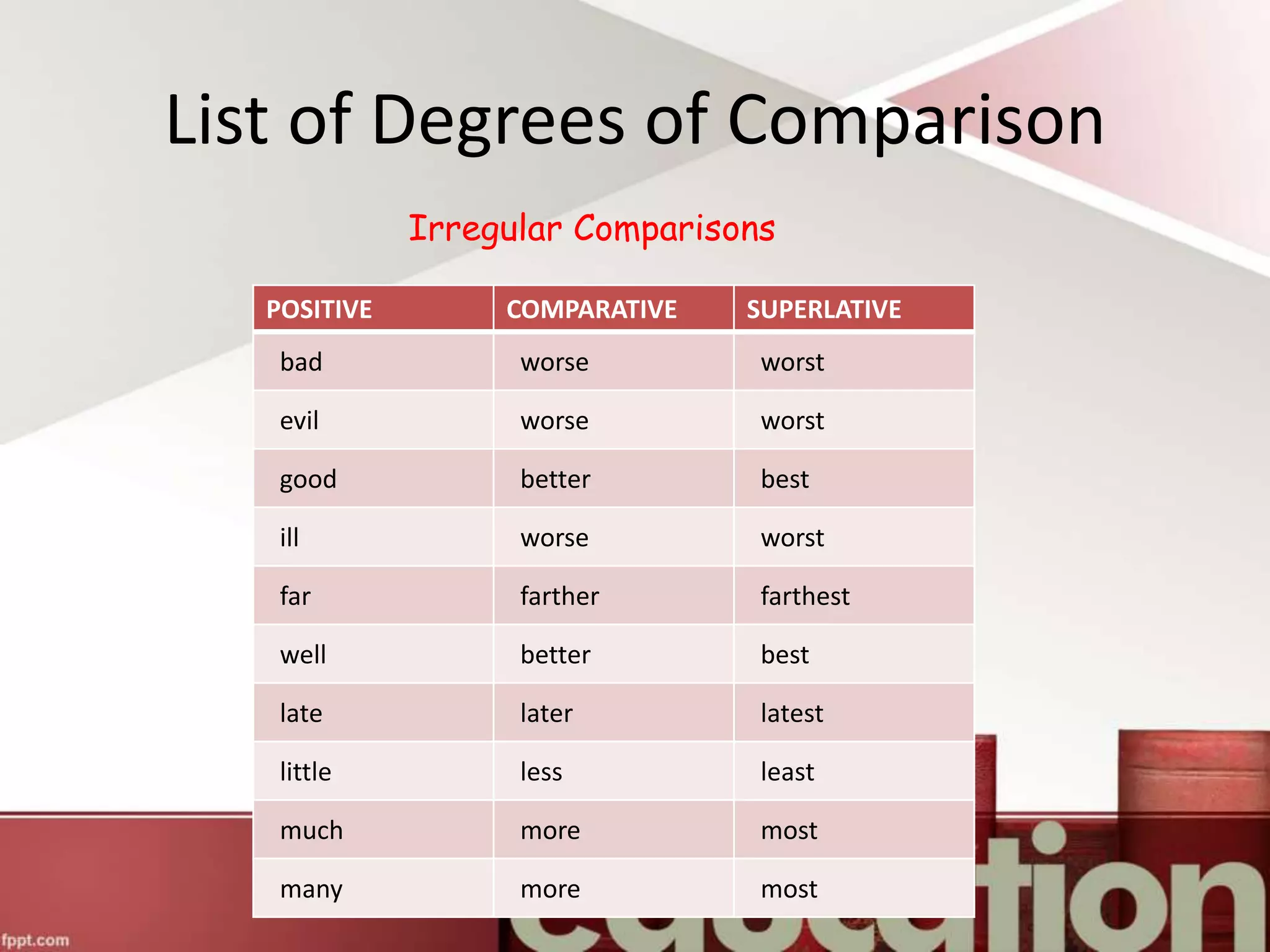
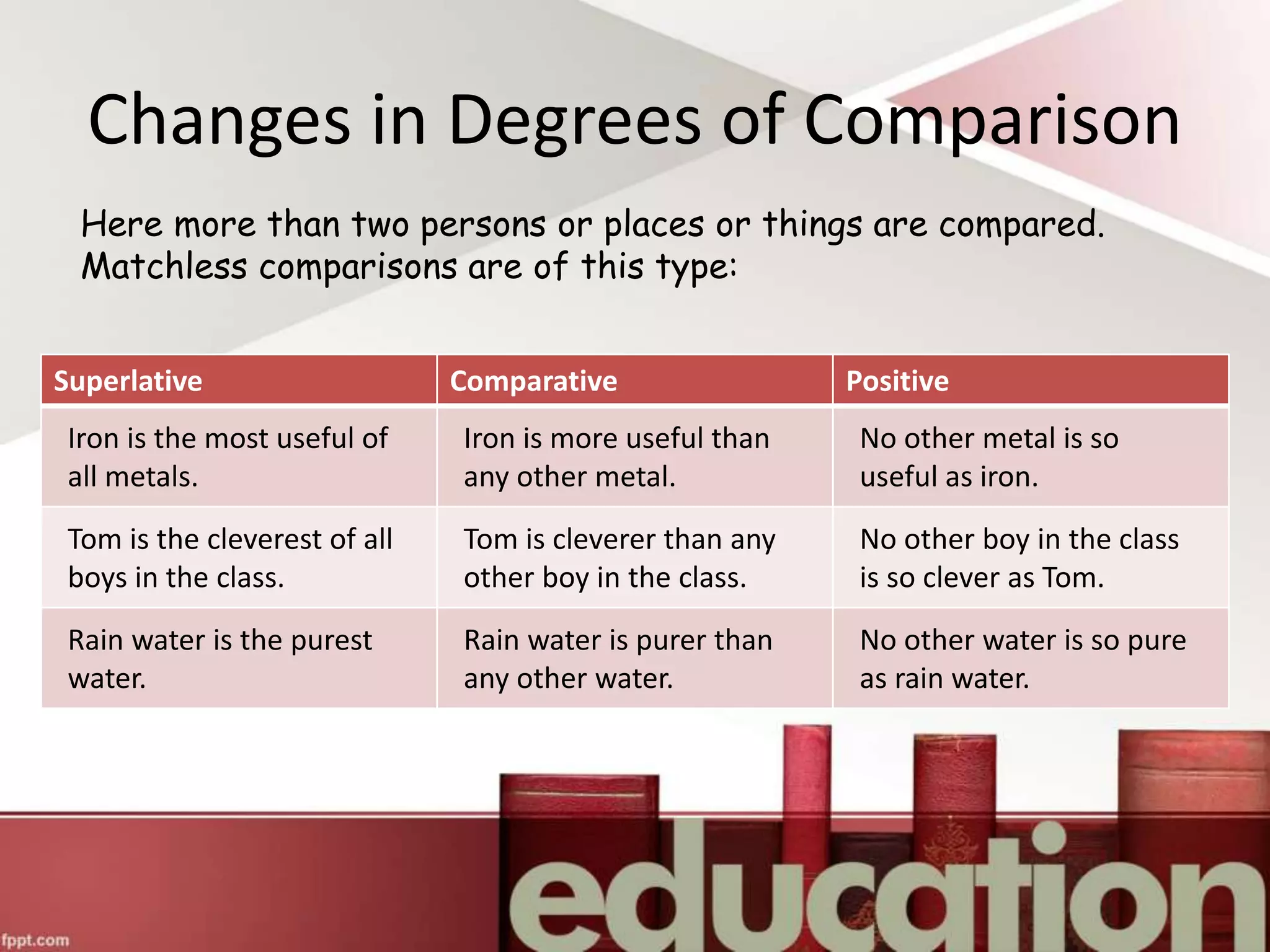
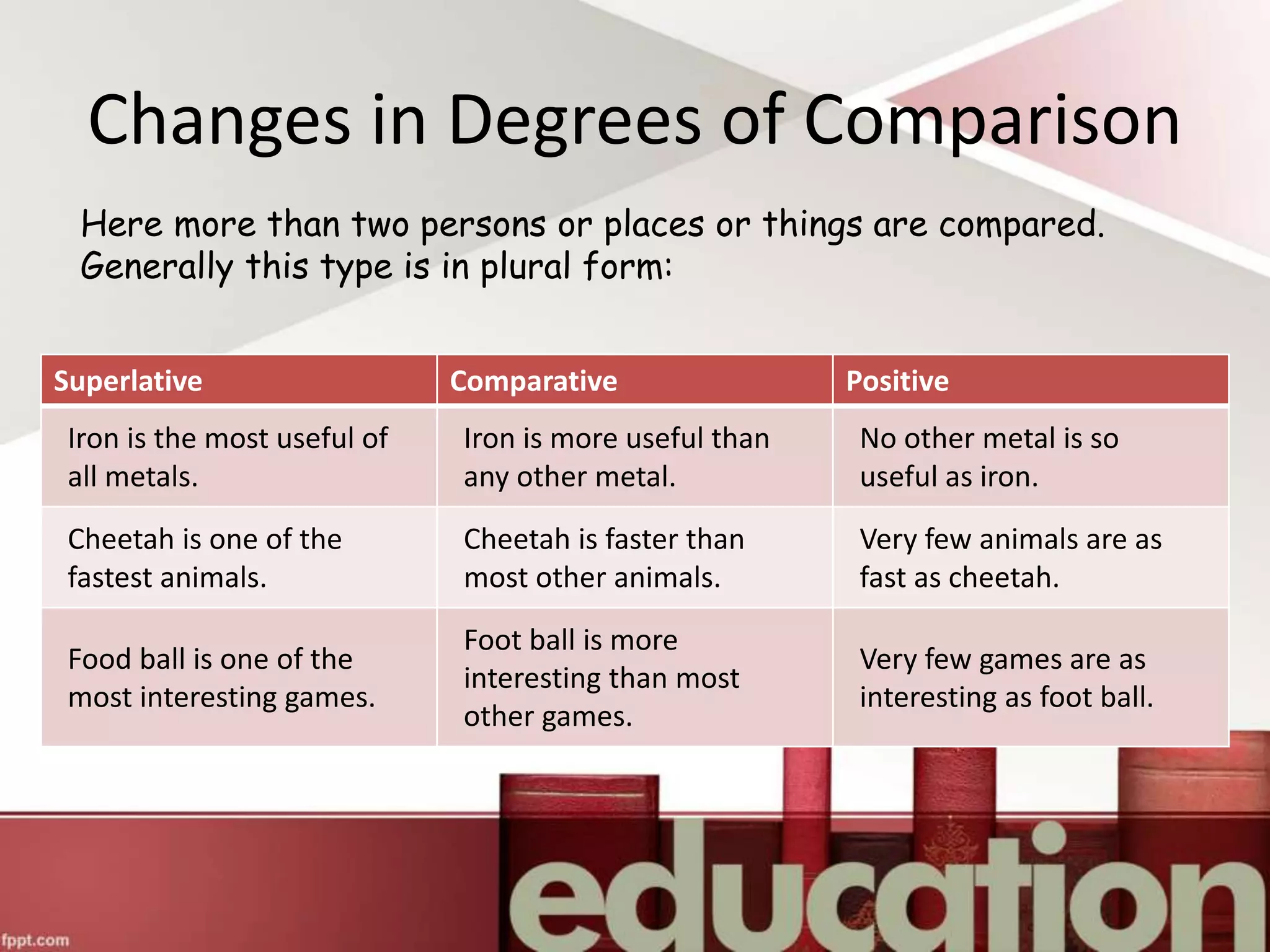
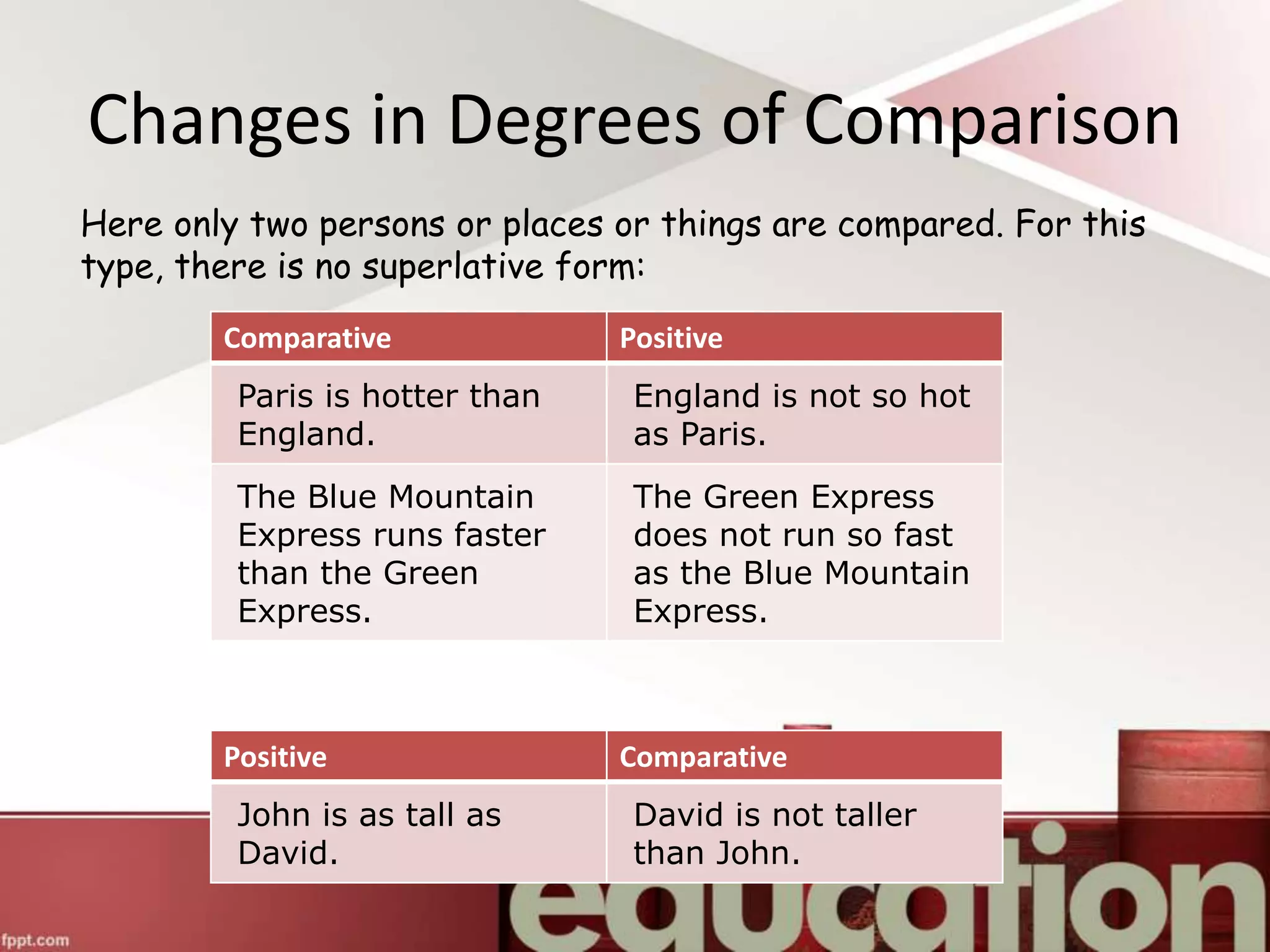
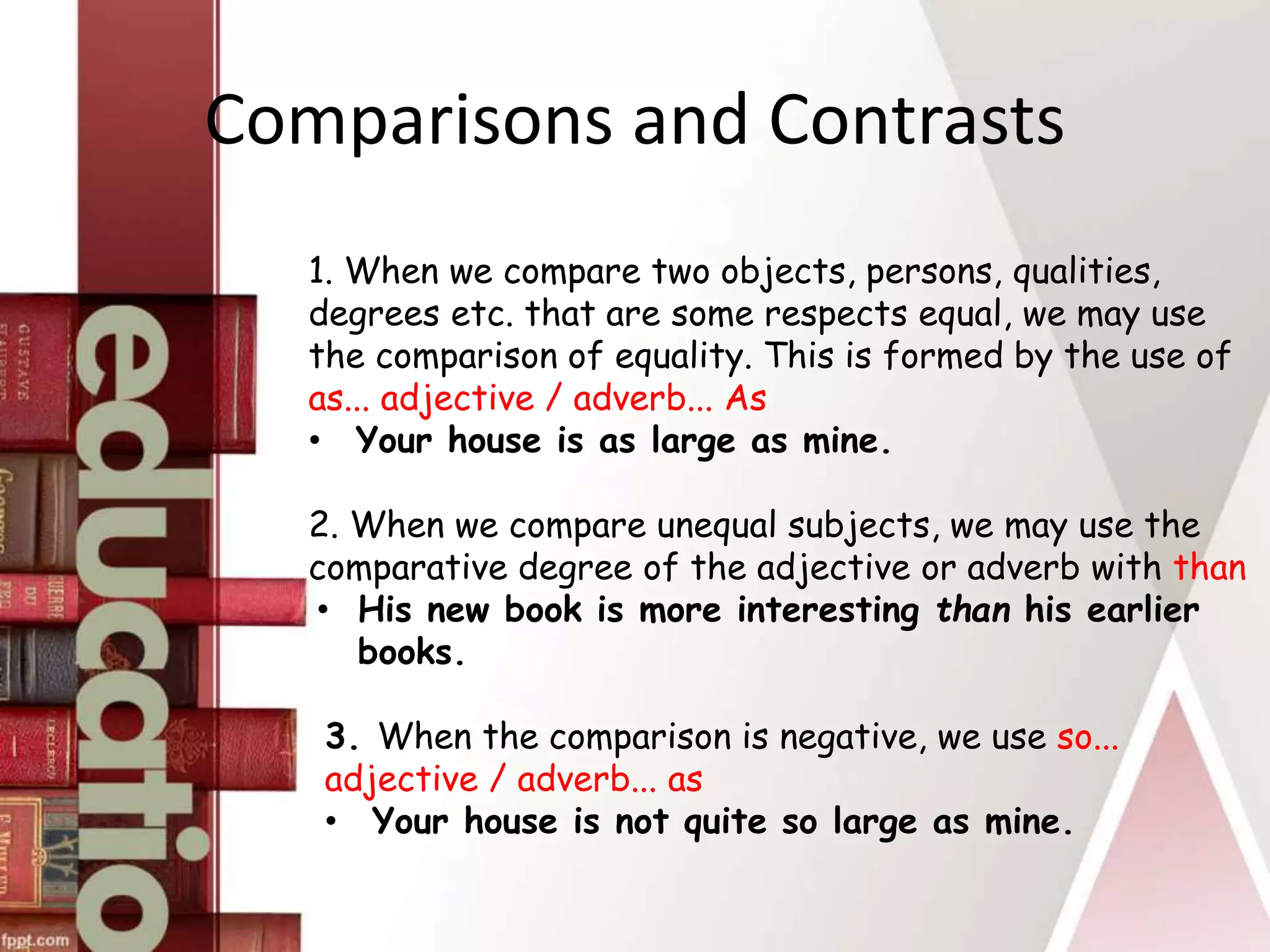
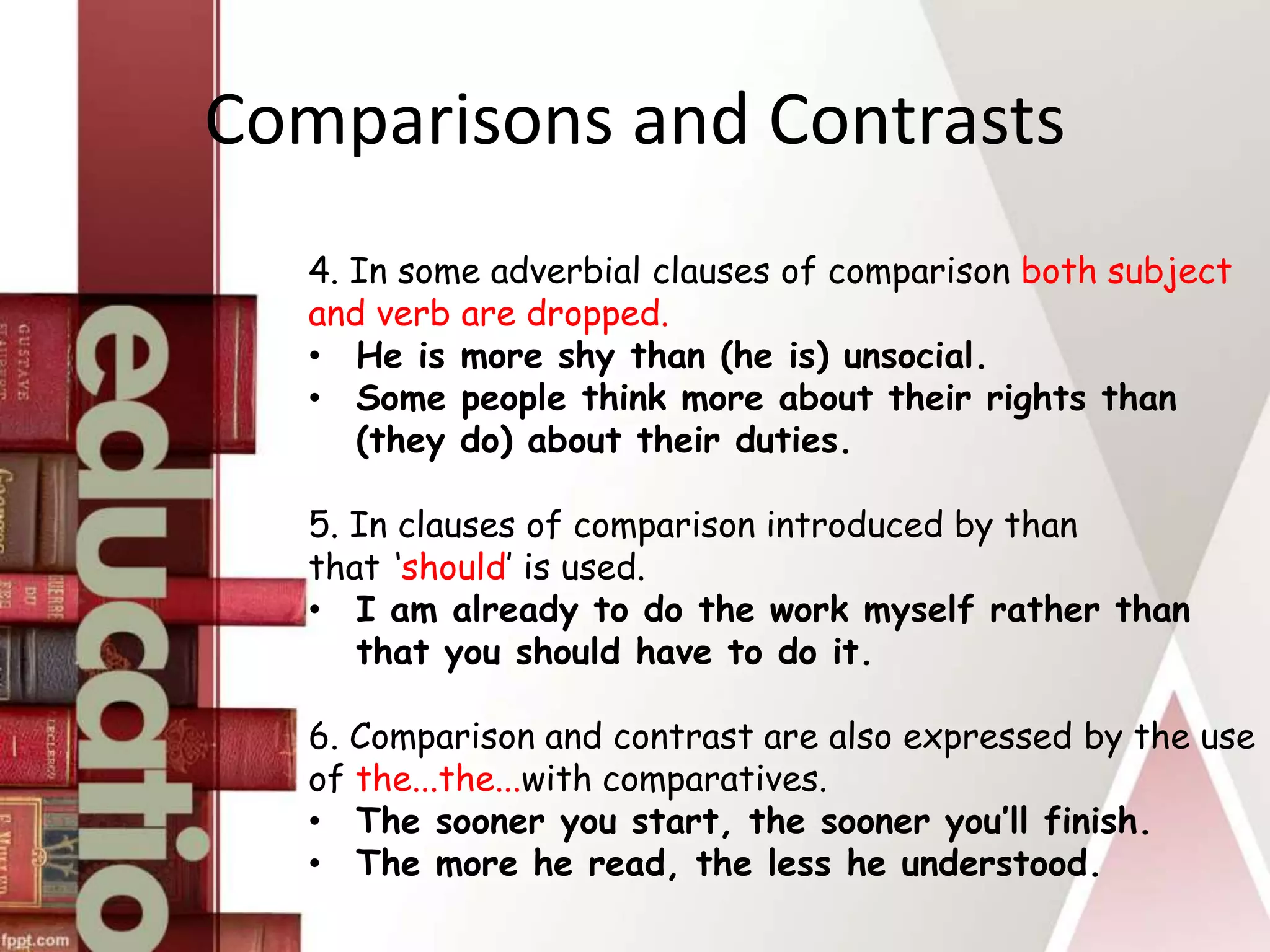

The document discusses degrees of comparison in adjectives and adverbs. It explains that adjectives and adverbs have three degrees of comparison: positive, comparative, and superlative. The positive degree is the basic form of an adjective or adverb and does not involve comparison. The comparative degree involves comparing two items, using suffixes like -er or more. The superlative degree involves comparing three or more items and uses the suffixes -est or most. The document provides many examples of adjectives and adverbs in the three degrees of comparison and discusses how their forms change depending on their ending. It also discusses how comparisons are made using phrases like "as...as" and how comparisons can be negative.


