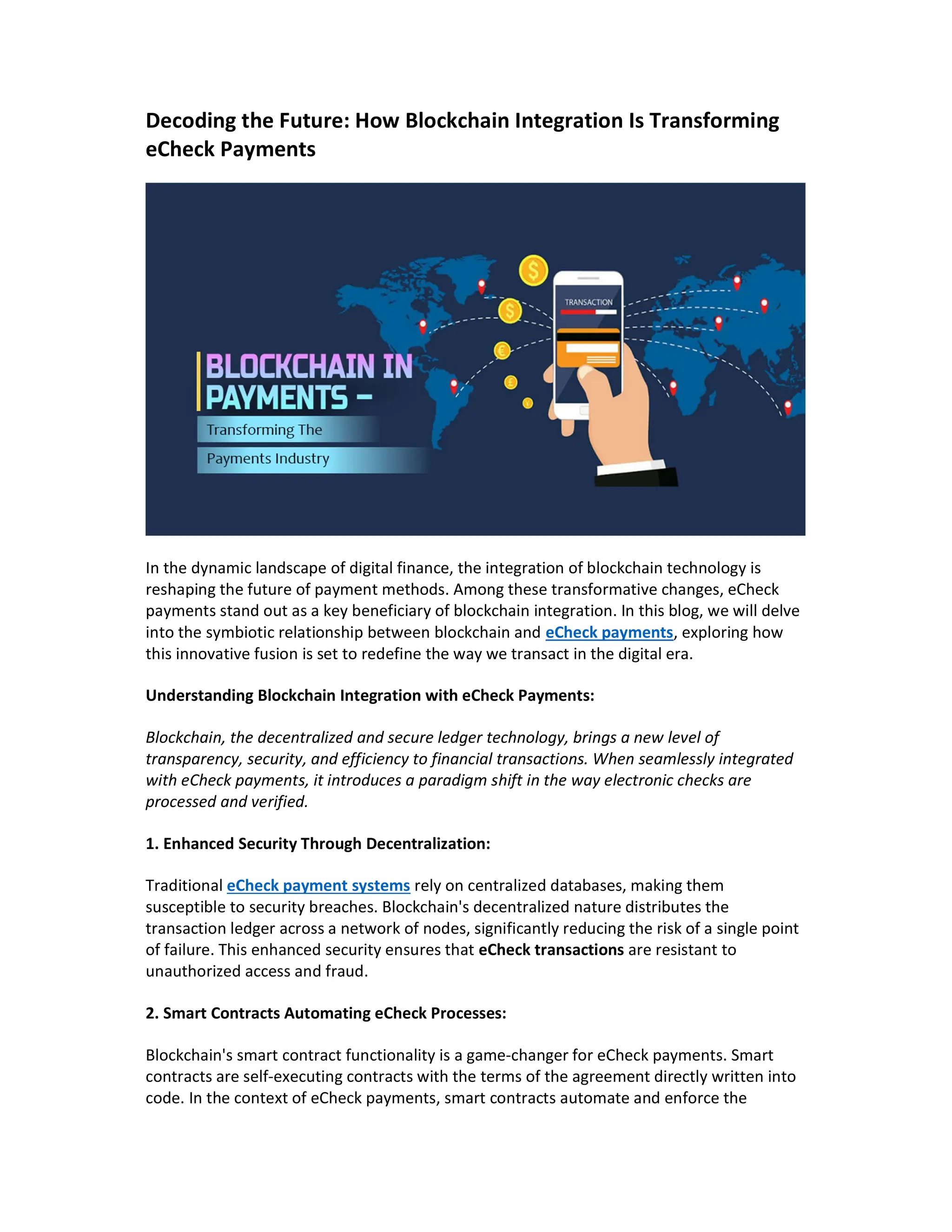
Decoding the Future How Blockchain Integration Is Transforming eCheck Payments
Embracing blockchain integration is not just a technological upgrade; it's a step into a future where eCheck payments redefine the standards of reliability and innovation in the digital age. Read this PDF to know more!
Decoding the Future How Blockchain Integration Is Transforming eCheck Payments
1.
Decoding the Future:How Blockchain Integration Is Transforming
eCheck Payments
In the dynamic landscape of digital finance, the integration of blockchain technology is
reshaping the future of payment methods. Among these transformative changes, eCheck
payments stand out as a key beneficiary of blockchain integration. In this blog, we will delve
into the symbiotic relationship between blockchain and eCheck payments, exploring how
this innovative fusion is set to redefine the way we transact in the digital era.
Understanding Blockchain Integration with eCheck Payments:
Blockchain, the decentralized and secure ledger technology, brings a new level of
transparency, security, and efficiency to financial transactions. When seamlessly integrated
with eCheck payments, it introduces a paradigm shift in the way electronic checks are
processed and verified.
1. Enhanced Security Through Decentralization:
Traditional eCheck payment systems rely on centralized databases, making them
susceptible to security breaches. Blockchain's decentralized nature distributes the
transaction ledger across a network of nodes, significantly reducing the risk of a single point
of failure. This enhanced security ensures that eCheck transactions are resistant to
unauthorized access and fraud.
2. Smart Contracts Automating eCheck Processes:
Blockchain's smart contract functionality is a game-changer for eCheck payments. Smart
contracts are self-executing contracts with the terms of the agreement directly written into
code. In the context of eCheck payments, smart contracts automate and enforce the
2.
conditions of atransaction, ensuring that funds are transferred only when predefined
criteria are met. This not only streamlines the payment process but also minimizes the
potential for errors or disputes.
3. Immutable Transaction History:
Every eCheck transaction recorded on the blockchain is immutable, meaning it cannot be
altered or tampered with. This transparent and tamper-proof transaction history adds a
layer of trust to eCheck payments, as both parties can independently verify the details of
each transaction. This feature is especially crucial in auditing, compliance, and dispute
resolution scenarios.
4. Faster Settlements and Reduced Processing Times:
Blockchain's efficiency in processing transactions reflects positively on the speed of eCheck
payments. Traditional eCheck settlements may take several days, but blockchain integration
enables near-instantaneous settlements. This accelerated processing time benefits
businesses and consumers alike, providing quicker access to funds and improving overall
transaction efficiency.
5. Cross-Border Transactions Simplified:
Blockchain's borderless nature facilitates seamless cross-border eCheck transactions.
Without the need for intermediaries or multiple currency conversions, businesses can
transact globally with reduced fees and increased speed. This is particularly advantageous
for businesses operating on an international scale, unlocking new opportunities and
markets.
6. Financial Inclusion and Accessibility:
Blockchain-powered eCheck payments contribute to financial inclusion by providing an
accessible and efficient payment method. This is particularly impactful in regions where
traditional banking infrastructure is limited. Anyone with internet access can participate in
the global economy, empowering individuals and businesses irrespective of geographical
constraints.
7. Reduced Costs and Improved Cost-Effectiveness:
Traditional payment systems often involve multiple intermediaries, each adding a layer of
cost to the transaction. Blockchain's decentralized and peer-to-peer nature eliminates the
need for many intermediaries, resulting in cost savings for businesses and, ultimately, the
end-users. This cost-effectiveness is a significant advantage for businesses of all sizes,
promoting financial sustainability.
8. Future Innovations and Synergies:
As blockchain technology continues to evolve, so do the possibilities for innovative eCheck
payment solutions. Integration with emerging technologies such as decentralized finance
3.
(DeFi) and non-fungibletokens (NFTs) may open new avenues for financial creativity and
flexibility, paving the way for exciting possibilities in the future.
Conclusion: A New Era of Trust and Efficiency in eCheck Payments
The integration of blockchain technology with eCheck payments marks a transformative
leap towards a more secure, efficient, and accessible financial ecosystem. As businesses and
consumers increasingly recognize the benefits of this innovative fusion, the future holds the
promise of a digital financial landscape where eCheck transactions are synonymous with
trust, transparency, and speed. Embracing blockchain integration is not just a technological
upgrade; it's a step into a future where eCheck payments redefine the standards of
reliability and innovation in the digital age.
Originally Published: h ps://ipaydigital.com/blog/decoding-the-future-how-blockchain-integra on-
is-transforming-echeck-payments/